Kirjojen hintavertailu – 12 859 818 kirjaa ja 27 kauppaa

Kirjailija

Giorgio Agamben

Kirjat ja teokset yhdessä paikassa: 139 kirjaa, julkaisuja vuosilta 1993–2027, suosituimpiin kuuluu The Body of Europe. Vertaile teosten hintoja ja tarkista saatavuus suomalaisista kirjakaupoista.

139 kirjaa

Kirjojen julkaisuvuodet: 1993–2027.

What Is Philosophy?

What Is Philosophy?

Giorgio Agamben

STANFORD UNIVERSITY PRESS
2017
sidottu
In attempting to answer the question posed by this book's title, Giorgio Agamben does not address the idea of philosophy itself. Rather, he turns to the apparently most insignificant of its components: the phonemes, letters, syllables, and words that come together to make up the phrases and ideas of philosophical discourse. A summa, of sorts, of Agamben's thought, the book consists of five essays on five emblematic topics: the Voice, the Sayable, the Demand, the Proem, and the Muse. In keeping with the author's trademark methodology, each essay weaves together archaeological and theoretical investigations: to a patient reconstruction of how the concept of language was invented there corresponds an attempt to restore thought to its place within the voice; to an unusual interpretation of the Platonic Idea corresponds a lucid analysis of the relationship between philosophy and science, and of the crisis that both are undergoing today. In the end, there is no universal answer to what is an impossible or inexhaustible question, and philosophical writing—a problem Agamben has never ceased to grapple with—assumes the form of a prelude to a work that must remain unwritten.
What Is Philosophy?

What Is Philosophy?

Giorgio Agamben

Stanford University Press
2017
pokkari

Halvin toimitettuna 27,70 €

In attempting to answer the question posed by this book's title, Giorgio Agamben does not address the idea of philosophy itself. Rather, he turns to the apparently most insignificant of its components: the phonemes, letters, syllables, and words that come together to make up the phrases and ideas of philosophical discourse. A summa, of sorts, of Agamben's thought, the book consists of five essays on five emblematic topics: the Voice, the Sayable, the Demand, the Proem, and the Muse. In keeping with the author's trademark methodology, each essay weaves together archaeological and theoretical investigations: to a patient reconstruction of how the concept of language was invented there corresponds an attempt to restore thought to its place within the voice; to an unusual interpretation of the Platonic Idea corresponds a lucid analysis of the relationship between philosophy and science, and of the crisis that both are undergoing today. In the end, there is no universal answer to what is an impossible or inexhaustible question, and philosophical writing—a problem Agamben has never ceased to grapple with—assumes the form of a prelude to a work that must remain unwritten.
The Omnibus Homo Sacer

The Omnibus Homo Sacer

Giorgio Agamben

Stanford University Press
2017
sidottu
Giorgio Agamben's Homo Sacer is one of the seminal works of political philosophy in recent decades. A twenty-year undertaking, this project is a series of interconnected investigations of staggering ambition and scope investigating the deepest foundations of every major Western institution and discourse. This single book brings together for the first time all nine volumes that make up this groundbreaking project. Each volume takes a seemingly obscure and outdated issue as its starting point—an enigmatic figure in Roman law, or medieval debates about God's management of creation, or theories about the origin of the oath—but is always guided by questions with urgent contemporary relevance. The Omnibus Homo Sacer includes: 1. Homo Sacer: Sovereign Power and Bare Life 2.1. State of Exception 2.2. Stasis: Civil War as a Political Paradigm 2.3. The Sacrament of Language: An Archeology of the Oath 2.4. The Kingdom and the Glory: For a Theological Genealogy of Economy and Glory 2.5. Opus Dei: An Archeology of Duty 3. Remnants of Auschwitz: The Witness and the Archive 4.1. The Highest Poverty: Monastic Rules and Form-of-Life 4.2. The Use of Bodies
The Mystery of Evil

The Mystery of Evil

Giorgio Agamben

Stanford University Press
2017
sidottu
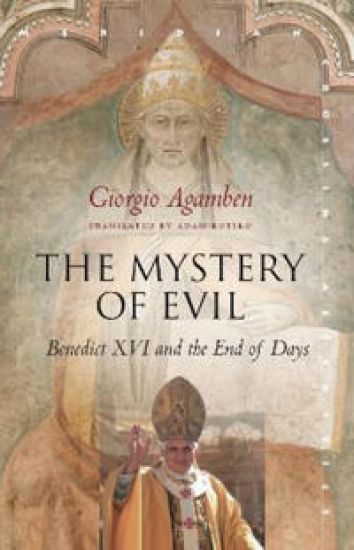
In 2013, Benedict XVI became only the second pope in the history of the Catholic Church to resign from office. In this brief but illuminating study, Giorgio Agamben argues that Benedict's gesture, far from being solely a matter of internal ecclesiastical politics, is exemplary in an age when the question of legitimacy has been virtually left aside in favor of a narrow focus on legality. This reflection on the recent history of the Church opens out into an analysis of one of the earliest documents of Christianity: the Second Epistle to the Thessalonians, which stages a dramatic confrontation between the "man of lawlessness" and the enigmatic katechon, the power that holds back the end of days. In Agamben's hands, this infamously obscure passage reveals the theological dynamics of history that continue to inform Western culture to this day.
The Mystery of Evil

The Mystery of Evil

Giorgio Agamben

Stanford University Press
2017
pokkari

Halvin toimitettuna 27,70 €

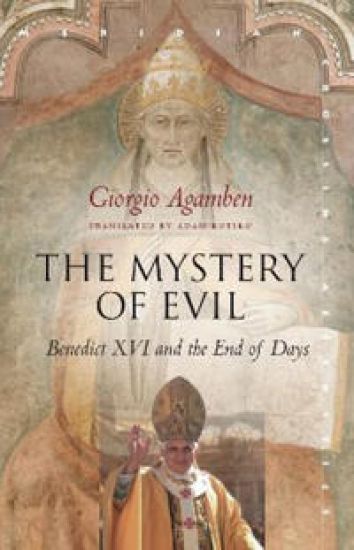
In 2013, Benedict XVI became only the second pope in the history of the Catholic Church to resign from office. In this brief but illuminating study, Giorgio Agamben argues that Benedict's gesture, far from being solely a matter of internal ecclesiastical politics, is exemplary in an age when the question of legitimacy has been virtually left aside in favor of a narrow focus on legality. This reflection on the recent history of the Church opens out into an analysis of one of the earliest documents of Christianity: the Second Epistle to the Thessalonians, which stages a dramatic confrontation between the "man of lawlessness" and the enigmatic katechon, the power that holds back the end of days. In Agamben's hands, this infamously obscure passage reveals the theological dynamics of history that continue to inform Western culture to this day.
The Fire and the Tale

The Fire and the Tale

Giorgio Agamben

Stanford University Press
2017
pokkari

Halvin toimitettuna 27,70 €

What is at stake in literature? Can we identify the fire that our stories have lost, but that they strive, at all costs, to rediscover? And what is the philosopher's stone that writers, with the passion of alchemists, struggle to forge in their word furnaces? For Giorgio Agamben, who suggests that the parable is the secret model of all narrative, every act of creation tenaciously resists creation, thereby giving each work its strength and grace. The ten essays brought together here cover works by figures ranging from Aristotle to Paul Klee and illustrate what urgently drives Agamben's current research. As is often the case with his writings, their especial focus is the mystery of literature, of reading and writing, and of language as a laboratory for conceiving an ethico-political perspective that places us beyond sovereign power.
The Fire and the Tale

The Fire and the Tale

Giorgio Agamben

Stanford University Press
2017
sidottu
What is at stake in literature? Can we identify the fire that our stories have lost, but that they strive, at all costs, to rediscover? And what is the philosopher's stone that writers, with the passion of alchemists, struggle to forge in their word furnaces? For Giorgio Agamben, who suggests that the parable is the secret model of all narrative, every act of creation tenaciously resists creation, thereby giving each work its strength and grace. The ten essays brought together here cover works by figures ranging from Aristotle to Paul Klee and illustrate what urgently drives Agamben's current research. As is often the case with his writings, their especial focus is the mystery of literature, of reading and writing, and of language as a laboratory for conceiving an ethico-political perspective that places us beyond sovereign power.
Den højeste fattigdom. Klosterregler og livsform
”Hvorledes at tænke en livs-form, altså et menneskeligt liv fuldstændigt unddraget rettens greb og en brug af kroppene og verden, der aldrig konkretiserer sig i en tilegnelse. Med andre ord: at tænke livet som det, der ikke kan tilskrives noget ejerskab, men kun en fælles brug.” Det er centrale emner i Den højeste fattigdom. Klosterregler og livsform, hvor Giorgio Agamben endnu engang fascinerer og imponerer med en fortolkning af mindre belyste sider af Vestens kulturhistorie, munkevæsenet og særligt Franciskanerordenen. Her opdages en ny dimension, hvor regel og liv mister deres velkendte betydning og peger imod et tredje, som værket forsøger at drage frem i lyset. Bogen er en del af Agambens stort anlagte Homo sacer projekt.
Signatura Rerum

Signatura Rerum

Giorgio Agamben

Forlaget Wunderbuch
2016
muu
Signatura rerum er Giorgio Agambens metodebog og aldeles uomgængelig, hvis man vil forstå hans tænkning. Bogen indledes og er oversat af Søren Gosvig Olesen. Bogen er Agambens overvejelser over egen metode, skrevet efter adskillige prøver på denne – ganske som Vidensarkæologien var det for Foucault, som er den forfatter, Agamben kommenterer hele vejen igennem. Men ud over arkæologien er der også kommentarer til og studier i paradigmet, den hermeneutiske cirkel, analogien, dialektikken og »urfænomenet«. Det er en bog, hvor man vil se Agamben vedgå sin gæld til tyske og franske læremestre, samt til traditionen, og hvor man kan se ham gradvis komme i besiddelse af sine arbejdsredskaber. En polemisk brod stikker frem i Agambens forsøg på afklaring af de »arkæologiske« modellers ontologi; dér taler han de nutidige humanvidenskabers primitive kopiering af neurovidenskaberne midt imod. Giorgio Agamben (f. 1942) er en af vor tids mest markante og kontroversielle filosoffer. Hans tænkning er inspireret af bl.a. Heidegger, Benjamin, Nietzsche, Aristoteles, Marx og Derrida. For Agamben hænger sprog, litteratur, metafysik, politik og etik nøje sammen. Søren Gosvig Olesen (f. 1956), filosof, oversætter og forfatter. Han er dr.phil.habil fra Université de Nice og lektor i filosofi ved Københavns Universitet.
Homo Sacer

Homo Sacer

Giorgio Agamben

Forlaget Klim
2016
nidottu
Giorgio Agamben er en af vor tids vigtigste og mest indflydelsesrige filosoffer. Hans arbejde er baseret på meget originale fortolkninger af klassiske traditioner inden for filosofi og retorik. Romerretten, senantikkens filosofi, kristen teologi og moderne filosofi fra Hannah Arendt og Martin Heidegger til Michel Foucault er afgørende for hans arbejde. Agamben går derfra videre og forbinder tænkning med konkrete etisk-politiske konklusioner om samfundets tilstand i dag. I Agambens hovedværk ‘Homo sacer – den suveræne magt og det nøgne liv’ sigter han mod at knytte spørgsmålene om potentialitet, udelukkelse og magt til politisk og social etik i en verden, hvor netop etik har mistet sin tidligere religiøse, metafysiske og kulturelle forankring. Med efterskrift af oversætteren Carsten Juhl.
The Use of Bodies

The Use of Bodies

Giorgio Agamben

Stanford University Press
2016
pokkari

Halvin toimitettuna 31,00 €

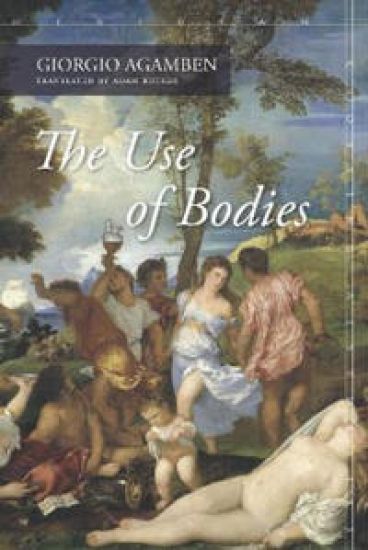
Giorgio Agamben's Homo Sacer was one of the seminal works of political philosophy in recent decades. It was also the beginning of a series of interconnected investigations of staggering ambition and scope, investigating the deepest foundations of Western politics and thought. The Use of Bodies represents the ninth and final volume in this twenty-year undertaking, breaking considerable new ground while clarifying the stakes and implications of the project as a whole. It comprises three major sections. The first uses Aristotle's discussion of slavery as a starting point for radically rethinking notions of selfhood; the second calls for a complete reworking of Western ontology; and the third explores the enigmatic concept of "form-of-life," which is in many ways the motivating force behind the entire Homo Sacer project. Interwoven between these major sections are shorter reflections on individual thinkers (Debord, Foucault, and Heidegger), while the epilogue pushes toward a new approach to political life that breaks with the destructive deadlocks of Western thought. The Use of Bodies represents a true masterwork by one of our greatest living philosophers.
The Use of Bodies

The Use of Bodies

Giorgio Agamben

Stanford University Press
2016
sidottu
Giorgio Agamben's Homo Sacer was one of the seminal works of political philosophy in recent decades. It was also the beginning of a series of interconnected investigations of staggering ambition and scope, investigating the deepest foundations of Western politics and thought. The Use of Bodies represents the ninth and final volume in this twenty-year undertaking, breaking considerable new ground while clarifying the stakes and implications of the project as a whole. It comprises three major sections. The first uses Aristotle's discussion of slavery as a starting point for radically rethinking notions of selfhood; the second calls for a complete reworking of Western ontology; and the third explores the enigmatic concept of "form-of-life," which is in many ways the motivating force behind the entire Homo Sacer project. Interwoven between these major sections are shorter reflections on individual thinkers (Debord, Foucault, and Heidegger), while the epilogue pushes toward a new approach to political life that breaks with the destructive deadlocks of Western thought. The Use of Bodies represents a true masterwork by one of our greatest living philosophers.
Stasis

Stasis

Giorgio Agamben

Stanford University Press
2015
pokkari
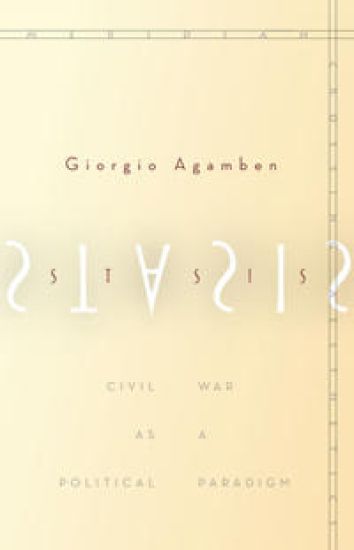
We can no longer speak of a state of war in any traditional sense, yet there is currently no viable theory to account for the manifold internal conflicts, or civil wars, that increasingly afflict the world's populations. Meant as a first step toward such a theory, Giorgio Agamben's latest book looks at how civil war was conceived of at two crucial moments in the history of Western thought: in ancient Athens (from which the political concept of stasis emerges) and later, in the work of Thomas Hobbes. It identifies civil war as the fundamental threshold of politicization in the West, an apparatus that over the course of history has alternately allowed for the de-politicization of citizenship and the mobilization of the unpolitical. The arguments herein, first conceived of in the immediate aftermath of 9/11, have become ever more relevant now that we have entered the age of planetary civil war.
Stasis

Stasis

Giorgio Agamben

Stanford University Press
2015
sidottu
We can no longer speak of a state of war in any traditional sense, yet there is currently no viable theory to account for the manifold internal conflicts, or civil wars, that increasingly afflict the world's populations. Meant as a first step toward such a theory, Giorgio Agamben's latest book looks at how civil war was conceived of at two crucial moments in the history of Western thought: in ancient Athens (from which the political concept of stasis emerges) and later, in the work of Thomas Hobbes. It identifies civil war as the fundamental threshold of politicization in the West, an apparatus that over the course of history has alternately allowed for the de-politicization of citizenship and the mobilization of the unpolitical. The arguments herein, first conceived of in the immediate aftermath of 9/11, have become ever more relevant now that we have entered the age of planetary civil war.
STASIS

STASIS

Giorgio Agamben

Edinburgh University Press
2015
nidottu

Halvin toimitettuna 27,60 €

Offers Agamben's genealogy of power in terms of political, philosophical and legal thought. This book investigates the genealogy of the strife between the Polis and its population with particular regard to the Greek concept of stasis and the strife with the commonwealth of Hobbes' Leviathan. It re opens the questioning of the answers offered from the pre history of the power of the State all the way to the time after the end of its power and towards the renewed questioning of the state of power today. This is an interdisciplinary exploration of the relations that form historically and theoretically between law and philosophy. It is a unique simultaneous investigation into the laws of philosophy and the philosophies of law. It focusses on the creativity of the legal and philosophical imagination in the face of the present social situation. It explores legal and philosophical concepts and modalities in relation to the formation and intersection of institutional traditions, histories and ideas.
Midler uden mål

Midler uden mål

Giorgio Agamben

Forlaget Wunderbuch
2015
muu
Midler uden mål forbereder den italienske filosof Giorgio Agambens beskrivelse af homo sacer-figuren: et af vor tids største filosofiske projekter. Bogens indledes og er oversat af Søren Gosvig Olesen. Bogen består af kortere tekster, udgivet i franske og italienske tidsskrifter og aviser, samt et enkelt forord, fra tidsrummet 1990 til 1995, året for udgivelsen af den første Homo sacer. De forskellige lejlighedsskrifter har givet Agamben lejlighed til at overveje, hvad der bliver hovedbegreber i det sene, omfattende projekt – lejr, folk, livs-form, nøgent liv, potentialitet, osv. På den måde er bogen anvendelig for den, der søger definition på dét eller dét begreb hos Agamben. Desuden udgør den en slags emnekatalog for homo sacer-projektet. Den kontroversielle filosof lægger ikke fingrene imellem; den moderne demokratiske stat hudflettes så det slår gnister – kompromisløst provokerende og forfriskende tankevækkende. Giorgio Agamben (f. 1942) er en af vor tids mest markante og kontroversielle filosoffer. Hans tænkning er inspireret af bl.a. Heidegger, Benjamin, Nietzsche, Aristoteles, Marx og Derrida. For Agamben hænger sprog, litteratur, metafysik, politik og etik nøje sammen.
Profanations

Profanations

Giorgio Agamben

Zone Books
2015
pokkari

Halvin toimitettuna 31,70 €

Essays by a provocative Italian philosopher on memory and oblivion, on what is lost and what remains. The Italian philosopher Giorgio Agamben has always been an original reader of texts, understanding their many rich historical, aesthetic, and political meanings and effects. In Profanations, Agamben has assembled for the first time some of his most pivotal essays on photography, the novel, and film. A meditation on memory and oblivion, on what is lost and what remains, Profanations proves yet again that Agamben is one of the most provocative writers of our time. In ten essays, Agamben ponders a series of literary and philosophical problems: the relation among genius, ego, and theories of subjectivity; the problem of messianic time as explicated in both images and lived experience; parody as a literary paradigm; and the potential of magic to provide an ethical canon. The range of topics and themes addressed here attest to the creativity of Agamben's singular mode of thought and his persistent concern with the act of witnessing, sometimes futile, sometimes earth-shattering. "In Praise of Profanity," the central essay of this short but dense book, confronts the question of profanity as the crucial political task of the moment. An act of resistance to every form of separation, the concept of profanation reorients perceptions of how power, consumption, and use interweave to produce an urgent political modality and desire: to profane the unprofanable. Agamben not only provides a new and potent theoretical model but describes it with a writerly style that itself forges inescapable links among literature, politics, and philosophy.
Pilate and Jesus

Pilate and Jesus

Giorgio Agamben

Stanford University Press
2015
sidottu
Pontius Pilate is one of the most enigmatic figures in Christian theology. The only non-Christian to be named in the Nicene Creed, he is presented as a cruel colonial overseer in secular accounts, as a conflicted judge convinced of Jesus's innocence in the Gospels, and as either a pious Christian or a virtual demon in later Christian writings. This book takes Pilate's role in the trial of Jesus as a starting point for investigating the function of legal judgment in Western society and the ways that such judgment requires us to adjudicate the competing claims of the eternal and the historical. Coming just as Agamben is bringing his decades-long Homo Sacer project to an end, Pilate and Jesus sheds considerable light on what is at stake in that series as a whole. At the same time, it stands on its own, perhaps more than any of the author's recent works. It thus serves as a perfect starting place for readers who are curious about Agamben's approach but do not know where to begin.
Pilate and Jesus

Pilate and Jesus

Giorgio Agamben

Stanford University Press
2015
pokkari

Halvin toimitettuna 26,50 €

Pontius Pilate is one of the most enigmatic figures in Christian theology. The only non-Christian to be named in the Nicene Creed, he is presented as a cruel colonial overseer in secular accounts, as a conflicted judge convinced of Jesus's innocence in the Gospels, and as either a pious Christian or a virtual demon in later Christian writings. This book takes Pilate's role in the trial of Jesus as a starting point for investigating the function of legal judgment in Western society and the ways that such judgment requires us to adjudicate the competing claims of the eternal and the historical. Coming just as Agamben is bringing his decades-long Homo Sacer project to an end, Pilate and Jesus sheds considerable light on what is at stake in that series as a whole. At the same time, it stands on its own, perhaps more than any of the author's recent works. It thus serves as a perfect starting place for readers who are curious about Agamben's approach but do not know where to begin.