Kirjojen hintavertailu – 12 859 818 kirjaa ja 27 kauppaa

Kirjailija

Giorgio Agamben

Kirjat ja teokset yhdessä paikassa: 139 kirjaa, julkaisuja vuosilta 1993–2027, suosituimpiin kuuluu The Body of Europe. Vertaile teosten hintoja ja tarkista saatavuus suomalaisista kirjakaupoista.

139 kirjaa

Kirjojen julkaisuvuodet: 1993–2027.
The Unspeakable Girl

The Unspeakable Girl

Giorgio Agamben; Monica Ferrando

Seagull Books London Ltd
2014
sidottu
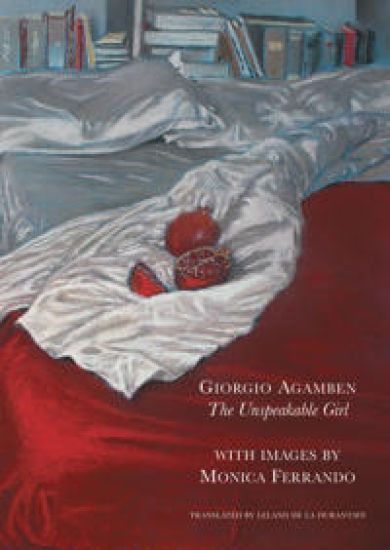
Italian philosopher Giorgio Agamben is the rare writer whose ideas and works have a broad appeal across many fields, and his devoted fans are not just philosophers, but readers of political and legal theory, sociology, and literary criticism as well. Agamben's intuition and meditation are fascinating, and not least when he turns his critical eye to the mysteries and contradictions of early religion. The "Unspeakable Girl: The Myth and Mystery of Kore" is a book of three richly detailed treatments of the myth of Kore. Kore, also called Persephone and referred to poetically by the Greeks as "the unspeakable girl," was the daughter of Demeter and Zeus who was abducted by Hades and made queen of the netherworld. Kore and her story gave rise to a mysterious cult at Eleusis, the site of the well where Demeter mourned her lost daughter. This book opens with an innovative and insightful essay that focuses on the mysterious indeterminacy of the figure of Kore/Persephone - at once a woman and a girl, a virgin and a mother - as well as the attendant divisions of speech and silence, the sacred and the profane, the animal and the human, and the mortal and the divine. Tracing these dichotomies, Agamben is in top form, able to articulate paradoxes that in another writer's hands might be ineffable. In the second and third parts of the book the reader is treated to a series of beautiful paintings by acclaimed artist Monica Ferrando, as well as her translation of crucial Greek and Latin source materials. As a whole, "The Unspeakable Girl" will not only be welcomed by Agamben's many readers across the disciplines, but also by enthusiasts of classical mythology in general.
Leviathans Rätsel

Leviathans Rätsel

Giorgio Agamben

Mohr Siebeck
2014
sidottu
Das Wesen der abendländischen Politik besteht in der Trennung zwischen dem nackten Leben, das heißt dem natürlichen Dasein des Menschen, und seiner rechtlich-politischen Existenz. Denn um sich zu konstituieren, muss das rechtlich-politische Leben das nackte Leben produzieren und als Ausnahme von sich selbst ausschließen. Diese zentrale These seiner politischen Philosophie erläutert Giorgio Agamben in seiner Dankesrede bei der Verleihung des Leopold Lucas Preises 2013 durch eine eindringliche Auslegung des emblematischen Titelbildes, das sich auf der ersten Ausgabe von Thomas Hobbes' Leviathan, dem vielleicht wichtigsten philosophischen Werk über die Ursprünge und Grundlagen des Staates, findet. Dabei wird zugleich deutlich, dass Hobbes eine eschatologische Überwindung der Widersprüche erwartet, die mit der Konstituierung von politischer Herrschaft untrennbar einhergehen.
Vad är ett dispositiv?

Vad är ett dispositiv?

Giorgio Agamben

Eskaton
2014
nidottu
"Det vore sannolikt inte felaktigt att definiera den extrema fas av kapitalismens utveckling som vi i dag lever i som en gigantisk ackumulation och ökning av dispositiv. Förvisso har det funnits dispositiv ända sedan homo sapiens dök upp, men man skulle kunna säga att det i dag inte finns ett enda ögonblick i individernas liv som inte är format, besmittat eller kontrollerat av ett eller annat dispositiv. Hur kan vi då bemöta denna situation, vilken strategi bör vi följa i vår dagliga närkamp med dispositiven?"
Kyrkan och riket

Kyrkan och riket

Giorgio Agamben

Eskaton
2014
nidottu
I mars 2009 blev Agamben inbjuden att tala i Notre-Dame katedralen i närvaro av biskopen av Paris och ett antal andra högt uppsatta kyrkliga tjänstemän. Hans tal, som här presenteras i svensk översättning, är en klarsynt analys av kyrkans historia och dess roll i samhället. Kyrkan och Riket är på samma gång en uppmaning till kyrkan att ta fasta på sin eskatologiska uppgift och en teoretisk utvikning kring begreppen messiansk tid och ekonomi.
Nymphs

Nymphs

Giorgio Agamben

Seagull Books London Ltd
2013
sidottu
In 1900, Dutch art historians Andre Jolles and Aby Warburg constructed an experimental dialogue in which Jolles supposed he had fallen in love with the figure of a young woman in a painting: "A fantastic figure - shall I call her a servant girl, or rather a classical nymph? What is the meaning of it all - Who is the nymph? Where does she come from?" Warburg's response: "In essence she is an elemental spirit, a pagan goddess in exile," serves as the touchstone for this wide-ranging and theoretical exploration of female representation in iconography. In "Nymphs", the newest translation of Italian philosopher Giorgio Agamben's work, the author notes that academic research has lingered on the "pagan goddess," while the concept of "elemental spirit," ignored by scholars, is vital to the history of iconography. Tracing the genealogy of this idea, Agamben goes on to examine subjects as diverse as the aesthetic theories of choreographer Domineco da Piacenza, Friedrich Theodor Vischer's essay on the "symbol," Walter Benjamin's concept of the dialectic image, and the bizarre discoveries of photographer Nathan Lerner in 1972. From these investigations emerges a startlingly original exploration of the ideas of time and the image. Agamben is the rare writer whose ideas and works have a broad appeal across many fields, and "Nymphs" will engage not only the author's devoted fans in philosophy, legal theory, sociology, and literary criticism, but his growing audience among art theorists and historians as well.
Opus Dei

Opus Dei

Giorgio Agamben

Stanford University Press
2013
pokkari

Halvin toimitettuna 30,10 €

In this follow-up to The Kingdom and the Glory and The Highest Poverty, Agamben investigates the roots of our moral concept of duty in the theory and practice of Christian liturgy. Beginning with the New Testament and working through to late scholasticism and modern papal encyclicals, Agamben traces the Church's attempts to repeat Christ's unrepeatable sacrifice. Crucial here is the paradoxical figure of the priest, who becomes more and more a pure instrument of God's power, so that his own motives and character are entirely indifferent as long as he carries out his priestly duties. In modernity, Agamben argues, the Christian priest has become the model ethical subject. We see this above all in Kantian ethics. Contrasting the Christian and modern ontology of duty with the classical ontology of being, Agamben contends that Western philosophy has unfolded in the tension between the two. This latest installment in the study of Western political structures begun in Homo Sacer is a contribution to the study of liturgy, an extension of Nietzsche's genealogy of morals, and a reworking of Heidegger's history of Being.
Opus Dei

Opus Dei

Giorgio Agamben

Stanford University Press
2013
sidottu
In this follow-up to The Kingdom and the Glory and The Highest Poverty, Agamben investigates the roots of our moral concept of duty in the theory and practice of Christian liturgy. Beginning with the New Testament and working through to late scholasticism and modern papal encyclicals, Agamben traces the Church's attempts to repeat Christ's unrepeatable sacrifice. Crucial here is the paradoxical figure of the priest, who becomes more and more a pure instrument of God's power, so that his own motives and character are entirely indifferent as long as he carries out his priestly duties. In modernity, Agamben argues, the Christian priest has become the model ethical subject. We see this above all in Kantian ethics. Contrasting the Christian and modern ontology of duty with the classical ontology of being, Agamben contends that Western philosophy has unfolded in the tension between the two. This latest installment in the study of Western political structures begun in Homo Sacer is a contribution to the study of liturgy, an extension of Nietzsche's genealogy of morals, and a reworking of Heidegger's history of Being.
The Highest Poverty

The Highest Poverty

Giorgio Agamben

Stanford University Press
2013
sidottu
What is a rule, if it appears to become confused with life? And what is a human life, if, in every one of its gestures, of its words, and of its silences, it cannot be distinguished from the rule? It is to these questions that Agamben's new book turns by means of an impassioned reading of the fascinating and massive phenomenon of Western monasticism from Pachomius to St. Francis. The book reconstructs in detail the life of the monks with their obsessive attention to temporal articulation and to the Rule, to ascetic techniques and to liturgy. But Agamben's thesis is that the true novelty of monasticism lies not in the confusion between life and norm, but in the discovery of a new dimension, in which "life" as such, perhaps for the first time, is affirmed in its autonomy, and in which the claim of the "highest poverty" and "use" challenges the law in ways that we must still grapple with today. How can we think a form-of-life, that is, a human life released from the grip of law, and a use of bodies and of the world that never becomes an appropriation? How can we think life as something not subject to ownership but only for common use?
The Highest Poverty

The Highest Poverty

Giorgio Agamben

Stanford University Press
2013
pokkari

Halvin toimitettuna 24,90 €

What is a rule, if it appears to become confused with life? And what is a human life, if, in every one of its gestures, of its words, and of its silences, it cannot be distinguished from the rule? It is to these questions that Agamben's new book turns by means of an impassioned reading of the fascinating and massive phenomenon of Western monasticism from Pachomius to St. Francis. The book reconstructs in detail the life of the monks with their obsessive attention to temporal articulation and to the Rule, to ascetic techniques and to liturgy. But Agamben's thesis is that the true novelty of monasticism lies not in the confusion between life and norm, but in the discovery of a new dimension, in which "life" as such, perhaps for the first time, is affirmed in its autonomy, and in which the claim of the "highest poverty" and "use" challenges the law in ways that we must still grapple with today. How can we think a form-of-life, that is, a human life released from the grip of law, and a use of bodies and of the world that never becomes an appropriation? How can we think life as something not subject to ownership but only for common use?
Democracy in What State?

Democracy in What State?

Giorgio Agamben; Alain Badiou; Daniel Bensaid; Wendy Brown; Jean-Luc Nancy; Jacques Rancière; Kristin Ross; Slavoj Žižek
Columbia University Press
2012
pokkari
"Is it meaningful to call oneself a democrat? And if so, how do you interpret the word?" In responding to this question, eight iconoclastic thinkers prove the rich potential of democracy, along with its critical weaknesses, and reconceive the practice to accommodate new political and cultural realities. Giorgio Agamben traces the tense history of constitutions and their coexistence with various governments. Alain Badiou contrasts current democratic practice with democratic communism. Daniel Bensaid ponders the institutionalization of democracy, while Wendy Brown discusses the democratization of society under neoliberalism. Jean-Luc Nancy measures the difference between democracy as a form of rule and as a human end, and Jacques Ranciere highlights its egalitarian nature. Kristin Ross identifies hierarchical relationships within democratic practice, and Slavoj Zizek complicates the distinction between those who desire to own the state and those who wish to do without it. Concentrating on the classical roots of democracy and its changing meaning over time and within different contexts, these essays uniquely defend what is left of the left-wing tradition after the fall of Soviet communism. They confront disincentives to active democratic participation that have caused voter turnout to decline in western countries, and they address electoral indifference by invoking and reviving the tradition of citizen involvement. Passionately written and theoretically rich, this collection speaks to all facets of modern political and democratic debate.
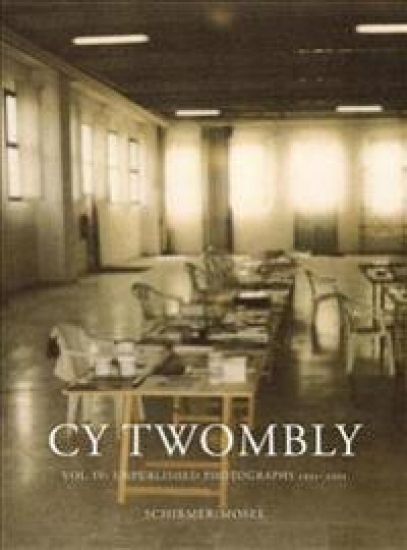
Cy Twombly

Cy Twombly

Giorgio Agamben

Schirmer/Mosel Verlag GmbH
2012
sidottu
"As his final creative surprise, Cy Twombly, one of the greatest 20th-century artists, has given to the wold a huge body of photographic works emphasizing his unique artistic vision. Contrary to his sharp and teeming drawings his photographs are not sharp at all. They are colorful, soft, and warm and generate a painterly impression. Their coloring is as unique as thier fine sense of composition. The photographs reveal the artist's vision embedded both in the world of objects and the nature that surrounds him. His own artistic creations and collection of art objects in his various homes are a favorite subject of his photographic studies. Twombly's photographic work offers a new dimension for understanding the artist's patintings, drawings, and sculptures. The new book features some 120 photographic prints from the Cy Twombly Estate in Gaeta, most of them previously unpublished."
The Church and the Kingdom

The Church and the Kingdom

Giorgio Agamben

Seagull Books London Ltd
2012
sidottu
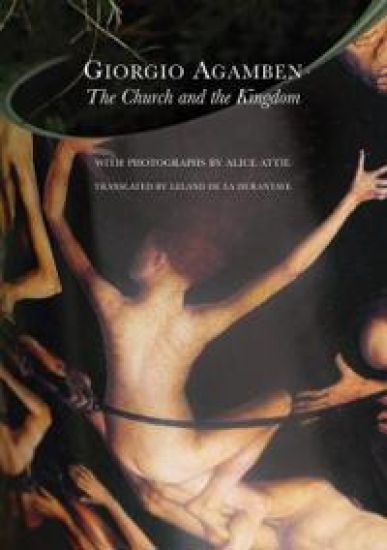
Italian philosopher Giorgio Agamben is the rare writer whose ideas and works have a broad appeal across many fields, and his devoted fans are not just philosophers, but readers of political and legal theory, sociology, and literary criticism as well. In March 2009, Agamben was invited to speak in Paris' Notre-Dame Cathedral in the presence of the bishop of Paris and a number of other high-ranking church officials. His resulting speech, a stunningly lucid and provocative look at the history and state of the church and its role in society, is presented here. "The Church and its Reign" is at once a pointed attack on the institutional structure of the Catholic Church and a theoretical excursus on the concepts of messianic time and economy. Presenting an exegesis of certain key passages in the New Testament, Agamben examines the philology and philosophy at the root of the church and of its earthly reign. With its examinations of the foundational texts of the church, which are also the foundational texts of our modern idea of economy, "The Church and its Reign" reveals significant connections and parallel ideologies which are imperative to understanding the current global situation. This edition of Agamben's text is accompanied by photographs by artist Alice Attie. Made from folded and twisted reproductions of paintings culled from Christian iconography, these works of art evoke the restless challenge that characterizes Agamben's four decades of philosophy and critique. This book will be welcomed by Agamben's many readers across the disciplines.
Homo sacer

Homo sacer

Giorgio Agamben

SUHRKAMP VERLAG
2011
pokkari
Die Mappen enthalten die Märchen der Bilderboxen als Lesetexte in knapper, einfacher Sprache, die auch jüngere Kinder lesen und verstehen können. Zu jedem Märchen gibt es spannende Aufgaben, die das Leseverständnis prüfen: Märchenquiz, Kreuzwort- und Silbenrätsel, Fragen zur Handlung beantworten, Reimwörter finden, Texte ordnen u. v. m. Dazu gibt es die Bilder der Boxen als Schwarzweissvorlagen - für die Gruppenarbeit oder zum Ausmalen, Ausschneiden oder Einkleben ins Heft. Ab 2. Schuljahr. Inhalt: Wer waren die Gebrüder Grimm und Hans Christian Andersen? - Hänsel und Gretel - Rumpelstilzchen - Schneeweisschen und Rosenrot - Rapunzel - Das hässliche junge Entlein - Die Sterntaler. 43 Kopiervorlagen A4.
The Kingdom and the Glory

The Kingdom and the Glory

Giorgio Agamben

Stanford University Press
2011
pokkari

Halvin toimitettuna 31,00 €

Why has power in the West assumed the form of an "economy," that is, of a government of men and things? If power is essentially government, why does it need glory, that is, the ceremonial and liturgical apparatus that has always accompanied it? In the early centuries of the Church, in order to reconcile monotheism with God's threefold nature, the doctrine of Trinity was introduced in the guise of an economy of divine life. It was as if the Trinity amounted to nothing more than a problem of managing and governing the heavenly house and the world. Agamben shows that, when combined with the idea of providence, this theological-economic paradigm unexpectedly lies at the origin of many of the most important categories of modern politics, from the democratic theory of the division of powers to the strategic doctrine of collateral damage, from the invisible hand of Smith's liberalism to ideas of order and security. But the greatest novelty to emerge from The Kingdom and the Glory is that modern power is not only government but also glory, and that the ceremonial, liturgical, and acclamatory aspects that we have regarded as vestiges of the past actually constitute the basis of Western power. Through a fascinating analysis of liturgical acclamations and ceremonial symbols of power—the throne, the crown, purple cloth, the Fasces, and more—Agamben develops an original genealogy that illuminates the startling function of consent and of the media in modern democracies. With this book, the work begun with Homo Sacer reaches a decisive point, profoundly challenging and renewing our vision of politics.