Kirjojen hintavertailu – 12 859 819 kirjaa ja 27 kauppaa
Kirjailija
Herman Melville
Kirjat ja teokset yhdessä paikassa: 1 182 kirjaa, julkaisuja vuosilta 1851–2026, suosituimpiin kuuluu Pierre. Vertaile teosten hintoja ja tarkista saatavuus suomalaisista kirjakaupoista.
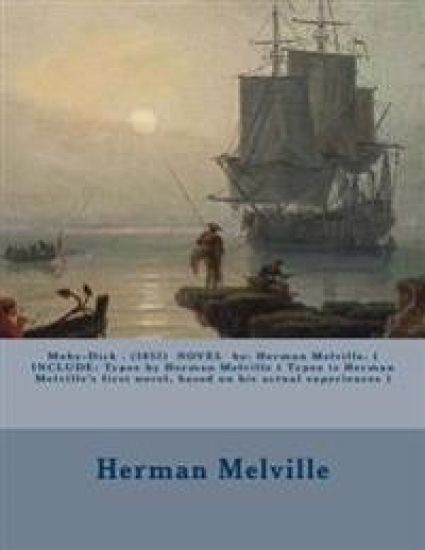
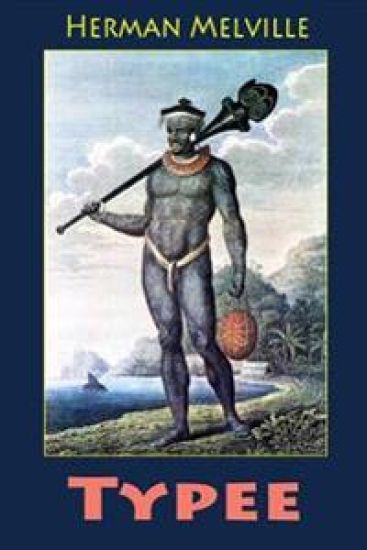
Moby-Dick; or, The Whale is a novel by American writer Herman Melville, published in 1851 during the period of the American Renaissance. Sailor Ishmael tells the story of the obsessive quest of Ahab, captain of the whaler the Pequod, for revenge on Moby Dick, the white whale that on the previous whaling voyage bit off Ahab's leg at the knee. The novel was a commercial failure and out of print at the time of the author's death in 1891, but during the 20th century, its reputation as a Great American Novel was established. William Faulkner confessed he wished he had written it himself, and D. H. Lawrence called it "one of the strangest and most wonderful books in the world", and "the greatest book of the sea ever written". "Call me Ishmael" is among world literature's most famous opening sentences. The product of a year and a half of writing, the book draws on Melville's experience at sea, on his reading in whaling literature, and on literary inspirations such as Shakespeare and the Bible. The white whale is modeled on the notoriously hard to catch actual albino whale Mocha Dick, and the ending is based on the sinking of the whaler Essex by a whale. The detailed and realistic descriptions of whale hunting and of extracting whale oil, as well as life aboard ship among a culturally diverse crew, are mixed with exploration of class and social status, good and evil, and the existence of God. In addition to narrative prose, Melville uses styles and literary devices ranging from songs, poetry, and catalogs to Shakespearean stage directions, soliloquies, and asides. Dedicated to Nathaniel Hawthorne, "in token of my admiration for his genius", the work was first published as The Whale in London in October 1851, and under its definitive title in New York in November. Hundreds of differences, mostly slight and some important, are seen between the two editions. The London publisher censored or changed sensitive passages and Melville made revisions, as well, including the last-minute change in the title for the New York edition. The whale, however, appears in both editions as "Moby Dick", with no hyphen. Because the British edition lacked the Epilogue, which accounts for Ishmael's survival, it seemed that the story was told by someone who was supposed to have perished. Many reviewers in British magazines recognized a violation of the rules of fiction and criticized the author for a serious flaw. Other reviewers, however, found the book too fascinating to dismiss it for these reasons. Some of the scornful British reviews were either reprinted or quoted in American periodicals, wrongfooting the American readers though the Epilogue was present in Moby-Dick. About 3,200 copies were sold during the author's life.... Herman Melville a] (August 1, 1819 - September 28, 1891) was an American novelist, short story writer, and poet of the American Renaissance period. His best known works include Typee (1846), a romantic account of his experiences in Polynesian life, and his whaling novel Moby-Dick (1851). His work was almost forgotten during his last thirty years. His writing draws on his experience at sea as a common sailor, exploration of literature and philosophy, and engagement in the contradictions of American society in a period of rapid change. He developed a complex, baroque style: the vocabulary is rich and original, a strong sense of rhythm infuses the elaborate sentences, the imagery is often mystical or ironic, and the abundance of allusion extends to Scripture, myth, philosophy, literature, and the visual arts. Born in New York City as the third child of a merchant in French dry goods, Melville's formal education ended abruptly after his father died in 1832, leaving the family in financial straits. Melville briefly became a schoolteacher before he took to sea in 1839 as a common sailor on a merchant ship. In 1840 he signed aboard the whaler Acushnet for his first whaling voyage, but jumped ship in the Marquesas Islands.
Redburn: His First Voyage is the fourth book by the American writer Herman Melville, first published in London in 1849. The book is semi-autobiographical and recounts the adventures of a refined youth among coarse and brutal sailors and the seedier areas of Liverpool. Melville wrote Redburn in less than ten weeks. While one scholar describes it as "arguably his funniest work," 2] scholar F. O. Matthiessen calls it "the most moving of its author's books before Moby-Dick". Plot Unable to find employment at home, young Wellingborough Redburn signs on the Highlander, a merchantman out of New York City bound for Liverpool, England. Representing himself as the "son of a gentleman" and expecting to be treated as such, he discovers that he is just a green hand, a "boy", the lowest rank on the ship, assigned all the duties no other sailor wants, like cleaning out the "pig-pen", a longboat that serves as a shipboard sty. The first mate promptly nicknames him "Buttons" for the shiny ones on his impractical jacket. Redburn quickly grasps the workings of social relations aboard ship. As a common seaman he can have no contact with those "behind the mast" where the officers command the ship. Before the mast, where the common seaman work and live, a bully named Jackson, the best seaman aboard, rules through fear with an iron fist. Uneducated yet cunning, with broken nose and squinting eye, he is described as "a Cain afloat, branded on his yellow brow with some inscrutable curse and going about corrupting and searing every heart that beat near him." Redburn soon experiences all the trials of a greenhorn: seasickness, scrubbing decks, climbing masts in the dead of night to unfurl sails, cramped quarters, and bad food....... Herman Melville a] (August 1, 1819 - September 28, 1891) was an American novelist, short story writer, and poet of the American Renaissance period. His best known works include Typee (1846), a romantic account of his experiences in Polynesian life, and his whaling novel Moby-Dick (1851). His work was almost forgotten during his last thirty years. His writing draws on his experience at sea as a common sailor, exploration of literature and philosophy, and engagement in the contradictions of American society in a period of rapid change. He developed a complex, baroque style: the vocabulary is rich and original, a strong sense of rhythm infuses the elaborate sentences, the imagery is often mystical or ironic, and the abundance of allusion extends to Scripture, myth, philosophy, literature, and the visual arts.
The narrator, an elderly lawyer who has a very comfortable business helping wealthy men deal with mortgages, title deeds, and bonds, relates the story of the strangest man he has ever known. The narrator already employs two scriveners, Nippers and Turkey. Nippers suffers from chronic indigestion, and Turkey is a drunk, but the office survives because in the mornings Turkey is sober even though Nippers is irritable, and in the afternoon Nippers has calmed down even though Turkey is drunk.
Desiring to go on a whaling expedition to make a bit of money, Ishmael ignorantly signs up for the crew captained by Ahab. Once out to sea, the mysterious captain emerges proclaiming his desire to seek revenge on the white sperm whale that took his leg. Ishmael protests but is put in place by the god-like Ahab. The boat veers for the Pacific Ocean to catch this whale and Ishmael must put his hunting skills to the test.
Herman Melville's final masterpiece, found unpublished on his desk at his death. Billy Budd, Sailor would emerge, after its publication in 1924, as one of Melville's best-loved books--and one of his most open, with its discussion of homosexualty. In it, Melville returns to the sea to tell the story of Billy, a cheerful, hard working, and handsome young sailor, conscripted to work against his will on another ship, where he soon finds himself persecuted by Claggart, the paranoid master-at-arms. As things escalate beyond the naive Billy's control, tragedy looms on the horizon like Melville's great white whale, and the story become Melville's final, sublime plunge into the classic tussle between civilization and chaos, between oppression and freedom, as well as the book in which he discusses homosexuality most openly. One of the major works of American literature.
The Piazza Tales is a collection of six short stories by American writer Herman Melville, published by Dix & Edwards in the United States in May 1856 and in Britain in June. Except for the newly written title story, "The Piazza," all of the stories had appeared in Putnam's Monthly in 1853-1855. The collection includes what has long been regarded as the author's three most important achievements in the genre of short fiction, "Bartleby, the Scrivener", "Benito Cereno", and "The Encantadas", his sketches of the Gal pagos Islands. Melville had originally intended to entitle the volume Benito Cereno and Other Sketches, but settled on the definitive title after he had written the introductory story. The book received largely favorable reviews, with reviewers especially praising "The Encantadas".but did not sell well enough to get Melville out of his financial straits, probably because short fiction for magazines had little appeal to bookbuyers. After Melville was rediscovered until the end of the twentieth century, the short works attracting the most critical attention were "Bartleby," "Benito Cereno" and "The Encantadas," with "The Piazza" a little behind those. After reviewers denigrated Moby-Dick in 1851, Harper brothers changed the terms for its successor, Pierre: or, The Ambiguities. Melville's London publisher Richard Bentley would not publish Pierre without alterations after he saw the American proofs in 1852, which Melville could not accept. Pierre found no British publisher and hence Melville received no advance payment in the summer of 1852. The reviews for Pierre were harsh, and this damaged Melville's reputation the more because the reviews followed upon the mixed reception of the whaling novel. In the spring of 1853 Melville could not get his next work printed, most likely, Sealts thinks, because Harper "simply refused to bring out another work by Herman Melville in the following year to risk the renewed wrath of already hostile reviewers". Under the circumstances, publishing anonymously seemed an attractive strategy, and the firm did ask him to write for Harper's New Monthly Magazine. His contributions to that periodical were not collected in a book during his lifetime.
Omoo: A Narrative of Adventures in the South Seas is the second book by American writer Herman Melville, first published in London in 1847, and a sequel to his first South Sea narrative Typee, also based on the author's experiences in the South Pacific. After leaving the island of Nuku Hiva, the main character ships aboard a whaling vessel that makes its way to Tahiti, after which there is a mutiny and the majority of the crew are imprisoned on Tahiti. In the Preface to Omoo, Melville claimed to have written "from simple recollection" strengthened by his retelling the story many times before family and friends. Yet a scholar working in the late 1930s discovered that Melville had not simply relied on his memory and went on to reveal a wealth of sources. Later, Melville scholar Harrison Hayford made a detailed study of these sources and, in the introduction to a 1969 edition of Omoo, summed up the author's practice: "He had altered facts and dates, elaborated events, assimilated foreign materials, invented episodes, and dramatized the printed experiences of others as his own. He had not plagiarized, merely, for he had always rewritten and nearly always improved the passages he appropriated." Hayford showed that this was a repetition of a process previously used in Typee, "first writing out the narrative based on his recollections and invention, then using source books to pad out the chapters he had already written and to supply the stuff of new chapters that he inserted at various points in the manuscript."