Kirjojen hintavertailu – 12 878 269 kirjaa ja 26 kauppaa

Kirjailija

Jeremy Black

Kirjat ja teokset yhdessä paikassa: 255 kirjaa, julkaisuja vuosilta 1992–2027, suosituimpiin kuuluu Geopolitikens återkomst : striden om framtidens historia. Vertaile teosten hintoja ja tarkista saatavuus suomalaisista kirjakaupoista.

255 kirjaa

Kirjojen julkaisuvuodet: 1992–2027.

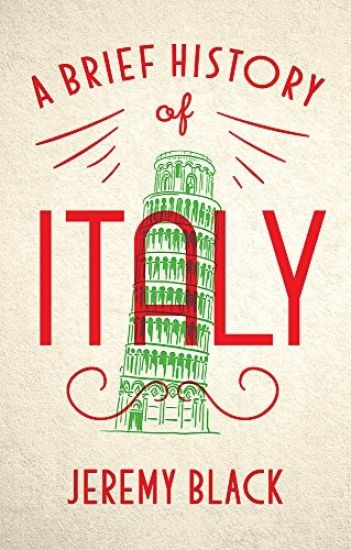
A Brief History of Italy

A Brief History of Italy

Jeremy Black

Robinson
2018
pokkari
'Jeremy Black skilfully sketches social, cultural and political trends' - Christina Hardyment, Times audiobook of the week'A remarkable mixture of cold history, wide culture and personal experience'Ciro Paoletti, Secretary General of the Italian Commission of Military HistoryDespite the Roman Empire's famous 500-year reign over Europe, parts of Africa and the Middle East, Italy does not have the same long national history as states such as France or England. Divided for much of its history, Italy's regions have been, at various times, parts of bigger, often antagonistic empires, notably those of Spain and Austria. In addition, its challenging and varied terrain made consolidation of political control all the more difficult. This concise history covers, in very readable fashion, the formative events in Italy's past from the rise of Rome, through a unified country in thrall to fascism in the first half of the twentieth century right up to today. The birthplace of the Renaissance and the place where the Baroque was born, Italy has always been a hotbed of culture. Within modern Italy country there is fierce regional pride in the cultures and identities that mark out Tuscany, Rome, Sicily and Venice to name just a few of Italy's many famous regions. Jeremy Black draws on the diaries, memoirs and letters of historic travellers to Italy to gain insight into the passions of its people, first chronologically then regionally. In telling Italy's story, Black examines what it is that has given Italians such cultural clout - from food and drink, music and fashion, to art and architecture - and explores the causes and effects of political events, and the divisions that still exist today.

English Nationalism

English Nationalism

Jeremy Black

C Hurst Co Publishers Ltd
2018
sidottu
Englishness is an idea, a consciousness and a proto-nationalism. There is no English state within the United Kingdom, no English passport, Parliament or currency, nor any immediate prospect of any. That does not mean that England lacks an identity, although English nationalism, or at least a distinctive nationalism, has been partly forced upon the English by the development in the British Isles of strident nationalisms that have contested Britishness, and with much success. So what is happening to the United Kingdom, and, within that, to England? Jeremy Black looks to the past in order to understand the historical identity of England, and what it means for English nationalism today, in a post-Brexit world. The extent to which English nationalism has a 'deep history' is a matter of controversy, although he seeks to demonstrate that it exists, from 'the Old English State' onwards, predating the Norman invasion He also questions whether the standard modern critique of politically partisan, or un-British, Englishness as 'extreme' is merited? Indeed, is hostility to 'England,' whatever that is supposed to mean, the principal driver of resurgent English nationalism? The Brexit referendum of 2016 appeared to have cancelled out Scottish and other nationalisms as an issue, but, in practice, it made Englishness a topic of particular interest and urgency, as set out in this short history of its origins and evolution.
Geographies of an Imperial Power

Geographies of an Imperial Power

Jeremy Black

Indiana University Press
2018
pokkari
From explorers tracing rivers to navigators hunting for longitude, spatial awareness and the need for empirical understanding were linked to British strategy in the 1700s. This strategy, in turn, aided in the assertion of British power and authority on a global scale. In this sweeping consideration of Britain in the 18th century, Jeremy Black explores the interconnected roles of power and geography in the creation of a global empire. Geography was at the heart of Britain's expansion into India, its response to uprisings in Scotland and America, and its revolutionary development of railways. Geographical dominance was reinforced as newspapers stoked the fires of xenophobia and defined the limits of cosmopolitan Europe as compared to the "barbarism" beyond. Geography provided a system of analysis and classification which gave Britain political, cultural, and scientific sovereignty. Black considers geographical knowledge not just as a tool for creating a shared cultural identity but also as a key mechanism in the formation of one of the most powerful and far-reaching empires the world has ever known.
Geographies of an Imperial Power

Geographies of an Imperial Power

Jeremy Black

Indiana University Press
2018
sidottu
From explorers tracing rivers to navigators hunting for longitude, spatial awareness and the need for empirical understanding were linked to British strategy in the 1700s. This strategy, in turn, aided in the assertion of British power and authority on a global scale. In this sweeping consideration of Britain in the 18th century, Jeremy Black explores the interconnected roles of power and geography in the creation of a global empire. Geography was at the heart of Britain's expansion into India, its response to uprisings in Scotland and America, and its revolutionary development of railways. Geographical dominance was reinforced as newspapers stoked the fires of xenophobia and defined the limits of cosmopolitan Europe as compared to the "barbarism" beyond. Geography provided a system of analysis and classification which gave Britain political, cultural, and scientific sovereignty. Black considers geographical knowledge not just as a tool for creating a shared cultural identity but also as a key mechanism in the formation of one of the most powerful and far-reaching empires the world has ever known.
Mapping Naval Warfare

Mapping Naval Warfare

Jeremy Black

Osprey Publishing
2017
sidottu
A visually stunning account of how naval conflict was recorded and planned, using contemporary mapping. Naval operations and warfare were, and remain, a key element for mapping. Maps were vital for commanders in drawing up plans of attack, and their detail and usefulness have increased over the centuries as the science of mapping has developed. This beautiful book examines stunning original maps from a series of key conflicts from the Spanish Armada, the American Wars of Independence, and the Napoleonic wars to twentieth century conflicts from the First World War to Vietnam, and explains how they were represented through mapping and how the maps produced helped naval commanders to plan their strategy.
Combined Operations

Combined Operations

Jeremy Black

Rowman Littlefield
2017
nidottu

Halvin toimitettuna 59,40 €

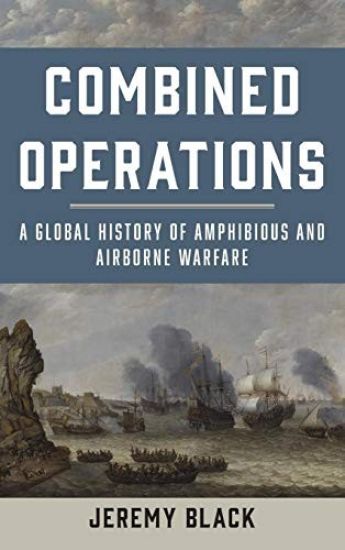
This compelling book provides the first global history of the evolution of combined operations since Antiquity. Beginning with amphibious warfare in the ancient world of the Romans, Vikings, and Mongols, Jeremy Black advances through the Gunpowder Revolution, the rise of maritime empires and the formation of nation-states, the early Industrial Revolution and the adaptation of modern technology to warfare, the twentieth-century world wars, the Cold War, and concluding with the modern age of irregular and asymmetric conflict. Black’s informed and analytical narrative emphasizes conflicts around the world, focusing not only on leading powers but also regional combatants. His case studies include amphibious operations in the Mongol invasions of Japan, the War for American Independence, and the Gallipoli campaign of World War I. He also explores the development and effectiveness of airborne operations as a way to project military power inland. Offering a balanced assessment of strategic, operational, and technical developments over time, Black considers both the potential and limitations of amphibious and airborne warfare—past, present, and future.
Combined Operations

Combined Operations

Jeremy Black

Rowman Littlefield
2017
sidottu
This compelling book provides the first global history of the evolution of combined operations since Antiquity. Beginning with amphibious warfare in the ancient world of the Romans, Vikings, and Mongols, Jeremy Black advances through the Gunpowder Revolution, the rise of maritime empires and the formation of nation-states, the early Industrial Revolution and the adaptation of modern technology to warfare, the twentieth-century world wars, the Cold War, and concluding with the modern age of irregular and asymmetric conflict. Black’s informed and analytical narrative emphasizes conflicts around the world, focusing not only on leading powers but also regional combatants. His case studies include amphibious operations in the Mongol invasions of Japan, the War for American Independence, and the Gallipoli campaign of World War I. He also explores the development and effectiveness of airborne operations as a way to project military power inland. Offering a balanced assessment of strategic, operational, and technical developments over time, Black considers both the potential and limitations of amphibious and airborne warfare—past, present, and future.
A History of Britain

A History of Britain

Jeremy Black

Indiana University Press
2017
sidottu
In 2016, Britain stunned itself and the world by voting to pull out of the European Union, leaving financial markets reeling and global politicians and citizens in shock. But was Brexit really a surprise, or are there clues in Britain's history that pointed to this moment? In A History of Britain: 1945 to the Brexit, award-winning historian Jeremy Black reexamines modern British history, considering the social changes, economic strains, and cultural and political upheavals that brought Britain to Brexit. This sweeping and engaging book traces Britain's path through the destruction left behind by World War II, Thatcherism, the threats of the IRA, the Scottish referendum, and on to the impact of waves of immigration from the European Union. Black overturns many conventional interpretations of significant historical events, provides context for current developments, and encourages the reader to question why we think the way we do about Britain's past.
A History of Britain

A History of Britain

Jeremy Black

Indiana University Press
2017
pokkari
In 2016, Britain stunned itself and the world by voting to pull out of the European Union, leaving financial markets reeling and global politicians and citizens in shock. But was Brexit really a surprise, or are there clues in Britain's history that pointed to this moment? In A History of Britain: 1945 to the Brexit, award-winning historian Jeremy Black reexamines modern British history, considering the social changes, economic strains, and cultural and political upheavals that brought Britain to Brexit. This sweeping and engaging book traces Britain's path through the destruction left behind by World War II, Thatcherism, the threats of the IRA, the Scottish referendum, and on to the impact of waves of immigration from the European Union. Black overturns many conventional interpretations of significant historical events, provides context for current developments, and encourages the reader to question why we think the way we do about Britain's past.
The Little Book of Big History: The Story of the Universe, Human Civilization, and Everything in Between
A lively history of the universe and human civilization, this authoritative volume tells the story of the cosmos, the stars, and human development on earth. The Little Book of Big History is an endeavor to encapsulate the entire story of the cosmos, from the Big Bang to the current day, into an engaging and comprehensive narrative. Combining methods from history, astronomy, physics, and biology to draw together the big story arcs of how the universe was created, why planets formed, and how life developed, the result is a unique perspective of mankind's place in the universe. Excited by the alternative "framework for all knowledge" that is offered by this approach, Bill Gates is funding the Big History Project, which aims to bring this concept to a wider audience around the world. The Little Book of Big History breaks down the main themes of Big History into highly informative and accessible parts for all readers to enjoy. By giving a truly complete timeline of world events, this book shines a whole different light on science as we learned it and makes us think of our history--and our future--in a very different way.
The British Empire

The British Empire

Jeremy Black

Routledge
2017
nidottu
What was the course and consequence of the British Empire? The rights and wrongs, strengths and weaknesses of empire are a major topic in global history, and deservedly so. Focusing on the most prominent and wide-ranging empire in world history, the British empire, Jeremy Black provides not only a history of that empire, but also a perspective from which to consider the issues of its strengths and weaknesses, and rights and wrongs. In short, this is history both of the past, and of the present-day discussion of the past, that recognises that discussion over historical empires is in part a reflection of the consideration of contemporary states. In this book Professor Black weaves together an overview of the British Empire across the centuries, with a considered commentary on both the public historiography of empire and the politically-charged character of much discussion of it. There is a coverage here of social as well as political and economic dimensions of empire, and both the British perspective and that of the colonies is considered. The chronological dimension is set by the need to consider not only imperial expansion by the British state, but also the history of Britain within an imperial context. As such, this is a story of empires within the British Isles, Europe, and, later, world-wide. The book addresses global decline, decolonisation, and the complex nature of post-colonialism and different imperial activity in modern and contemporary history. Taking a revisionist approach, there is no automatic assumption that imperialism, empire and colonialism were ’bad’ things. Instead, there is a dispassionate and evidence-based evaluation of the British empire as a form of government, an economic system, and a method of engagement with the world, one with both faults and benefits for the metropole and the colony.
Plotting Power

Plotting Power

Jeremy Black

Indiana University Press
2017
sidottu
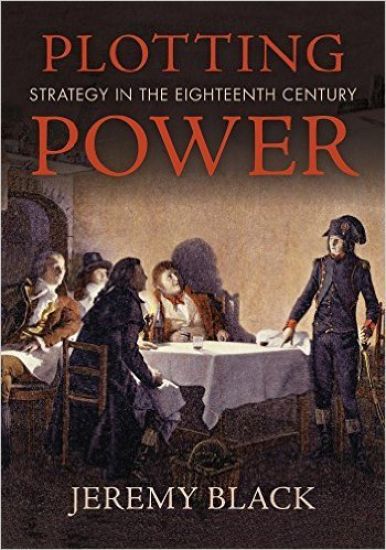
Military strategy takes place as much on broad national and international stages as on battlefields. In a brilliant reimagining of the impetus and scope of eighteenth-century warfare, historian Jeremy Black takes us far and wide, from the battlefields and global maneuvers in North America and Europe to the military machinations and plotting of such Asian powers as China, Japan, Burma, Vietnam, and Siam. Europeans coined the term "strategy" only two centuries ago, but strategy as a concept has been practiced globally throughout history. Taking issue with traditional military historians, Black argues persuasively that strategy was as much political as battlefield tactics and that plotting power did not always involve outright warfare but also global considerations of alliance building, trade agreements, and intimidation.
Naval Warfare

Naval Warfare

Jeremy Black

Rowman Littlefield
2017
sidottu
The modern age of naval warfare began with the combination of steam power, iron warships, and modern artillery, which launched an intense period of international competition. Tracing naval warfare from the 1860s into the future, noted historian Jeremy Black provides a dynamic account of strategy and warfare worldwide. He focuses on the interplay of technological development, geopolitics, and resource issues to assess not only the role of leading powers but all those involved in naval conflict. Emphasizing conflict and changes since 1945 and, notably, since the end of the Cold War, the author considers possible future developments of navies, their challengers, and the geopolitics of maritime power.
Naval Warfare

Naval Warfare

Jeremy Black

Rowman Littlefield
2017
nidottu
The modern age of naval warfare began with the combination of steam power, iron warships, and modern artillery, which launched an intense period of international competition. Tracing naval warfare from the 1860s into the future, noted historian Jeremy Black provides a dynamic account of strategy and warfare worldwide. He focuses on the interplay of technological development, geopolitics, and resource issues to assess not only the role of leading powers but all those involved in naval conflict. Emphasizing conflict and changes since 1945 and, notably, since the end of the Cold War, the author considers possible future developments of navies, their challengers, and the geopolitics of maritime power.
The World in the Twentieth Century
From this major author comes a totally unique history of the twentieth century. Eschewing the traditional model for histories of this kind – blow-by-blow political narratives typically overloaded with detail - Jeremy Black offers us instead a brilliant thematic account of the last 100 years with the environment and the continuing strength of religious belief at its centre. Looking back to the 1910s and 1920s, Black begins with "the greatest issue of all" – the natural environment and its destruction, and moves to show how our world been transformed by urbanisation and development. Amazing developments took place across the century: men walked on the moon, the internet revolutionised communications; advances in health and medicine; developments in manufacturing and technology; economic globalization – all have changed the way different parts of the world related to each other. How have these revolutionary changes impacted on religion and politics? In the final sections of the book, Black looks at the persistence and growing extremism in religious belief, how change creates instability and wars, and how power blocs emerged and collapsed in response to all these developments. This is twentieth century world history on a truly global scale. The Twentieth Century World forces us to rethink the way we view the past, and offers us a new way to understand the present.
The Tory World

The Tory World

Jeremy Black

Routledge
2016
nidottu
Political decisions are never taken in a vacuum but are shaped both by current events and historical context. In other words, long-term developments and patterns in which the accumulated memory of what came earlier, can greatly (and sometimes subconsciously) influence subsequent policy choices. Working forward from the later seventeenth century, this book explores the ’deep history’ of the changing and competing understandings within the Tory party of the role Britain has aspired to play on a world stage. Conservatism has long been one of the major British political tendencies, committed to the defence of established institutions, with a strong sense of the ’national interest’, and embracing both ’liberal’ and ’authoritarian’ views of empire. The Tory party has, moreover, at several times been deeply divided, if not convulsed, by different perspectives on Britain’s international orientation and different positions on foreign and imperial policy. Underlying Tory beliefs upon which views of Britain’s global role were built were often not stated but assumed. As a result they tend to be obscured from historical view. This book seeks to recover and reconsider those beliefs, and to understand how the Tory party has sought to navigate its way through the difficult pathways of foreign and imperial politics, and why this determination outlasted Britain’s rapid decolonisation and was apparently remarkably little affected by it. With a supporting cast from Pitt to Disraeli, Churchill to Thatcher, the book provides a fascinating insight into the influence of history over politics. Moreover it argues that there has been an inherent politicisation of the concept of national interests, such that strategic culture and foreign policy cannot be understood other than in terms of a historically distorted political debate.
Studying History

Studying History

Jeremy Black; Donald MacRaild

Red Globe Press
2016
nidottu
This best-selling guide will help you get to grips with the larger themes and issues behind historical study, while also showing you how to formulate your own ideas in a clear, analytical style. Fully updated throughout, further advice on using web-based sources and avoiding plagiarism will equip you with the tools you need to succeed on your course.
A History of the British Isles

A History of the British Isles

Jeremy Black

Red Globe Press
2016
sidottu
A core introductory textbook that provides students with a concise overview of the full sweep of English, Irish, Scottish and Welsh history, from pre-Roman times right through to the present day. Jeremy Black offers a balanced and absorbing account of a group of islands, their peoples, their extraordinary shared past and their remarkable impact on the rest of the world. This is an ideal set text for dedicated modules on British history, or a supplementary text for broader modules on European history, which may be offered at all levels of an undergraduate history or European studies degree. In addition it is a crucial resource for students who may be studying the history of Britain for the first time as part of a taught postgraduate degree in British or European history. New to this Edition:- Revised and updated throughout in light of the latest research- Provides coverage of recent events- Pays greater attention to social developments
A History of the British Isles

A History of the British Isles

Jeremy Black

Red Globe Press
2016
nidottu
A core introductory textbook that provides students with a concise overview of the full sweep of English, Irish, Scottish and Welsh history, from pre-Roman times right through to the present day. Jeremy Black offers a balanced and absorbing account of a group of islands, their peoples, their extraordinary shared past and their remarkable impact on the rest of the world. This is an ideal set text for dedicated modules on British history, or a supplementary text for broader modules on European history, which may be offered at all levels of an undergraduate history or European studies degree. In addition it is a crucial resource for students who may be studying the history of Britain for the first time as part of a taught postgraduate degree in British or European history. New to this Edition:- Revised and updated throughout in light of the latest research- Provides coverage of recent events- Pays greater attention to social developments
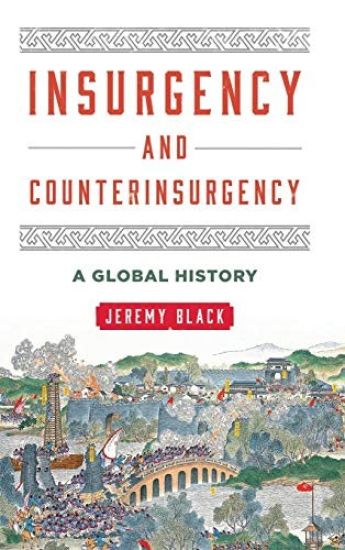
Insurgency and Counterinsurgency

Insurgency and Counterinsurgency

Jeremy Black

Rowman Littlefield
2016
sidottu
This timely book offers a world history of insurgencies and of counterinsurgency warfare. Jeremy Black moves beyond the conventional Western-centric narrative, arguing that it is crucial to ground contemporary experiences in Afghanistan and Iraq in a global framework. Unlike other studies that begin with the American and French revolutions, this book reaches back to antiquity to trace the pre-modern origins of war within states. Interweaving thematic and chronological narratives, Black probes the enduring linkages between beliefs, events, and people on the one hand and changes over time on the other hand. He shows the extent to which power politics, technologies, and ideologies have evolved, creating new parameters and paradigms that have framed both governmental and public views. Tracing insurgencies ranging from China to Africa to Latin America, Black highlights the widely differing military and political dimensions of each conflict. He weighs how, and why, lessons were “learned” or, rather, asserted, in both insurgency and counterinsurgency warfare. At every stage, he considers lessons learned by contemporaries, the ways in which norms developed within militaries and societies, and their impact on doctrine and policy. His sweeping study of insurrectionary warfare and its counterinsurgency counterpart will be essential reading for all students of military history.