Kirjojen hintavertailu – 12 878 549 kirjaa ja 26 kauppaa

Kirjailija

Jeremy Black

Kirjat ja teokset yhdessä paikassa: 255 kirjaa, julkaisuja vuosilta 1992–2027, suosituimpiin kuuluu Geopolitikens återkomst : striden om framtidens historia. Vertaile teosten hintoja ja tarkista saatavuus suomalaisista kirjakaupoista.

255 kirjaa

Kirjojen julkaisuvuodet: 1992–2027.

Insurgency and Counterinsurgency

Insurgency and Counterinsurgency

Jeremy Black

Rowman Littlefield
2016
nidottu
This timely book offers a world history of insurgencies and of counterinsurgency warfare. Jeremy Black moves beyond the conventional Western-centric narrative, arguing that it is crucial to ground contemporary experiences in Afghanistan and Iraq in a global framework. Unlike other studies that begin with the American and French revolutions, this book reaches back to antiquity to trace the pre-modern origins of war within states. Interweaving thematic and chronological narratives, Black probes the enduring linkages between beliefs, events, and people on the one hand and changes over time on the other hand. He shows the extent to which power politics, technologies, and ideologies have evolved, creating new parameters and paradigms that have framed both governmental and public views. Tracing insurgencies ranging from China to Africa to Latin America, Black highlights the widely differing military and political dimensions of each conflict. He weighs how, and why, lessons were “learned” or, rather, asserted, in both insurgency and counterinsurgency warfare. At every stage, he considers lessons learned by contemporaries, the ways in which norms developed within militaries and societies, and their impact on doctrine and policy. His sweeping study of insurrectionary warfare and its counterinsurgency counterpart will be essential reading for all students of military history.

Britain As A Military Power, 1688-1815

Britain As A Military Power, 1688-1815

Professor Jeremy Black; Jeremy Black

Routledge
2016
nidottu
In 1688, Britain was successfully invaded, its army and navy unable to prevent the overthrow of the government. 1815, Britain was the strongest power in the world with the most succesful navy and the largest empire. Britain had not only played a prominent role in the defeat of Napoleonic France, but had also established itself as a significant power in South Asia and was unsurpassed in her global reach. Her military strength was related to, and based on, one of the best systems of public finance in the world and held a strong trade position. This illustrated text assesses the military aspects of this shift, concentrating on the multi-faceted nature of the British military effort.; Topics covered include: the rise of Britain; an analysis of military infrastructure; warfare in the British Isles; conventional warfare in Europe; trans- oceanic warfare with European powers; the challenge of America; and the challenge of Revolutionary and Napoleonic France.
British Politics and Foreign Policy, 1744-57
The years between 1744 and 1757 were a testing time for the British government as political unrest at home exploded into armed rebellion, whilst on the continent French armies were repeatedly victorious. Providing an analytical narrative, supported by thematic chapters, this book examines the relationship between Britain’s politics and foreign policy in a period not hitherto treated as a unit. Building upon methods employed in the preceding two books (’Politics and Foreign Policy in the Age of George I, 1714-1727’ and ’Politics and Foreign Policy, 1727-44’), this volume charts the significant political changes of 1744-57. It shows how ministerial change and political fortunes were closely linked to foreign policy, with foreign policy affecting, and being affected by, political developments. In particular, it asks important questions about the politics and foreign policy of these years and thus reconsiders the context of imperial growth, economic development and political stability. Far from being simply a study of individual episodes, the book outlines the structural aspects of the relationship between foreign policy and politics, examining issues of political stability, motivation and effectiveness. In particular, the role of monarch, Court and ministers are considered alongside those of Parliament, parliamentary politics, and the public sphere of discussion, notably, but not only, the press. The book therefore offers a guided narrative that both uses and builds on the analysis offered by contemporary commentators, and provides an informed assessment of the significance of the ideas, terms and language employed in eighteenth-century Britain to discuss foreign policy and politics.
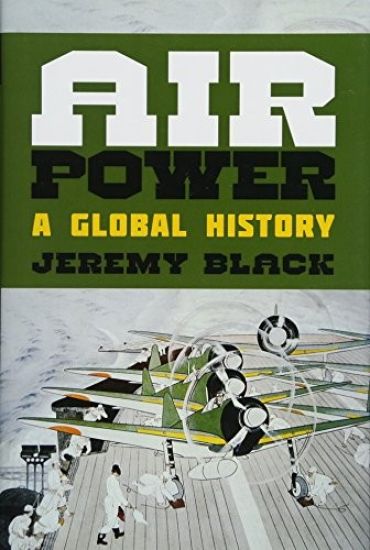
Air Power

Air Power

Jeremy Black

Rowman Littlefield
2016
sidottu
This essential book offers a compelling and original interpretation of the rise of military aviation. Jeremy Black, one of the world’s finest scholars of military history, provides a lucid analysis of the use of airpower over land and sea both during the two world wars and the more limited wars of the twentieth and twenty-first centuries. Considering both the theory and praxis of air power, the author begins with hot air balloons, and then highlights the use of zeppelins, piston engine fighters, jet bombers, and finally the so-called Military Revolution of today. While discussing the growth of American and European military aviation, Black, a pioneer in emphasizing the importance of non-Western military history for understanding global developments, also traces the emergence of air power in Latin America, Africa, and Asia. Black breaks new ground by exploring not only to conventional war—both inside and outside Europe—but also to the use of air power in unconventional wars, especially critical given to the spread of insurgencies around the globe. He vividly describes traditional debates over the pros and cons of strategic bombing and aircraft carriers versus battleships and gives equal attention to managerial, doctrinal, and technological innovations. The author shows how better management resulted in increasing lethality of close air support of the RAF during the latter part of World War II and at the same times highlights the limits of air power with case studies of the two Gulf Wars. The author goes beyond our traditional understanding of air power associated with bombing and fighter engagements, adding the important elements associated with naval power, including ground/logistics support, anti-aircraft measures, and political constraints. As he explains, air power has become Western politicians’ weapon of choice, spreading maximum destruction with the minimum of commitment. His current and comprehensive study considers how we got to this point, and what the future has in store. Anyone seeking a balanced, accurate understanding of air power in history will find this book an essential introduction.
War in Europe

War in Europe

Jeremy Black

Bloomsbury Academic
2016
nidottu
War in Europe is an overview of war and military development in Europe since 1450, bringing together the work of a renowned historian of modern European and military history in a single authoritative volume. Beginning with the impact of the Reformation and continuing up to the present day, Jeremy Black discusses the following key themes: long-term military developments, notably in the way war is waged and battle conducted the relationship between war and transformations in the European international system the linkage between military requirements and state developments the consequences of these requirements, and of the experience of war, for the nature of society Adopting a clear chronological approach, Black weaves a rich and detailed narrative of the development of war in relation to transformations in the European international system, demonstrating the links between its causes and consequences in the military, political and social spheres. Assimilating decades of important research as well as bringing new perspectives to the topic, War in Europe is a key text for students taking courses in European history, international relations and war studies.
War in Europe

War in Europe

Jeremy Black

Bloomsbury Academic
2016
sidottu
War in Europe is an overview of war and military development in Europe since 1450, bringing together the work of a renowned historian of modern European and military history in a single authoritative volume. Beginning with the impact of the Reformation and continuing up to the present day, Jeremy Black discusses the following key themes: long-term military developments, notably in the way war is waged and battle conducted the relationship between war and transformations in the European international system the linkage between military requirements and state developments the consequences of these requirements, and of the experience of war, for the nature of societyAdopting a clear chronological approach, Black weaves a rich and detailed narrative of the development of war in relation to transformations in the European international system, demonstrating the links between its causes and consequences in the military, political and social spheres. Assimilating decades of important research as well as bringing new perspectives to the topic, War in Europe is a key text for students taking courses in European history, international relations and war studies.
Geopolitics and the Quest for Dominance

Geopolitics and the Quest for Dominance

Jeremy Black

Indiana University Press
2015
sidottu
History and geography delineate the operation of power, not only its range but also the capacity to plan and the ability to implement. Approaching state strategy and policy from the spatial angle, Jeremy Black argues that just as the perception of power is central to issues of power, so place, and its constraints and relationships, is partly a matter of perception, not merely map coordinates. Geopolitics, he maintains, is as much about ideas and perception as it is about the actual spatial dimensions of power. Black's study ranges widely, examining geography and the spatial nature of state power from the 15th century to the present day. He considers the rise of British power, geopolitics and the age of Imperialism, the Nazis and World War II, and the Cold War, and he looks at the key theorists of the latter 20th century, including Henry Kissinger, Francis Fukuyama and Samuel P. Huntington, Philip Bobbitt, Niall Ferguson, and others.
Geopolitics and the Quest for Dominance

Geopolitics and the Quest for Dominance

Jeremy Black

Indiana University Press
2015
pokkari
History and geography delineate the operation of power, not only its range but also the capacity to plan and the ability to implement. Approaching state strategy and policy from the spatial angle, Jeremy Black argues that just as the perception of power is central to issues of power, so place, and its constraints and relationships, is partly a matter of perception, not merely map coordinates. Geopolitics, he maintains, is as much about ideas and perception as it is about the actual spatial dimensions of power. Black's study ranges widely, examining geography and the spatial nature of state power from the 15th century to the present day. He considers the rise of British power, geopolitics and the age of Imperialism, the Nazis and World War II, and the Cold War, and he looks at the key theorists of the latter 20th century, including Henry Kissinger, Francis Fukuyama and Samuel P. Huntington, Philip Bobbitt, Niall Ferguson, and others.
The Cold War

The Cold War

Jeremy Black

Bloomsbury Academic
2015
sidottu
The term the Cold War has had many meanings and interpretations since it was originally coined and has been used to analyse everything from comics to pro-natalist policies, and science fiction to gender politics. This range has great value, but also poses problems, notably by diluting the focus on war of a certain type, and by exacerbating a lack of precision in definition and analysis. The Cold War: A Military History is the first survey of the period to focus on the diplomatic and military confrontation and conflict. Jeremy Black begins his overview in 1917 and covers the ‘long Cold War’, from the 7th November Revolution to the ongoing repercussions and reverberations of the conflict today. The book is forward-looking as well as retrospective, not least in encouraging us to reflect on how much the character of the present world owes to the Cold War. The result is a detailed survey that will be invaluable to students and scholars of military and international history.
The Cold War

The Cold War

Jeremy Black

Bloomsbury Academic
2015
nidottu
The term the Cold War has had many meanings and interpretations since it was originally coined and has been used to analyse everything from comics to pro-natalist policies, and science fiction to gender politics. This range has great value, but also poses problems, notably by diluting the focus on war of a certain type, and by exacerbating a lack of precision in definition and analysis. The Cold War: A Military History is the first survey of the period to focus on the diplomatic and military confrontation and conflict. Jeremy Black begins his overview in 1917 and covers the ‘long Cold War’, from the 7th November Revolution to the ongoing repercussions and reverberations of the conflict today. The book is forward-looking as well as retrospective, not least in encouraging us to reflect on how much the character of the present world owes to the Cold War. The result is a detailed survey that will be invaluable to students and scholars of military and international history.
The British Empire

The British Empire

Jeremy Black

Routledge
2015
sidottu
What was the course and consequence of the British Empire? The rights and wrongs, strengths and weaknesses of empire are a major topic in global history, and deservedly so. Focusing on the most prominent and wide-ranging empire in world history, the British empire, Jeremy Black provides not only a history of that empire, but also a perspective from which to consider the issues of its strengths and weaknesses, and rights and wrongs. In short, this is history both of the past, and of the present-day discussion of the past, that recognises that discussion over historical empires is in part a reflection of the consideration of contemporary states. In this book Professor Black weaves together an overview of the British Empire across the centuries, with a considered commentary on both the public historiography of empire and the politically-charged character of much discussion of it. There is a coverage here of social as well as political and economic dimensions of empire, and both the British perspective and that of the colonies is considered. The chronological dimension is set by the need to consider not only imperial expansion by the British state, but also the history of Britain within an imperial context. As such, this is a story of empires within the British Isles, Europe, and, later, world-wide. The book addresses global decline, decolonisation, and the complex nature of post-colonialism and different imperial activity in modern and contemporary history. Taking a revisionist approach, there is no automatic assumption that imperialism, empire and colonialism were ’bad’ things. Instead, there is a dispassionate and evidence-based evaluation of the British empire as a form of government, an economic system, and a method of engagement with the world, one with both faults and benefits for the metropole and the colony.
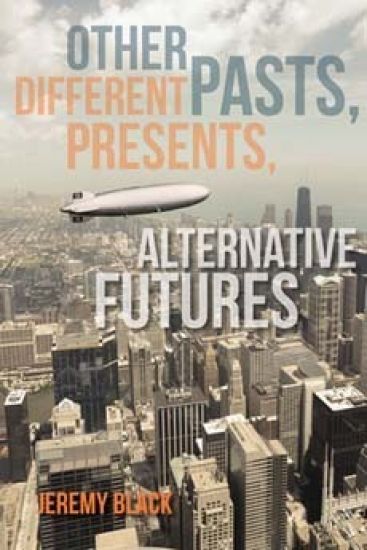
Other Pasts, Different Presents, Alternative Futures

Other Pasts, Different Presents, Alternative Futures

Jeremy Black

Indiana University Press
2015
sidottu

Halvin toimitettuna 87,80 €

What if there had been no World War I or no Russian Revolution? What if Napoleon had won at Waterloo in 1815, or if Martin Luther had not nailed his complaints to the church door at Wittenberg in 1517, or if the South had won the American Civil War? The questioning of apparent certainties or "known knowns" can be fascinating and, indeed, "What if?" books are very popular. However, this speculative approach, known as counterfactualism, has had limited impact in academic histories, historiography, and the teaching of historical methods. In this book, Jeremy Black offers a short guide to the subject, one that is designed to argue its value as a tool for public and academe alike. Black focuses on the role of counterfactualism in demonstrating the part of contingency, and thus human agency, in history, and the salutary critique the approach offers to determinist accounts of past, present, and future.
Other Pasts, Different Presents, Alternative Futures

Other Pasts, Different Presents, Alternative Futures

Jeremy Black

Indiana University Press
2015
pokkari
What if there had been no World War I or no Russian Revolution? What if Napoleon had won at Waterloo in 1815, or if Martin Luther had not nailed his complaints to the church door at Wittenberg in 1517, or if the South had won the American Civil War? The questioning of apparent certainties or "known knowns" can be fascinating and, indeed, "What if?" books are very popular. However, this speculative approach, known as counterfactualism, has had limited impact in academic histories, historiography, and the teaching of historical methods. In this book, Jeremy Black offers a short guide to the subject, one that is designed to argue its value as a tool for public and academe alike. Black focuses on the role of counterfactualism in demonstrating the part of contingency, and thus human agency, in history, and the salutary critique the approach offers to determinist accounts of past, present, and future.
The City on the Hill

The City on the Hill

Jeremy Black

University of Exeter
2015
nidottu
In 1955 the former University College of the South West was granted a royal charter and became the University of Exeter. Its development over the the subsequent six decades is the subject of this book. This is the history of an institution that is also a community, a focus of teaching and research set within a particular environment but also part of the wider world. Jeremy Black has drawn on a range of sources, from archive material to personal recollections of staff and students, past and present, to record and analyse the story of the university as it engaged with the need to expand and evolve, while responding to constant financial and political pressures. The result is a comprehensive portrait of this unique 'city on the hill'.
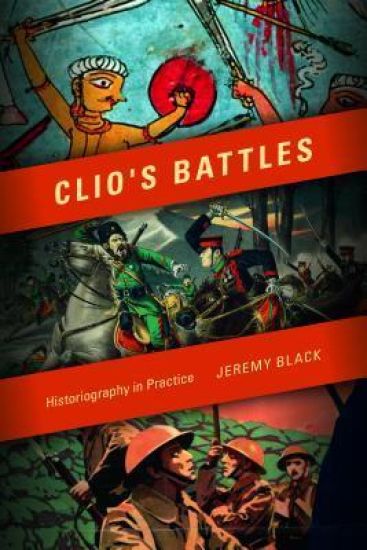
Clio's Battles

Clio's Battles

Jeremy Black

Indiana University Press
2015
pokkari
To write history is to consider how to explicate the past, to weigh the myriad possible approaches to the past, and to come to terms with how the past can be and has been used. In this book, prize-winning historian Jeremy Black considers both popular and academic approaches to the past. His focus is on the interaction between the presentation of the past and current circumstances, on how history is used to validate one view of the present or to discredit another, and on readings of the past that unite and those that divide. Black opens with an account that underscores the differences and developments in traditions of writing history from the ancient world to the present. Subsequent chapters take up more recent decades, notably the post-Cold War period, discussing how different perspectives can fuel discussions of the past by individuals interested in shaping public opinion or public perceptions of the past. Black then turns to the possible future uses of the then past as a way to gain perspective on how we use the past today. Clio's Battles is an ambitious account of the engagement with the past across world history and of the clash over the content and interpretation of history and its implications for the present and future.
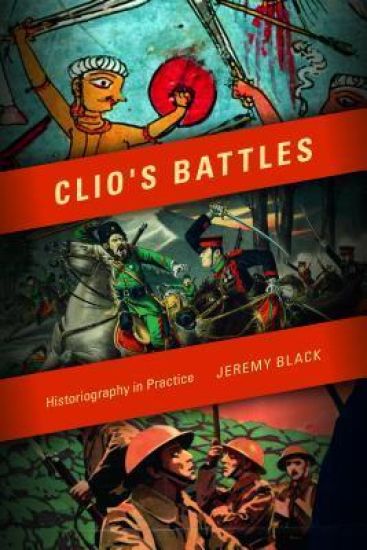
Clio's Battles

Clio's Battles

Jeremy Black

Indiana University Press
2015
sidottu
To write history is to consider how to explicate the past, to weigh the myriad possible approaches to the past, and to come to terms with how the past can be and has been used. In this book, prize-winning historian Jeremy Black considers both popular and academic approaches to the past. His focus is on the interaction between the presentation of the past and current circumstances, on how history is used to validate one view of the present or to discredit another, and on readings of the past that unite and those that divide. Black opens with an account that underscores the differences and developments in traditions of writing history from the ancient world to the present. Subsequent chapters take up more recent decades, notably the post-Cold War period, discussing how different perspectives can fuel discussions of the past by individuals interested in shaping public opinion or public perceptions of the past. Black then turns to the possible future uses of the then past as a way to gain perspective on how we use the past today. Clio's Battles is an ambitious account of the engagement with the past across world history and of the clash over the content and interpretation of history and its implications for the present and future.
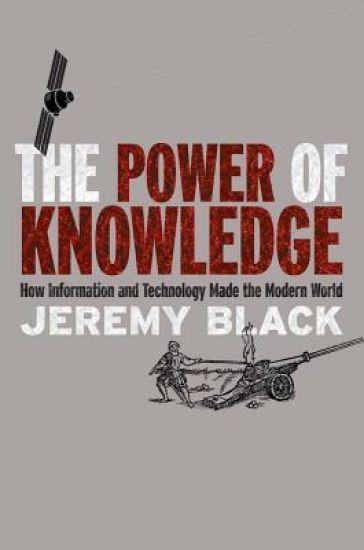
The Power of Knowledge

The Power of Knowledge

Jeremy Black

Yale University Press
2015
pokkari

Halvin toimitettuna 35,70 €

A thought-provoking analysis of how the acquisition and utilization of information has determined the course of history over the past five centuries and shaped the world as we know it today Information is power. For more than five hundred years the success or failure of nations has been determined by a country’s ability to acquire knowledge and technical skill and transform them into strength and prosperity. Leading historian Jeremy Black approaches global history from a distinctive perspective, focusing on the relationship between information and society and demonstrating how the understanding and use of information have been the primary factors in the development and character of the modern age. Black suggests that the West’s ascension was a direct result of its institutions and social practices for acquiring, employing, and retaining information and the technology that was ultimately produced. His cogent and well-reasoned analysis looks at cartography and the hardware of communication, armaments and sea power, mercantilism and imperialism, science and astronomy, as well as bureaucracy and the management of information, linking the history of technology with the history of global power while providing important indicators for the future of our world.
The Tory World

The Tory World

Jeremy Black

Routledge
2015
sidottu
Political decisions are never taken in a vacuum but are shaped both by current events and historical context. In other words, long-term developments and patterns in which the accumulated memory of what came earlier, can greatly (and sometimes subconsciously) influence subsequent policy choices. Working forward from the later seventeenth century, this book explores the ’deep history’ of the changing and competing understandings within the Tory party of the role Britain has aspired to play on a world stage. Conservatism has long been one of the major British political tendencies, committed to the defence of established institutions, with a strong sense of the ’national interest’, and embracing both ’liberal’ and ’authoritarian’ views of empire. The Tory party has, moreover, at several times been deeply divided, if not convulsed, by different perspectives on Britain’s international orientation and different positions on foreign and imperial policy. Underlying Tory beliefs upon which views of Britain’s global role were built were often not stated but assumed. As a result they tend to be obscured from historical view. This book seeks to recover and reconsider those beliefs, and to understand how the Tory party has sought to navigate its way through the difficult pathways of foreign and imperial politics, and why this determination outlasted Britain’s rapid decolonisation and was apparently remarkably little affected by it. With a supporting cast from Pitt to Disraeli, Churchill to Thatcher, the book provides a fascinating insight into the influence of history over politics. Moreover it argues that there has been an inherent politicisation of the concept of national interests, such that strategic culture and foreign policy cannot be understood other than in terms of a historically distorted political debate.
A Short History of Britain

A Short History of Britain

Jeremy Black

Bloomsbury Academic
2015
nidottu
Covering over 2,000 years in under 200 pages, Jeremy Black takes the reader on a breathless tour of British history, providing invaluable context for students of any period. A truly British overview, this book covers all four constituent parts of the UK, as well as migration to and from Britain, and introduces questions of national identity and collective memory. The author begins by considering how the geography of Britain has influenced its development and goes on to examine the formation of its society and political culture. Resisting the Whiggish tradition of triumphalist national histories, Jeremy Black provides a balanced and sensitive account in his trademark pithy style. This new edition has been considerably revised and expanded, bringing the coverage right up to the present day, including what the Scottish referendum on independence says about the nature of modern 'Britishness'.