Kirjojen hintavertailu – 12 903 724 kirjaa ja 27 kauppaa

Kirjailija

John Dewey

Kirjat ja teokset yhdessä paikassa: 491 kirjaa, julkaisuja vuosilta 1931–2026, suosituimpiin kuuluu Demokratia ja kasvatus. Vertaile teosten hintoja ja tarkista saatavuus suomalaisista kirjakaupoista.

491 kirjaa

Kirjojen julkaisuvuodet: 1931–2026.

The Collected Works of John Dewey V. 11; 1935-1937, Essays, Reviews, Trotsky Inquiry, Miscellany, and Liberalism and Social Action
This volume includes ninety-two items from 1935, 1936, and 1937, including Dewey's 1935 Page-Barbour Lectures at the University of Virginia, published as Liberalism and Social Action. In essay after essay Dewey analyzed, criticized, and reevaluated liberalism. When his controversial Liberalism and Social Action appeared, asking whether it was still possible to be a liberal, Horace M. Kallen wrote that Dewey restates in the language and under the conditions of his times what Jefferson's Declaration of Independence affirmed in the language and under the conditions of his. The diverse nature of the writings belies their underlying unity: some are technical philosophy; other philosophical articles shade into social and political themes; social and political issues permeate the educational articles, which in turn involve Dewey's philosophical ideas.
The Collected Works of John Dewey V. 8; 1933, Essays and How We Think
This volume includes all Dewey's writings for 1938 except for Logic: The Theory of Inquiry (Volume 12 of The Later Works), as well as his 1939 Freedom and Culture, Theory of Valuation, and two items from Intelligence in the Modern World. Freedom and Culture presents, as Steven M. Cahn points out, the essence of his philosophical position: a commitment to a free society, critical intelligence, and the education required for their advance.
The Collected Works of John Dewey V. 6; 1931-1932, Essays, Reviews, and Miscellany
Except for Dewey's and James H. Tufts' 1932 Ethics (Volume 7 of The Later Works), this volume brings together Dewey's writings for 1931-1932. The Great Depression presented John Dewey and the American people with a series of economic, political, and social crises in 1931 and 1932 that are reflected in most of the 86 items in this volume, even in philosophical essays such as "Human Nature." As Sidney Ratner points out in his Introduction, Dewey's interest in international peace is fea tured in the writings in this volume.
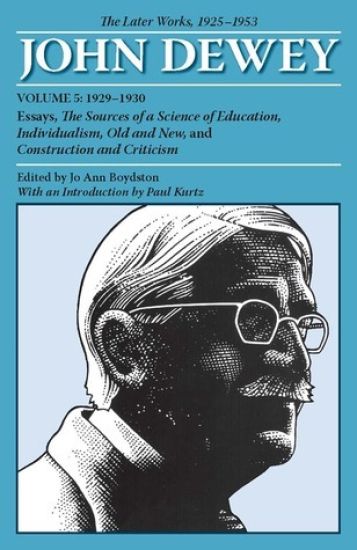
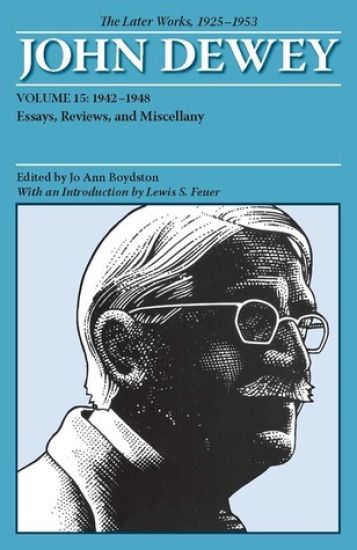
The Later Works of John Dewey, Volume 5, 1925 - 1953

The Later Works of John Dewey, Volume 5, 1925 - 1953

John Dewey

Southern Illinois University Press
2008
nidottu
With the exception of The Quest for Cer­tainty (Volume 4) this fifth volume brings together Dewey’s writings for the 1929–1930 period. During this time Dewey published 4 books and 50 articles on philosophical, educational, political, and social issues. His philosophical essays include “What Humanism Means to Me” and “What I Believe,” both of which express Dewey’s faith in man’s potentialities and intel­ligence, and a lively Journal of Philoso­phy exchange with Ernest Nagel, Wil­liam Ernest Hocking, C. I. Lewis, and F. J. E. Woodbridge. Educational writings include The Sources of a Science of Education. The contents of this volume re­flect Dewey’s increasing involvement in social and political problems.
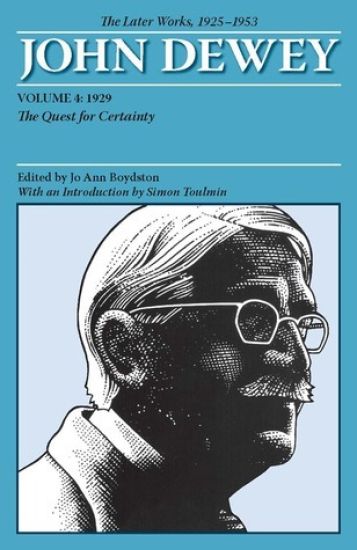
The Later Works of John Dewey, Volume 4, 1925 - 1953

The Later Works of John Dewey, Volume 4, 1925 - 1953

John Dewey

Southern Illinois University Press
2008
nidottu
This volume includes all Dewey's writings for 1938 except for Logic: The Theory of Inquiry (Volume 12 of The Later Works), as well as his 1939 Freedom and Culture, Theory of Valuation, and two items from Intelligence in the Modern World. Freedom and Culture presents, as Steven M. Cahn points out, the essence of his philosophical position: a commitment to a free society, critical intelligence, and the education required for their advance.
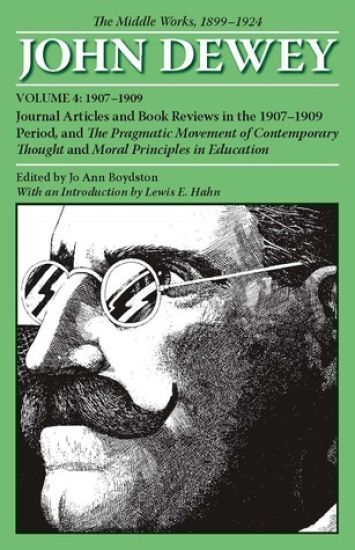
The Collected Works of John Dewey V. 4; 1907-1909, Journal Articles and Book Reviews in the 1907-1909 Period, and the Pragmatic Movement of Contemporary Thought and Moral Principles in Education
Volume 11 brings together all of Dewey's writings for 1918 and 1919. A Modern Language Association Committee on Scholarly Editions textual edition. Dewey's dominant theme in these pages is war and its after-math. In the Introduction, Oscar and Lilian Handlin discuss his philosophy within the historical context: The First World War slowly ground to its costly conclusion; and the immensely more difficult task of making peace got painfully under way. The armi-stice that some expected would permit a return to normalcy opened instead upon a period of turbulence that agitated fur-ther a society already unsettled by preparations for battle and by debilitating conflict overseas. After spending the first half of 1918-19 on sabbatical from Columbia at the University of California, Dewey traveled to Japan and China, where he lectured, toured, and assessed in his essays the relationship between the two nations. From Peking he reported the student revolt known as the May Fourth Move-ment. The forty items in this volume also include an analysis of Thomas Hobbe's philosophy; an affectionate commemorative tribute to Theodore Roosevelt, our Teddy; the syllabus for Dewey's lectures at the Imperial University in Tokyo, which were later revised and published as Reconstruction in Philosophy; an exchange with former disciple Randolph Bourne about F. Mat-thias Alexander's Man's Supreme Inheritance; and, central to Dew-ey's creed, Philosophy and Democracy. His involvement in a study of the Polish-American community in Philadelphia--resulting in an article, two memoranda, and a lengthy report--is discussed in detail in the Introduction and in the Note on the Confidential Report ofConditions among the Poles in the United States.

The Early Works of John Dewey, Volume 3, 1882 - 1898

The Early Works of John Dewey, Volume 3, 1882 - 1898

John Dewey

Southern Illinois University Press
2008
nidottu
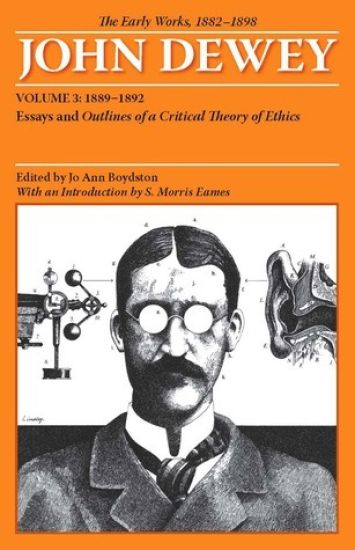
This third volume in the definitive edition of Dewey's early work opens with his tribute to George Sylvester Morris, the former teacher who had brought Dewey to the University of Michigan. Morris's death in 1889 left vacant the Department of Philosophy chairmanship and led to Dewey's returning to fill that post after a year's stay at Minnesota. Appearing here, among all his writings from 1889 through 1892, are Dewey's earliest comprehensive statements on logic and his first book on ethics. Dewey's marked copy of the galley-proof for his important article The Present Position of Logical Theory, recently discovered among the papers of the Open Court Publishing Company, is used as the basis for the text, making available for the first time his final changes and corrections. The textual studies that make The Early Works unique among American philosophical editions are reported in detail. One of these, A Note on Applied Psychology, documents the fact that Dewey did not co-author this book frequently attributed to him. Six brief unsigned articles written in 1891 for a University of Michigan student publication, the Inlander, have been identified as Dewey's and are also included in this volume. In both style and content, these articles reflect Dewey's conviction that philosophy should be used as a means of illuminating the contemporary scene; thus they add a new dimension to present knowledge of his early writing.
The Collected Works of John Dewey Volume 17; 1885-1953, Miscellaneous Writings
This is the final textual volume in The Collected Works of John Dewey, 1882– 1953, published in 3 series comprising 37 volumes: The Early Works, 1882– 1898 (5 vols.); The Middle Works, 1899– 1924 (15 vols.); The Later Works, 1925– 1953 (17 vols.). Volume 17 contains Dewey’ s writings discovered after publication of the appropriate volume of The Collected Works and spans most of Dewey’ s publishing life. There are 83 items in this volume, 24 of which have not been previously published. Among works highlighted in this volume are 10 “ Educational Lectures before Brigham Young Academy,” early essays “ War’ s Social Results” and “ The Problem of Secondary Education after the War,” and the previously unpublished “ The Russian School System.”
The Later Works of John Dewey, Volume 13, 1925 - 1953

The Later Works of John Dewey, Volume 13, 1925 - 1953

John Dewey

Southern Illinois University Press
2008
nidottu
This volume includes all Dewey's writings for 1938 except for Logic: The Theory of Inquiry (Volume 12 of The Later Works), as well as his 1939 Freedom and Culture, Theory of Valuation, and two items from Intelligence in the Modern World. Freedom and Culture presents, as Steven M. Cahn points out, the essence of his philosophical position: a commitment to a free society, critical intelligence, and the education required for their advance.
The Later Works of John Dewey, Volume 7, 1925 - 1953

The Later Works of John Dewey, Volume 7, 1925 - 1953

John Dewey

Southern Illinois University Press
2008
nidottu
This volume includes all Dewey's writings for 1938 except for Logic: The Theory of Inquiry (Volume 12 of The Later Works), as well as his 1939 Freedom and Culture, Theory of Valuation, and two items from Intelligence in the Modern World. Freedom and Culture presents, as Steven M. Cahn points out, the essence of his philosophical position: a commitment to a free society, critical intelligence, and the education required for their advance.
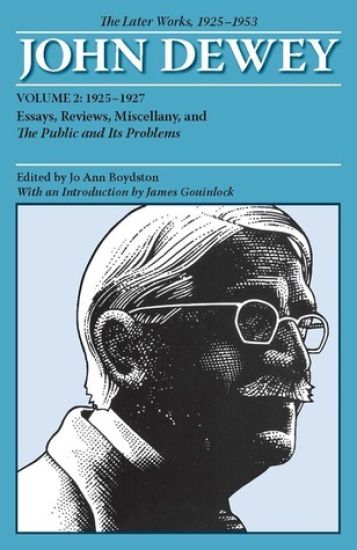
The Later Works of John Dewey, Volume 2, 1925 - 1953

The Later Works of John Dewey, Volume 2, 1925 - 1953

John Dewey

Southern Illinois University Press
2008
nidottu
This volume includes all Dewey's writings for 1938 except for Logic: The Theory of Inquiry (Volume 12 of The Later Works), as well as his 1939 Freedom and Culture, Theory of Valuation, and two items from Intelligence in the Modern World. Freedom and Culture presents, as Steven M. Cahn points out, the essence of his philosophical position: a commitment to a free society, critical intelligence, and the education required for their advance.
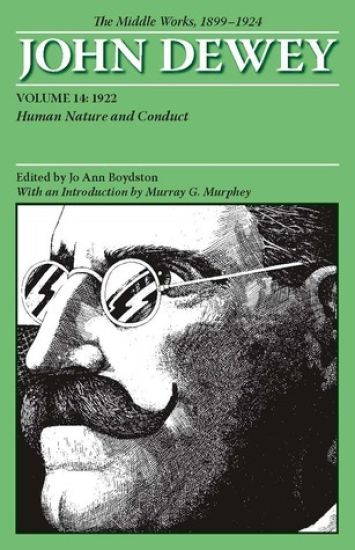
The Middle Works of John Dewey, Volume 14, 1899 - 1924

The Middle Works of John Dewey, Volume 14, 1899 - 1924

John Dewey

Southern Illinois University Press
2008
nidottu
Volume 11 brings together all of Dewey's writings for 1918 and 1919. A Modern Language Association Committee on Scholarly Editions textual edition. Dewey's dominant theme in these pages is war and its after-math. In the Introduction, Oscar and Lilian Handlin discuss his philosophy within the historical context: The First World War slowly ground to its costly conclusion; and the immensely more difficult task of making peace got painfully under way. The armi-stice that some expected would permit a return to normalcy opened instead upon a period of turbulence that agitated fur-ther a society already unsettled by preparations for battle and by debilitating conflict overseas. After spending the first half of 1918-19 on sabbatical from Columbia at the University of California, Dewey traveled to Japan and China, where he lectured, toured, and assessed in his essays the relationship between the two nations. From Peking he reported the student revolt known as the May Fourth Move-ment. The forty items in this volume also include an analysis of Thomas Hobbe's philosophy; an affectionate commemorative tribute to Theodore Roosevelt, our Teddy; the syllabus for Dewey's lectures at the Imperial University in Tokyo, which were later revised and published as Reconstruction in Philosophy; an exchange with former disciple Randolph Bourne about F. Mat-thias Alexander's Man's Supreme Inheritance; and, central to Dew-ey's creed, Philosophy and Democracy. His involvement in a study of the Polish-American community in Philadelphia--resulting in an article, two memoranda, and a lengthy report--is discussed in detail in the Introduction and in the Note on the Confidential Report ofConditions among the Poles in the United States.
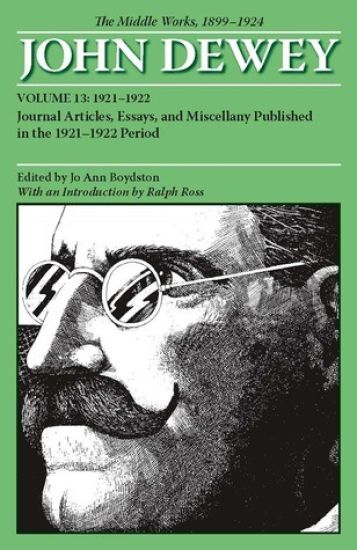
The Collected Works of John Dewey V. 13; 1921-1922, Journal Articles, Essays, and Miscellany Published in the 1921-1922 Period
Volume 11 brings together all of Dewey's writings for 1918 and 1919. A Modern Language Association Committee on Scholarly Editions textual edition. Dewey's dominant theme in these pages is war and its after-math. In the Introduction, Oscar and Lilian Handlin discuss his philosophy within the historical context: The First World War slowly ground to its costly conclusion; and the immensely more difficult task of making peace got painfully under way. The armi-stice that some expected would permit a return to normalcy opened instead upon a period of turbulence that agitated fur-ther a society already unsettled by preparations for battle and by debilitating conflict overseas. After spending the first half of 1918-19 on sabbatical from Columbia at the University of California, Dewey traveled to Japan and China, where he lectured, toured, and assessed in his essays the relationship between the two nations. From Peking he reported the student revolt known as the May Fourth Move-ment. The forty items in this volume also include an analysis of Thomas Hobbe's philosophy; an affectionate commemorative tribute to Theodore Roosevelt, our Teddy; the syllabus for Dewey's lectures at the Imperial University in Tokyo, which were later revised and published as Reconstruction in Philosophy; an exchange with former disciple Randolph Bourne about F. Mat-thias Alexander's Man's Supreme Inheritance; and, central to Dew-ey's creed, Philosophy and Democracy. His involvement in a study of the Polish-American community in Philadelphia--resulting in an article, two memoranda, and a lengthy report--is discussed in detail in the Introduction and in the Note on the Confidential Report ofConditions among the Poles in the United States.
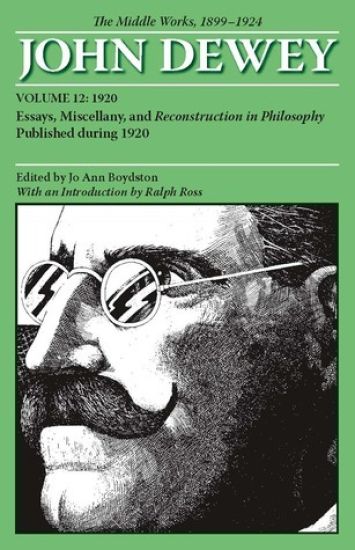
The Middle Works of John Dewey, Volume 12, 1899 - 1924

The Middle Works of John Dewey, Volume 12, 1899 - 1924

John Dewey

Southern Illinois University Press
2008
nidottu
Volume 11 brings together all of Dewey's writings for 1918 and 1919. A Modern Language Association Committee on Scholarly Editions textual edition. Dewey's dominant theme in these pages is war and its after-math. In the Introduction, Oscar and Lilian Handlin discuss his philosophy within the historical context: The First World War slowly ground to its costly conclusion; and the immensely more difficult task of making peace got painfully under way. The armi-stice that some expected would permit a return to normalcy opened instead upon a period of turbulence that agitated fur-ther a society already unsettled by preparations for battle and by debilitating conflict overseas. After spending the first half of 1918-19 on sabbatical from Columbia at the University of California, Dewey traveled to Japan and China, where he lectured, toured, and assessed in his essays the relationship between the two nations. From Peking he reported the student revolt known as the May Fourth Move-ment. The forty items in this volume also include an analysis of Thomas Hobbe's philosophy; an affectionate commemorative tribute to Theodore Roosevelt, our Teddy; the syllabus for Dewey's lectures at the Imperial University in Tokyo, which were later revised and published as Reconstruction in Philosophy; an exchange with former disciple Randolph Bourne about F. Mat-thias Alexander's Man's Supreme Inheritance; and, central to Dew-ey's creed, Philosophy and Democracy. His involvement in a study of the Polish-American community in Philadelphia--resulting in an article, two memoranda, and a lengthy report--is discussed in detail in the Introduction and in the Note on the Confidential Report ofConditions among the Poles in the United States.
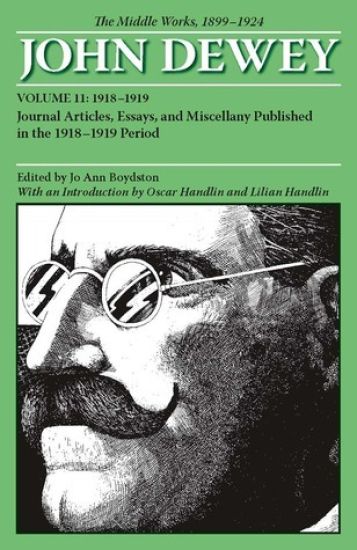
The Collected Works of John Dewey V. 11; 1918-1919, Journal Articles, Essays, and Miscellany Published in the 1918-1919 Period
Volume 11 brings together all of Dewey's writings for 1918 and 1919. A Modern Language Association Committee on Scholarly Editions textual edition. Dewey's dominant theme in these pages is war and its after-math. In the Introduction, Oscar and Lilian Handlin discuss his philosophy within the historical context: The First World War slowly ground to its costly conclusion; and the immensely more difficult task of making peace got painfully under way. The armi-stice that some expected would permit a return to normalcy opened instead upon a period of turbulence that agitated fur-ther a society already unsettled by preparations for battle and by debilitating conflict overseas. After spending the first half of 1918-19 on sabbatical from Columbia at the University of California, Dewey traveled to Japan and China, where he lectured, toured, and assessed in his essays the relationship between the two nations. From Peking he reported the student revolt known as the May Fourth Move-ment. The forty items in this volume also include an analysis of Thomas Hobbe's philosophy; an affectionate commemorative tribute to Theodore Roosevelt, our Teddy; the syllabus for Dewey's lectures at the Imperial University in Tokyo, which were later revised and published as Reconstruction in Philosophy; an exchange with former disciple Randolph Bourne about F. Mat-thias Alexander's Man's Supreme Inheritance; and, central to Dew-ey's creed, Philosophy and Democracy. His involvement in a study of the Polish-American community in Philadelphia--resulting in an article, two memoranda, and a lengthy report--is discussed in detail in the Introduction and in the Note on the Confidential Report ofConditions among the Poles in the United States.
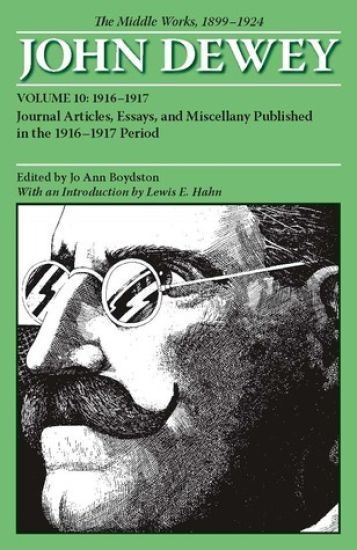
The Middle Works of John Dewey, Volume 10, 1899 - 1924

The Middle Works of John Dewey, Volume 10, 1899 - 1924

John Dewey

Southern Illinois University Press
2008
nidottu
Volume 11 brings together all of Dewey's writings for 1918 and 1919. A Modern Language Association Committee on Scholarly Editions textual edition. Dewey's dominant theme in these pages is war and its after-math. In the Introduction, Oscar and Lilian Handlin discuss his philosophy within the historical context: The First World War slowly ground to its costly conclusion; and the immensely more difficult task of making peace got painfully under way. The armi-stice that some expected would permit a return to normalcy opened instead upon a period of turbulence that agitated fur-ther a society already unsettled by preparations for battle and by debilitating conflict overseas. After spending the first half of 1918-19 on sabbatical from Columbia at the University of California, Dewey traveled to Japan and China, where he lectured, toured, and assessed in his essays the relationship between the two nations. From Peking he reported the student revolt known as the May Fourth Move-ment. The forty items in this volume also include an analysis of Thomas Hobbe's philosophy; an affectionate commemorative tribute to Theodore Roosevelt, our Teddy; the syllabus for Dewey's lectures at the Imperial University in Tokyo, which were later revised and published as Reconstruction in Philosophy; an exchange with former disciple Randolph Bourne about F. Mat-thias Alexander's Man's Supreme Inheritance; and, central to Dew-ey's creed, Philosophy and Democracy. His involvement in a study of the Polish-American community in Philadelphia--resulting in an article, two memoranda, and a lengthy report--is discussed in detail in the Introduction and in the Note on the Confidential Report ofConditions among the Poles in the United States.
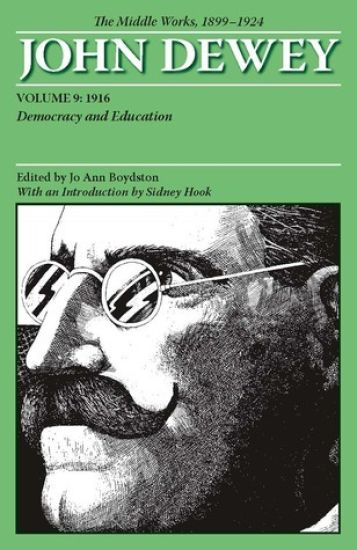
The Middle Works of John Dewey, Volume 9, 1899-1924

The Middle Works of John Dewey, Volume 9, 1899-1924

John Dewey

Southern Illinois University Press
2008
nidottu
Volume 11 brings together all of Dewey's writings for 1918 and 1919. A Modern Language Association Committee on Scholarly Editions textual edition. Dewey's dominant theme in these pages is war and its after-math. In the Introduction, Oscar and Lilian Handlin discuss his philosophy within the historical context: The First World War slowly ground to its costly conclusion; and the immensely more difficult task of making peace got painfully under way. The armi-stice that some expected would permit a return to normalcy opened instead upon a period of turbulence that agitated fur-ther a society already unsettled by preparations for battle and by debilitating conflict overseas. After spending the first half of 1918-19 on sabbatical from Columbia at the University of California, Dewey traveled to Japan and China, where he lectured, toured, and assessed in his essays the relationship between the two nations. From Peking he reported the student revolt known as the May Fourth Move-ment. The forty items in this volume also include an analysis of Thomas Hobbe's philosophy; an affectionate commemorative tribute to Theodore Roosevelt, our Teddy; the syllabus for Dewey's lectures at the Imperial University in Tokyo, which were later revised and published as Reconstruction in Philosophy; an exchange with former disciple Randolph Bourne about F. Mat-thias Alexander's Man's Supreme Inheritance; and, central to Dew-ey's creed, Philosophy and Democracy. His involvement in a study of the Polish-American community in Philadelphia--resulting in an article, two memoranda, and a lengthy report--is discussed in detail in the Introduction and in the Note on the Confidential Report ofConditions among the Poles in the United States.