Kirjojen hintavertailu – 12 903 724 kirjaa ja 27 kauppaa

Kirjailija

John Dewey

Kirjat ja teokset yhdessä paikassa: 491 kirjaa, julkaisuja vuosilta 1931–2026, suosituimpiin kuuluu Demokratia ja kasvatus. Vertaile teosten hintoja ja tarkista saatavuus suomalaisista kirjakaupoista.

491 kirjaa

Kirjojen julkaisuvuodet: 1931–2026.

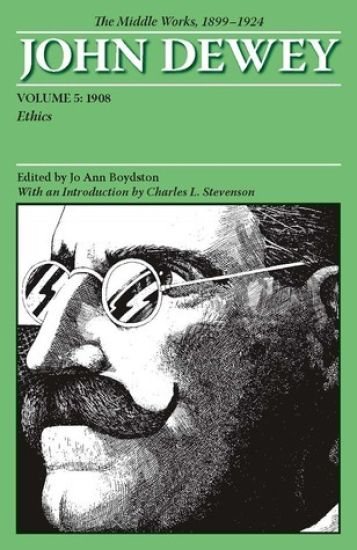
The Collected Works of John Dewey V. 5; 1908, Ethics

The Collected Works of John Dewey V. 5; 1908, Ethics

John Dewey

Southern Illinois University Press
2008
nidottu
Thisfifth volume of the Middle Works contains Ethics by John Dewey and his former colleague at the University of Michigan, James H. Tufts, which ap peared as one of the last in the Holt American Science series of textbooks. Within some six months after publica tion, Ethics was adopted as a textbook by thirty colleges. The book continued to be extremely popular and widely used, and was reprinted twenty-five times before both authors completely revised their respective parts for the new 1932edition. Up to the time Ethics was published, Dewey's approach to ethics was known primarily from two short publications that were developed for use by his classes at the University of Michigan: Outlines of a Critical Theory of Ethics (1891)and The Study of Ethics: A Syl labus (1894). Charles Stevenson notes in his Introduction to the present edition that Ethics afforded Dewey an opportu nity to preserve and enrich the content of those earlier works and at the same time to expound his position in a more systematic manner.
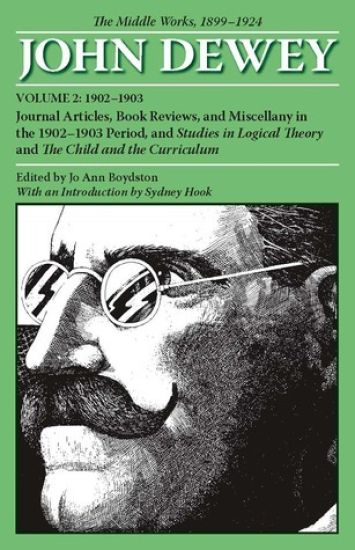
The Collected Works of John Dewey V. 2; 1902-1903, Journal Articles, Book Reviews, and Miscellany in the 1902-1903 Period, and Studies in Logical Theory and the Child and the Curriculum
Volume 11 brings together all of Dewey's writings for 1918 and 1919. A Modern Language Association Committee on Scholarly Editions textual edition. Dewey's dominant theme in these pages is war and its after-math. In the Introduction, Oscar and Lilian Handlin discuss his philosophy within the historical context: The First World War slowly ground to its costly conclusion; and the immensely more difficult task of making peace got painfully under way. The armi-stice that some expected would permit a return to normalcy opened instead upon a period of turbulence that agitated fur-ther a society already unsettled by preparations for battle and by debilitating conflict overseas. After spending the first half of 1918-19 on sabbatical from Columbia at the University of California, Dewey traveled to Japan and China, where he lectured, toured, and assessed in his essays the relationship between the two nations. From Peking he reported the student revolt known as the May Fourth Move-ment. The forty items in this volume also include an analysis of Thomas Hobbe's philosophy; an affectionate commemorative tribute to Theodore Roosevelt, our Teddy; the syllabus for Dewey's lectures at the Imperial University in Tokyo, which were later revised and published as Reconstruction in Philosophy; an exchange with former disciple Randolph Bourne about F. Mat-thias Alexander's Man's Supreme Inheritance; and, central to Dew-ey's creed, Philosophy and Democracy. His involvement in a study of the Polish-American community in Philadelphia--resulting in an article, two memoranda, and a lengthy report--is discussed in detail in the Introduction and in the Note on the Confidential Report ofConditions among the Poles in the United States.
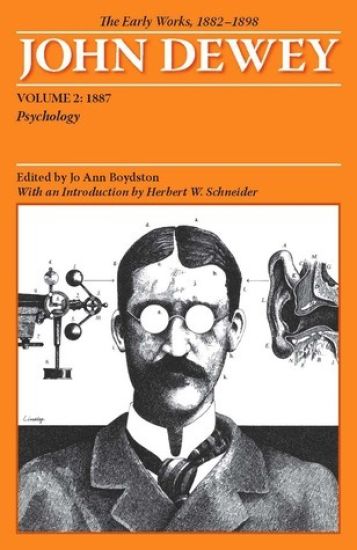
The Collected Works of John Dewey V. 2; 1887, Psychology

The Collected Works of John Dewey V. 2; 1887, Psychology

John Dewey

Southern Illinois University Press
2008
nidottu
This third volume in the definitive edition of Dewey's early work opens with his tribute to George Sylvester Morris, the former teacher who had brought Dewey to the University of Michigan. Morris's death in 1889 left vacant the Department of Philosophy chairmanship and led to Dewey's returning to fill that post after a year's stay at Minnesota. Appearing here, among all his writings from 1889 through 1892, are Dewey's earliest comprehensive statements on logic and his first book on ethics. Dewey's marked copy of the galley-proof for his important article The Present Position of Logical Theory, recently discovered among the papers of the Open Court Publishing Company, is used as the basis for the text, making available for the first time his final changes and corrections. The textual studies that make The Early Works unique among American philosophical editions are reported in detail. One of these, A Note on Applied Psychology, documents the fact that Dewey did not co-author this book frequently attributed to him. Six brief unsigned articles written in 1891 for a University of Michigan student publication, the Inlander, have been identified as Dewey's and are also included in this volume. In both style and content, these articles reflect Dewey's conviction that philosophy should be used as a means of illuminating the contemporary scene; thus they add a new dimension to present knowledge of his early writing.
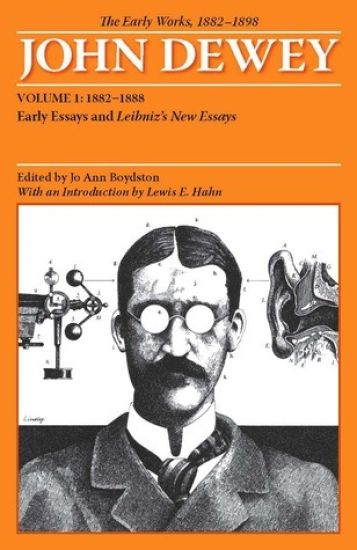
The Early Works of John Dewey, Volume 1, 1882 - 1898

The Early Works of John Dewey, Volume 1, 1882 - 1898

John Dewey

Southern Illinois University Press
2008
nidottu
This third volume in the definitive edition of Dewey's early work opens with his tribute to George Sylvester Morris, the former teacher who had brought Dewey to the University of Michigan. Morris's death in 1889 left vacant the Department of Philosophy chairmanship and led to Dewey's returning to fill that post after a year's stay at Minnesota. Appearing here, among all his writings from 1889 through 1892, are Dewey's earliest comprehensive statements on logic and his first book on ethics. Dewey's marked copy of the galley-proof for his important article The Present Position of Logical Theory, recently discovered among the papers of the Open Court Publishing Company, is used as the basis for the text, making available for the first time his final changes and corrections. The textual studies that make The Early Works unique among American philosophical editions are reported in detail. One of these, A Note on Applied Psychology, documents the fact that Dewey did not co-author this book frequently attributed to him. Six brief unsigned articles written in 1891 for a University of Michigan student publication, the Inlander, have been identified as Dewey's and are also included in this volume. In both style and content, these articles reflect Dewey's conviction that philosophy should be used as a means of illuminating the contemporary scene; thus they add a new dimension to present knowledge of his early writing.
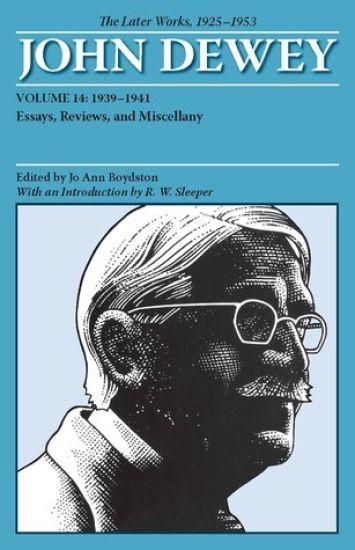
The Collected Works of John Dewey V. 14; 1939-1941, Essays, Reviews, and Miscellany
This volume republishes forty-four essays, reviews, and miscellaneous pieces from 1939, 1940, and 1941. In his Introduction, R. W. Sleeper characterizes the contents of this volume as “vintage Dewey. Ranging widely over problems of theory and practice, they reveal him commencing his ninth decade at the peak of his intellectual powers.”“Nature in Experience,” Dewey’s reply to Morris R. Cohen and William Ernest Hocking, “is a model of clarity and responsiveness,” writes Sleeper, “perhaps his clearest statement of why it is that metaphysics does not play the fundamental role for him that it had regularly played for his predecessors.”
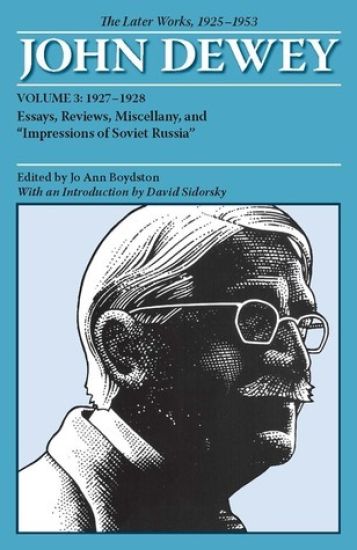
The Later Works of John Dewey, Volume 3, 1925 - 1953

The Later Works of John Dewey, Volume 3, 1925 - 1953

John Dewey

Southern Illinois University Press
2008
nidottu
This volume includes all Dewey's writings for 1938 except for Logic: The Theory of Inquiry (Volume 12 of The Later Works), as well as his 1939 Freedom and Culture, Theory of Valuation, and two items from Intelligence in the Modern World. Freedom and Culture presents, as Steven M. Cahn points out, the essence of his philosophical position: a commitment to a free society, critical intelligence, and the education required for their advance.
The Later Works of John Dewey 1925-1953, Volume 16

The Later Works of John Dewey 1925-1953, Volume 16

John Dewey

Southern Illinois University Press
2008
nidottu
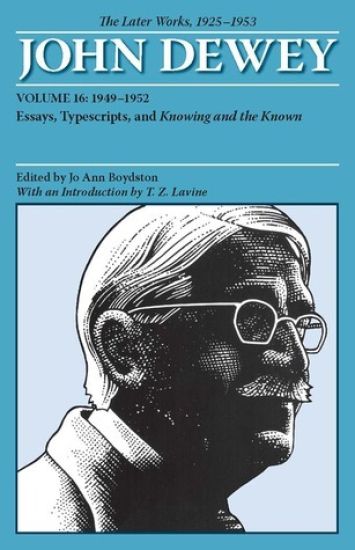
Typescripts, essays, and an authoritative edition of Knowing and the known, Dewey's collaborative work with Arthur F. Bentley. In an illuminating Introduction T. Z. Lavine defines the collaboration's three goals-the construction of a new language for behavioral inquiry, a critique of formal logicians, in defense of Dewey's Logic, and a critique of logical positivism. In Dewey's words: Largely due to Bentley, I've finally got the nerve inside of me to do what I should have done years ago. What is it to be a linguistic sign or name? and Values, valuations, and social facts, ' both written in 1945, are published here for the first time
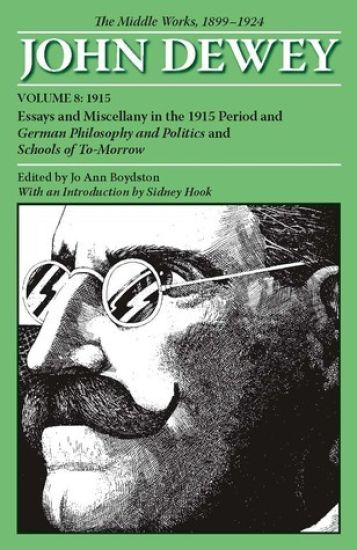
The Collected Works of John Dewey V. 8; 1915, Essays and Miscellany in the 1915 Period and German Philosophy and Politics and Schools of Tomorrow
Volume 11 brings together all of Dewey's writings for 1918 and 1919. A Modern Language Association Committee on Scholarly Editions textual edition. Dewey's dominant theme in these pages is war and its after-math. In the Introduction, Oscar and Lilian Handlin discuss his philosophy within the historical context: The First World War slowly ground to its costly conclusion; and the immensely more difficult task of making peace got painfully under way. The armi-stice that some expected would permit a return to normalcy opened instead upon a period of turbulence that agitated fur-ther a society already unsettled by preparations for battle and by debilitating conflict overseas. After spending the first half of 1918-19 on sabbatical from Columbia at the University of California, Dewey traveled to Japan and China, where he lectured, toured, and assessed in his essays the relationship between the two nations. From Peking he reported the student revolt known as the May Fourth Move-ment. The forty items in this volume also include an analysis of Thomas Hobbe's philosophy; an affectionate commemorative tribute to Theodore Roosevelt, our Teddy; the syllabus for Dewey's lectures at the Imperial University in Tokyo, which were later revised and published as Reconstruction in Philosophy; an exchange with former disciple Randolph Bourne about F. Mat-thias Alexander's Man's Supreme Inheritance; and, central to Dew-ey's creed, Philosophy and Democracy. His involvement in a study of the Polish-American community in Philadelphia--resulting in an article, two memoranda, and a lengthy report--is discussed in detail in the Introduction and in the Note on the Confidential Report ofConditions among the Poles in the United States.
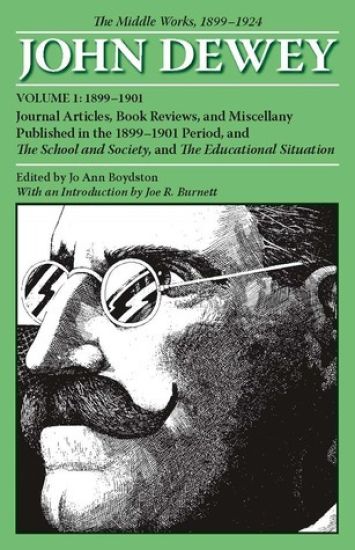
The Collected Works of John Dewey V. 1; 1899-1901, Journal Articles, Book Reviews, and Miscellany Published in the 1899-1901 Period, and the School and Society, and the Educational Situation
Volume 11 brings together all of Dewey's writings for 1918 and 1919. A Modern Language Association Committee on Scholarly Editions textual edition. Dewey's dominant theme in these pages is war and its after-math. In the Introduction, Oscar and Lilian Handlin discuss his philosophy within the historical context: The First World War slowly ground to its costly conclusion; and the immensely more difficult task of making peace got painfully under way. The armi-stice that some expected would permit a return to normalcy opened instead upon a period of turbulence that agitated fur-ther a society already unsettled by preparations for battle and by debilitating conflict overseas. After spending the first half of 1918-19 on sabbatical from Columbia at the University of California, Dewey traveled to Japan and China, where he lectured, toured, and assessed in his essays the relationship between the two nations. From Peking he reported the student revolt known as the May Fourth Move-ment. The forty items in this volume also include an analysis of Thomas Hobbe's philosophy; an affectionate commemorative tribute to Theodore Roosevelt, our Teddy; the syllabus for Dewey's lectures at the Imperial University in Tokyo, which were later revised and published as Reconstruction in Philosophy; an exchange with former disciple Randolph Bourne about F. Mat-thias Alexander's Man's Supreme Inheritance; and, central to Dew-ey's creed, Philosophy and Democracy. His involvement in a study of the Polish-American community in Philadelphia--resulting in an article, two memoranda, and a lengthy report--is discussed in detail in the Introduction and in the Note on the Confidential Report ofConditions among the Poles in the United States.
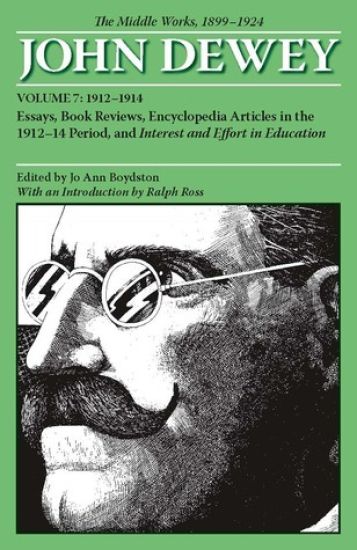
The Collected Works of John Dewey v. 7; 1912-1914, Essays, Books Reviews, Encyclopedia Articles in the 1912-1914 Period, and Interest and Effort in Education
Volume 11 brings together all of Dewey's writings for 1918 and 1919. A Modern Language Association Committee on Scholarly Editions textual edition. Dewey's dominant theme in these pages is war and its after-math. In the Introduction, Oscar and Lilian Handlin discuss his philosophy within the historical context: The First World War slowly ground to its costly conclusion; and the immensely more difficult task of making peace got painfully under way. The armi-stice that some expected would permit a return to normalcy opened instead upon a period of turbulence that agitated fur-ther a society already unsettled by preparations for battle and by debilitating conflict overseas. After spending the first half of 1918-19 on sabbatical from Columbia at the University of California, Dewey traveled to Japan and China, where he lectured, toured, and assessed in his essays the relationship between the two nations. From Peking he reported the student revolt known as the May Fourth Move-ment. The forty items in this volume also include an analysis of Thomas Hobbe's philosophy; an affectionate commemorative tribute to Theodore Roosevelt, our Teddy; the syllabus for Dewey's lectures at the Imperial University in Tokyo, which were later revised and published as Reconstruction in Philosophy; an exchange with former disciple Randolph Bourne about F. Mat-thias Alexander's Man's Supreme Inheritance; and, central to Dew-ey's creed, Philosophy and Democracy. His involvement in a study of the Polish-American community in Philadelphia--resulting in an article, two memoranda, and a lengthy report--is discussed in detail in the Introduction and in the Note on the Confidential Report ofConditions among the Poles in the United States.
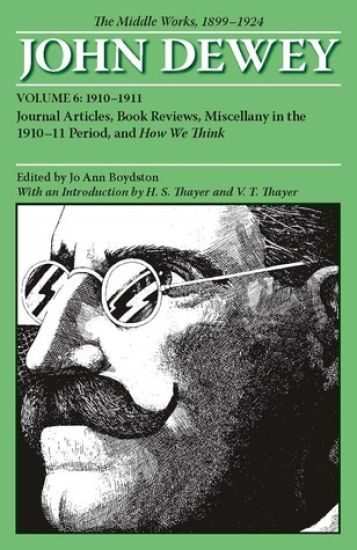
The Collected Works of John Dewey v. 6; 1910-1911, Journal Articles, Book Reviews, Miscellany in the 1910-1911 Period, and How We Think
Volume 11 brings together all of Dewey's writings for 1918 and 1919. A Modern Language Association Committee on Scholarly Editions textual edition. Dewey's dominant theme in these pages is war and its after-math. In the Introduction, Oscar and Lilian Handlin discuss his philosophy within the historical context: The First World War slowly ground to its costly conclusion; and the immensely more difficult task of making peace got painfully under way. The armi-stice that some expected would permit a return to normalcy opened instead upon a period of turbulence that agitated fur-ther a society already unsettled by preparations for battle and by debilitating conflict overseas. After spending the first half of 1918-19 on sabbatical from Columbia at the University of California, Dewey traveled to Japan and China, where he lectured, toured, and assessed in his essays the relationship between the two nations. From Peking he reported the student revolt known as the May Fourth Move-ment. The forty items in this volume also include an analysis of Thomas Hobbe's philosophy; an affectionate commemorative tribute to Theodore Roosevelt, our Teddy; the syllabus for Dewey's lectures at the Imperial University in Tokyo, which were later revised and published as Reconstruction in Philosophy; an exchange with former disciple Randolph Bourne about F. Mat-thias Alexander's Man's Supreme Inheritance; and, central to Dew-ey's creed, Philosophy and Democracy. His involvement in a study of the Polish-American community in Philadelphia--resulting in an article, two memoranda, and a lengthy report--is discussed in detail in the Introduction and in the Note on the Confidential Report ofConditions among the Poles in the United States.
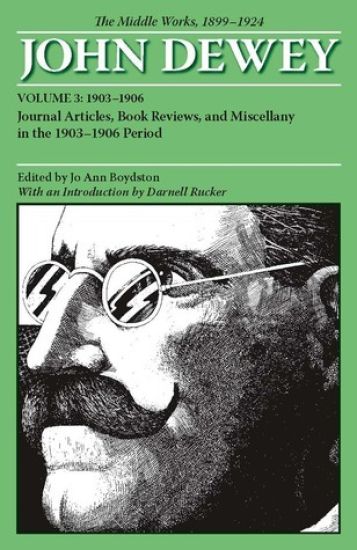
The Middle Works of John Dewey, Volume 3, 1899 - 1924

The Middle Works of John Dewey, Volume 3, 1899 - 1924

John Dewey

Southern Illinois University Press
2008
nidottu
Volume 11 brings together all of Dewey's writings for 1918 and 1919. A Modern Language Association Committee on Scholarly Editions textual edition. Dewey's dominant theme in these pages is war and its after-math. In the Introduction, Oscar and Lilian Handlin discuss his philosophy within the historical context: The First World War slowly ground to its costly conclusion; and the immensely more difficult task of making peace got painfully under way. The armi-stice that some expected would permit a return to normalcy opened instead upon a period of turbulence that agitated fur-ther a society already unsettled by preparations for battle and by debilitating conflict overseas. After spending the first half of 1918-19 on sabbatical from Columbia at the University of California, Dewey traveled to Japan and China, where he lectured, toured, and assessed in his essays the relationship between the two nations. From Peking he reported the student revolt known as the May Fourth Move-ment. The forty items in this volume also include an analysis of Thomas Hobbe's philosophy; an affectionate commemorative tribute to Theodore Roosevelt, our Teddy; the syllabus for Dewey's lectures at the Imperial University in Tokyo, which were later revised and published as Reconstruction in Philosophy; an exchange with former disciple Randolph Bourne about F. Mat-thias Alexander's Man's Supreme Inheritance; and, central to Dew-ey's creed, Philosophy and Democracy. His involvement in a study of the Polish-American community in Philadelphia--resulting in an article, two memoranda, and a lengthy report--is discussed in detail in the Introduction and in the Note on the Confidential Report ofConditions among the Poles in the United States.
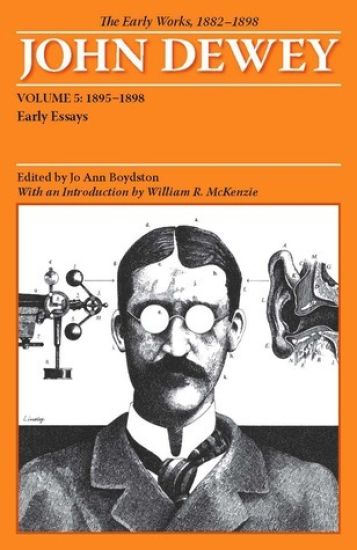
The Early Works of John Dewey, Volume 5, 1882 - 1898

The Early Works of John Dewey, Volume 5, 1882 - 1898

John Dewey

Southern Illinois University Press
2008
nidottu
This third volume in the definitive edition of Dewey's early work opens with his tribute to George Sylvester Morris, the former teacher who had brought Dewey to the University of Michigan. Morris's death in 1889 left vacant the Department of Philosophy chairmanship and led to Dewey's returning to fill that post after a year's stay at Minnesota. Appearing here, among all his writings from 1889 through 1892, are Dewey's earliest comprehensive statements on logic and his first book on ethics. Dewey's marked copy of the galley-proof for his important article The Present Position of Logical Theory, recently discovered among the papers of the Open Court Publishing Company, is used as the basis for the text, making available for the first time his final changes and corrections. The textual studies that make The Early Works unique among American philosophical editions are reported in detail. One of these, A Note on Applied Psychology, documents the fact that Dewey did not co-author this book frequently attributed to him. Six brief unsigned articles written in 1891 for a University of Michigan student publication, the Inlander, have been identified as Dewey's and are also included in this volume. In both style and content, these articles reflect Dewey's conviction that philosophy should be used as a means of illuminating the contemporary scene; thus they add a new dimension to present knowledge of his early writing.
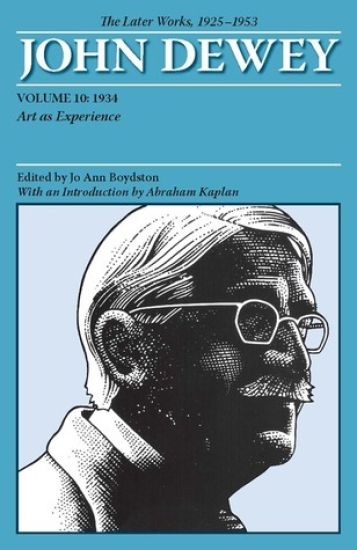
The Collected Works of John Dewey v. 10; 1934, Art as Experience

The Collected Works of John Dewey v. 10; 1934, Art as Experience

John Dewey

Southern Illinois University Press
2008
nidottu

Halvin toimitettuna 47,90 €

Art as Experience evolved from John Dewey's Willam James Lectures, delivered at Harvard University from February to May 1931. In his Introduction, Abraham Kaplan places Dewey's philosophy of art within the context of his pragmatism. Kaplan demonstrates in Dewey's esthetic theory his traditional “movement from a dualism to a monism€ and discusses whether Dewey's viewpoint is that of the artist, the respondent, or the critic.
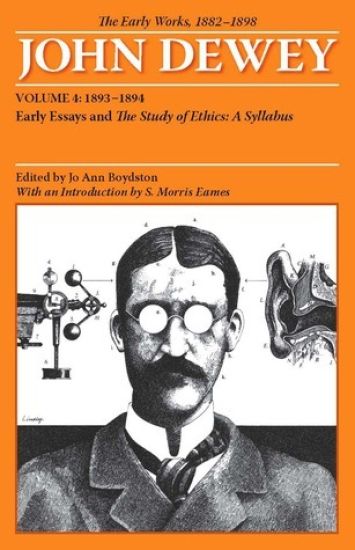
The Collected Works of John Dewey V. 4; 1893-1894, Early Essays and the Study of Ethics: a Syllabus
This third volume in the definitive edition of Dewey's early work opens with his tribute to George Sylvester Morris, the former teacher who had brought Dewey to the University of Michigan. Morris's death in 1889 left vacant the Department of Philosophy chairmanship and led to Dewey's returning to fill that post after a year's stay at Minnesota. Appearing here, among all his writings from 1889 through 1892, are Dewey's earliest comprehensive statements on logic and his first book on ethics. Dewey's marked copy of the galley-proof for his important article The Present Position of Logical Theory, recently discovered among the papers of the Open Court Publishing Company, is used as the basis for the text, making available for the first time his final changes and corrections. The textual studies that make The Early Works unique among American philosophical editions are reported in detail. One of these, A Note on Applied Psychology, documents the fact that Dewey did not co-author this book frequently attributed to him. Six brief unsigned articles written in 1891 for a University of Michigan student publication, the Inlander, have been identified as Dewey's and are also included in this volume. In both style and content, these articles reflect Dewey's conviction that philosophy should be used as a means of illuminating the contemporary scene; thus they add a new dimension to present knowledge of his early writing.