
Kirjailija
Langston Hughes
Kirjat ja teokset yhdessä paikassa: 84 kirjaa, julkaisuja vuosilta 1931–2026, suosituimpiin kuuluu Graphic Classics Volume 22: African-American Classics. Vertaile teosten hintoja ja tarkista saatavuus suomalaisista kirjakaupoista.
84 kirjaa
Kirjojen julkaisuvuodet: 1931–2026.
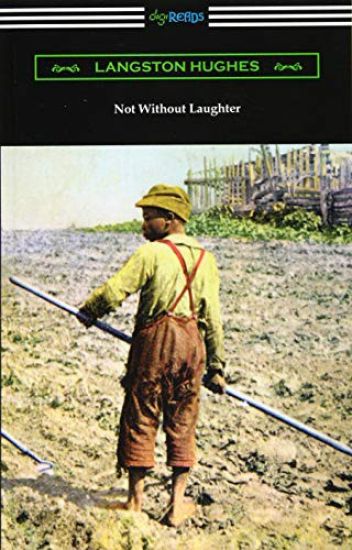
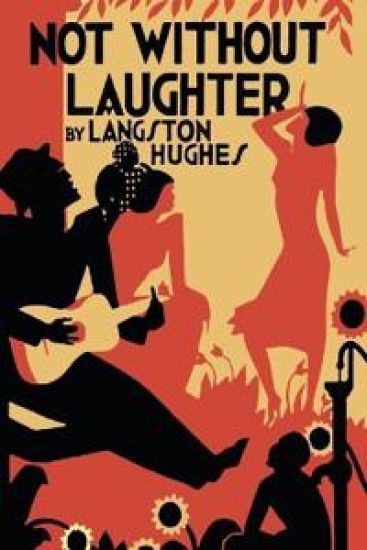
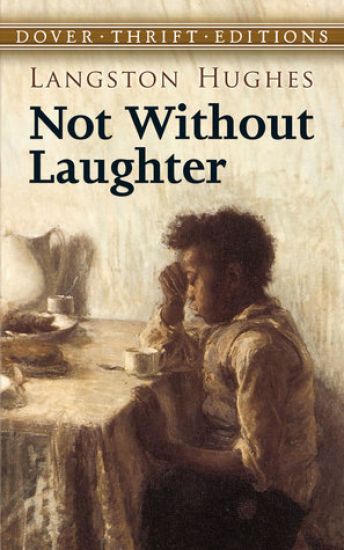
First published in 1930, "Not Without Laughter" is the debut novel by Langston Hughes and a deeply personal, semi-autobiographical tale of an African-American family in rural Kansas. Langston Hughes, born in 1902 in Joplin, Missouri, spent much of his youth in Lawrence, Kansas and it is here that he set his first novel. "Not Without Laughter" tells the story of young Sandy Rogers as he grows from a boy to a young man and focuses on his "awakening to the sad and beautiful realities of black life in a small Kansas town". Sandy clashes with his irresponsible father, Jimboy, and relies on the hard work of his mother Annjelica and his tough grandmother, Aunt Hager, to survive the challenges of poverty and race in early-twentieth century rural America. Sandy's struggles mirror that of Hughes, who also had a strained and difficult relationship with his often absent father and was mainly raised by his maternal grandmother, a proud and strong woman who installed in Hughes a deep pride in his African-American heritage. "Not Without Laughter" is a powerful and moving portrait of race and poverty in America, as well as an important and inspiring story of hope and perseverance. This edition is printed on premium acid-free paper.
The Sweet Flypaper of Life
Roy DeCarava; Langston Hughes; Sherry Turner DeCarava
David Zwirner
2018
nidottu
Halvin toimitettuna 22,70 €
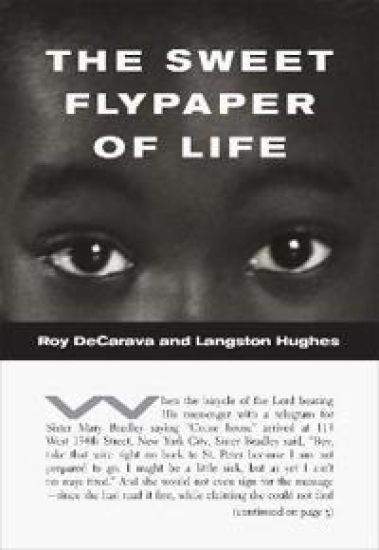
The Sweet Flypaper of Life is a "poem" about ordinary people, about teenagers around a jukebox, about children at an open fire hydrant, about riding the subway alone at night, about picket lines and artist work spaces. This renowned, life-affirming collaboration between artist Roy DeCarava and writer Langston Hughes honors in words and pictures what the authors saw, knew and felt deeply about life in their city. Hughes' heart-warming description of Harlem in the late 1940s and early 1950s is seen through the eyes of one grandmother, Sister Mary Bradley. We experience the sights and sounds of Harlem through her learned and worldly eyes, expressed here through Hughes' poetic prose. As she states, "I done got my feet caught in the sweet flypaper of life and I'll be dogged if I want to get loose." DeCarava's photographs lay open a world of sense and feeling that begins with his perception and vision. The ruminations go beyond the limit of simple observation and contend with deeper meanings to reveal these individuals as subjects worthy of art. While Hughes states, "We've had so many books about how bad life is, maybe it's time to have one showing how good it is," the photographs bring us back to this lively dialogue and a complex reality, to a resolution that stands with the optimism of the photographic medium and the certainty of DeCarava's artistic moment. First published in 1955, the book, widely considered a classic of photographic visual literature, was reprinted by public demand several times. This fourth printing, the Heritage Edition, is the first authorized English-language edition since 1983 and includes an afterword by Sherry Turner DeCarava tracing the history and ongoing importance of this book.
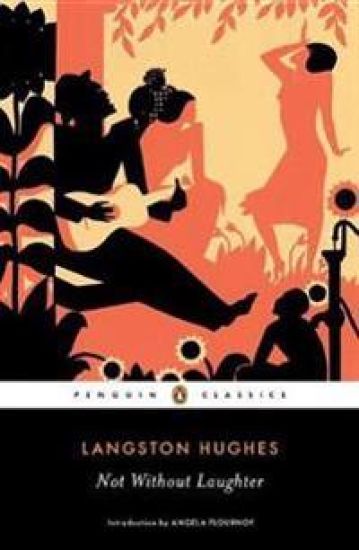
In a poor town in Kansas, an African American family struggles. At its centre sits Sandy Rodgers - a young boy attempting to find purpose amid the chaos, meagreness and music of his surroundings. His narrative intertwines with those of his family - his wandering father, his fervent grandmother, his blues-singing aunt - to create a brilliantly intricate portrait of Black life in the early twentieth century. Not Without Laughter, Langston Hughes' unforgettable debut novel, is a landmark in the history of a racially divided America and one of the jewels of the Harlem Renaissance.
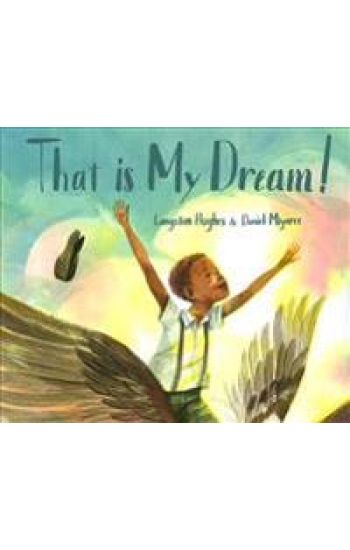
-Dream Variation, - one of Langston Hughes's most celebrated poems, about the dream of a world free of discrimination and racial prejudice, is now a picture book stunningly illustrated by Daniel Miyares, the acclaimed creator of Float. To fling my arms wide In some place of the sun, To whirl and to dance Till the white day is done.... Langston Hughes's inspiring and timeless message of pride, joy, and the dream of a better life is brilliantly and beautifully interpreted in Daniel Miyares's gorgeous artwork. Follow one African-American boy through the course of his day as the harsh reality of segregation and racial prejudice comes into vivid focus. But the boy dreams of a different life--one full of freedom, hope, and wild possibility, where he can fling his arms wide in the face of the sun. Hughes's powerful vision, brought joyously to life by Daniel Miyares, is as relevant--and necessary--today as when it was first written.

Letters from Langston
Langston Hughes; Robin D.G. Kelley
University of California Press
2016
sidottu
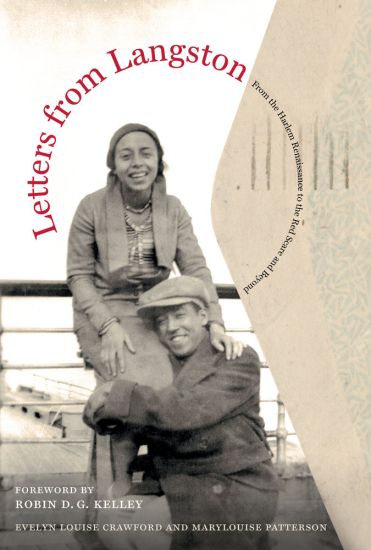
Langston Hughes, one of America's greatest writers, was an innovator of jazz poetry and a leader of the Harlem Renaissance whose poems and plays resonate widely today. Accessible, personal, and inspirational, Hughes' poems portray the African American community in struggle in the context of a turbulent modern United States and a rising black freedom movement. This indispensable volume of letters between Hughes and four leftist confidants sheds vivid light on his life and politics. Letters from Langston begins in 1930 and ends shortly before his death in 1967, providing a window into a unique, self-created world where Hughes lived at ease. This distinctive volume collects the stories of Hughes and his friends in an era of uncertainty and reveals their visions of an idealized world - one without hunger, war, racism, and class oppression.
Letters from Langston
Langston Hughes; Robin D.G. Kelley
University of California Press
2016
pokkari
Langston Hughes, one of America's greatest writers, was an innovator of jazz poetry and a leader of the Harlem Renaissance whose poems and plays resonate widely today. Accessible, personal, and inspirational, Hughes' poems portray the African American community in struggle in the context of a turbulent modern United States and a rising black freedom movement. This indispensable volume of letters between Hughes and four leftist confidants sheds vivid light on his life and politics. Letters from Langston begins in 1930 and ends shortly before his death in 1967, providing a window into a unique, self-created world where Hughes lived at ease. This distinctive volume collects the stories of Hughes and his friends in an era of uncertainty and reveals their visions of an idealized world-one without hunger, war, racism, and class oppression.
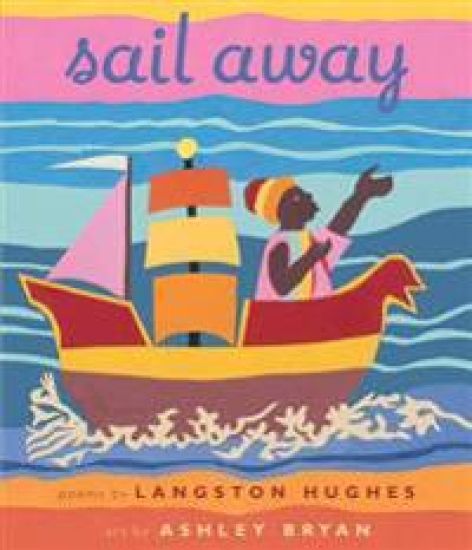
A celebration of mermaids, wildernesses of waves, and the creatures of the deep through poems by Langston Hughes and cut-paper collage illustrations by multiple Coretta Scott King Award winner Ashley Bryan. The great African American poet Langston Hughes penned poem after poem about the majesty of the sea, and the great African American artist Ashley Bryan, who's spent more than half his life on a small island, is as drawn to the sea as much as he draws the sea. Their talents combine in this windswept collection of illustrated poems--from "The Negro Speaks of Rivers" to "Seascape," from "Sea Calm" to "Sea Charm"--that celebrates all things oceanic.
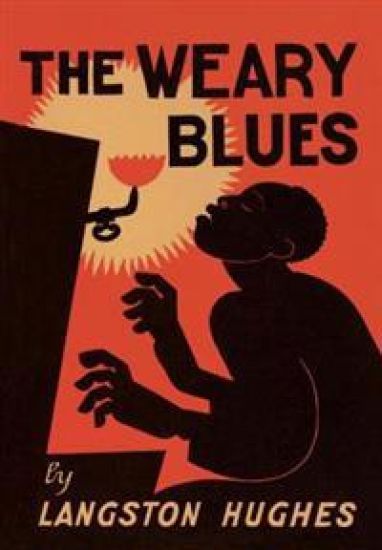
This celebratory edition of the classic poetry collection reminds us of Hughes's stunning achievement, speaking directly, intimately, and powerfully of Black experiences at a time when Black voices were newly being heard in American literature. - With an introduction by poet Kevin Young. Beginning with the opening "Proem" (prologue poem) Huges writes, "I am a Negro: / Black as the night is black, / Black like the depths of my Africa." As the legendary Carl Van Vechten wrote in a brief introduction to the original 1926 edition, "His cabaret songs throb with the true jazz rhythm; his sea-pieces ache with a calm, melancholy lyricism; he cries bitterly from the heart of his race... Always, however, his stanzas are subjective, personal," and, he concludes, they are the expression of "an essentially sensitive and subtly illusive nature." That illusive nature darts among these early lines and begins to reveal itself, with precocious confidence and clarity. In a new introduction to the work, the poet and editor Kevin Young suggests that Hughes, who was 24 at the time of the original publication, from this very first moment is "celebrating, critiquing, and completing the American dream," and that he manages to take Walt Whitman's American "I" and write himself into it. We find here not only such classics as "The Negro Speaks of Rivers" and the great twentieth-century anthem that begins "I, too, sing America," but also the poet's shorter lyrics and fancies, which dream just as deeply. "Bring me all of your / Heart melodies," the young Hughes offers, "That I may wrap them / In a blue cloud-cloth / Away from the too-rough fingers / Of the world."
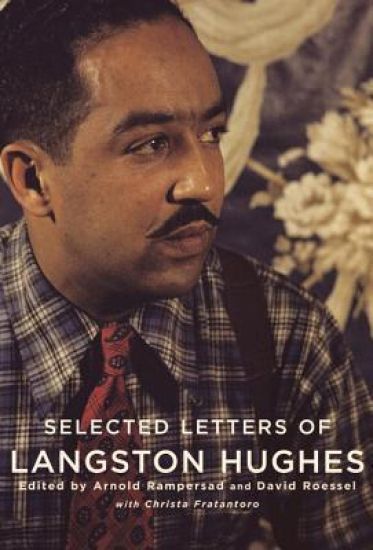
This is the first comprehensive selection from the correspondence of the iconic and beloved Langston Hughes. It offers a life in letters that showcases his many struggles as well as his memorable achievements. Arranged by decade and linked by expert commentary, the volume guides us through Hughes's journey in all its aspects: personal, political, practical, and--above all--literary. His letters range from those written to family members, notably his father (who opposed Langston's literary ambitions), and to friends, fellow artists, critics, and readers who sought him out by mail. These figures include personalities such as Carl Van Vechten, Blanche Knopf, Zora Neale Hurston, Arna Bontemps, Vachel Lindsay, Ezra Pound, Richard Wright, Kurt Weill, Carl Sandburg, Gwendolyn Brooks, James Baldwin, Martin Luther King, Jr., Alice Walker, Amiri Baraka, and Muhammad Ali. The letters tell the story of a determined poet precociously finding his mature voice; struggling to realize his literary goals in an environment generally hostile to blacks; reaching out bravely to the young and challenging them to aspire beyond the bonds of segregation; using his artistic prestige to serve the disenfranchised and the cause of social justice; irrepressibly laughing at the world despite its quirks and humiliations. Venturing bravely on what he called the "big sea" of life, Hughes made his way forward always aware that his only hope of self-fulfillment and a sense of personal integrity lay in diligently pursuing his literary vocation. Hughes's voice in these pages, enhanced by photographs and quotations from his poetry, allows us to know him intimately and gives us an unusually rich picture of this generous, visionary, gratifyingly good man who was also a genius of modern American letters.
The Mule-Bone
Langston Hughes; Zora Hurston
Createspace Independent Publishing Platform
2014
nidottu
Mule Bone: A Comedy of Negro Life is a 1930 play by American authors Langston Hughes and Zora Neale Hurston. The process of writing the play led Hughes and Hurston, who had been close friends, to sever their relationship. Mule Bone was not staged until 1991. The play begins in Eatonville, Florida, on a Saturday afternoon with Jim and Dave fighting for Daisy's affection. The two men come to blows, and Jim picks up a hock bone from a mule and knocks Dave out. Jim is arrested and held for trial in Joe Clarke's barn. On Monday, the trial begins in the Macedonia Baptist Church. The townspeople are divided along religious lines: Jim's Methodist supporters sit on one side of the church, Dave's Baptist supporters on the other. The issue to be decided at the trial is whether or not Jim has committed a crime. Jim admits he hit Dave but denies it was a crime. Elder Simms argues on Jim's behalf that a weapon is necessary to commit a crime, and nowhere in the Bible does it say a mule bone is a weapon. Elder Childers, representing Dave, says Samson used a donkey's jawbone to kill 3,000 men (citing Judges 18:18), 2] so the hock bone of a mule must be even more powerful. Joe Clarke declares Jim guilty and banishes him from town for two years. Hughes and Hurston began writing Mule Bone in March 1930. They wanted to write a comedy about African-American life that didn't consist of racial stereotypes. They decided to base the plot on a folktale Hurston had collected in Florida during one of her anthropological field trips. The two writers dictated their work to Louise Thompson, who typed it. Their work was almost completed in June, when Hurston went away for the summer. She took her notes and said she would return in the fall, and they could finish the play. When Hurston came back, she would not return telephone calls from Hughes. She felt he wanted Thompson to be considered a third collaborator in the project, a proposal to which she strongly objected. 7] 8] Concurrently, Hughes was in the process of severing his relationship with their common literary patron, Mrs. Rufus Osgood Mason. Reviewers have conjectured that Hurston may have been trying to protect her own relationship with Mason by shunning Hughes. Hurston submitted Mule Bone for copyright in October 1930, listing herself as the only author. In January 1931, Hughes found that a copy of Mule Bone had been sent to the Gilpin Players, an all-black theatre company in Cleveland, for their consideration-bearing only Hurston's name. Hurston told Hughes she hadn't sent them the play, an assertion that was true, but Hughes was furious. He sent a copy for copyright under both their names. In the meantime, the Gilpin Players wanted to stage the play. The play was still somewhat rough, but Hughes was in Cleveland, and he offered to help rewrite portions of the play. Hurston sent a telegram advising that she refused to allow the production. A day later, she sent another telegram authorizing the production on the condition that she be allowed to work with Hughes on changes. That same day, Hughes received a letter from Hurston saying that no part of the play had been written by him. In light of all the off-stage drama, the Gilpin Players decided not to proceed with their production. The copy of Mule Bone in the Langston Hughes papers at Yale University has a hand-written notation by Hughes: "This play was never done because the authors fell out.
With graceful words as smooth as a song, the poet Langston Hughes celebrates the love between a mother and her baby. This picture book edition is a gift to share. Award-winning illustrator Sean Qualls's painted and collaged artwork captures universally powerful maternal moments with tenderness. In the end, readers will find a rare photo of baby Hughes and his mother, a biographical note, further reading, and the complete lullaby. Like little love-ones, this beautiful book is a treasure." My little dark baby, / My little earth-thing, / My little love-one, / What shall I sing / For your lullaby?"
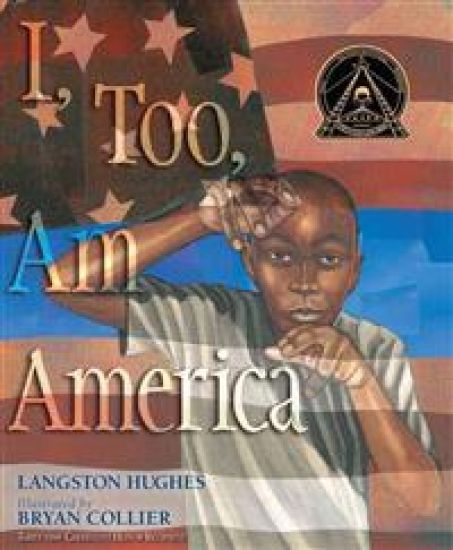
Winner of the Coretta Scott King illustrator award, I, Too, Am America blends the poetic wisdom of Langston Hughes with visionary illustrations from Bryan Collier in this inspirational picture book that carries the promise of equality. I, too, sing America. I am the darker brother. They send me to eat in the kitchenWhen company comes, But I laugh, And eat well, And grow strong. Langston Hughes was a courageous voice of his time, and his authentic call for equality still rings true today. Beautiful paintings from Barack Obama illustrator Bryan Collier accompany and reinvent the celebrated lines of the poem "I, Too," creating a breathtaking reminder to all Americans that we are united despite our differences. This picture book of Langston Hughes's celebrated poem, "I, Too, Am America," is also a Common Core Text Exemplar for Poetry.

Fight for Freedom: The Story of the NAACP
Langston Hughes; Arthur B. Spingarn
Literary Licensing, LLC
2011
nidottu

Fight for Freedom: The Story of the NAACP
Langston Hughes; Arthur B. Spingarn
Literary Licensing, LLC
2011
sidottu
""Fight For Freedom: The Story Of The NAACP"" by Langston Hughes is a comprehensive account of the National Association for the Advancement of Colored People (NAACP). The book traces the history of the organization from its inception in 1909 to its role in the civil rights movement of the 1960s. Hughes provides an in-depth analysis of the NAACP's strategies and tactics, including its legal battles, lobbying efforts, and grassroots organizing. He also explores the key figures who led the organization, including W. E. B. Du Bois, Thurgood Marshall, and Rosa Parks. The book highlights the NAACP's successes, such as its role in the landmark Brown v. Board of Education Supreme Court case, as well as its challenges, including internal divisions and external opposition. Overall, ""Fight For Freedom"" is a powerful and engaging narrative that sheds light on the NAACP's crucial role in the struggle for racial justice in America. It is a must-read for anyone interested in the history of the civil rights movement and the ongoing fight for equality and social justice. This scarce antiquarian book is a facsimile reprint of the old original and may contain some imperfections such as library marks and notations. Because we believe this work is culturally important, we have made it available as part of our commitment for protecting, preserving, and promoting the world's literature in affordable, high quality, modern editions, that are true to their original work.
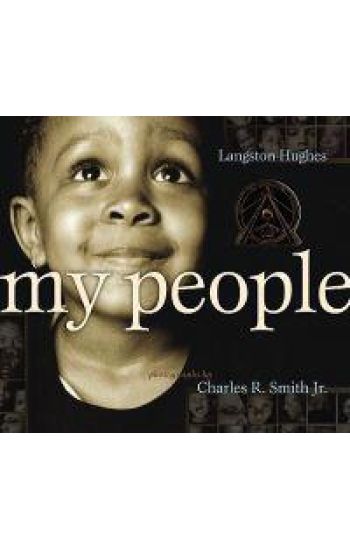
This Coretta Scott King Award-winning photography book based on Langston Hughes's classic poem is perfect for kids and moving and powerful for readers of all ages. Langston Hughes's spare yet eloquent tribute to his people has been cherished for generations. Now, acclaimed photographer Charles R. Smith Jr. interprets this beloved poem in vivid sepia photographs that capture the glory, the beauty, and the soul of being a black American today.
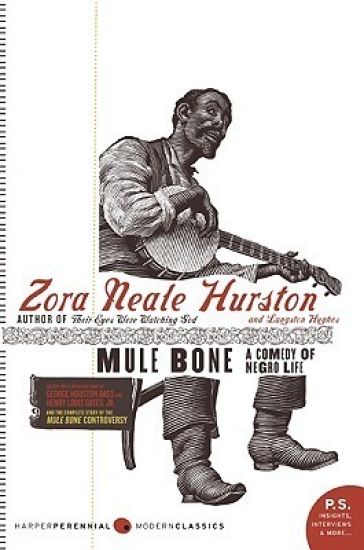
In 1930, two giants of African American literature joined forces to create a lively, insightful, often wildly farcical look inside a rural Southern black community—the three-act play Mule Bone. In this hilarious story, Jim and Dave are a struggling song-and-dance team, and when a woman comes between them, chaos ensues in their tiny Florida hometown. This extraordinary theatrical work broke new ground while triggering a bitter controversy between the collaborators that kept it out of the public eye for sixty years. This edition of the rarely seen stage classic features Hurston's original short story, "The Bone of Contention," as well as the complete recounting of the acrimonious literary dispute that prevented Mule Bone from being produced or published until decades after the authors' deaths.
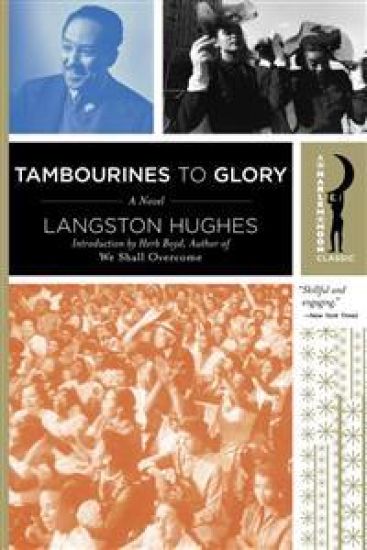
Determined to escape the poverty of public assistance, Essie Belle Johnson and Laura Reed, neighbors living in adjoining tenement apartments, are inspired to start a church in the heart of 1950s Harlem, using Laura's talents for the limelight and Essie's charismatic singing to establish the Tambourine Temple. Reprint. 10,000 first printing.
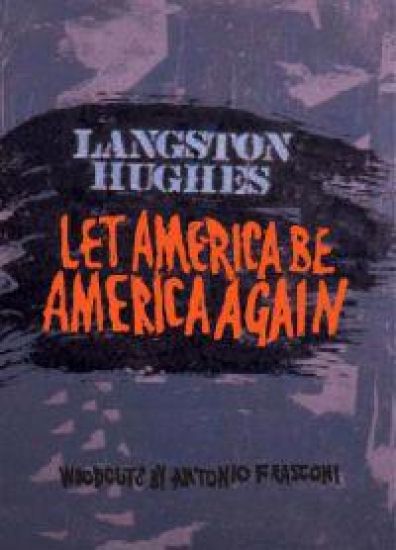
A newly-illustrated edition of the classic poem, used extensively by John Kerry is his Presidential campaign. World-renowned poet and master of prose Langston Hughes enlightened Americans nationwide when his poem Let America Be America Again appeared in 1936. Today, more than half a century later, this poem's insights into American society and its dream of social justice continue to resonate powerfully among readers. In celebration of the poem's inspiring message, artist Antonio Frasconi illustrated Hughes' poem with thirty-two woodcuts in an extraordinary limited-edition artist's book, adding a rich visual dimension to the poet's verses. Henry Louis Gates, Jr., noted scholar and W. E. B. Du Bois Professor of the Humanities at Harvard University, contributed a foreword. A popular edition of this work, Let America Be America Again brings their important collaboration to a wider audience, faithfully reproducing the intricacy and subtlety of Frasconi's prints. Each coupling of image and stanza conveys Hughes'and Frasconi'sdream of justice for all with compelling force. A call to fulfill this country's potential for greatness, Let America Be America Again will touch every American who reads its pages.