Kirjojen hintavertailu – 12 859 828 kirjaa ja 27 kauppaa

Kirjailija

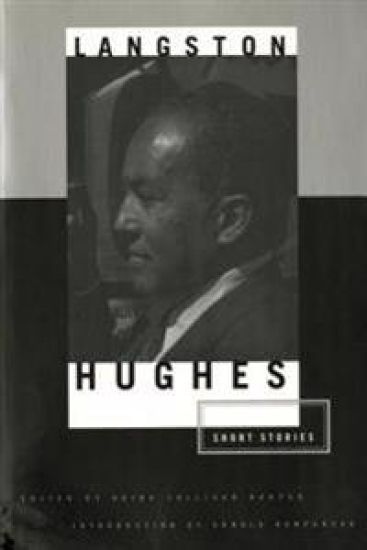
Langston Hughes

Kirjat ja teokset yhdessä paikassa: 84 kirjaa, julkaisuja vuosilta 1931–2026, suosituimpiin kuuluu Graphic Classics Volume 22: African-American Classics. Vertaile teosten hintoja ja tarkista saatavuus suomalaisista kirjakaupoista.

84 kirjaa

Kirjojen julkaisuvuodet: 1931–2026.

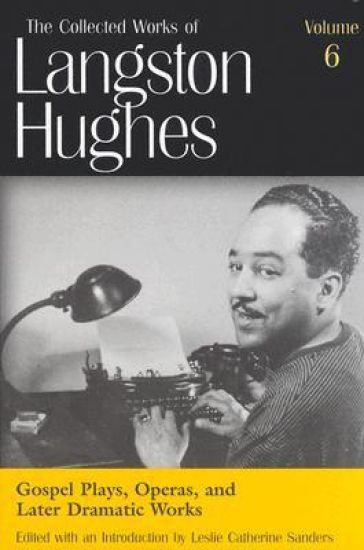
The Collected Works of Langston Hughes v. 6; Gospel Plays, Operas and Later Dramatic Works
Although Langston Hughes had a lifelong engagement in theatre and other performance arts, his work in this area is the least known of his rich and complex contributions to African American expressive culture. This volume focuses on Hughes's plays after 1942, along with all of his other work written for performance, including operas, musicals, radio plays, ballet libretti and song lyrics, all of which demonstrate his strong determination to inject an African American presence into a range of cultural forms. In 1943, Hughes brought into being what would become his most famous character, Jesse B. Semple - not for the stage, but for a newspaper column he would write for the ""Chicago Defender"" for 15 years and then for the ""New York Post"" until 1965. Hughes revised and collected the stories into four books, and following the success of his second collection, ""Simple Takes a Wife"", composed a play of the same name, which he later turned into the musical ""Simply Heavenly"". Although well known, this work was atypical of Hughes's interests during the postwar period. It was African American music that engaged him, particularly gospel music, which was, in the 1950s, acquiring significant crossover success. Aside from a few educational or occasional pieces, virtually all of Hughes's stage writing after 1942 incorporated music in some form. He wrote five complete operas, as well as musicals, gospel plays, several cantatas, two very successful Broadway productions, and the more than 30 plays that he provided to community theatres and collegiate, church and amateur groups. It was inevitable that HUghes, the most prolific of African American playwrights at that time, would seek to employ the music genre that dominated Broadway during the 1940s and 1950s to tell his own kind of stories. Hughes's intense engagement with theatre and other performance arts lasted more than 35 years. In every genre he attempted, Hughes left unforgettable and inspiring work, giving rise to the range and richness of contemporary African American theatrical achievement.
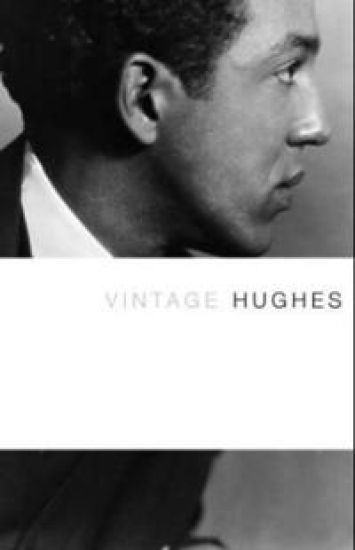
Vintage Hughes

Vintage Hughes

Langston Hughes

Knopf Doubleday Publishing Group
2004
nidottu
The perfect introduction to one of the most important writers to emerge from the Harlem Renaissance of the 1920s and '30s, featuring a career-spanning collection of poems and three of his most powerful stories. "Langston Hughes is a titanic figure in 20th-century American literature ... a powerful interpreter of the American experience." The Philadelphia Inquirer Hughes's work blends elements of blues and jazz, speech and song, into a triumphant and wholly original idiom. Vintage Hughes includes the famed poems "The Negro Speaks of Rivers," "I, Too," "The Weary Blues," "America," "Let America Be America Again," "Dream Variations," "Young Sailor," "Afro-American Fragment," "Scottsboro," "The Negro Mother," "Good Morning Revolution," "I Dream a World," "The Heart of Harlem," "Freedom Train," "Song for Billie Holliday," "Nightmare Boogie," "Africa," "Black Panther," "Birmingham Sunday," and "UnAmerican Investigators"; and three stories from the collection The Ways of White Folks: "Cora Unashamed," "Home," and "The Blues I'm Playing."
Autobiography (LH14) Volume 14

Autobiography (LH14) Volume 14

Langston Hughes

University of Missouri Press
2003
sidottu
This is the second volume of Langston Hughes's autobiography, charting the period of his life from age 29 to 35. It is filled with portraits of the people and places Hughes encountered during his travels around the world.
The Collected Works of Langston Hughes v. 5; Plays to 1942 - ""Mulatto"" to ""The Sun Do Move
But someday somebody'll Stand up and talk about me - Black and beautiful - And sing about me. And put on plays about me! I reckon it'll be Me myself! Yes, it'll be me. Langston Hughes is least known for his theatrical endeavors, yet his attention to the theater was lifelong. His love of the stage began in childhood, and from the late 1920s on he was continually writing plays, for black community theater, for theater companies he established himself, and for the Broadway and off-Broadway stage. His early plays endeavor to provide ""authentic"" representations of African American life, both to counter and correct the stereotypical stage portrayals of African Americans in white theater and to provide suitable plays for black theater companies hungry for scripts that would entertain and challenge black audiences. Volume 5 of The Collected Works of Langston Hughes includes the plays Hughes wrote between 1930 and 1942, alone and in collaboration. Almost all the plays were performed during the same period; a few have never seen the stage, but are included because they indicate the range of Hughes's artistic and political concerns. Because very few of the plays in this volume have been previously published, they disclose a side of Langston Hughes's artistry that is virtually unknown.
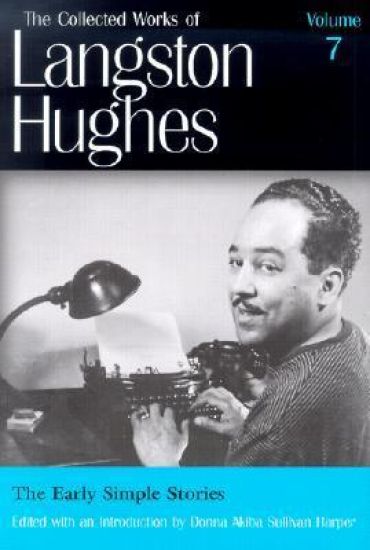
The Collected Works of Langston Hughes v. 7; Early Simple Stories

The Collected Works of Langston Hughes v. 7; Early Simple Stories

Langston Hughes

University of Missouri Press
2002
sidottu
Jesse B. Semple first sprang to life in Langston Hughes's weekly Chicago Defender column in 1943. Almost immediately, the ""Simple stories,"" as they were routinely called, had a large and ever-increasing audience. Simple soon became Harlem's Everyman - an ordinary black workingman, representative of the masses of black folks in the 1940s. Simple had migrated to Harlem, like many other blacks, seeking to escape the racism of the South, and he celebrated his new freedoms despite the economic struggles he still confronted. Simple's bar buddy and foil in the stories is the better-educated, more articulate Boyd who has never lived in the South. Their conversations permit Simple to speak the wisdom of the working class. By the time the first book of Simple stories was published, Hughes had honed and polished these two characters, enhancing the distinctions between the vernacular language of Simple and the more educated diction of his friend. Remaining within the Afrocentric world that was his chosen sphere, Hughes makes clear the message that Simple and Boyd are very much alike; both are black men in a racially unbalanced society. Both exist in a world within a world, in Harlem, the separate black community of New York City. Countless exchanges between Simple and his companion offer wit and wisdom that remind contemporary readers why Langston Hughes is so special.
Remember Me to Harlem: The Letters of Langston Hughes and Carl Van Vechten
Langston Hughes is widely remembered as a celebrated star of the Harlem Renaissance -- a writer whose bluesy, lyrical poems and novels still have broad appeal. What's less well known about Hughes is that for much of his life he maintained a friendship with Carl Van Vechten, a flamboyant white critic, writer, and photographer whose ardent support of black artists was peerless. Despite their differences -- Van Vechten was forty-four to Hughes twenty-two when they met-Hughes' and Van Vechten's shared interest in black culture lead to a deeply-felt, if unconventional friendship that would span some forty years. Between them they knew everyone -- from Zora Neale Hurston to Richard Wright, and their letters, lovingly and expertly collected here for the first time, are filled with gossip about the antics of the great and the forgotten, as well as with talk that ranged from race relations to blues lyrics to the nightspots of Harlem, which they both loved to prowl. It's a correspondence that, as Emily Bernard notes in her introduction, provides "an unusual record of entertainment, politics, and culture as seen through the eyes of two fascinating and irreverent men.
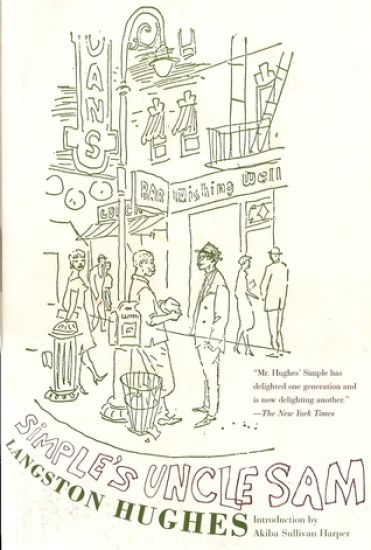
Simple's Uncle Sam: With a New Introduction by Akiba Sullivan Harper
Langston Hughes's most beloved character comes back to life in this extraordinary collection, Simple's Uncle Sam, featuring a new introduction by Akiba Sullivan Harper. Langston Hughes is best known as a poet, but he was also a prolific writer of theater, autobiography, and fiction. None of his creations won the hearts and minds of his readers as did Jesse B. Semple, better known as "Simple." Simple speaks as an Everyman for African Americans in Uncle Sam's America. With great wit, he expounds on topics as varied as women, Gospel music, and sports heroes--but always keeps one foot planted in the realm of politics and race. Over the years readers have been able to appreciate Simple's situational humor as well as his poignant questions about social injustice in The Best of Simple and The Return of Simple. Now they can, once again, enjoy the last of Hughes's original Simple books.
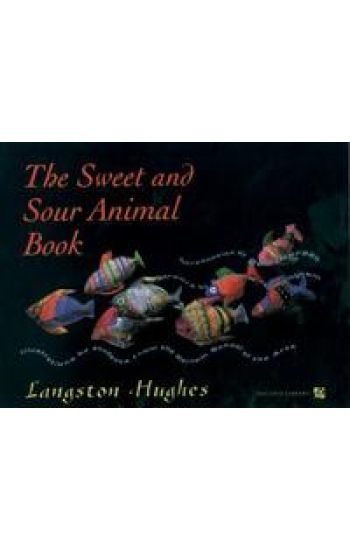
The Sweet and Sour Animal Book

The Sweet and Sour Animal Book

Langston Hughes

Oxford University Press
1997
nidottu
In 26 never-before-published short and wonderfully clever poems, Langston Hughes takes children through both the alphabet and the animal world. From Ape to Zebra--with bees, camels, fish, and even a unicorn in between--he paints a picture of each animal with just a few simple, but telling, words.
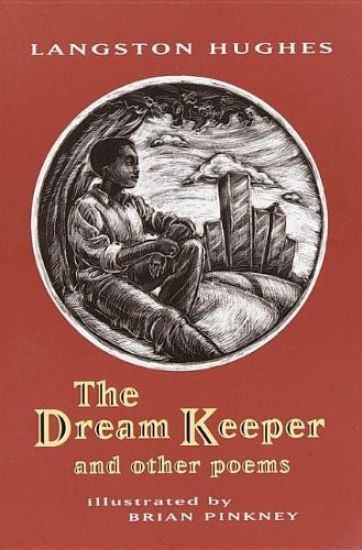
The Dream Keeper: And Other Poems

The Dream Keeper: And Other Poems

Langston Hughes

Alfred A. Knopf Books for Young Readers
1996
nidottu
Illus. in black-and-white. This classic collection of poetry is available in a handsome new gift edition that includes seven additional poems written after The Dream Keeper was first published. In a larger format, featuring Brian Pinkney's scratchboard art on every spread, Hughes's inspirational message to young people is as relevant today as it was in 1932.
Collected Poems of Langston Hughes

Collected Poems of Langston Hughes

Langston Hughes

Vintage Books
1995
nidottu

Halvin toimitettuna 23,40 €

"The ultimate book for both the dabbler and serious scholar--. [Hughes] is sumptuous and sharp, playful and sparse, grounded in an earthy music--. This book is a glorious revelation."--Boston GlobeSpanning five decades and comprising 868 poems (nearly 300 of which have never before appeared in book form), this magnificent volume is the definitive sampling of a writer who has been called the poet laureate of African America--and perhaps our greatest popular poet since Walt Whitman. Here, for the first time, are all the poems that Langston Hughes published during his lifetime, arranged in the general order in which he wrote them and annotated by Arnold Rampersad and David Roessel. Alongside such famous works as "The Negro Speaks of Rivers" and Montage of a Dream Deferred, The Collected Poems includes the author's lesser-known verse for children; topical poems distributed through the Associated Negro Press; and poems such as "Goodbye Christ" that were once suppressed. Lyrical and pungent, passionate and polemical, the result is a treasure of a book, the essential collection of a poet whose words have entered our common language.
Langston Hughes and the *Chicago Defender*

Langston Hughes and the *Chicago Defender*

Langston Hughes

University of Illinois Press
1995
nidottu
Langston Hughes is well known as a poet, playwright, novelist, social activist, communist sympathizer, and brilliant member of the Harlem Renaissance. He has been referred to as the "Dean of Black Letters" and the "poet low-rate of Harlem." But it was as a columnist for the famous African-American newspaper the Chicago Defender that Hughes chronicled the hopes and despair of his people. For twenty years, he wrote forcefully about international race relations, Jim Crow, the South, white supremacy, imperialism and fascism, segregation in the armed forces, the Soviet Union and communism, and African-American art and culture. None of the racial hypocrisies of American life escaped his searing, ironic prose. This is the first collection of Hughes's nonfiction journalistic writings. For readers new to Hughes, it is an excellent introduction; for those familiar with him, it gives new insights into his poems and fiction.
The Big Sea

The Big Sea

Langston Hughes

Hill Wang Inc.,U.S.
1993
nidottu

Halvin toimitettuna 22,20 €

Introduction by Arnold Rampersad. Langston Hughes, born in 1902, came of age early in the 1920s. In "The Big Sea he recounts those memorable years in the two great playgrounds of the decade--Harlem and Paris. In Paris he was a cook and waiter in nightclubs. He knew the musicians and dancers, the drunks and dope fiends. In Harlem he was a rising young poet--at the center of the "Harlem Renaissance." Arnold Rampersad writes in his incisive new introduction to "The Big Sea, an American classic: "This is American writing at its best--simpler than Hemingway; as simple and direct as that of another Missouri-born writer... Mark Twain."
The Panther & the Lash

The Panther & the Lash

Langston Hughes

VINTAGE
1992
nidottu
Hughes's last collection of poems commemorates the experience of Black Americans in a voice that no reader could fail to hear--the last testament of a great American writer who grappled fearlessly and artfully with the most compelling issues of his time. "Langston Hughes is a titanic figure in 20th-century American literature ... a powerful interpreter of the American experience." --The Philadelphia InquirerFrom the publication of his first book in 1926, Langston Hughes was America's acknowledged poet of color. Here, Hughes's voice--sometimes ironic, sometimes bitter, always powerful--is more pointed than ever before, as he explicitly addresses the racial politics of the sixties in such pieces as "Prime," "Motto," "Dream Deferred," "Frederick Douglas: 1817-1895," "Still Here," "Birmingham Sunday." " History," "Slave," "Warning," and "Daybreak in Alabama."
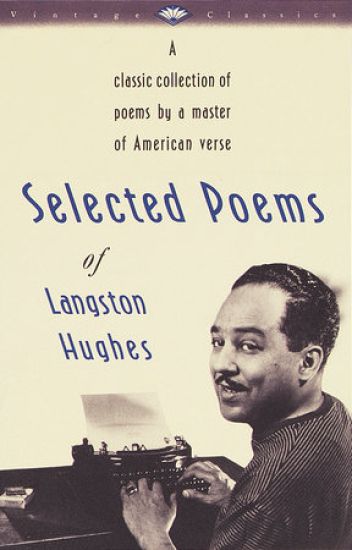
Selected Poems of Langston Hughes

Selected Poems of Langston Hughes

Langston Hughes

Vintage Books
1990
nidottu
With the publication of his first book of poems, The Weary Blues, in 1926, Langston Hughes electrified readers and launched a renaissance in black writing in America. The poems Hughes wrote celebrated the experience of invisible men and women: of slaves who "rushed the boots of Washington"; of musicians on Lenox Avenue; of the poor and the lovesick; of losers in "the raffle of night." They conveyed that experience in a voice that blended the spoken with the sung, that turned poetic lines into the phrases of jazz and blues, and that ripped through the curtain separating high from popular culture. They spanned the range from the lyric to the polemic, ringing out "wonder and pain and terror-- and the marrow of the bone of life." The poems in this collection were chosen by Hughes himself shortly before his death in 1967 and represent work from his entire career, including "The Negro Speaks of Rivers," "The Weary Blues," "Still Here," "Song for a Dark Girl," "Montage of a Dream Deferred," and "Refugee in America." It gives us a poet of extraordinary range, directness, and stylistic virtuosity.