Kirjojen hintavertailu – 12 903 724 kirjaa ja 27 kauppaa
Kirjailija
Office of Air Force History
Kirjat ja teokset yhdessä paikassa: 219 kirjaa, julkaisuja vuosilta 1983–2015, suosituimpiin kuuluu Pearl to V-J Day: World War II in the Pacific. Vertaile teosten hintoja ja tarkista saatavuus suomalaisista kirjakaupoista.
USAF Plans and Policies in South Vietnam, 1961-1963, follows two previous studies prepared on counterinsurgency by the USAF Historical Division Liaison Office: USAF CounterinsurgencyDoctrines and Capabilities, 1961-1962, and USAFSpecial Air Warfare Doctrines and Capabilities, 1963. This study outlines the role of Headquarters USAF in aiding the South Vietnamese effort to defeat the communist led Viet Cong. The author begins by discussing general U. S. policy leading to increased military and economic assistance to South Vietnam. He then describes the principal USAF deployments and augmentations, Air Force efforts to obtain a larger military planning role, some facets of plans and operations, the Air Force-Army divergencies over the use and control of airpower in combat training and in testing, defoliation activities, and USAF support for the Vietnamese Air Force. The study ends with an account of events leading to the overthrow of the Diem government in Saigon late in 1963. Because this study emphasizes plans and policies, no effort has been made to chronicle the hundreds of individual air actions in which USAF units participated. However, operational data for the 1961-1963 period is available in the appendices and in other sources, including histories of the participating commands and units, some of which are on file in the USAF Historical Division Liaison Office.
USAF Logistic Plans and Policies in Southeast Asia, 1965 is the latest of a series of studies prepared by the USAF Historical Division Liaison Office on the current war. Previous published histories include: USAF Plans and Policies in South Vietnam, 1961-1963; USAF Plans and Policies in South Vietnam and Laos, 1964; and USAF: Plansand Operations in Southeast Asia, 1965. This study briefly reviews the status of the USAF logistic system prior to the 1965 buildup of American forces in Southeast Asia and the steps taken by the Air Force to support them. Separate chapters cover the construction of new air bases in the theater, plans relating to conventional war munitions stockage, and efforts to obtain anadequate fuel supply system. Appendices also have been provided on aircraft readiness rates and the ordnance inventory.
USAF Deployment Planning for Southeast Asia, 1966 is the fifth in a series of special historical monographs on the war in Southeast Asia prepared by the USAF Historical Division Liaison Office. After discussing briefly Air Force views on the strategy for the war, the study describes the administration's deployment planning into 1968for Southeast Asia and other Pacific Command areas. It focuses especially on the impact of the planning on the Air Force's resources and world-wide defense posture.
USAF Plans and Policies: R&D For Southeast Asia, 1965-1967 is the most recent publication by the Office of Air Force History (AFCHO) dealing with the war in Vietnam. The author first considers--within the context of the U. S. Southeast Asian policy--the evolution of limited war R&D concepts prior to 1965 and then shows how these influenced USAF research and development programs in this area during 1965-1967. He examines the changes that the Air Force had to make in its R&D funding procedures, organization, and policies as it made the transition from peacetime to a war situation. He also reviews the development of conventional weapons and munitions as the Air Force shifted its emphasis from nuclear to limited war R&D.
USAF Manpower in Limited War, 1964-1967 discusses the Air Force effort to augment its manpower resources to meet the rapidly expanding requirements of the Vietnam war. Prior to the summer of 1965, when Southeast Asia operations sharply increased, the USAF manpower pool had been contracting as a result of previous decisions and actions. Thereafter, the trend was reversed and the Air Force undertook to enlarge its base as quickly as possible, although facing serious shortages of qualified officers and airmen. Its situation was made more difficult by competition from civilian industry. Many experienced USAF personnel --pilots, technicians, and other professionals--were drawn from the service by attractive salaries offered by the expanding private sector of the economy. Since new recruits were usually unskilled, the Air Training Command and many combat units had to shoulder the heaviest training burden since the Korean War. An unusual amount of strain, confusion, and overwork followed and, at times, deteriorated the combat readiness of many unitsnot directly involved in the war. Consequently, the Air Force sought to, improve its management procedures to insure the most effective utilizationand retention of its trained personnel. This study is the third in a series written by Dr. George F. Lemmer of the USAF Historical Division Liaison Office (AFCHO). Its predecessors were: The Changing Character of Air Force Manpower, 1958-1959, issued in April 1961, and USAF Manpower Trends 1960-1963, published in March1965.
USAF Plans and Policies: R&D for Southeast Asia, 1968 is the eleventh of a series of historical monographs prepared by the Office of Air Force History on various aspects of the war in Vietnam. It is a continuation of a previous study on the same subject written by the author. In this narrative, Mr. Wolk reviews several critical investigations of Air Force research and development procedures and programs, examines the functioning of the Southeast Asia Operational Requirement system, and discusses USAF efforts to modify or develop new systems and equipment to counter the enemy's growing air defenses in North Vietnam. He also reviews steps taken by the Air Force to improve bombing accuracies and briefly discusses the major systems which weredeveloped and deployed to the theater under Project Shed Light.
Covering the efforts of the United States from 1945 to September 1959 to wrestle with the unknown ramifications of space, this history includes both the civilian and military activities. An Air Force History of Space Activities presents a more detailed treatment of information published in 1960 under the title of Threshold of Space, 1945-1959. Other monographs on this subject include The Air Force in Space, 1959-1960, and (in draft) a sequel for fiscal year 1961. The author of this history begins with the work of the early pioneers in rocketry, the first satellite feasibility studies by the military, and the relationship of the ballistic missile to the space vehicle. He reviews the Russian and U. S. space programs between 1945 and 1957, during which efforts were made to create space law and the United States chose to pursue a space-for-peace policy. The conservatism of policy makers raised obstacles, but there were space projects, some of them under the Air Force. After the shock of Sputnik I, the reshaping of policy resulted in the establishment of ARPA in the Department of Defense and NASA as the civilian space agency. The author tells of ARPA's supremacy over the military services in 1958; its loss of control to NASA in October 1958; NASA's activities from then until July 1959; the position of the Air Force after losing out to both ARPA and NASA; and the Air Force's determination to cooperate with NASA, through research, development, and use of its facilities. Within the DOD in 1959, authority for space research and development was transferred from ARPA to DDR&E, interservice tension mounted, the AirForce struggled to regain lost projects and objected to Navy's appeal for a military space command, and the tide turned for the Air Force when the Secretary of Defense decided in September to give to it the responsibility for the development and launching of all DOD space boosters and for management of Sentry, Midas, and Discoverer.
This historical monograph was originally planned as part of a multi-volume history of the USAF guided missile program. However, personnel, organizational, and program realignments within the USAF Historical Division Liaison Office (AFCHO) forced abandonment of these plans. Consequently, the scope of the study is not that initially contemplated but its content seemed of sufficient interest to warrant publication. The monograph covers generally the so-called national guided missile program that slowly evolved between the closing months of World WarII and the beginning of the Korean War. More particularly, the monograph treats the interplay among the numerous national security agenciesas it concerned guided missiles. The guided missile was among the first weapon systems to be subjected to the disadvantages as well as the advantages of constant scrutiny and intervention at the interservice level. Moreover, this condition was aggravated no little by the interest, but not the forceful leadership, of a number of joint andother national security agencies a niche or more above the level of the services. In a sense, then, the guided missile became the "guinea pig"from which grew the paradoxical situation of both a centralization and proliferation of authority and responsibility over weapon development and use. Only in recent years has this peculiar set of circumstances been altered under the persistent pressure of strong centralization in the Office of the Secretary of Defense. For these reasons, the record of service actions and counteractions from the early guided missile years may well serve as a worthwhile addition to "lessons learned" documentation.
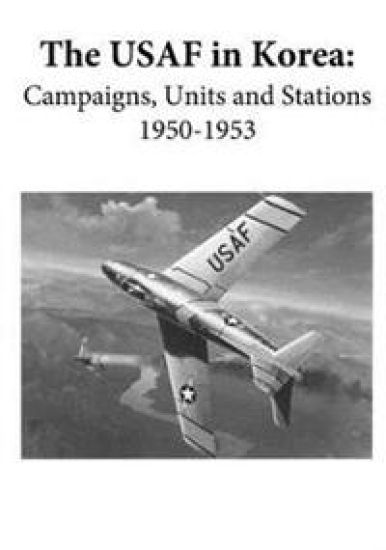
In commemoration of the Korean War, the U. S. Air Force History Program is publishing several works. One is this pamphlet, a companion volume to the air war chronology entitled The USAF in Korea: A Chronology, 1950-1953, which details monthly and daily USAF activities and operations in the theater. This pamphlet, The USAF in Korea: Campaigns, Units, and Stations, 1950-1953, provides information on the ten combat campaigns of the Korean War and gives an organizational view of tactical and support organizations carrying out combat operations. It also locates organizations or elements of organizations at their stations in Korea during the war and identifies designated K-Sites. The first part of the pamphlet describes and illustrates the Korean service medal and service streamer and the ten designated campaigns of the Korean War. Accompanied by pertinent maps, the campaign narratives are general and selective rather than comprehensive, with each summary highlighting aerial combat. This section is extracted from Dr. A. Timothy Warnock's referencework Air Force Combat Medals, Streamers, and Campaigns (Washington: USGPO, 1990). The second section comprises briefs on the combat flying organizations and a selected number of combat support organizations that operated in the theater. In instances where the tactical group and wing of the same number began combat at different times, the first to enter combat is summarized first; if both began operational missions at the same time, information on the parent wing is given first. Each brief in section two contains an operational summary of a given organization's activities in the war, but specific information in the Chronology is not repeated here. Next, where pertinent, is a listing of flying or mission components. Following that is an organization's station list based oninformation in the organization's histories; in some cases, the station shown in the brief will not agree with the station listings found in the third section of this pamphlet. The commanders of groups and wings are listed next, and whereapplicable, Korean War campaign streamers, Korean War decorations, and Medal of Honor recipients are identified. The organizations' official emblems at the time of the Korean War appear with their descriptions or blazons. The third part of the pamphlet contains the available official lists of Air Force units and organizations located in Korea, extracted directly from the bimonthly publication, Directory of USAF Organizations, issued by HQ USAF DCS/Comptroller. These listings date from July 1, 1950, which showed no USAF unit or organization located in Korea, to July 1, 1953, which listedstations and organizations located in Korea just before the end of the conflict. Unfortunately, we were not able to locate two issues of this series - May 1, 1951, and July 1, 1951. The issue of April 1952 was a special edition; then, the series reverted to bimonthly issues. These lists appear exactly as shown in the directories. The data contained in each issue reflects information provided by FEAF and other commands to the HQ USAF, Directorate of Statistical Services, Machine Accounting Division, through the end of the previous month. In some instances, the inputs did not specifically identify the location of an organization, leaving the reader to guess whether an organization was located in the town or at a nearby air base or airdrome. Rendering Koreanplace names in English inevitably results in a variety of spellings, and these lists are no exception. For example, the location generally known in USAF documents as Kangnung is in these lists consistently spelled as Kangnumg.
In commemoration of the Korean War, the U. S. Air Force History Program is publishing several works. One is this pamphlet, a companion volume to the air war chronology entitled The USAF in Korea: A Chronology, 1950-1953, which details monthly and daily USAF activities and operations in the theater. This pamphlet, The USAF in Korea: Campaigns, Units, and Stations, 1950-1953, provides information on the ten combat campaigns of the Korean War and gives an organizational view of tactical and support organizations carrying out combat operations. It also locates organizations or elements of organizations at their stations in Korea during the war and identifies designated K-Sites. The first part of the pamphlet describes and illustrates the Korean service medal and service streamer and the ten designated campaigns of the Korean War. Accompanied by pertinent maps, the campaign narratives are general and selective rather than comprehensive, with each summary highlighting aerial combat. This section is extracted from Dr. A. Timothy Warnock's referencework Air Force Combat Medals, Streamers, and Campaigns (Washington: USGPO, 1990). The second section comprises briefs on the combat flying organizations and a selected number of combat support organizations that operated in the theater. In instances where the tactical group and wing of the same number began combat at different times, the first to enter combat is summarized first; if both began operational missions at the same time, information on the parent wing is given first. Each brief in section two contains an operational summary of a given organization's activities in the war, but specific information in the Chronology is not repeated here. Next, where pertinent, is a listing of flying or mission components. Following that is an organization's station list based oninformation in the organization's histories; in some cases, the station shown in the brief will not agree with the station listings found in the third section of this pamphlet. The commanders of groups and wings are listed next, and whereapplicable, Korean War campaign streamers, Korean War decorations, and Medal of Honor recipients are identified. The organizations' official emblems at the time of the Korean War appear with their descriptions or blazons. The third part of the pamphlet contains the available official lists of Air Force units and organizations located in Korea, extracted directly from the bimonthly publication, Directory of USAF Organizations, issued by HQ USAF DCS/Comptroller. These listings date from July 1, 1950, which showed no USAF unit or organization located in Korea, to July 1, 1953, which listedstations and organizations located in Korea just before the end of the conflict. Unfortunately, we were not able to locate two issues of this series - May 1, 1951, and July 1, 1951. The issue of April 1952 was a special edition; then, the series reverted to bimonthly issues. These lists appear exactly as shown in the directories. The data contained in each issue reflects information provided by FEAF and other commands to the HQ USAF, Directorate of Statistical Services, Machine Accounting Division, through the end of the previous month. In some instances, the inputs did not specifically identify the location of an organization, leaving the reader to guess whether an organization was located in the town or at a nearby air base or airdrome. Rendering Koreanplace names in English inevitably results in a variety of spellings, and these lists are no exception. For example, the location generally known in USAF documents as Kangnung is in these lists consistently spelled as Kangnumg.
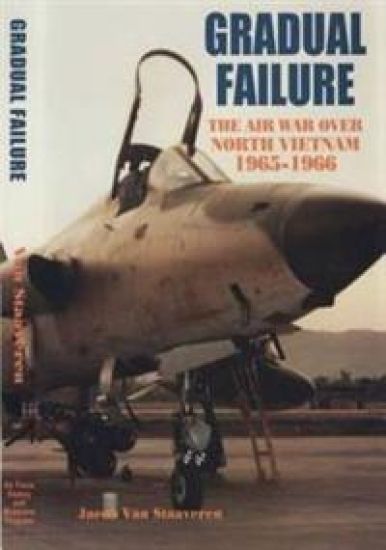
The United States Air Force reached its nadir during the opening two years of the Rolling Thunder air campaign in North Vietnam. Never had the Air Force operated with so many restraints and to so little effect. These pages are painful but necessary reading for all who care about the nation's military power. Jacob Van Staaveren wrote this book in the 1970s near the end of his distinguished government service, which began during the occupation of Japan; the University of Washington Press published his book on that experience in 1995. He was an Air Force historian in Korea during the Korean War, and he began to write about the Vietnam War while it was still being fought. His volume on the air war in Laos was declassified and published in 1993. Now this volume on the air war in North Vietnam has also been declassified and is being published for the first time. Although he retired to McMinnville, Oregon, a number of years ago, we asked him to review the manuscript and make any changes that seemed warranted. For the most part, this is the book he wrote soon afterthe war.
The Air Force instinctively disliked the slow, gradual way the United States prosecuted its war against the Vietnamese communists. While Americans undoubtedly delayed a communist victory in South Vietnam, Laos and Cambodia long enough to spare Thailand and other Southeast Asian countries a similar fate, the American public grew very tired of this war years before its dismal conclusion. Due to questionable political policies and decision-making, only sporadic and relatively ineffective use had been made of air power's ability to bring great force to bear quickly and decisively. The United States and its Air Force experienced a decade of frustration made more painful by the losses of its personnel killed, wounded, or taken prisoner. Fighting resolutely and courageously, the Air Force played the decisiverole in forcing North Vietnam to the peace table in 1973. The demands of the Vietnam War forced new developments such as laser-guided-bombs that would eventually radically transform the shape of air warfare.
Tactical airlift matured in Vietnam. American airlift personnel worked with the French prior to their pull-out in the mid-1950s, and started assistingSouth Vietnamese in the years just prior to the massive American involvement. Tactics were developed, and then changed constantly in aneffort to adapt to current military situations. Sometimes the old procedures did not apply. For example, the dropping of paratroops, long a staple of tactical airlift, was only marginally successful and in 1966 was largely abandoned in favor of helicopter-borne assault forces. But the early involvement in airborne assault did provide experience in supporting a seemingly endless variety of missions and helped shape the future of the airlift mission. Few tactical airlift missions in Vietnam could be called routine; weather, terrain, enemy action, and the usual snafus saw to that. Tactical airlift forces lost 122 aircraft and 229 crewmembers in Vietnam, many while attempting to deliver critical cargo to friendly units surrounded or besieged by enemy forces. Some crewmembers earned prestigious decorations, including the Medal of Honor, for their performance in the face of enemy fire; others died lonely deaths from causes that will probably go forever unrecorded. But as this book consistently documents, the cargo virtually always got through when it was within the realm of possibility. A positive theme throughout the war was the cooperation between tactical airlift and its primary user, the U. S. Army. Army personnel grumbled about late deliveries and the occasionally inaccurate airdrop of supplies, but with the exception of the siege of An Loc in 1972 the complaints were surprisingly minor. In the case of An Loc, Army personnel were sharply critical of the Air Force for the length of time it took todevise successful airdrop methods in the face of an unprecedented antiaircraft threat. Yet even this criticism became muted when new and successful tactics were introduced. The key to the successful Army-Air Force relationship was the willingness at all levels of command in both services to exchange information, to work together, and to appreciate the other service's problems. The lessons learned in Vietnam ought to have a major impact at the inter-service management level in any future conflict. For those with a taste for the unusual there is a chapter on unorthodox operations which documents for the first time the use of tactical airlift to support secret missions throughout Southeast Asia; included was the novel use of A-1 fighter-bombers to drop supplies in drogue-retarded napalm tanks, while other A-ls bombed the surrounding jungle to disguise the true nature of the mission. Also revealed are details on the use of C-130s as bombers and reconnaissance aircraft, and the insertion and extraction of special forces sent to harass North Vietnamese operations on the Ho Chi Minh Trail. Finally, the reader will be challenged to examine and to assimilate a wealth of detail, and to assemble a cogent picture of tactical airlift across a broad operational spectrum. One thing emerges with clarity from this book: tactical airlift in Vietnam triumphed over enormous obstacles. Itwill forever be to the credit of tactical airlift forces that few friendly units were overrun because tactical airlift failed to deliver the material whenvictory or defeat hinged on supply from the air.
Tactical airlift matured in Vietnam. American airlift personnel worked with the French prior to their pull-out in the mid-1950s, and started assistingSouth Vietnamese in the years just prior to the massive American involvement. Tactics were developed, and then changed constantly in aneffort to adapt to current military situations. Sometimes the old procedures did not apply. For example, the dropping of paratroops, long a staple of tactical airlift, was only marginally successful and in 1966 was largely abandoned in favor of helicopter-borne assault forces. But the early involvement in airborne assault did provide experience in supporting a seemingly endless variety of missions and helped shape the future of the airlift mission. Few tactical airlift missions in Vietnam could be called routine; weather, terrain, enemy action, and the usual snafus saw to that. Tactical airlift forces lost 122 aircraft and 229 crewmembers in Vietnam, many while attempting to deliver critical cargo to friendly units surrounded or besieged by enemy forces. Some crewmembers earned prestigious decorations, including the Medal of Honor, for their performance in the face of enemy fire; others died lonely deaths from causes that will probably go forever unrecorded. But as this book consistently documents, the cargo virtually always got through when it was within the realm of possibility. A positive theme throughout the war was the cooperation between tactical airlift and its primary user, the U. S. Army. Army personnel grumbled about late deliveries and the occasionally inaccurate airdrop of supplies, but with the exception of the siege of An Loc in 1972 the complaints were surprisingly minor. In the case of An Loc, Army personnel were sharply critical of the Air Force for the length of time it took todevise successful airdrop methods in the face of an unprecedented antiaircraft threat. Yet even this criticism became muted when new and successful tactics were introduced. The key to the successful Army-Air Force relationship was the willingness at all levels of command in both services to exchange information, to work together, and to appreciate the other service's problems. The lessons learned in Vietnam ought to have a major impact at the inter-service management level in any future conflict. For those with a taste for the unusual there is a chapter on unorthodox operations which documents for the first time the use of tactical airlift to support secret missions throughout Southeast Asia; included was the novel use of A-1 fighter-bombers to drop supplies in drogue-retarded napalm tanks, while other A-ls bombed the surrounding jungle to disguise the true nature of the mission. Also revealed are details on the use of C-130s as bombers and reconnaissance aircraft, and the insertion and extraction of special forces sent to harass North Vietnamese operations on the Ho Chi Minh Trail. Finally, the reader will be challenged to examine and to assimilate a wealth of detail, and to assemble a cogent picture of tactical airlift across a broad operational spectrum. One thing emerges with clarity from this book: tactical airlift in Vietnam triumphed over enormous obstacles. Itwill forever be to the credit of tactical airlift forces that few friendly units were overrun because tactical airlift failed to deliver the material whenvictory or defeat hinged on supply from the air.
This is the third in a series of research studies-historical works that were not published for various reasons. Yet, the material contained therein was deemed to be of enduring value to Air Force members and scholars. These were minimally edited and printed in a limited edition to reach a small audience that may find them useful. We invite readers to provide feedback to the Air Force History and Museums Program. The author, Marcelle S. Knaack, a member of the Office of Air Force History, undertook the research and writing of this book as a consultant, after she retired. Tragically, she passed away in November 1996, before she completed the manuscript. Her colleague, Bernard C. Nalty, also retired by that time, undertook to complete Ms. Knaack's work. At first glance, the history of the C-5A Galaxy seems to be nothing more than a compilation of contradictions. Ordered under a totally new procurement concept specifically designed to control costs, the C-5A aircraft ended up costing a small fortune. Its purchase in 1965 depended on achieving an initial operational capability no later than 1969, but the transport did not appear in South Vietnam in a truly operational capacity until August 1971. Although built by the Lockheed-Georgia Company, celebrated for its success with military transports like the C-130 Hercules and C-141 Starlifter, the C-5A program from the verystart encountered serious technical problems, delays, and exorbitant cost overruns, which combined to trigger several congressional investigations. Although the program contracted in size under the pressure of these failings, it survived congressional opposition and began to demonstrate its unique value during the last year of the Vietnam War, even though operating under weight restrictions. In October 1973, moreover, the C-5A helped provide Israel with a constant flow of supplies to ensure victory over the attacking Egyptian and Syrian armies. Into the 1980s the C-5A operated under increasingly stringent flying restrictions because the flawed wing structure deteriorated until it had to be replaced. While under these restrictions, the C-5A could carry just 174,000 pounds of cargo, roughly 100,000 pounds more than the C-141, but 46,000 pounds less than the Galaxy's design objective. Although installation of the heavier new wing would probably prevent the airplane from ever attaining the design capacity of 220,000 pounds, the Military Airlift Command was determined to extend the service life of the C-5A because its performance remained so impressive even with a reduced load. The improvements that strengthened the structure of the C-5A were incorporated in a new version of the Galaxy, the C-5B, for which Lockheed-Georgia reopened its production line. The modified A-model and the new C-5B did everything expected of a heavy-logistics transport during the Persian Gulf War of 1990-1991.
This study surveys the changes in the size and functions of Headquarters United States Air Force (USAF) since its inception in September 1947. It examines both the external and internal factors that influenced the Headquarters USAF organization. Additionally, it surveys and evaluates the many reorganizations that were implemented over time. Divided into three sections. this study begins with a consideration of the external influences that have shaped the Headquarters USAF organization. The second section addresses Air Force internal changes. The third section considers the statistical jumble that invariably accompanies any work dealing with administrative reorganization and also compares Air Force Headquarters strength with that of other Services. Several appendices are included to illustrate the intricacies of reorganization and to suggest some of the difficulties associated with tracking change in a bureaucracy. Finally, a select bibliography is included for those who may wish to delve into this topic in greater detail.
Early on the morning of January 17, 1991, the Persian Gulf War began. It consisted of massive allied air strikes on Iraq and Iraqi targets in Kuwait. The United States Air Force spearheaded the air offensive and furnished the bulk of the attacking aircraft. During forty-two days of fighting, the U. S. Air Force simultaneously conducted two closely coordinated air campaigns: one in support of allied ground forces; the other, attacking strategic targets. Planners of the strategic air campaign sought to isolate and incapacitate Saddam Hussein's government; gain and maintain air supremacy to permit unhindered air operations; destroy Iraq's nuclear, biological, and chemical capabilities; and eliminate Iraq'soffensive military capability, which included its key military production facilities, their infrastructure, and the instruments it used to project its power-the Iraqi Air Force, the Republican Guard, and short-range ballistic missiles. This study develops background information to place the Persian Gulf War in its proper historical and cultural contexts, unfamiliar to and not easily understood by Americans. The first essay quickly summarizes the relationship between Arab culture and Islam, the history of Islam and the Arab conquests, and the creation of one of the flash points in present-day Middle Eastern conflicts-the Arab-Jewish dispute over Palestine. The second essay provides a military analysis of the Arab-Israeli wars from 1948 to 1982. It describes the performance of the engaged armed forces, the performance of Western versus Soviet weaponssystems, the development of the respective forces' military professionalization, and the ability of the warring parties to learn from their experiences. The final three essays describe the recent history of the three regional powers of the Persian Gulf-Saudi Arabia, Iran, and Iraq. In addition to providing a detailed character analysis of Saddam Hussein and a military analysis of the Iran-Iraq War, these final sections examine the tension that arose in the three nations when the desire for modernization confronted the demands of Islamic conservatism
This study analyzes one of the most difficult problems that continues to face the U. S. Government: how to balance the costs of national security against the overall needs of the nation andhow to divide up the defense costs among the military services so as to secure the most effective forces and weapons. Strategy and Money traces some of the causes of interservice controversy to the complicated factors of budget-making and shows the effects of the budget on military policy. Using the defense budget for fiscal year 1961 as an example, the author describes the budget process during 1959-60, through the presentations by the services and reviews by the Joint Chiefs of Staff and the Secretary of Defense. The concluding section points out that the disagreements within the JCS over force programs and weapon systems reveal the degree to which money decisions have influenced strategic concepts and plans. Strategy and Money forms a part of the larger History of Headquarters USAF. It is being published separately to make it more readilyavailable throughout the Air Force.
Air Operations in the Taiwan Crisis of 1958 is one of a series of studies on air operations in international incidents, prepared by the USAF Historical Division Liaison Office at the request of the Directorate of Plans, Headquarters USAF. Thishistorical narrative, by Jacob Van Staaveren, is based on primary source materials available in 1960--messages and correspondence--and on histories from many levels of the Air Force, including units, commands, and the Air Staff. Originally prepared in a very few copies, the study has been in great demand by the Air Staff, major commands, and Department of Defense agencies and is now being published for wider dissemination. The defense of Taiwan has been and will continue to be a source of major concern to the United States and especially to the U. S. armed services. It is likely that there may be more military crises involving Taiwan and its related islands. The crisis in 1958 provided a test of American military planning concepts that should prove of value for future planning. Occurring in the Pacific almost simultaneously with the Lebanon crisis of July-August 1958, it created certain planning, operational, and logistic problems that had not been anticipated.