Kirjojen hintavertailu – 12 903 724 kirjaa ja 27 kauppaa

Kirjailija

Office of Air Force History

Kirjat ja teokset yhdessä paikassa: 219 kirjaa, julkaisuja vuosilta 1983–2015, suosituimpiin kuuluu Pearl to V-J Day: World War II in the Pacific. Vertaile teosten hintoja ja tarkista saatavuus suomalaisista kirjakaupoista.

219 kirjaa

Kirjojen julkaisuvuodet: 1983–2015.

Wings of Hope: The U.S. Air Force and Humanitarian Airlift Operations

Wings of Hope: The U.S. Air Force and Humanitarian Airlift Operations

U. S. Air Force; Office of Air Force History

Createspace Independent Publishing Platform
2015
nidottu
The Air Force's humanitarian operations received wide attention during the 1990s, as they will for years to come. They are part of a well-establishedtradition dating back three-quarters of a century to the early days of military flight. The nation's first airmen recognized early on aviation's potential for alleviating the effects of natural disasters. As early as September 1919, Army Air Service planes from Kelly Field, Texas, dropped food supplies to marooned flood victims along the Rio Grande. On a few occasions duringthe 1920s, American aviators bombed their own country-for good cause. They delivered ordnance against ice jams in the Delaware, Platte, and Susquehanna rivers to prevent flooding, save bridges, and restore navigation. In March 1929 at least twenty-one airplanes from Maxwell Field, Alabama, delivered twenty-seven tons of food and other supplies to flood victims in the southern part of the state. The Army flew several dramatic relief missions during the 1930s. In 1932 bombers dropped supplies to Navajo Indians who had become snowbound by severe blizzards in Arizona. In December 1935 the 5th Bombardment Group bombed the Mauna Loa volcano, diverting its lavaflow away from Hilo, Hawaii. In 1936 Air Corps squadrons flew food and other supplies to flood victims in Pennsylvania and the following year tosouthern Illinois. During February 1939 the Army air-delivered medical aid in the wake of an earthquake in Chile. World War II proved the most costly conflict in history. It has been estimated that during the six years of warfare, about 85 million people were killed and another 60 million rendered homeless. Around the globe, staggering numbers of unfortunates needed food and medical relief.
The United States Air Force and Humanitarian Airlift Operations 1947-1994

The United States Air Force and Humanitarian Airlift Operations 1947-1994

U. S. Air Force; Office of Air Force History

Createspace Independent Publishing Platform
2015
nidottu
Historians have written extensively about the United States Air Force as an instrument of war, focusing on aerial combat, bombing, strafing, and the transportation of troops and weapons. They have written less about the role of the USAF in supporting disaster relief operations, in helping emerging nations meet the needs of their citizens, and in feeding the hungry anywhere in the world-missions which are cumulatively known as humanitarian airlift. One might even think this is a new role for the U. S. military. This book attempts to fill a historical gap by addressing humanitarian airlift missions as an important part of Air Force heritage. Rarely acting alone in conducting humanitarian relief efforts, the U. S. Air Force has served with the U. S. Army, Navy, Marine Corps, and Coast Guard. It has worked with other federal agencies such as the Federal Emergency ManagementAgency, the State Department, and the Agency for International Development. It has also interacted with private charitable organizations. Air Force humanitarian airlift operations include providing assistance at home and abroad. In the event of a domestic disaster, the federal government follows a procedure first defined by the Federal Disaster Act of 1950. After an emergency, a governor requests federal assistance and the president declares the region a federal disaster area. In recent decades, the Federal Emergency Management Agency has coordinated domestic disaster relief, often requesting the support of the Department of Defense for airlift missions. In the case of an international disaster, a foreign government requests relief through the U. S. embassy, permitting the State Department's Agency for International Development and its Office of Foreign Disaster Assistance to coordinatethe relief effort. Both organizations have used the USAF for airlift when commercial aircraft were not available or could not perform the mission. In recent years, the Department of Defense established its own office of humanitarian assistance to coordinate congressionally- mandated transport of privately donated relief supplies and distribution of excess nonlethal Defense Department cargo. The Military Airlift Command dominated, but did not monopolize, humanitarian airlifts during the Cold War. Other Air Force commands, such as U. S. Air Forces in Europe, Pacific Air Forces, Tactical Air Command, Alaskan Air Command, Caribbean Air Command, Southern Air Command, and Air Mobility Command took part in significant relief flights. Air Force Reserve and Air National Guard crews and aircraft also participated in many operations, either independently or by complementing active organizations.
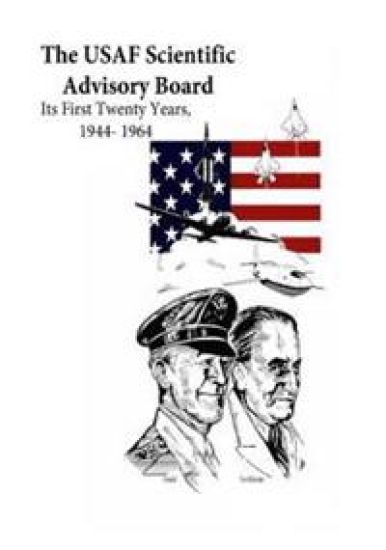
The USAF Scientific Advisory Board: Its First Twenty Years, 1944- 1964

The USAF Scientific Advisory Board: Its First Twenty Years, 1944- 1964

U. S. Air Force; Office of Air Force History

Createspace Independent Publishing Platform
2015
nidottu
One of the highest compliments a USAF research and engineering officer can receive on his work is that it met the standards of "the Arnold-von Karman tradition." This allusion epitomizes objectivity of inquiry and thoroughness and excellence of performance. This documented narrative traces that proud tradition from its genesis through the twentieth anniversary of its creator and most zealous guardian-the Scientific Advisory Board to the Chief of Staff and Secretary of the Air Force. Hopefully, the work will serve as both testimonial and concise source book on the invaluable contribution which this dedicated and uniquely skilled companion-in-arms has made to the cause of American aerospace supremacy.
United States Air Force and its Antecedents Published and Printed Unit Histories, A Bibliography Expanded & Revised Edition

United States Air Force and its Antecedents Published and Printed Unit Histories, A Bibliography Expanded & Revised Edition

U. S. Air Force; Office of Air Force History

Createspace Independent Publishing Platform
2015
nidottu
The primary focus of this work in on those privately printed unit and organizational histories produced outside the official channels of the armed services. Some official reports are included because they fall within the criteria set out below. This guide is intended to assist the user in understanding the scheme for listing the titles and the organization of entries. The unit history has been popular since the Civil War. It most often is an un-official publication written and produced by the personnel who constituted the unit. It is often an expression of pride of their accomplishments typically published just after the termination of hostilities. It can provide a wealth of detail concerning the unit's formation, combat experiences, missions etc. It often provides photographs taken by the unit members and often includes individual and/or group portraits of the personnel assigned to it. Since it was most often an un-official publication, its attention to detail and accuracy can be wanting. They were often published to bolster the moral and tended to concentrate on the positive and often ignore the negative. One of their major benefit is they often portrayed the day to day activities, hardships, and the feelings and thoughts of its members much better than many if not most of the official histories. Some of the more recent publications sponsored by the unit associations often combine the official records including after action reports and unit journal with extensive research producing extremely detailed histories. One major problem relation to the privately printed publications is that due to their nature they had extreme limited printing and distribution was most often limited to those unit member in the unit at the time of printing. They become extremely rare and can be almost impossible purchase. Criteria for Including Titles: * The following categories of printed are included in this listing: * Privately sponsored or Aun-official@ histories often written by the unit historian and published orprinted by the unit association. The distribution of these was most often limited to members of association.* Personal narratives that are unit or organization specific or identifiable in content. These were oftenautobiographical accounts by unit members and often provide a better insight to the morale and actions than the official or general histories. * Career biographies and autobiographies of officers, particularly general officers, who served in numerous units, are generally not included in this compilation.* Purely photographic or pictorial histories relating to a specific unit or command providing photographs of the activities, missions, aircraft and/or equipment, airfields, etc.* Route of battle maps. Although these are more commonly found with army ground units, there arealso maps that provide historical information and a description of the geographical area covered by the unit or missions flown.* Printed or published personnel rosters listing past and/or present members of uni
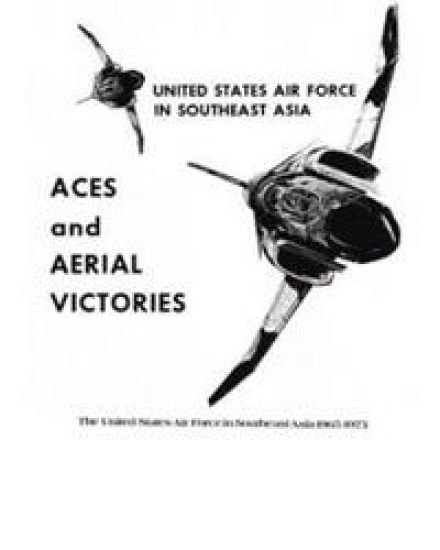
ACES and AERIAL VICTORIES: The United States Air Force in Southeast Asia 1965-1973

ACES and AERIAL VICTORIES: The United States Air Force in Southeast Asia 1965-1973

U. S. Air Force; Office of Air Force History

Createspace Independent Publishing Platform
2015
nidottu
During the war in Southeast Asia, U. S. Air Forcefighter pilots and crewmen were repeatedly challenged by enemy MIG's in the skies over NorthVietnam. The air battles which ensued were uniquein American history because U. S. fighter and strikeforces operated under stringent rules of engagement. With periodic exceptions, for example, MIG bases could not be struck. The rules generally forbade bombing or strafing of military and industrial targets in and around the enemy's heartland, encompassing the capital of Hanoi and the port city of Haiphong. These restrictions gave the North Vietnamese substantial military advantage. Free from American attack and helped by its Soviet and Chinese allies, the enemy was able to construct one of the most formidable antiaircraft defenses the world has even seen. Itincluded MIG forces, surface-to-air missile (SAM)batteries, heavy concentrations of antiaircraft artillery (AAA) units, and an array of early warning radar systems. These elements sought to interdictand defeat the U. S. bombing campaign againstNorth Vietnam's lines of communication and itsmilitary and industrial base. The primary mission of U. S. fighter pilots was to prevent the North Vietnamese MIG's from interfering with U. S. strikeoperations. This book tells how American airmen-assisted by an armada of other USAF aircraft whose crews refueled their planes, warned of approaching enemy MIG's and SAM's, and flew rescue missions when they were shot down managed to emerge from their aerial battles withboth victories and honor.
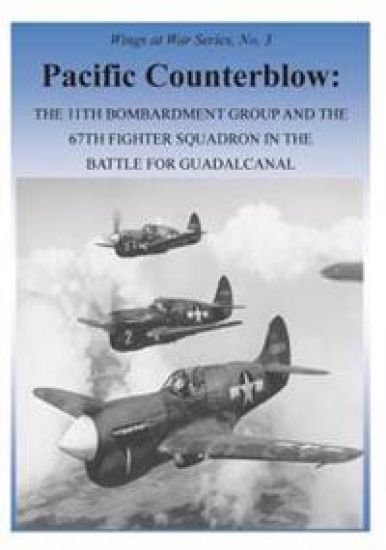
Pacific Counterblow: The 11th Bombardment Group and the 67th Fighter Squadron in the Battle for Guadalcanal

Pacific Counterblow: The 11th Bombardment Group and the 67th Fighter Squadron in the Battle for Guadalcanal

U. S. Air Force; Office of Air Force History

Createspace Independent Publishing Platform
2015
nidottu
Pacific Counterblow tells the story of the Battle for Guadalcanal (1942), focusing on the operations of the 11th Bombardment Group and the 67th Fighter Squadron. Months after the devastation of Pearl Harbor, U. S. forces had crushed the Japanese fleet at Midway and then moved to seize the initiative. AAF commanders in the Pacific sought to prevent the enemy from severing Australia's supply lines. So the B-17s of the 11th Bomb Group and the P-39s and P-400s of the 67th Fighter Squadron, flying from makeshift bases at Espiritu Santo and Henderson Field, began grueling attacks on Japanese shipping between Rabaul, New Britainand the Solomon Islands. After several months of bitter fighting, American forces gained control of Guadalcanal, positioning them to swing forward beyond Rabaul to New Guinea.
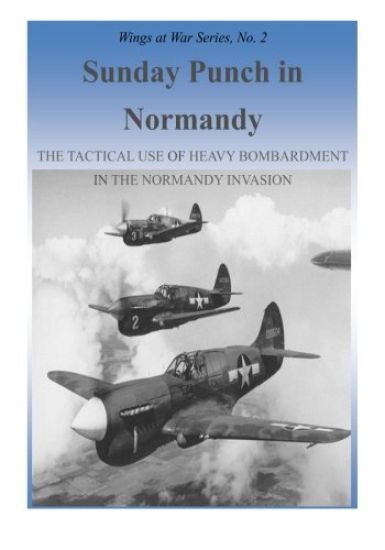
Sunday Punch in Normandy: The Tactical Use of Heavy Bombardment in the Normandy Invasion

Sunday Punch in Normandy: The Tactical Use of Heavy Bombardment in the Normandy Invasion

U. S. Air Force; Office of Air Force History

Createspace Independent Publishing Platform
2015
nidottu
This is the second in a series of interim reports published by Headquarters, Army Air Forces. The original manuscript was prepared by Deputy Chief of Staff, Operations, Eighth Air Force, on the basis of official records and firsthand observation. This text has been abridged and edited in order to provide for combat personnel in all theaters a succinct summary of the planning and execution of the tactical use of heavy bombardment in the invasion of Normandy. The conscientious and able work of staff personnel in the theaters makes possible the publication of this series, the intent of which is to cover the more important campaigns and individual missions in all theaters of operations.
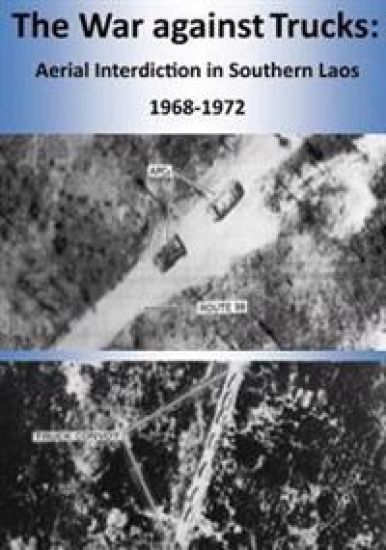
The War against Trucks: Aerial Interdiction in Southern Laos 1968-1972

The War against Trucks: Aerial Interdiction in Southern Laos 1968-1972

U. S. Air Force; Office of Air Force History

Createspace Independent Publishing Platform
2015
nidottu
The Air Force History and Museums Program has prepared accounts of the United States Air Force and the war in Southeast Asia according to a design that reflects the compartmentalized nature of the conflict itself. Besides the special studies like the illustrated history (The United States Air Force in Southeast Asia, 1961-1973: An Illustrated Account) and the monographs, some of them quite lengthy, on topics like rescue or tactical airlift, the Air Force history program has published volumes on the air wars over South Vietnam and Cambodia, North Vietnam, and Laos. This book is the last of three recounting operations in Laos, one of them dealing with the war in the northern part of that kingdom and the other two with aerial interdiction in the south. This history covers the critical years from 1968 through 1972, when the Air Force carried out the Commando Hunt series of aerial interdiction campaigns against the Ho Chi Minh Trail in southern Laos, trying, in conjunction with ground actions, to use air power and electronics to impede the movement of men and supplies from North Vietnam to the battlefields of South Vietnam. Conducted during the time the United States was withdrawing ground forces and turning the war over to the greatly strengthened armed forces of South Vietnam, Commando Hunt sought to prevent a North Vietnamese offensive that would take advantage of the declining U. S. presence. That attack did not come until March 1972 and not only stopped short of overrunning South Vietnam, but also was a setback for the Hanoi government and a cease-fire agreement. The invasion, however, signaled the end of Commando Hunt, for the South Vietnamese did not take over the electronic surveillance network-with its computer, sensors, and communications equipment-that made the series of aerial interdiction operations possible." The real war," said Walt Whitman, "will never get in the books." Yet, even though they cannot conjure up the realities of death and suffering, heroism and sacrifice, books like this have a purpose, offering the counsel of the past to help today's policy makers. What useful principle can they derive from an account of the events of a few years in a unique part of the world? Stripped of all that links it to a particular time, place, and strategy, this narrative warns them that a determined enemy may be able to use geography, climate, and ingenuity to blunt the cutting edge of technology. Against such a foe, what seems flawless in theory or has succeeded brilliantly in tests may fail in actual combat, but what fails on one battlefield may succeed years later on another. In the last analysis, military genius does not reside in compiling lists of lessons learned, but in analyzing the past and applying its distilled wisdom in new, perhaps unique, circumstances.
Air Operations in the Lebanon Crisis of 1958

Air Operations in the Lebanon Crisis of 1958

U. S. Air Force; Office of Air Force History

Createspace Independent Publishing Platform
2015
nidottu
Air Operations in the Lebanon Crisis of 1958 is one in a series of studies on air operations in international incidents prepared by the USAF Historical Division Liaison Office at the request of the Directorate of Plans, Headquarters USAF. Written in 1959, this study is based chiefly on the raw materials of historical writing--messages and correspondence--and command and unit reports on the operations available at that time. State Department, JCS, Air Force, Army, Navy, and Marine Corps materials were used in its preparation. Originally prepared in a very few copies, the study has nevertheless been extensively used within the Air Staff, the JCS, and in the Department of Defense. In response to many requests for wider dissemination of the study, DCS/Plans and Programs, Headquarters USAF, has concurred in its reproduction for a larger distribution. Written by Dr. Robert D. Little and Mrs. Wilhelmine Burch, this study is of special significance in connection with planning and preparations for local wars and incidents. In this operation the American forces experienced no combat action, but the possibility of action was constant and the deployment of forces to the objective area was of first importance. To achieve a meaningful historical context for the military operations, the political and diplomatic background has been presented in some detail.
Nuclear Propulsion for Manned Aircraft: The End of the Program, 1959-1961

Nuclear Propulsion for Manned Aircraft: The End of the Program, 1959-1961

U. S. Air Force; Office of Air Force History

Createspace Independent Publishing Platform
2015
nidottu
This study is concerned primarily with the concluding phase of the program to develop a nuclear-propelled aircraft for manned flight. Covering the period from January 1959 to March 1961, it seeks to make clear the factors that brought about the termination of the program. The emphasis is on the policy-management level, and technological factors are dealt with only to the extent that they became involved at that level. A summary review is given of the earlier phase from1946 through 1958. For this phase the study draws heavily, though by no means exclusively, from a historical study prepared by the Wright Air Development Center in 1959, The USAF Aircraft Nuclear Propulsion Program. Charts and tables areprovided in an appendix to summarize the financial support of the program and to illustrate the organizational structure for its management. Nuclear Propulsion for Manned Aircraft is part of the larger History of Headquarters USAF, Fiscal Year 1960. It is being published separately to make it more readily available throughout the Air Force.
Strengthening USAF General Purpose Forces, 1961-1964

Strengthening USAF General Purpose Forces, 1961-1964

U. S. Air Force; Office of Air Force History

Createspace Independent Publishing Platform
2015
nidottu
Probably no phase of recent Air Force history has been more significant than the development of strong general purpose forces to deter or win limited conflicts, including the "wars of nationalliberation" advocated by Soviet Premier Nikita Khrushchev in January 1961. Strengthening USAF General Purpose Forces, 1961-1964, an account of this buildup, also includes a brief summary of the change in national military policy which gave rise to it. The author discusses the viewpoints of the top planners in the Office of the Secretary of the Air Force and in Headquarters USAF. At the same time, he describes how these officials adjusted to the military policy inaugurated by President John F. Kennedy and his Secretary of Defense, Robert S. McNamara. Concurrently, the author notes how the growing emphasis on general purpose forces required closer coordination with the other military services, especially the Army, and aggravated the problems of interservice support. The buildup of tactical forces took place in a period of growing world tension and simultaneously with other important national programs, such as the exploration of space and attempts to improve the domestic economy. Resulting strains on the national budget and the unfavorable balance of gold payments created numerous and sometimes unforeseen difficulties. Prepared as part of a continuing History of Headquarters USAF, this study is being issued separately to make it available quickly in a conveniently usable form. A companion study by the same author, Strengthening USAF Airlift forces, 1961-1964, covers a related phase of U. S. preparations to resist aggression by limited means.
The United States Air Force in Southeast Asia: Civic Action

The United States Air Force in Southeast Asia: Civic Action

U. S. Air Force; Office of Air Force History

Createspace Independent Publishing Platform
2015
nidottu
This is the first in a series of research studies-historical works that were not published for various reasons. Yet, the material contained therein was deemed to be of enduring value to Air Force members and scholars. These works were minimally edited and printed in a limited edition to reach a small audience that may find them useful. We invite readers to provide feedback to the Air Force History and Museums Program. Capt. Betty L. Barton Christiansen, a member of the staff in the Office of Air Force History, researched and wrote this volume. She begins by establishing a framework of the civic action concept. Chapter II discusses the period corresponding to the Kennedy administration, when both government and military officials grappled with adjusting to a "new kind of war," the origins of counterinsurgency strategy (of which civic action was a part), and the efforts to apply this strategy in Vietnam. The nation-building period discussed in Chapter III, covers the period from November 1963 to July 1965, a time of great instability in South Vietnam, and the myriad efforts by the USAF to establish unity. Although he had promised to continue the policies of President Kennedy, Lyndon Johnson began to "lean away" from political and other non-military solutions to the crisis in Vietnam. This was reflected in the attitudes of the various services toward unconventional warfare and civic action. By 1966, while military solutions occupied center stage, some stability had been established in Vietnam. More attention was being paid to winning popular allegiance and USAF's Seventh Air Force formally organized its civic action activities. However, just as the program showed signs of success, the Tet offensive intervened. Thus, Chapter V demonstrates that instead of serving as advisers to the Vietnamese, the USAF civic action effort was compelled to revert to an earlier phase of its development, when humanitarian services were emphasized. Still, the program recuperated completely by July 1968. In Chapter VI, the South Vietnamese government embarked on an accelerated pacification program to extend its control throughout the country. Civic action constituted one part of this effort. Seventh Air Force sought to improve training civic action personnel, increase the number of civic action officers "in country," and obtain more resources for the program. These refinements provided a better understanding of civic action and showed the benefits of increased South Vietnamese participation. By the end of 1968, pacification had become a major part of allied strategy in Vietnam. The results of the various changes in the civic action program are discussed and assessed.
Civic Action: The United States Air Force in Southeast Asia

Civic Action: The United States Air Force in Southeast Asia

U. S. Air Force; Office of Air Force History

Createspace Independent Publishing Platform
2015
nidottu
This is the first in a series of research studies-historical works that were not published for various reasons. Yet, the material contained therein was deemed to be of enduring value to Air Force members and scholars. These works were minimally edited and printed in a limited edition to reach a small audience that may find them useful. We invite readers to provide feedback to the Air Force History and Museums Program. Capt. Betty L. Barton Christiansen, a member of the staff in the Office of Air Force History, researched and wrote this volume. She begins by establishing a framework of the civic action concept. Chapter II discusses the period corresponding to the Kennedy administration, when both government and military officials grappled with adjusting to a "new kind of war," the origins of counterinsurgency strategy (of which civic action was a part), and the efforts to apply this strategy in Vietnam. The nation-building period discussed in Chapter III, covers the period from November 1963 to July 1965, a time of great instability in South Vietnam, and the myriad efforts by the USAF to establish unity. Although he had promised to continue the policies of President Kennedy, Lyndon Johnson began to "lean away" from political and other non-military solutions to the crisis in Vietnam. This was reflected in the attitudes of the various services toward unconventional warfare and civic action. By 1966, while military solutions occupied center stage, some stability had been established in Vietnam. More attention was being paid to winning popular allegiance and USAF's Seventh Air Force formally organized its civic action activities. However, just as the program showed signs of success, the Tet offensive intervened. Thus, Chapter V demonstrates that instead of serving as advisers to the Vietnamese, the USAF civic action effort was compelled to revert to an earlier phase of its development, when humanitarian services were emphasized. Still, the program recuperated completely by July 1968. In Chapter VI, the South Vietnamese government embarked on an accelerated pacification program to extend its control throughout the country. Civic action constituted one part of this effort. Seventh Air Force sought to improve training civic action personnel, increase the number of civic action officers "in country," and obtain more resources for the program. These refinements provided a better understanding of civic action and showed the benefits of increased South Vietnamese participation. By the end of 1968, pacification had become a major part of allied strategy in Vietnam. The results of the various changes in the civic action program are discussed and assessed.
The Air Force and the Worldwide Military Command and Control System, 1961-1965

The Air Force and the Worldwide Military Command and Control System, 1961-1965

U. S. Air Force; Office of Air Force History

Createspace Independent Publishing Platform
2015
nidottu
The Air Force and the Worldwide Military Command and Control System, 1961-1965, is a companion volume to Arthur K. Marmor's USAF Command and Control Problems, 1958-1961. It seeks to trace major developments in the continuing effort to provide the nation's leaders with command and control facilities for assessing and responding to crises which require, or might require, commitment of America's military forces. Since decisions on most of these developments are made by the President or the Office of the Secretary of Defense it is frequently difficult to pinpoint the Air Force role in them. They remain very much a part of Air Force history, however. The Air Force contributes many of its most highly skilled officers to the joint agencies that build, operate, and support elements of the worldwide military command and control system. Air Staff officers serve on the joint planning groups that conceive the facilities. And nearly every Air Staff section furnishes support to these planning groups
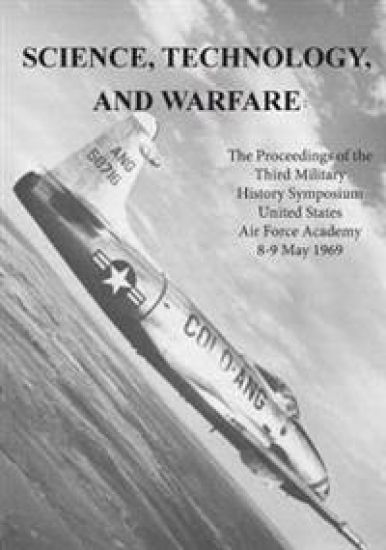
Science, Technology, and Warfare: The Proceedings of the Third Military History Symposium United States Air Force Academy 8-9 May 1969
The theme of the first Military History Symposium, held at the United States Air Force Academy on 4-5 May 1967, was "Current Concepts in Military History." The papers delivered at the second, on 2-3 May 1968, together with the subsequentcomments of a number of officers who had participated in the events discussed, were published by the Academy in 1969 as Command and Commanders in Modern Warfare. The presentvolume consists of the papers, revised and annotated for publication, and the discussion sessions of the third Symposium, held on 8-9 May 1969. With the fourth Symposium, "Soldiersand Statesmen; the Policy-Making Process in Modern History," to be held at the Academy on 22-23 Oct 1970, the series becomes biennial. The Symposia are intended to serve a number of purposes. First, they provide a forum for scholars in military history, a field that has grown rapidly since World War II and one in which the Academy obviously has a special interest. Second, bybringing distinguished scholars to the Academy, the Symposia provide a link between the scholar and the military professional. At a time of serious internal stresses in American society, all such links are generally valuable. More prosaically, however, the Academy's history faculty is kept abreast of developments in their academic discipline, while cadets are encouraged to a continuing interest in the background of their chosen profession. Third, by the participation of historians who do not consider themselves primarily "military" historians, but who are competent in areas that impinge on military affairs, the field of military history itself is enriched
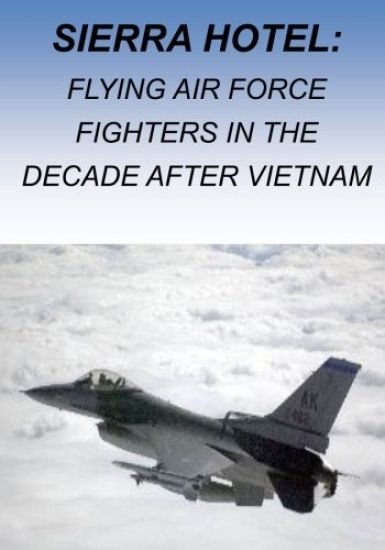
Sierra Hotel: Flying Air Force Fighters in the Decade after Vietnam

Sierra Hotel: Flying Air Force Fighters in the Decade after Vietnam

U. S. Air Force; Office of Air Force History

Createspace Independent Publishing Platform
2015
nidottu
Those old enough to remember the decade after Vietnam will recall those years as exciting but difficult ones to be a fighter pilot. Struggling to come to terms with poor performance by U. S. forces in Vietnam, we seemed to have thewrong jets, unreliable weapons, and inadequate training. On top of this we faced the specter of the next war coming in Europe against the Warsaw Pact, which outnumbered us two to one. We called the Soviet and Soviet-trained pilots Ivan, and sometimes Ivan seemed ten feet tall. We should have had an edge with our force of combat veterans. However, within five years after Vietnam, the number of experienced combat fighter pilots dropped precipitously as many disgruntled aviators left the Air Force for thegreener pastures of commercial aviation. For the ones who stayed it was no consolation to know that combat experience always evaporates after every war. All they could see was men who knew how to fight laying down their arms and retiringfrom the field. The ones who stayed struggled mightily, and this is their story. I did not focus this book on the generals and legislators who worked hard to improve the fighter force. Rather, this book is about the young officers, the line pilots, and weapons systems operators (WSOs), whose innovations, devotion to duty, intelligence, flying skills, and sheer determination made indelible marks on combat capability Of course, generals made a difference, and nothing could have happened without the leadership and support of some, like the former commanders of Tactical Air Command (TAC), Generals Robert J. Dixon, William W. Momyer, and Wilbur Creech. Some of the stories I relate include them, but the thrust is toward the "blighters in the trenches." Most worked long, usually thankless hours in anenvironment where the cynics among them stated that the reward for excellence was no punishment. History is at once educational and fickle. After reading this, a young officer, pilot or not, will have a better understanding of how the fighter force developed. Nonetheless, much of the information herein comes from interviews, and memories dim over the decades. An old joke: What is the difference between a fairy tale and a fighter pilot's war story? Answer: None, except the fairy tale starts out, "Once upon a time..." whereas the story starts out, "There I was..." That said, the information from the interviewees is the best available. All of them were in the hunt during those years, flying the jets, teaching the younger pilots, and striving for excellence. No one knows more about the era.
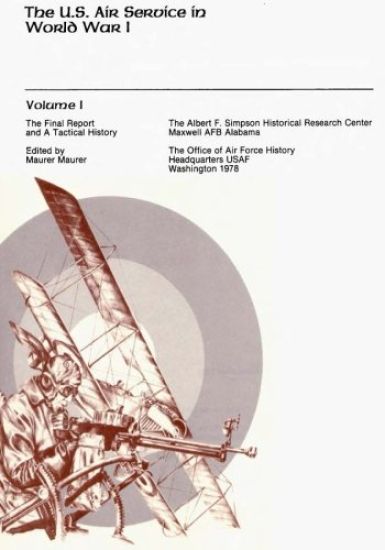
The Final Report and A Tactical History: The U.S. Air Service in World War I

The Final Report and A Tactical History: The U.S. Air Service in World War I

U. S. Air Force; Office of Air Force History

Createspace Independent Publishing Platform
2015
nidottu
In December 1918 Maj. Gen. Mason M. Patrick, Chief of Air Service, American Expeditionary Forces (AEF), directed his newly appointed Assistant Chief of Staff, Col. Edgar S. Gorrell, toprepare a history and final report on U. S. air activities in Europe during World War I. The narratives written and compiled by Gorrell and his staff were submitted by Patrick to Gen. John J. Pershing, Commander in Chief of the AEF. They summarized Air Service activities from the arrival of the first airmen in France in the spring of 1917 until the Armistice on November 11, 1918. The"Final Report" was published by the Air Service in an Information Circular in 1921, and by the Army in a multivolume collection of World War I documents in 1948. Although it has been used andcited by a number of historians over the years, it deserves to be better known. The Office of Air Force History, therefore, is republishing it so as to reach a wider circle of persons interested in the Great War and the early history of military aviation. Another important document produced under Gorrell's supervision as part of the history of the Air Service, AEF, is a "Tactical History" written by Lt. Col. William C. Sherman and a group of officers working with him in France at the end of the war. Although published in part in an Air Service Information Circular in 1920, Sherman's "Tactical History" has remained virtually unknown, or at least has not had extensive use. Since it provides excellent information about the conduct of combat operations, it should be of value to persons interested in aerial warfare in the First World War. It has been included, therefore, in this volume with the "Final Report." This is one of a series of volumes of World War I documentation that the Office of Air Force History is planning to publish.
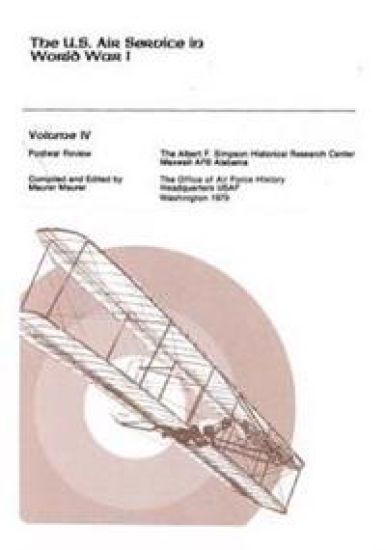
Postwar Review: The U. S. Air Service in World War I

Postwar Review: The U. S. Air Service in World War I

U. S. Air Force; Office of Air Force History

Createspace Independent Publishing Platform
2015
nidottu
Following the Armistice in 1918, Maj. Gen. Mason M. Patrick, Chief of Air Service, American Expeditionary Forces, directed that a record be made of lessons learned during the war. This information, he believed, was needed for planning the Air Service of the future. The reports prepared by commanders, pilots, observers, and other members of the various Air Service units inresponse to General Patrick's directive are of considerable historical interest for the information they contain about the Air Service and its employment at the front. A select group of the reports on lessons learned make up Part I of this volume of World War I documents on U. S. military aviation. Part II is devoted to a report on the effects of Allied bombing in World War I. This long-forgotten document, the result of a post-war investigation by the Air Intelligence Section of General Headquarters, American Expeditionary Forces, is the counterpart of the well-known United States Strategic Bombing Survey of World War II. This volume is the last in a series that the Office of Air Force History is publishing on the U. S. Air Service in World War I.
Weapon of Denial: Air Power and the Battle for New Guinea

Weapon of Denial: Air Power and the Battle for New Guinea

U. S. Air Force; Office of Air Force History

Createspace Independent Publishing Platform
2015
nidottu
Gen. Douglas MacArthur, commander of Pacific forces in World War II, viewed the Battle of the Bismarck Sea as a disaster for the Japanese and a triumph for the Allies. In that great air-sea confrontation, U. S. and Australian air forces proved that air power could be decisive in preventing the resupply of ground troops by sea. Months of torturous warfare in the jungles of New Guinea had left Japanese troops vulnerable to disease and starvation. In the end, Allied airmenwere able to break Japan's grip on New Guinea and end its threat to Australia through the innovative and aggressive use of air power. MacArthur's strength lay in a dedicated and courageous band of airmen who could attack enemy ships from all directions at any time.