Kirjojen hintavertailu – 12 903 724 kirjaa ja 27 kauppaa
Kirjailija
Office of Air Force History
Kirjat ja teokset yhdessä paikassa: 219 kirjaa, julkaisuja vuosilta 1983–2015, suosituimpiin kuuluu Pearl to V-J Day: World War II in the Pacific. Vertaile teosten hintoja ja tarkista saatavuus suomalaisista kirjakaupoista.
The Threshold of Space is a brief study of the national space program from 1954 through 1959 with emphasis on the role of the Air Force. It was originally prepared as a chapter for inclusion in theHistory of Headquarters USAF, Fiscal Year 1959. Because of the importance and timeliness of the subject, the chapter is being issued as a separate study to make it more quickly available throughout the Air Force. Based chiefly on official documents, The Threshold of Space is a precis of a much more detailed history on the space program currently being prepared. Rather than confining itself to fiscal year 1959, the present study reaches back to the beginnings of space research in the l940's and carries the story forward to January 1960. This was necessary to provide the proper perspective for an understanding and appreciation of this vital area of national activity. It was impossible in a study of this length to cover all facets of the space program, whether national or Air Force. There had to be a choice of topics such as policy, the selection of projects for development, and the widespread distribution by the Department of Defense of systems and subsystems among the three services for researchand tests. Other topics almost equally important had to be excluded. Among the latter there were such subjects as interservice rivalry for control of the satellite-detection fence and the Navy-Air Force dispute about the Pacific Missile Range. It was also necessary to omit coverage of the valuable work done by the Air Force in the field of space medicine and in the establishment of international agreements for the construction of bases outside the United States. These and other subjects will receive thorough treatment in the more comprehensive history now under way.
In commemoration of the fiftieth anniversary of the Korean War, the U. S. Air Force (USAF) Historian commissioned the Research Division, Air Force Historical Research Agency (AFHRA), Maxwell Air Force Base, Alabama, to compile this chronology of significant events of USAF military operations in the Korean theater. The chronology points out the relationship of these operations to the land battle, naval operations, and important political and diplomatic events. It also identifies such USAF historical "firsts" as the first all-jet air battle, the introduction of new weapons systems, and the initiation of tactics, techniques, or procedures that had a major impact on later air operations. The chronology also identifies important people, including key commanders, recipients of the Medal of Honor, and aces. Finally, it attempts to summarize those USAF events in Korea that best illustrate the air war and the application of air power in the theater. To present the information most effectively, the chronology offers narrative monthly summaries followed by daily entries of significant events. Each daily entry uses the local date, which in the theater is one day later than the date in the United States. Two dates separated by a hyphen indicate that the entry covers events occurring from the first date through the second. Two dates separated by a slash indicate that the events occurred during nighttime hours. Each event includes an explanation of its significance or correlates to information in the monthly summary. The entries are based on primary sources available at the AFHRA, including organizational histories, intelligence summaries, digests, and operational statements of the U. S. Far East Command, Far East Air Forces (FEAF), Fifth Air Force, FEAF Bomber Command, FEAF Combat Cargo Command (Provisional), and the 315th Air Division (Combat Cargo). Sometimes, wing and group histories provided additional information. The researchers also consulted numerous secondary sources, usually to confirm the most significant events of the air war in Korea.
Throughout the War in Southeast Asia, Communist forces from North Vietnam infiltrated the isolated, neutral state of Laos. Men and supplies crossed the mountain passes and traveled along an intricate web of roads and jungle paths known as the Ho Chi Minh Trail to the Viet Cong insurgents in South Vietnam. American involvement in Laos began with photo-reconnaissance missions and, as the war in Vietnam intensified, expanded to a series of air-ground operations from bases in Vietnam and Thailand against fixed targets and infiltration routes in southern Laos. U. S. Air Force leaders and aircrews flying interdiction missions over Laotian territory faced a unique set of challenges. Their efforts were plagued by political controversies, daunting weather, rugged terrain, a tenacious foe, and above all a bewildering array of rules of engagement limiting the effectiveness of air operations. Interdiction in Southern Laos, 1960-1968 examines this complex operational environment. Many of these issues-particularly those relevant to conducting a politically sensitive, limited war from foreign bases, with a commitment to minimizing civilian casualties-are still relevant today and for the foreseeable future as the modern Air Force meets its responsibilities in an ever-changing global environment.
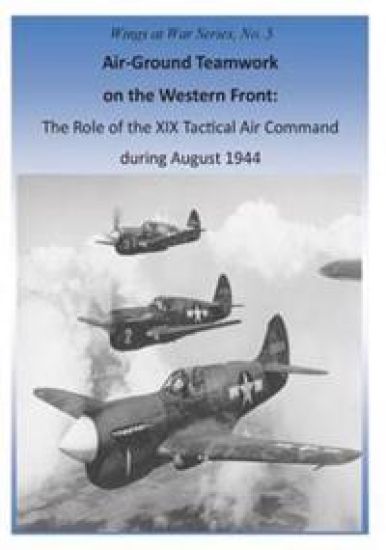
Air-Ground Teamwork on the Western Front describes close air support and battlefield interdiction in action. A single, month-long campaign-the famous thrust across northern France in August 1944 of Gen. George S. Patton's Third Army and Maj. Gen. 0. P. Weyland's XIX Tactical Air Command-became a model for close cooperation between army and aviation forces in future conflicts. This day-by-day, blow-by-blowaccount shows how the ground forces raced forward, frequently twenty miles per day, because friendly air power protected their flanks, shielded them from the Luftwaffe, and devastated the opposition in front of them.
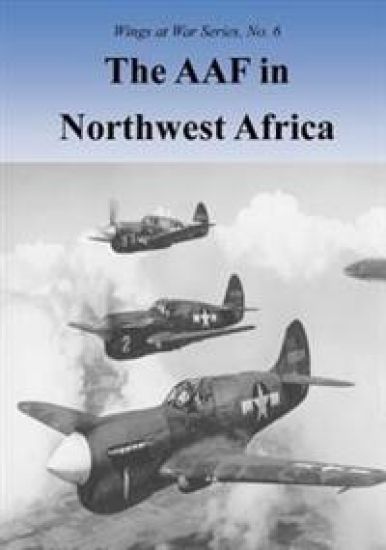
The AAF in Northwest Africa focuses on the Allied assault on Northwest Africa and the battle for Tunisia-the critical second front that secured the Mediterranean and increased the enemy's vulnerability to a massive invasion from Britain. From this experience of the Twelfth Air Force and its British counterparts in 1942-43 evolved a spirit of Anglo-American cooperation and important aspects of air doctrine still relevant to today's Air Force.
In our continuing desire to bring to the reader an in-depth look at the use of airpower in Southeast Asia, we present in this volume a truly monumental effort at recounting the myriad of widely separate but not unrelated events and operations that took place during the spring invasion of 1972. In this monograph, the authors from the Air War College present an illuminating story of the people and machines that fought so gallantly during this major enemy offensive. The authors' breadth of experience in and out of combat enables them toprovide a penetrating account of how airpower was brought to bear upon the enemy. The "Vietnamization" program, begun in 1969, had by March of 1972 reduced U. S. manpower involvement in Vietnam from 500,000 to 95,000. U. S. airpower involvement, however, did not decrease proportionately. Although the South Vietnamese Air Force took up the "lion's share" of the effort, U. S. airmen were still very much involved. During the offensive, their skills, courageand professionalism were tested 24 hours a day, directly contributing to the eventual successful outcome. The reader should learn from this story that not only is airpower an essential element of any major operation, but that its employment is a team effort. More so, it involves men and women on the ground as well as in the air -- one cannot function without the other.
One of the major lessons of World War II was theneed for the military services, both in the UnitedStates and elsewhere, to work together in mutuallysupporting ways to defeat an enemy. Changingtechnology and the worldwide character of the waraltered the traditional boundaries between land and sea warfare, and the new elements of air power and atomic weapons even further called into question the traditional roles and missions of the armed services. In 1947, the U. S. Air Force became independent ofthe Army and a National Military Establishment (which became the Department of Defense in 1949) was formed to coordinate and, after 1949, to control the services. Yet, disagreements over roles and missions continued, often exacerbated by the fiscal limitations of the post-war era. But not all roles and missions disagreements were caused by financial struggles. Genuine differences of opinion over doctrinal issues and the best means to accomplish missions often divided the services, and on many occasions the Secretary ofDefense had to assign missions and adjudicate roles amid a blizzard of conflicting claims. Dr. Richard Wolf of the Office of Air Force Historyhas collected in this volume the most significantdocuments which have determined the roles and missions of the Air Force, from its birth in 1947 to the present. The documents themselves only tell part of the story, of course. Dr. Wolf provides anintroductory essay to each document so that readers can comprehend the context in which the decisions over roles and missions took place. The result is a convenient and useful reference tool for anyone working with, or studying, the organizational and doctrinal basis of the United States Air Force.
The History of the United States Air Force is more than a tribute to the men and women responsible for the advancement of military aviation. Individualheroes do emerge, air battles are recounted, and record-setting flights described, but the book also deals with the ideas and decisions that have made the U. S. Air Force the professional military organization it is. Activity in the lecture hall and on the flight line, in the corridors of government and in aeronautical research facilities, and in both peacetime and during wars have helped shape the institution, influence its conduct, and fix its goals. The Air Force continues to serve the country effectively and efficiently because its men and women understand that experience provides the foundation for progress. More than any other military organization, the U. S. Air Force searches out and listens to the experience history offers. Few problems arise from a void or occur without precedent; and while every challenge possesses itsunique aspects, the perspective of time and the careful consideration of what already has succeeded or failed inevitably improves the effectiveness of today's decisions and the quality of planning for the future. History is therefore important to the Air Force; the recorded past is afoundation for doctrine, policy, strategy, tactics, equipment development, organization, force structure, and virtually every other element of air power. This volume, published in commemoration of the fiftieth anniversary of the Air Force as an independent service, is especially valuable. Not only should it both inspire and enlighten the members of the Air Force, it should also serve as a convenient source of information for those outside the service who are interested in the origin, growth, evolution and application of American air power.
The History of the United States Air Force is more than a tribute to the men and women responsible for the advancement of military aviation. Individualheroes do emerge, air battles are recounted, and record-setting flights described, but the book also deals with the ideas and decisions that have made the U. S. Air Force the professional military organization it is. Activity in the lecture hall and on the flight line, in the corridors of government and in aeronautical research facilities, and in both peacetime and during wars have helped shape the institution, influence its conduct, and fix its goals. The Air Force continues to serve the country effectively and efficiently because its men and women understand that experience provides the foundation for progress. More than any other military organization, the U. S. Air Force searches out and listens to the experience history offers. Few problems arise from a void or occur without precedent; and while every challenge possesses itsunique aspects, the perspective of time and the careful consideration of what already has succeeded or failed inevitably improves the effectiveness of today's decisions and the quality of planning for the future. History is therefore important to the Air Force; the recorded past is a foundation for doctrine, policy, strategy, tactics, equipment development, organization, force structure, and virtually every other element of air power. This volume, published in commemoration of the fiftieth anniversary of the Air Force as an independent service, is especially valuable. Not only should it both inspire and enlighten the members of the Air Force, it should also serve as a convenient source of information for those outside the service who are interested in the origin, growth, evolution and application of American air power.
Under normal circumstances, the command and control of the nation's strategic air forces is a tremendous task. At the start of the 1960's, for example, an average of 122 bomber and tankeraircraft of the Strategic Air Command (SAC) were airborne each day, with inflight refueling taking place at the rate of once every 6.8 minutes. Large-scale exercises by the command often involved more than 500 aircraft. The enormous size of SAC, with 260,000 men and thousands of aircraft scattered around the globe and with intercontinental ballistic missiles (ICBM's) beginning to enter the force, greatly compounded the problems of command and control. To supervise and direct this widely dispersed force, the Air Force and SAC over the years built a worldwide communication network for the rapid transmission of information and action directives. The network in 1960 included: {a) a primary alert system of voice communications between SAC's underground control center at Offutt, AFB and all base control rooms in the United States and overseas; (b) a single sideband high frequency point-to-point radio system; {c) a telephone system for day-to-day operational control purposes; and {d) a teletype system to convey printed operational information. These several systems generated huge amounts of data on the daily status of the force which were continuously processed and displayed in the SAC control center. As early as 1954, however, the flood of information bad become so great the SAC commander {CINCSAC) expressed concern over the center's inability to stay current with the disposition of the force. The primary difficulty involved the center's machinery for data reduction, correlation, and display. Based on manual World War II devices and techniques, the processing fell further and further behind the improved operational capabilities of the airborneelements.
This study was prepared in response to an Air Staffrequest for a history of command and control procedures used in close air support (CAS). The writer, Mr. Riley Sunderland, is co-author of the official Army history of the China-Burma-IndiaTheater, World War II, and wrote 5 RAND Corp. studies of the Communist insurgency in Malaya. He begins with brief comment on the invention of close air support during World War I, then moves on to the evolution of the modern Tactical Air Control System (TACS) from the late 1930's to thepresent. Only major developments are treated to keep the subject manageable. The author, distinguishing between doctrine and procedure, has focused on the former. For official definitions of "doctrine" and "close air support," the reader is referred to Air Force Manual (AFM) 11-1, USAF Glossary of Standardized Terms. Close air support is the third of 3 principal missions of tactical air forces, of which air superiority is first and interdiction second. The classic statement is in War Department Field Manual (FM) 100-20, Command and Employment of Air Power, 21 July 1943, paragraph 16. Close air support may also be provided by strategic air, e.g., St. Lo, France, 1944; Khe Sanh, South Vietnam, 1968. The responsible air commander must weigh the allocation of resources betweenthe 3 basic tactical air missions, lest an injudicious commitment of his forces to any one mission degrades his ability to perform the others. As will be seen in Mr. Sunderland's narrative, this has been a major issue in the handling of tactical air.
Command and Control for North American Air Defense, 1959-1963, is the third in a series of studies prepared by the USAF Historical Division Liaison Office (AFCHO) on command and control. This study discusses the issues and problems involved in centralizing authority and control over forces responsible for maintaining airspace vigilance in peacetime and combating any aircraft attack, as distinct from space (missile) attacks. Preliminary sections summarize the steps taken to remove the doctrinal and structural barriers which long served to dissipate the ability of air defense commanders to control their forces and trace conversion of the system from manual to semi-automatic operation. The main body of the study is concerned with the impact that the threat of missile attack had on aircraft defense command and control systems. A final section charts the likely course of future command and control developments as they appeared at the close of 1963. This study forms a part of the larger History of Headquarters USAF, Fiscal Year 1963. It is being published separately to make it more readily available throughout the Air Force.
Concurrently with the buildup of its general purpose forces to deter or win limited conflicts instigated by Communist nations, the Air Force strengthened its airlift forces appreciably. This was a logically necessary step, since Army as well as USAF combat units would depend on efficient airlift to deploy quickly to widely scattered locations where aggression against U. S. allies appeared likely to occur. Strengthening USAF Airlift Forces, 1961-1964 is an account of the airlift buildup and should be read in conjunction with the author's previous study, Strengthening USAF General Purpose Forces, 1961-1964 in a sense a companion monograph. The writer has emphasized generally the viewpoint of planners in the Office of the Secretary of the Air Force and Headquarters USAF. At the same time, he has discussed the relationship of their planning to the broader national military policy enunciated by the President and the Secretary of Defense. Dependence of the Army on airlift for the movement of its combat units also necessitated close cooperation between Air Force and Army, and this sometimes led to sharp differences of opinion and heated controversy. Prepared as part of the continuing History of Headquarters USAF, this study is being issued separately to make it available quickly in convenient form.
Professor Stephen B. Johnson demonstrates in fine detail how the application of systems management by the United States Air Force to its ballistic missiles and computer programs not only produced critical new weapons, but also benefitedAmerican industry. Systems management harmonized the disparate goals of four interest groups. For the military it brought rapid technological progress; for scientists, new products; for engineers, dependability; and for managers, predictable cost. The process evolved, beginning shortly after the end of World War II, when Gen. Henry H. "Hap" Arnold directed that the Army Air Forces (later the U. S. Air Force) continue its wartime collaboration with the scientific community. This started as a voluntary association, with the establishment of the Scientific Advisory Board and Project RAND. In the early 1950s, the Air Force reorganized its researchand development (R&D) function with the creation of Air Research and Development Command (ARDC) and the Air Staff's office of deputy chief of staff for development (DCS/D), which were both aimed at controlling the scientists. The systems management approach evolved out of a jurisdictional conflict between ARDC and its rival, Air Materiel Command (AMC). The latter controlled R&D finances and was determined not to relinquish its prerogatives. Of course, ARDC argued that this was a case of having responsibility without the requisite authority. At first represented by Gen. Bernard A. Schriever's ballistic missiles program, ARDC bypassed traditional organizational structures. Schriever's Western Development Division (WDD), located at Inglewood, California, made its case, based upon the Soviet Union's nuclear threat, to engage in the race to develop longrange ballistic missiles. Ultimately, Schriever's new project management and weapons systems procedures-concurrency-produced a family of missile and space vehicles. However, in bypassing administrative red tape, this development also eliminated some necessarychecks and balances that led to a series of flight test failures and cost overruns. Closely related to the missiles program was the air defense effort, centered at the Massachusetts Institute of Technology (MIT) in Boston. Dr. Jay Forrester's Project Whirlwind evolved into large-scale, real-time computers. Again, as with themissiles program, once the Cold War waned, the government's emphasis shifted to cost control. When Schriever assumed command of ARDC, he transplanted his successful Inglewood model to all major weapons systems acquisition. Ironically, in the early 1960s, Secretary of Defense Robert S. McNamara appropriated Schriever's procedures, using them to wield ever greater centralized control. Dr. Johnson shows that Air Force procedures were not only highly successful in terms of meeting the challenges of the Cold War, but also that their adoption by American industry propelled the nation to international prominence in aerospaceand computing. Finally, he argues that while aerospace had experienced somewhat more difficulty adapting to consumer products than did the computer industry, the full implications of systems management were yet to be seen by the end of the Cold War.
The Southeast Asia Monograph Series is designed and dedicated to telling the story of USAF's participation in the Vietnam War. This monograph, the sixth in the Series, adds another exciting chapter to our continuing effort to bring forth and highlight the dedication, courage, and professionalism of the U. S. airman in combat. Theprimary intent of this series is. to emphasize and dramatize the human aspects of this long and frustrating struggle, straying somewhat away from the cold hard statistics of "tons of bombs dropped" and "structures destroyed," etc., frequently the headliners in historical presentations." Last Flight From Saigon" is an exciting and moving account of how all our Services, as well as several civilian agencies, pulled together to pull-off the largest aerial evacuation in history-what many have referred to as a modern day Dunkirk. The three authors, intimately involved with the evacuation from beginning to end, have carefully pieced together an amazing story of courage, determination and American ingenuity. Above all, it's a story about saving lives;one that is seldom told in times of war. All too often, critics of armed conflict make their targets out to be something less than human, bent on death and destruction. One need only study theenormity of the effort and cost that went into the "evacuation of Saigon," and the resultant thousands of lives that were saved, to realize that the American fighting man is just as capable, and more eager, to save lives than he is in having to wage war. The reader can help tell this story by sharing this book with his friends.
The Southeast Asia Monograph Series is designed and dedicated to telling the story of USAF's participation in the Vietnam War. This monograph, the sixth in the Series, adds another exciting chapter to our continuing effort to bring forth and highlight the dedication, courage, and professionalism of the U. S. airman in combat. Theprimary intent of this series is. to emphasize and dramatize the human aspects of this long and frustrating struggle, straying somewhat away from the cold hard statistics of "tons of bombs dropped" and "structures destroyed," etc., frequently the headliners in historical presentations." Last Flight From Saigon" is an exciting and moving account of how all our Services, as well as several civilian agencies, pulled together to pull-off the largest aerial evacuation in history-what many have referred to as a modern day Dunkirk. The three authors, intimately involved with the evacuation from beginning to end, have carefully pieced together an amazing story of courage, determination and American ingenuity. Above all, it's a story about saving lives;one that is seldom told in times of war. All too often, critics of armed conflict make their targets out to be something less than human, bent on death and destruction. One need only study theenormity of the effort and cost that went into the "evacuation of Saigon," and the resultant thousands of lives that were saved, to realize that the American fighting man is just as capable, and more eager, to save lives than he is in having to wage war. The reader can help tell this story by sharing this book with his friends.