Kirjojen hintavertailu – 12 859 819 kirjaa ja 27 kauppaa

Kirjailija

Rabindranath Tagore

Kirjat ja teokset yhdessä paikassa: 845 kirjaa, julkaisuja vuosilta 1910–2027, suosituimpiin kuuluu A Woman of India: Being the Life of Saroj Nalini, Founder of the Women's Institute Movement in India. Vertaile teosten hintoja ja tarkista saatavuus suomalaisista kirjakaupoista.

845 kirjaa

Kirjojen julkaisuvuodet: 1910–2027.

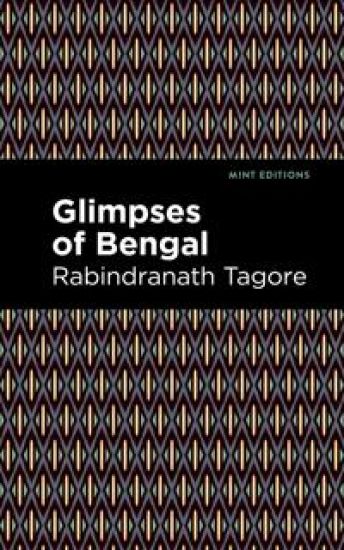
Glimpses of Bengal

Glimpses of Bengal

Rabindranath Tagore

West Margin Press
2022
sidottu
Glimpses of Bengal: The Letters of Tagore (1917) is a selection of letters by Rabindranath Tagore. Published after Tagore received the 1913 Nobel Prize in Literature, Glimpses of Bengal: The Letters of Tagore collects letters from 1885 to 1895, a period designated by the author as “the most productive period of [his] literary life.” Bridging the gap between fiction and nonfiction, these letters contain personal reflections on the political situation in India, mediations on nature and poetry, and stunning vignettes of life in the nineteenth century. “The unsheltered sea heaves and heaves and blanches into foam. It sets me thinking of some tied-up monster straining at its bonds, in front of whose gaping jaws we build our homes on the shore and watch it lashing its tail.” In this selection of letters, Tagore is at his philosophical, poetic best, reflecting earnestly and with ease on matters public and private. A young man, he writes with the clarity and wisdom of one who has lived many times over, granting readers a glimpse of the iconic figure he would become toward the end of his life and career. His portrait of Bengal is heartfelt and true, unadorned and yet possessing an almost mystical quality. Whether describing his travels upriver by boat or a dream journey through a Calcutta immersed in “a dense, dark mist,” Tagore never fails to intrigue, enrapture, and enlighten. With a beautifully designed cover and professionally typeset manuscript, this edition of Rabindranath Tagore’s Glimpses of Bengal: The Letters of Tagore is a classic of Indian literature reimagined for modern readers.
The Fugitive

The Fugitive

Rabindranath Tagore

West Margin Press
2022
sidottu
The Fugitive (1921) is a collection of poems by Rabindranath Tagore. Translated into English by Tagore after he received the 1913 Nobel Prize in Literature, The Fugitive is a powerful collection of poems, dialogues, and songs by a master of Indian literature. “Darkly you sweep on, Eternal Fugitive, round whose bodiless rush stagnant space frets into eddying bubbles of light. Is your heart lost to the Lover calling you across his immeasurable loneliness?” The Fugitive is an intoxicating blend of prose poetry, verse dialogue, and songs that investigates themes of faith, love, death, and friendship. Here, Tagore is at the height of his creative powers, providing brilliant original lyrics alongside adaptations from the Hindu epics and his own translations of traditional Bengali songs. Filled with visions of flight, words between lovers torn apart, and powerful evocations of the natural world, The Fugitive is one of his most original works. With a beautifully designed cover and professionally typeset manuscript, this edition of Rabindranath Tagore’s The Fugitive is a classic of Indian literature reimagined for modern readers.
Fruit-Gathering

Fruit-Gathering

Rabindranath Tagore

West Margin Press
2022
sidottu
Fruit-Gathering (1916) is a collection of poems by Rabindranath Tagore. Translated into English by Tagore after he received the 1913 Nobel Prize in Literature, Fruit-Gathering is a powerful collection of prose poems by a master of Indian literature. “Bid me and I shall gather my fruits to bring them in full baskets into your courtyard, though some are lost and some not ripe. For the season grows heavy with its fulness, and there is a plaintive shepherd’s pipe in the shade. Bid me and I shall set sail on the river.” In these poems of love, nature, faith, and dreams, Tagore is at the height of his creative powers. In one passage, he is a lovesick youth, in another, an illiterate man with a letter he cannot read. He longs to be a poet of the night, a singer of “fathomless silence.” Filled with visions of saints and kings, celebrations of beauty, and powerful evocations of the natural world, Fruit-Gathering is one of his most original works. With a beautifully designed cover and professionally typeset manuscript, this edition of Rabindranath Tagore’s Fruit-Gathering is a classic of Indian literature reimagined for modern readers.
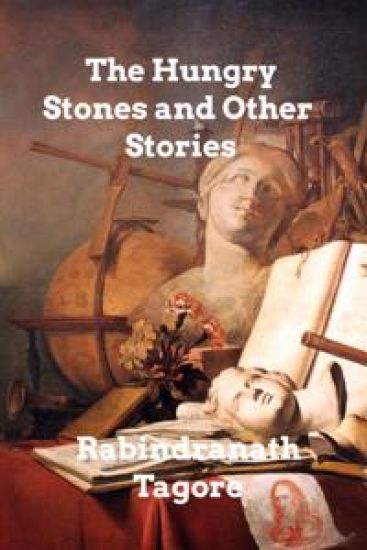
The Hungry Stones and Other Stories

The Hungry Stones and Other Stories

Rabindranath Tagore

West Margin Press
2022
sidottu
The Hungry Stones and Other Stories (1916) is a collection of short stories by Rabindranath Tagore. Published following his ascension to international fame with the 1912 Nobel Prize in Literature, the collection contains some of Tagore’s most celebrated works of fiction. “Before a week had passed, the place began to exert a weird fascination upon me. It is difficult to describe or to induce people to believe; but I felt as if the whole house was like a living organism slowly and imperceptibly digesting me by the action of some stupefying gastric juice.” In the title story of the collection, a tax collector moves to a deserted palace on the outskirts of a small town. Devoting himself to his daily work, he returns home at night to sleep and spends as little time as possible indoors. Rumored to be haunted, the palace was built during the height of the Mughal Empire and was once a symbol of fortune for all those who entered its gate or passed it by along the road. For Srijut, however, it is a source of terror and unease, a living entity filled with restless spirits who all seem to vie for his soul. Elsewhere in the collection, Tagore explores the lives of rich and poor, giving voice to struggling writers, suffering wives, and young servants alike with an ease and familiarity possessed by the purest of storytellers. With a beautifully designed cover and professionally typeset manuscript, this edition of Rabindranath Tagore’s The Hungry Stones and Other Stories is a classic of Indian literature reimagined for modern readers.
Creative Unity

Creative Unity

Rabindranath Tagore

INDOEUROPEANPUBLISHING.COM
2022
pokkari
Rabindranath Tagore FRAS (7 May 1861 - 7 August 1941) was a Bengali polymath-poet, writer, playwright, composer, philosopher, social reformer and painter. He reshaped Bengali literature and music as well as Indian art with Contextual Modernism in the late 19th and early 20th centuries. Author of the "profoundly sensitive, fresh and beautiful" poetry of Gitanjali, he became in 1913 the first non-European and the first lyricist to win the Nobel Prize in Literature. Tagore's poetic songs were viewed as spiritual and mercurial; however, his "elegant prose and magical poetry" remain largely unknown outside Bengal. He was a fellow of the Royal Asiatic Society. Referred to as "the Bard of Bengal", Tagore was known by sobriquets: Gurudev, Kobiguru, Biswakobi. A Bengali Brahmin from Calcutta with ancestral gentry roots in Burdwan district and Jessore, Tagore wrote poetry as an eight-year-old. At the age of sixteen, he released his first substantial poems under the pseudonym Bhānusiṃha ("Sun Lion"), which were seized upon by literary authorities as long-lost classics. By 1877 he graduated to his first short stories and dramas, published under his real name. As a humanist, universalist, internationalist, and ardent anti-nationalist, he denounced the British Raj and advocated independence from Britain. As an exponent of the Bengal Renaissance, he advanced a vast canon that comprised paintings, sketches and doodles, hundreds of texts, and some two thousand songs; his legacy also endures in his founding of Visva-Bharati University. Tagore modernised Bengali art by spurning rigid classical forms and resisting linguistic strictures. His novels, stories, songs, dance-dramas, and essays spoke to topics political and personal. Gitanjali (Song Offerings), Gora (Fair-Faced) and Ghare-Baire (The Home and the World) are his best-known works, and his verse, short stories, and novels were acclaimed-or panned-for their lyricism, colloquialism, naturalism, and unnatural contemplation. His compositions were chosen by two nations as national anthems: India's "Jana Gana Mana" and Bangladesh's "Amar Shonar Bangla". The Sri Lankan national anthem was inspired by his work. (wikipedia.org)
Creative Unity

Creative Unity

Rabindranath Tagore

INDOEUROPEANPUBLISHING.COM
2022
sidottu
Rabindranath Tagore FRAS (7 May 1861 - 7 August 1941) was a Bengali polymath-poet, writer, playwright, composer, philosopher, social reformer and painter. He reshaped Bengali literature and music as well as Indian art with Contextual Modernism in the late 19th and early 20th centuries. Author of the "profoundly sensitive, fresh and beautiful" poetry of Gitanjali, he became in 1913 the first non-European and the first lyricist to win the Nobel Prize in Literature. Tagore's poetic songs were viewed as spiritual and mercurial; however, his "elegant prose and magical poetry" remain largely unknown outside Bengal. He was a fellow of the Royal Asiatic Society. Referred to as "the Bard of Bengal", Tagore was known by sobriquets: Gurudev, Kobiguru, Biswakobi. A Bengali Brahmin from Calcutta with ancestral gentry roots in Burdwan district and Jessore, Tagore wrote poetry as an eight-year-old. At the age of sixteen, he released his first substantial poems under the pseudonym Bhānusiṃha ("Sun Lion"), which were seized upon by literary authorities as long-lost classics. By 1877 he graduated to his first short stories and dramas, published under his real name. As a humanist, universalist, internationalist, and ardent anti-nationalist, he denounced the British Raj and advocated independence from Britain. As an exponent of the Bengal Renaissance, he advanced a vast canon that comprised paintings, sketches and doodles, hundreds of texts, and some two thousand songs; his legacy also endures in his founding of Visva-Bharati University. Tagore modernised Bengali art by spurning rigid classical forms and resisting linguistic strictures. His novels, stories, songs, dance-dramas, and essays spoke to topics political and personal. Gitanjali (Song Offerings), Gora (Fair-Faced) and Ghare-Baire (The Home and the World) are his best-known works, and his verse, short stories, and novels were acclaimed-or panned-for their lyricism, colloquialism, naturalism, and unnatural contemplation. His compositions were chosen by two nations as national anthems: India's "Jana Gana Mana" and Bangladesh's "Amar Shonar Bangla". The Sri Lankan national anthem was inspired by his work. (wikipedia.org)
Nationalism

Nationalism

Rabindranath Tagore

INDOEUROPEANPUBLISHING.COM
2022
pokkari
Rabindranath Tagore FRAS (7 May 1861 - 7 August 1941) was a Bengali polymath-poet, writer, playwright, composer, philosopher, social reformer and painter. He reshaped Bengali literature and music as well as Indian art with Contextual Modernism in the late 19th and early 20th centuries. Author of the "profoundly sensitive, fresh and beautiful" poetry of Gitanjali, he became in 1913 the first non-European and the first lyricist to win the Nobel Prize in Literature. Tagore's poetic songs were viewed as spiritual and mercurial; however, his "elegant prose and magical poetry" remain largely unknown outside Bengal. He was a fellow of the Royal Asiatic Society. Referred to as "the Bard of Bengal", Tagore was known by sobriquets: Gurudev, Kobiguru, Biswakobi. A Bengali Brahmin from Calcutta with ancestral gentry roots in Burdwan district and Jessore, Tagore wrote poetry as an eight-year-old. At the age of sixteen, he released his first substantial poems under the pseudonym Bhānusimha ("Sun Lion"), which were seized upon by literary authorities as long-lost classics. By 1877 he graduated to his first short stories and dramas, published under his real name. As a humanist, universalist, internationalist, and ardent anti-nationalist, he denounced the British Raj and advocated independence from Britain. As an exponent of the Bengal Renaissance, he advanced a vast canon that comprised paintings, sketches and doodles, hundreds of texts, and some two thousand songs; his legacy also endures in his founding of Visva-Bharati University. Tagore modernised Bengali art by spurning rigid classical forms and resisting linguistic strictures. His novels, stories, songs, dance-dramas, and essays spoke to topics political and personal. Gitanjali (Song Offerings), Gora (Fair-Faced) and Ghare-Baire (The Home and the World) are his best-known works, and his verse, short stories, and novels were acclaimed-or panned-for their lyricism, colloquialism, naturalism, and unnatural contemplation. His compositions were chosen by two nations as national anthems: India's "Jana Gana Mana" and Bangladesh's "Amar Shonar Bangla". The Sri Lankan national anthem was inspired by his work. (wikipedia.org)
Sadhana

Sadhana

Rabindranath Tagore

INDOEUROPEANPUBLISHING.COM
2022
pokkari
"For love is the ultimate meaning of everything around us. It is not a mere sentiment; it is truth; it is the joy that is at the root of all creation. It is the white light of pure consciousness." CONTENTS Preface I The Relation of the Individual to the Universe Ii Soul Consciousness Iii The Problem of Evil Iv The Problem of Self V Realisation in Love Vi Realisation in Action Vii The Realisation of Beauty Viii The Realisation of The Infinite
Sadhana

Sadhana

Rabindranath Tagore

INDOEUROPEANPUBLISHING.COM
2022
sidottu
"For love is the ultimate meaning of everything around us. It is not a mere sentiment; it is truth; it is the joy that is at the root of all creation. It is the white light of pure consciousness." CONTENTS Preface I The Relation of the Individual to the Universe Ii Soul Consciousness Iii The Problem of Evil Iv The Problem of Self V Realisation in Love Vi Realisation in Action Vii The Realisation of Beauty Viii The Realisation of The Infinite
Stories from Tagore

Stories from Tagore

Rabindranath Tagore

INDOEUROPEANPUBLISHING.COM
2022
pokkari
CONTENTSPreface The Cabuliwallah The Home-Coming Once there was a King The Child's Return Master Mashai Subha The Postmaster The Castaway The Son of Rashmani The Babus of Nayanjore
Stories from Tagore

Stories from Tagore

Rabindranath Tagore

INDOEUROPEANPUBLISHING.COM
2022
sidottu
CONTENTSPreface The Cabuliwallah The Home-Coming Once there was a King The Child's Return Master Mashai Subha The Postmaster The Castaway The Son of Rashmani The Babus of Nayanjore
The Home and the World

The Home and the World

Rabindranath Tagore

INDOEUROPEANPUBLISHING.COM
2022
sidottu
The Home and the World is a 1916 novel by Rabindranath Tagore. The book illustrates the battle Tagore had with himself, between the ideas of Western culture and revolution against the Western culture. These two ideas are portrayed in two of the main characters, Nikhilesh, who is rational and opposes violence, and Sandip, who will let nothing stand in his way from reaching his goals. These two opposing ideals are very important in understanding the history of the Bengal region and its contemporary problems. There is much controversy over whether or not Tagore was attempting to represent Gandhi with Sandip. This is owing to Gyorgy Lukacs's 1922 review of the novel in the Berlin periodical, Die rote Fahne (that is typically translated into English as "Tagore's Gandhi Novel") where he makes this mistaken suggestion. The novel could not have been based on Gandhi as it was published in 1916 (and written before) when Gandhi had just moved to India from South Africa (1915) and was not a known political figure. Gandhi gained political prominence in India in the context of the Khilafat movement of 1919, which was long after the novel's publication, and took over the leadership of the Indian National Congress in 1920. The novel was translated into English by the author's nephew, Surendranath Tagore, with input from the author, in 1919. The Home and the World was among the contenders in a 2014 list by The Telegraph of the 10 all-time greatest Asian novels. (wikipedia.org)
The Home and the World

The Home and the World

Rabindranath Tagore

INDOEUROPEANPUBLISHING.COM
2022
pokkari
The Home and the World is a 1916 novel by Rabindranath Tagore. The book illustrates the battle Tagore had with himself, between the ideas of Western culture and revolution against the Western culture. These two ideas are portrayed in two of the main characters, Nikhilesh, who is rational and opposes violence, and Sandip, who will let nothing stand in his way from reaching his goals. These two opposing ideals are very important in understanding the history of the Bengal region and its contemporary problems. There is much controversy over whether or not Tagore was attempting to represent Gandhi with Sandip. This is owing to Gyorgy Lukacs's 1922 review of the novel in the Berlin periodical, Die rote Fahne (that is typically translated into English as "Tagore's Gandhi Novel") where he makes this mistaken suggestion. The novel could not have been based on Gandhi as it was published in 1916 (and written before) when Gandhi had just moved to India from South Africa (1915) and was not a known political figure. Gandhi gained political prominence in India in the context of the Khilafat movement of 1919, which was long after the novel's publication, and took over the leadership of the Indian National Congress in 1920. The novel was translated into English by the author's nephew, Surendranath Tagore, with input from the author, in 1919. The Home and the World was among the contenders in a 2014 list by The Telegraph of the 10 all-time greatest Asian novels. (wikipedia.org)
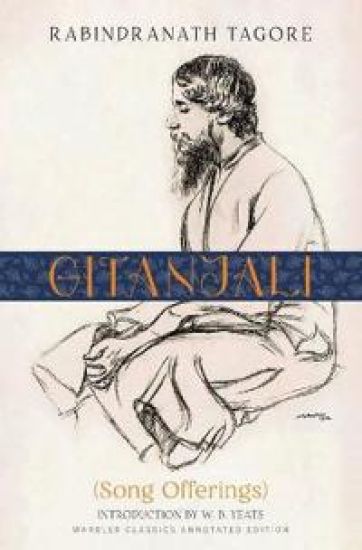
Gitanjali (Warbler Classics Annotated Edition)

Gitanjali (Warbler Classics Annotated Edition)

Rabindranath Tagore

Warbler Classics
2021
pokkari
Gitanjali, the most famous work by Rabindranath Tagore, was first published in India in 1910. Tagore modeled these poems about love, devotion, desire, and the realization of the divine within on medieval Indian lyrics of devotion. In 1912, Tagore traveled to England with his English translation of Gitanjali, and shared it with English painter William Rothenstein who had visited India. Rothenstein championed the collection and shared it with others. For its publication by the India Society in London Rothenstein provided the frontispiece and W. B. Yeats wrote the introduction. Immediately upon its publication the book earned attention and high praise Ezra Pound, Robert Bridges, Ernest Rhys, Thomas Sturge Moore, and others. Largely for his English translation of Gitanjali, in 1913 Tagore won the Nobel Prize for Literature-the first such recognition of an Eastern writer. Gitanjali is part of the UNESCO Collection of Representative Works and a beloved classic the world over.