
Kirjailija
Rudolf Steiner
Kirjat ja teokset yhdessä paikassa: 1 477 kirjaa, julkaisuja vuosilta 1910–2026, suosituimpiin kuuluu The Cosmic New Year: A Course of Lectures by Rudolf Steiner. Vertaile teosten hintoja ja tarkista saatavuus suomalaisista kirjakaupoista.
1 477 kirjaa
Kirjojen julkaisuvuodet: 1910–2026.
Esoterische Betrachtungen karmischer Zusammenhänge
Rudolf Steiner
Steiner Verlag, Dornach
2024
sidottu

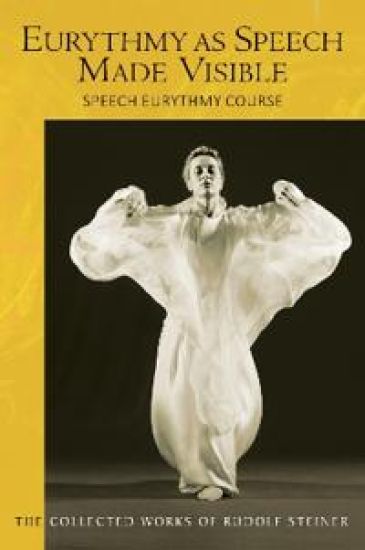
Eurythmy as Speech Made Visible
Rudolf Steiner
RUDOLF STEINER PRESS
2024
nidottu
Halvin toimitettuna 33,80 €
With these fundamental lectures on speech eurythmy - given just months after his course entitled 'Eurythmy as Visible Singing' - Rudolf Steiner completed the foundations of the new art of movement. In connecting to the centuries-old esoteric and exoteric Western traditions of 'the Word' - the creative power in the sounds of the divine-human alphabet - he gave it concrete form and expression in the performing arts, education and therapy. Although aimed primarily at the professional concerns of eurythmists who perform, teach or work as therapists, the lectures offer a wealth of suggestions and insights to anyone interested in the arts. For this new edition - freshly translated by Matthew Barton and introduced by Coralee Frederickson - the original shorthand transcripts have been compared exhaustively with typed records and the notes of course participants. These notes included numerous sketches of movements, gestures and choreographies, many of which have been reproduced here to complement the text. Also featured is an appendix comprising facsimiles and transcripts of Rudolf Steiner's preparatory notes, programmes of the eurythmy performances given during the course, and accounts by Steiner published in the Society Newsletter. Finally, there are recollections by course participants, additional sketches of forms and movements, Marie Steiner's original foreword, and 30 pages of colour plates featuring blackboard drawings and eurythmy forms.

The Philosophy of Freedom is the fundamental philosophical work of the philosopher and esotericist Rudolf Steiner (1861-1925). It addresses the question of whether and in what sense human beings can be said to be free. Originally published in 1894 in German as Die Philosophie der Freiheit, with a second edition published in 1918, the work has appeared under a number of English titles, including The Philosophy of Spiritual Activity (the title Steiner proposed for the English-language translation), The Philosophy of Freedom, and Intuitive Thinking as a Spiritual Path . Part One of The Philosophy of Freedom examines the basis for freedom in human thinking, gives an account of the relationship between knowledge and perception, and explores the role and reliability of thinking as a means to knowledge. In Part Two Steiner analyzes the conditions necessary for human beings to be free, and develops a moral philosophy that he describes as "ethical individualism".
Knowledge of the Higher Worlds and Its Attainment
Rudolf Steiner
Martino Fine Books
2024
nidottu
Halvin toimitettuna 12,60 €
Selv om boken befatter seg med ting som ikke lar seg utforske med den forstand som er bundet til sanseverdenen, så er allikevel intet sagt som ikke kan være forståelig for en uhildet fornuft og en sunn sannhetssans hos enhver person som vil anvende disse menneskets gaver. Forfatteren sier uten omsvøp: Han ønsker seg ikke lesere som er villige til å ta til seg det beskrevne utfra blind tro, men slike som bestreber seg på å prøve det som blir meddelt mot sin egen sjels erkjennelsesliv, og sine egne livserfaringer. Her menes ikke kun den åndsvitenskapelige prøving ved hjelp av oversanselige forskningsmetoder, men i første linje en prøving utfra den sunne fordomsfrie tenkning og menneskeforstand, som avgjort ligger innenfor det muliges grenser. Han ønsker seg fremfor alt forsiktige lesere som kun vil bygge på det som kan rettferdiggjøres i et logisk perspektiv. Rudolf Steiner Boken har en innledning av Kaj Skagen. Oversatt fra tysk av Harald Haakstad, Terje Christensen og Gunner Ihlen. Originalens tittel: «Die Geheimwissenschaft im Umriss», 1. opplag 1910. Innbundet, 368 sider. Utgitt av Antropos Forlag 2024.

Das Johannes-Evangelium im Verhältnis zu den drei anderen Evangelien, besonders zu dem Lukas-Evangelium
Rudolf Steiner
Steiner Verlag, Dornach
2024
sidottu

"We live in a time when] human beings must become independent. But on what does this depend? It depends on people's ability...to become self-assertive, to not allow themselves to be put to sleep in their thinking]. It is the antisocial forces that require development in this time, for consciousness to be present. It would not be possible for humanity in the present to accomplish its task if...these antisocial forces did not become ever more powerful; they are indeed the pillars on which personal independence rests. At present humanity has no idea how much more powerful antisocial impulses must become." -- Rudolf Steiner (Dec. 12, 1918)Rudolf Steiner's profound and practical insights and indications concerning what happens when human beings meet and interact with one another are scarcely known and studied seriously by few. But, despite having been worked with but scantly in the last hundred years, these indications and insights could easily provide the basis for a widescale reawakening of our own, perhaps latent, capacities to listen, speak, and understand one another at a higher level, as beings of soul and spirit. This volume, edited and compiled by Gary Lamb, provides a succinct yet thorough overview of Steiner's many remarks and insights into the mysteries of social encounter, as well as offering helpful commentary and contextualization. Using Steiner's words, and his own thread of commentary running throughout, Lamb shows how spiritualized conversations and interpersonal dynamics attained through rigorous self-development practices provide the necessary soul-spiritual substance and forces necessary for the overcoming of evil in modern life.

10 lectures at the Second International Congress of the Anthroposophical Movement, Vienna, June 1-12, 1922 (CW 83)In ordinary consciousness, we combine our thoughts logically and thus make use of thinking to know the external sensory world. Now, however, we allow thinking to enter into a kind of musical element, but one that is undoubtedly a knowledge element; we become aware of a spiritual rhythm underlying all things; we penetrate into the world by beginning to perceive it in the spirit. From abstract, dead thinking, from mere image-thinking, our thinking becomes a thinking enlivened in itself. This is the significant transition that can be made from abstract and merely logical thinking to a living thinking about which we have the feeling it is capable of shaping a reality, just as we recognize our process of growth as a living reality. -- Rudolf SteinerThis demanding set of lectures attempts to lift the veil from modern social and spiritual problems as experienced in the contrasts between East and West. By ascribing only vague and subjective validity to human thinking, modern science tries to invalidate the very faculty that gives us our human dignity. However, such "unreality" of thought images makes possible the inner freedom that scientific doctrine tends to deny in principle. The need arises from these contradictions to extend the limits of ordinary scientific thinking toward new investigative capacities. In part one, "Anthroposophy and the Sciences," Rudolf Steiner explains that this can be achieved in a healthy way through two kinds of meditative exercises very different from yoga and asceticism and ancient paths to higher knowledge. These disciplines lead to the discovery of a paradoxical truth: "If you would know yourself, look into the world. If you would know the world, look into your self." The spiritual-scientific philosophy thus presented provides a framework through which the second half of the book, "Anthroposophy and Sociology," considers how a healthy social life can be understood and formed. Today the old social instincts of humanity have grown uncertain, and the rational intellect is proving unsuited to comprehend and foster a truly human social life. While admitting that we are only beginning to discover the right relationship between individual and community, Steiner describes how a conscious spiritual life offers the same social certainties as did the earlier, "instinctual" human life. He explains how we may find a way from our highly developed sense of a personal self toward the global social organism. When the riddles of existence concern the human soul, they become not only great problems in life but life itself. They become the happiness or sorrow of human existence. And not a passing happiness or sorrow only, but one we must carry for a time through life, so that by this experience of happiness or sorrow we become fit or unfit for life. -- Rudolf SteinerThis book is a translation from German of Westliche und stliche Weltgegens tzlichkeit. Wege zu ihrer Verst ndigung durch Anthroposophie (GA 83, 3rd ed.), Rudolf Steiner Verlag, 1981.

Those Holy Fields. Palestine, Illustrated by Pen and Pencil (Edition1)
Rudolf Steiner
Alpha Editions
2024
nidottu
Halvin toimitettuna 21,50 €
The Spiritual Guidance of Man and of Mankind, a classical book, was published more than a century ago and has been considered important throughout the human history, and so that this work is never forgotten we at Alpha Editions have made efforts in its preservation by republishing this book in a modern format for present and future generations. This whole book has been reformatted, retyped and designed. These books are not made of scanned copies of their original work and hence the text is clear and readable.

Die Opferfeier - mit den Perikopen
Rudolf Steiner; Volker Lambertz
BoD - Books on Demand
2024
sidottu
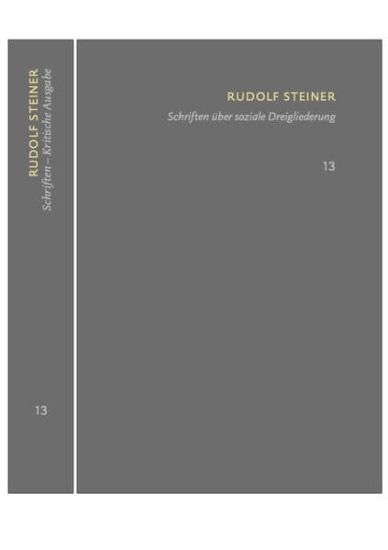
Schriften über soziale Dreigliederung. Die Kernpunkte der sozialen Frage - In Ausführung der Dreigliederung des sozialen Organismus.
Rudolf Steiner
Steiner Verlag, Dornach
2024
sidottu