Kirjailija
Rudolf Steiner
Kirjat ja teokset yhdessä paikassa: 1 477 kirjaa, julkaisuja vuosilta 1910–2026, suosituimpiin kuuluu The Cosmic New Year: A Course of Lectures by Rudolf Steiner. Vertaile teosten hintoja ja tarkista saatavuus suomalaisista kirjakaupoista.
1 477 kirjaa
Kirjojen julkaisuvuodet: 1910–2026.
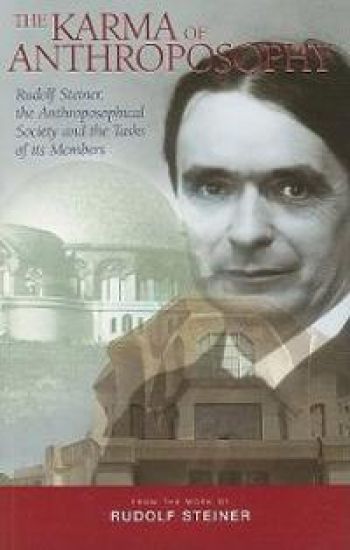
'If such authentic souls, such honest anthroposophists can be found ...then an upward movement and dynamic will arise. If such souls do not appear, then decadence will take its inexorable downward course... Today humanity stands before a great crisis: either it will see all civilization collapsing into the abyss, or else spirituality will raise civilization up by the power of the Michael impetus, through which the Christ impetus works, thus continuing, enriching and sustaining it.' In 1924, the final full year of his life, Rudolf Steiner gave a series of urgent, sometimes impassioned, talks to members of the Anthroposophical Society regarding their karma and its relationship to the culture of the time, referring in particular to the vital task of renewing civilization and preserving it from the threat of decline. Steiner's words characterize vividly a great spiritual battle, of forces gathering to fight for the soul of humanity itself. He presents a striking panorama in which anthroposophists are compelled to broaden their vision; to see true esoteric and exoteric anthroposophical work as a live yeast that can set all culture rising. To waken the members of the Society to the dimensions of their task, Steiner saw it as essential that they begin to understand the many different karmic threads from which the movement is woven. This recognition - of difference as much as unity - can give the strength of diversity which, if unconscious and unrecognized, leads easily to division. In the lectures and excerpts compiled here Steiner speaks of the unprecedented convergence of two specific groups of souls within the anthroposophical movement: the Platonists and the Aristotelians. In the karmic background lies a conflict of approaches, but the task today calls for a unity based on love and knowledge; to work with Michael and Christ in the face of Ahriman, materialism and the possibility of civilization collapsing into decadence. Given the challenges faced by humanity today, it has, perhaps, never been more urgent for those who ally themselves with Rudolf Steiner's work to study, absorb and take to heart the contents of this critically important material.
'It is not always right to send someone to the chemist for some medicine when he's ill. Instead we should organize our lives in a way that renders us less susceptible to illness, or alleviates its impact. Disorders will impinge on us less severely if we strengthen the ego's influence on the astral body, the astral body's influence on the etheric and the etheric on the physical.' Nervousness, anxiety and agitation are all common symptoms of our increasingly stressed and pressured society. They manifest in the everyday form that many people experience, or sometimes as serious mental or psychological disorders. In this classic lecture, Rudolf Steiner offers practical advice and spiritual insight for those who wish to heal these proliferating ailments of modern life. He describes simple exercises that strengthen the inner self, with the goal of achieving the calm and centredness necessary to lead a purposeful and healthy life. This audio edition, complete and unabridged, is read by respected actor and speech teacher Peter Bridgmont, author of Liberation of the Actor.
During 1924, before his last address in September, Rudolf Steiner gave over eighty lectures on the subject of karma to members of the Anthroposophical Society. These profoundly esoteric lectures examine the underlying laws inherent in reincarnation and karma, and explore in detail the incarnations of specific historical figures. In Rudolf Steiner's words, the study of karma is "...a matter of penetrating into the most profound mysteries of existence, for within the sphere of karma and the course it takes lie those processes which are the basis of the other phenomena of world existence..." In this volume, Steiner discusses the karmic relationships within the anthroposophical movement, including the predispositions which lead souls to anthroposophy, the two streams within the movement, plus Rosicrucianism, Arabism, Aristotelianism, the Platonists and the School of Michael.
During 1924, before his last address in September, Rudolf Steiner gave over eighty lectures on the subject of karma to members of the Anthroposophical Society. These profoundly esoteric lectures examine the underlying laws inherent in reincarnation and karma, and explore in detail the incarnations of specific historical figures. In Rudolf Steiner's words, the study of karma is "...a matter of penetrating into the most profound mysteries of existence, for within the sphere of karma and the course it takes lie those processes which are the basis of the other phenomena of world existence..." A study of the karma of the anthroposophical movement and society, the spiritual gates of the sun and moon, and much more.
Elämä kuoleman jälkeen ja sen yhteys elävien maailmaan
Rudolf Steiner
SUOMEN ANTROPOSOFINEN LIITTO
2009
nidottu
Halvin toimitettuna 26,60 €
Rudolf Steiner kertoo näissä huolellisesti valituissa esitelmissä omien henkisten havaintojensa perusteella ihmisen kuolemanjälkeisestä elämästä, olomuodon muutoksesta joka silloin koetaan, niistä kohtaloon liittyvistä asioista joita silloin käydään läpi. Ihmisen sisäinen elämä muuttuu monin tavoin. Nykyisin yleiset kuolemaa lähellä käyneiden ihmisten kertomukset rajantakaisista kokemuksista ovat paljolti samankaltaisia tässä esitettyjen kanssa. Rudolf Steiner kuvaa, miten ihminen käy läpi mennyttä elämäänsä, ikään kuin kuoriutuu siitä irti matkallaan varsinaiseen henkiseen maailmaan. Hän kuvailee myös uuteen elämään valmistautumista. Elävien ja kuolleiden välillä vallitsee läheisempi yhteys kuin yleensä tiedostetaan. Tähän tärkeään yhteyteen voi oppia kiinnittämään huomiota. Rudolf Steiner (1861-1924) oli filosofi ja monipuolinen kulttuurivaikuttaja sekä Antroposofisen seuran perustaja.
Henkinen tutkimus on minätietoisuuden laajentamista henkiseen maailmaan, sanoo Rudolf Steiner. Tietoisuuden laajetessa käy ilmi että ihminen elää pääasiassa kahden henkisen vaikutuksen, ahrimanisen ja lusiferisen voiman, välisessä jännitteessä. Niiden aktiivista tasapainoa on koko ajan etsittävä. Esitelmät antavat mahdollisimman konkreettisen ja käytännönläheisen kuvauksen näistä voimista ja niiden dynamiikasta. Eräs näkökulma on historiallinen: miten menneisyydessä ensin lusiferinen vaikutus ja 1400-luvulta yhä enenevästi ahrimaninen vaikutus ovat olleet ja ovat edelleen vaikuttamassa ihmisen tietoisuuteen ja sitä kautta koko maailmankehitykseen. Näin avautuu näkymiä ihmisen tulevaisuuteen, ja myös nykytilannetta sekä kristillisyyden jatkuvaa kehitystä on mahdollista ymmärtää syvemmin.
Notes written from memory by the participants and meditation verses by Rudolf Steiner (CW 266/3) Beginning in January 1913, five days after the Anthroposophical Society was founded, this rich volume traces the esoteric work (and lack thereof) in the decade leading up to the reestablishment of the General Anthroposophical Society at the "Christmas Conference" (1923/1924) and the subsequent creation of the First Class, which replaced the Esoteric Section. Part One, the largest section (Jan. 2, 1913-July 14, 1914), containing thirty-nine lessons in nineteen months, allows us to sense the subtle, though seismic, shift as Anthroposophy gradually became an autonomous earthly, spiritual reality outside the context of Theosophy, with the initial focus to deepen the Rosicrucian path. The emphasis is more practical than theoretical. The task is meditation, without which the new, freestanding spiritual movement could not fulfill its mission. As a consequence, instructions and advice are given. Then, with the outbreak of World War I, the esoteric lessons cease. Part Two is much shorter and covers the period from 1918 to 1923, with only six lessons. Clearly, the time demanded a different approach to the spiritual world, and esoteric students were less prepared to work. Nevertheless, important meditations were given that indicated a new direction. Part Three contains the two esoteric lessons given to the esoteric youth circle--members of the Youth Movement who were serious about esoteric work and would become public exponents of Anthroposophy. Here is something quite new and future-oriented: a new way of undertaking spiritual work in the service of the Archangel Michael. Never before made public, the meditations and instructions are powerful and relevant. This section is preceded by a moving account of the history and development of the esoteric Youth Movement, in which Rudolf Steiner placed such hopes. The volume closes with the Threefold Mantra that foreshadowed a new approach for the First Class and was used by those in the Esoteric Section between 1920 and 1923. This volume is the English translation of Aus den Inhalten der esoterischen Stunden, Ged chtnisaufzeichnungen von Teilnehmern. Band.3, 1913 und 1914; 1920-1923 (GA 266).
Christianity As Mystical Fact And The Mysteries Of Antiquity
Rudolf Steiner
Createspace Independent Publishing Platform
2008
nidottu
Knowledge Of The Higher Worlds, And Its Attainment
Rudolf Steiner
Createspace Independent Publishing Platform
2008
nidottu
Two Lectures Cycles, Followed by Two Christmas Lectures Dornach, October 3-7 and December 12-20, 1914; Dornach, December 26 and Basel, December 27, 1914 (CW 156)These two lecture courses, given just after the beginning of World War I, stand as a kind of unexpected gift. A few months later, once the war became a reality, the possibilities for esoteric work would change and it would become more difficult to do spiritual research. But in the short interval before the true horror of the conflict unfolded, Rudolf Steiner--almost by the way--was able to give these lectures, which lay out in the clearest fashion the path of anthroposophic meditation, and its assumptions, language, and consequences. The first lectures expand on the idea of inner "reading" and "hearing" as the path to spiritual knowing. The spiritual world gives something and we, as spiritual researchers, receive and then read or interpret it. Spiritual knowledge is not a matter of will, desire, or intention on our part, but a gift from the spiritual world for which we must prepare ourselves by silencing our desires, emptying ourselves, and presenting ourselves in humility and devotion to the spiritual world. Then we become aware of the reality that the spiritual world is nowhere else but here, all around us; and if we dissolve the sense of being skin-bound, we can become open to it, reflect its images in our astral bodies, and then learn to read them by identification. Steiner describes this complex, subtle, existential and living process, in which ultimately we can become one with the universe, in a masterful way from which anyone who meditates, or wishes to begin to meditate, will gain a great deal. The second lecture cycle, "How to Achieve Existence in the World of Ideas," deepens the themes developed in the first cycle, so that the two together provide a useful guide to the processes underlying meditation or learning to know the spiritual world. At the same time, because work was just beginning on the building that would become the Goetheanum, Steiner connects the esoteric principles of its design with the overall theme of the suprasensory human being in relation to meditation and spiritual knowing. The volume closes with two wonderful lectures in celebration of Christmas. Here Steiner has a threefold emphasis: Christ, supraearthly, glorious, and divine, fully united with humanity and the Earth and born in each human heart. To celebrate Christmas truly means that we recognize all three of these as one in the spiritual world, in the earthly world, and in ourselves. CONTENTS: Introduction by Christopher Bamford PART I: Inner Reading and Inner Hearing 1. The Human Being in Relationship to the World (Dornach, October 3, 1914): Inner reading and inner hearing as a method of spiritual scientific research. Acquiring new forms of judgment, thinking, sensing or feeling for the spiritual world. The significance of thinking, feeling, willing on the physical plane as preparation for the investigation of the spiritual world. Difference between perceiving in the physical world and in the spiritual world. Suppressing the self in meditation. Experiences of the soul while learning inner reading. Learning inner hearing. 2. Identification with the Signs and Spiritual Realities of the Imaginative World (Dornach, October 4, 1914): The physical organism as a mirror for experience in the outer world. Experience of the astral body in the spiritual world reflected in the etheric body--images of spiritual realities. Differences between natural and trained clairvoyance. Cosmic vowels and consonants. 3. The Vowels and Consonants of the Spiritual World (Dornach, October 5, 1914): Experience of the cosmic vowels. Human thoughts and ideas as shadow pictures of real imaginations. The beings of the hierarchy of angels. Practicing loving interest in the world. The animal world as the physiognomy of nature; the plant world as the facial expression; the mineral world as the gesture of nature. The capability to change into other beings. The evil misuse of higher spiritual forces. 4. Inner Mobility of Thought (Dornach, October 6, 1914): Space and time relationships and imaginations of the angels, archangels, archai. Experience of the Cosmic Word. Reflections of the seven cosmic vowels in the etheric body and the twelve cosmic consonants in the physical body. Perception in the spiritual world between death and new birth. The future organ of thinking during the Jupiter and Venus periods. 5. Times of Expectation (Dornach, October 7, 1914): Christian Morgenstern's connection with the spiritual-scientific movement. Christian Morgenstern's soul after death as spiritual guide for souls that had felt on Earth the yearning for the spiritual. Goethe, Hermann Grimm, and Christian Morgenstern and their relationship to the suprasensory worlds. Spiritual science as fulfillment of this expectation. The nature of eurythmy. PART II: How to Achieve Existence in the World of Ideas 6. The Human Organization, Memory, and Inner Reading (Dornach, December 12, 1914): Human memory. The astral body as reader of the esoteric script. The sacred art of writing in ancient times. Goethe's relation to color. The significance of judgments out of the folk nature, of sympathy and antipathy for a particular folk soul. 7. Microcosm and Macrocosm: Human Gestures and the Life of the World (Dornach, December 13, 1914): The transition of the "I" into the astral body, from conscious to subconscious experience. Possibilities of a plant therapy. Ideas in Maeterlinck's book, Der Schatz der Armen the treasure of the poor] and Fichte's Reden an die deutsche Nation addresses to the German nation] as examples of the striving for the re-enlivening of human spiritual development. Spiritual-scientific impulses for artistic creating. The building of the human form under the influence of the cosmos. 8. Human Beings as illuminators of the Cherubim, heaters of the Seraphim (Dornach, December 19, 1914): How can human beings enter reality with concepts and ideas? Perception of the world in mirror image. Spiritual science adds a concluding chapter to Riddles of Philosophy. Developing specific capacities through philosophy. The objective thought world; the world of the hierarchies. The dying of thoughts in the physical body. The world of images and the world of realities. How can we bring reality to the world of images? Moral impulses of human beings and their significance for the hierarchies. 9. The Separation of Art, Science, and Religion (Dornach, December 20, 1914): The transformation of a one-sided head culture into a whole-human view of the world as the task of spiritual science. Separation and re-uniting of art, science, and religion. Artistic experience. The transformation of the human organism in the coming Jupiter evolution. The building-forms of the first Goetheanum. PART III: The Celebration of Christmas 10. Toward a New Understanding of the Mystery of Golgotha (Dornach, December 26, 1914): The Christmas festival of the renewed understanding of Christ. The descent of Christ out of the spiritual heights. The various views of a divine mediator in the Mithras service, in Manichaeism, and in Gnosis. Augustine and Faust, the renewed understanding of Christ. 11. The Birth of Christ in the Human Heart (Basel, December 27, 1914): The cosmic Christ and the birth of the Christ knowledge in us. The working of the Christ force in evolution. An old Gnostic verse and a poem by Christian Morgenstern.

Knowledge Of the Higher Worlds And Its Attainment
Rudolf Steiner
READ BOOKS
2008
sidottu
Halvin toimitettuna 45,40 €
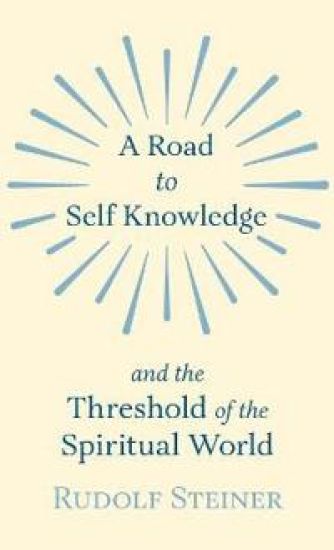
A Road to Self Knowledge And The Threshold of The Spiritual World
Rudolf Steiner
READ BOOKS
2008
sidottu