Kirjojen hintavertailu – 12 903 725 kirjaa ja 27 kauppaa

Kirjailija

Rudolf Steiner

Kirjat ja teokset yhdessä paikassa: 1 477 kirjaa, julkaisuja vuosilta 1910–2026, suosituimpiin kuuluu The Cosmic New Year: A Course of Lectures by Rudolf Steiner. Vertaile teosten hintoja ja tarkista saatavuus suomalaisista kirjakaupoista.

1 477 kirjaa

Kirjojen julkaisuvuodet: 1910–2026.

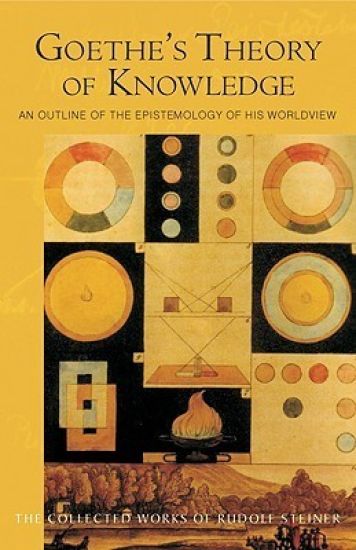
Goethe's Theory of Knowledge

Goethe's Theory of Knowledge

Rudolf Steiner

SteinerBooks, Inc
2008
nidottu

Halvin toimitettuna 27,70 €

Written 1884-1885; first published 1886 (CW 2) As the editor of Goethe's scientific writings during the 1880s, Rudolf Steiner became immersed in a worldview that paralleled and amplified his own views in relation to epistemology, the interface between science and philosophy, the theory of how we know the world and ourselves. At the time, like much of the thinking today and the foundation of modern natural science, the predominant theories held that individual knowledge is limited to thinking that reflects objective, sensory perception. Steiner's view was eventually distilled in his Anthroposophical Leading Thoughts in 1924: "There are those who believe that, with the limits of knowledge derived from sensory perception, the limits of all insight are given. Yet if they would carefully observe how they become conscious of these limits, they would find in the very consciousness of the limits the faculties to transcend them." In this concise volume, Steiner lays out his argument for this view and, moreover, begins his explication of how one goes beyond thinking to the observation of thinking itself. Goethe's Theory of Knowledge is essential reading for a deeper understanding of Rudolf Steiner's seminal work, Intuitive Thinking as a Spiritual Path: A Philosophy of Freedom. CONTENTS: Introduction by Christopher BamfordPreface to the Edition of 1924 by Rudolf SteinerForeword to the First Edition (1886) by Rudolf Steiner A. Preliminary Questions 1. The Point of Departure2. Goethe's Science According to Schiller's Method3. The Purpose of Our Science B. Experience 4. Establishing the Concept of Experience5. Examining the Essence of Experience6. Correcting the Erroneous View of Experience as a Totality7. The Experience of Each Individual Reader C. Thinking 8. Thinking as a Higher Experience within Experience9. Thinking and Consciousness10. The Inner Nature of Thinking D. Knowledge 11. Thought and Perception12. Intellect and Reason13. The Act of Cognition14. Cognition and the Ultimate Ground of Things E. Knowing Nature 15. Inorganic Nature16. Organic Nature F. The Humanities 17. Introduction: Mind and Nature18. Psychological Cognition19. Human Freedom20. Optimism and Pessimism G. Conclusion 21. Knowledge and Artistic Creation Notes to the First Edition 1886] Annotations to the Edition of 1924 This volume is a translation from the German of Grundlinien einer Erkenntnistheorie der Goetheschen Weltanschauung, mit besonderer R cksicht auf Schiller (GA 2). Previous translations were published as The Science of Knowing (1988) and The Theory of Knowledge implicit in Goethe's World-Conception: Fundamental Outlines with Special Reference to Schiller (1940).

Nutrition

Nutrition

Rudolf Steiner

Rudolf Steiner Press
2008
nidottu
Our instinctive knowledge of which foods are helpful and which are harmful appears increasingly to be fading. We are bombarded with advice, information and prescriptions as to what we should eat and drink, but the issues surrounding nutrition - questions of health, diet, taste, even ecology and sustainability - remain largely unresolved. Unlike most commentators on this subject, Rudolf Steiner tackles the theme of nutrition in a refreshingly open way. At no point does he try to tell us what we should or should not be putting into our bodies - whether with regard to an omnivorous or vegetarian diet, smoking, drinking alcohol, and so on. The job of the scientist, he says, is to explain how things act and what effect they have; what people do with that information is up to them. However, he emphasizes that our diet not only determines our physical wellbeing, but can also promote or hinder our inner spiritual development. In this carefully collated anthology, with an introduction, commentary and notes by Christian von Arnim, Rudolf Steiner considers nutrition in the light of his spiritual-scientific research. He explains the impact of raw food, vegetarian and meat diets, the effects of protein, fats, carbohydrates and salts, individual foodstuffs such as potatoes, beetroots and radishes, as well as the impact of alcohol and nicotine. His insights are vital to anybody with a serious interest in health, diet and spiritual development.
Tregrening

Tregrening

Rudolf Steiner

Vidarforlaget
2008
sidottu
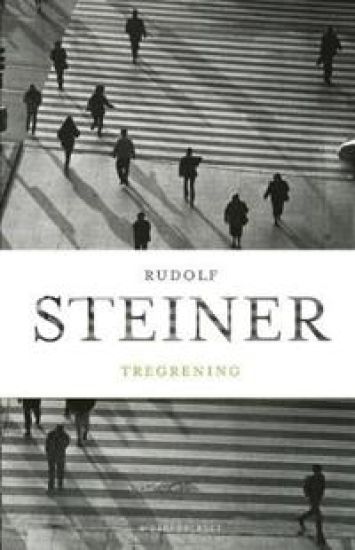
Rudolf Steiner (1861-1925) etterlot seg et mangfoldig livsverk. Her presenteres hans ideer til en nystrukturering av samfunnet. De ble presentert umiddelbart etter første verdenskrig, som alternativ til de økonomisk orienterte og etnisk baserte nasjonalstatene og til Lenins "vitenskapelige sosialisme". Rudolf Steiner ville desentralisere samfunnet og la dets tre funksjonsområder, kulturlivet, rettslivet og det økonomiske liv, organiseres etter hvert sitt prinsipp. Han kalte sin idé "tregreningen av den sosiale organismen". Ideen er ikke blitt mindre aktuell siden han fremla den. Den representerer intet skjema eller utgjør noen oppskrift på "det lykkelige samfunn". Derimot leverer Steiner et perspektiv på samfunnet som særlig i en verden herjet av etniske konflikter og markedsøkonomisk fundamentalisme kan bidra til å sette problemene inn i en sammenheng som gjør løsningene synlige.
Frihetens filosofi

Frihetens filosofi

Rudolf Steiner

Antropos
2008
nidottu
Rudolf Steiners filosofiske hovedverk handler om den frie menneskelige personlighet, som vokser frem der hvor mennesket forstår sitt forhold til den natur det er sprunget ut av og det samfunn det selv har frembragt.
Engler

Engler

Rudolf Steiner

Antropos
2008
nidottu
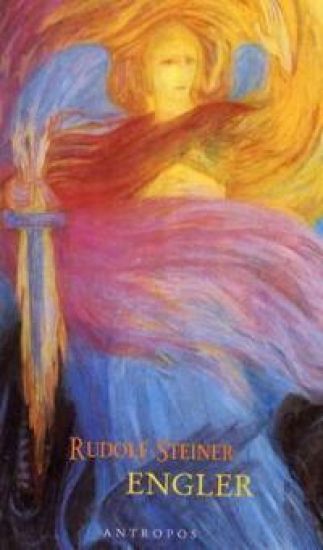
Forfatteren har i sin åndsvitenskap gjort englenes virkelighet tilgjengelig for en moderne bevissthet. I de ti foredragene som er samlet i denne boken, beskriver han englenes og de andre åndelige hierarkiers virke i den enkeltes liv, i menneskehetens og kosmos utvikling. Han viser hva det betyr for jordens fremtid at menneskene i dag lærer å forstå englenes vesen og oppgaver.
Spiritual Hierarchies and the Physical World

Spiritual Hierarchies and the Physical World

Rudolf Steiner

SteinerBooks, Inc
2008
nidottu

Halvin toimitettuna 26,20 €

10 lectures in D sseldorf, April 12-18, 1909; notes by participants from question-and-answer sessions (CW 110)April 21 - 22, 1909Ever since nature and consciousness were separated during the late Middle Ages--giving rise to scientific thinking that considers only the physical world and views the mind as merely an epiphenomenon of neural chemistry--the spiritual beings who are the universe have felt abandoned and unable to complete their work, which depends on human collaboration for its suc-cess. Human beings have likewise felt aban-doned and alienated. In these remarkable lectures, Rudolf Steiner reestablishes the human being as a participant in an evolving, dynamic universe of living spiritual beings: a living universe, whole and divine. He does so in concrete images, capable of being grasped by human consciousness as if from within. How is this possible? Implicit in Rudolf Steiner's view is the fact that, essentially, the universe consists of consciousness. Everything else is illusion. Hence, to understand the evolution of the cosmos and humanity in any terms other than consciousness is also an illusion. Whenever we are dealing with grand cosmic facts, we are dealing with states of consciousness. But states of consciousness never exist apart from the beings who embody them. Therefore, the only true realities are beings in various states of consciousness. In this sense, Steiner's spiritual science is a science of states of consciousness and the beings who embody them. Indeed, any science--physics, chemistry, botany, psychology--is a science of beings. And the sensory perception, or physical trace, is simply the outer vestment of the activity of beings in various states of consciousness. To describe these beings, Steiner uses the names made familiar by the wisdom traditions of the West. He speaks of the evolutionary states of Saturn, Sun, Moon, and so on; the nine choirs of angels; elemental beings and nature spirits; and the elements of fire, earth, air, and water. LECTURES: The Renewal of Primeval Wisdom The Four Elements, Fire, and the Elemental Beings: the Lowest Realm of the Hierarchies Planetary Evolution: Saturn and Sun Stagesof Evolution and the Spirits of Personality The Work of the Spiritual Hierarchies and the Zodiac Cosmic Evolution and the War in Heaven Geocentricity and Heliocentricity in Cosmic Evolution The Constitution of Spiritual Beings and Humanity The Spiritual Hierarchies, the Zodiac, and the Human Being Evolution and the Cosmic Human Body The ChristThe Spiritual Hierarchies and the Physical World: Zodiac, Planets & Cosmos is a translation from German of Geistige Hiearchien und ihre Wiederspiegelung in der physischen Welt. Tierkreis, Planeten, Kosmos (GA 110). The Spiritual Hierarchies and the Physical World: Reality and Illusion (1996) contained a previous edition of this lecture course.
How to Cure Nervousness

How to Cure Nervousness

Rudolf Steiner

Rudolf Steiner Press
2008
nidottu
"It is not always right to send someone to the chemist for some medicine when he's ill. Instead we should organize our lives in a way that renders us less susceptible to illness, or alleviates its impact. Disorders will impinge on us less severely if we strengthen the ego's influence on the astral body, the astral body's influence on the etheric and the etheric on the physical." Nervousness, anxiety and agitation are all common symptoms of our increasingly stressed and pressured society. They manifest in the everyday form that many people experience, or sometimes as serious mental or psychological disorders. In this classic lecture, Rudolf Steiner offers practical advice and spiritual insight for those who wish to heal these proliferating ailments of modern life. He describes simple exercises that strengthen the inner self, with the goal of achieving the calm and centredness necessary to lead a purposeful and healthy life. Also available as an Audio Book
The Second Coming of Christ

The Second Coming of Christ

Rudolf Steiner

Rudolf Steiner Press
2008
nidottu
"The being whom we call Christ once walked the earth in flesh and blood at the beginning of our era. He will never again return in a physical body, for that was a unique event and will not be repeated. But He will come again in an etheric form in the period I have mentioned. People will learn to perceive Christ by virtue of growing towards him through this etheric perception." Many contemporaries were unaware of Christ's incarnation on earth at the beginning of the modern era. And today, says Rudolf Steiner, many remain ignorant of the most important event of our time: the appearance of Christ in the etheric - or life - realm of the earth. Fundamentalist and millennial groups await a second physical incarnation, while atheists and materialists deny spirit altogether. Nevertheless, an incisive transformation is taking place in the human soul that will lead to an emerging clairvoyance. Just as Paul perceived Christ at Damascus, so may every human being experience Him today. Also available as an Audio Book
Educating Children Today

Educating Children Today

Rudolf Steiner

Rudolf Steiner Press
2008
nidottu
spacer "Vague and general phrases...cannot provide the basis for a genuine art of education, which depends on real knowledge of the human being. It is not that such phrases are wrong, but that they are as useless as saying that all parts of a machine must be made to work together harmoniously. To make a machine work you have to apply real, detailed knowledge, not phrases and truisms. For the art of education likewise, what is important is specific insight into the way the human being is constituted, and how each aspect develops." In his earliest and most succinct statement regarding education, Rudolf Steiner describes the stages of childhood development and explains why it is important to introduce aspects of the curriculum at specific times. He relates developmental steps in children to the "births" of the non-physical aspects of the human being: the etheric body that accompanies the change of teeth, the astral body that becomes apparent at puberty, and the birth of the "I" that heralds the individual's maturation to adulthood. Without this knowledge, says Steiner, well-meaning but misguided educational theory and practise can cause harm.
The Four Temperaments

The Four Temperaments

Rudolf Steiner

Rudolf Steiner Press
2008
nidottu
"The two streams in the human being combine to produce what is commonly known as a person's temperament. Our inner self and our inherited traits co-mingle in it. Temperament is an intermediary between what connects us to an ancestral line and what we bring with us... Temperament strikes a balance between the eternal and the ephemeral..." From personal spiritual insight, Rudolf Steiner renews and broadens the ancient teaching of the four temperaments. He explains how each person's combination of temperaments - with one usually uppermost - is shaped. Steiner gives lively descriptions of the passive, comfort-seeking phlegmatic, the fickle, flitting sanguine, the pained, gloomy melancholic and the fiery, assertive choleric. He also offers practical suggestions aimed at teachers and parents for addressing the various manifestations of the temperaments in children, as well as advice intended for adults' personal development. Also available as an Audio Book
Spiritual Ecology

Spiritual Ecology

Rudolf Steiner

Rudolf Steiner Press
2008
nidottu
Today we face an increasing number of challenges connected to our environment - from climate change and extreme weather patterns to deforestation, threats to animal species and ongoing crises in farming. Hardly a day goes by without further alarming reports. How are we to respond - particularly if we wish to take a broader, spiritual view of these events? Today we face an increasing number of challenges connected to our environment - from climate change and extreme weather patterns to deforestation, threats to animal species and ongoing crises in farming. Hardly a day goes by without further alarming reports. How are we to respond - particularly if we wish to take a broader, spiritual view of these events? In the extracts compiled in this volume, presented here with commentary and notes by Matthew Barton, Steiner speaks about human perception, the earth, water, plants, animals, insects, agriculture and natural catastrophes. Spiritual Ecology offers a wealth of original thought and spiritual insight for anyone who cares about the future of the earth and humanity.