Kirjailija
Rudolf Steiner
Kirjat ja teokset yhdessä paikassa: 1 477 kirjaa, julkaisuja vuosilta 1910–2026, suosituimpiin kuuluu The Cosmic New Year: A Course of Lectures by Rudolf Steiner. Vertaile teosten hintoja ja tarkista saatavuus suomalaisista kirjakaupoista.
1 477 kirjaa
Kirjojen julkaisuvuodet: 1910–2026.
Selected from the material given by Rudolf S teiner to members of his Esoteric School, this volume featur es exercises, meditations and practices for spiritual develo pment '
5 lectures, Berlin and Stuttgart, January-March 1912 (CW 135)"Just as an age was once ready to receive the Copernican theory of the universe, so is our own age ready for the ideas of reincarnation and karma to be brought into the general consciousness of humanity." --Rudolf SteinerSteiner introduced the West to his detailed, scientific knowledge of reincarnation and karma. He gave concrete descriptions of the way individuals transform during the course of successive incarnations and specific examples of how karma works. Steiner also provides practical exercises that lead us to experience the reality of reincarnation. He believed that by experiencing the reality of successive earth lives, we can form a foundation for a spiritual understanding of the relationship between humankind and the cosmos. These talks contain some of Steiner's most important teachings on reincarnation and karma. His examples and exercises can lead us to direct knowledge of the laws of reincarnation and karma. Topics include: How to perceive directly the part of our being that passes through many lives on earth; How to develop a "feeling memory," which we need before we are able to experience reincarnation; Thought exercises for gaining knowledge of reincarnation and karma; Examples of how karma works between incarnations; How knowledge of reincarnation and karma affects our moral life. This volume is a translation from German of Wiederverk rperung und Karma und ihre Bedeutung f r die Kultur der Gegenwart.
Freud, Jung and Spiritual Psychology
Rudolf Steiner
SteinerBooks, Inc
2001
nidottu
Halvin toimitettuna 21,70 €
A collection of talks on Psychology (CW 143, 178, 205)In these five talks, Rudolf Steiner laid out the foundations for a truly spiritual psychology. The first two lectures take a critical look at the principles of Freud and Jung's early work. The last three lectures describe the threefold structure of human consciousness and then outline a psychological approach that considers both the soul's hidden powers and the complex connections between psychological and organic, bodily processes. Robert Sardello, codirector of The School of Spiritual Psychology, contributed an important and provocative introduction from the perspective of a practicing psychotherapist. CONTENTS: Introduction by Robert J. Sardello "Anthroposophy and Psychoanalysis," part 1Dornach, November 10, 1917 "Anthroposophy and Psychoanalysis," part 2Dornach, November 11, 1917 "Spiritual Psychology: Subconscious and Supraconscious"Munich, February 25, 1912 "Hidden Depths of Soul"Munich, February 27, 1912 "Organic Processes and Soul Life." Dornach, July 2, 1921 NotesThis is an important work for understanding Steiner's views on psychoanalytic practices as they appeared in the first quarter of the twentieth century. A previous edition of this book was titled Psychoanalysis & Spiritual Psychology. READ A REVIEW BY BOBBY MATHERNE
Building on the achievements of Goethe in his Theory of Colour, Rudolf Steiner shows how colour affects us in many areas of life, including our health, our sense of well-being, and our feelings. Distinguishing between 'image' and 'lustre' colours, he lays the foundation, based on his spiritual-scientific research, for a practical technique of working with colour that leads to a new direction in artistic creativity. His many penetrating remarks on some of the great painters of the past are supplemented by a deep concern to see a cultural, spiritual renewal emerge in the present time. 'If you realize', he states, 'that art always has a relation to the spirit, you will understand that both in creating and appreciating it, art is something through which one enters the spiritual world.' This volume is the most comprehensive compilation of Rudolf Steiner's insights into the nature of colour, painting and artistic creation. It is an invaluable source of reference and study not only for artists and therapists but for anyone interested in gaining an appreciation of art as a revelation of spiritual realities.
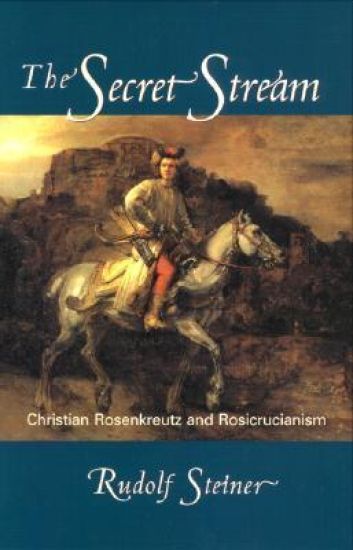
During the early seventeenth century, Europe was suddenly embroiled in controversy after the publication of the first Rosicrucian texts. Ever since, Rosicrucianism has been at the center of Western Christian esotericism. Forced underground by the Thirty Years War, it was secretly handed down by alchemists, hermeticists, and Masons to the nineteenth century, when it inspired new spiritual movements such as Theosophy, the Order of Golden Dawn, and Rudolf Steiner's Spiritual Science. The Secret Stream collects all of Steiner's discussions of the Rosicrucians, answering questions such as Who are the Rosicrucians? What is Alchemy? What is the Rosicrucian path? What is the difference between Rosicrucianism and mysticism? And what does it mean for today? The topics include the Tao and the Rose Cross; the history and mission of Christian Rosenkreutz; the nature of Rosicrucian practice and experience; the meaning of "The Chymical Wedding," and Goethe's Rosicrucian poem, "The Mysteries." Rosicrucian meditation is also discussed, including how to meditate the Rose Cross itself. This important collection goes to the spiritual heart of Anthroposophy, whose essence is the Rosicrucian path. Edited and introduced by Christopher Bamford, The Secret Stream brings to light the hidden fraternity that has lived and worked since the fourtheenth century. It reveals the Rosicrucian path that is Christian, alchemical, and profoundly modern. Contents: Rosicurcianism The Mission of Christian Rosenkreutz The Rosicrucian Path of Alchemy Rosicrucianism and Modern Initiation Rosicrucian Meditation
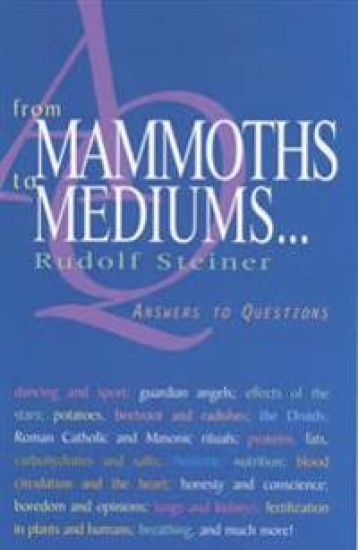
From Mammoths to Mediums...
Rudolf Steiner
Rudolf Steiner Press
2000
nidottu
Halvin toimitettuna 24,50 €
In this collection: dancing and sport; guardian angels; effects of the stars; potatoes, beetroots and radishes; the Druids; Roman Catholic and Masonic rituals; proteins, fats, carbohydrates and salts; Aristotle; nutrition; blood circulation and the heart; honesty and conscience; boredom and opinions; lungs and kidneys; fertilization in plants and humans; light and color; and breathing.
Esoteric Christianity and the Mission of Christian Rosenkreutz
Rudolf Steiner
Rudolf Steiner Press
2000
nidottu
Halvin toimitettuna 26,70 €
In addition to the outer manifestation of Christianity as we know it from history, there exists a second, hidden stream of Christian thought and development, sometimes referred to as 'esoteric Christianity' or 'Rosicrucian Christianity'. Displaying an intimate knowledge of his subject, Rudolf Steiner throws light on this once secret, spiritual movement. But rather than relying on historical tradition or teaching, he presents wisdom and insight directly from the original metaphysical sources of esoteric Christianity. In these dynamic lectures, Steiner describes the influence of Christ's power throughout history, the workings of karma, the role of the Buddha and the Bodhisattvas, as well as the vital work of Christian Rosenkreutz, Jeshu ben Pandira and other key historical figures. This new edition - indispensable for serious students of esotericism - contains all 23 lectures and addresses of the original German collection. It features previously scattered, classic lectures such as 'The Etherisation of the Blood', 'Faith, Love, Hope' and 'Cosmic Ego and Human Ego'.
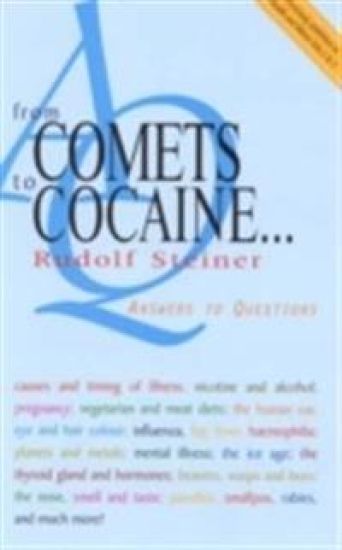
From Comets to Cocaine...
Rudolf Steiner
Rudolf Steiner Press
2000
nidottu
Halvin toimitettuna 24,50 €
18 lectures, Dornach, October 19, 1922 - February 10, 1923 (CW 348)The remarkable discussions in these two volumes took place between Rudolf Steiner and workers at the Goetheanum, Switzerland, who chose the varied subject matter. Steiner took questions and usually gave immediate answers. The astonishing nature of his responses, their insight, knowledge and spiritual depth, is testimony to his outstanding ability as a spiritual initiate and teacher. Accessible and stimulating, the records of these sessions are both entertaining and profound. In From Comets to Cocaine, Steiner discusses, among other things, nicotine and alcohol; the causes and timing of illness; pregnancy; vegetarian and meat diets; the human ear, eye and hair color; influenza, hay fever, hemophilia; planets and metals; mental illness; the ice age; the thyroid gland and hormones; beavers, wasps and bees; the nose, smell and taste; and jaundice, smallpox and rabies. This volume is a translation from German of UEber Gesundheit und Krankheit. Grundlagen einer geisteswissenschaftlichen Sinneslehre (GA 348). Previous translation published in two volumes as Health and Illness.
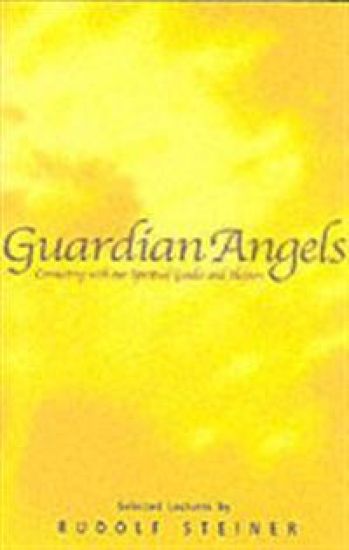
Traditional folklore has spoken of guardian angels who guide and protect us. However, although there are numerous stories of the miraculous intervention of these beings, some people still write them off as myth and superstition. Based on his own personal experience and cognition, Rudolf Steiner spoke of guardian angels and other spiritual beings as a reality. Their existence, he said, is a spiritual and scientific fact that can be researched and studied by clairvoyance. One of his aims was to enable people to connect again with these spiritual beings not only for their own benefit, but also for the benefit of the other kingdom of nature and the whole destiny of the earth's evolution. In his writings and lectures Steiner intended to lead people from belief to recognition, knowledge, and understanding of spiritual beings. In these six specially selected lectures, which until now have lain hidden away in very early publications or journals, he describes the role of the guardian angel and discusses our relationship to the heavenly hierarchies of spiritual beings as a whole and how they shape our human form as a result of their cosmic activity. As many people today are awakening to angelic guidance in their daily lives and are seeking it consciously, these lectures will help them to understand their experiences and to make their communication more conscious.
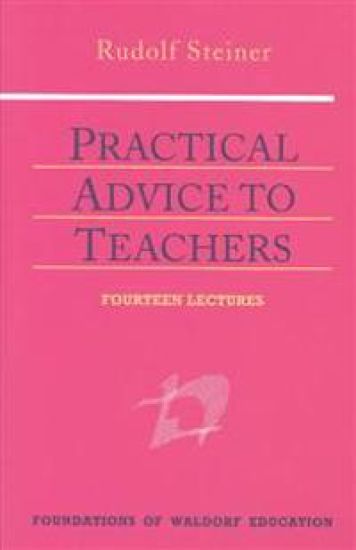
14 lectures, Stuttgart, August 21-September 5, 1919 (CW 294) How do Waldorf teachers put their educational ideals into practice in the classroom? How does a teacher connect geography and art and language in a way that enlivens the souls of children? What does a child's respect for the teacher mean for later life? These are only a few practical aspects of this initial course for Waldorf teachers. During an intensive two weeks, Rudolf Steiner gave three simultaneous educational courses to those who would be the first teachers of the original Waldorf school. One course provided the foundational ideas behind Waldorf education (The Foundations of Human Experience); another provided a forum for questions and lively discussions on specific issues in the classroom (Discussions with Teachers). In this course, Steiner takes the middle-path by integrating theory and practice. Here, Steiner spoke of new ways to teach reading, writing, geography, geometry, language, and much more. His approach is tailored to the spiritual and physical needs of the children themselves, not to an arbitrary curriculum based solely on external results. At a time when public education is in a state of crisis, this book describes how children around the world are being guided into adulthood with a fuller sense of themselves and with a creative approach to life and the world around them. German source: Erziehungskunst. Methodisch-Didaktisches (GA 294).
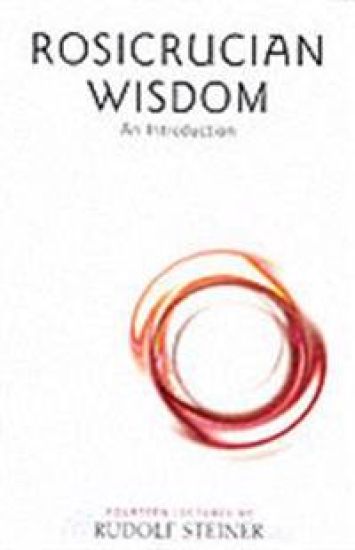
14 lectures, Munich, May 22- June 6, 1907 (CW 99)The work of Rudolf Steiner is unique in the way it combines esoteric teaching with practical suggestions for the development of social life. Indeed, we know Steiner today mostly because of the various applications of his ideas in such areas as education, medicine, and agriculture. However, society could not have developed any of these without the coherent and profound body of spiritual knowledge at the core of Steiner's work. In Rosicrucian Wisdom--one of Rudolf Steiner's most complete introductions to modern spirituality--he speaks from the very stream of Rosicrucian teaching. Rather than borrowing old ideas from historical tradition, however, he presents a wholly new contribution that arises from the results of his own experiential, spiritual research. Steiner discusses of the Rosicrucian path as the one appropriate for modern spiritual seekers in the West. He warns the reader that Rosicrucian teaching should not be taken as abstract theory; rather than remaining in the head, or even in the heart, spiritual ideas should reach into daily action and transform all aspects of life. He goes on to describe many facets of spiritual truth, including the law of destiny, the fact of life after death, means of developing spiritual vision, humanity's past and future evolution, and much more. This volume contains one of the best lecture courses for gaining a deeper understanding of the spiritual principles behind Anthroposophy. Rosicrucian Wisdom is a translation from the German Die Theosophie des Rosenkreuzers (GA 99). A previous translation was titled The Theosophy of the Rosicrucians.
11 lectures, Hamburg May 16-28, 1910 (CW 120)Why do people en-counter such different events and circumstances in life? What is behind diseases, accidents, and natural disasters? Rudolf Steiner speaks of karma as a reality that, if we understand it, answers the questions that arise as we begin to look seriously for life's meaning and purpose. We create our own karma in every area of existence, laying the foundation in one incarnation for the next. The whole pattern is not contained in one but in many lives on earth. Steiner tells us that we can gain acceptance and a sense of purpose by recognizing that self-induced karma is always in the process of being resolved. About karma and animals; health and illness; the curability and incurability of diseases; accidents; volcanoes, earthquakes, and epidemics; the karma of higher beings; free will in the future of human evolution; and individual and shared karma." By exploring the more hidden aspects of a whole range of life phenomena in the light of the evolution of our planet Rudolf Steiner raises our consciousness to the vital role we play in helping or hindering the powers which serve the world's evolvement."--from the Foreword
This collection of special prayers is a wonderful companion for parents and caregivers and will help guide children on their journey to adulthood. It includes verses for every occasion--for parents to recite as the incarnating soul prepares for birth, for the baby after birth, and for children of all ages. Also included are prayers for morning and evening and graces for mealtimes. A lecture by Rudolf Steiner provides context for the prayers, offering insight into the greater cosmic relationships in which individuals are immersed before birth, during life, and after death.
Written in 1925 (CW 27)In this classic introductory work on spiritual medicine, Rudolf Steiner worked in a unique literary collaboration with the physician Ita Wegman. Their aim was to revitalize the art of healing through spiritual knowledge--yet in so doing they did not underrate or dismiss modern allopathic medicine; rather, they illumined ordinary medicine beyond its materialistic outlook to a fuller realization of the human condition. As Ita Wegman wrote in her preface: "The aim was not to underestimate scientific medicine in an amateurish way; it was given full recognition. But it was important to add to existing knowledge the insights that can come from true perception of the spirit, enabling us to understand the processes of illness and healing." Today this new extension of practical medicine--generally called "anthroposophical medicine"--is used and valued by many physicians in numerous clinics around the world. Contents: Foreword by Dr. Michael Evans1. Understanding the True Nature of Man as a Basis of Medical Practice2. Why Do People Fall Ill?3. The Phenomena of Life4. On the Nature of the Sentient Organism5. Plant, Animal, Man6. Blood and Nerve7. The Nature of Medicinal Actions8. Activities in the Human Organism--Diabetes Mellitus9. The Role of Protein in the Human Body and Proteinuria10. The Role of Fat in the Human Organism and Deceptive Local Symptom Complexes11. The Configuration of the Human Body and Gout12. Development and Separating-off Processes of the Human Organism13. On the Nature of Illness and Healing14. The Therapeutic Way of Thinking15. The Method of Treatment16. Perceiving Medicinal Qualities17. Perceiving the Nature of Substances as a Basis of Pharmacognosy18. Eurythmy Therapy19. Characteristic Illnesses20. Typical MedicinesThis volume is a translation from the German of Grundlegendes fur eine Erweiterung der Heilkunst nach geisteswissenschaflichen Erkenntnissen (GA 27).
5 lectures at The Hague, November 13-18, 1923 (CW 231) What is our relationship to the planets we see in the night sky? Does the cosmos have any affect on our individual lives? Modern science tells us that we are an insignificant accident in a vast, indifferent universe. Rudolf Steiner maintains that we are intimately enmeshed with the whole cosmos, right down to the very structure of our physical bodies. In these talks, Steiner explores our relationship as individuals to the spiritual cosmos--where we will all become cosmonauts one day. The key to being at home in the universe is to comprehend the significance of our individual, physical lives on Earth and what happens when we leave our physical bodies behind. Steiner describes his view of our journey after death and our subsequent return to Earth and a new life. He describes the "planetary" spheres through which we pass and how they affect our future life. He shows us how our character and actions on Earth affects us after we die, and how those experiences in turn shape our next physical life. This is not just more information to add to our already overloaded store of abstract concepts; Steiner gives imaginative exercises that help us explore our suprasensory, spiritual nature. We can begin right now to act more consciously by recognizing the concrete nature of morality and the real consequences of our present lives. The introduction and comprehensive afterword by Paul Mar-gulies explain and contextualize Steiner's text, revealing a message that is more vital and relevant than ever in our frenzied, materialistic times. This book can help us experience more meaning in life and become more at home as spiritual citizens of the universe. Contents: Introduction by Paul Margulies 1. "A Speck of Dust?"2. "Interweaving Our Destinies"3. "Through the Spheres"4. "Through Midnight to Birth"5. "Earth and the Mystery of Karma" Afterword by Paul Margulies Title of the original German edition: Der bersinnliche Mensch, anthroposophisch erfa t. This volume is a thoroughly revised edition of the book Supersensible Man.
Die Schöpfung der Welt und des Menschen. Erdenleben und Sternenwirken
Rudolf Steiner
Steiner Verlag, Dornach
2000
sidottu
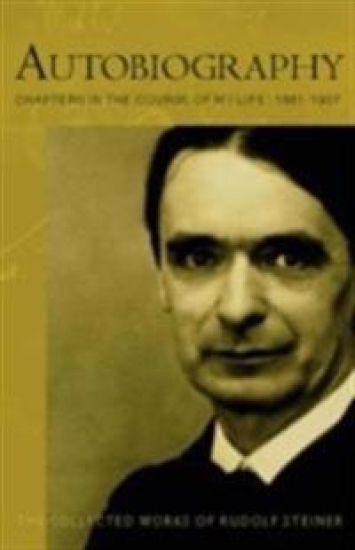
Written 1924-1925 (CW 28)"Because I entered this world with defined soul predispositions, and because the course of my life, as expressed in my biogra-phy, is determined by those predispositions, as a spiritual human being I must have existed before my birth. As a being of spirit, I must be the repetition of someone through whose biography mine can be explained. In each life the human spirit appears as a repetition of itself with the fruits of experi-ences during previous lives. --Rudolf SteinerRudolf Steiner seldom spoke of himself in a personal way, but in his Autobiography we are offered a rare glimpse into some of the most intimate aspects of his inner life, his personal relationships, and significant events that helped to shape the philosopher, seer, and teacher he became. This edition restores the original format of seventy chapters, just as they were written for the Goetheanum weekly newsletter. This autobiography is not merely a narrative of Rudolf Steiner's successes and failures, but the story of a soul possessed of a precise, probing scientific mind and a natural clairvoyant ability to see into the spiritual world. Although naturally clairvoyant, Steiner always recognized the integrity and importance of modern scientific methods, and thus he developed a modern discipline he named Anthroposophy, or spiritual science. During the century that followed the events recorded in this autobiography, Rudolf Steiner's insights have touched and enriched numerous areas of life in ways that continue to transform people's lives in the twenty-first century. This illustrated, revised, updated, and expanded edition was the first volume to be released in The Collected Works of Rudolf Steiner. This series will eventually collect all of the English translations of Rudolf Steiner's works--including many never before in English--into an attractive and uniform set of his written and spoken words. Contents: Series Foreword, Introduction, and Chronological Context Part 1: Seeds of Awakening, Wiener-Neustadt to Vienna, 1861-1890 Part 2: Fertile Ground, Weimar, 1890 -1897 Part 3: Must I Remain Unable to Speak?, Berlin, 1897 -1907 A Chronology of Rudolf Steiner's Life and Work by Paul Allen Editorial and Reference Notes by Paul Allen (updated) Annotated Bibliography Index This volume is a translation from German of Mein Lebensgang (GA 28). A previous translation was titled The Course of My Life (1951).

Selvänäköisyys nykyaikana ja sen suhde ajatteluun
Rudolf Steiner
SUOMEN ANTROPOSOFINEN LIITTO
2000
nidottu
Meaning of Life and Other Lectures on Fundamental Issues
Rudolf Steiner
Rudolf Steiner Press
1999
pokkari
What is the meaning of Life? Rudolf Steiner discusses this ancient enigma with refreshing directness, offering profound and enlighten-ing answers. In this inspiring collection of talks, Steiner speaks on themes related to health, reincarnation, destiny, luck, and the trials of modern life. Most of these talks were originally published in booklet form and have been out of print for some years. The variety of topics is unified by the fact that all the lectures address practical and fundamental issues facing us in our modern lives: "Growth, Decay and Reincarnation," "Human Participation in Evolution," "Illu-sory Illness," "The Feverish Pursuit of Health," "Luck--Reality and Illusion," "Psychological Distress and the Birth Pangs of the Consciousness Soul," and "How to Listen to the Spirit."