Kirjojen hintavertailu – 12 903 725 kirjaa ja 27 kauppaa

Kirjailija

Rudolf Steiner

Kirjat ja teokset yhdessä paikassa: 1 477 kirjaa, julkaisuja vuosilta 1910–2026, suosituimpiin kuuluu The Cosmic New Year: A Course of Lectures by Rudolf Steiner. Vertaile teosten hintoja ja tarkista saatavuus suomalaisista kirjakaupoista.

1 477 kirjaa

Kirjojen julkaisuvuodet: 1910–2026.

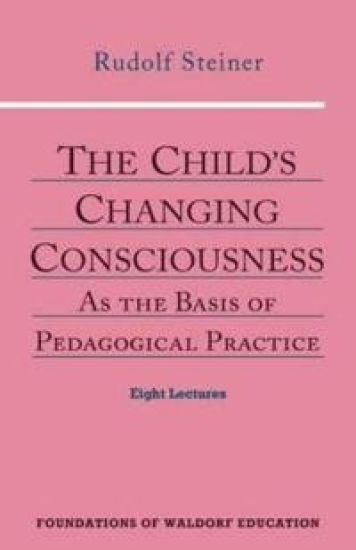
The Child's Changing Consciousness

The Child's Changing Consciousness

Rudolf Steiner

SteinerBooks, Inc
1996
pokkari
8 lectures, Dornach, April 15-22, 1923 (CW 306); plus "Introductory Words to a Eurythmy Performance" Three and a half years after the founding of the first Waldorf school in Stuttgart, Germany, these talks were given to an audience of Swiss school teachers, most having little knowledge of Anthroposophy. This is the context of these lectures, which are among Rudolf Steiner's most accessible talks on education. A teacher who attended the lectures wrote in the Berne School Paper "Every morning, as we listened anew to Dr. Steiner, we felt we had come closer to him and understood better what he had to say and how he had to say it. Daily, we newcomers gathered, asking ourselves: Why are more of our colleagues not here? It is untrue that anthroposophy limits a person, develops blinkers, or avoids real life.... Step by step, Dr. Steiner shows its application to life...illumining the details and disclosing their connection with profound questions of life and existence. I came to the conference to stimulate my school work. I found benefit in abundance. But also, I unexpectedly received a greater richness for heart and soul--and, from this in turn shall stream richness for my classes." In other words, these lectures are ideal for anyone who is approaching Waldorf education for the first time. Using language that any teacher or parent can understand, Steiner goes into the essentials of his educational philosophy, providing many examples and anecdotes to convey his meaning. In this way, against the background of the developing child, he allows the curriculum and the method of teaching to emerge as the commonsense conclusion of practical experience. German source: Die p dagogisch Praxis vom Geichtspunkte geisteswissenschaftlicher Menschenerkenntnis (GA 306).
The Foundations of Human Experience

The Foundations of Human Experience

Rudolf Steiner

SteinerBooks, Inc
1996
nidottu
Opening address, Stuttgart, August 20, 191914 lectures, Stuttgart, August 21-September 5, 1919 (CW 293)2 lectures, Berlin, March 15 and 17, 1917 (CW 66) "Although we can physically see children only after their birth, we need to be aware that birth is also a continuation. We do not want to look only at what the human being experiences after death, that is, at the spiritual continuation of the physical. We want to be aware that physical existence is a continuation of what higher beings have done without our assistance. Our form of educating can have the correct attitude only when we are aware that our work with young people is a continuation of what higher beings have done before birth." --Rudolf Steiner This course on education contains some of the most remarkable and significant lectures ever given by Rudolf Steiner. Because these lectures were given to teachers, however, they have suffered the misconception that they are useful only to teachers. Any teacher who wants to teach in a way that encompasses the whole child certainly needs a functional understanding of what Steiner presents here, but these lectures will also greatly benefit parents, psychologists, counselors, or anyone else involved with child development. Steiner gives his most concise and detailed account of human nature in these lectures, which are absolutely essential for anyone who wants a deeper understanding of Steiner's spiritual science. Those who are willing to work through this work will discover here a new, powerful, convincing, and profoundly phenomenological "anthropology" of human spiritual psychology. In these lectures, Steiner laid out for the first time the principles that form the basis for renewing the art of teaching. The Foundations of Human Experience is the most important text for studying and understanding the human developmental and psychological basis for Waldorf education. READ BOBBY MATHERNE'S REVIEW OF THIS BOOK Translated from the German editions: Allgemeine Menschenkunde als Grundlage der Padagogik (GA 239); appendix from Geist und Stoff. Leben und Tod (GA 66). An older translation of CW 239 was titled Study of Man.
Education for Adolescents

Education for Adolescents

Rudolf Steiner

SteinerBooks, Inc
1996
pokkari
8 lectures, Stuttgart, June 12-19, 1921 (CW 302) In these eight talks on education for adolescent-aged young people, Steiner addressed the teachers of the first Waldorf school two years after it was first opened. A high school was needed, and Steiner wanted to provide a foundation for study and a guide for teachers already familiar with his approach to the human being, child development, and education based on spiritual science. Steiner's education affirms the being of every child within the world of spirit. This approach works within the context of the child's gradual entry into earthly life, aided by spiritual forces, and children's need for an education that cooperates with those forces. Some of Steiner's remarks may be controversial, but unbiased study will lead to an appreciation of the profound thought and wisdom behind what is presented here. German source: Menschenerkenntnis und Unterrichtsgestaltung (GA 302).
Education of the Child

Education of the Child

Rudolf Steiner

SteinerBooks, Inc
1996
pokkari
As early as 1884, while tutoring a boy with special needs, Steiner began a lifelong interest in applying spiritual knowledge to the practical aspects of life. Steiner originally published the essay at the core of this book in 1907. It represents his earliest ideas on education, in which he lays out the soul spiritual processes of human development, describing the need to understand how the being of a child develops through successive "births," beginning with the physical body's entry into earthly life, and culminating in the emergence of the I-being with adulthood. Also included here are several early lectures on education (1906-1911). Contents: "The Education of the Child in the Light of Spiritual Science," essay "Teaching from a Foundation of Spiritual Insight," Berlin, May 14, 1906 "Education in the Light of Spiritual Science," Cologne, December 1, 1906 "Education and Spiritual Science," Berlin, January 24, 1907 "Interests, Talent, and Educating Children," Nuremberg, November 14, 1910 "Interests, Talent, and Education," Berlin, January 12, 1911
Anthroposophy

Anthroposophy

Rudolf Steiner

SteinerBooks, Inc
1996
nidottu
This written attempt to create a spiritual anthropology was found among Rudolf Steiner's unpublished works after his death. Although fragmentary, this key work on "Anthroposophy" is of enormous interest and importance. It is work whose time has finally arrived. Here are the first steps toward the development of a true psychology of spirit, using a phenomenological approach to the human senses, the life processes, the I-experience, the human form, and the human relationship to higher spiritual worlds. Steiner struggled to express the concepts related in this book, since many of the terms used in neurology, psychology, and cognitive studies did not yet exist in 1910. Since then there has been much progress, and this translation benefits from more than eighty years of development in the study of the human senses, cognition, and, neurology. Steiner's "Anthroposophy" lies halfway between anthropology and theosophy as a means of studying the human being. On the one hand, anthropology studies the human being through the physical senses using empirical scientific method; theosophy, on the other hand, recognizes the spiritual nature of the human being based on inner experience and attempts to understand human nature within the realm of spirit. Anthroposophy takes the middle way, studying human beings as they present themselves to physical observation while, at the same time, attempting to derive indications of the spiritual foundations of phenomena through a process of "phenomenological intensification." The results of this intensification are extremely important and constitute the first steps toward a truly cognitive psychology. Included are an introduction by neurologist Dr. James Dyson, an anthroposophic doctor; a foreword by Robert Sardello, co-founder and co-director of The School of Spiritual Psychology; and a translator's preface by Detlef Hardorp. While not an easy text, Anthroposophy (A Fragment) is essential for understanding Steiner's view of the human body--especially its formation and function in relation to spirit. Read Bobby Matherne's review of this book CONTENTS: Introduction by Dr. James A. Dyson Foreword by Robert Sardello Editor/Co-translator Preface Publisher's Foreword to the 1970 German Edition The Character of Anthroposophy The Human Being as a Sensory Organ The World Underlying the Senses The Life Processes Processes in the Inner Human Being I-Experience The World Underlying the Sense Organs The World Underlying the Organs of Life The Higher Spiritual World The Human Form Appendices Bibliography Anthroposophy (A Fragment) is a translation from German of Anthroposophie: Ein Fragment aus dem Jahre 1910 (GA 45).
The Spiritual Foundations of Morality

The Spiritual Foundations of Morality

Rudolf Steiner

SteinerBooks, Inc
1995
nidottu
3 lectures, Norrk ping, Sweden, May 28-30, 1912 (CW 155) Moral teaching and moral preaching cannot establish morality. It is only by delving into the hidden secrets of life that we can advance not just to moral doctrines but to the moral sources of life, true moral impulses. At different times, humanity has manifested moral life in different ways. To understand these differences, the evolution of consciousness must also be taken into account. Originally morality was a part of human nature, for in their essence human beings are good. But through evolution, there have come errors, deviations, times of falling away. In this small, much-loved cycle of three lectures Rudolf Steiner indicates the sources for the recovery of a living morality for our time. Rudolf Steiner shows the transformation of the virtues through the evolution of consciousness and, above all, through the incarnation of the Christ in the Mystery of Golgotha. Since then, morality works to build up Christ's being. Synopses: Lecture 1 -- Why morality needs to be studied. Preaching morality v. founding morality: examples of ancient India (devotion to wisdom) and ancient Europe (courage). Leprosy in the Middle Ages. The biography of Francis of Assisi; the transformation of courage into love. The reality of moral forces. Lecture 2 -- The caste system; differentiation as to a law of evolution. The betrayal of the Atlantean Mysteries; the consequences for the European population. Racial evolution v. soul evolution. The demons of leprosy overcome by the Christ impulse in Francis of Assisi. Francis's prior incarnation; the mysteries at Colchis and the Buddha. Francis's faith in the original goodness of humanity. Plato's four virtues. Lecture 3 -- The nature of evil and freedom; the teaching of the mean. Interest as a precondition for understanding and moral conduct. Spiritual Science, as divine wisdom, stimulates interest. During the third post-Atlantean cultural epoch, interest was regulated by the instinctive virtue of "wisdom"; today, interest must be regulated by conscious truthfulness. The lack of truthfulness in modern times; theosophy as an educator of truthfulness. Truthfulness as the virtue of the sentient soul. Courage as the instinctive virtue of the mind soul in the fourth epoch; today, in the fifth epoch, it must become love, based on understanding. This is promoted by a theosophical comprehension of the Christ. Temperance as the virtue of the consciousness soul is still instinctive in the fifth epoch; it will be replaced by "life wisdom" in the sixth epoch. The effect of spiritual-scientific wisdom on the body. The virtue of "justice." Knowledge of the suprasensory world through wonder, astonishment, faith. The evolution of conscience. The Christ impulse is naked; it must be clothed by impulses of wonder, love, conscience. Founding v. preaching morality: the reality of the Christ impulse v. abstract ideals of brotherhood. How goodness builds and evil destroys. This volume is a partial translation of Theosophische Moral (CW 155).
The Spirit of the Waldorf School

The Spirit of the Waldorf School

Rudolf Steiner

SteinerBooks, Inc
1995
nidottu
6 lectures and an essay, 1919-1920 (CW 297) World War I destroyed the structures, values, and self-confidence that created the seeming greatness of the nineteenth century. In its place stood ruins and the shards of a civilization. In response to this, Emil Molt--the director of the Waldorf-Astoria Cigarette Factory and a student of Rudolf Steiner--decided to establish a school to educate people who could create a new culture. Thus, the Waldorf school movement was begun. Rudolf Steiner agreed to act as the school's consultant, and his insights guided the school in accomplishing this ambitious task. The goal of this education was that, through living inner work guided by the insights of Rudolf Steiner, the teachers would develop in the children such power of thought, depth of feeling, and strength of will that they would emerge from their school years as full members of the human community, able to meet and transform the world. These lectures occurred around the opening of the first Waldorf school. They serve as an excellent, inspiring introduction to Waldorf education as a whole. Here Steiner outlines--with freshness, immediacy, and excitement--the goals and intentions of a new form of education and speaks to parents of prospective students. He explains the school's guiding principles and describes how parents must participate, with understanding and interest, in the awakening of their children's creative forces so that a healthier society can come about. Contents: Introduction by Robert Lathe and Nancy Whittaker The Intent of the Waldorf School The Spirit of the Waldorf School A Lecture for Prospective Parents Supersensible Knowledge and Social Pedagogical Life The Social Pedagogical Significance of Spiritual Science Spiritual Science and Pedagogy The Pedagogical Objective of the Waldorf School in StuttgartAn essay by Rudolf Steiner from the Journal The Social Future German sources: Die Waldorfschule und ihr Geist (GA 297); "Die p dagogische Zielsetzung der Waldorfschule in Stuttgart," from Soziale Zukunft, Feb. 1920 (GA 24).
Anthroposophy in Everyday Life

Anthroposophy in Everyday Life

Rudolf Steiner

SteinerBooks, Inc
1995
nidottu
Four of Rudolf Steiner's best-loved lectures are collected in this book. They are some of the most accessible presentations of the anthroposophic approach to life available in English. Included are: Practical Training in Thought Overcoming Nervousness Facing Karma The Four Temperaments The first lecture concerns the fundamental human activity of thinking. Everything we do, we do through thinking. The first task, then, is to realize the reality of thinking. To help us do this, Steiner gives exercises that will allow us to experience the cognitive, even clairvoyant, power of thinking. In "Overcoming Nervousness," Steiner shows us how exercises in thinking also give us the calm centered sense needed to lead purposeful, healthy lives. "Facing Karma" takes us to the heart of life, where we experience suffering and happiness. The law of karma that determines life's experiences and encounters also helps us develop the self-knowledge required for self-transformation. Finally, "The Four Temperaments" show us how the union of hereditary factors and our own inner spiritual nature shape our psychology. The guide here is the ancient classifications of sanguine, choleric, phlegmatic, and melancholic. Renewed understanding of these allows us to develop a truly modern spiritual psychology, which is the basis of all real inner development. With its many practical exercises, mantras, and meditations, this book is a fundamental introduction for anyone beginning or needing encouragement along the path of inner development.
The Kingdom of Childhood

The Kingdom of Childhood

Rudolf Steiner

SteinerBooks, Inc
1995
nidottu
These seven intimate, aphoristic talks were presented to a small group on Steiner's final visit to England. Because they were given to "pioneers" dedicated to opening a new Waldorf school, these talks are often considered one of the best introductions to Waldorf education. Steiner shows the necessity for teachers to work on themselves first, in order to transform their own inherent gifts. He explains the need to use humor to keep their teaching lively and imaginative. Above all, he stresses the tremendous importance of doing everything in the knowledge that children are citizens of both the spiritual and the earthly worlds. And, throughout these lectures, he continually returns to the practical value of Waldorf education. These talks are filled with practical illustrations and revolve around certain themes--the need for observation in teachers; the dangers of stressing the intellect too early; children's need for teaching that is concrete and pictorial; the education of children's souls through wonder and reverence; the importance of first presenting the "whole," then the parts, to the children's imagination. Here is one of the best introductions to Waldorf education, straight from the man who started it all. German source: Die Kunst des Erziehens aus dem Erfassen der Menschenwesenhiet (GA 311). SYNOPSIS OF THE LECTURES LECTURE 1: The need for a new art of education. The whole of life must be considered. Process of incarnation as a stupendous task of the spirit. Fundamental changes at seven and fourteen. At seven, the forming of the "new body" out of the "model body" inherited at birth. After birth, the bodily milk as sole nourishment. The teacher's task to give "soul milk" at the change of teeth and "spiritual milk" at puberty. LECTURE 2: In first epoch of life child is wholly sense organ. Nature of child's environment and conduct of surrounding adults of paramount importance. Detailed observation of children and its significance. In second epoch, seven to fourteen, fantasy and imagination as life blood of all education, e.g., in teaching of writing and reading, based on free creative activity of each teacher. The child as integral part of the environment until nine. Teaching about nature must be based on this. The "higher truths" in fairy tales and myths. How the teacher can guide the child through the critical moment of the ninth year. LECTURE 3: How to teach about plants and animals (seven to fourteen). Plants must always be considered, not as specimens, but growing in the soil. The plant belongs to the earth. This is the true picture and gives the child an inward joy. Animals must be spoken of always in connection with humans. All animal qualities and physical characteristics are to be found, in some form, in the human being. Humans as synthesis of the whole animal kingdom. Minerals should not be introduced until twelfth year. History should first be presented in living, imaginative pictures, through legends, myths, and stories. Only at eleven or twelve should any teaching be based on cause and effect, which is foreign to the young child's nature. Some thoughts on punishment, with examples. LECTURE 4: Development of imaginative qualities in the teacher. The story of the violet and the blue sky. Children's questions. Discipline dependent on the right mood of soul. The teacher's own preparation for this. Seating of children according to temperament. Retelling of stories. Importance of imaginative stories that can be recalled in later school life. Drawing of diagrams, from ninth year. Completion and metamorphosis of simple figures, to give children feeling of form and symmetry. Concentration exercises to awaken an active thinking as basis of wisdom for later life. Simple color exercises. A Waldorf school timetable. The "main lesson." LECTURE 5: All teaching matter must be intimately connected with life. In counting, each different number should be connected with the child or what the child sees in the environment. Counting and stepping in rhythm. The body counts. The head looks on. Counting with fingers and toes is good (also writing with the feet). The ONE is the whole. Other numbers proceed from it. Building with bricks is against the child's nature, whose impulse is to proceed from whole to parts, as in medieval thinking. Contrast atomic theory. In real life we have first a basket of apples, a purse of coins. In teaching addition, proceed from the whole. In subtraction, start with minuend and remainder; in multiplication, with product and one factor. Theorem of Pythagoras (eleven-twelve years). Details given of a clear, visual proof, based on practical thinking. This will arouse fresh wonder every time. LECTURE 6: In first seven years etheric body is an inward sculptor. After seven, child has impulse to model and to paint. Teacher must learn anatomy by modeling the organs. Teaching of physiology (nine to twelve years) should be based on modeling. Between seven and fourteen astral body gradually draws into physical body, carrying the breathing by way of nerves, as playing on a lyre. Importance of singing. Child's experience of well being like that of cows chewing the cud. Instrumental music from beginning of school life, wind or strings. Teaching of languages; up to nine through imitation, then beginnings of grammar, as little translation as possible. Vowels are expression of feeling, consonants are imitation of external processes. Each language expresses a different conception. Compare head, Kopf, testa. The parts of speech in relation to the life after death. If language is rightly taught, out of feeling, eurythmy will develop naturally, expressing inner and outer experiences in ordered movements--"visible speech." Finding relationship to space in gymnastics. LECTURE 7: Between seven and fourteen soul qualities are paramount. Beginnings of science teaching from twelfth year only, and connected with real phenomena of life. The problem of fatigue. Wrong conceptions of psychologists. The rhythmic system, predominant in second period, never tires. Rhythm and fantasy. Composition. Sums from real life, not abstractions. Einstein's theory. The kindergarten--imitation of life. Teachers' meetings, the heart of the school. Every child to be in the right class for its age. Importance of some knowledge of trades, e.g., shoemaking, handwork, and embroidery. Children's reports-- characterization, but no grading. Contact with the parents. QUESTIONS AND ANSWERS: The close relationship of Multiplication and Division. How to deal with both together. Transition from the concrete to the abstract in Arithmetic. Not before the ninth year. Healthiness of English weights and measures as related to real life. Decimal system as an intellectual abstraction. Drawing. Lines have no reality in drawing and painting, only boundaries. How to teach children to draw a tree in shading, speaking only of light and color. (Illustration). Line drawing belongs only to geometry. Gymnastics and Sport. Sport is of no educational value, but necessary as belonging to English life. Gymnastics should be taught by demonstration. Religious Instruction. Religion lessons in the Waldorf school given by Catholic priest and Protestant pastor. "Free" religion lessons provided for the other children. Plan of such teaching described, of which the fundamental aim is an understanding of Christianity. The Sunday services. Modern Language Lessons. Choice of languages must be guided by the demands of English life. These can be introduced at an early age. Direct method in language teaching. Closing words by Dr. Steiner on the seriousness of this first attempt to found a school in England.

Warmth Course

Warmth Course

Rudolf Steiner

Mercury Press (Canada)
1995
pokkari
Following his first scientific course the previous year (The Light Course), in these lectures Rudolf Steiner discusses the nature of warmth, its relationship to the four states of matter, to light, to color, and to the subearthly and superearthly realms. He extends the modern ideas of physics through aspects of understanding achieved by spiritual science. With extensive notes and diagrams, this work comprises essential reference material for natural science teachers, as well as interested parents and anyone wanting a deeper understanding of a theory of heat and warmth based on spiritual science.