Kirjojen hintavertailu – 12 859 829 kirjaa ja 27 kauppaa

Kirjailija

Samuel Beckett

Kirjat ja teokset yhdessä paikassa: 161 kirjaa, julkaisuja vuosilta 1974–2027, suosituimpiin kuuluu Novels I of Samuel Beckett. Vertaile teosten hintoja ja tarkista saatavuus suomalaisista kirjakaupoista.

161 kirjaa

Kirjojen julkaisuvuodet: 1974–2027.

Waiting for Godot

Waiting for Godot

Samuel Beckett

Grove Press / Atlantic Monthly Press
2011
nidottu

Halvin toimitettuna 24,20 €

From an inauspicious beginning at the tiny Left Bank Theatre de Babylone in 1953, followed by bewilderment among American and British audiences, Waiting for Godot has become of the most important and enigmatic plays of the past fifty years and a cornerstone of twentieth-century drama. As Clive Barnes wrote, "Time catches up with genius ... Waiting for Godot is one of the masterpieces of the century." The story revolves around two seemingly homeless men waiting for someone--or something--named Godot. Vladimir and Estragon wait near a tree, inhabiting a drama spun of their own consciousness. The result is a comical wordplay of poetry, dreamscapes, and nonsense, which has been interpreted as mankind's inexhaustible search for meaning. Beckett's language pioneered an expressionistic minimalism that captured the existential post-World War II Europe. His play remains one of the most magical and beautiful allegories of our time.
Murphy

Murphy

Samuel Beckett

Grove Press
2011
nidottu
Murphy, Samuel Beckett's first published novel, is set in London and Dublin, during the first decades of the Irish Republic. The title character loves Celia in a "striking case of love requited" but must first establish himself in London before his intended bride will make the journey from Ireland to join him. Beckett comically describes the various schemes that Murphy employs to stretch his meager resources and the pastimes that he uses to fill the hours of his days. Eventually Murphy lands a job as a nurse at Magdalen Mental Mercyseat hospital, where he is drawn into the mad world of the patients which ends in a fateful game of chess. While grounded in the comedy and absurdity of much of daily life, Beckett's work is also an early exploration of themes that recur throughout his entire body of work including sanity and insanity and the very meaning of life.
Mercier and Camier

Mercier and Camier

Samuel Beckett

Grove Press
2011
nidottu
Mercier and Camier, Beckett's first postwar novel and his first in French, has been described as a forerunner of his most famous work, Waiting for Godot. Like the play, Mercier and Camier revolves around two wandering vagabonds. Their journey is described as relatively easy going, with no frontiers or seas to be crossed. The reader never knows where the journey starts or where it ends and the novel is less about the characters' physical progress than their exchanges regarding the meaning of their journey, their goals, and life in general. One of Beckett's more accessible works, Mercier and Camier is one of his early endeavors to experiment with structure and reimagine the novel as it had been known.
The Collected Shorter Plays

The Collected Shorter Plays

Samuel Beckett

Grove Press / Atlantic Monthly Press
2010
nidottu
Samuel Beckett, the great minimalist master and winner of the 1969 Nobel Prize for Literature, produced some of his most widely praised work for the stage in the form of the short play. This complete and definitive collection of twenty-five plays and "playlets" includes Beckett's celebrated Krapp's Last Tape, Embers, Cascando, Play, Eh Joe, Not I, and Footfalls, as well as his mimes, all his radio and television plays, his screenplay for Film, his adaptation of Robert Pinget's The Old Tune, and the more recent Catastrophe, What Where, Quad, and Night and Dreams.
Waiting for Godot/En Attendant Godot

Waiting for Godot/En Attendant Godot

Samuel Beckett

Grove Press / Atlantic Monthly Press
2010
nidottu

Halvin toimitettuna 21,10 €

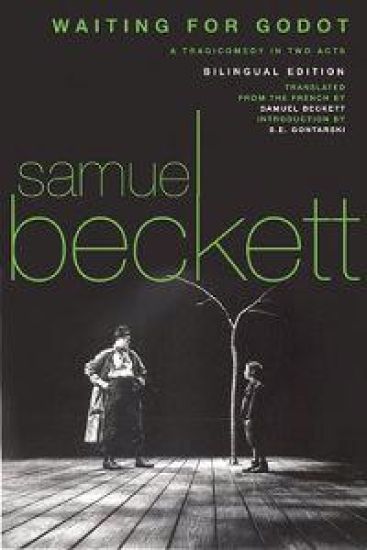
From an inauspicious beginning at the tiny Left Bank Theatre de Babylone in 1953, followed by bewilderment among American and British audiences, Waiting for Godot has become one of the most important and enigmatic plays of the past fifty years and a cornerstone of twentieth-century drama. As Clive Barnes wrote, "Time catches up with genius. . . . Waiting for Godot is one of the masterpieces of the century." Beckett wrote the play in French and then translated it into English himself. In doing so he chose to revise and eliminate various passages. With side-by-side text, the reader can experience the mastery of Beckett's language and explore its nuances. Upon being asked who Godot is, Samuel Beckett told director Alan Schneider, "If I knew, I would have said so in the play." Although we may never know who we are waiting for, in this special edition we can rediscover one of the most poignant and humorous allegories of our time.
Happy Days

Happy Days

Samuel Beckett

Faber Faber
2010
nidottu

Halvin toimitettuna 20,90 €

Happy Days was written in 1960 and first produced in London at the Royal Court Theatre in November 1962. WINNIE: [ . . .] Well anyway - this man Shower - or Cooker - no matter - and the woman - hand in hand - in the other hands bags - kind of big brown grips - standing there gaping at me [...] - What's she doing? he says - What's the idea? he says - stuck up to her diddies in the bleeding ground - coarse fellow - What does it mean? he says - What's it meant to mean? - and so on - lot more stuff like that - usual drivel - Do you hear me? He says - I do, she says, God help me - What do you mean, he says, God help you? (stops filing nails, raises head, gazes front.) And you, she says, what's the idea of you, she says, what are you meant to mean?
More Pricks Than Kicks

More Pricks Than Kicks

Samuel Beckett

Faber Faber
2010
nidottu

Halvin toimitettuna 18,90 €

His first published work of fiction (1934), More Pricks Than Kicks is a set of ten interlocked stories, set in Dublin and involving their adrift hero Belacqua in a series of encounters, as woman after woman comes crashing through his solipsism. More Pricks contains in embryo the centrifugal world of Beckett's men and women. She lifted the lobster clear of the table. It had about thirty seconds to live. Well, thought Belacqua, it's a quick death, God help us all. It is not.
Malone Dies

Malone Dies

Samuel Beckett

Faber Faber
2010
nidottu

Halvin toimitettuna 18,80 €

'Malone', writes Malone, 'is what I am called now.' On his deathbed, and wiling away the time with stories, the octogenarian Malone's account of his condition is intermittent and contradictory, shifting with the vagaries of the passing days: without mellowness, without elegiacs; wittier, jauntier, and capable of wilder rages than Molloy. The sound I liked best had nothing noble about it. It was the barking of the dogs, at night, in the clusters of hovels up in the hills, where the stone-cutters lived, like generations of stone-cutters before them. it came down to me where I lay, in the house in the plain, wild and soft, at the limit of earshot, soon weary. The dogs of the valley replied with their gross bay all fangs and jaws and foam...
The Unnamable

The Unnamable

Samuel Beckett

Faber Faber
2010
nidottu
The Unnamable - so named because he knows not who he may be - is from a nameless place. He speaks of previous selves ('all these Murphys, Molloys, and Malones...') as diversions from the need to stop speaking altogether. But, as with the other novels in the trilogy, the prose is full of marvellous precisions, full of its own reasons for keeping going. ...perhaps the words have carried me to the threshold of my story, before the door that opens on my story, that would surprise me, if it opens, it will be I, will be the silence, where I am, I don't know, I'll never know, in the silence you don't know, you must go on, I can't go on, I'll go on.
Mercier and Camier

Mercier and Camier

Samuel Beckett

Faber Faber
2010
nidottu

Halvin toimitettuna 18,90 €

Written over three months in 1946, Mercier and Camier was Beckett's first post-war work, and his first novel in French. He came to regard it as a practice piece, and set it aside to write his trilogy. Mercier et Camier was finally published in 1970, and in Beckett's English translation four years later. The eponymous heroes tramp around a city, then out of it, then back again. They are aimless, but there is something elusive that they should be doing. They arrange meetings, they drink, they argue, they discuss being shot of each other. They are preoccupied by the weather, by provisions, by a raincoat, by an umbrella, by a bicycle . . .'All of these ingredients in the later work are accompanied here, fleetingly, by those things in Beckett that we know but cannot really name, those things that occupy so much of the trilogy. Intangible things, traps in the mind, that voice we hear, the stop-start understanding, the ongoing bewilderment, the fear.' Keith Ridgeway George, said Camier, five sandwiches, four wrapped and one on the side. You see, he said, turning graciously to Mr Conaire, I think of everything. For the one I eat here will give me the strength to get back with the four others. Sophistry, said Mr Conaire. You set off with your five, wrapped, feel faint, open up, take one out, eat, recuperate, push on with the others. For all response, Camier began to eat. You'll spoil him, said Mr Conaire. Yesterday cakes, today sandwiches, tomorrow crusts and Thursday stones. Mustard, said Camier.
Texts for Nothing and Other Shorter Prose, 1950-1976

Texts for Nothing and Other Shorter Prose, 1950-1976

Samuel Beckett

Faber Faber
2010
pokkari

Halvin toimitettuna 18,90 €

This is the last of three volumes of collected shorter prose to be published in the Faber edition of the works of Samuel Beckett - which already includes a volume of early stories (The Expelled/The Calmative/The End/First Love) and of late stories (Company/Ill Seen Ill Said/Worstward Ho/Stirrings Still). The present volume contains all of the short fictions - some of them no longer than a page - written and published by Beckett between 1950 and the early 1970s. Most were written in French, and they mostly belong within three loose sequences: Texts for Nothing, Fizzles and Residua. The edition also includes two remarkable independent narratives: From an Abandoned Work and As The Story Was Told. All of these texts, whose unsleeping subject is themselves, demonstrate that the short story is one of the recurrent modes of Beckett's imagination, and occasions some of his greatest works. ... he would like it to be my fault that words fail him, of course words fail him. He tells his story every five minuts, saying it is not his, there's cleverness for you. He would like ti to be my fault that he has no story, of course he has no story, that's no reason for trying to foist one on me...
Waiting for Godot

Waiting for Godot

Samuel Beckett

Faber Faber
2010
nidottu

Halvin toimitettuna 19,90 €

Subtitled 'A tragicomedy in two Acts', and famously described by the Irish critic Vivien Mercier as a play in which 'nothing happens, twice', En attendant Godot was first performed at the Théâtre de Babylone in Paris in 1953. It was translated into English by Samuel Beckett, and Waiting for Godot opened at the Arts Theatre in London in 1955. 'Go and see Waiting for Godot. At the worst you will discover a curiosity, a four-leaved clover, a black tulip; at the best something that will securely lodge in a corner of your mind for as long as you live.' Harold Hobson, 7 August 1955'I told him that if by Godot I had meant God I would have said God, and not Godot. This seemed to disappoint him greatly.' Samuel Beckett, 1955
Trilogin. Molloy ; Malone dör ; Den onämnbare
Trilogin Molloy, Malone dör och Den Onämnbare har beskrivits som den moderna människans intellektuella och moraliska bankruttförklaring. Liksom karaktärerna krälar texten sakta men säkert fram mot sin logiska slutpunkt - en värld där inga människor finns, inget medvetande. Mellan Molloys eskatologiska värld och Malones språkliga förvirring i dödens närhet, och Den Onämnbare som redan vid textens utgångspunkt saknar namn och identitet - reduceras människan och språket gradvis, till någonting som närmar sig ingenting. Samuel Beckett föddes 1906 i Dublin av irländska föräldrar och var bosatt i Frankrike från 1938 till sin död. Hans mest kända romaner och pjäser, bland dem I väntan på Godot och Trilogin, skrevs på franska. 1969 mottog han Nobelpriset i litteratur. Romanerna Molloy, Malone dör och Den Onämnbare samlas nu för första gången på svenska i en volym, i översättning av Lill-Inger Eriksson och med förord av Jesper Olsson. Pressröster »Att som vuxen tillåtas tillträde till den existentiella zon där varje liten rörelse framstår som ny och outforskad är lika omtumlande som den första förälskelsen. Det går igenom hela nervsystemet.«Anna Hallberg, Dagens Nyheter »Jag skulle kunna gå i pension, binda fast mig vid en stol och ägna all min vakna tid åt Molloy, Malone dör och Den onämnbare.«Jenny Tunedal, Aftonbladet
How It Is

How It Is

Samuel Beckett

Faber Faber
2009
pokkari

Halvin toimitettuna 18,90 €

Published in French in 1961, and in English in 1964, How It Is is a novel in three parts, written in short paragraphs, which tell (abruptly, cajolingly, bleakly) of a narrator lying in the dark, in the mud, repeating his life as he hears it uttered - or remembered - by another voice. Told from within, from the dark, the story is tirelessly and intimately explicit about the feelings that pervade his world, but fragmentary and vague about all else therein or beyond. Together with Molloy, How It Is counts for many readers as Beckett's greatest accomplishment in the novel form. It is also his most challenging narrative, both stylistically and for the pessimism of its vision, which continues the themes of reduced circumstance, of another life before the present, and the self-appraising search for an essential self, which were inaugurated in the great prose narratives of his earlier trilogy. she sits aloof ten yards fifteen yards she looks up looks at me says at last to herself all is well he is working my head where is my head it rests on the table my hand trembles on the table she sees I am not sleeping the wind blows tempestuous the little clouds drive before it the table glides from light to darkness darkness to lightEdited by Edouard Magessa O'Reilly
The Expelled/The Calmative/The End with First Love

The Expelled/The Calmative/The End with First Love

Samuel Beckett

Faber Faber
2009
nidottu

Halvin toimitettuna 19,90 €

These four stories or 'nouvelles' date from 1945, though all were published much later, in French and subsequently in English. All make use of a first-person narrator, and relish its vagaries - the inability to remember facts, the uncertainty as to why he is speaking in the first place, the loss of heart when explanations seem called for... Above all, the stories crisply plot the narrator's plotless descent into vagrancy, the steeper as it approaches The End. Out of these short works and their patient procedures grew the large canvases of Molloy and Malone Dies. My bench was still there. It was shaped to fit the curves of the seated body. It stood beside a watering trough, gift of a Mrs Maxwell to the city horses, according to the inscription. During the short time I rested there, several horses took advantage of the monument. The iron shoes approached and the jingle of the harness. Then silence. That was the horse looking at me. Then the noise of pebbles and mud that horses make when drinking. Then the silence again. That was the horse looking at me again. Then the pebbles again. Then the silence again. Till the horse had finished drinking or the driver deemed it had drunk its fill. Edited by Christopher Ricks
All That Fall and Other Plays for Radio and Screen
This new edition brings together all of Beckett's dramatic writings for radio, television and film, offering works which range from eloquent comic naturalism to an eviscerated and pared-down symbolism. Above all, Beckett found his unique uses for the radio-play, a medium 'for voices not bodies', compacted of speech, sound and silence - and the plays in this volume intently explore the resources and limits of the sound-stage. My father, back from the dead, to be with me. (Pause.) As if he hadn't died. (Pause.) No, simply back from the dead, to be with me, in this strange place. (Pause.) Can he hear me? (Pause.) Yes, he must hear me. (Pause.) To answer me? (Pause.) No, he doesn't answer me. (Pause.) Just be with me. (Pause.) That sound you hear is the sea. (Pause. Louder.) I say that sound you hear is the sea, we are sitting on the strand. (Pause.) I mention it because the sound is so strange, so unlike the sound of the sea, that if you didn't see what it was you wouldn't know what it was. (Pause.). Hooves! Contents: All That Fall, Embers, Words and Music, Eh Joe, Quad, Film, ...but the clouds..., Ghost Trio, Nacht und Träume, Rough for Radio I, Rough for Radio II, Cascando, The Old TunePreface and Notes by Everett Frost
Selected Poems 1930-1988

Selected Poems 1930-1988

Samuel Beckett

Faber Faber
2009
nidottu

Halvin toimitettuna 21,80 €

It was as a poet that Samuel Beckett launched himself in the little reviews of 1930s Paris, and as a poet that he ended his career. This new selection, from Whoroscope (1930) to 'what is the word' (1988), describes a lifetime's arc of writing. It was as a poet moreover that Beckett made his first breakthrough into writing in French, and the Selected Poems represents work in both languages, including the sequence of brief but highly crafted mirlitonnades, which did so much to usher in the style of his late prose, and come as close as anything he wrote to honouring the ambition to 'bore one hole after another in language, until what lurks behind it - be it something or nothing - begins to seep through.' Also included are several of Beckett's translations from contemporaries - Apollinaire, Eluard, Michaux, Montale - in versions which count among his own poetic achievements. Edited by David Wheatley
Watt

Watt

Samuel Beckett

Grove Press / Atlantic Monthly Press
2009
nidottu
In prose possessed of the radically stripped-down beauty and ferocious wit that characterize his work, this early novel by Nobel Prize winner Samuel Beckett recounts the grotesque and improbable adventures of a fantastically logical Irish servant and his master. Watt is a beautifully executed black comedy that, at its core, is rooted in the powerful and terrifying vision that made Beckett one of the most influential writers of the twentieth century.