Kirjojen hintavertailu – 12 859 828 kirjaa ja 27 kauppaa

Kirjailija

Samuel Beckett

Kirjat ja teokset yhdessä paikassa: 161 kirjaa, julkaisuja vuosilta 1974–2027, suosituimpiin kuuluu Novels I of Samuel Beckett. Vertaile teosten hintoja ja tarkista saatavuus suomalaisista kirjakaupoista.

161 kirjaa

Kirjojen julkaisuvuodet: 1974–2027.

Three Novels

Three Novels

Samuel Beckett

Grove Press / Atlantic Monthly Press
2009
nidottu

Halvin toimitettuna 21,80 €

Few works of contemporary literature are so universally acclaimed as central to our understanding of the human experience as Nobel Prize winner Samuel Beckett's famous trilogy. Molloy, the first of these masterpieces, appeared in French in 1951. It was followed seven months later by Malone Dies and two years later by The Unnamable. All three have been rendered into English by the author.
Krapp's Last Tape and Other Dramatic Pieces

Krapp's Last Tape and Other Dramatic Pieces

Samuel Beckett

Grove Press / Atlantic Monthly Press
2009
nidottu
This collection of Nobel Prize winner Samuel Beckett's dramatic pieces includes a short stage play, two radio plays, and two pantomimes. The stage play Krapp's Last Tape evolves a shattering drama out of a monologue of a man who, at age sixty-nine, plays back the autobiographical tape he recorded on his thirty-ninth birthday. The two radio plays were commissioned by the BBC; All That Fall "plumbs the same pessimistic depths [as Waiting for Godot] in what seems a no less despairing search for human dignity" (London Times), and Embers is equally unforgettable theater, born of the ramblings of an old man and his wife. Finally, in the two pantomimes, Beckett takes drama to the point of pure abstraction with his portrayals of, in Act Without Words I, frustrated desired, and in Act Without Words I, corresponding motions of living juxtaposed in the slow despair of one man and the senselessly busy motion of another.
Murphy

Murphy

Samuel Beckett

Faber Faber
2009
nidottu

Halvin toimitettuna 18,90 €

Edited by J. C. C. Mays Murphy, Samuel Beckett's first novel, was published in 1938. Its work-shy eponymous hero, adrift in London, realises that desire can never be satisfied and withdraws from life, in search of stupor. Murphy's lovestruck fiancée Celia tries with tragic pathos to draw him back, but her attempts are doomed to failure. Murphy's friends and familiars are simulacra of Murphy, fragmented and incomplete. But Beckett's achievement lies in the brilliantly original language used to communicate this vision of isolation and misunderstanding. The combination of particularity and absurdity gives Murphy's world its painful definition, but the sheer comic energy of Beckett's prose releases characters and readers alike into exuberance.
Company / Ill Seen Ill Said / Worstward Ho / Stirrings Still

Company / Ill Seen Ill Said / Worstward Ho / Stirrings Still

Samuel Beckett

Faber Faber
2009
pokkari

Halvin toimitettuna 19,90 €

These four last prose fictions by Samuel Beckett were originally published individually, and their composition spanned the final decade of his life. In Company a solitary hearer lying in blackness calls up images from the far-off past. Ill Seen Ill Said meditates upon an old woman living out her last days alone in an isolated snow-bound cottage, watched over by twelve mysterious sentinels. In Worstward Ho, a breathless speaker unravels the sense of things, acting out the unending injunction to 'Try again. Fail again. Fail better.' And Stirrings Still, published in the Guardian a few months before Beckett's death in 1989, is the last prose work and testament of 'this great soothsayer of the age, and of the aged' (Christopher Ricks). The present edition includes several short prose texts (Heard in the Dark I & II, One Evening, The Way, Ceiling) which represent work in progress or works ancillary to the composition of these late masterpieces.
Krapp's Last Tape and Other Shorter Plays

Krapp's Last Tape and Other Shorter Plays

Samuel Beckett

Faber Faber
2009
pokkari

Halvin toimitettuna 21,80 €

Krapp's Last Tape was first performed by Patrick Magee at the Royal Court Theatre in October 1958, and described as 'a solo, if that is the word, for one voice and two organs: one human, one mechanical. It fills few pages. It is perhaps the most original and important play of its length ever written.' (Roy Walker)The present volume brings together Krapp's Last Tape and Beckett's other shorter works or 'dramaticules' written for the stage. It will be complemented by a forthcoming Faber edition of dramatic works written for radio and screen. Arranged in chronological order of composition, these shorter plays exhibit the laconic means and compassionate ends of Beckett's dramatic vision. KRAPP 'Here I end this reel. Box - [Pause.] - three, spool - [Pause.] - five. [Pause.] Perhaps my best years have gone. When there was a chance of happiness. But I wouldn't want them back. Not with the fire in me now. No, I wouldn't want them back. [Staring motionless before him.]
Endgame

Endgame

Samuel Beckett

Faber Faber
2009
nidottu

Halvin toimitettuna 19,90 €

Originally written in French and translated into English by Beckett, Endgame was given its first London performance at the Royal Court Theatre in 1957. HAMM: Clov! CLOV: Yes. HAMM: Nature has forgotten us. CLOV: There's no more nature. HAMM: No more nature! You exaggerate. CLOV: In the vicinity. HAMM: But we breathe, we change! We lose our hair our teeth! Our bloom! Our ideals! CLOV: Then she hasn't forgotten us.
Watt

Watt

Samuel Beckett

Faber Faber
2009
pokkari

Halvin toimitettuna 18,90 €

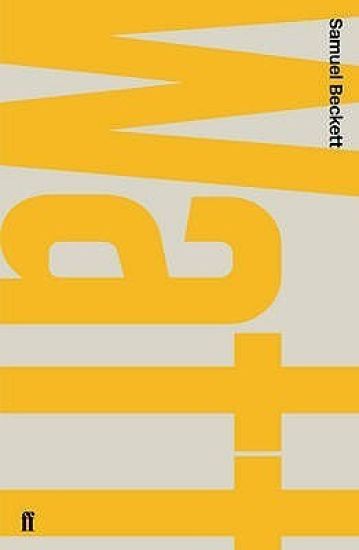
Written in Roussillon during World War Two, while Samuel Beckett was hiding from the Gestapo, Watt was first published in 1953. Beckett acknowledged that this comic novel unlike any other 'has its place in the series' - those masterpieces running from Murphy to the Trilogy, Waiting for Godot and beyond. It shares their sense of a world in crisis, their profound awareness of the paradoxes of being, and their distrust of the rational universe. Watt tells the tale of Mr Knott's servant and his attempts to get to know his master. Watt's mistake is to derive the essence of his master from the accidentals of his being, and his painstakingly logical attempts to 'know' ultimately consign him to the asylum. Itself a critique of error, Watt has previously appeared in editions that are littered with mistakes, both major and minor. The new Faber edition offers for the first time a corrected text based on a scholarly appraisal of the manuscripts and textual history.
The Letters of Samuel Beckett: Volume 1, 1929–1940

The Letters of Samuel Beckett: Volume 1, 1929–1940

Samuel Beckett

Cambridge University Press
2009
sidottu
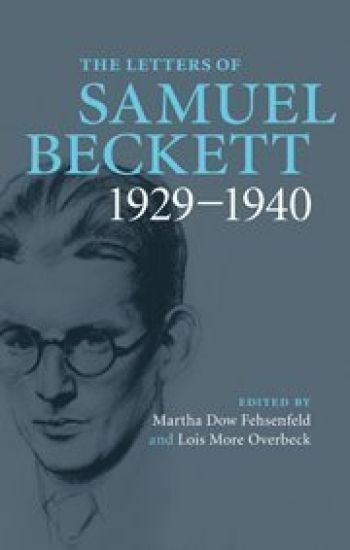
The letters written by Samuel Beckett between 1929 and 1940 provide a vivid and personal view of Western Europe in the 1930s, and mark the gradual emergence of Beckett's unique voice and sensibility. The Cambridge University Press edition of The Letters of Samuel Beckett offers for the first time a comprehensive range of letters of one of the greatest literary figures of the twentieth century. Selected for their bearing on his work from over 15,000 extant letters, the letters published in this four-volume edition encompass sixty years of Beckett's writing life (1929–1989), and include letters to friends, painters and musicians, as well as to students, publishers, translators, and colleagues in the world of literature and theatre. For anyone interested in twentieth-century literature and theatre this edition is essential reading, offering not only a record of Beckett's achievements but a powerful literary experience in itself.
Vente på Godot

Vente på Godot

Samuel Beckett

Transit
2007
nidottu
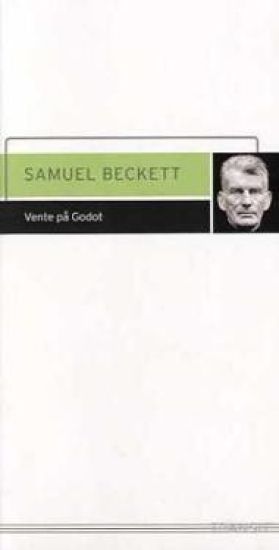
I april 2005 er det premiere på Becketts absurde klassiker på Nationaltheatret og i den forbindelse utgir Transit Jan Erik Volds eminente nyoversettelsen, som erstatter Stein Bugges oversettelse fra 1964. Boken foreligger i forbindelse med premieren! I stykket møter vi to landstrykere som venter og venter på at Godot skal komme . ja, for han kommer vel? Men hvem er Godot, og hva skal skje når han kommer? Akkurat det svaret lar vente på seg; i stedet dukker det et par andre fremtoninger som på ulikt vis skal komme til i å sette sitt preg på de to landstrykernes tilværelse, ikke minst i form av de to karakterene Pozzo og Lucky. I Vente på Godot møtes den svarteste fortvilelse og den mest befriende latter, dette som er Becketts adelsmerke som forfatter og som gjør ham så stor. Og det er ikke minst av den grunn at Vente på Godot er blitt satt opp igjen og igjen på scener over hele verden siden urpremieren på begynnelsen av 1950-tallet. I Norge har Samuel Beckett vært en viktig inspirasjonskilde for en rekke forfattere, blant annet Jon Fosse, Tor Ulven . og ikke minst Jan Erik Vold, som også har oversatt flere av Becketts tekster til norsk. Samuel Beckett fikk Nobelprisen i litteratur i 1969.
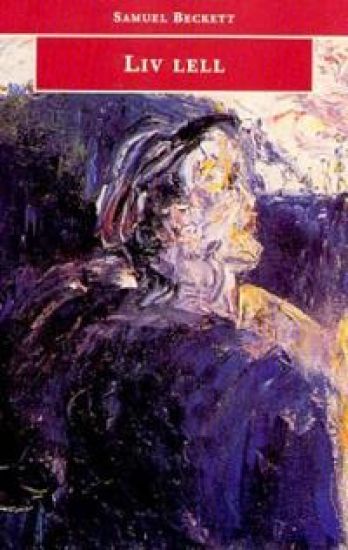
Liv lell

Liv lell

Samuel Beckett

Bokvennen
2007
pokkari
SAMUEL BECKETTLIV LELLTeksten i denne boka utga Samuel Beckett i en alder av 82 år. Det ble hans aller siste publiserte verk. Like nådeløs og poetisk, like full av følelse og ironi er hen mer rendyrket og konsekvent i sin reduksjon enn noen gang. Noen få ord varieres, fragmenteres - sammenstilles på nytt. I etterordet skriver lyrikeren Paal-Helge Haugen: "Røysta svevar i eit landskap der uvissa er det einaste visse". Den slags og mye mer av samme slaget surret i hans såkalte sinn til ingenting annet dypt innenfra enn bare stadig svakere åh å ende. Samme hvordan samme hvor. Tid og sorg og såkalt jeg. Åh alt til ende.
Første kjærlighet

Første kjærlighet

Samuel Beckett; Petter Aaslestad

Bokvennen
2007
sidottu
Kjærlighetshistorien er spesiell: Etter å ha blitt kastet ut av barndomshjemmet og tenkt over forbindelsen mellom farens død, kjærlighet og avvisningen, møter jeg-personen tilfeldig en kvinne på en benk. Gjennom henne får han et sted å bo og livet endres.
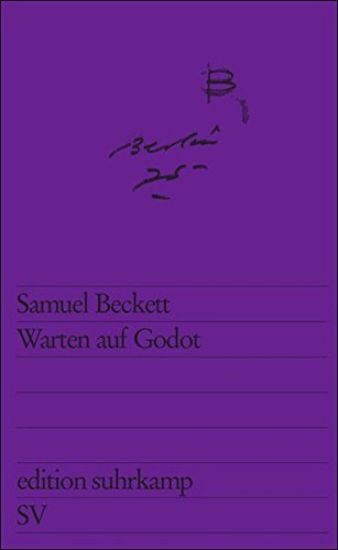
Warten auf Godot

Warten auf Godot

Samuel Beckett

SUHRKAMP VERLAG
2006
pokkari
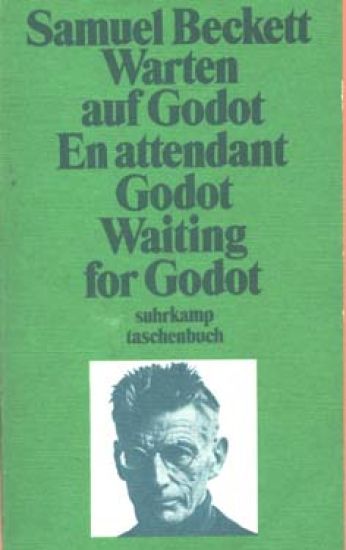
Als Samuel Beckett 1975 Warten auf Godot, das bereits zu dem Theaterstück des 20. Jahrhunderts geworden war, im Berliner Schillertheater inszenierte, benutzte er zur Vorbereitung auch ein Bändchen mit Elmar Tophovens Übersetzung, in das er mit seiner charakteristischen Schrift vor allem Textveränderungen und - varianten eintrug. Becketts Handexemplar, das der Suhrkamp Verlag zum 100. Geburtstag des Autors als Faksimile publiziert, ist sinnfälliges Beispiel der glücklichen Engführung, die im Verhältnis von Becketts Werk und dessen deutscher Aufnahme stattfand. Hier der französisch schreibende Ire, der auch die deutsche Sprache beherrschte und seine eigenen Werke mit großer Sicherheit in deutschen Theatern und Fernsehstudios inszenierte. Dort das deutsche Publikum, das sich - unter tätiger Mitwirkung von Übersetzern, Verlag und Kritik - diesem wie wenigen anderen Werken zeitgenössischer fremdsprachiger Autoren öffnete. Das Exemplar aus dem Besitz der Beckett International Foundation an der Universität Reading ist Seite für Seite getreu des 1963 gedruckten Exemplars (21.-35. Tausend) reproduziert, inklusive Verlagsanzeigen, und originalgetreu präsentiert sich auch der Buchkörper, ein grau broschiertes Bändchen mitsamt lila Schutzumschlag
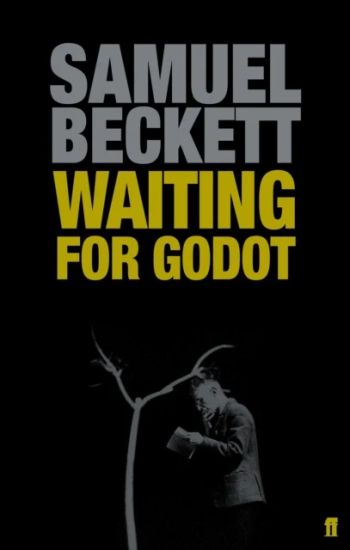
Waiting for Godot

Waiting for Godot

Samuel Beckett

Faber Faber
2006
pokkari

Halvin toimitettuna 18,90 €

Nothing happens, nobody comes, nobody goes, it's awful.' This line from the play was adopted by Jean Anouilh to characterize the first production of Waiting for Godot at the Théâtre de Babylone in 1953. He went on to predict that the play would, in time, represent the most important premiere to be staged in Paris for forty years. Nobody acquainted with Beckett's masterly black comedy would now question this prescient recognition of a classic of twentieth-century literature.
Collected Shorter Plays

Collected Shorter Plays

Samuel Beckett

Faber Faber
2006
pokkari

Halvin toimitettuna 28,40 €

Ths volume contains all of Beckett's less-than-full-length works (or 'Dramaticules') for the stage, radio and television. Arranged in chronological order of composition, these shorter plays demonstrate the laconic means and compassionate ends of Beckett's dramatic vision. Contents: All That Fall, Act Without Words, Krapp's Last Tape, Roughs for Theatre, Embers, Roughs for Radio, Words and Music, Cascando, Play, Film, The Old Tune (adapted from Pinget), Come and Go, Eh Joe, Breath, Not I, That Time, Footfalls, Ghost Trio, ...but the clouds..., A Piece of Monologue, Rockaby, Ohio Impromptu, Quad, Catastrophe, Nacht und Traume, What Where.
The Complete Dramatic Works of Samuel Beckett

The Complete Dramatic Works of Samuel Beckett

Samuel Beckett

Faber Faber
2006
pokkari

Halvin toimitettuna 28,40 €

The present volume gathers all of Beckett's texts for theatre, from 1955 to 1984. It includes both the major dramatic works and the short and more compressed texts for the stage and for radio.'He believes in the cadence, the comma, the bite of word on reality, whatever else he believes; and his devotion to them, he makes clear, is a sufficient focus for the reader's attention. In the modern history of literature he is a unique moral figure, not a dreamer of rose-gardens but a cultivator of what will grow in the waste land, who can make us see the exhilarating design that thorns and yucca share with whatever will grow anywhere.' - Hugh KennerContents: Waiting for Godot, Endgame, Happy Days, All That Fall, Acts Without Words, Krapp's Last Tape, Roughs for the Theatre, Embers, Roughs for the Radio, Words and Music, Cascando, Play, Film, The Old Tune, Come and Go, Eh Joe, Breath, Not I, That Time, Footfalls, Ghost Trio,...but the clouds..., A Piece of Monologue, Rockaby, Ohio Impromptu, Quad, Catastrophe, Nacht und Traume, What Where.
Watt

Watt

Samuel Beckett

Basam
2006
Kovakantinen
Tämä varhainen Samuel Beckettin romaani kertoo irlantilaisen palvelijan ja hänen isäntänsä groteskin ja epätodennäköisen tarinan. Sen kieli on radikaalin kaunista, sen proosa julman älykästä. Wattin upeasti toteutetun mustan komedian ydin lepää siinä voimakkaassa ja pelottavassa visiossa, joka teki Beckettistä yhden 1900-luvun vaikutusvaltaisimmista kirjailijoista. Kirja kertoo miehestä nimeltä Watt. Juoni on varsin yksinkertainen: Watt matkustaa raitiovaunulla sekä junalla arvoituksellisen herra Knottin talolle, jossa hän palvelee aikansa. Tietyn ajan kuluttua, kun seuraava palvelija saapuu, Watt lähtee herra Knottin talosta, kävelee asemalle ja ostaa lipun pääteasemalle. Tämän kaiken meille kertoo Sam, joka on kuullut kertomansa Wattilta itseltään paikassa, jossa he kumpikin asuvat ja joka lähinnä muistuttaa valtaisaa mielisairaalaa. Romaanissa ei ulkoisesti siis tapahdu paljon; se kuvaakin varsinaisesti Wattin pään sisäisiä ajatuksia ja mietteitä. Watt jatkaa näin Joycen tapaan modernistisen kirjallisuuden perinnettä, jossa keskeinen ongelma on kuilu ihmisen tajunnan ja todellisuuden välillä. Watt on tyylivirityksiltään monipuolisuuden ihme; se on sydäntä raastavan traaginen, siinä on posketonta komiikkaa ja railakasta herjaa. Lisäksi se on filosofinen teksti, jonka analyysin kohteena on itse kieli. Caj Westerberg sai käännöksestä merkittävän kaunokirjallisen teoksen erinomaisesta suomennoksesta myönnettävän Agricola-palkinnon vuonna 2007. Irlantilaissyntyinen Beckett kirjoitti Wattin vuosina 1942–1945 piileskellessään Etelä-Ranskassa saksalaismiehityksen aikana. Vuonna 2006 tulee kuluneeksi 100 vuotta Samuel Beckettin (1906–1989) syntymästä. Beckett tunnetaan Suomessa lähinnä näytelmistään, mutta hän kirjoitti myös runoja, lyhytproosaa sekä romaaneja. Samuel Beckett (1906–1989) opiskeli kirjallisuutta Dublinin Trinity Collegessa ja asui Pariisissa vuodesta 1928 alkaen eräin keskeytyksin. Pysyvästi hän muutti sinne vuonna 1937. Ystävystyttyään James Joycen kanssa hän toimi jonkin aikaa tämän palkattomana apulaisena. Beckett toimi myös yliopiston lehtorina Dublinissa ja Pariisissa 1928–31. Sodan aikana Beckett osallistui Ranskan vastarintaliikkeeseen ja työskenteli maatyöläisenä. Beckett kirjoitti sekä englanniksi että ranskaksi. Vaikka hänet tunnetaan parhaiten näytelmistään, joista on suomennettu mm. Huomenna hän tulee (En attendant Godot, 1952) ja Leikin loppu (Fin de partie, 1957), hän kirjoitti läpi elämänsä myös proosaa ja lyriikkaa. Monet kriitikot pitävät Beckettin romaaneja, pienoisromaaneja ja lyriikkaa muodon mestariteoksina ja katsovat niiden olevan keskeisiä tämän modernismin mestarin ja James Joycen manttelinperijän kokonaistuotannon ymmärtämisen kannalta. Samuel Beckett sai Nobelin kirjallisuuspalkinnon vuonna 1969.