Kirjailija
Slavoj Zizek
Kirjat ja teokset yhdessä paikassa: 185 kirjaa, julkaisuja vuosilta 1991–2026, suosituimpiin kuuluu Nakanune Gospodina. Sotrjasaja ramki. Vertaile teosten hintoja ja tarkista saatavuus suomalaisista kirjakaupoista.
Nimi esiintyy myös muodoissa: Slavoj Žižek
185 kirjaa
Kirjojen julkaisuvuodet: 1991–2026.
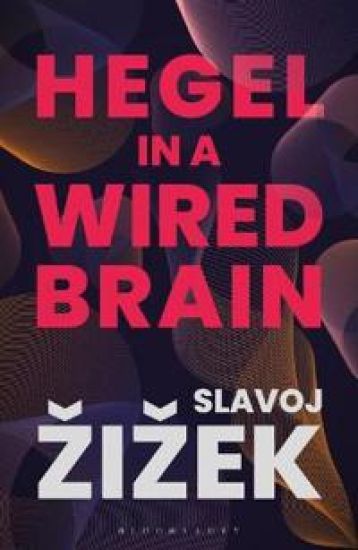
Slavoj Žižek gives us a reading of a philosophical giant that changes our way of thinking about the new posthuman era. No ordinary study of Hegel, this work investigates what he might have had to say about the idea of the 'wired brain' – what happens when a direct link between our mental processes and a digital machine emerges. Žižek explores the phenomenon of a wired brain effect, and what might happen when we can share our thoughts directly with others. He hones in on the key question of how it shapes our experience and status as 'free' individuals and asks what it means to be human when a machine can read our minds. With characteristic verve and enjoyment of the unexpected, Žižek connects Hegel to the world we live in now, shows why he is much more fun than anyone gives him credit for, and why the 21st century might just be Hegelian.

Lo que estamos presenciando hoy es la mercantilizaci n directa de nuestras experiencias: en el mercado compramos cada vez menos productos (objetos materiales) que queremos poseer, y adquirimos cada vez m s experiencias de vida -experiencias de sexo, gastronom a, comunicaci n, consumo cultural, que forman parte de un estilo de vida-. No compramos productos por su utilidad ni tampoco como s mbolos de estatus; los compramos para obtener la experiencia que nos brindan, los consumimos para hacer que nuestra vida sea m s placentera y significativa. Slavoj Zizek
Publicado por primera vez en 1992, Goza tu s ntoma analiza conceptos del psicoan lisis a trav s de ejemplos del cine, desde Chaplin hasta Matrix, a trav s de figuras muy diversas: Lenin, Hegel, Foucault y Jesucristo. Es el primer moj n en la obra de Zizek donde se puede observar el inter s por vincular ejemplos de la cultura popular con nociones m s complejas de filosof a o psicoan lisis. Con pr logo nuevo y un cap tulo final dedicado a la relaci n entre la realidad y la fantas a, esta nueva edici n, con traducci n de Horacio Pons, vuelve a ponernos frente a frente con las dos pasiones m s confesadas de Zizek: el cine y el psicoan lisis.
Sex and the Failed Absolute
Slavoj Žižek
Bloomsbury Academic
2021
nidottu
Halvin toimitettuna 21,20 €
In the most rigorous articulation of his philosophical system to date, Slavoj Žižek provides nothing short of a new definition of dialectical materialism. In forging this new materialism, Žižek critiques and challenges not only the work of Alain Badiou, Robert Brandom, Joan Copjec, Quentin Meillassoux, and Julia Kristeva (to name but a few), but everything from popular science and quantum mechanics to sexual difference and analytic philosophy. Alongside striking images of the Möbius strip, the cross-cap, and the Klein bottle, Žižek brings alive the Hegelian triad of being-essence-notion. Radical new readings of Hegel, and Kant, sit side by side with characteristically lively commentaries on film, politics, and culture. Here is Žižek at his interrogative best.
The Desire of Psychoanalysis
Gabriel Tupinambá; Slavoj Zizek
Northwestern University Press
2021
nidottu
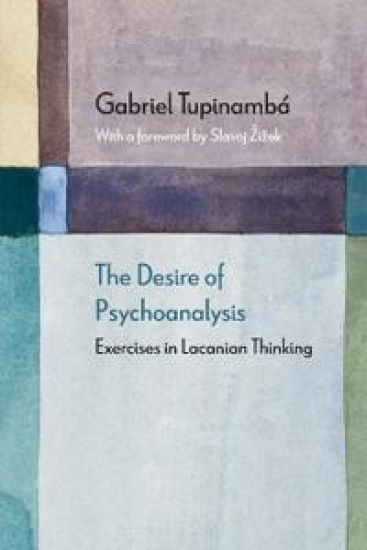
The Desire of Psychoanalysis proposes that recognizing how certain theoretical and institutional problems in Lacanian psychoanalysis are grounded in the historical conditions of Lacan's own thinking might allow us to overcome these impasses. In order to accomplish this, Gabriel TupinambÁ analyzes the socioeconomic practices that underlie the current institutional existence of the Lacanian community - its political position as well as its institutional history - in relation to theoretical production. By focusing on the underlying dynamic that binds clinical practice, theoretical work, and institutional security in Lacanian psychoanalysis today, TupinambÁ is able to locate sites for conceptual innovation that have been ignored by the discipline, such as the understanding of the role of money in clinical practice, the place of analysands in the transformation of psychoanalytic theory, and ideological dead-ends that have become common sense in the Lacanian field. The Desire of Psychoanalysis thus suggests ways of opening up psychoanalysis to new concepts and clinical practices and calls for a transformation of how psychoanalysis is understood as an institution.
The Desire of Psychoanalysis
Gabriel Tupinambá; Slavoj Zizek
Northwestern University Press
2021
sidottu
The Desire of Psychoanalysis proposes that recognizing how certain theoretical and institutional problems in Lacanian psychoanalysis are grounded in the historical conditions of Lacan's own thinking might allow us to overcome these impasses. In order to accomplish this, Gabriel TupinambÁ analyzes the socioeconomic practices that underlie the current institutional existence of the Lacanian community - its political position as well as its institutional history - in relation to theoretical production. By focusing on the underlying dynamic that binds clinical practice, theoretical work, and institutional security in Lacanian psychoanalysis today, TupinambÁ is able to locate sites for conceptual innovation that have been ignored by the discipline, such as the understanding of the role of money in clinical practice, the place of analysands in the transformation of psychoanalytic theory, and ideological dead-ends that have become common sense in the Lacanian field. The Desire of Psychoanalysis thus suggests ways of opening up psychoanalysis to new concepts and clinical practices and calls for a transformation of how psychoanalysis is understood as an institution.
Den slovenske filosof Slavoj Žižek fortsætter sine betragtninger om COVID-19-pandemien efter den internationalt roste corona-pamflet Pandemi! 1. I denne nye udvidede bog kommer han ind på de forandringer og psykologiske udfordringer, der har præget alle menneskers dagligdag i nu mere end et år, og som trods vacciner og tests vil præge os i lang tid endnu. Blandt andet berøres problemer for den globale fødevareforsyning på grund af mangel på arbejdskraft, især høstarbejdere i landbruget. Men også det ekstremt øgede pres på sundheds- og alt andet servicepersonale, som er en forudsætning for at vi kan opretholde en ‘hverdag’, får ord med på vejen. Altid åben for nye erkendelser viser Žižek via kritisk teori, pop-kultur og psykoanalyse, hvordan en foruroligende dynamik mellem viden og magt manifesterer sig i vor tids virusramte kapitalistiske system.
What do sex doll sales, locust swarms and a wired-brain pig have to do with the coronavirus pandemic? Everything—according to that “Giant of Lubliana,” the inimitable Slovenian philosopher Slavoj ?i?ek. In this exhilarating sequel to his acclaimed Pandemic!: COVID-19 Shakes the World, ?i?ek delves into some of the more surprising dimensions of lockdowns, quarantines, and social distancing—and the increasingly unruly opposition to them by “response fatigued” publics around the world. ?i?ek examines the ripple effects on the food supply of harvest failures caused by labor shortages and the hyper-exploitation of the global class of care workers, without whose labor daily life would be impossible. Through such examples he pinpoints the inability of contemporary capitalism to safeguard effectively the public in times of crisis. Writing with characteristic daring and zeal, ?i?ek ranges across critical theory, pop-culture, and psychoanalysis to reveal the troubling dynamics of knowledge and power emerging in these viral times.
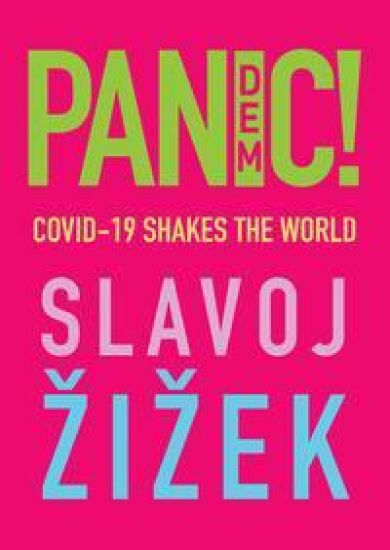
Pandemi! Covid-19 ryster verden er skrevet i løpet av koronapandemien første uker. Dette er ikke en koronadagbok med kort holdbarhetsdato, men solid systemkritikk fra en av verdens ledende intellektuelle. Det må være noe iboende galt med systemet vårt, skriver Slavoj Zizek innledningsvis, siden vi var totalt uforberedt på pandemien, enda Kina hadde vært hardt rammet i flere måneder før viruset nådde Europa. Pandemi! er en oppfordring og et ønske om radikal forandring av vår samfunnsorden. Zizek tar her til orde for en ny form for kommunisme, som har fokus på solidaritet og global samhandling - en kommunisme basert på tillit til folk og tro på vitenskap. Han skriver om hvordan isolasjon og sosial distanse uttrykker den største form for omtanke, om hvordan myndigheter i lands som systematisk kutter offentlige utgifter, plutselig kan trylle frem enorme pengesummer, og om hvorfor panikken gjør toalettpapir mer verdifullt enn diamanter.
"Ideologins sublima objekt var Žižeks väg in i den internationella teoridiskussionen. [Här] finner vi också de huvudsakliga teoretiska koordinaterna för hans fortsatta arbete, de ansatser som därefter omsatts i en serie analyser under de efterföljande tre decennierna. Vare sig det handlar om politik, musik, film, sociologi eller filosofi så kan de centrala begreppen, tankegångarna och referenspunkterna identifieras redan här. ... Trots att verket nu har 30 år på nacken bär det fortfarande på stor potential för ett utforskande av samtiden." - ur Hjalmar Falks förord
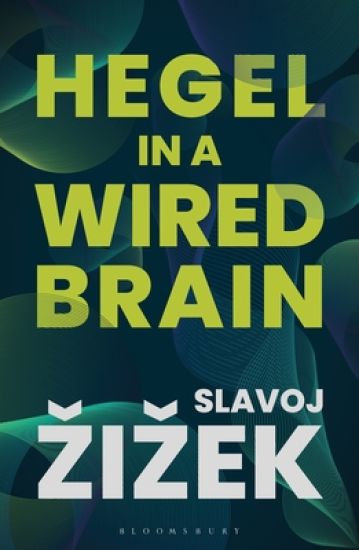
Slavoj Žižek gives us a reading of a philosophical giant that changes our way of thinking about our new posthuman era. No ordinary study of Hegel, Hegel in a Wired Brain investigates what he might have had to say about the idea of the 'wired brain' – what happens when a direct link between our mental processes and a digital machine emerges. Žižek explores the phenomenon of a wired brain effect, and what might happen when we can share our thoughts directly with others. He hones in on the key question of how it shapes our experience and status as 'free' individuals and asks what it means to be human when a machine can read our minds. With characteristic verve and enjoyment of the unexpected, Žižek connects Hegel to the world we live in now, shows why he is much more fun than anyone gives him credit for, and why the 21st century might just be Hegelian.

Den verdenskendte slovenske filosof Slavoj Žižek beskæftiger sig gerne med store emner og nu også med den globale pandemi. I denne helt aktuelle corona-pamflet, fuld af bemærkelsesværdige iagttagelser og kommentarer til den nye krise verden står i, forudsiger han udover almindelig solidaritet et fremtidigt behov for en ny slags kommunisme – forudsat, at vi mennesker kan blive klogere og lære af historien.“Žižek har en en teori om et hvilket som helst socialt eller kulturelt fænomen i vores tid og er en mester i kontraintuitive iagttagelser.” – The New Yorker“Vestens farligste filosof.” – The New RepublicSlavoj Žižek er en af verdens mest markante nulevende filosoffer og kulturteoretikere. Hans originale og ofte provokerende meninger og optræden udfordrer gængs tænkning og verdensforståelse på både højre- og venstrefløj. Žižek er erklæret marxist og lader sig inspirere af alle tidens kulturelle fænomener, ikke mindst film og medier – samt af den franske psykoanalytiker Jacques Lacan.
As an unprecedented global pandemic sweeps the planet, who better than the supercharged Slovenian philosopher Slavoj ?i?ek to uncover its deeper meanings, marvel at its mind-boggling paradoxes and speculate on the profundity of its consequences? We live in a moment when the greatest act of love is to stay distant from the object of your affection. When governments renowned for ruthless cuts in public spending can suddenly conjure up trillions. When toilet paper becomes a commodity as precious as diamonds. And when, according to ?i?ek, a new form of communism – the outlines of which can already be seen in the very heartlands of neoliberalism – may be the only way of averting a descent into global barbarism. Written with his customary brio and love of analogies in popular culture (Quentin Tarantino and H. G. Wells sit next to Hegel and Marx), ?i?ek provides a concise and provocative snapshot of the crisis as it widens, engulfing us all.
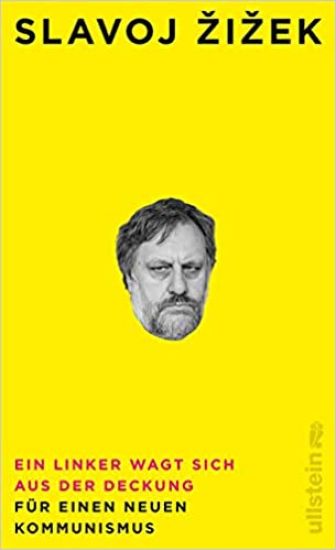
With irrepressible humor, Slavoj ?i?ek dissects our current political and social climate, discussing everything from Jordan Peterson and sex “unicorns” to Greta Thunberg and Chairman Mao. Taking aim at his enemies on the Left, Right, and Center, he argues that contemporary society can only be properly understood from a communist standpoint. Why communism? The greater the triumph of global capitalism, the more its dangerous antagonisms multiply: climate collapse, the digital manipulation of our lives, the explosion in refugee numbers – all need a radical solution. That solution is a Left that dares to speak its name, to get its hands dirty in the real world of contemporary politics, not to sling its insults from the sidelines or to fight a culture war that is merely a fig leaf covering its political and economic failures. As the crises caused by contemporary capitalism accumulate at an alarming rate, the Left finds itself in crisis too, beset with competing ideologies and prone to populism, racism, and conspiracy theories. A Left that Dares to Speak Its Name is ?i?ek’s attempt to elucidate the major political issues of the day from a truly radical Leftist position. The first three parts explore the global political situation and the final part focuses on contemporary Western culture, as ?i?ek directs his polemic to topics such as wellness, Wikileaks, and the rights of sexbots. This wide-ranging collection of essays provides the perfect insight into the ideas of one of the most influential radical thinkers of our time.