Kirjojen hintavertailu – 12 859 818 kirjaa ja 27 kauppaa

Kirjailija

Slavoj Zizek

Kirjat ja teokset yhdessä paikassa: 185 kirjaa, julkaisuja vuosilta 1991–2026, suosituimpiin kuuluu Nakanune Gospodina. Sotrjasaja ramki. Vertaile teosten hintoja ja tarkista saatavuus suomalaisista kirjakaupoista.

Nimi esiintyy myös muodoissa: Slavoj Žižek

185 kirjaa

Kirjojen julkaisuvuodet: 1991–2026.

Žižek on Race

Žižek on Race

Zahi Zalloua; Slavoj Žižek

Bloomsbury Academic
2020
nidottu
Slavoj Žižek’s prolific comments on anti-Semitism, Islamophobia, scapegoating, popular nationalism, the refugee crisis, Eurocentrism, the War on Terror, neocolonialism, global justice, and rioting comprise a dizzying array of thinking. But what can we pull out of his various writings and commentaries on race in the contemporary world? Is there anything approaching a Žižekian philosophy of race? Zahi Zalloua argues here that there is and that the often polemical style of Žižek's pronouncements shouldn't undermine the importance and urgency of his work in this area. Zalloua not only examines Žižek's philosophy of race but addresses the misconceptions that have arisen and some of the perceived shortcomings in his work to date. Žižek on Race also puts Žižek in dialogue with critical race and anti-colonial studies, dwelling on the sparks struck up by this dialogue and the differences, gaps, and absences it points up. Engaging Žižek’s singular contribution to the analysis of race and racism, Žižek on Race both patiently interrogates and critically extends his direct comments on the topic, developing more fully the potential of his thought. In a response to the book, Žižek boldly reaffirms his theoretical stance, clarifying further his often difficult-to-work-out positions on some of his more controversial pronouncements.

Žižek on Race

Žižek on Race

Zahi Zalloua; Slavoj Žižek

Bloomsbury Academic
2020
sidottu
Slavoj Žižek’s prolific comments on anti-Semitism, Islamophobia, scapegoating, popular nationalism, the refugee crisis, Eurocentrism, the War on Terror, neocolonialism, global justice, and rioting comprise a dizzying array of thinking. But what can we pull out of his various writings and commentaries on race in the contemporary world? Is there anything approaching a Žižekian philosophy of race? Zahi Zalloua argues here that there is and that the often polemical style of Žižek's pronouncements shouldn't undermine the importance and urgency of his work in this area. Zalloua not only examines Žižek's philosophy of race but addresses the misconceptions that have arisen and some of the perceived shortcomings in his work to date. Žižek on Race also puts Žižek in dialogue with critical race and anti-colonial studies, dwelling on the sparks struck up by this dialogue and the differences, gaps, and absences it points up. Engaging Žižek’s singular contribution to the analysis of race and racism, Žižek on Race both patiently interrogates and critically extends his direct comments on the topic, developing more fully the potential of his thought. In a response to the book, Žižek boldly reaffirms his theoretical stance, clarifying further his often difficult-to-work-out positions on some of his more controversial pronouncements.
Chitat Marksa / per. s angl. 2-izd.

Chitat Marksa / per. s angl. 2-izd.

Slavoj Zizek; F. Ruda; A. Khamza

Izdatelskij Dom VShE (Vysshaja Shkola Ekonomiki)
2019
sidottu
Veduschie issledovateli rabot Marksa predlagajut neozhidannuju radikalnuju interpretatsiju marksizma, objasnjajuschuju provaly neoliberalizma i zakladyvajuschuju osnovanija dlja novoj politiki osvobozhdenija. Ne provodja ploskikh sravnenij mezhdu mirovozzreniem Marksa i nashej segodnjashnej politicheskoj situatsiej, Slavoj Zhizhek, Frank Ruda i Agon Khamza pokazyvajut, chto aktualnoe znachenie i tsennost mysli Marksa luchshe objasnit, vkljuchiv ego osnovopolagajuschie idei v dialog s temi, kto popytalsja ego smestit. Prochityvaja Marksa cherez Gegelja i Lakana, fiziku chastits i sovremennye politicheskie trendy, avtory predlagajut novye sposoby objasnenija krizisa sovremennogo kapitalizma, a takzhe soprotivlenija fundamentalizmu vo vsekh ego projavlenijakh.
Ideologikritik

Ideologikritik

Slavoj Zizek

Gyldendal
2019
nidottu
De seneste årtier har Slavoj Zizek slået sit navn fast som en af verdens mest fremtrædende filosoffer, og hans mangesidede forfatterskab har berørt alt fra film og tegneserier til politisk tænkning og Hegel-studier. Zizeks værker er oftest mangfoldige ekskurser, der peger i mange retninger. Denne bog samler centrale tekster og bidrag med fokus på ét centralt emne: ideologikritik. Hvor ideologikritikken hos bl.a. Marx havde til formål at gå bag om den sociale overflade og analysere grundlæggende økonomiske og klassemæssige mekanismer, der former samfundet, er Zizeks ideologikritik rettet mod dynamikker, der går på tværs af hele menneskelivet. Han tager den sociale overflade alvorligt som en vigtig komponent i en samlet social helhed, og ideologikritik bliver her en disciplin, der analyserer dynamikker, der rækker fra kulturelle, sproglige og adfærdsmæssige former til ubevidste og dybereliggende mekanismer. Bogen er redigeret af lektor Henrik Jøker Bjerre, Center for Anvendt Filosofi, AAU, og lektor Carsten Bagge Laustsen, Institut for Statskundskab, AU.
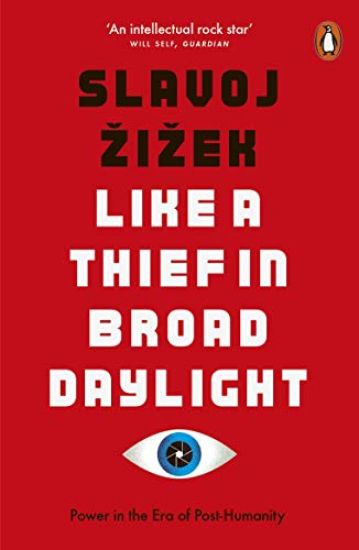
Like A Thief In Broad Daylight

Like A Thief In Broad Daylight

Slavoj Zizek

Penguin Books Ltd.
2019
pokkari

Halvin toimitettuna 18,70 €

In our brave new world of Big Tech, work is automated and money melts into air. What comes next as the global capitalist edifice crumbles? Slavoj Zizek shows how the answer is already stealing into sight, like a thief in broad daylight. What we must do is wake up and see it. 'In a world determined to crush hope of radical change, where moral corruption poses as pragmatism and systemic oppression as the new freedom, Slavoj Zizek's excellent new book serves humanity in a way that only authentic philosophy can' Yanis Varoufakis.'The Elvis of cultural theory' New Statesman.'Master of the counterintuitive observation' New Yorker.
Disparities

Disparities

Slavoj Žižek

Bloomsbury Academic
2019
nidottu
The concept of disparity has long been a topic of obsession and argument for philosophers but Slavoj Žižek would argue that what disparity and negativity could mean, might mean and should mean for us and our lives has never been more hotly debated. Disparities explores contemporary 'negative' philosophies from Catherine Malabou's plasticity, Julia Kristeva's abjection and Robert Pippin's self-consciousness to the God of negative theology, new realisms and post-humanism and draws a radical line under them. Instead of establishing a dialogue with these other ideas of disparity, Slavoj Žižek wants to establish a definite departure, a totally different idea of disparity based on an imaginative dialectical materialism. This notion of rupturing what has gone before is based on a provocative reading of how philosophers can, if they're honest, engage with each other. Slavoj Žižek borrows Alain Badiou's notion that a true idea is the one that divides. Radically departing from previous formulations of negativity and disparity, Žižek employs a new kind of negativity: namely positing that when a philosopher deals with another philosopher, his or her stance is never one of dialogue, but one of division, of drawing a line that separates truth from falsity.
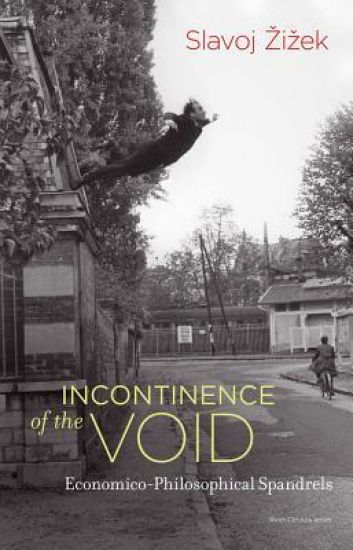
Incontinence of the Void

Incontinence of the Void

Slavoj Žižek

MIT Press
2019
pokkari
The "formidably brilliant" Zizek considers sexuality, ontology, subjectivity, and Marxian critiques of political economy by way of Lacanian psychoanalysis. If the most interesting theoretical interventions emerge today from the interspaces between fields, then the foremost interspaceman is Slavoj Zizek. In Incontinence of the Void (the title is inspired by a sentence in Samuel Beckett's late masterpiece Ill Seen Ill Said), Zizek explores the empty spaces between philosophy, psychoanalysis, and the critique of political economy. He proceeds from the universal dimension of philosophy to the particular dimension of sexuality to the singular dimension of the critique of political economy. The passage from one dimension to another is immanent: the ontological void is accessible only through the impasses of sexuation and the ongoing prospect of the abolition of sexuality, which is itself opened up by the technoscientific progress of global capitalism, in turn leading to the critique of political economy. Responding to his colleague and fellow Short Circuits author Alenka Zupancic's What Is Sex?, Zizek examines the notion of an excessive element in ontology that gives body to radical negativity, which becomes the antagonism of sexual difference. From the economico-philosophical perspective, Zizek extrapolates from ontological excess to Marxian surplus value to Lacan's surplus enjoyment. In true Zizekian fashion, Incontinence of the Void focuses on eternal topics while detouring freely into contemporary issuesfrom the Internet of Things to Danish TV series.
The Relevance of the Communist Manifesto
No other Marxist text has come close to achieving the fame and influence of The Communist Manifesto. Translated into over 100 languages, this clarion call to the workers of the world radically shaped the events of the twentieth century. But what relevance does it have for us today? In this slim book Slavoj Zizek argues that, while exploitation no longer occurs the way Marx described it, it has by no means disappeared; on the contrary, the profit once generated through the exploitation of workers has been transformed into rent appropriated through the privatization of the ‘general intellect’. Entrepreneurs like Bill Gates and Mark Zuckerberg have become extremely wealthy not because they are exploiting their workers but because they are appropriating the rent for allowing millions of people to participate in the new form of the ‘general intellect’ that they own and control. But, even if Marx’s analysis can no longer be applied to our contemporary world of global capitalism without significant revision, the fundamental problem with which he was concerned, the problem of the commons in all its dimensions – the commons of nature, the cultural commons, and the commons as the universal space of humanity from which no one should be excluded – remains as relevant as ever. This timely reflection on the enduring relevance of The Communist Manifesto will be of great value to everyone interested in the key questions of radical politics today.
The Relevance of the Communist Manifesto

The Relevance of the Communist Manifesto

Slavoj Zizek

Polity Press
2019
nidottu

Halvin toimitettuna 18,60 €

No other Marxist text has come close to achieving the fame and influence of The Communist Manifesto. Translated into over 100 languages, this clarion call to the workers of the world radically shaped the events of the twentieth century. But what relevance does it have for us today? In this slim book Slavoj Zizek argues that, while exploitation no longer occurs the way Marx described it, it has by no means disappeared; on the contrary, the profit once generated through the exploitation of workers has been transformed into rent appropriated through the privatization of the ‘general intellect’. Entrepreneurs like Bill Gates and Mark Zuckerberg have become extremely wealthy not because they are exploiting their workers but because they are appropriating the rent for allowing millions of people to participate in the new form of the ‘general intellect’ that they own and control. But, even if Marx’s analysis can no longer be applied to our contemporary world of global capitalism without significant revision, the fundamental problem with which he was concerned, the problem of the commons in all its dimensions – the commons of nature, the cultural commons, and the commons as the universal space of humanity from which no one should be excluded – remains as relevant as ever. This timely reflection on the enduring relevance of The Communist Manifesto will be of great value to everyone interested in the key questions of radical politics today.
The Day After the Revolution

The Day After the Revolution

Slavoj Zizek; V I Lenin

Verso Books
2018
nidottu
Lenin's originality and importance as a revolutionary leader is most often associated with the seizure of power in 1917. But, Zizek argues in his new study and collection of original texts, Lenin's true greatness can be better grasped in the very last couple of years of his political life. Russia had survived foreign invasion, embargo and a terrifying civil war, as well as internal revolts such as at Kronstadt in 1921. But the new state was exhausted, isolated and disorientated in the face of the world revolution that seemed to be receding. New paths had to be sought, almost from scratch, for the Soviet state to survive and imagine some alternative route to the future. With his characteristic brio and provocative insight, Zizek suggests that Lenin's courage as a thinker can be found in his willingness to face this reality of retreat lucidly and frontally.
First as Tragedy, Then as Farce

First as Tragedy, Then as Farce

Slavoj Zizek

Verso Books
2018
nidottu

Halvin toimitettuna 19,40 €

Billions of dollars were hastily poured into the global banking system in a frantic attempt at financial stabilisation. So why has it not been possible to bring the same forces to bear in addressing world poverty and environmental crisis? In this take-no-prisoners analysis, Slavoj Zizek frames the moral failures of the modern world in terms of the epoch-making events of the first decade of this century. What he finds is the old one-two punch of history: the jab of tragedy, the right hook of farce. In the attacks of 9/11 and the global credit crunch, liberalism dies twice: as a political doctrine and as an economic theory. The election of Donald Trump only confirms the bankruptcy of a liberal order on its last legs. First as Tragedy, Then as Farce is a call for the left to reinvent itself in the light of our desperate historical situation. The time for liberal, moralistic blackmail is over.
Living in the End Times

Living in the End Times

Slavoj Zizek

Verso Books
2018
nidottu

Halvin toimitettuna 24,00 €

There should no longer be any doubt: global capitalism is fast approaching its terminal crisis. But if the end of capitalism seems to many like the end of the world, how is it possible for Western society to face up to the end times? In a major new analysis of our global situation, Zizek argues that our collective responses to economic Armageddon correspond to the stages of grief: ideological denial, explosions of anger and attempts at bargaining, followed by depression and withdrawal. For this edition, Zizek has written a long afterword that leaves almost no subject untouched, from WikiLeaks to the nature of the Chinese Communist Party.
The Courage of Hopelessness

The Courage of Hopelessness

Slavoj Žižek

Penguin Books Ltd
2018
pokkari

Halvin toimitettuna 17,00 €

The maverick philosopher returns to explore today's idealogical, political and economic battles, and asks whether radical change is possibleIn these troubled times, even the most pessimistic diagnosis of our future ends with an uplifting hint that things might not be as bad as all that, that there is light at the end of the tunnel. Yet, argues Slavoj Žižek, it is only when we have admit to ourselves that our situation is completely hopeless - that the light at the end of the tunnel is in fact the headlight of a train approaching us from the opposite direction - that fundamental change can be brought about. Surveying the various challenges in the world today, from mass migration and geopolitical tensions to terrorism, the explosion of rightist populism and the emergence of new radical politics - all of which, in their own way, express the impasses of global capitalism - Žižek explores whether there still remains the possibility for genuine change. Today, he proposes, the only true question is,or should be, this: do we endorse the predominant acceptance of capitalism as fact of human nature, or does today's capitalism contain strong enough antagonisms to prevent its infinite reproduction? Can we, he asks, move beyond the failure of socialism, and beyond the current wave of populist rage, and initiate radical change before the train hits? 'Žižek is a thinker who regards nothing as outside his field: the result is deeply interesting and provocative' - Guardian 'Žižek leaves no social or cultural phenomenon untheorized, and is master of the counterintuitive observation' -New Yorker
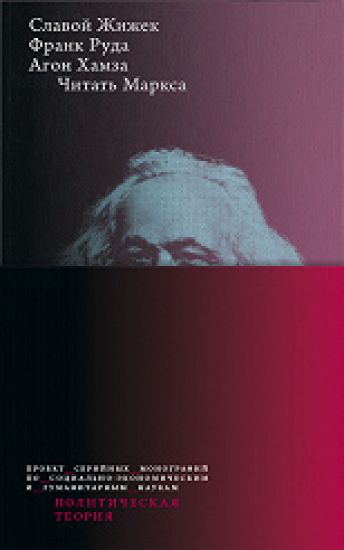
Reading Marx

Reading Marx

Slavoj Zizek; Frank Ruda; Agon Hamza

Polity Press
2018
nidottu
Marx's critique of political economy is vital for understanding the crisis of contemporary capitalism. Yet the nature of its relevance and some of its key tenets remain poorly understood. This bold intervention brings together the work of leading Marx scholars Slavoj ?i?ek, Frank Ruda and Agon Hamza, to offer a fresh, radical reinterpretation of Marxism that explains the failures of neoliberalism and lays the foundations for a new emancipatory politics. Avoiding trite comparisons between Marx's worldview and our current political scene, the authors show that the current relevance and value of Marx's thought can better be explained by placing his key ideas in dialogue with those that have attempted to replace them. Reading Marx through Hegel and Lacan, particle physics, and modern political trends, the authors provide new ways to explain the crisis in contemporary capitalism and resist fundamentalism in all its forms. Reading Marx will find a wide audience amongst activists and scholars.
Reading Marx

Reading Marx

Slavoj Zizek; Frank Ruda; Agon Hamza

Polity Press
2018
sidottu
Marx's critique of political economy is vital for understanding the crisis of contemporary capitalism. Yet the nature of its relevance and some of its key tenets remain poorly understood. This bold intervention brings together the work of leading Marx scholars Slavoj ?i?ek, Frank Ruda and Agon Hamza, to offer a fresh, radical reinterpretation of Marxism that explains the failures of neoliberalism and lays the foundations for a new emancipatory politics. Avoiding trite comparisons between Marx's worldview and our current political scene, the authors show that the current relevance and value of Marx's thought can better be explained by placing his key ideas in dialogue with those that have attempted to replace them. Reading Marx through Hegel and Lacan, particle physics, and modern political trends, the authors provide new ways to explain the crisis in contemporary capitalism and resist fundamentalism in all its forms. Reading Marx will find a wide audience amongst activists and scholars.
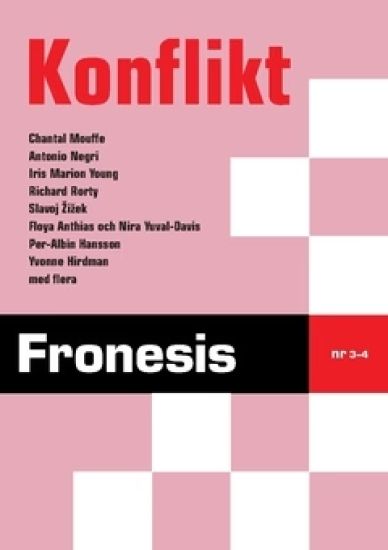
Fronesis 3-4. Konflikt

Fronesis 3-4. Konflikt

Per Albin Hansson; Antonio Negri; Floya Anthias; Iris Marion Young; Chantal Mouffe; Richard Rorty; Nira Yuval-Davis; Slavoj Zizek; Yvonne Hirdman

Fronesis
2018
nidottu
Vi lever i en tid då den politiska samstämmigheten har gjorts till dygd inom politiken. Under 1990- och 2000-talet lämnade många socialdemokratiska partier den polariserande vänsterpositionen till förmån för det harmoniska mittenfältet. Samtidigt är det just frånvaron av politiska konflikter och reella alternativ som har banat väg för ytterhögerns framgångar. Och med den ekonomiska globaliseringen minskar kapitalets behov av att söka samförstånd med såväl stat som fackföreningsrörelse. I Fronesis nr 3–4 uppmärksammas politikens nödvändiga konfliktdimension. Innehåll i Fronesis nr 3-4 (192 sidor): Thomas Tidholm: Den politiska situationen Anders Kalat och Cecilia von Otter: Politik är antagonism Anders Kalat och Camilla Lundberg: Politisk identitet och antagonism: klass, kön och etnicitet Chantal Mouffe: Hegemoni och nya politiska subjekt: med sikte mot ett nytt demokratibegrepp Floya Anthias och Nira Yuval-Davis: Att sätta feminismen i sin kontext – genusmässiga, etniska och klassmässiga skiljelinjer Slavoj Zizek: Mångkulturalismen eller den multinationella kapitalismens kulturella logik Klas Gustavsson: Negri, Sinisi och den politiska ekonomin John Sinisi: Hobbes skugga Antonio Negri: Keynes och den kapitalistiska teorin om staten Yvonne Hirdman: Ett småberusat middagstal Per-Albin Hansson: Kvinnokraften LO:s kongress 1936 (protokoll): Saltsjöbadsförhandlingarna och samförståndet Iris Young: Uppror i det välfärdskapitalistiska samhället Linnea Nilsson: En politik utan antagonismer? Perry Anderson: En kommentar: Makt, politik och upplysningen Helen Wilkinson: Fortfarande det Andra könet Richard Rorty: Tillbaka till klasspolitiken
Žižek's Jokes

Žižek's Jokes

Slavoj Žižek

MIT Press
2018
pokkari

Halvin toimitettuna 19,20 €

Žižek as comedian: jokes in the service of philosophy." A serious and good philosophical work could be written consisting entirely of jokes."—Ludwig WittgensteinThe good news is that this book offers an entertaining but enlightening compilation of Žižekisms. Unlike any other book by Slavoj Žižek, this compact arrangement of jokes culled from his writings provides an index to certain philosophical, political, and sexual themes that preoccupy him. Žižek's Jokes contains the set-ups and punch lines—as well as the offenses and insults—that Žižek is famous for, all in less than 200 pages. So what's the bad news? There is no bad news. There's just the inimitable Slavoj Žižek, disguised as an impossibly erudite, politically incorrect uncle, beginning a sentence, "There is an old Jewish joke, loved by Derrida..." For Žižek, jokes are amusing stories that offer a shortcut to philosophical insight. He illustrates the logic of the Hegelian triad, for example, with three variations of the "Not tonight, dear, I have a headache" classic: first the wife claims a migraine; then the husband does; then the wife exclaims, "Darling, I have a terrible migraine, so let's have some sex to refresh me!" A punch line about a beer bottle provides a Lacanian lesson about one signifier. And a "truly obscene" version of the famous "aristocrats" joke has the family offering a short course in Hegelian thought rather than a display of unspeakables. Žižek's Jokes contains every joke cited, paraphrased, or narrated in Žižek's work in English (including some in unpublished manuscripts), including different versions of the same joke that make different points in different contexts. The larger point being that comedy is central to Žižek's seriousness.