Kirjojen hintavertailu – 12 859 829 kirjaa ja 27 kauppaa
Kirjailija
T. S. Eliot
Kirjat ja teokset yhdessä paikassa: 188 kirjaa, julkaisuja vuosilta 1922–2026, suosituimpiin kuuluu ??-??The Waste Land/The Love Song of J. Alfred Prufrock. Vertaile teosten hintoja ja tarkista saatavuus suomalaisista kirjakaupoista.
Nimi esiintyy myös muodoissa: T S Eliot, T.S. Eliot, T.S Eliot
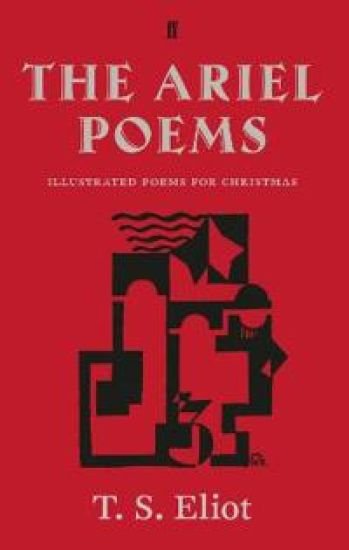
A cherished part of his oeuvre, the 'Ariel Poems' of T. S. Eliot were originally commissioned for a pamphlet series of the same name that first ran between 1927 and 1931. ('Nobody else seemed to want the title afterward,' said Eliot of the series, 'so I kept it for myself.') That pamphlet series inventively paired an unpublished poem by a leading writer of the day with new artwork from an eminent artist. Thomas Hardy, Siegfried Sassoon, Barnett Freedman and John Nash were among the contributors to the first set, which broadly carried a Christmas theme and which sold for one shilling. The publisher's hope was that the pamphlets might double-up as greeting cards, and Eliot himself sent them as festive gifts to the writers on Faber's poetry list. This handsome new publication brings together, for the first time in a single edition, the six poems that T. S. Eliot wrote for the series, and in so doing restores them to the company of the artworks that originally partnered them.
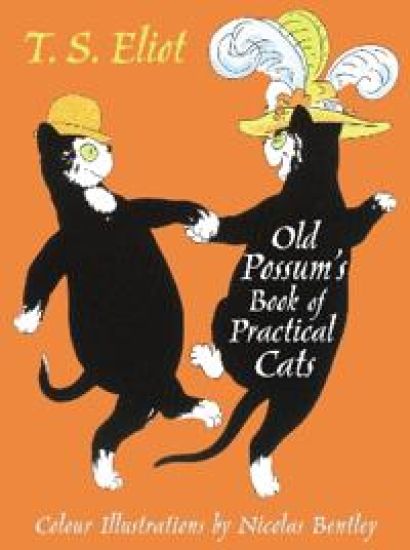
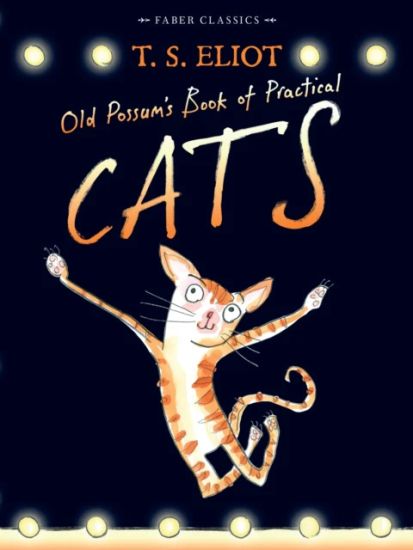
Cats! Some are sane, and some are mad. Some are good, and some are bad . . . The original Old Possum's illustrations have been lovingly restored and are showcased in this beautiful new hardback edition, perfect for children and Eliot aficionados alike. These lovable cat poems were written by T. S. Eliot for his godchildren and continue to delight children and grown-ups. The collection inspired the musical Cats!, and features Macavity, Mr Mistofelees and Growltiger!
The Waste Land is a long poem by T. S. Eliot, widely regarded as one of the most important poems of the 20th century and a central work of modernist poetry. Published in 1922, the 434-line poem first appeared in the United Kingdom in the October issue of The Criterion and in the United States in the November issue of The Dial. It was published in book form in December 1922. Among its famous phrases are "April is the cruellest month", "I will show you fear in a handful of dust", and the mantra in the Sanskrit language "Shantih shantih shantih". Eliot's poem loosely follows the legend of the Holy Grail and the Fisher King combined with vignettes of contemporary British society. Eliot employs many literary and cultural allusions from the Western canon, Buddhism and the Hindu Upanishads. Because of this, critics and scholars regard the poem as obscure. The poem shifts between voices of satire and prophecy featuring abrupt and unannounced changes of speaker, location, and time and conjuring of a vast and dissonant range of cultures and literatures. The Waste Land's structure is divided into five sections. The first section, "The Burial of the Dead," introduces the diverse themes of disillusionment and despair. The second, "A Game of Chess," employs vignettes of several characters-alternating narrations-that address those themes experientially. "The Fire Sermon," the third section, offers a philosophical meditation in relation to the imagery of death and views of self-denial in juxtaposition influenced by Augustine of Hippo and eastern religions. After a fourth section, "Death by Water," which includes a brief lyrical petition, the culminating fifth section, "What the Thunder Said," concludes with an image of judgment. Eliot probably worked on the text that became The Waste Land for several years preceding its first publication in 1922. In a May 1921 letter to New York lawyer and patron of modernism John Quinn, Eliot wrote that he had "a long poem in mind and partly on paper which I am wishful to finish". 5] Richard Aldington, in his memoirs, relates that "a year or so" before Eliot read him the manuscript draft of The Waste Land in London, Eliot visited him in the country. 6] While walking through a graveyard, they discussed Thomas Gray's Elegy Written in a Country Churchyard. Aldington writes: "I was surprised to find that Eliot admired something so popular, and then went on to say that if a contemporary poet, conscious of his limitations as Gray evidently was, would concentrate all his gifts on one such poem he might achieve a similar success." 6] Eliot, having been diagnosed with some form of nervous disorder, had been recommended rest, and applied for three months' leave from the bank where he was employed; the reason stated on his staff card was "nervous breakdown". He and his first wife, Vivienne Haigh-Wood Eliot, travelled to the coastal resort of Margate, Kent, for a period of convalescence. While there, Eliot worked on the poem, and possibly showed an early version to Ezra Pound when, after a brief return to London, the Eliots travelled to Paris in November 1921 and stayed with him. Eliot was en route to Lausanne, Switzerland, for treatment by Doctor Roger Vittoz, who had been recommended to him by Ottoline Morrell; Vivienne was to stay at a sanatorium just outside Paris. In Hotel Ste. Luce (where Hotel Elite stands since 1938) in Lausanne, Eliot produced a 19-page version of the poem. 7] He returned from Lausanne in early January 1922. Pound then made detailed editorial comments and significant cuts to the manuscript. Eliot later dedicated the poem to Pound.
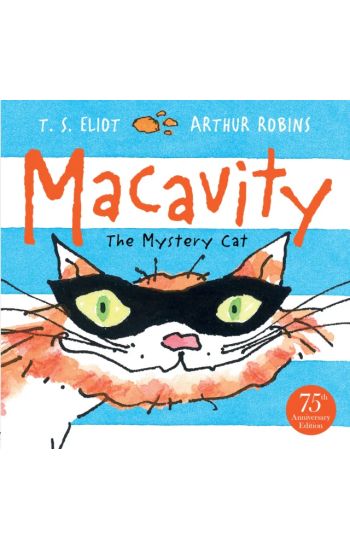
'Macavity' (the mystery cat!) is one of the best-loved poems from T. S. Eliot's Old Possum's Book of Practical Cats - the inspiration for Cats: The Musical - beloved by generations of children and their parents. Now, Macavity is given a new life in this stunning picture book with illustrations from Arthur Robins that perfectly convey all the wit and humour of Eliot's creation. To sit alongside other classics such as The Gruffalo, The Tiger Who Came to Tea, and Spot.'Arthur Robins' witty and robust illustrations bring Macavity up to date, delighting a new generation of readers' Guardian
'The cat himself knows and will never confess...'To celebrate Old Possum's 75th anniversary we have commissioned lively new illustrations from Rebecca Ashdown for T. S. Eliot's original book of Practical Cats. Featuring Macavity, the Mystery Cat; Mr Mistofelees, the Original Conjuring Cat; Mungojerrie and Rumpelteazer and all the gang, this is a must for every child's bookshelf and is a great companion to the Andrew Lloyd Webber stage show.
"Jeremiah Webster's brilliant Introduction leaves no doubt about Eliot's relevance for a new generation of readers." -Lee Oser, author of T. S. Eliot and American Poetry and The Ethics of Modernism: Moral Ideas in Yeats, Eliot, Joyce, Woolf and Beckett Dr Webster's introduction offers compelling reasons for experienced readers to revisit Eliot, and powerful incentives for new readers to explore the landscape of this immeasurably influential artist. -Dr. E Victor Bobb, Whitworth University . . . Eliot's poetry deserves a new readership. As the United States continues to seek departed nymphs through the incantations of technology, as moral impotence becomes the norm, the jeremiad voice of The Waste Land is a much needed corrective; its pessimism may in fact be the best prescription for our time. Eliot's critique of Victorian decay, of the bankruptcy of empire, "Falling towers / Jerusalem Athens Alexandria / Vienna London / Unreal," is a necessary rejoinder for a generation still trying to maintain a Post-WWII "American Dream." As prosperity becomes increasingly mirage-like in the Twenty First Century, as decadence begets debt, as shalom is pursued through duplicitous governance and predator drones, the poem's final lamentation, "Shantih, Shantih, Shantih," is an apt benediction for our age. To survey this "heap of broken images" as Eliot so courageously does, is to recognize that all is not well, that unless there is revelation, "the sound of water over a rock," unless we are able to answer, "Who is the third who walks always beside you?," there is little reason for hope. -From the Introduction by Jeremiah Webster Wiseblood Books is a publishing line particularly favorable toward works of fiction, poetry, and philosophy that render truths with what Flannery O'Connor called an unyielding "realism of distances." Such works find redemption in uncanny places and people; wrestle us from the tyranny of boredom; mock the pretensions of respectability; engage the hidden mysteries of the human heart, be they sources of either violence or courage; articulate faith and doubt in their incarnate complexity; dare an unflinching gaze at human beings as "political animals"; and suffer through this world's trials without forfeiting hope. Visit us at www.wisebloodbooks.com We are wide-eyed for new epiphanies of beauty.
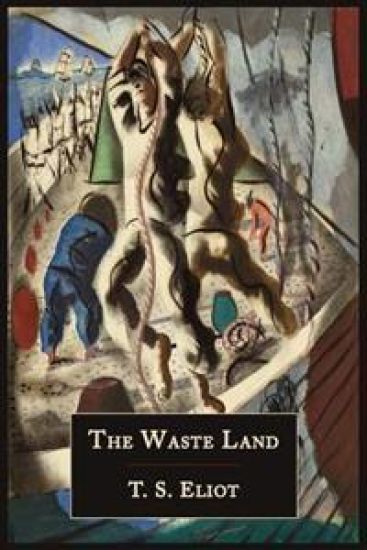
The Waste Land is arguably the most important poem of the twentieth century. First published in the United States by Boni & Liveright in 1922, this landmark reissue of the first edition, now back with its original publisher, includes a new introduction by Paul Muldoon, showcasing the poem's searing power and strange, jarring beauty. With a modernist design that matches the original, this edition allows contemporary readers to experience the poem the way readers would have seen it for the first time. As Muldoon writes, "It's almost impossible to think of a world in which The Waste Land did not exist. So profound has its influence been not only on twentieth-century poetry but on how we ve come to view the century as a whole, the poem itself risks being taken for granted." Famously elliptical, wildly allusive, at once transcendent and bleak, The Waste Land defined modernity after the First World War, forever transforming our understanding of ourselves, the broken world we live in, and the literature that was meant to make sense of it. In a voice that is arch, ironic, almost ebullient, and yet world-weary and tragic, T. S. Eliot mixes and remixes, drawing on a cast of ghosts to create a new literature for a new world. In the words of Edmund Wilson, "Eliot is one of our only authentic poets [The Waste Land is] one triumph after another.""
This book, titled ""An Exhibition Of Manuscripts And First Editions Of T. S. Eliot: Humanities Research Center, The University Of Texas, June, 1961"" is a collection of manuscripts and first editions of the works of T. S. Eliot. The book showcases an exhibition held at the Humanities Research Center at the University of Texas in June of 1961. The exhibition was dedicated to showcasing the literary works of T. S. Eliot, a renowned poet, playwright, and literary critic. The book features detailed descriptions and photographs of the manuscripts and first editions on display, providing a comprehensive overview of Eliot's literary legacy. It is a valuable resource for scholars, researchers, and fans of T. S. Eliot's work, offering a unique glimpse into the creative process and evolution of his writing. This scarce antiquarian book is a facsimile reprint of the old original and may contain some imperfections such as library marks and notations. Because we believe this work is culturally important, we have made it available as part of our commitment for protecting, preserving, and promoting the world's literature in affordable, high quality, modern editions, that are true to their original work.
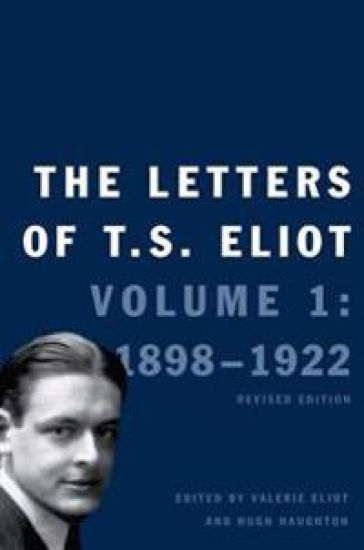
In two highly anticipated volumes, the correspondence of the twentieth century's eminent man of letters, from youth to early manhood Volume One: 1898-1922 presents some 1,400 letters encompassing the years of Eliot's childhood in St. Louis, Missouri, through 1922, by which time the poet had settled in England, married his first wife, and published The Waste Land. Since the first publication of this volume in 1988, many new materials from British and American sources have come to light. More than two hundred of these newly discovered letters are now included, filling crucial gaps in the record and shedding new light on Eliot's activities in London during and after the First World War. Volume Two: 1923-1925 covers the early years of Eliot's editorship of The Criterion, publication of The Hollow Men, and his developing thought about poetry and poetics. The volume offers 1,400 letters, charting Eliot's journey toward conversion to the Anglican faith, as well as his transformation from banker to publisher and his appointment as director of the new publishing house Faber & Gwyer. The prolific and various correspondence of this volume testifies to Eliot's growing influence as cultural commentator and editor.