Kirjojen hintavertailu – 12 903 725 kirjaa ja 27 kauppaa
Kirjailija
U. S. Army Command and General Staff Col
Kirjat ja teokset yhdessä paikassa: 421 kirjaa, julkaisuja vuosilta 2014–2017, suosituimpiin kuuluu Opportunities Gained and Lost: J.E.B. Stuart's Cavalry operations in the Seven Days Campaign. Vertaile teosten hintoja ja tarkista saatavuus suomalaisista kirjakaupoista.
Eisenhower preferred to build consensus for his strategies by using multiple communication techniques to convey his intent. If consensus was not achieved and his intent was not carried out he would aggressively move to eliminate the source of friction. This book will analyze four case studies to demonstrate that it is critically important for subordinates and peers to understand the influence of leadership styles on strategic decision makers. It will also argue that the consequences for not understanding strategic decision makers can mean the difference between individual, organizational or national success or failure. There are four principal conclusions to help subordinates and peers succeed by identifying and understanding the influence of leadership styles on strategic decision makers. Eisenhower believed strongly in the reasons behind his strategies, which provided the motivation to pursue their implementation. Second is his preference for a consensus building approach to strategy development. Third is that Eisenhower used multiple methods to communicate his intent and the importance of his strategies. If a subordinate or peer did not support his strategy he would continue to try and persuade them to his view but if they did not see his vision he would move to eliminate the threat to his strategy.
In 2001 and in 2003 the United States Army, along with coalition forces demonstrated their conventional superiority by routing the forces of the Taliban and the Iraqi Army. Since those conventional victories, determining success has not been so clear. How does a COIN commander know he is winning? US military doctrine addresses the need to construct measures of effectiveness, but does not offer any universal metrics applicable to COIN. To determine if there are any reasonable, universal metrics, this monograph looks to COIN theorists, COIN doctrine and COIN researchers. The proposed metrics include body count, violence reduction, actionable intelligence, popular attitude, popular behavior, resource reduction, and subjective assessments. Each metric has shortcomings unless linked to a reduction of tangible resources. Counterinsurgency in practice reveals that reducing tangible recourses is the surest path to victory in COIN. Measuring tangible resource reduction is possible and efficient if the process mirrors the intelligence collection process. The staff must identify indicators of the trend in insurgent resources instead of tasking elements to look for and destroy resources. The indicators are environmentally dependant but typically include size of attack, solicitation for sponsorship, equipment characteristics, and insurgent interaction with population.
This book investigates the interwar periods following World War I, World War II, and Vietnam. During each period the Army message toCongress is explored. The book also examines downsizing effects on training, morale, and readiness. Post-Cold War Army downsizing iscompared and contrasted to each period covered in the study. Following major U. S. conflicts the Army's difficulties with training resources, poor morale, and readiness have been consistent. Additionally, the army leadership's message to Congress has been relatively unchangedthroughout each period. The Army's situation was no different following the downsizing programs of the early 1990s. This book emphasizesthe relevance of comparing the Army of the downsizing 1990s to the downsizing periods of the past
Terrain is a permanent and important aspect of all military operations. Today, the military study of terrain is called geospatial engineering, and it is the responsibility of engineers to maximize its effect for the tactical echelons of the Army. Engineer officers are the commanders' terrain experts armed with distinct skills, knowledge, and behaviors (tasks). From a review of doctrinal, historical, anecdotal, and periodical sources, seventy-three essential geospatial tasks emerged. These tasks cover the geospatial engineering functions found in the Army Universal Task List in Field Manual 7-15 and support a definition for the terrain expert role. Forty-nine of the seventy-three tasks are taught in an institutional setting at the US Army Engineer School and the National Geospatial and Intelligence School. Recommendations are provided on how to improve training for thesetasks and for the twenty-four tasks not yet taught. A five-step geospatial engineering process is also recommended to facilitate officer proficiency and application of geospatial engineering. Finally, several other geospatial engineering considerations are provided for further research into the conceptual skills required for terrain visualization and expertise.
A nation's ability to wage war is largely shaped by the preparations that it has undertaken in the period since the last war it has waged. The policies that support preparation for the next war are often forced to compete for resources against other domestic programs. Deficiencies in the U. S. Army's ammunition readiness during the Korean War are illustrative of the many challenges faced in resourcing readiness in the face of competingdomestic and military priorities. The U. S. Army's readiness for battle at the beginning of the Cold War was closely linked to reliance on a strategy of mobilization, which proved itself ill suited to respond to the needs of the nation's strategy to contain the growth of Communism. Military leaders struggled to develop a joint strategy to meet the Soviet threat, and to secure presidential support to resource a military establishment that was ready and capable of fighting the next war. Securing presidential support for increased funding was complicated by divisions between military services exacerbated by the National Security Act of 1947, different perceptions of the nature of the Soviet threat, and domestic political pressures to limit defense spending.
U. S. military doctrine defines operational art within the domain of conventional warfare. This book evolves the conventional understanding of operational art into the domain of irregular warfare. Al Qaeda in Iraq, as led by Abu Musab al-Zarqawi, orchestrated seemingly disjointed attacks against random targets from 2004 to 2006. This book determines that Zarqawi employed a unique form of operational art through deliberately planned and synchronized attacks to achieve a specific aim. The book derives the irregular warfare operational art definition and appropriate characteristics from analysis of authoritative authors' works and published military doctrine on conventional operational art. The derived characteristics are used to evaluate the strategic, operational, and tactical influences of Zarqawi's organization, plans, and tactics. This examination illustrates how the leader of a terrorist organization sought to synchronize operations in time, space, and purpose to combat a superior force and achieve a strategic aim. The book concludes Zarqawi did employ a form of operational art against U. S., Coalition, Iraqi Security Forces, and the Iraqi population from 2004 to 2006.
This book examines the impact that the dominant personalities of General DouglasMacArthur and Admiral Ernest King had in shaping Allied strategy in the Pacific during the Second World War. The concept of dominant personality is defined as containing three essential elements: arrogance, tenacity, and supreme competence. The lives of MacArthur and King are examined, demonstrating that the actions of each consistently reflected these characteristics, allowing them to dominate those around them. Three key decisions from the Pacific war are scrutinized for the impact of one or both of these dominant personalities. King and MacArthur affected these decisions in different ways. In the first, the decision to initiate carrier raids against Japan in early 1942, King acted unopposed in pushing his audacious plans through. The second decision was to invade Guadalcanal (Operation Watchtower) in August 1942. King and MacArthur drove this decision in parallel competition, each striving to begin offensive operations and each desiring to be in control. Finally, the long competition between the Central and Southwestern Pacific drives for primacy, culminating with the debate over invading Luzon or Formosa, is examined. In this case, MacArthur and King pursued mutually exclusive courses and stalemate nearly resulted.
Avid readers of WWII air combat will find the Eighth AAF's strategic bombing mission #84 (the Schweinfurt-Regensburg raid on August 17th, 1943) and mission #115 (the Schweinfurt raid on October 14th, 1943) to be tremendous setbacks to the daylight strategic bombing campaign of Germany. As a result of the heavy losses the Luftwaffe inflicted upon Eighth Bomber Command's heavy bombers, the daylight strategic bombing campaign was halted for over four months. The Eighth AAF could not sustain such heavy losses, in both aircraft and aircrew, and remain an effective force. During the halt in the daylight strategic bombing campaign, only targets within fighter escort range were selected so Eighth Bomber Command could receive replacement crews, upgraded aircraft, revise its strategic bombing tactics, and review its daylight strategic bombing doctrine. This book examines the daylight strategic bombing doctrine before and after the Schweinfurt raids to answer the question "After the costly Schweinfurt raids, the Eighth AAF paused to reset its doctrine; how was this doctrinal change accepted and what were the implications?" Initially, the heavy losses incurred during the August Schweinfurt-Regensburg raid were explained away as justified due to the "heavy" damage to both targets, the number of German fighters "shot down," and the weather which prevented 300 heavy bombers from being sent as one force - the number required for self-sustainment on deep penetration missions. This was the same mood immediately after the October Schweinfurt raid but changed drastically once monthly loss statistics were released and further examination forced the USAAF leadership into a rude awakening: unescorted bombers took seven times the loss plus two-and-a-half times the damage and the final assessment revealed Eighth Bomber Command experienced the loss of one-third of its heavy bombers each month. The upper levels of the USAAF leadership initially had difficulty accepting what the lower level leaders and aircrew knew: unescorted daylight strategic bombing was not practical in the face of determined opposition.
The construction of a US-Mexico border fence has proved an increasingly divisive method for securing the southern US border since its initial construction as the San Diego Fence in 1990. Since the terrorist attacks of September 11, 2001 the construction of a US-Mexico border fence has morphed from a method to stem the tide of illegal immigration from Mexico into a legislated method to prevent the entrance of terrorists. All terrorists except two have gained entrance into the US through manipulation of the US immigration system. Those two exceptions crossed the US-Canada border. This work analyzes what threat Mexico poses as a transit for terrorists attempting to enter the US by surreptitious means, and what deterrent or defeat effect a US-Mexico fence provides. The absence of a terrorist attempt to gain entrance into the US via Mexico indicates that Mexico does not provide the essential support required for an Al Qaeda terrorist, and that other countries and other means of entrance provide a more viable option and likelihood for success. The one support element that could provide a terrorist entrance from Mexico is that of the "coyote". A strategy of vigorous enforcement against illegal immigration without combating the motives for illegal immigration has helped to enable the "coyote" to gain the capability to transport a terrorist into the US from Mexico. The US-Mexico border fence has a limited deterrent effect against terrorists as demonstrated by the migration of illegal immigrants to more remote crossing sites. Finally, this work provides recommendations to better secure US land borders.
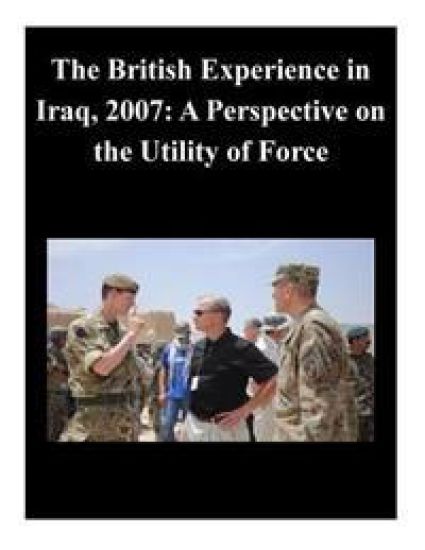
Recent years have seen the US, UK and other ISAF and Coalition nations enmeshed in protracted, complex and intense campaigns in Iraq and Afghanistan. Resilient and highly adaptable opponents have operated asymmetrically, and amongst the people, to negate the technological superiority of the West; counterinsurgency (COIN) has been the norm. Progress made has been hard won, consuming considerable resources and testing national will. Despite the achievement of often rapid and spectacular tactical military successes, the desired political dividends have been slower to materialise and scarcely commensurate with the investment of national blood and treasure. This has led some to question the utility of military force and the mood in several Western capitals seems increasingly wary of further stabilisation campaigns abroad. This sense of caution is reinforced by the global economic downturn and its associated fiscal challenges, which have encouraged retrenchment in public spending, especially in defence budgets. It would seem timely, given this context, to reflect upon the utility of force. Following Clausewitz's reasoning, the utility of force rests on its instrumentality in achieving a desired policy goal. This monograph contends that this involves controlling, to a sufficient degree, the adversary's policy choices, which depends on changing attitudes, and thence behavior, in a way favorable to our interests. It requires our opponents to embrace our vision of their political future: they must be convinced to accept this changed political order. The political value of armed force derives from its power to hurt (its capacity for "killing people and breaking things"); its utility is a function of how effectively this can be harnessed to influence behavior and achieve control. The ultimate expression of hard power, armed force can be used to deter, coerce or compel especially in an interstate conflict when these effects are focused on an enemy government in control of its people. In a confrontation with an enemy operating amongst the people, such as in stabilisation or COIN campaigns, where control of the people is contested and political considerations predominate, the power to hurt is diffused and attenuated, being consciously restrained by policy choices and by legal and moral norms. A greater premium is placed on persuasion over coercion. Here, activities designed to enhance legitimacy and win consent (for shorthand termed stabilization) are likely to be more effective, with the military in a subordinate role. By promoting physical security, it can create the opportunity for other instruments of power to resolve political problems; but armed force alone may resolve little. This book examines the purpose and dominant characteristics of military force and highlights the conditions that must obtain if military success is to be translated into political advantage in the contemporary operating environment. It uses recent British experience in Iraq to illustrate some of the challenges involved. It concludes that despite the complexity and frustrations of Iraq and Afghanistan, armed force retains utility in the contemporary operational environment, as long as certain conditions are met. These are that the missions allocated to the military are appropriate, recognising the limitations of force; are adequately resourced; are properly integrated with other instruments of national power; and are underwritten with the requisite political commitment to sustain them over time.
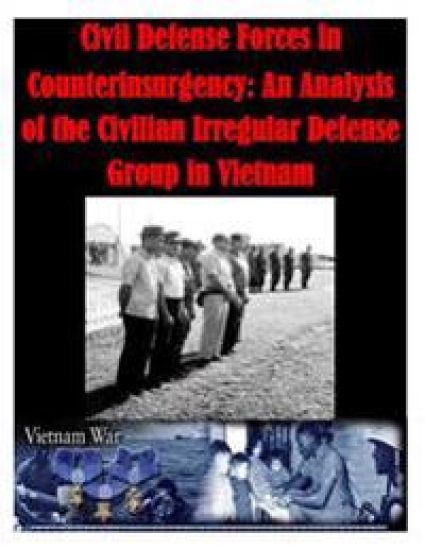
This work examines the effect of civil defense forces on a counterinsurgency campaign through a study of the Civilian Irregular Defense Group in the Republic of Vietnam. This work challenges a common U. S. Army viewpoint on counterinsurgency that conventional combat power, training a host nation's national security forces, and expenditures on large civil reconstruction projects are the Army's main contributions to counterinsurgency operations. This work is a chronological study that outlines the U. S. Army's major successes and failures in the refinement of counterinsurgency doctrine. This study uses two major research strategies: (1) qualitative analysis of counterinsurgency theory and U. S. Army counterinsurgency doctrine of the 1960s.(2) a chronological study of the Civilian Irregular Defense Group. Further, operations are evaluated using the four major principles of counterinsurgency: unity of effort, securing the population, isolating the insurgent from sources of support, and winning the support of the population. After examining counterinsurgency theory, doctrine, and operations in the Republic of Vietnam this study reveals that civil defense forces are a decisive in defeating an insurgency when properly balanced with conventional combat power. Additionally, a civil defense force assists in regaining area control, denial of support to the insurgents, and the restoration of government authority to an area.