Kirjojen hintavertailu – 12 903 725 kirjaa ja 27 kauppaa
Kirjailija
U. S. Army Command and General Staff Col
Kirjat ja teokset yhdessä paikassa: 421 kirjaa, julkaisuja vuosilta 2014–2017, suosituimpiin kuuluu Opportunities Gained and Lost: J.E.B. Stuart's Cavalry operations in the Seven Days Campaign. Vertaile teosten hintoja ja tarkista saatavuus suomalaisista kirjakaupoista.
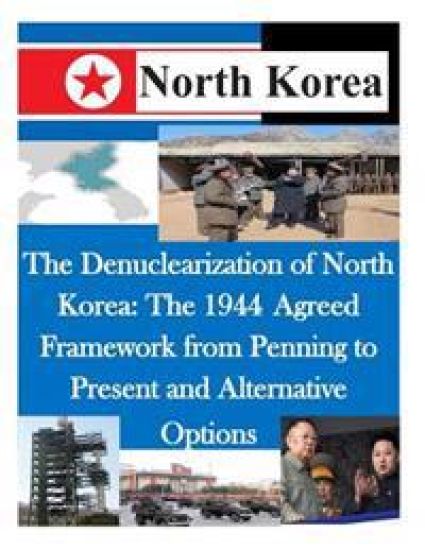
The denuclearization of North Korea, a formalized policy objective of the United States since the signing of the 1994 Agreed Framework, is the singularly most important objective of Washington regarding Pyongyang. The Agreed Framework is an accord that provides North Korea two light-water reactors in exchange for the elimination of its capabilities to produce nuclear weapons. However, many debates have arisen over the soundness of this policy option. The purpose of this thesis is to assess four different policy options for achieving the permanent or long-term denuclearization of North Korea: (1) the Agreed Framework, (2) the Amended Framework Option, (3) the Comprehensive Framework Option, and (4) the Coercive Denuclearization Option. The analysis of the Agreed Framework centers on obstacles that might prohibit its completion. The analysis of the Amended Framework focuses on North Korea's inability to distribute the energy that the LWRs will produce. The Comprehensive Framework analyzes the effects of the United States attaching additional conditions to the Agreed Framework. Lastly the, Coercive Denuclearization Option analyzes whether or not preemptive counter proliferation could force North Korea to abandon its nuclear weapons program. The conclusion of this thesis suggests that none of the evaluated policy options will lead to the denuclearization of North Korea. North Korea, Nonproliferation, U. S. Strategy, International Affairs, Technology
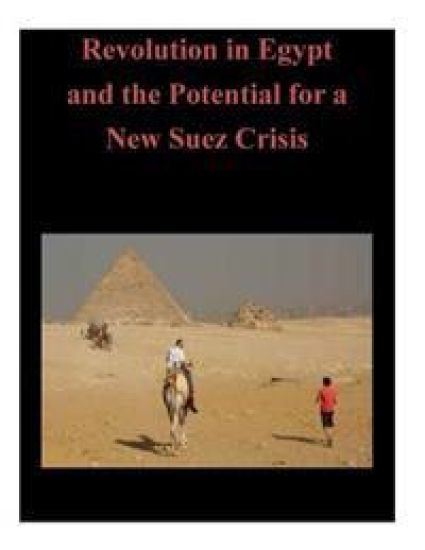
What is the probability for renewed conflict in the Sinai region in light of Egypt's recent revolution? This monograph examines that question by analyzing Nasser's Free Officer revolution of the 1950s that led to 1956 Suez Crisis (Nasser era) and the recent 2011 Egyptian revolution (Muslim Brotherhood era). The study uses a comparative case study methodology to analyze both revolutionary environments against political, economic, social, and military variables. A pattern of five revolutionary phases emerge showing the causal trends leading to the 1956 Suez Crisis and the current trends that could lead to renewed conflict in the Sinai. During the Nasser era, pan-Arab nationalism was the primary driving force. In the Brotherhood era, Islamism is the primary trend shaping the revolution. Both periods demonstrate deep systemic trends of political corruption, economic stagnation, social turmoil, anti-imperialism, and anti-Zionism that indicate an elevated propensity for crisis. Mitigating trends also emerge such as the U. S.-Egyptian security cooperation relationship, secular democracy, and economic development. U. S. leaders could leverage these trends to prevent another crisis in the region.
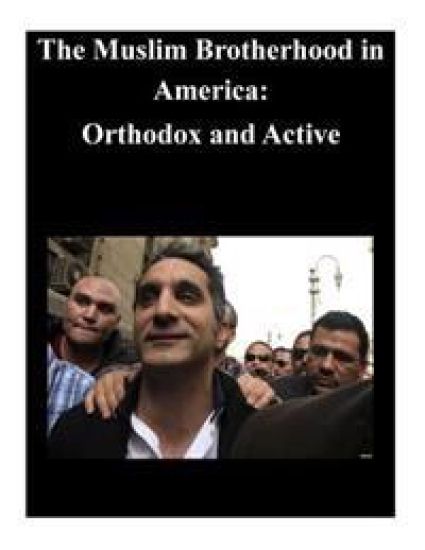
The al Ikhwan al Muslimim, the Society of Muslim Brothers or Muslim Brotherhood, (MB) is an international Islamist organization with over fifty national branches. Its motto reflects its Salafi jihadist motives and methods: "Allah is our objective. The Prophet is our leader. Qur'an is our law. Jihad is our way. Dying in the way of Allah is our highest hope." Contrary to the American national narrative endorsed by the media and public leaders, jihad is part of orthodox Islam and a fundamental component of Islamic law. The MB's goals, strategy, doctrine, and tactics descended logically from the sources of Islamic law, Sharia, which include the "trilogy of Sharia" the Qur'an, Sira, and Hadith. MB writers are not radicals who have adopted an unusual interpretation of Islam. Rather, they carefully based their strategy for political action in America upon Sharia-compliant doctrines of jihad, holy war, and da'wa, invitation to Islam. The MB in North America built their goals and strategies upon the international strategies and implemented these strategies through various front groups established to maintain some secrecy for the MBs members. The goals, strategies, and nature of the relationships with the MB and its affiliate organizations in America all work to achieve the international MB's ultimate goal, which is to establish a global caliphate - a single Islamic state where Sharia is enforced. The MB thus seeks to propagate Islam universally as a political, social, legal, financial, and religious system. These international goals, as well as the supporting goals sought by the MB in America represent a fundamental threat to the United States (US) and the American way of life.
During the past several decades, numerous authors have written on the subject of an American way of war. These include works by Russell Weigley, Max Boot, and Brian Linn. The apparent differences between these works have stimulated debate among military scholars as to what constitutes the American way of war. These debates and the accepted validity of apparently differing accounts of the American way of war highlight the difficulty in characterizing a topic as broad and inclusive as a way of war. Because of these challenges, some scholars claim that there is a differentiation between the concept of war and the conduct of warfare. This study concludes that over time, aspects of Army doctrine and operational traditions have achieved a state of semi-permanence. This enduring legacy represents an identifiable American way of warfare that encourages adaptive leaders to seek decisive victories through the application of superior power, which requires the ability to project that power over vast distances. It derives from the collective perceptions of historical military experience and is influenced by the unique American experiences of geography, political philosophy, and civic culture.
This work examines the British experience in Iraq from 1914-1926. Britain invaded Iraq to secure its oil interests and to protect its lines of communication to India. The British initially defeated Ottoman forces and captured the Basra vilayet (province) in December 1914. Although Basra's capture accomplished the objectives that Britain had sought to achieve at the outset of the campaign, it was followed by an ill-advised advance to Baghdad that culminated in defeat by the Ottomans at Kut-al-Amara in 1916. The British regrouped, however, and resumed the offensive, capturing Baghdad in 1917 and Mosul in 1918. After the war, Britain managed Iraq as a League of Nations Mandate from 1920- 1932. The British installed Iraq's first ruler, King Feisal I in 1921 and helped demarcate its northern border with Turkey in 1926. This work explores the British military campaign in Iraq during World War I and its subsequent civil administration. The work will examine the actions Britain took during this time period and determine, what wisdom, if any, that the United States (US) can draw from these experiences in relation to its current efforts in Iraq. This study concludes that, if the US is going to accomplish its objectives in Iraq, it should base its future relationship with Iraq primarily by incentives and not coercion. Furthermore, any attemptby the US to simultaneously develop Iraq into an independent nation-state and maintain dominant, long-term influence will likely result in failure. Overall, if the US wants to accomplish its goals in Iraq, it should treat Iraq like an equal and strive to be the best friend it has never had.