Kirjojen hintavertailu – 12 859 819 kirjaa ja 27 kauppaa

Kirjailija

U.S. Army War College

Kirjat ja teokset yhdessä paikassa: 398 kirjaa, julkaisuja vuosilta 2002–2019, suosituimpiin kuuluu The Challenge of Drug Trafficking to Democratic Governance and Human Security in West Africa (Enlarged Edition). Vertaile teosten hintoja ja tarkista saatavuus suomalaisista kirjakaupoista.

Nimi esiintyy myös muodoissa: U. S. Army War College, U S Army War College

398 kirjaa

Kirjojen julkaisuvuodet: 2002–2019.

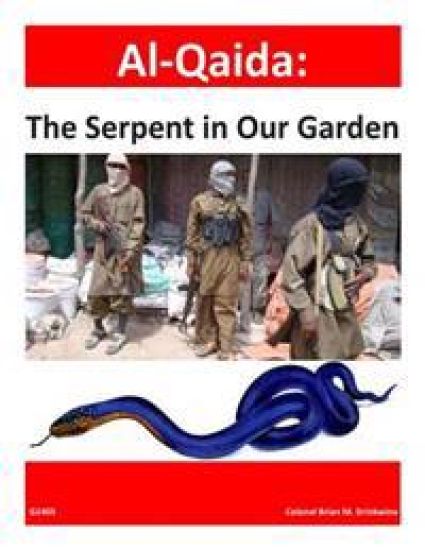
Al-Qaida: The Serpent in Our Garden

Al-Qaida: The Serpent in Our Garden

U. S. Army War College

Createspace Independent Publishing Platform
2014
nidottu
Terrorism has existed for centuries and governments have struggled to counterthe violent extremist threat within their midst. In the immediate days following the unprovoked attacks against the United States on September 11, 2001, President Bush and our collective national leaders stressed the urgent need to go on the immediate offensive against the terrorists, deploy military forces, and promote democracy abroad. Now, going on seven years in the Global War on Terror (GWOT), one can argue we have made credible tactical gains, but have fallen far short in defeating violent extremism as a threat to our way of life. Cooperation amongst the international community has resulted in genuine security improvements - particularly in disruption of terrorist organizations and finances, securing of borders with tighter security at points of entry, and the killing or capture of individuals of high value. We have seen greater cooperation amongst many countries and internally within the United States, among theinteragency to include some specific reforms. But, despite these successes, significant challenges remain and terror organizations like Al-Qa'ida have adapted, are conducting transnational irregular warfare and have grown stronger and more widespread then before the attacks of 9/11. The most recent National Intelligence Estimate judges that the U. S. homeland will continue to face a persistent and evolving terrorist threat, mainly from Islamic terrorist groups and cells and that Al-Qa'ida will remain the most seriousthreat. More important, the current administration's approach to the war on terror has created more terrorists than it has eliminated and that anti-American sentiment across the world and throughout the Middle East has skyrocketed serving to fuel and inspire Muslims to join or openly support terror groups. I believe we have failed to understand the true enemy who opposes us, the allure and appeal that they hold for the people of Islam worldwide, and our misguided efforts at engaging in a "war of ideas" have been clearly one-sided and not in our favor. Without a clear concept of what victory in a war on terror should look like, we will exhaust our resources to include our service men andwomen in futility. Our near enemy, Al-Qa'ida has been engaging in war for nearly four decades inorder to achieve their overall strategic objective of a world-wide Islamic caliphate where the only law is shar'ia (Islamic law). Al-Qa'ida continues to evolve, has increased its global reach and appeal, and has inspired numerous other extremist groups while continuing to expand its worldwide network. Al-Qa'ida has been elevated to the status we would hold for an institution, not just the world's most feared terrorist group. But they are neither invincible nor invulnerable, and they have stumbled momentously more than once. Today, our heroic military forces have fought tremendously and garnerednumerous significant results and tactical victories on the operational fronts inAfghanistan, Iraq, the Philippines and Northeast (HORN) of Africa, some of which are clearly irreversible gains. We have also gained greater insight into this elusive organization and now understand some of the cracks or fissures within their foundation. This newly found understanding and comprehension by experts in the field of study of terrorism, as well as our national leaders, has enlightened us to the simple fact that we must prepare to wage a long war against the Al-Qa'ida Associated Movement (AQAM) and Islamist terrorism. A war that will incorporate all elements of national power in a cogent and executable strategy as well as build and leverage multinational partnerships. A war where the United States is well resourced but, at present, ill-prepared to lead and to conduct.
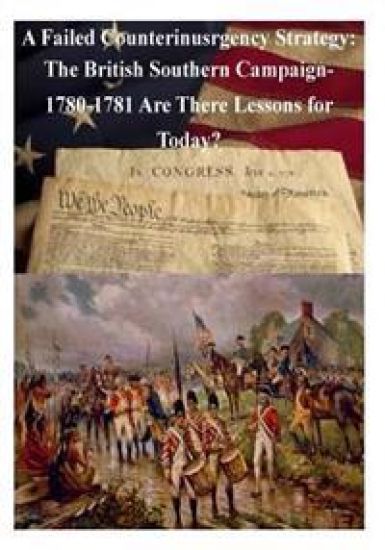
A Failed Counterinsurgency Strategy: The British Southern Campaign- 1780-1781 Are There Lessons for Today?
The Southern Campaign (1780-1781) was the application of the British grand strategy to conduct a counterinsurgency operation aimed at pacifying the Southern Colonies. The campaign was based on the flawed assumption that the Southern colonies contained a large loyalist population, and thus could be easily brought under British control. However, the plan was so poorly planned that the British operations inflamed the population and pushed them towards the rebels rather than pacifying them. Research of the strategy and subsequent application of the plan is of contemporary interest, especially when analyzed using current doctrinal concepts. The British Southern campaign is an ideal case study on the fatal ramifications of failing to apply the principles of MOOTW as contained in JP 3-07, and has surprising parallels to what the US is currently experiencing in Iraq.
Arctic Security in a Warming World

Arctic Security in a Warming World

U. S. Army War College

Createspace Independent Publishing Platform
2014
nidottu
A convergence of global factors is opening new territory and presenting new security challenges for the United States in the Arctic. The sovereign nations of the Arctic region must develop and implement security measures to manage the influx of interested parties and protect both their interests and the region. National interests and policy objectives in the Arctic call for renewed political and military attention within U. S. national security efforts. Engaging the United Nations and leveraging North American Aerospace Defense (NORAD) Command and U. S. Northern Command (NORTHCOM) capabilities will be critical to accomplishing U. S. goals and securing the northern coast of the continent. Challenges for the future include developing lasting stability through a robust international legal regime, creating effective command and coordination structures, and putting the means in place to implement the nation's policy objectives throughout the Arctic region. With focused efforts the nation can achieve all of its national policy objectives and be a leader in shaping the world's use and protection of the far north.
Cartel Car Bombings in Mexico

Cartel Car Bombings in Mexico

Robert J. Bunker; John P. Sullivan; Strategic Studies Institute; U.S. Army War College

Lulu.com
2014
nidottu
Contemporary Mexican cartel use of car bombs began in mid-July 2010 and has since escalated. Given the proximity to the United States, some literally within miles of the border, the car bombings, with about 20 incidents identified over the last 2 1/2 years, should be of interest to local, state, and federal U. S. law enforcement, the U. S. Army, and other governmental institutions which are providing increasing support to Mexican federal agencies. An historical overview and analysis of cartel car bomb use in Mexico provides context, insights, and lessons learned stemming from the Medellin and Cali cartel car bombing campaigns. In order to generate insights into future cartel car bombings in Mexico, the identification of such potentials offers a glimpse into cartel "enemy intent," a possible form of actionable strategic intelligence. For Mexico, steady and both slowly and quickly increasing car bomb use trajectories may exist.
Changing Minds in The Army: Why It Is So Difficult and What To Do About It (Enlarged Edition)

Changing Minds in The Army: Why It Is So Difficult and What To Do About It (Enlarged Edition)

Stephen J. Gerras; Leonard Wong; Strategic Studies Institute; U.S. Army War College

Lulu.com
2014
nidottu
History and organizational studies both demonstrate that changing one's mind is quite difficult, even in the face of overwhelming evidence that this change needs to occur. This monograph explains how smart, professional, and incredibly performance-oriented Army senior leaders develop frames of reference and then oftentimes cling to their outdated frames in the face of new information. It describes the influence of individual-level concepts-personality, cognitive dissonance reduction, the hardwiring of the brain, the imprints of early career events, and senior leader intuition-along with group level factors to explain how frames of reference are established, exercised, and rewarded. It concludes by offering recommendations to senior leaders on how to structure Army leader development systems to create leaders comfortable in changing their minds when the environment dictates.
Development of the Baltic Armed Forces in Light of Multinational Deployments (Enlarged Edition)

Development of the Baltic Armed Forces in Light of Multinational Deployments (Enlarged Edition)

James S. Corum; Strategic Studies Institute; U.S. Army War College

Lulu.com
2014
nidottu
Developing coalition security strategies within NATO has never been easy. However, it does help to have a thorough understanding of one's allies and their concerns and perspectives. This monograph provides an in depth view of how three Baltic nations (Estonia, Latvia, and Lithuania) view current and future security threats and likely problems. It recommends some ways in which the United States might respond to these issues.
NATO Missile Defense and the European Phased Adaptive Approach: The Implications of Burden Sharing and the Underappreciated Role of The U.S. Army (Enlarged Edition)
In 2010, NATO decided to expand its ballistic missile defense program, in part because of the American offer to include its European Phased Adaptive Approach (EPAA) as the centerpiece of an expanded effort. For the Allies' part, few have actually contributed tangible ballistic missile defense assets, in terms of missile interceptors, radars or other sensors, or ballistic missile defense-related platforms. This is likely to have significant implications for the U. S. Army, which has an important but largely underappreciated role in NATO missile defense today. In particular, the Army is likely to face increased manpower demands, materiel requirements, and training needs in order to meet the demand signal created by the NATO ballistic missile defense program. Additionally, Army units involved directly in or in support of ballistic missile defense are likely to face a higher OPTEMPO than currently projected. Ultimately, this will exacerbate the perceived imbalance in transatlantic burden-sharing...
Reforming the Police in Post-Soviet States: Georgia and Kyrgyzstan (Enlarged Edition)

Reforming the Police in Post-Soviet States: Georgia and Kyrgyzstan (Enlarged Edition)

Strategic Studies Institute; U.S. Army War College; Erica Marat

Lulu.com
2014
nidottu
This report identifies and explains the determinants of police reform in former Soviet states by examining the cases of Georgia and Kyrgyzstan. The two cases were chosen to show two drastically different approaches to reform played out in countries facing arguably similar problems with state-crime links, dysfunctional governments, and corrupt police forces. In Georgia, the government's reform program has fundamentally transformed the police, but it also reinforced the president Mikhail Saakashvili regime's reliance on the police. With two political regime changes in one decade, Kyrgyzstan's failed reform effort led to increasing levels of corruption within law enforcement agencies and the rise of violent nonstate groups. The experiences of Georgia and Kyrgyzstan show that a militarized police force is unlikely to spontaneously reform itself, even if the broader political landscape becomes more democratic.
U.S. Governmental Information Operations and Strategic Communications: A Discredited Tool or User Failure? Implications for Future Conflict (Enlarged Edition)
Through the prism of operations in Afghanistan, the author examines how the U. S. Government's Strategic Communication (SC) and, in particular, the Department of Defense's (DoD) Information Operations (IO) and Military Information Support to Operations (MISO) programs, have contributed to U. S. strategic and foreign policy objectives. It assesses whether current practice, which is largely predicated on ideas of positively shaping audiences perceptions and attitudes towards the United States, is actually fit for purpose. Indeed, it finds that the United States has for many years now been encouraged by large contractors to approach communications objectives through techniques heavily influenced by civilian advertising and marketing, which attempt to change hostile attitudes to the United States and its foreign policy in the belief that this will subsequently reduce hostile behavior. While an attitudinal approach may work in convincing U. S. citizens to buy consumer products...
What is Next for Mali? The Roots of Conflict and Challenges to Stability (Enlarged Edition)

What is Next for Mali? The Roots of Conflict and Challenges to Stability (Enlarged Edition)

Strategic Studies Institute; U.S. Army War College; Dona J. Stewart

Lulu.com
2014
nidottu
In March 2012, the government of Mali, one of the most touted symbols of Africa's democratic potential, fell in a military-executed coup. At the same time, a 4-decades old rebellion among Tuaregs seeking autonomy or independence reached new heights fueled by weapons from Libya and the belief that the Arab Spring could extend to northern Mali. Al-Qaeda in the Islamic Maghreb (AQIM) and their allies were quick to capitalize on the increasing chaos in a territory characterized by lack of government control and poverty and seized the major cities in the north. While French-led military intervention restored security to cities in the north, the underlying social, economic and political issues of the crisis remain.
U.S. Army War College Key Strategic Issues List - Part I: Army Priorities for Strategic Analysis [Academic Year 2013-14] (Enlarged Edition)
For over a decade, SSI has published the annual Key Strategic Issues List (KSIL) to inform students, faculty, and external research associates of strategic topics requiring research and analysis. Part I of the Academic Year (AY) 2013-14 KSIL, referred to as the Army Priorities for Strategic Analysis (APSA), has been developed by Headquarters Department of the Army (HQDA) and SSI. The APSA will help prioritize strategic research and analysis conducted by USAWC students and faculty, USAWC Fellows, and external researchers, to link their research efforts and results more effectively to HQDA's highest priority topics. To improve the relevance of the research and analysis, topics are directly linked to chiefs or points of contact (POC) within appropriate HQDA divisions or directorates. These POCs will advise researchers as to specific topics and results needed to better shape research, analysis, and results that meet the Army's needs. NOTE: Topics with (***) are priority Chief of Staff of the Army topics.
The Security Concerns of The Baltic States as NATO Allies (Enlarged Edition)

The Security Concerns of The Baltic States as NATO Allies (Enlarged Edition)

James S. Corum; Strategic Studies Institute; U.S. Army War College

Lulu.com
2014
nidottu
If the United States is likely to fight in a coalition with small allies in the future, then it is useful to understand the experience, capabilities, and perspectives of those allies. Since regaining independence in 1991, the countries of Latvia, Estonia, and Lithuania have been very active in supporting NATO and U. S. military operations abroad. It is notable that the three Baltic countries have also used the deployment of a significant part of their forces in the last decade as a major part of their program to carry out a major force transformation.
The Effectiveness of Drone Strikes in Counterinsurgency and Counterterrorism Campaigns (Enlarged Edition)

The Effectiveness of Drone Strikes in Counterinsurgency and Counterterrorism Campaigns (Enlarged Edition)

Strategic Studies Institute; U.S. Army War College; James Igoe Walsh

Lulu.com
2014
nidottu
The United States increasingly relies on unmanned aerial vehicles to target insurgent and terrorist groups around the world. This monograph analyzes the available research and evidence that assesses the political and military consequences of drone strikes. It is not clear if drone strikes have degraded their targets, or that they kill enough civilians to create sizable public backlashes against the United States. Drones are a politically and militarily attractive way to counter insurgents and terrorists, but, paradoxically, this may lead to their use in situations where they are less likely to be effective and where they are difficult to predict consequences.
State Collapse, Insurgency, and Counterinsurgency: Lessons from Somalia (Enlarged Edition)

State Collapse, Insurgency, and Counterinsurgency: Lessons from Somalia (Enlarged Edition)

Strategic Studies Institute; U.S. Army War College; J. Peter Pham

Lulu.com
2014
nidottu
For more than 2 decades, Somalia has been the prime example of a collapsed state, resisting multiple attempts to reconstitute a central government, with the current internationally-backed regime of the "Federal Republic of Somalia" struggling just to maintain its hold on the capital and the southeastern littoral-thanks only to the presence of a more than 17,000-strong African Union peacekeeping force. Despite the desultory record, the apparent speedy collapse since late 2011 of the insurgency spearheaded by the Harakat al-Shabaab al-Mujahideen (Movement of Warrior Youth, al-Shabaab)-a militant Islamist movement with al-Qaeda links-has made it fashionable within some political and military circles to cite with little nuance the "Somalia model" as a prescription for other conflicts in Africa, including the fight in Mali against al-Qaeda in the Islamic Maghreb and its allies.
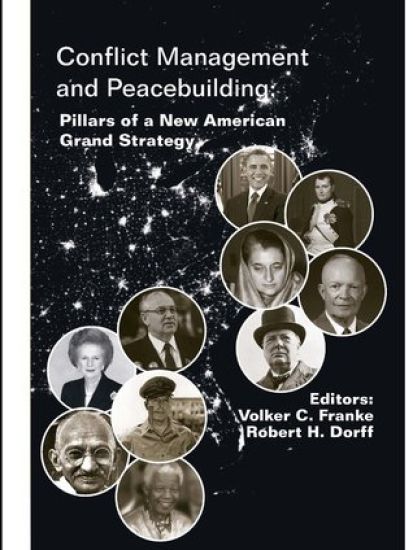
Conflict Management and Peacebuilding: Pillars of a New American Grand Strategy (Enlarged Edition)

Conflict Management and Peacebuilding: Pillars of a New American Grand Strategy (Enlarged Edition)

Volker C. Franke; Robert H. Dorff; Strategic Studies Institute; U.S. Army War College

Lulu.com
2014
nidottu
The authors examine the utility of the U. S. Government's whole-of-government (WoG) approach for responding to the challenging security demands of operations in Iraq and Afghanistan. They specifically discuss the strategic objectives of interagency cooperation particularly in the areas of peacebuilding and conflict management. Discussions range from the conceptual to the practical, with a focus on the challenges and desirability of interagency cooperation in international interventions. Shared were experiences and expertise on the need for and future of an American grand strategy in an era characterized by increasingly complex security challenges and shrinking budgets. All agreed that taking the status quo for granted was a major obstacle to developing a successful grand strategy and that government, the military, international and nongovernmental organizations, and the private sector are all called on to contribute their best talents and efforts to joint global peace and security efforts.
Closing The Candor Chasm: The Missing Element of Army Professionalism (Enlarged Edition)

Closing The Candor Chasm: The Missing Element of Army Professionalism (Enlarged Edition)

Paul Paolozzi; Strategic Studies Institute; U.S. Army War College

Lulu.com
2014
nidottu
Candor stands as the keystone element in creating the foundation of trust in the Army, yet the topic is muted. Stewards of the Army Profession build trust through authentic communication-in education, training, and modeled in application. Candor was previously included in Army Doctrine, yet nearly no mention of it currently exists in professional military education and dialogue. Through personal experiences and review of literature, two examples-the demands placed on the Army Reserve Components and a review of the Army's counseling and evaluation environment-serve as illustrations where candor requires revitalization. Candor must be reinforced to be valued or it remains peripheral, serving as a lesson that is equally damaging to individual character as is it institutionally to the Army.
Building Better Armies: an Insider's Account of Liberia

Building Better Armies: an Insider's Account of Liberia

Sean McFate; Strategic Studies Institute; U.S. Army War College

Lulu.com
2014
nidottu
Recent events in Mali, Libya, Syria, Afghanistan, Iraq, and elsewhere demonstrate that building professional indigenous forces is imperative to regional stability, yet few success stories exist. Liberia is a qualified "success," and this study explores how it was achieved by the program's chief architect. Liberia suffered a 14-year civil war replete with human rights atrocities that killed 250,000 people and displaced a third of its population. Following President Charles Taylor's exile in 2003, the U. S. contracted DynCorp International to demobilize and rebuild the Armed Forces of Liberia and its Ministry of Defense; the first time in 150 years that one sovereign nation hired a private company to raise another sovereign nation's military. This monograph explores the theory and practice behind the successful disarmament, demobilization, and reintegration (DDR) of the legacy military and security sector reform (SSR) that built the new one.
An Assessment of The Department of Defense Strategy for Operating In Cyberspace

An Assessment of The Department of Defense Strategy for Operating In Cyberspace

Thomas M. Chen; Strategic Studies Institute; U.S. Army War College

Lulu.com
2014
nidottu
In July 2011, the U. S. Department of Defense (DoD) issued the DoD Strategy for Operating in Cyberspace, which outlines five strategic initiatives: 1) Treat cyberspace as another operational domain; 2) Employ new defense operating concepts to pro--tect DoD networks; 3) Partner with other U. S. government agencies and the private sector; 4) Build relationships with U. S. allies and interna--tional partners to strengthen cyber security; and, 5). Leverage the national intellect and capabilities through cyber workforce training and rapid techno--logical innovation. First , the monograph explores the evolution of cyberspace strategy through a series of government publications leading up to the DoD Strategy for Operating in Cyber--space. It is seen that, although each strategy has differ--ent emphases on ideas, some major themes recur. Second, each strategic initiative is elaborated and critiqued in terms of significance, novelty, and practicality. Third, the monograph critiques the DoD Strategy as a whole.
The Real "Long War": The Illicit Drug Trade and the Role of The Military (Enlarged Edition)

The Real "Long War": The Illicit Drug Trade and the Role of The Military (Enlarged Edition)

Strategic Studies Institute; U.S. Army War College; Geoffrey Till

Lulu.com
2014
nidottu
The 21st century has seen the growth of a number of nontraditional threats to the international stability on which trade, and thus U. S. peace and security, depends, and for the moment at least a reduced likelihood of continental scale warfighting operations, and something of a de-emphasis on major involvement in counterinsurgency operations. These nontraditional threats are, however, very real and should command a higher priority than they have done, even in a period of budgetary constraint. The military have cost-effective contributions to make in countering the manufacture and distribution of illicit drugs, and in many cases can do so without serious detriment to their main warfighting task. Successfully completing this mission, however, will require the military to rethink their integration with the nonmilitary aspects of a whole-of-government approach and almost certainly their institutional preference for speedy victories in short wars.
Forging an American Grand Strategy: Securing a Path Through a Complex Future (Enlarged Edition)

Forging an American Grand Strategy: Securing a Path Through a Complex Future (Enlarged Edition)

Strategic Studies Institute; U.S. Army War College; Sheila R. Ronis

Lulu.com
2014
nidottu
On November 8-9, 2011, the National Defense University (NDU) held a conference entitled "Forging an American Grand Strategy: Securing a Path Through a Complex Future." The discussion that began at that conference needs to be further developed and continued. More importantly, we, as a nation, need to explore together the path ahead as well as questions that have yet to be answered regarding how and why we, as a nation, struggle with grand strategies. If developed and executed with a systemic orientation, grand strategies could help us shape our future in an ever changing and complex world. This volume represents a compilation of some of the presentations given at the NDU conference. They represent the great diversity of opinions regarding this subject.