

Kirjailija
Wilkie Collins
Kirjat ja teokset yhdessä paikassa: 2 039 kirjaa, julkaisuja vuosilta 1985–2026, suosituimpiin kuuluu Basil. Vertaile teosten hintoja ja tarkista saatavuus suomalaisista kirjakaupoista.
2 039 kirjaa
Kirjojen julkaisuvuodet: 1985–2026.


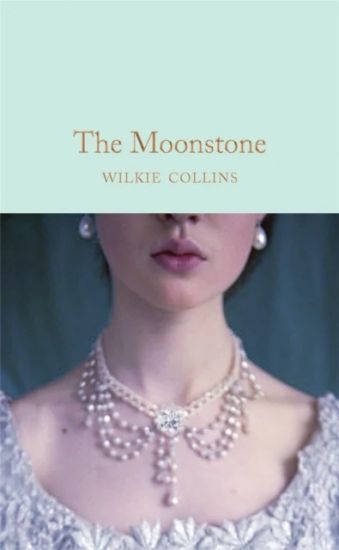
One of the great Victorian novels, The Moonstone has engrossed, entertained and enraptured readers since its first publication in 1868. This edition features an introduction by the renowned historian, journalist and author, Judith Flanders. Part of the Macmillan Collector’s Library; a series of stunning, clothbound, pocket-sized classics with gold foiled edges and ribbon markers. These beautiful books make perfect gifts or a treat for any book lover. Lady Verinder’s uncle gives her the Moonstone – a magnificent diamond as large as an egg – for her eighteenth birthday, but it is not quite the generous gift it first seems. For he obtained it through bloody and nefarious means in India, and legend says the diamond’s guardians will stop at nothing to get it back. When the Moonstone is stolen, an innocent man is accused of the crime and from this simple beginning, Wilkie Collins creates a stunning, complex narrative of dark mystery, suspense and atmosphere – and one of the very first detective stories ever written.

No Thoroughfare
Charles Dickens; Wilkie Collins
Createspace Independent Publishing Platform
2018
nidottu

William Holman Hunt OM (2 April 1827 - 7 September 1910) was an English painter and one of the founders of the Pre-Raphaelite Brotherhood. His paintings were notable for their great attention to detail, vivid color, and elaborate symbolism. These features were influenced by the writings of John Ruskin and Thomas Carlyle, according to whom the world itself should be read as a system of visual signs. For Hunt it was the duty of the artist to reveal the correspondence between sign and fact. Of all the members of the Pre-Raphaelite Brotherhood, Hunt remained most true to their ideals throughout his career. He was always keen to maximize the popular appeal and public visibility of his works. EARLY LIFECollins was born at 11 New Cavendish Street, Marylebone, London, the son of a well-known Royal Academician landscape painter, William Collins and his wife, Harriet Geddes. Named after his father, he swiftly became known by his middle name, which honoured his godfather, David Wilkie. The family moved to Pond Street, Hampstead, in 1826. In 1828 Collins's brother Charles Allston Collins was born. Between 1829 and 1830, the Collins family moved twice, first to Hampstead Square and then to Porchester Terrace, Bayswater. Wilkie and Charles received their early education from their mother at home. The Collins family were deeply religious, and Collins's mother enforced strict church attendance on her sons, which Wilkie disliked. In 1835, Collins began attending school at the Maida Vale academy. From 1836 to 1838, he lived with his parents in Italy and France, which made a great impression on him. He learned Italian while the family was in Italy and began learning French, in which he would eventually become fluent. From 1838 to 1840, he attended the Reverend Cole's private boarding school in Highbury, where he was bullied by a boy who would force Collins to tell him a story before allowing him to go to sleep. "It was this brute who first awakened in me, his poor little victim, a power of which but for him I might never have been aware.... When I left school I continued story telling for my own pleasure," Collins later said. In 1840 the family moved to 85 Oxford Terrace, Bayswater. In late 1840, he left school and was apprenticed as a clerk to the firm of tea merchants Antrobus & Co, owned by a friend of Wilkie's father. He disliked his clerical work but remained employed by the company for more than five years. Collins's first story The Last Stage Coachman, was published in the Illuminated Magazine in August 1843. In 1844 he travelled to Paris with Charles Ward. That same year he wrote his first novel, Iolani, or Tahiti as It Was; a Romance, which was submitted to Chapman and Hall but rejected in 1845. The novel remained unpublished during his lifetime. Collins said of it: "My youthful imagination ran riot among the noble savages, in scenes which caused the respectable British publisher to declare that it was impossible to put his name on the title page of such a novel." It was during the writing of this novel that Collins's father first learned that his assumptions that Wilkie would follow him in becoming a painter were mistaken. William Collins had intended Wilkie for a clergyman and was disappointed in his son's lack of interest. In 1846 he instead entered Lincoln's Inn to study law, on the initiative of his father, who wanted him to have a steady income. Wilkie showed only a slight interest in law and spent most of his time with friends and on working on a second novel, Antonina, or the Fall of Rome. After his father's death in 1847, Collins produced his first published book, Memoirs of the Life of William Collins, Esq., R. A., published in 1848. The family moved to 38 Blandford Square soon afterwards, where they used their drawing room for amateur theatricals. In 1849, Collins exhibited a painting, "The Smugglers' Retreat," at the Royal Academy summer exhibition. Antonina was published by Richard Bentley in February 1850.

Armadale (1866) by Wilkie Collins is a 19th-century semi-epistolary novel. Some chapters consist of letters between the various characters, while other chapters record the events as the characters perceive them. The novel has a convoluted plot about two distant cousins both named Allan Armadale. The father of one had murdered the father of the other (the two fathers are also named Allan Armadale). The story starts with a deathbed confession by the murderer in the form of a letter to be given to his baby son when he grows up. Many years are skipped over. The son, mistreated at home, runs away from his mother and stepfather, and takes up a wandering life under the assumed name of Ozias Midwinter. He becomes a companion to the other Allan Armadale, who throughout the novel never discovers the relationship. But Ozias is constantly haunted by feeling that he might harm Allan, first after he reads the letter left for him, and then again after they spend the night on a shipwreck off the Isle of Man--the ship turning out to be the same on which the old murder took place (the murderer locked his victim in a cabin as the boat filled with water). On the boat, Allan has a mysterious dream involving three characters. This dream fills Ozias with foreboding, its three scenes becoming fulfilled in the course of the novel. We are delighted to publish this classic book as part of our extensive Classic Library collection. Many of the books in our collection have been out of print for decades, and therefore have not been accessible to the general public. The aim of our publishing program is to facilitate rapid access to this vast reservoir of literature, and our view is that this is a significant literary work, which deserves to be brought back into print after many decades. The contents of the vast majority of titles in the Classic Library have been scanned from the original works. To ensure a high quality product, each title has been meticulously hand curated by our staff. Our philosophy has been guided by a desire to provide the reader with a book that is as close as possible to ownership of the original work. We hope that you will enjoy this wonderful classic work, and that for you it becomes an enriching experience.
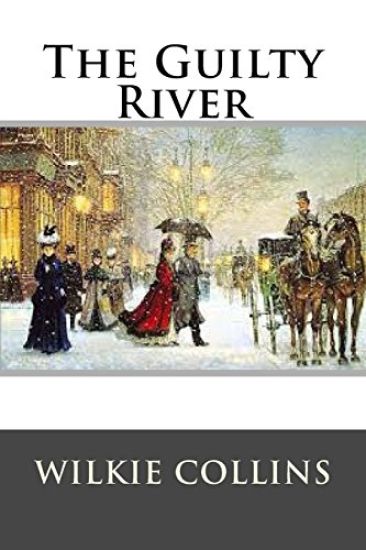
Written late in Collins's career, it incorporates two of the themes often featured in his work: the psychological effects of physical handicap, in this case deafness, and the love of a middle-class man for an intelligent and independent woman from a lower social stratum. Collins began writing in September and worked twelve hours a day to enable the story to be published on 15 November 1886. Plot summary Enter Gerard Roylake, returning from Germany after his father dies, for his inheritance at Trimley Deen awaits. Whilst on an evening stroll he meets a childhood friend, Cristel Toller, and then their strange resident called The Lodger... Well of course Gerard likes Cristel, the Lodger is jealous, and soon a bizarre chain of events occur...
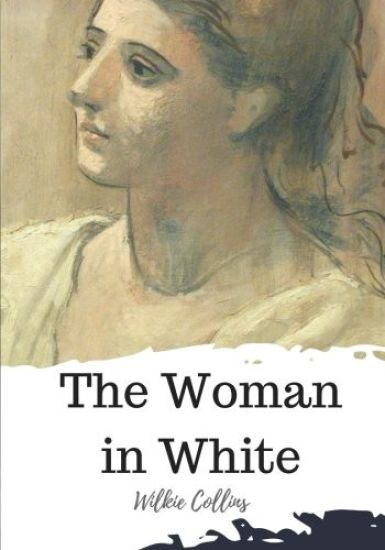
The Woman in White is credited with being the first of the sensation novels, and one of the finest examples of the genre. A young woman's husband defrauds her of her fortune, her identity and eventually her sanity. She is saved by her sister and a loyal man who loves her, and her two rescuers attempt to expose her husband. They meet a woman dressed all in white whose fate seems curiously intertwined with that of the young woman. In the tradition of the sensation novel, the story contravenes boundaries of class, identity and the private and public spheres.

When Rachel Verinder turns eighteen she inherits a large and spectacular diamond known as The Moonstone from an uncle who had served in the British Army in India. Unaware of the importance of the diamond in Hindu religion, Rachel wears her new prize on her gown at her birthday celebration. But when Indian performers spot the diamond, Rachel and her cousin Franklin, along with many others, are pulled into a complex web of occurrences all stemming from the precious jewel.

The Law and the Lady: Special Edition
Wilkie Collins
Createspace Independent Publishing Platform
2018
nidottu
Valeria Woodville's first act as a married woman is to sign her name in the marriage register incorrectly, and this slip is followed by the gradual disclosure of a series of secrets about her husband's earlier life, each of which leads on to another set of questions and enigmas. Her discoveries prompt her to defy her husband's authority, to take the law into into a labyrinthine maze of false clues and deceptive identities, in which the exploration of the tangled workings of the mind becomes linked to an investigation into the masquerades of femininity. Probably the first full-length novel with a woman detective as its heroine, The Law and the Lady is a fascinating example of Collins's later fiction. First published in 1875, it employs many of the techniques used in The Moonstone, developing them in bizarre and unexpected ways, and in its Gothic and fantastic elements The Law and the Lady adds a significant dimension to the history of detective fiction. We are delighted to publish this classic book as part of our extensive Classic Library collection. Many of the books in our collection have been out of print for decades, and therefore have not been accessible to the general public. The aim of our publishing program is to facilitate rapid access to this vast reservoir of literature, and our view is that this is a significant literary work, which deserves to be brought back into print after many decades. The contents of the vast majority of titles in the Classic Library have been scanned from the original works. To ensure a high quality product, each title has been meticulously hand curated by our staff. Our philosophy has been guided by a desire to provide the reader with a book that is as close as possible to ownership of the original work. We hope that you will enjoy this wonderful classic work, and that for you it becomes an enriching experience.
Der Mondstein gilt als wegweisendes Werk f r die Kriminalliteratur. Der Tagebuch- und Briefroman erz hlt die komplexe Geschichte um den Diebstahl und das Wiederauffinden eines indischen Diamanten im England der Kolonialzeit und setzt sich dabei kritisch mit sozialen und politischen Fragen auseinander. Wilkie Collins (1824-1889) war ein britischer Schriftsteller und Verfasser der ersten Mystery Thriller.
Nicht aus noch ein (Krimi-Klassiker)
Charles Dickens; Wilkie Collins; Julie Hallervorden
E-Artnow
2018
pokkari

Die Frau in Wei ist ein Roman von Wilkie Collins, der 1860 erschien. Das Buch gilt als das erste dem Genre des typischen englischen "Mystery Novel" zugeh rige Werk. Zur Inhalt: Der Kunstlehrer Walter Hartright soll die beiden Halbschwestern Marian Halcombe und Laura Fairlie, die in Limmeridge House in Cumberland wohnen, im Zeichnen unterrichten. Am Abend vor seiner Abreise nach Cumberland verabschiedet sich Hartright von seiner Familie und macht sich erst nach Mitternacht auf den Heimweg. Vor London wird er von einer ver ngstigten Frau in Wei angesprochen, die er in die Innenstadt begleitet und die ihn dort verl sst, ohne ihm ihren Namen verraten zu haben. Allerdings erw hnt sie, dass sie in ihrer Kindheit in Limmeridge House war. Nach ihrem Verschwinden h rt er ein Gespr ch, das ihn vermuten l sst, die Frau sei aus einem Irrenhaus geflohen....
The Woman in White: Large Print: First and Second Epochs: Large Dyslexia-Friendly Print
Wilkie Collins
Createspace Independent Publishing Platform
2018
nidottu
Told from several points of view, The Woman in White is considered an early example of the Mystery Novel and even one of the first detective-type stories. This edition is printed in a Large Dyslexia-Friendly font making it necessary to split the novel into two books. This book contains the first and second epochs. The third epoch is available separately.
The main story begins in 1875. Helena and Eunice are sisters brought up by their father, the Reverend Abel Gracedieu. He has deliberately kept them in ignorance of their true ages because the elder daughter was adopted in 1858, after her natural mother was executed for the brutal murder of her husband. The story's main narrator is the prison governor who always feared the adoption would end badly because of the taint of inherited evil. The household is joined by the minister's impoverished cousin, Selina Jillgall, to whom Helena takes an immediate dislike. The good-natured Eunice, however, becomes very friendly with Miss Jillgall whose only other ally is a Mrs Tegenbruggen. In 1858 she was Elizabeth Chance, lover of Eunice's murdered father. Mrs Tegenbruggen is determined to discover which daughter is the elder and make trouble. Eunice, visiting friends in London, meets young Philip Dunboyne. They fall in love but when Philip later sees Helena she captures his affections. Eunice finds out and to compose herself takes some of her ailing father's medicine. Under its influence she sees a ghostly apparition of her executed mother urging her to kill Helena in revenge. Helena incurs the disapproval of both the Reverend Gracedieu and Philip's father, brother-in-law to the executed woman. The distressed minister asks the governor for advice. Helena, to spite them both, provokes her father and, permanently unhinged, he tries to kill the governor with a razor. Philip tires of Helena and wishes to marry the now reluctant Eunice. Helena in revenge obtains digitalis with a forged prescription and attempts to poison Philip while pretending to nurse him. She is arrested and sent to prison. Philip fully recovers and finally persuades Eunice to marry him, but only after the governor, to thwart the mischievous Mrs Tegenbruggen, has revealed the truth: it was Eunice who was adopted after her mother's execution. Helena serves a two year sentence and emigrates to America where she prospers as the leader of a women's religious cult.
The Dead Alive, tambi n llamado John Jago's Ghost, es una novela escrita en 1874 por Wilkie Collins basada en el caso del asesinato de Boorn Brothers. Ill feelings exist between the Meadowcroft sons and John Jago, the foreman of the Meadowcroft estate. Then, John Jago disappears, and a body is found in a kiln. The Meadowcroft brothers stand accused of the crime, but are they guilty? The Dead Alive is a novel written by Wilkie Collins based on the true-life Boorn Brothers murder conviction case of 1819. Jesse and Stephen Boorn were sentenced to death for the murder of their brother-in-law, but were they wrongly convicted?