Kirjojen hintavertailu – 12 859 824 kirjaa ja 27 kauppaa
Kirjailija
Wilkie Collins
Kirjat ja teokset yhdessä paikassa: 2 039 kirjaa, julkaisuja vuosilta 1985–2026, suosituimpiin kuuluu Basil. Vertaile teosten hintoja ja tarkista saatavuus suomalaisista kirjakaupoista.
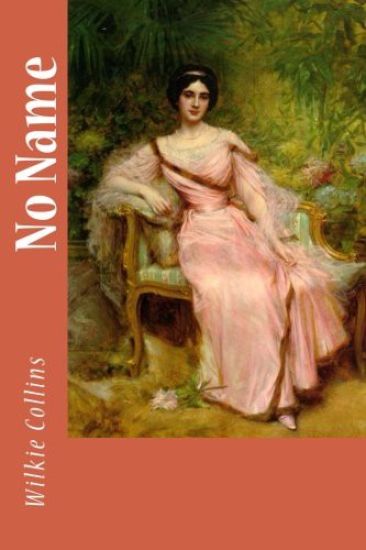
No Name (1862) by Wilkie Collins is a 19th-century novel revolving around the issue of illegitimacy. The story begins in 1846, at Combe-Raven in West Somersetshire, the country residence of the happy Vanstone family. When Andrew Vanstone is killed suddenly in an accident and his wife follows shortly thereafter, it is revealed that they were not married at the time of their daughters' births, making their daughters "Nobody's Children" in the eyes of English law and robbing them of their inheritance.
Collection of ten short stories set within the connecting narrative of 'The Queen of Hearts'. Dedicated to Emile Forgues. 'The Queen of Hearts' is the school nickname of Jessie Yelverton who arranges to stay for six weeks with her elderly guardian, Griffith, a retired lawyer. Griffith lives with his two brothers, Owen the clergyman and Morgan the doctor, in an isolated house in South Wales. Griffith's son, George, is in love with Jessie and the three brothers set out to delay her departure for ten days so that George can propose on his return from the Crimean war. In a kind of Arabian Nights story-telling, the three brothers draw on their professional experiences to entertain their young guest with a different story each evening: Brother Owen's Story of The Black Cottage Brother Griffith's Story of The Family Secret Brother Morgan's Story of The Dream Woman (The Ostler) Brother Griffith's Story of Mad Monkton Brother Morgan's Story of The Dead Hand Brother Griffith's Story of The Biter Bit Brother Owen's Story of The Parson's Scruple Brother Griffith's Story of A Plot in Private Life Brother Morgan's Story of Fauntleroy Brother Owen's Story of Anne Rodway
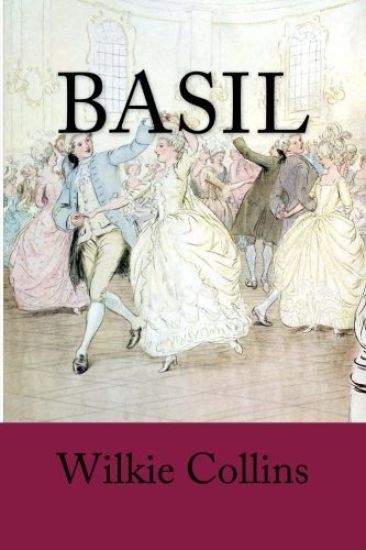
Basil was published in 1852 and dedicated to Charles Ward. It was Collins's second full-length work of fiction and first contemporary novel. In the introduction, he warns the reader that he has 'not hesitated to violate the conventionalities of sentimental fiction.' Basil is sometimes regarded as an early example of, if not the first, sensation novel. The author also declares his interest in drama, 'Believing that the Novel and the Play are twin-sisters in the family of Fiction.' Collins claimed that the main event of the story was founded on a fact within his own knowledge. This could be the secret marriage, based on that of Edward and Henrietta Ward. In Basil's secret and unconsummated marriage to the linen-draper's sexually precocious daughter, and the shocking betrayal, insanity, and death that follow, Wilkie Collins reveals the bustling, commercial London of the 19th century wreaking its vengeance on a still powerful aristocratic world.
Three years ago, her husband stood accused of murder -- and the verdict that came in from the jury was the Scottish Verdict, Not Proven. The jury had not evidence enough to convict him -- nor enough to comfortably exonerate him. Eustace could not bear the weight of her discovery; he fled to the continent, to live in anonymity. But Valeria knew her husband, and she loved him. She knew he was innocent, too, with the sort of intuition that guides the lucky flawlessly. And she set out to prove it to the world. * Valeria Woodville is one of English literature's earliest women detectives -- that makes the novel historically remarkable. But it's also a great fun mystery, full of plot and circumsance, and a rogue's gallery of odd Dickensian characters. The Law and the Lady is as remarkable a novel today as it was when it was first published in 1875.
IT has long been one of my pleasantest anticipations to look forward to the time when I might offer to you, my old and dear friend, some such acknowledgment of the value I place on your affection for me, and of my grateful sense of the many acts of kindness by which that affection has been proved, as I now gladly offer in this place. In dedicating the present work to you, I fulfil therefore a purpose which, for some time past, I have sincerely desired to achieve; and, more than that, I gain for myself the satisfaction of knowing that there is one page, at least, of my book, on which I shall always look with unalloyed pleasure-the page that bears your name. I have founded the main event out of which this story springs, on a fact within my own knowledge. In afterwards shaping the course of the narrative thus suggested, I have guided it, as often as I could, where I knew by my own experience, or by experience related to me by others, that it would touch on something real and true in its progress. My idea was, that the more of the Actual I could garner up as a text to speak from, the more certain I might feel of the genuineness and value of the Ideal which was sure to spring out of it.
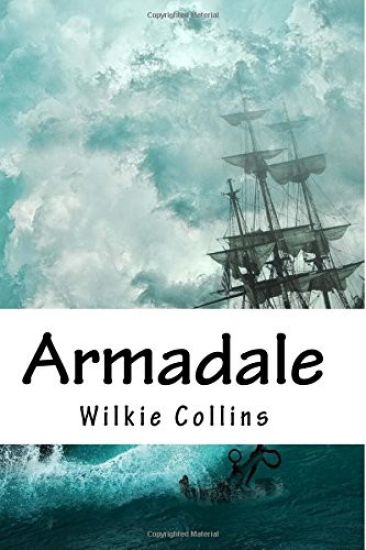
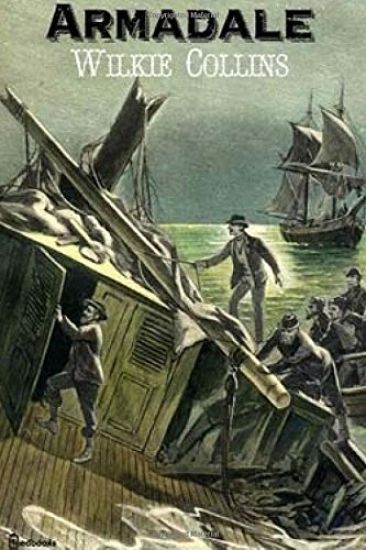
Armadale (1866) by Wilkie Collins is a 19th-century semi-epistolary novel. Some chapters consist of letters between the various characters, while other chapters record the events as the characters perceive them. The novel has a convoluted plot about two distant cousins both named Allan Armadale. The father of one had murdered the father of the other (the two fathers are also named Allan Armadale). The story starts with a deathbed confession by the murderer in the form of a letter to be given to his baby son when he grows up. Many years are skipped over. The son, mistreated at home, runs away from his mother and stepfather, and takes up a wandering life under the assumed name of Ozias Midwinter. He becomes a companion to the other Allan Armadale, who throughout the novel never discovers the relationship. But Ozias is constantly haunted by feeling that he might harm Allan, first after he reads the letter left for him, and then again after they spend the night on a shipwreck off the Isle of Man--the ship turning out to be the same on which the old murder took place (the murderer locked his victim in a cabin as the boat filled with water). On the boat, Allan has a mysterious dream involving three characters. This dream fills Ozias with foreboding, its three scenes becoming fulfilled in the course of the novel.
Excerpt from A Rogue's Life: From His Birth to His Marriage The following pages were written more than twenty years since, and were then published periodically in Household Words. About the Publisher Forgotten Books publishes hundreds of thousands of rare and classic books. Find more at www.forgottenbooks.com This book is a reproduction of an important historical work. Forgotten Books uses state-of-the-art technology to digitally reconstruct the work, preserving the original format whilst repairing imperfections present in the aged copy. In rare cases, an imperfection in the original, such as a blemish or missing page, may be replicated in our edition. We do, however, repair the vast majority of imperfections successfully; any imperfections that remain are intentionally left to preserve the state of such historical works.
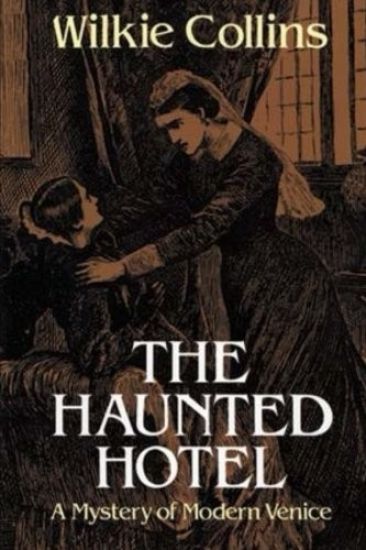
Wilkie Collins's ghost story was set in 1860 and published in book form with 'My Lady's Money'. It was dedicated to his friends Mr and Mrs Sebastian Schlesinger. Apart from supernatural elements, the story contains detective procedures and an insurance fraud relying on substituted identity that anticipates the later Blind Love (1890). The story is unusually horrific for Collins. A kind, good-hearted genteel young woman jilted, a suspicious death or two that only a few think could be murder, strange apparitions appearing in an hotel all combine to create a horrifying conundrum. Who was the culprit and will finding out finally put an end to the mystery?
Valeria Woodville's first act as a married woman is to sign her name in the marriage register incorrectly, and this slip is followed by the gradual disclosure of a series of secrets about her husband's earlier life, each of which leads on to another set of questions and enigmas. Her discoveries prompt her to defy her husband's authority, to take the law into into a labyrinthine maze of false clues and deceptive identities, in which the exploration of the tangled workings of the mind becomes linked to an investigation into the masquerades of femininity. Probably the first full-length novel with a woman detective as its heroine, The Law and the Lady is a fascinating example of Collins's later fiction. First published in 1875, it employs many of the techniques used in The Moonstone, developing them in bizarre and unexpected ways, and in its Gothic and fantastic elements The Law and the Lady adds a significant dimension to the history of detective fiction.
No Name (1862) by Wilkie Collins is a 19th-century novel revolving around the issue of illegitimacy. The story begins in 1846, at Combe-Raven in West Somersetshire, the country residence of the happy Vanstone family. When Andrew Vanstone is killed suddenly in an accident and his wife follows shortly thereafter, it is revealed that they were not married at the time of their daughters' births, making their daughters "Nobody's Children" in the eyes of English law and robbing them of their inheritance.
Excerpt from Hide and Seek: Or the Mystery of Mary Grice For some years the book was, in the technical phrase, out Of print.' Proposals reached me, at various times, for its republication; but I resolutely abstained from availing myself Of them for two reasons. In the first place, I was anxious to wait until Hide and Seek' could make its te-appearance on a footing of perfect equality with my other works. In the second place, I was resolved to keep it back until it might Obtain the advantage of a careful revisal, guided by the light of the author's later experience. The period for the accomplishment of both these Objects has now presented itself. 'hide and Seek' forms one among the series of my novels, which has begun with 'antonina, ' The Dead Secret, ' and 'the Woman in White and which will be continued with Basil and 'the Queen of Hearts.' My project of revisal has, at the same time. About the Publisher Forgotten Books publishes hundreds of thousands of rare and classic books. Find more at www.forgottenbooks.com This book is a reproduction of an important historical work. Forgotten Books uses state-of-the-art technology to digitally reconstruct the work, preserving the original format whilst repairing imperfections present in the aged copy. In rare cases, an imperfection in the original, such as a blemish or missing page, may be replicated in our edition. We do, however, repair the vast majority of imperfections successfully; any imperfections that remain are intentionally left to preserve the state of such historical works.
Excerpt from The Frozen Deep: And Other Tales About the Publisher Forgotten Books publishes hundreds of thousands of rare and classic books. Find more at www.forgottenbooks.com This book is a reproduction of an important historical work. Forgotten Books uses state-of-the-art technology to digitally reconstruct the work, preserving the original format whilst repairing imperfections present in the aged copy. In rare cases, an imperfection in the original, such as a blemish or missing page, may be replicated in our edition. We do, however, repair the vast majority of imperfections successfully; any imperfections that remain are intentionally left to preserve the state of such historical works.
Excerpt from The Evil Genius: A Domestic Story Of the seven remaining members, one was a little drowsy man who gave no trouble; one was an irritable invalid who served under protest. About the Publisher Forgotten Books publishes hundreds of thousands of rare and classic books. Find more at www.forgottenbooks.com This book is a reproduction of an important historical work. Forgotten Books uses state-of-the-art technology to digitally reconstruct the work, preserving the original format whilst repairing imperfections present in the aged copy. In rare cases, an imperfection in the original, such as a blemish or missing page, may be replicated in our edition. We do, however, repair the vast majority of imperfections successfully; any imperfections that remain are intentionally left to preserve the state of such historical works.
Ancient Rome, AD 408: Young Antonia had the misfortune to live in interesting times -- the days when mighty Rome was brought low by the terror of the Goths.
When a condemned woman asks the local Minister to take her daughter home, the childless man is touched and finds himself unable to refuse. Yet the prisoner is unrepentant of the murder of her husband. Will her vices be passed on to this seemingly sweet child?
The Woman in White is an epistolary novel written by Wilkie Collins in 1859, serialized in 1859-1860, and first published in book form in 1860. It is considered to be among the first mystery novels and is widely regarded as one of the first (and finest) in the genre of 'sensation novels'. As was customary at that time, The Woman in White was first published as a magazine serial. The first episode appeared on 29 November 1859, following Charles Dickens's own A Tale of Two Cities in Dickens's magazine All the Year Round in England, and Harper's Magazine in America. It caused an immediate sensation. Julian Symons (in his 1974 introduction to the Penguin edition) reports that "queues formed outside the offices to buy the next instalment. Bonnets, perfumes, waltzes and quadrilles were called by the book's title. Gladstone cancelled a theatre engagement to go on reading it. And Prince Albert sent a copy to Baron Stockmar."
Wilkie Collins's novel was published in 1876 and dedicated to Charles Reade. Collins explores the themes of 'destined spirits' and supernatural visions. He acknowledges taking the second idea from a case reported in Robert Dale Owen's Footfalls on the Boundary of another World. This describes how a ship's captain is convinced to change course after seeing an apparition and saves the passengers of a wrecked ship, including the person in the vision.
The story spans two generations of the Armadale families and the complex plot combines several of Collins's favourite themes, including the supernatural, identity, murder and detection. The novel has a convoluted plot about two distant cousins both named Allan Armadale. The father of one had murdered the father of the other (the two fathers are also named Allan Armadale). The story starts with a deathbed confession by the murderer in the form of a letter to be given to his baby son when he grows up. Many years are skipped over. The son, mistreated at home, runs away from his mother and stepfather, and takes up a wandering life under the assumed name of Ozias Midwinter.