Kirjojen hintavertailu – 12 859 829 kirjaa ja 27 kauppaa

Kirjailija

William James

Kirjat ja teokset yhdessä paikassa: 603 kirjaa, julkaisuja vuosilta 1896–2026, suosituimpiin kuuluu Pragmatism a New Name for Some Old Ways of Thinking. Vertaile teosten hintoja ja tarkista saatavuus suomalaisista kirjakaupoista.

603 kirjaa

Kirjojen julkaisuvuodet: 1896–2026.
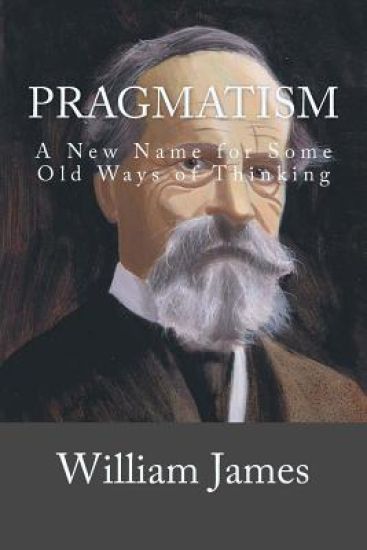
Pragmatism: A New Name for Some Old Ways of Thinking

Pragmatism: A New Name for Some Old Ways of Thinking

William James

Createspace Independent Publishing Platform
2018
nidottu
A profoundly influential figure in American psychology, William James (1842-1910) was also a philosopher of note, who used Charles S. Peirce's theories of pragmatism as a basis for his own conception of that influential philosophy. For James, this meant an emphasis on "radical empiricism" and the concept that the meaning of any idea - philosophical, political, social, or otherwise - has validity only in terms of its experiential and practical consequences. James propounded his theories of pragmatism in this book, one of the most important in American philosophy. In a sense, he wished to test competing systems of thought in the "marketplace of actual experience" to determine their validity, i.e. whether adopting a particular philosophical theory or way of looking at the world makes an actual difference in individual conduct or in how we perceive and react to the varieties of experience. In these pages, James not only makes a strong case for his own ideas, but mounts a powerful attack against the transcendental and rationalist tradition. For anyone interested in William James or the history of American philosophical thought, Pragmatism is an essential and thought provoking reference. In this handy, inexpensive edition, it will challenge and stimulate any thinking person.
Pragmatism

Pragmatism

William James

Bibliotech Press
2018
sidottu
Pragmatism was a philosophical tradition that originated in the United States around 1870. The most important of the 'classical pragmatists' were Charles Sanders Peirce (1839-1914), William James (1842-1910) and John Dewey (1859-1952). The influence of pragmatism declined during the first two thirds of the twentieth century, but it has undergone a revival since the 1970s with philosophers being increasingly willing to use the writings and ideas of the classical pragmatists, and also a number of thinkers, such as Richard Rorty, Hilary Putnam and Robert Brandom developing philosophical views that represent later stages of the pragmatist tradition. The core of pragmatism was the pragmatist maxim, a rule for clarifying the contents of hypotheses by tracing their 'practical consequences'. In the work of Peirce and James, the most influential application of the pragmatist maxim was to the concept of truth. But the pragmatists have also tended to share a distinctive epistemological outlook, a fallibilist anti-Cartesian approach to the norms that govern inquiry. For much of the twentieth century, pragmatism was largely in eclipse. Few philosophers were familiar with the works of classical pragmatists such as Charles Sanders Pierce and William James, and pragmatist ideas were not at the centre of debate. John Dewey, who had been a dominant philosophical figure in the 1920s, was no longer a central figure. Analytical philosophers and their students had a central role in philosophy. It was not until the 1970s that interest in the writings of the Pragmatists became widespread and pragmatist ideas were recognized as able to make a major contribution to philosophy.
Pragmatism

Pragmatism

William James

Bibliotech Press
2018
pokkari
Pragmatism was a philosophical tradition that originated in the United States around 1870. The most important of the 'classical pragmatists' were Charles Sanders Peirce (1839-1914), William James (1842-1910) and John Dewey (1859-1952). The influence of pragmatism declined during the first two thirds of the twentieth century, but it has undergone a revival since the 1970s with philosophers being increasingly willing to use the writings and ideas of the classical pragmatists, and also a number of thinkers, such as Richard Rorty, Hilary Putnam and Robert Brandom developing philosophical views that represent later stages of the pragmatist tradition. The core of pragmatism was the pragmatist maxim, a rule for clarifying the contents of hypotheses by tracing their 'practical consequences'. In the work of Peirce and James, the most influential application of the pragmatist maxim was to the concept of truth. But the pragmatists have also tended to share a distinctive epistemological outlook, a fallibilist anti-Cartesian approach to the norms that govern inquiry. For much of the twentieth century, pragmatism was largely in eclipse. Few philosophers were familiar with the works of classical pragmatists such as Charles Sanders Pierce and William James, and pragmatist ideas were not at the centre of debate. John Dewey, who had been a dominant philosophical figure in the 1920s, was no longer a central figure. Analytical philosophers and their students had a central role in philosophy. It was not until the 1970s that interest in the writings of the Pragmatists became widespread and pragmatist ideas were recognized as able to make a major contribution to philosophy
Varieties of Religious Experience, a Study in Human Nature

Varieties of Religious Experience, a Study in Human Nature

William James

Createspace Independent Publishing Platform
2018
nidottu
It is with no small amount of trepidation that I take my place behind this desk, and face this learned audience. To us Americans, the experience of receiving instruction from the living voice, as well as from the books, of European scholars, is very familiar. At my own University of Harvard, not a winter passes without its harvest, large or small, of lectures from Scottish, English, French, or German representatives of the science or literature of their respective countries whom we have either induced to cross the ocean to address us, or captured on the wing as they were visiting our land. It seems the natural thing for us to listen whilst the Europeans talk. The contrary habit, of talking whilst the Europeans listen, we have not yet acquired; and in him who first makes the adventure it begets a certain sense of apology being due for so presumptuous an act. Particularly must this be the case on a soil as sacred to the American imagination as that of Edinburgh. The glories of the philosophic chair of this university were deeply impressed on my imagination in boyhood. Professor Fraser's Essays in Philosophy, then just published, was the first philosophic book I ever looked into, and I well remember the awestruck feeling I received from the account of Sir William Hamilton's classroom therein contained. Hamilton's own lectures were the first philosophic writings I ever forced myself to study, and after that I was immersed in Dugald Stewart and Thomas Brown. Such juvenile emotions of reverence never get outgrown; and I confess that to find my humble self promoted from my native wilderness to be actually for the time an official here, and transmuted into a colleague of these illustrious names, carries with it a sense of dreamland quite as much as of reality.
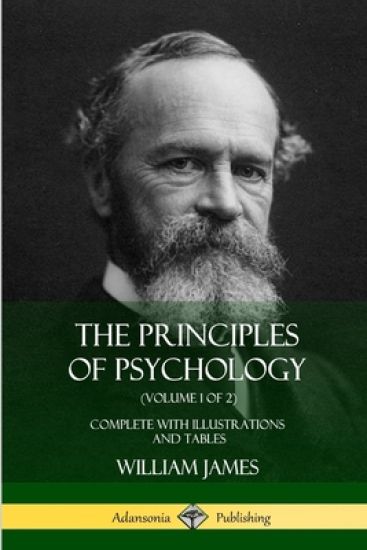
The Principles of Psychology (Volume 1 of 2)
A superbly thorough guide to psychology, William James' thesis successfully summarizes the tenets of the science in the early 20th century - this edition contains the vital notes and illustrations. Appearing in 1890, The Principles of Psychology was a landmark text which established psychology as a serious scientific discipline. William James' compiled a convincing, lengthy and broad thesis, devoting detail and vigorous analysis in every chapter. The text's comprehensiveness and superb presentation played a pivotal role in bringing the science of mental health closer toward the scholarly mainstream. The entire book is set out intuitively: there are two volumes, each of which has a certain number of chapters. While some chapters have sub-sections, James is careful not to make his textbook dry or convoluted in organisation.
The Principles of Psychology

The Principles of Psychology

William James

Lulu.com
2018
sidottu
The Principles of Psychology Volume 1, complete with William James' original notes, illustrations, tables and charts clarifying the theory described and arguments made. Appearing in 1890, The Principles of Psychology was a landmark text which established psychology as a serious scientific discipline. William James' compiled a convincing, lengthy and broad thesis, devoting detail and vigorous analysis in every chapter. The text's comprehensiveness and superb presentation played a pivotal role in bringing the science of mental health closer toward the scholarly mainstream. The entire book is set out intuitively: there are two volumes, each of which has a certain number of chapters. While some chapters have sub-sections, James is careful not to make his textbook dry or convoluted in organisation. Each chapter introduces, discusses and concludes on a particular subject - whether it be the role of psychology as an academic and medical discipline, or the various functions of the human brain.
The Principles of Psychology

The Principles of Psychology

William James

Lulu.com
2018
pokkari
The Principles of Psychology Volume 1, complete with William James' original notes, illustrations, tables and charts clarifying the theory described and arguments made. Appearing in 1890, The Principles of Psychology was a landmark text which established psychology as a serious scientific discipline. William James' compiled a convincing, lengthy and broad thesis, devoting detail and vigorous analysis in every chapter. The text's comprehensiveness and superb presentation played a pivotal role in bringing the science of mental health closer toward the scholarly mainstream. The entire book is set out intuitively: there are two volumes, each of which has a certain number of chapters. While some chapters have sub-sections, James is careful not to make his textbook dry or convoluted in organisation. Each chapter introduces, discusses and concludes on a particular subject - whether it be the role of psychology as an academic and medical discipline, or the various functions of the human brain.
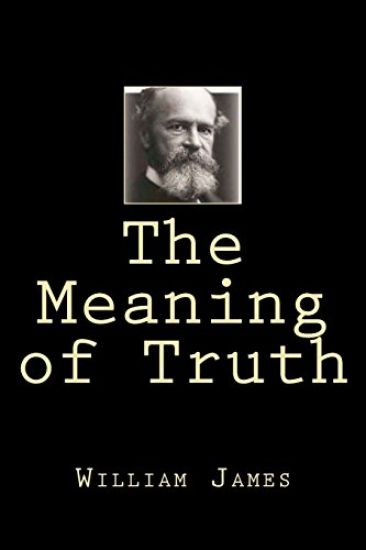
The Meaning of Truth

The Meaning of Truth

William James

Createspace Independent Publishing Platform
2018
nidottu
Preeminent American philosopher and educator John Dewey (1859-1952) rejected Hegelian idealism for the pragmatism of William James. In this collection of informal, highly readable essays, originally published between 1897 and 1909, Dewey articulates his now classic philosophical concepts of knowledge and truth and the nature of reality. Here Dewey introduces his scientific method and uses critical intelligence to reject the traditional ways of viewing philosophical discourse. Knowledge cannot be divorced from experience; it is gradually acquired through interaction with nature. Philosophy, therefore, has to be regarded as itself a method of knowledge and not as a repository of disembodied, pre-existing absolute truths.
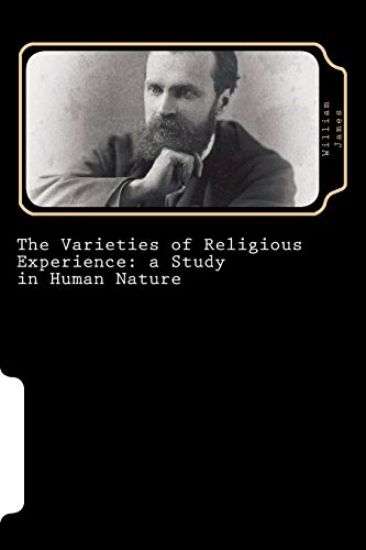
The Varieties of Religious Experience: a Study in Human Nature

The Varieties of Religious Experience: a Study in Human Nature

William James

Createspace Independent Publishing Platform
2018
nidottu
The Varieties of Religious Experience: A Study in Human Nature is a book by the Harvard psychologist and philosopher William James comprising 20 lectures given at the University of Edinburgh in Scotland. These lectures concerned the nature of religion and the neglect of science, in James' view, in the academic study of religion. Soon after its publication, the book found its way into the canon of psychology and philosophy, and has remained in print for over a century.
The Varieties of Religious Experience
William James' treatise on religious experiences attempts to cogently explain aspects of psychology related to mystical experiences. James was most interested in the direct experiences of people, which they and sometimes observers would afterwards claim as religious or spiritual in tone. Whether the experience was deemed a mystical connection, or as a sign of prophecy or other religious significance, and how these could translate into future significance in faiths - such as the designation of saintliness - are topics which concern the author. The book itself is divided into twenty different lectures, each of which focuses upon religion and its relation to psychology. James makes a distinction between religion conceived by a healthy mind, and religious experiences which denote some form of psychic malady or illness, a phenomenon James refers to as 'the sick soul'.
The Varieties of Religious Experience

The Varieties of Religious Experience

William James

Lulu.com
2018
pokkari

Halvin toimitettuna 27,30 €

William James' treatise on religious experiences attempts to cogently explain aspects of psychology related to mystical experiences. James was most interested in the direct experiences of people, which they and sometimes observers would afterwards claim as religious or spiritual in tone. Whether the experience was deemed a mystical connection, or as a sign of prophecy or other religious significance, and how these could translate into future significance in faiths - such as the designation of saintliness - are topics which concern the author. The book itself is divided into twenty different lectures, each of which focuses upon religion and its relation to psychology. James makes a distinction between religion conceived by a healthy mind, and religious experiences which denote some form of psychic malady or illness, a phenomenon James refers to as 'the sick soul'.
The Varieties of Religious Experience: A Study in Human Nature

The Varieties of Religious Experience: A Study in Human Nature

William James

Createspace Independent Publishing Platform
2018
nidottu
The Varieties of Religious Experience: A Study in Human Nature by William James. The Varieties of Religious Experience: A Study in Human Nature is a book by Harvard University psychologist and philosopher William James. It comprises his edited Gifford Lectures on natural theology, which were delivered at the University of Edinburgh in Scotland in 1901 and 1902. The lectures concerned the nature of religion and the neglect of science in the academic study of religion. This book would never have been written had I not been honored with an appointment as Gifford Lecturer on Natural Religion at the University of Edinburgh. In casting about me for subjects of the two courses of ten lectures each for which I thus became responsible, it seemed to me that the first course might well be a descriptive one on "Man's Religious Appetites," and the second a metaphysical one on "Their Satisfaction through Philosophy." But the unexpected growth of the psychological matter as I came to write it out has resulted in the second subject being postponed entirely, and the description of man's religious constitution now fills the twenty lectures. In Lecture XX I have suggested rather than stated my own philosophic conclusions. I hope to be able at some later day to express them in more explicit form.
Pragmatism

Pragmatism

William James

Createspace Independent Publishing Platform
2018
nidottu
Pragmatism Willliam James This book is a reproduction of an important historical work. Forgotten Books uses state-of-the-art technology to digitally reconstruct the work, preserving the original format whilst repairing imperfections present in the aged copy. In rare cases, an imperfection in the original, such as a blemish or missing page, may be replicated in our edition. We do, however, repair the vast majority of imperfections successfully; any imperfections that remain are intentionally left to preserve the state of such historical works. We are delighted to publish this classic book as part of our extensive Classic Library collection. Many of the books in our collection have been out of print for decades, and therefore have not been accessible to the general public. The aim of our publishing program is to facilitate rapid access to this vast reservoir of literature, and our view is that this is a significant literary work, which deserves to be brought back into print after many decades. The contents of the vast majority of titles in the Classic Library have been scanned from the original works. To ensure a high quality product, each title has been meticulously hand curated by our staff. Our philosophy has been guided by a desire to provide the reader with a book that is as close as possible to ownership of the original work. We hope that you will enjoy this wonderful classic work, and that for you it becomes an enriching experience.
Pragmatism: A New Name for Some Old Ways of Thinking

Pragmatism: A New Name for Some Old Ways of Thinking

William James

Createspace Independent Publishing Platform
2018
nidottu
Pragmatism: A New Name for Some Old Ways of Thinking by William James. William James (January 11, 1842 - August 26, 1910) was an American philosopher and psychologist, and the first educator to offer a psychology course in the United States. James was one of the leading thinkers of the late nineteenth century and is believed by many to be one of the most influential philosophers the United States has ever produced, while others have labeled him the "Father of American psychology". The lectures that follow were delivered at the Lowell Institute in Boston in November and December, 1906, and in January, 1907, at Columbia University, in New York. They are printed as delivered, without developments or notes. The pragmatic movement, so-called-I do not like the name, but apparently it is too late to change it-seems to have rather suddenly precipitated itself out of the air. A number of tendencies that have always existed in philosophy have all at once become conscious of themselves collectively, and of their combined mission; and this has occurred in so many countries, and from so many different points of view, that much unconcerted statement has resulted. I have sought to unify the picture as it presents itself to my own eyes, dealing in broad strokes, and avoiding minute controversy. Much futile controversy might have been avoided, I believe, if our critics had been willing to wait until we got our message fairly out.
A Pluralistic Universe

A Pluralistic Universe

William James

Createspace Independent Publishing Platform
2018
nidottu
A Pluralistic Universe William James A Pluralistic Universe by William James, originally published in 1909, was a series of eight lectures originally given at Oxford, and also at Manchester College, on the "Present Situation in Philosophy". James goes through critical discussions of Josiah Royce's idealism, Hegel's "vicious intellectualism", and moving on to philosophers that he admires. Gustaf Fechner and Henri Bergson. We are delighted to publish this classic book as part of our extensive Classic Library collection. Many of the books in our collection have been out of print for decades, and therefore have not been accessible to the general public. The aim of our publishing program is to facilitate rapid access to this vast reservoir of literature, and our view is that this is a significant literary work, which deserves to be brought back into print after many decades. The contents of the vast majority of titles in the Classic Library have been scanned from the original works. To ensure a high quality product, each title has been meticulously hand curated by our staff. Our philosophy has been guided by a desire to provide the reader with a book that is as close as possible to ownership of the original work. We hope that you will enjoy this wonderful classic work, and that for you it becomes an enriching experience.