Kirjojen hintavertailu – 12 903 727 kirjaa ja 27 kauppaa

Kirjailija

Charles River

Kirjat ja teokset yhdessä paikassa: 4 673 kirjaa, julkaisuja vuosilta 2013–2022, suosituimpiin kuuluu William Powell and Myrna Loy: The Lives and Careers of One of Classical Hollywood's Most Iconic Duos. Vertaile teosten hintoja ja tarkista saatavuus suomalaisista kirjakaupoista.

4 673 kirjaa

Kirjojen julkaisuvuodet: 2013–2022.

Native American Tribes: The History and Culture of the Anasazi (Ancient Pueblo)

Native American Tribes: The History and Culture of the Anasazi (Ancient Pueblo)

Charles River

Createspace Independent Publishing Platform
2018
nidottu
*Includes pictures of Anasazi art, artifacts, and ruins. *Explains the origins, history, religion, and social structure of the Anasazi *Explains the relationship between the Anasazi and the Zuni *Includes a Bibliography for further reading. From the "Trail of Tears" to Wounded Knee and Little Bighorn, the narrative of American history is incomplete without the inclusion of the Native Americans that lived on the continent before European settlers arrived in the 16th and 17th centuries. Since the first contact between natives and settlers, tribes like the Sioux, Cherokee, and Navajo have both fascinated and perplexed outsiders with their history, language, and culture. In Charles River Editors' Native American Tribes series, readers can get caught up to speed on the history and culture of North America's most famous native tribes in the time it takes to finish a commute, while learning interesting facts long forgotten or never known. When European settlers and later American settlers came into contact with Native American tribes on the continent, they were frequently unable to differentiate between the subcultures within individual tribes, leading to all kinds of misunderstandings. When the Spanish came into contact with different tribes in the Southwest, they categorized several of them as Pueblo. Thus, while most Americans have heard of the Pueblo and Navajo, many remain unfamiliar with distinctions within the tribes. The Pueblo fascinated those who came across their settlements, especially those located in desert regions and the sides of cliffs that involved the use of adobe mud, stone, carving homes out of cliffs. One such settlement, Oraibi, was created around 1100 A. D. and remains one of the oldest continuously inhabited settlements in North America. The Spanish were so intrigued by the structure of the communities that they gave the natives the name Pueblo, a term they used to measure certain sizes for their own settlements. Today's Puebloan tribes are descended from tribes known as the "Ancestral Puebloan People", one of which was the Anasazi. The name Anasazi came from their enemies; it is a Navajo word that means "enemy ancestor". While that name understandably continues to offend the descendants of the Anasazi, it also underscores that there is still a lot of uncertainty regarding the history of the Anasazi. It is still unclear what the Anasazi called themselves, and though they resided near the "Four Corners" area of Utah, Arizona, Colorado and New Mexico for more than 700 years, they mysteriously abandoned their settlements shortly after they truly began to flourish around 1050-1150 A. D. Despite the unknowns, it is likely that all of the Puebloan tribes today are at least partially descended from the Anasazi, particularly the Zuni. Through ongoing research and Zuni oral traditions, archaeologists and anthropologists continue to try to piece together the history and culture of the Anasazi, even as their ruins continue to fascinate tourists nearly a millennium after they were constructed. Native American Tribes: The History and Culture of the Anasazi comprehensively covers the facts, mysteries, and theories surrounding the ancient Native Americans who built the elaborate and impressive settlements in the cliffs and deserts of the Southwest. Along with pictures and a bibliography, you will learn about the Ancient Pueblo like you never have before, in no time at all.
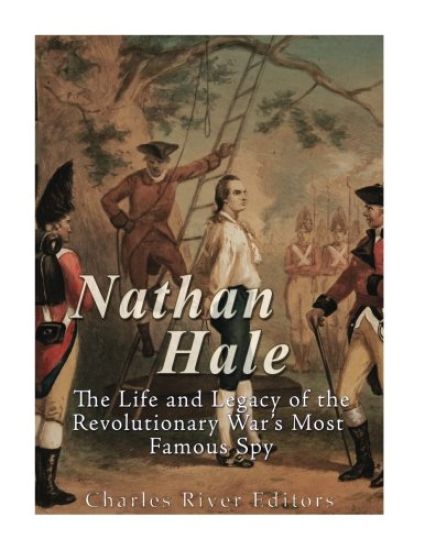
Nathan Hale: The Life and Legacy of the Revolutionary War's Most Famous Spy

Nathan Hale: The Life and Legacy of the Revolutionary War's Most Famous Spy

Charles River

Createspace Independent Publishing Platform
2018
nidottu
*Includes pictures *Includes some of Hale's letters during the war *Includes accounts about Hale's final words *Includes online resources and a bibliography for further reading "I wish to be useful, and every kind of service necessary to the public good becomes honorable by being necessary. If the exigencies of my country demand a peculiar service, its claim to perform that service are imperious." - Nathan Hale's statement to Captain William Hull prior to his spying mission, as quoted in Captain Nathan Hale (1755 - 1776) by Rev. Edward Everett Hale For over 230 years, American schoolchildren have been taught about the story of Nathan Hale, or at least a legend of it, and in the process the myth of Hale and his apocryphal final words have immortalized the young man as America's most famous spy, despite his failed mission. After the siege of Boston forced the British to evacuate that city in March 1776, Continental Army commander George Washington suspected that the British would move by sea to New York City, the next logical target in an attempt to end a colonial insurrection. He thus rushed his army south to defend the city. Washington guessed correctly, but it would ultimately be to no avail. Unlike Boston, New York City's terrain featured few defensible positions; the city lacked a high point from which to launch a siege, as the peninsula of Boston was fortunate to have. In the summer of 1776, the British conducted the largest amphibious expedition in North America's history at the time, landing over 20,000 troops on Long Island. Washington's army attempted to fight, but Washington was badly outmaneuvered, and his army was nearly cut off from escape. To escape from New York, Washington led a tactical retreat across the East River and off Long Island in the middle of the night without British knowledge, but the withdrawal across New York City was enormously disorderly, with many of Washington's troops so scared that they deserted. Others were sick as a result of the dysentery and smallpox plaguing the Continental Army in New York. Washington's army would ultimately be pushed west all the way through New Jersey the rest of the year, but shortly before the colonists had to leave New York, Washington tried to implement intelligence operations around New York City, and one of the early spies was young Nathan Hale. A young officer in the Continental Army from Connecticut, Hale was asked by Washington to go behind British lines on Long Island and bring back information on what the British were up to there. Unfortunately, Hale was quickly identified by Loyalists, found with incriminating papers on his body, and executed the morning after he was caught. The 21 year old Hale's name may have very well been lost to history but for propaganda efforts to make him a martyr to the cause, most notably the reports of his last words about regretting that he had but one life to lose for his country. If Hale said anything like the quote he's best known for, he was likely reciting an exchange in the play Cato by Joseph Addison or playing off of it, but regardless of what he actually said, the story and the legend of Hale aimed to cover up the fact that his mission was an abject failure, due both to bad luck and ineptitude. At the same time, however, Hale's death convinced Washington of the need to develop a more properly-prepared body of secret service agents that could bring him the information he needed to make good military decisions. Thus, if anything, Hale's lasting legacy, at least from a concrete perspective, lay in Washington's formation of the Culper Ring after his execution. Without question, the relatively little-known clandestine actions of the patriotic men and women who participated in the Culper Ring contributed to the eventual victory in the long struggle for American independence. This book profiles the life of the young spy and his lasting legacy.
Nathan Hale and John André: The Lives and Deaths of the Revolutionary War's Most Famous Spies
*Includes pictures*Includes quotes by both men about the war*Includes online resources and a bibliography for further readingFor over 230 years, American schoolchildren have been taught about the story of Nathan Hale, or at least a legend of it, and in the process the myth of Hale and his possibly apocryphal final words have immortalized the young man as America's most famous spy, despite his failed mission. After the siege of Boston forced the British to evacuate that city in March 1776, Continental Army commander George Washington suspected that the British would move by sea to New York City, the next logical target in an attempt to end a colonial insurrection. He thus rushed his army south to defend the city, but Washington's army would ultimately be pushed west all the way through New Jersey the rest of the year. However, shortly before the colonists had to leave New York, Washington tried to implement intelligence operations around New York City, and one of the early spies was young Nathan Hale. A young officer in the Continental Army from Connecticut, Hale was asked by Washington to go behind British lines on Long Island and bring back information on what the British were up to there. Unfortunately, Hale was quickly identified by Loyalists, found with incriminating papers on his body, and executed the morning after he was caught. The 21 year old Hale's name may have very well been lost to history but for propaganda efforts to make him a martyr to the cause, most notably the reports of his last words about regretting that he had but one life to lose for his country. If Hale said anything like the quote he's best known for, he was likely reciting an exchange in the play Cato by Joseph Addison or playing off of it, but regardless of what he actually said, the story and the legend of Hale aimed to cover up the fact that his mission was an abject failure, due both to bad luck and ineptitude. No one who knew John Andr personally would ever have dreamed he would one day hang. He was raised by devoutly religious parents and was a loyal Englishman and solid officer in His Majesty's army. He had, it was rumored, an unfortunate romantic liaison that ended with a cancelled engagement, and during the early days of the American Revolutionary War, he had served his king in Canada before being captured and held as a prisoner of war. Once he was returned to his command, he was promoted in recognition of his strength of character under duress. His reputation was so sterling, in fact, that he was given a very sensitive role, that of gathering intelligence for the British Army as they tried to put down the rebellious American colonies. This assignment, and an alleged relationship to a beautiful young Loyalist in Philadelphia named Peggy Shippen, would lead him to one of the colonists' biggest war heroes, Benedict Arnold. Arnold had arguably been more instrumental for the colonies' successes from 1775-1778 than anyone else, even perhaps George Washington, but a confluence of events left him willing to betray the cause he had fought and bled so hard for after he became military commander of Philadelphia. In one of the most controversial and scrutinized episodes of the war, Arnold married Peggy Shippen despite her Loyalist sympathies, and while Arnold was willing to break the first rule, Andr broke the second rule by using Shippen to pass messages, possibly even playing on her own affections for him. Ultimately, it was in breaking the third rule of espionage that Andr made his fatal mistake, for when he met near West Point to facilitate Arnold's betrayal, he changed his clothes one fateful night in September 1780, he changed his destiny and earned a place in the history books at the cost of his life. He was tried and convicted of being a spy, and he was sentenced to hang by men who had more respect for him than they did for their turncoat countryman.
Mysterious Mexico: A History of Ghosts, Legends, and Perplexing Places across the Mexican States
*Includes pictures *Includes contemporary accounts *Includes online resources and a bibliography for further reading At a time in antiquity when most of Europe was covered with forests and wandering tribes, Mexico had already developed complex civilizations, beginning with the Olmecs and followed by the Maya, a civilization with advanced knowledge of medicine, engineering and astronomy. The Maya calculated the precession of the equinoxes and cycles of the Pleiades, on which they based their year, since they believed they had come from that constellation. The last, and perhaps most famous, great civilization before the arrival of the Europeans was the Aztecs. With so many ancient peoples whose influence, beliefs, and modifications to the landscape extend to the present day, Mexico is fertile land for legends, ghosts, surprising places, and mysteries. A belief in communing with things that lie beyond (stars, constellations, and life after death), mysticism, and apparitions are intimately woven into the colorful fabric of the Mexican nation, to the point that a metaphysical event (the apparition of the Virgin of Guadalupe) is considered by many as one of the founding elements of the nation. Our Lady of Guadalupe has an eerie counterpart, another woman who appeared around the same time: La Llorona, the weeping woman. If the content of the former vision is loving and conciliatory, the latter is full of regret and agony. La Llorona is just the first of a long procession of even less benign ghosts. For many years, human sacrifices and endless cruelties were committed in present-day Mexico City. People across the country believe that a legion of ghostly voices-if one believes in ghosts as a byproduct of repetition, remembrance and re-experience of tragic memories-can still heard in the cities and valleys of Mexico. After all, archaeologists have found evidence of chilling human sacrifices in the Mexican capital, proof that the ancient inhabitants honored their gods by decapitating the bodies of their prisoners and putting their bleeding heads on a stick. Several sites have been found, and the largest one was unearthed in ancient Tenochtitlan (now Mexico City), which may contain up to 60,000 human skulls. Mexico s territory was relatively unknown until the beginning of the 20th century, even for its own people, as many of its ruins and natural wonders were out of reach or buried under thick jungles. It wasn t until the development of the railroad at the turn of the 20th century that this vast country (the world's 14th largest) began to reveal its secrets. Once Mexico was pacified, the interest in Mayan and Aztec ruins and the strange stories that circulated in the villages brought dozens of archaeologists, anthropologists, photographers and historians from all over the world. From that point, the nation was able to show its charms and mysteries to its own people and to strangers. The south kept memories of a race that talked to the stars, the center possessed ghosts filled with regret and resentment, and the north teemed with places that only a science fiction writer could imagine. The result is a collection of the most surprising, mysterious, and terrifying aspects of Mexico, including magical places, puzzles of history, and strange beings and apparitions. Mexico is a mystical country where everyday people have learned to live with their ghosts, old and new. As Octavio Paz, the Literature Nobel Prize winner, once said, "One of the most remarkable traits of the Mexican character is its willingness to contemplate horror-the Mexican is even familiar and complacent in his dealings with it." Mysterious Mexico: A History of Ghosts, Legends, and Perplexing Places across the Mexican States covers the mysteries and oddities of the region, with a sampling of strange, unexplained, and just plain odd stories from Mexico that have fascinated people in and around the area for centuries.
Mysteries of the South: Ghosts, Legends, and Unexplained Phenomena in Dixie

Mysteries of the South: Ghosts, Legends, and Unexplained Phenomena in Dixie

Charles River

Createspace Independent Publishing Platform
2018
nidottu
*Includes pictures *Profiles mysteries like the Lost Colony of Roanoke, ghosts like the Bell Witch of Tennessee, and more *Includes online resources and a bibliography for further reading *Includes a table of contents The American South has given birth to many of the nation's great stories and legends. From the earliest Colonial times, it's been a place of mystery, replete with disappearing colonies and strange apparitions in the woods, but the South's long and proud history has always had a darker, and stranger, side to it. One of America's most famous mysteries was its first. Despite the fact he had left over 100 colonists at the island of Roanoke in 1587, John White returned to literally nothing, with all traces of the settlement gone and no evidence of fighting or anything else that might have explained the disappearance of the inhabitants. White found the word "Croatoan" carved on a tree nearby, which he figured might mean the colonists moved to a nearby island, but he was unable to conduct a search expedition there. The Spanish also searched for the colony in hopes of wiping it out themselves, but none of the Europeans could find Roanoke's colonists or explain what happened to the "lost" colony. The fate of Roanoke has fascinated people for over 400 years, and there is no shortage of theories regarding the disappearance of the colony. In addition to the possibility that the settlers moved to Croatoan Island, most theories speculate that they were either wiped out by nearby Native Americans or assimilated among a tribe. Future settlements in the area would survive and start to flourish, and that would bring more mystery and unexplained phenomena. Tales of monsters and ghosts lurking in its woods and old houses, and strange monuments that may be from a forgotten civilization, puzzle local investigators. All the while, the early inhabitants themselves were always superstitious, whether in Florida, Georgia, Maryland, North Carolina, South Carolina, Virginia, West Virginia, Alabama, Kentucky, Mississippi, Tennessee, and eastern Louisiana. Mysteries of the South: Ghosts, Legends, and Unexplained Phenomena in Dixie profiles a sampling of strange, unexplained, and just plain odd stories of the South that have fascinated people in and around the region for centuries. Along with pictures of important people, places, and events, you will learn about the mysterious side of the South like never before, in no time at all.
Monticello: The History of Thomas Jefferson's Famous Estate

Monticello: The History of Thomas Jefferson's Famous Estate

Charles River

Createspace Independent Publishing Platform
2018
nidottu
*Includes pictures *Includes Jefferson's writings about Monticello and its construction *Includes online resources and a bibliography for further reading *Includes a table of contents " A]nd our own dear Monticello, where has Nature spread so rich a mantle under the eye? mountains, forests, rocks, rivers. with what majesty do we there ride above the storms how sublime to look down into the workhouse of nature, to see her clouds, hail, snow, rain, thunder, all fabricated at our feet and the glorious Sun, when rising as if out of a distant water, just gilding the tops of the mountains, & giving life to all nature " - Thomas Jefferson, letter to Maria Cosway, 1786 Nobody spent more time in the thick of the Revolutionary era than Thomas Jefferson, one of the most famous and revered Americans. Jefferson was instrumental in all of the debates before the Revolution, authoring the Declaration of Independence, laying out the ideological groundwork of the notion of states' rights, leading one of the first political parties, and overseeing the expansion of the United States during his presidency. But for all of his accomplishments, Jefferson's reputation and legacy are still inextricably intertwined with the divisive issues of his own day. As the slaveholder who wrote that all men are created equal, and his relationship with one of his slaves, Sally Hemings, Jefferson's life and career are still sometimes fiercely debated today. Few Presidents are remembered for their homes, but Jefferson's Monticello is the greatest exception to that rule, and to this day it remains one of the nation's most instantly recognizable landmarks. When Jefferson's father died in 1757, his father's estate was split between Thomas and his brother, Randolph. Jefferson's share equated to about 5,000 acres of land and between 20-40 slaves. Because his father died when Thomas was only 14, he was not able to legally take hold of this estate until he was 21. Once Jefferson took formal control of the land, he began constructing his personal estate. Having received the schooling befitting of a gentleman during the late Enlightenment, Jefferson had a broad liberal arts education. This gave him some knowledge of architecture. Jefferson himself thus designed Monticello in a neoclassical mold. He avidly studied the Italian architect Andrea Palladio, and Jefferson's style can therefore be broadly characterized as Palladian. The construction of Monticello began in 1768, but it remained an ongoing project for many years. He formally moved into Monticello in 1770, and his wife Martha joined him there in 1772 after they were married. The time Jefferson subsequently spent in Europe also affected Monticello. He marveled at the architectural arts of the continent and studied them closely, which only strengthened his love for classical architecture and gave him ideas on how to expand his own estate. Ironically, although he had been wealthy all his life (or perhaps even because of it), Jefferson was a notorious spender who never learned how to operate a budget. During the twilight of his life, debt was a recurring issue, in large part due to expenses incurred by his work on Monticello and the University were enormous, and they ultimately depleted his considerable wealth. Monticello: The History of Thomas Jefferson's Famous Estate tells the story of the residence most associated with the third president, and the controversial nature of the man and his property. Along with pictures of important people, places, and events, you will learn about Monticello like never before, in no time at all.
Monet & Renoir: The Lives and Legacies of the Famous Impressionist Artists

Monet & Renoir: The Lives and Legacies of the Famous Impressionist Artists

Charles River

Createspace Independent Publishing Platform
2018
nidottu
*Includes pictures *Includes the artists' quotes about their lives and art *Includes online resources and a bibliography for further reading *Includes a table of contents To get a sense of the kind of prestige that Claude Monet enjoys within the art world, one need only learn that his Le Bassin Aux Nymphe s (1919) - from his series of paintings featuring water lilies - sold for the equivalent of more than $70 million. This is an incredibly staggering price, especially considering that early in his life, Monet had been so poor and debt-ridden that some of his paintings were taken from him by creditors. How, exactly, did Monet progress from being an impoverished young Impressionist artist working at the vanguard of European art to the legendary Master whose works command prices near the very pinnacle of the art world? Naturally, Monet's commercial success soared exponentially in the decades following his death in 1926, at a time in which the prices commanded by the great Masters of Western art began rising in price at exponential rates. Yet even during his own lifetime, Monet enjoyed a sharp rise to fame and was canonized as one of the greatest painters in France. Following sharply in the footsteps of Edouard Manet, Claude Monet was one of the first painters identified within the Impressionist circle (indeed, it was Monet himself who coined the label of Impressionist after using it in the title of one of his paintings). Where some artists reach the peak of their acclaim early in life, Monet's star continued to rise even throughout his old age; although some would argue that the last decade or so of his life were anticlimactic, at least from an artistic standpoint, his landmark water lilies were made during his elderly years. And even though Monet would continue to paint well after the canonical period of Impressionism had ended, his name was and remains synonymous with Impressionism, along with cherished acquaintances of his, including such luminaries as Pierre-August Renoir, Camille Pissarro, and Edouard Manet. Simply put, Monet is a monumental figure when it comes to examining Western art during the second half of the 19th century. Pierre-Auguste Renoir stands alongside Claude Monet at the very peak of Impressionist painting, and though neither of them can be credited with founding the movement (that honor likely goes to Edouard Manet or Edgar Degas), Renoir and Monet remain inextricably tied to the key characteristics of Impressionism: loose brushwork; outdoor painting; an emphasis on capturing natural light and shadow; and a focus on remaining in Paris and the surrounding countryside. Yet if Monet and Renoir are each remembered for their affiliation with these descriptors, differences nevertheless distinguish them, especially the fact that Renoir concentrated less on nature than did Monet, attending instead to scenes depicting Parisian leisure activity. This thematic concern for depicting scenes of idyllic Parisian enjoyment, such as rowing in boats or grand luncheons, imbues Renoir with a greater sense of joie-de-vivre than Monet or perhaps any of the other members of the Impressionist cohort. Even though Renoir's art shares much in common with his Impressionist colleagues, both his handling of paint and even his subject matter contain significant differences that render him truly unique as a painter. That Renoir captured scenes of leisure better than any of his contemporaries was surprising and unlikely considering the background in which he was raised. Denied the opportunity for a proper education, Renoir's painting, which started at a young age, was borne more out of a need to work than in pursuit of a lifelong passion. Renoir certainly loved to paint, but like Monet, painting always remained his profession, and he treated it as such. Monet & Renoir looks at the personal background that led to the two becoming artists and the cultural climate in which they rose to fame.
Montezuma and the Aztecs: The Life and Death of an Empire and Its Emperor

Montezuma and the Aztecs: The Life and Death of an Empire and Its Emperor

Charles River

Createspace Independent Publishing Platform
2018
nidottu
*Includes pictures of Aztec art, ruins, and more. *Includes art depicting Montezuma and important people, places, and event in his life. *Describes daily life for the Aztecs, including the legendary city of Tenochtitlan and their infamous human sacrifice rituals. *Includes Hernan Cort s's Second Letter to Holy Roman Emperor Charles V, one of the most descriptive firsthand accounts of the Aztecs and Tenochtitlan. "Cort s and all of us captains and soldiers wept for him, and there was no one among us that knew him and had dealings with him who did not mourn him as if he were our father, which was not surprising, since he was so good. It was stated that he had reigned for seventeen years, and was the best king they ever had in Mexico, and that he had personally triumphed in three wars against countries he had subjugated. I have spoken of the sorrow we all felt when we saw that Montezuma was dead. We even blamed the Mercederian friar for not having persuaded him to become a Christian." - Bernal D az del Castillo From the moment Spanish conquistador Hernan Cort s first found and confronted them, the Aztecs have fascinated the world, and they continue to hold a unique place both culturally and in pop culture. Nearly 500 years after the Spanish conquered their mighty empire, the Aztecs are often remembered today for their major capital, Tenochtitlan, as well as being fierce conquerors of the Valley of Mexico who often engaged in human sacrifice rituals. Ironically, and unlike the Mayans, the Aztecs are not widely viewed or remembered with nuance, in part because their own leader burned extant Aztec writings and rewrote a mythologized history explaining his empire's dominance less than a century before the Spanish arrived. Naturally, Cortes and other Spaniards depicted the Aztecs as savages greatly in need of conversion to Catholicism. While the Mayans are remembered for their astronomy, numeral system, and calendar, the Aztecs have primarily been remembered in a far narrower way, despite continuing to be a source of pride to Mexicans through the centuries. The Spanish conquest of the Aztec and some of the myths and legends surrounding it have made the name of its last emperor (and variations of it like Moctezuma and Montezuma) instantly recognizable around the globe. Still, Moctezuma II's life is shrouded in mystery; Bernal Diaz del Castillo's The Conquest of New Spain and Miguel Leon-Portilla's translation of the Aztec observation of the conquest, The Broken Spears, recorded but a few details about the last Aztec ruler's life. Also, these two sources are only concerned with the circumstances surrounding the Spanish conquest of the Aztecs and therefore only deal with the very end of Moctecuma II's life and reign. Thus, his early life largely remains a mystery. So what is known about the famous Aztec ruler? Naturally, there is still a fierce debate over what happened during the conquest of the Aztec, and one of the most controversial episodes of the conquest was Moctezuma's death. But all of the sources agree that Moctezuma - sometimes called Moctezuma the Younger - generally possessed a reputation as a valiant warrior and was considered a courageous combat leader among his people. Myths and legends have helped fill in the blanks, regardless of their accuracy, and many of them have since become the best known details of Moctezuma's life. Montezuma and the Aztecs chronicles the Aztecs' lives, religion, art, cities, and empire, in an attempt to better understand the once dominant civilization. It also chronicles the life and death of its famous ruler and examines the myths, legends and historical accounts in an attempt to separate fact from fiction. Along with pictures of famous art depicting important people, places, and events, you will learn about Montezuma and the Aztecs like you never have before.
Mesoamerica's Greatest Civilizations: The History and Culture of the Maya and Aztec

Mesoamerica's Greatest Civilizations: The History and Culture of the Maya and Aztec

Charles River

Createspace Independent Publishing Platform
2018
nidottu
*Includes over 25 pictures of both civilizations' art, ruins, architecture, and more. *Describes everyday life for the Maya and Aztecs, from language to religion. *Comprehensively covers the civilizations' most famous characteristics, including Mayan astronomy and the Aztecs' infamous human sacrifice rituals. When the Spanish arrived in the New World, men like Columbus, Cortes, and Pizarro came into contact with a vast array of different Native American settlements. Though the Spanish mercilessly conquered their way through the Americas and aimed to convert the peoples they considered savages, the unique culture, architecture and aspects of the indigenous tribes fascinated even the conquistadors, who brought the accounts back to Europe and fascinated millions across the Atlantic. 500 years later, the world is more fascinated than ever by the American civilizations, particularly the Aztecs and Maya. Of all the world's civilizations, none have intrigued people more than the Mayans, whose culture, astronomy, language, and mysterious disappearance all continue to captivate people. In 2012 especially, there has been a renewed focus on the Mayans, whose advanced calendar has led many to speculate the world will end on the same date the Mayan calendar ends. The focus on the "doomsday" scenario, however, has overshadowed the Mayans' true contribution to astronomy, language, sports, and art. From the moment Spanish conquistador Hernan Cortes first found and confronted them, the Aztecs have fascinated the world, and they continue to hold a unique place both culturally and in pop culture. Nearly 500 years after the Spanish conquered their mighty empire, the Aztecs are often remembered today for their major capital, Tenochtitlan, as well as being fierce conquerors of the Valley of Mexico who often engaged in human sacrifice rituals. Ironically, and unlike the Mayans, the Aztecs are not widely viewed or remembered with nuance, in part because their own leader burned extant Aztec writings and rewrote a mythologized history explaining his empire's dominance less than a century before the Spanish arrived. Naturally, Cortes and other Spaniards depicted the Aztecs as savages greatly in need of conversion to Catholicism. While the Mayans are remembered for their astronomy, numeral system, and calendar, the Aztecs have primarily been remembered in a far narrower way, despite continuing to be a source of pride to Mexicans through the centuries. Mesoamerica's Greatest Civilizations gives a comprehensive and entertaining overview of the cultures and empires of these two amazing civilizations, describing everyday life, architecture, their capital cities and more. Along with dozens of pictures of important people, places, events, art, and ruins, you will learn about the Maya and Aztec like you never have before.
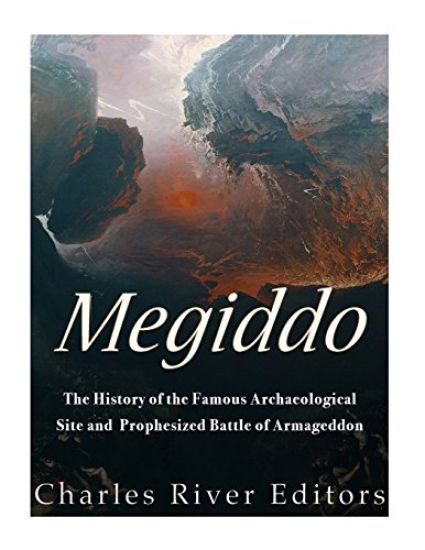
Megiddo: The History of the Famous Archaeological Site and Prophesized Battle of Armageddon
*Includes pictures *Includes descriptions of the ruins and their importance *Includes online resources and a bibliography for further reading *Includes a table of contents There are not many corners in the world that have seen as many people, civilizations, and armies as Tel Megiddo. Located in the western Jezreel Valley, it once laid upon the Via Maris, an ancient international trade route that connected ancient Egypt to the kingdoms and empires of Palestine, Syria, Anatolia, and Mesopotamia. It is because of this road that Megiddo saw so much carnage and bloodshed throughout its history. Many groups have coveted Tel Megiddo because of its strategic location guarding the entrance/exit of the Aruna Pass, now known as the Musmus Pass. Such groups ranged from the Canaanites, Egyptian, Israelites, Philistines and many others; including more recent states and empires, like the Ottomans, Napoleon's French empire, and modern Israel. Megiddo's occupational history, or ages of intensive human occupation, began during the Neolithic Age (c. late-fifth millennium B. C. E.) and ended in the Iron Age (c. late-seventh century B. C. E.). But, according to the New Testament, everyone's stories will end with the coming of Armageddon, otherwise known as Tel Megiddo. The history of the archaeological site and the Jezreel Valley is filled with many firsts and many lasts. Perhaps its wide plains were the location of the first recorded battle. It most certainly was the location of the first recorded chariot battle in history when the Pharaoh of Egypt, Thutmosis III of the Eighteenth Dynasty, attacked his former vassals, the Canaanites, after their kings formed a coalition with the Mesopotamian kings during the 15th century B. C. E. Such occurrences of violence and warfare have been common ordeals in the Jezreel Valley, and depending on who partook varied from guerilla-warfare to open-air fighting. The history in the Jezreel Valley had been so repetitively violent that the British General Edmund Allenby replicated, almost exactly, the tactic used by Thutmosis III nearly 3400 years before him when he too attacked Megiddo in 1918. It is perhaps due to the many battles that the ancient scribes bestowed the image of Armageddon upon Megiddo. After all, the Hebrew words Har Megiddo, simply means the "Mount of Megiddo." But despite the bloody history of the mound, and its valley, Megiddo's location was eventually lost to history and only was rediscovered relatively recently. Megiddo: The History of the Famous Archaeological Site and Prophesized Battle of Armageddon looks at the history of the site, its ruins, and its importance throughout the centuries. Along with pictures of important people, places, and events, you will learn about Megiddo like never before, in no time at all.
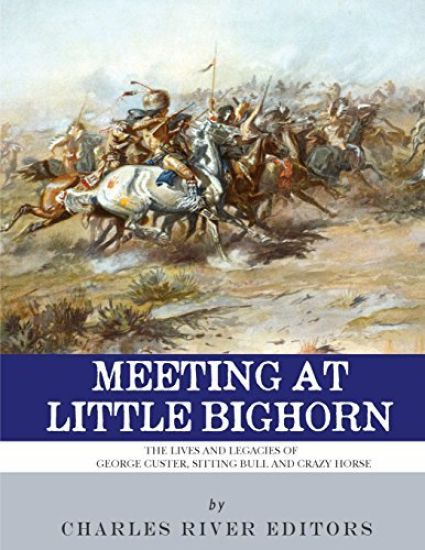
Meeting at Little Bighorn: The Lives and Legacies of George Custer, Sitting Bull and Crazy Horse
*Includes pictures of Custer, Sitting Bull, and important people, places, and events in their lives. *Explains the Lakota oral legends and the origins of the names Sitting Bull and Crazy Horse. *Analyzes the three men and their legacies. *Includes a Bibliography for further reading. The Battle of the Little Bighorn is one of the most famous battles in American history and to this day remains one of the U. S. Army's biggest debacles. It was also the most decisive victory a Native American tribe had against the U. S. as it steadily pushed westward and forced native tribes off their land. The battle forever linked Sitting Bull, Crazy Horse and George Custer, and it also made them American legends. Like Geronimo in the Southwest during the same era, Sitting Bull and Crazy Horse fought in several skirmishes against settlers and U. S. forces across the Plains during the 1860s on the way to becoming leaders of the Lakota. While it is still debated whether Sitting Bull was the "Supreme Chief of the whole Sioux Nation" by 1868, it's clear that he was one of the influential leaders of the Lakota. And when The Great Sioux War of 1876 began, Sitting Bull was recognized as the most important leader among all Native American tribes on the Plains, and the one to turn to for those who intended to keep fighting whites. At the Battle of the Little Bighorn, during which an estimated 2,000 Lakota and Cheyenne warriors inspired by one of Sitting Bull's visions routed and then annihilated the 7th U. S. Cavalry led by Custer, Crazy Horse was the one who executed the vision, leading his warriors against two of the 7th Cavalry columns, and oral legends claim he led the charge that started the rout of Custer's column. That disaster led the American government to double down on its efforts to "pacify" the Sioux, and by the end of the decade many of them had surrendered and been moved onto a reservation. Both Crazy Horse and Sitting Bull became celebrities of sorts after their eventual surrender, and both suffered controversial deaths on reservations that had their tribesmen claiming they were assassinated. Though he's now best remembered for "Custer's Last Stand", George Armstrong Custer began June 25, 1876 as one of America's better regarded cavalry officers, and a man whose ambitions might one day take him to higher office. In fact, decades before radio and television existed, Custer mastered the art of public relations, dressing impeccably and having newspaper correspondents accompany him on campaign, all in an effort to help cultivate and enhance his legacy. Custer's efforts worked, with one biographer noting that Americans during the 19th century viewed him as "a cavalier without fear and beyond reproach." Much like famous Confederate cavalry leader JEB Stuart, Custer added substance to the style. Despite being in his early 20s when the Civil War started, Custer rose through the ranks so quickly that he famously commanded a brigade of Michigan cavalrymen at Gettysburg, fighting the vaunted JEB Stuart and his horsemen to a standstill on the climactic 3rd day of that battle. Custer's success continued through until the end of the war, with his men playing an integral role during the Appomattox Campaign that forced the surrender of Robert E. Lee's Army of Northern Virginia. Had Custer's career ended there, he would have been both successful and largely forgotten. Meeting at Little Bighorn details the lives of the three men and their feateful meeting at Little Bighorn, but it also humanizes them and addresses the controversies surrounding their lives and their famous battle. Along with pictures of important people, places, and events in his life, you will learn about Custer, Sitting Bull and Crazy Horse like you never have before, in no time at all.
Medina: The History of Islam's Second Holiest City

Medina: The History of Islam's Second Holiest City

Jesse Harasta; Charles River

Createspace Independent Publishing Platform
2018
nidottu
*Includes pictures *Traces the history of the area from before Medina to the current day *Includes footnotes and a bibliography for further reading *Includes a table of contents "Whenever the Prophet...returned from a journey and observed the walls of Madinah, he would make his Mount go fast, and if he was on an animal (i.e. a horse), he would make it gallop because of his love for Madinah." - Sahih Bukhari - Book 30: Hadith 110 The reason for the existence of most of the world's cities is obvious to geography students. New York and Shanghai control deep ports and straddle great rivers bringing trade from the interior; Paris and London are at the crossing points of major cross-country rivers; Johannesburg sits atop a great mountain of gold ore; and Moscow and Madrid are at the heart of their great nations, easily able to control even the more distant corners of the land. Medina, however, is starkly different. Even centuries before the birth of the Prophet Muhammad, Jews settled on the land to escape persecution at the hands of the Babylonians and Romans, meaning the area and its arid environment brought inhabitants precisely because it wasn't an attractive or resource rich area. In fact, the city fated to become the second holiest city in Islam earned that spot simply by straddling trade routes to the religious city of Mecca, which brought traders and pilgrims in large enough numbers to make it a trade center. Of course, Mecca is now best known for being Islam's holiest city, and it is revered as the birthplace of Muhammad and the site where Allah first revealed the Qu'ran to him. However, the Prophet spent a great deal of time in Medina, especially when he and his supporters found themselves in conflict with the Meccans. Using Medina as a base, Muhammad eventually took Mecca, and both cities became integral parts of the Caliphate that followed. This meant that even as history brought geopolitical changes, Medina remained a city of religious significance for all Muslims, and even though its turbulent history is often overlooked, many people are still quite familiar with the city. Medina: The History of Islam's Second Holiest City traces the history of the most important site in Islam. Along with pictures depicting important people, places, and events, you will learn about Medina like never before, in no time at all.
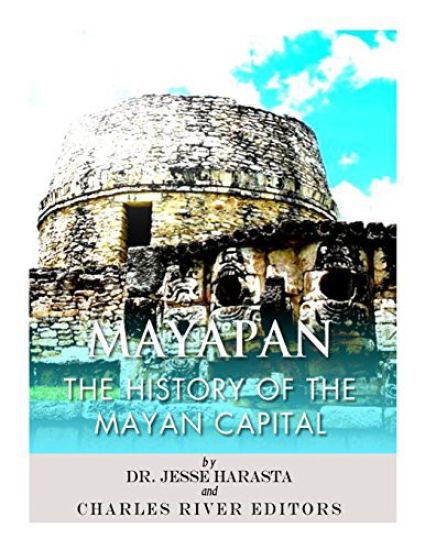
Mayapan: The History of the Mayan Capital

Mayapan: The History of the Mayan Capital

Jesse Harasta; Charles River

Createspace Independent Publishing Platform
2018
nidottu
*Includes pictures. *Includes footnotes for further reading. Many ancient civilizations have influenced and inspired people in the 21st century, like the Greeks and the Romans, but of all the world's civilizations, none have intrigued people more than the Mayans, whose culture, astronomy, language, and mysterious disappearance all continue to captivate people. At the heart of the fascination is Chich n Itz , the most visited Mayan site, but Chich n Itz 's prominence lasted for less than 200 years and was eventually succeeded by Mayap n, which lasted as the capital of the Maya for nearly 225 years until the middle of the 15th century. The Mayans are still remembered and celebrated for their culture and their contributions to astronomy, language, and sports, and many of their advancements came with Mayap n as their capital. Early Mayap n was closely connected to the overshadowing power of the region at the time: the mighty trading city of Chich n Itz . Mayap n emerged first as a minor settlement in the orbit of Chich n, but it slowly came to replace it after the larger city's trade connections with the Toltecs of Tula crumbled and it suffered a staggering defeat by Mayap n's armies. The building styles and art in their city show both admiring references to the great Chich n Itz as well as an attempt to position Mayap n as a more orthodox heir of Maya tradition. At the same time, they emulated many features and could not escape the tremendous influences - especially in religion - of Chich n. This is seen in the fact that many of the most important buildings in the new city appear to be small-scale reproductions of ones in Chich n. Due in part to the fact that it has long been overshadowed by Chich n Itz , a lot excavation and scholarly research on the site has only come about in recent decades, and even though there is still plenty of work to do, a lot of information about life in Mayap n has been unearthed. At its height, Mayap n may have boasted a population of over 15,000, and archaeologists have had their hands full trying to discover and restore the several thousand buildings both inside Mayap n's walls and outside them as well. Mayap n: The History of the Mayan Capital covers the history of the city, as well as the speculation and debate over the city's buildings. Along with pictures and a bibliography, you will learn about the Mayan capital like you never have before, in no time at all.
A History of Some of London's Most Famous Landmarks

A History of Some of London's Most Famous Landmarks

Charles River

Createspace Independent Publishing Platform
2018
nidottu
*Includes pictures *Includes online resources and a bibliography for further reading It almost goes without saying that Westminster Abbey is one of the foremost sites in Europe when it comes to being steeped in history. Dating back to the reign of William the Conqueror and the Norman conquest, Westminster Abbey has traditionally been the site of royal coronations, royal weddings, and royal burials, and anyone who enters can instantly feel that they are walking in the footsteps of some of the most influential figures in history, from Henry III to Queen Elizabeth I. Of course, Westminster Abbey is also far more than a place for royalty. As the English became to more intimately associate the site with their history and culture, luminaries from all walks of life have also been interred there, from Charles Darwin and Isaac Newton to Rudyard Kipling and Charles Dickens. Along with effigies, plaques, and various other monuments, walking through Westminster Abbey offers its own sort of crash course on England over the centuries. The Tower of London is one of the most historic sites in all of England, and still one of the most popular. All around is the modern City of London, one of the world's most prosperous and power financial districts, but the Tower is still a daunting structure that looms across the landscape. Not a single structure but a vast network of medieval and early modern fortifications, it anchors the southeastern end of the old City and controls access to the River Thames and, through it, London's connection to the sea. While the both the City and the Thames are often obscured by the walls once visitors are inside the Tower, they are inextricably tied to the building, giving the Tower its entire reason for existence. When people think of the British Royal family, and more specifically where they live, the first image that often pops into mind is that of stately Buckingham Palace, with its changing of the guard and the occasional royal coach leaving or entering. Others may think of the royal country estate of Windsor Castle, a favorite of both Britain's longest-reigning and second longest-reigning monarchs. And there was a time when both royal residences played second fiddle to a much better known home, the elegant Kensington Palace. Big Ben is one of the most recognizable symbols of Britain, and indeed one of the most famous structures in the world. A quintessential part of London, every movie set in London features an establishing shot of Big Ben, and many guidebooks of London have the clock tower as its cover photo. London and Big Ben are forever linked in the consciousness of the Western world. As it turns out, now is the time to admire and learn about Big Ben, because some believe it is likely to fall over. Since 2012, several sources have reported about the cracks appearing in walls all over the Palace of Westminster. This building houses Parliament and the House of Lords, which comprise the legislative bodies of the British Government. The building has stood in the same location since 1288, although it has not always been the same building. The palace and the tower have gone through renovation, rebuilding, fire, and more rebuilding, over the course of the last 720 years. The tall bridge that symbolizes not just the city but the nation is Tower Bridge, and while it is among the oldest major bridges in London, it is hardly the first to have been built on the Thames, or even on that spot. In actuality, the first men to build a bridge on that spot probably spoke Latin as their first language. As time passed, technology changed, and with it, the nature of bridge building. Wood gave way to stone, which in turn gave way to iron and steel. At the same, London grew on both land and water, with more people living in and near the city, and more people plying the river in bigger and bigger ships.
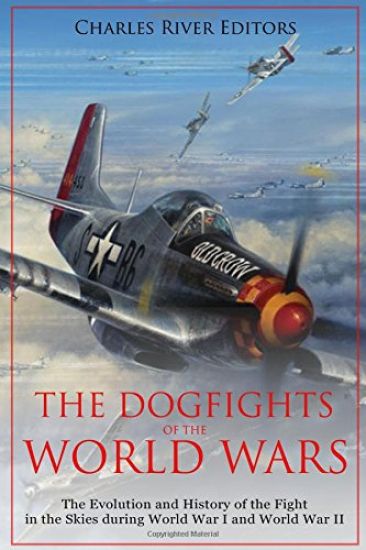
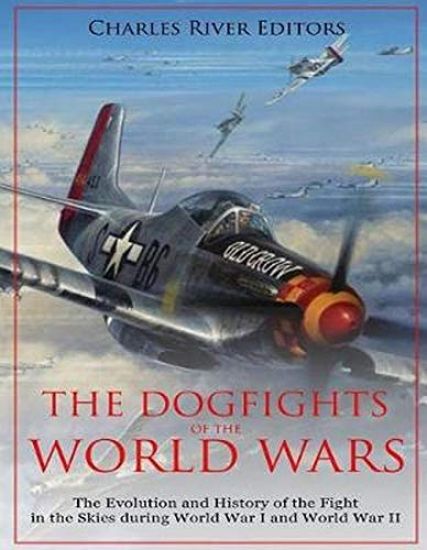
The Dogfights of the World Wars: The Evolution and History of the Fight in the Skies during World War I and World War II
*Includes pictures *Includes accounts of the fighting *Includes online resources and a bibliography for further reading The first aircraft to appear in the skies over the battlefields of World War I showed few signs of the dominant future of airplanes in warfare. Small, fragile, and slow, they provided no hint of the sleek jet fighters that would one day slash across the skies of Earth faster than sound to unleash the lethal blast and fire of sophisticated missiles, or the bombers able to level an entire city with one nuclear bomb. That said, they did not represent a complete novelty in warfare either, at least not during the early months of World War I. While airplanes had never before appeared above the field of war, other aerial vehicles had already been in use for decades, and balloons had carried soldiers above the landscape for centuries to provide a high observation point superior to most geological features. The French used a balloon for this purpose at the Battle of Fleurus in 1794, and by the American Civil War, military hydrogen balloons saw frequent use, filled from wagons generating hydrogen from iron filings and sulfuric acid. The balloonist Thaddeus Lowe persuaded President Abraham Lincoln to use the airships for observation, communicating troop movements to the ground with a telegraph wire. At first, airplane improvements occurred in an ad hoc, almost accidental manner during the war. However, when pilots' mounting of armaments on airplanes proved a successful means of defeating other aircraft and even attacking men on the ground, a much more active and systematic development of warplanes began across the continent. Each advance prompted a countermeasure, as the two sides strove for primacy in a deadly, unforgiving environment which rewarded real advances in equipment and tactics with survival and punished poor ideas with death. Before long, relatively powerful, heavily armed aircraft buzzed through the skies over battle-stained Europe, tearing each other apart with furious gusts of machine gun fire and sending many of the vaunted dirigibles plunging, burning, to the ground. The new era of fighting aircraft arrived in dramatic fashion, raising successful pilots to celebrity or heroic status, and laying the groundwork for the tremendous potential of airpower to achieve its next logical expansion in World War II and beyond. By the time World War II arrived, the fighter airplane appeared as a much different beast than the purpose-built aircraft-hunting machines of 1917 and 1918. Though propellers still provided motive force, greatly increased engine power allowed these aircraft to slice through the sky at speeds of 200 mph, 300 mph, or even in excess of 400 mph when flying flat-out. Service ceilings jumped to 25,000 feet, 30,000 feet, or higher, altitudes unthinkable to World War I's aviators. Engineering and research and development began working scientifically to shave time off the climb rate and address a host of other problems and possibilities. At the start of the war, as the German Luftwaffe first flew against Poland and then the Royal Air Force, aircraft were already swift, metal-skinned hunter-killers in the sky, with enclosed cockpits, armor, and powerful loadouts of machine guns, 20mm cannons, and, soon, rockets. But an even bigger transformation awaited - the birth of the jet age, a future glimpsed briefly in the spectacular but doomed appearance of the Messerschmitt Me 262 near the war's end. The Dogfights of the World Wars: The Evolution and History of the Fight in the Skies during World War I and World War II looks at how technology and tactics evolved during the wars. Along with pictures of important people, places, and events, you will learn about dogfights like never before.
The Dogfights of the World Wars: The Evolution and History of the Fight in the Skies during World War I and World War II
*Includes pictures *Includes accounts of the fighting *Includes online resources and a bibliography for further reading The first aircraft to appear in the skies over the battlefields of World War I showed few signs of the dominant future of airplanes in warfare. Small, fragile, and slow, they provided no hint of the sleek jet fighters that would one day slash across the skies of Earth faster than sound to unleash the lethal blast and fire of sophisticated missiles, or the bombers able to level an entire city with one nuclear bomb. That said, they did not represent a complete novelty in warfare either, at least not during the early months of World War I. While airplanes had never before appeared above the field of war, other aerial vehicles had already been in use for decades, and balloons had carried soldiers above the landscape for centuries to provide a high observation point superior to most geological features. The French used a balloon for this purpose at the Battle of Fleurus in 1794, and by the American Civil War, military hydrogen balloons saw frequent use, filled from wagons generating hydrogen from iron filings and sulfuric acid. The balloonist Thaddeus Lowe persuaded President Abraham Lincoln to use the airships for observation, communicating troop movements to the ground with a telegraph wire. At first, airplane improvements occurred in an ad hoc, almost accidental manner during the war. However, when pilots' mounting of armaments on airplanes proved a successful means of defeating other aircraft and even attacking men on the ground, a much more active and systematic development of warplanes began across the continent. Each advance prompted a countermeasure, as the two sides strove for primacy in a deadly, unforgiving environment which rewarded real advances in equipment and tactics with survival and punished poor ideas with death. Before long, relatively powerful, heavily armed aircraft buzzed through the skies over battle-stained Europe, tearing each other apart with furious gusts of machine gun fire and sending many of the vaunted dirigibles plunging, burning, to the ground. The new era of fighting aircraft arrived in dramatic fashion, raising successful pilots to celebrity or heroic status, and laying the groundwork for the tremendous potential of airpower to achieve its next logical expansion in World War II and beyond. By the time World War II arrived, the fighter airplane appeared as a much different beast than the purpose-built aircraft-hunting machines of 1917 and 1918. Though propellers still provided motive force, greatly increased engine power allowed these aircraft to slice through the sky at speeds of 200 mph, 300 mph, or even in excess of 400 mph when flying flat-out. Service ceilings jumped to 25,000 feet, 30,000 feet, or higher, altitudes unthinkable to World War I's aviators. Engineering and research and development began working scientifically to shave time off the climb rate and address a host of other problems and possibilities. At the start of the war, as the German Luftwaffe first flew against Poland and then the Royal Air Force, aircraft were already swift, metal-skinned hunter-killers in the sky, with enclosed cockpits, armor, and powerful loadouts of machine guns, 20mm cannons, and, soon, rockets. But an even bigger transformation awaited - the birth of the jet age, a future glimpsed briefly in the spectacular but doomed appearance of the Messerschmitt Me 262 near the war's end. The Dogfights of the World Wars: The Evolution and History of the Fight in the Skies during World War I and World War II looks at how technology and tactics evolved during the wars. Along with pictures of important people, places, and events, you will learn about dogfights like never before.
The Summer of 1940: The History of the Months that Decided the Fate of Europe in World War II
*Includes pictures *Includes accounts of the fighting *Includes online resources and a bibliography for further reading One of the most famous people in the world came to tour the city of Paris for the first time on June 28, 1940. Over the next three hours, he rode through the city's streets, stopping to tour L'Op ra Paris. He rode down the Champs- lys es toward the Trocadero and the Eiffel Tower, where he had his picture taken. After passing through the Arc de Triomphe, he toured the Pantheon and old medieval churches, though he did not manage to see the Louvre or the Palace of Justice. Heading back to the airport, he told his staff, "It was the dream of my life to be permitted to see Paris. I cannot say how happy I am to have that dream fulfilled today." Four years after his tour, Adolf Hitler would order the city's garrison commander, General Dietrich von Choltitz, to destroy Paris, warning his subordinate that the city "must not fall into the enemy's hand except lying in complete debris." The French had not expected the Germans would be able to move armored units through the Ardennes Forests, a heavily wooded region spanning parts of Belgium, France and the Netherlands. To the Allies' great surprise, the Germans had no trouble rolling across these lands in the span of weeks. And by invading France from the north, the Germans simply avoided the Maginot Line. The French surrendered in June 1940, and the British narrowly escaped disaster by transporting thousands of soldiers and equipment across the English Channel at Dunkirk. Thus, by the middle of 1940, the Axis powers and the Soviet Union had overrun nearly all of Western Europe. With France out of the war, and without active participation by the United States, Great Britain virtually stood alone. The surrender of more than 1,200,000 isolated troops was unquestionably disastrous, but the Allies contrived one coup that took even the victorious Wehrmacht aback: the evacuation of over 300,000 soldiers from the port of Dunkirk. This escape, hailed as "miraculous" at the time, provided England with a solid defensive force, the French with the kernel of a "Free French" army for the future, and the Western Allies with an invaluable boost to their morale during one of the war's darkest moments. Operation Dynamo, as the British named the Dunkirk evacuation mission, bolstered British morale and defenses sufficiently to keep the "Sceptered Isle" in the war. This, in turn, led to the eventual entry of the United States, whose lethal air force, powerful navy, strategic successes, and massive Lend-Lease aid to the Soviet Union helped doom Adolf Hitler's "Thousand-Year Reich" to a ruinous end in 1945. The Summer of 1940: The History of the Months that Decided the Fate of Europe in World War II chronicles the pivotal events that shaped the rest of the war. Along with pictures of important people, places, and events, you will learn about the summer of 1940 like never before.
The Summer of 1940: The History of the Months that Decided the Fate of Europe in World War II
*Includes pictures *Includes accounts of the fighting *Includes online resources and a bibliography for further reading One of the most famous people in the world came to tour the city of Paris for the first time on June 28, 1940. Over the next three hours, he rode through the city's streets, stopping to tour L'Op ra Paris. He rode down the Champs- lys es toward the Trocadero and the Eiffel Tower, where he had his picture taken. After passing through the Arc de Triomphe, he toured the Pantheon and old medieval churches, though he did not manage to see the Louvre or the Palace of Justice. Heading back to the airport, he told his staff, "It was the dream of my life to be permitted to see Paris. I cannot say how happy I am to have that dream fulfilled today." Four years after his tour, Adolf Hitler would order the city's garrison commander, General Dietrich von Choltitz, to destroy Paris, warning his subordinate that the city "must not fall into the enemy's hand except lying in complete debris." The French had not expected the Germans would be able to move armored units through the Ardennes Forests, a heavily wooded region spanning parts of Belgium, France and the Netherlands. To the Allies' great surprise, the Germans had no trouble rolling across these lands in the span of weeks. And by invading France from the north, the Germans simply avoided the Maginot Line. The French surrendered in June 1940, and the British narrowly escaped disaster by transporting thousands of soldiers and equipment across the English Channel at Dunkirk. Thus, by the middle of 1940, the Axis powers and the Soviet Union had overrun nearly all of Western Europe. With France out of the war, and without active participation by the United States, Great Britain virtually stood alone. The surrender of more than 1,200,000 isolated troops was unquestionably disastrous, but the Allies contrived one coup that took even the victorious Wehrmacht aback: the evacuation of over 300,000 soldiers from the port of Dunkirk. This escape, hailed as "miraculous" at the time, provided England with a solid defensive force, the French with the kernel of a "Free French" army for the future, and the Western Allies with an invaluable boost to their morale during one of the war's darkest moments. Operation Dynamo, as the British named the Dunkirk evacuation mission, bolstered British morale and defenses sufficiently to keep the "Sceptered Isle" in the war. This, in turn, led to the eventual entry of the United States, whose lethal air force, powerful navy, strategic successes, and massive Lend-Lease aid to the Soviet Union helped doom Adolf Hitler's "Thousand-Year Reich" to a ruinous end in 1945. The Summer of 1940: The History of the Months that Decided the Fate of Europe in World War II chronicles the pivotal events that shaped the rest of the war. Along with pictures of important people, places, and events, you will learn about the summer of 1940 like never before.
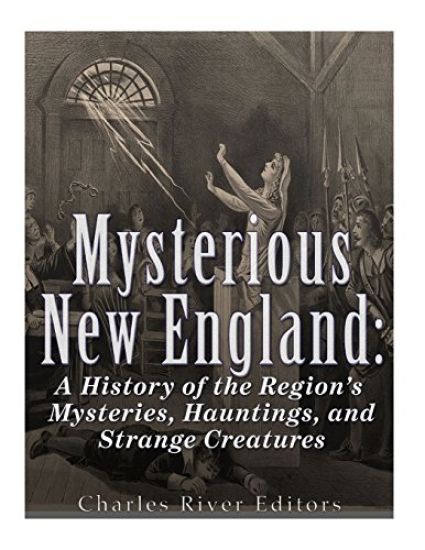
Mysterious New England: A History of the Region's Mysteries, Hauntings, and Strange Creatures
*Includes pictures*Profiles the Salem Witch Trials and other historic phenomena in New England*Includes online resources and a bibliography for further reading*Includes a table of contents"I think one of the reasons Stephen King's stories work so well is that he places his stories in spooky old New England, where a lot of American folk legends came from." - Ted NaifehNew England has always had a special place in the national memory. The states of Connecticut, Maine, Massachusetts, New Hampshire, Rhode Island, and Vermont have a long history as some of the earliest colonies in the New World. Their rich folklore and colorful history is woven into the national identity, and destinations such as Plymouth Rock, the lighthouses of Maine, and Vermont's autumn leaves are quintessential symbols of the United States. But New England has always had a dark side, a strange side. Monsters and ghosts lurk in its woods and old houses, and strange monuments that may be from a forgotten civilization puzzle local investigators. All the while, the early inhabitants themselves were always superstitious, as evidenced by history's most famous witch trials. Today the Salem Witch Trials are often remembered as being a relic of a superstitious past, and Salem has transformed itself into a tourist haven and Halloween destination by capitalizing off the Salem Witch trials, but it was deadly serious in 1692, when 19 men and women found themselves taken to "Gallows Hill" and hanged for being witches. Another man who was over 80 years old was pressed to death for refusing to be tried for witchcraft, and from February 1692-May 1693, hundreds of others were accused of witchcraft. Dozens of them were imprisoned for months until the mass hysteria finally died down. Mysterious New England: A History of the Region's Mysteries, Hauntings, and Strange Creatures profiles a sampling of strange, unexplained, and just plain odd stories of New England that have fascinated people in and around the region for centuries. Along with pictures of important people, places, and events, you will learn about mysterious New England like never before, in no time at all.
Nelson Mandela: The Life and Legacy of the Father of South Africa

Nelson Mandela: The Life and Legacy of the Father of South Africa

Charles River

Createspace Independent Publishing Platform
2018
nidottu
*Includes pictures *Includes Mandela's quotes about his life and work. *Includes a bibliography for further reading. "During my lifetime I have dedicated myself to this struggle of the African people. I have fought against white domination, and I have fought against black domination. I have cherished the ideal of a democratic and free society in which all persons will live together in harmony and with equal opportunities. It is an ideal which I hope to live for. But, my lord, if needs be, it is an ideal for which I am prepared to die." - Nelson Mandela, 1964 In the case of some historical figures, a single event or small span of years is sufficient for understanding the timeliness and extent of their impact upon the world. But others have taken lengthier, more convoluted journeys with broadly-evolved circumstances, intentions and roles to be played, reinventing themselves and playing different roles as times change. Such is the case with Nelson Mandela, whose conflict with the apartheid government of South Africa was marked by an irrational and contrary stream of corrupt legislation intended to reverse the gains made in the cause of equality through the 19th and 20th centuries. The most basic descriptions of Nelson Mandela's life and career would include terms such as anti-apartheid revolutionary, politician, activist and philanthropist, but all of these monikers require extensive shading. He has, at one time or another, been called every complimentary and critical term available to a politician, and from specific times and perspectives, they all contain some hint of truth. Mandela was a child without citizenship from his own country without any notion of its history, but in the end, he became the first of his race to lead it and to reestablish a franchise for those of his heritage. He is the "communist sympathizer" who pleaded with the United States Congress that the blessings of democracy be brought to his country, and the adoptee of a Gandhiesque non-violence who led the military wing of the African National Congress when pacifism no longer seemed feasible. Unlike the rise of national leaders of African heritage in modern times, Mandela's rise to the presidency literally began amidst mid-19th century conditions, in which the exclusionary pro-white business groups that took over southern Africa before his birth were able to legislate and codify apartheid into an accepted institution during his life. While he is now one of the most beloved figures of the 20th century and almost universally praised, few are familiar with more than a basic outline of his life, including his lengthy imprisonment for working against South Africa's apartheid government, his release from jail and his ascent to South Africa's presidency, and his tireless charitable work on behalf of peace, fighting HIV, and more. Nelson Mandela: The Life and Legacy of the Father of South Africa examines the life and career of one of the 20th century's most famous figures and one of its greatest activists. Along with pictures of important people, places, and events, you will learn about Mandela like never before, in no time at all.