Kirjojen hintavertailu – 12 903 727 kirjaa ja 27 kauppaa

Kirjailija

Charles River

Kirjat ja teokset yhdessä paikassa: 4 673 kirjaa, julkaisuja vuosilta 2013–2022, suosituimpiin kuuluu William Powell and Myrna Loy: The Lives and Careers of One of Classical Hollywood's Most Iconic Duos. Vertaile teosten hintoja ja tarkista saatavuus suomalaisista kirjakaupoista.

4 673 kirjaa

Kirjojen julkaisuvuodet: 2013–2022.

Guerra Submarina en la Segunda Guerra Mundial: La historia de la lucha bajo las olas en los teatros del Atlántico y del Pacífico
El peligro merode bajo las aguas fr as y grises del Mar del Norte y tambi n bajo las brillantes olas azules del Atl ntico tropical durante la Segunda Guerra Mundial, cuando el Tercer Reich de Hitler intentaba estrangular las l neas de suministro de los Aliados con ataques de U-Boot (abreviatura del alem n Unterseeboot - plural U-Boote). Submarinos alemanes y brit nicos peinaban el vasto campo de batalla oce nico en busca de presas, mientras los cient ficos desarrollaban nuevas tecnolog as y contramedidas. La guerra submarina comenz tentativamente durante la Guerra Civil estadounidense (aunque los Pa ses Bajos e Inglaterra hab an hecho peque os prototipos siglos atr s, y el sargento estadounidense Ezra Lee pilot en vano el monoplaza Turtle contra el HMS Eagle cerca de Nueva York en 1776). La invenci n del torpedo por parte del brit nico Robert Whitehead introdujo el arma que ser a luego usada con m s frecuencia por los submarinos. Mejoramientos continuos al dise o de Whitehead conllevaron a los torpedos militares que fueron desplegados contra las rutas mar timas de env o durante ambas Guerras Mundiales. Los submarinos tuvieron un impacto decisivo en el resultado de la Batalla del Pac fico en la Segunda Guerra Mundial. La flota submarina de los Estados Unidos, bajo el mando general, si bien no exclusivamente, del Vicealmirante Charles Lockwood, estrangul las l neas de suministro y tr fico naval del Imperio del Jap n. Sus "asaltos al comercio" lisiaron la capacidad japonesa, tanto de mantener abastecidas sus unidades en el frente, como de fabricar las armas, embarcaciones y veh culos que necesitaba para continuar con xito la lucha. Tanto los Estados Unidos como Jap n produjeron excelentes submarinos de alta tecnolog a en el contexto de la era de la II Guerra Mundial. Los submarinos Clase I de la Armada Imperial Japonesa (AIJ) demostraron excelente estabilidad en aguas dif ciles y ofrec an la versatilidad que les daba su gran tama o, incluyendo la capacidad de servir como naves nodrizas para mini submarinos, como portaaviones para aviones exploradores, o incluso como bombarderos especializados. Los torpedos Tipo 93 Long Lance y Tipo 95 que llevaban eran lo suficientemente poderosos para hundir buques capitales como acorazados y portaviones, desde varias millas de distancia. Los submarinos de la Marina de los Estados Unidos (US Navy - USN), si bien m s peque os, pod an sumergirse profundamente, moverse r pidamente y proporcionar tanto potencia de fuego como probabilidades de supervivencia. Aunque sus torpedos Tipo XIV y Tipo XVIII no igualaban al Tipo 93 japon s, igualmente ten an potencia letal, particularmente tras ser mejorados a finales de 1943. El USS Archerfish tambi n demostr a los buques capitales japoneses la letalidad de los submarinos estadounidenses. Los submarinistas de ambas flotas demostraron inmenso valor, osad a y habilidad en el ejercicio de su deber. Ambos grupos de hombres exhibieron agresi n, patriotismo y esp ritu de lucha en igual medida, independientemente del lente cultural a trav s del cual se manifestaron estos rasgos. Ambas marinas produjeron con xito oficiales submarinistas profesionales y altamente capacitados. Los japoneses, sin embargo, decidieron utilizar sus submarinos principalmente como apoyo para grandes acciones de flota a distancias visuales, lo cual nunca ocurri . En lugar de eso, los submarinos llevaron a cabo ataques espor dicos y descoordinados, y el resto del tiempo, permanecieron en guardias de vigilancia o vieron su tiempo desperdiciado en transporte de suministros y evacuaciones subacu ticas.
Presidential Assassinations: The History of the Killing of Abraham Lincoln, James Garfield, William McKinley, and John F. Kennedy
*Includes pictures *Includes online resources and a bibliography for further reading Until April 14, 1865, John Wilkes Booth was one of the most famous actors of his time, and President Abraham Lincoln had even watched him perform. But his most significant performance at a theater did not take place on the stage. That night, Booth became one of history's most infamous assassins when he assassinated President Lincoln at Ford's Theatre in Washington, D. C. Booth was a member of the prominent 19th century Booth theatrical family from Maryland and, by the 1860s, was a well-known actor. But he was also a Confederate sympathizer who dabbled in espionage, and he was increasingly outraged at the Lincoln Administration. Although Robert E. Lee's Army of Northern Virginia had surrendered days earlier, Booth believed the war was not yet over because Confederate General Joseph E. Johnston's army was still fighting the Union Army, so he and his group of conspirators plotted to kill Lincoln and other top officials in a bid to decapitate the federal government and help the South. In 1880, Civil War veteran James Garfield was running as a Republican for president, and one of his supporters was a man named Charles Guiteau, who wrote and circulated a speech called "Garfield vs. Hancock" that aimed to rally support for the Republican candidate. Though few knew it, Guiteau's family had already deemed him insane and attempted to keep him committed in an asylum, only to have him manage an escape from confinement. Garfield went on to narrowly edge Winfield Scott Hancock in the election, and Guiteau, harboring delusions of grandeur, believed he had helped tip the scales in Garfield's favor. As such, he believed that he was entitled to a post in Garfield's nascent administration. When he felt like he was slighted by the new administration, Guiteau bought a revolver and plotted to kill the president. He got his chance on July 2, 1881 at a railroad station, shooting Garfield in the back twice. In September 1901, the city of Buffalo was full of celebration. The Pan-American Exposition was ongoing, and it brought notable figures to northern New York, including President William McKinley, who had been reelected less than a year earlier. But also in Buffalo was Leon Czolgosz, a young man who had turned to anarchy years earlier after losing his job, Embracing his philosophy wholeheartedly, Czolgosz believed it was his mission to take down a powerful leader he considered oppressive, and McKinley's attendance gave him the chance. President James Garfield had been assassinated just 20 years earlier, but McKinley didn't worry about presidential security or his own safety, and that was the case in Buffalo. McKinley's insistence on greeting the public and shaking hands allowed Czolgosz to walk up to him on September 6, 1901 at a public reception in the Temple of Music on the expo grounds and shoot him point blank. November 22, 1963 started as a typical Friday, and many Americans were unaware that President Kennedy was even heading to Dallas, Texas. John and Jackie arrived in Dallas in the morning, with Texas Governor John Connally alongside them and Vice President Lyndon B. Johnson due to arrive later to meet them there. The Kennedys and the Connallys intended to participate in public events later in the day, and Jackie and John were welcomely surprised by the warm reception they received. A public parade was hosted for the President and First Lady that afternoon, and the First Couple rode with the Connallys in an open motorcade en route to a speech Kennedy would deliver later. As they waved to the people lining the streets, around 12:30 p.m. Central Standard Time, Governor Connally's wife turned around to the first couple and said, "Mr. President, you can't say Dallas doesn't love you." Moments later, the most controversial assassination in American history took place as a series of shots were fired at the motorcade.
President Roosevelt: The Lives and Legacies of Theodore and Franklin D. Roosevelt

President Roosevelt: The Lives and Legacies of Theodore and Franklin D. Roosevelt

Charles River

Createspace Independent Publishing Platform
2018
nidottu
*Includes pictures of Teddy, FDR, and important people, places, and events in their lives. *Includes a Bibliography for further reading. For a man who grew up to become the "Bull Moose", Theodore Roosevelt was a sickly child, suffering from asthma and other maladies. But his physical weakness actually drove him to be more active, which also fostered an interest in nature. It also helped that Teddy's family was wealthy, allowing him privileges including home school and the ability to attend Harvard, where he was an athlete and took an interest in naval affairs. After finishing at Harvard, Teddy entered politics, but it didn't stop him from writing The Naval War of 1812 in 1882, establishing himself as a professional writer and historian. In the 1890s, it was Teddy's turn to make history, leading the Rough Riders during the Spanish-American War and being decorated for his service with a Medal of Honor. He parlayed his glory into the governorship of New York and then the Vice Presidency under William McKinley. When McKinley was assassinated in 1901, young Teddy was thrust into the presidency, one that would earn him a place on Mount Rushmore, Roosevelt's "Square Deal" domestic policies favored average citizens while busting trusts and monopolies. Teddy also promoted conservation as an environmental stance, while his "speak softly and carry a big stick" foreign policy is still an oft used phrase today. Teddy even earned a Nobel Prize during his presidency. By the time Teddy died in 1919, he was an American icon. Today, Teddy is remembered for being an explorer, hunter, author, soldier, president, and safari adventurer, all of which combine into one unique reputation. As with all legends, Teddy is often portrayed more as a quintessential man's man, to the point that the legend obscures the actual man. Teddy is on Mount Rushmore and might be America's greatest 20th century president, but if he's not it might be because of his own relative. Whether Franklin Delano Roosevelt was America's greatest 20th century president or not, there's no question that he was the most unique. A well-connected relative of Theodore Roosevelt, FDR was groomed for greatness until he was struck down by what was widely believed to be polio at the time. Nevertheless, he persevered, rising through New York politics to reach the White House just as the country faced its greatest challenge since the Civil War, beginning his presidency with one of the most iconic lines ever spoken during an inaugural address. For over a decade, President Roosevelt threw everything he had at the Great Depression, and then threw everything the country had at the Axis powers during World War II. Ultimately, he succumbed to illness in the middle of his fourth term, just before the Allies won the war. President Roosevelt chronicles the lives and legacies of the famous relatives who became two of their country's greatest presidents, humanizing the Bull Moose by juxtaposing his tender side with his masculinity and looking at FDR's dogged determination to beat all of his enemies, no matter what form they took. Along with pictures of important people, places, and events, you will learn about Teddy and FDR like you never have before, in no time at all.
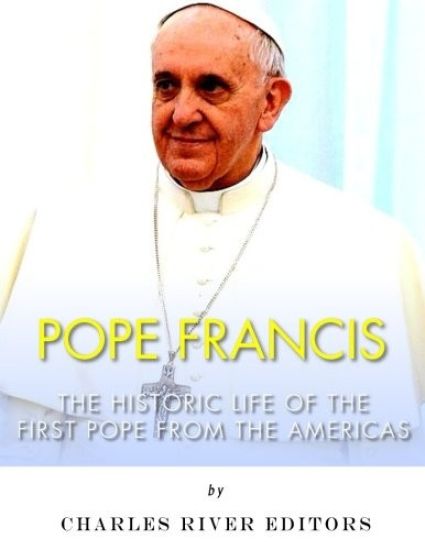
Pope Francis: The Historic Life of the first Pope from the Americas

Pope Francis: The Historic Life of the first Pope from the Americas

Charles River

Createspace Independent Publishing Platform
2018
nidottu
*Includes pictures *Includes the Pope's quotes about his life and faith *Includes footnotes and a bibliography for further reading "Each of us has a vision of good and of evil. We have to encourage people to move towards what they think is good... Everyone has his own idea of good and evil and must choose to follow the good and fight evil as he conceives them. That would be enough to make the world a better place." - Pope Francis In 1968, MGM released a popular movie titled The Shoes of the Fisherman, based on a 1963 novel of the same name by Australian novelist Morris West. In the film, Kiril Pavlovich Lakota (played by Anthony Quinn), a Metropolitan Archbishop of Lvov in the Soviet Union who has been imprisoned for years for refusing to knuckle under to the Soviet suppression of the Church, is freed from Siberia. The man who freed him, Ilyich Kamenev, was Kiril's former jailer but had since become the leader of the USSR, and shortly thereafter, Kiril is elevated to the College of Cardinals because of his near martyrdom for the faith. Not long afterwards, the Holy Father in Rome dies suddenly, and, amazingly, Cardinal Kiril is allowed to go to Rome for the consistory. Even more incredulously, this practically unknown cardinal is proclaimed by his fellow Cardinals as the next successor to the office of St. Peter. Now Pope Kiril, being used to a simple life of a prisoner in Siberia, shuns all trappings of office, sneaks out of the Vatican at night, and ministers to people he finds on the street. And, most unbelievable of all, when the world is faced with war due to massive famine in China, the unlikely Pope orders the sale of all the wealth of the church in order to feed the hungry masses. Fast forward to March 13, 2013. White smoke is seen coming out of the chimney of the Sistine Chapel where the College of Cardinals have gathered to pray and vote on the election of a successor to Pope Benedict XVI. They had been sequestered for two days, and five ballots had been taken. The press was speculating over who would be elected, and even though it was rumored that Argentine Cardinal Jorge Mario Bergoglio had been the runner up or the candidate receiving the second most votes in the consultatory that elected Benedict (then Cardinal Joseph Ratzinger) in 2005, hardly anyone had the Jesuit cardinal on their short list. After all, he was a Jesuit who was already 76 years old and from South America. Despite the odds, when Cardinal Jean-Louis Tauran stepped out onto the balcony at the papal palace and announced to the world Habemus Papam (We have a Pope ), the man who was called to step into the shoes of the fisherman, St. Peter, was none other than Cardinal Jorge Mario Bergoglio, the first Jesuit ever chosen for this honor, the first from the Americas, and the first ever from the southern hemisphere. Like the fictional Pope Kiril, he shunned the red slippers and the ermine lined mozzetta (cape) of his predecessors, and he also continued to wear the simple iron cross that he had worn as Cardinal Bergoglio, not one of the jewel-encrusted ones usually worn by the Bishop of Rome. In another first, it was announced that he would be known as Francis, after the great Saint Francis of Assisi, a friend to the poor, to animals, and a lover of nature. Pope Francis: The Historic Life of the First Pope from the Americas chronicles the amazing life of the leader of the Catholic Church and how he came to be pope. Along with pictures of important people, places, and events, you will learn about Pope Francis like never before, in no time at all.
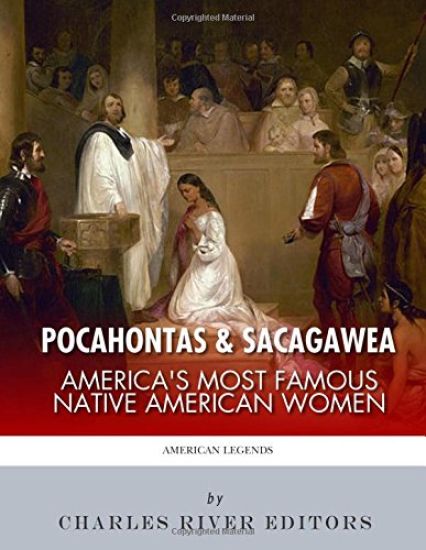
Pocahontas & Sacagawea: America's Most Famous Native American Women

Pocahontas & Sacagawea: America's Most Famous Native American Women

Charles River

Createspace Independent Publishing Platform
2018
nidottu
*Includes pictures of historic art depicting Pocahontas, Sacagawea and other important people and places. *Discuss the legends and myths that have become part of their legacies. *Include accounts of Pocahontas and Sacagawea written by John Smith, Lewis and Clark, and the Native Americans themselves. *Includes bibliographies for further reading. The life of Pocahontas fulfills a specific role in American culture and history. Her short life holds a bittersweet tragedy that is part of the mythology of Native America, especially the first encounters between English settlers and the local native tribes. The meaning of her name, "little plaything" or "little wanton," suggests that she was destined to be bandied about by the powers in her life. The men of the time simply assumed a young Native American girl did not deserve or even want respect. She had many other names, however, some which would have never been known to people outside her tribe, let alone European colonists. What historians do know is Pocahontas was also known as Matoaka, she was born sometime in 1595, and she was the daughter of the paramount chief (mamanatowick) Powhatan, leader of an Algonquian-speaking native group. She grew up in Tsenacommacha, the "densely inhabited Land" of eastern Virginia, where English explorers and settlers under the leadership of Lord Newport yearned to find a passage to the "other sea". The English settlers were also ready to play the role of the legendary Spanish conquistadors and hoping to find hidden gold in the region. Nevertheless, generations of Americans and English have been taught that Pocahontas was part of a unique fairytale, saving the life of explorer John Smith and later becoming his wife. While their relationship has been the subject of countless historical texts and even children's books, it has no historical basis in fact. There is still even some doubt over whether she saved his life in the famous encounter that has ensured her name remains instantly recognizable nearly 400 years after her death. Sacagawea is one of the most famous Native American women in American history, and few played such a central role in the settlement of the West for the young nation. As a young woman who was married to a French trapper from Quebec, Sacagawea happened to be in the right place at the right time for the legendary Lewis and Clark expedition, which set off for the Pacific coast after President Thomas Jefferson negotiated the Louisiana Purchase with France. The young Shoshone girl acted as a guide and interpreter for the expedition, helping it safely travel thousands of miles west from North Dakota to the Pacific over unfamiliar ground and amongst unfamiliar peoples. Put simply, the expedition could not have succeeded without her. Sacagawea's role in the Lewis and Clark expedition made her a national figure, and she continued to be popularized in literature and even among groups advocating for women's rights. Sacagawea is still taught to every American in school and stands alongside Pocahontas as the most famous Native American women, even though few people knew much about her life aside from her role in the trek. For that reason, few truly know about her life, her tribe, or her death, the latter of which is still controversial. At the same time, given the history and conflicts between the United States and various Native American tribes during the 19th century, Sacagawea's role in helping the nation push westward at the expense of Native Americans has taken on a more mixed and controversial character. Pocahontas & Sacagawea profiles the lives and legacies of the famous Native American girls. Along with pictures of important people, places, and events, you will learn about Pocahontas & Sacagawea like never before.
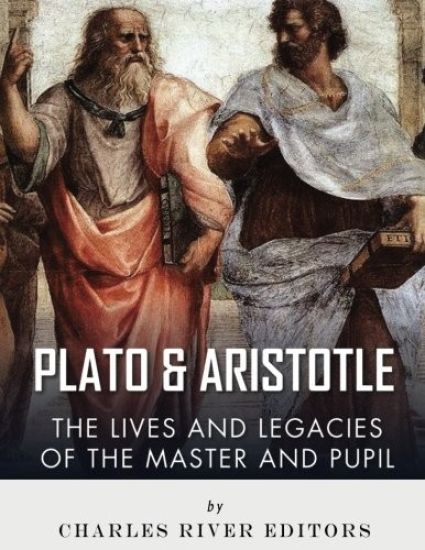
Plato and Aristotle: The Lives and Legacies of the Master and Pupil

Plato and Aristotle: The Lives and Legacies of the Master and Pupil

Charles River

Createspace Independent Publishing Platform
2018
nidottu
*Discusses the philosophers' writings about knowledge, logic, metaphysics, science, reason, Forms, political science, rhetoric and more. *Includes busts and other art depicting Plato, Aristotle, and important people and events. *Includes a Bibliography on each for further reading. "Until philosophers are kings, or the kings and princes of this world have the spirit and power of philosophy, and political greatness and wisdom meet in one, and those commoner natures who pursue either to the exclusion of the other are compelled to stand aside, cities will never have rest from their evils - no, nor the human race, as I believe - and then only will this our State have a possibility of life and behold the light of day." - Plato, The Republic "All men by nature desire to know. An indication of this is the delight we take in our senses; for even apart from their usefulness they are loved for themselves; and above all others the sense of sight. For not only with a view to action, but even when we are not going to do anything, we prefer sight to almost everything else. The reason is that this, most of all the senses, makes us know and brings to light many differences between things." - Aristotle, Metaphysics Over 2300 years after their deaths, Plato and Aristotle remain the most influential ancient Greek philosophers and arguably the greatest icons of ancient thought. Their legacies expanded rapidly and extensively across the ancient world, helped in part by the fact Aristotle tutored Alexander the Great, and both philosophers were recognized as celebrated intellectual forces during all of antiquity and the Middle Ages. Furthermore, Greek thought and political influence began a rapid decline after Plato and Aristotle, and the cultivation of knowledge, so important during the classic period, slowly but surely began to fade. The longevity of the the two philosophers' legacies is matched only by the incredible breadth of their works. Plato and Aristotle covered everything from the soul and metaphysical issues to political philosophy, science and ethics, and while Plato was the champion of dialectics (in the form of Socratic dialogues), Aristotle's works on rhetoric and language were seminal. Simply put, Plato and Aristotle laid the foundation for Western philosophy and thought, and even to this day they remain foundations of knowledge for subsequent philosophers to rely on when forming and refining their own philosophies. Plato and Aristotle chronicles both philosophers' lives, examines their works in depth, analyzes where they differed, and assesses their enduring legacies. Along with pictures of historic art, you will learn about Plato and Aristotle like you never have before, in no time at all.
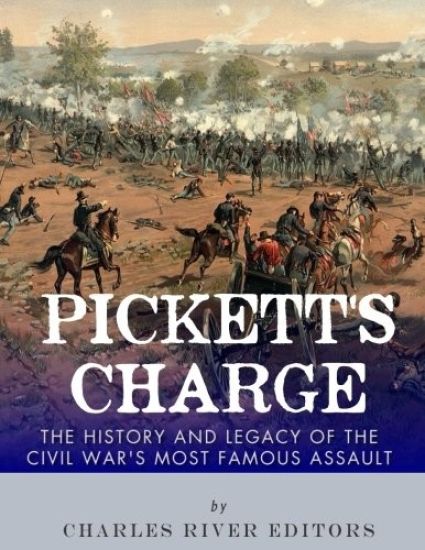
Pickett's Charge: The History and Legacy of the Civil War's Most Famous Assault

Pickett's Charge: The History and Legacy of the Civil War's Most Famous Assault

Charles River

Createspace Independent Publishing Platform
2018
nidottu
*Includes maps of the battle, pictures of the battlefield, and pictures of the important generals. *Includes descriptions of Pickett's Charge written by George Pickett, James Longstreet, Porter Alexander, and some soldiers who made the charge. *Explains Lee's strategy, Longstreet's argument, and an analysis of what went right and wrong. *Explains the legacy of Pickett's Charge and how it got its famous name. *Includes a Bibliography for further reading. Despite the fact that the Civil War began over 150 years ago, it remains one of the most widely discussed topics in America today, with Americans arguing over its causes, reenacting its famous battles, and debating which general was better than others. Americans continue to be fascinated by the Civil War icons who made the difference between victory and defeat in the war's great battles. The most famous attack of the Civil War was also one of its most fateful and fatal. Pickett's Charge, the climactic assault on the final day of the Battle of Gettysburg, has become the American version of the Charge of the Light Brigade, and it is one of the most famous events of the entire Civil War. Having been unable to break the Army of the Potomac's lines on the left and right flank during Day 2 of the Battle of Gettysburg, Confederate Army of Northern Virginia commander Robert E. Lee decided to make a thrust at the center of the Union's line with about 15,000 men spread out over three divisions. The charge required marching across an open field for about a mile, with the Union artillery holding high ground on all sides of the incoming Confederates. Though it is now known as Pickett's Charge, named after division commander George Pickett, the assignment for the charge was given to General James Longstreet, whose 1st Corps included Pickett's division. Longstreet had serious misgivings about Lee's plan and tried futilely to talk him out of it. Longstreet later wrote that he said to his commander, "General Lee, I have been a soldier all my life. It is my opinion that no fifteen thousand men ever arrayed for battle can take that position." Aware of the insanity of sending 15,000 men hurtling into all the Union artillery, Lee planned to use the Confederate artillery to try to knock out the Union artillery ahead of time. Although old friend William Pendleton was the artillery chief, the artillery cannonade would be supervised by Edward Porter Alexander, Longstreet's chief artillerist, who would have to give the go-ahead to the charging infantry because they were falling under Longstreet's command. Alexander later noted that Longstreet was so disturbed and dejected about ordering the attack that at one point he tried to make Alexander order the infantry forward, essentially doing Longstreet's dirty work for him. Unfortunately for Porter Alexander and the Confederates, the sheer number of cannons belched so much smoke that they had trouble gauging how effective the shells were. As it turned out, most of the artillery was overshooting the target, landing in the rear of the Union line. Reluctant to order the charge, Longstreet commanded Porter Alexander to order the timing for the charge. As Longstreet and Alexander anticipated, the charge was an utter disaster, incurring a nearly 50% casualty rate and failing to break the Union line. Pickett's Charge: The History and Legacy of the Civil War's Most Famous Assault profiles the history, context, and command decisions that all culminated in the most famous charge in American history. It also includes analysis of what went right and wrong, as well as what the major participants wrote about the charge. Along with maps and pictures of important people and places, you will learn about Pickett's Charge like you never have before, in no time at all.
Persepolis: The History and Legacy of the Ancient Persian Empire's Capital City

Persepolis: The History and Legacy of the Ancient Persian Empire's Capital City

Charles River

Createspace Independent Publishing Platform
2018
nidottu
*Includes pictures *Includes ancient historians' descriptions of Persepolis and the Persians *Includes online resources and a bibliography for further reading "By the favor of Ahuramazda these are the countries which I got into my possession along with this Persian people, which felt fear of me and bore me tribute: Elam, Media, Babylonia, Arabia, Assyria, Egypt, Armenia, Cappadocia, Lydia, the Greeks who are of the mainland and those who are by the sea, and countries which are across the sea, Sagartia, Parthia, Drangiana, Aria, Bactria, Sogdia, Chorasmia, Sattagydia, Arachosia, Hindus, Gandara, Sacae, Maka." - An inscription on a terrace wall in Persepolis, circa 521 CE Lying in the middle of a plain in modern day Iran is a forgotten ancient city: Persepolis. Built two and a half thousand years ago, it was known in its day as the richest city under the sun. Persepolis was the capital of Persia, the largest empire the world had ever seen, but after its destruction, it was largely forgotten for nearly 2,000 years, and the lives and achievements of those who built it were almost entirely erased from history. Alexander the Great's troops razed the city to the ground in a drunken riot to celebrate the conquest of the capital, after which time and sand buried it for centuries. It was not until the excavations of the 1930s that many of the relics, reliefs, and clay tablets that offer so much information about Persian life could be studied for the first time. Through archaeological remains, ancient texts, and work by a new generation of historians, a picture can today be built of this remarkable civilization and their capital city. Although the city had been destroyed, the legacy of the Persians survived, even as they mostly remain an enigma to the West and are not nearly as well understood as the Greeks, Romans, or Egyptians. In a sense, Persepolis and the Persian Empire are some of the most enduring mysteries of ancient civilization. Persepolis: The History and Legacy of the Ancient Persian Empire's Capital City looks at how the Persian city was built, its importance, and its collapse. Along with pictures depicting important people, places, and events, you will learn about Persepolis like never before.
Patrick Henry: The Life and Legacy of the Founding Father and Virginia's First Governor
*Includes pictures *Includes Henry's quotes about his life and career *Includes a bibliography for further reading "If this is treason, make the most of it." - Patrick Henry The American Revolution is replete with seminal moments that every American learns in school, from the "shot heard 'round the world" to the Declaration of Independence, but the events that led up to the fighting at Lexington & Concord were borne out of 10 years of division between the British and their American colonies over everything from colonial representation in governments to taxation, the nature of searches, and the quartering of British regulars in private houses. From 1764-1775, a chain of events that included lightning rods like the Townshend Acts led to bloodshed in the form of the Boston Massacre, while the Boston Tea Party became a symbol of nonviolent protest. Of course, the Revolutionary era also produced some of the most famous Americans in history, and Patrick Henry has the ironic distinction of frequently being overlooked in comparison to his contemporaries while also being remembered for speaking one of the most famous lines in American history despite the fact he may never have actually said it. When Henry famously cried out, "Give me liberty or give me death," he knew a surprising amount about both. He had known the liberty of running across open fields on warm Virginia mornings and of riding at breakneck speed across fields he owned. He had fought for, and won, the liberty of numerous clients he defended in Virginia's colonial courts. He had also taken the liberty of others, though for different reasons. He owned slaves and saw what it cost them to serve him each day, and he had even kept his own young wife in chains to prevent her from harming herself or one of their children. In the midst of the Revolutionary War, he was spared the horror of ordering men to their deaths by instead serving in an executive role during the war. He buried one wife and married another, and he lived to see 17 children born to the freedom he so cherished. Over time, he also helped shape this hard won freedom, speaking out against a strong federal government that he felt might take away the new nation's liberty. At the same time, he also lived to see the effects of unbridled liberty in France, and he was shaped by what he learned, to the extent that he spoke toward the end of his life for a more centralized government. Henry played crucial roles both during the Revolution and before it, locally and nationally. He was Virginia's first governor, and he was instrumental in convincing Virginian politicians to go to war. And yet, his life and career have mostly been reduced to the famous phrase "Give me liberty, or give me death," even though it's actually unclear whether those most famous of words were actually in the speech. This is because the first transcript of the speech came over a generation after Henry delivered it, in a biography of Henry written by William Wirt. Thus, ironically, historians are divided over whether the phrase Henry's best known for was actually his words or those of his biographer. Moreover, similar variations of that phrase already existed, and it's possible Henry was familiar with them, much the same way Franklin Roosevelt's line about fear had predecessors as far back as Duke Wellington over a century earlier. Either way, the words and the debate over it have overshadowed what was a monumental career in service of his new country, and the fact that Henry was at the forefront of the battles that ultimately shaped its direction. Patrick Henry: The Life and Legacy of the Founding Father and Virginia's First Governor looks at one of colonial Virginia's most important political leaders. Along with pictures of important people, places, and events, you will learn about Patrick Henry like never before.
Operation Silver Fox: The History of Nazi Germany's Arctic Invasion of the Soviet Union during World War II
*Includes pictures *Includes soldiers' accounts of the fighting *Includes online resources and a bibliography for further reading In the warm predawn darkness of June 22, 1941, 3 million men waited along a front hundreds of miles long, stretching from the Baltic coast of Poland to the Balkans. Ahead of them in the darkness lay the Soviet Union, its border guarded by millions of Red Army troops echeloned deep throughout the huge spaces of Russia. This massive gathering of Wehrmacht soldiers from Adolf Hitler's Third Reich and his allied states - notably Hungary and Romania - stood poised to carry out Operation Barbarossa, Hitler's surprise attack against the country of his putative ally, Soviet dictator Joseph Stalin. Today, everyone remembers the most famous consequences of Hitler's choice, particularly the fighting at Leningrad and Stalingrad, but the invasion was so comprehensive that it also involved fighting in the barren lands near the Arctic Circle, bringing fierce combat to the taiga and tundra. In fact, Arctic combat occurred in both the Pacific and European theaters of the war, and in both cases the operations were related in some measure to external lines of supply to the USSR. In the Pacific Theater, the Americans and Japanese met in the little-known but savagely contested Aleutian Islands Campaign. During this campaign IJA troops invaded North American territory for the only time in the war, setting off a months-long struggle on the remote island chain and in the frigid seas around it, culminating in a desperate tundra banzai charge in the harsh subarctic landscape of the distant north. Meanwhile, the Wehrmacht and the Red Army also met in the boreal pine forests, bogs, and tundra of Lapland and far northern Russia during the Barbarossa campaign of 1941. Fighting separately from the other Army Groups of the Third Reich, elite German Gebirgs (mountain) division soldiers and tough, resourceful Finns clashed with relatively determined and experienced Red Army soldiers in the forbidding terrain east of Finland's border. This campaign bore the elegant operational tile of Silberfuchs, or "Silver Fox." Aiming for Murmansk, a key Soviet port, or at least to sever the rail lines connecting it to points south and east, the Germans found themselves contending with the rugged, unfamiliar landscape, tough Soviet resistance, and as all too frequently occurred, the half-baked strategic meddling of Adolf Hitler, Fuhrer of the Third Reich. The Finns, for their part, had joined the Third Reich as military but not political allies to counterbalance the looming threat of the Soviet Union. The Soviets had already attacked Finland in late 1939 to early 1940, wresting the province of Karelia from their Scandinavian neighbor. Only the dauntless martial skill of the heavily outnumbered but indomitable Finns, coupled with Stalin's shift to securing his conquests in Poland, dissuaded the Soviets from attempting a full conquest of Finland. The Finns participated in Operation Silver Fox, albeit as a separate, independent command. The menace of the Soviets still loomed on Finland's eastern border, and the Finnish people wanted to win Karelia back in any case. Accordingly, Finn and German fought side by side, though their divergent goals contributed to Silver Fox's failure, and the Finns later turned on the Nazis near the end of the war to help bolster their territorial claims ahead of V-E Day.. Operation Silver Fox: The History of Nazi Germany's Arctic Invasion of the Soviet Union during World War II chronicles one of the most unheralded aspects of Nazi Germany's invasion of the USSR. Along with pictures of important people and places, you will learn about Operation Silver Fox like never before.
Nineveh: The History and Legacy of the Ancient Assyrian Capital

Nineveh: The History and Legacy of the Ancient Assyrian Capital

Charles River

Createspace Independent Publishing Platform
2018
nidottu
*Includes pictures *Includes ancient descriptions of Nineveh *Includes debate over whether Nineveh was home of the Hanging Gardens of Babylon *Includes online resources and a bibliography for further reading *Includes a table of contents "I captured 46 towns...by consolidating ramps to bring up battering rams, by infantry attacks, mines, breaches and siege engines." - Sennacherib When scholars study the history of the ancient Near East, several wars that had extremely brutal consequences (at least by modern standards) often stand out. Forced removal of entire populations, sieges that decimated entire cities, and wanton destruction of property were all tactics used by the various peoples of the ancient Near East against each other, but the Assyrians were the first people to make war a science. When the Assyrians are mentioned, images of war and brutality are among the first that come to mind, despite the fact that their culture prospered for nearly 2,000 years. Like a number of ancient individuals and empires in that region, the negative perception of ancient Assyrian culture was passed down through Biblical accounts, and regardless of the accuracy of the Bible's depiction of certain events, the Assyrians clearly played the role of adversary for the Israelites. Indeed, Assyria (Biblical Shinar) and the Assyrian people played an important role in many books of the Old Testament and are first mentioned in the book of Genesis: "And the beginning of his kingdom was Babel and Erech, and Akkad, and Calneh, in the land of Shinar. Out of that land went forth Ashur and built Nineveh and the city Rehoboth and Kallah." (Gen. 10:10-11). Although the Biblical accounts of the Assyrians are among the most interesting and are often corroborated with other historical sources, the Assyrians were much more than just the enemies of the Israelites and brutal thugs. Among all the cities that thrived in the ancient Near East, few can match the opulence and ostentatiousness of Nineveh, the capital of the Assyrian Empire for much of the seventh century BCE. During that time it became known for its mighty citadels, grand palaces, beautiful gardens, and even its zoos. In fact, the beauty of Nineveh, especially its gardens, impressed later writers so much that they assigned its gardens as one of the original Seven Wonders of the World, except unfortunately for Nineveh's memory, the location was placed in Babylon. The confusion that assigned one of the Wonders of the World to Babylon instead of Nineveh is in fact a large part of Nineveh's history - it was a great city during its time, but incessant warfare brought the metropolis to oblivion and eventually its history was forgotten or distorted. An examination of Nineveh demonstrates that in many ways it was the victim of the people who built it. When Nineveh was at its height, they controlled an empire that encompassed Egypt, Anatolia, Mesopotamia, and parts of Iran. Eventually, the Assyrians overextended themselves and their enemies overthrew them and destroyed much of their cities. Nineveh became lost for centuries, only mentioned in fragments by classical Greek historians, but modern archaeological methods were able to bring the lost city back to life in the nineteenth century. Today, through a combination of archaeological reports, classical Greek accounts, and ancient cuneiform inscriptions, the chronology of Nineveh can be reconstructed. An examination reveals that Nineveh played a vital role in the religious and political history of the ancient Near East and despite suffering immense damage at the hands of the Assyrians' enemies, continued to function as an important city for several centuries after the Assyrian Empire collapsed. Nineveh: The History and Legacy of the Ancient Assyrian Capital traces the history and legacy of one of the most influential cities of antiquity.
Notorious Outlaws of the Wild West: The Lives and Legacies of Jesse James, Billy the Kid, Butch Cassidy and the Sundance Kid
*Includes pictures of the outlaws and important people, places, and events in their lives. *Discusses the myths and legends surrounding the lives and deaths of each outlaw. *Includes a Bibliography for further reading. "There is a hell of excitement in this part of the country." - Jesse James "I'm not afraid to die like a man fighting, but I would not like to be killed like a dog unarmed.'' - Billy the Kid The Wild West has made legends out of many men after their deaths, but like Wild Bill Hickok, Jesse James was a celebrity during his life. However, while Hickok was (mostly) a lawman, Jesse James was and remains the most famous outlaw of the Wild West, with both his life of crime and his death remaining pop culture fixtures. Eventually James, his brother and their infamous gang became the most hunted outlaws in the country, but Jesse would famously be done in by the brother of his most trusted gang members. After Jesse moved in with the Ford brothers, Bob Ford began secretly negotiating turning in the famous outlaw to Missouri Governor Thomas Crittenden. On April 3, 1882, as the gang prepared for another robber, Jesse was famously shot in the back of the head by Bob Ford as he stood on a chair fixing a painting. While conspiracy theories have continued to linger that somehow James was not killed on that day, the Ford brothers would celebrate their participation in his murder, Bob himself would be murdered a few years later, and Jesse James's legacy had been ensured. Alongside Jesse James, Butch Cassidy and the Sundance Kid were two of the most notorious outlaws of the west. The duo had a full-fledged gang known as the Wild Bunch conducting robberies in the Southwest, and they became legendary for their shootouts and their escapes from the law. Eventually, Butch Cassidy and his most famous acquaintance fled as far east as New York City and as far south as Argentina. In fact, it was in South America that Butch Cassidy and the Sundance Kid are believed to have met their ultimate fate, in yet another shootout with Bolivian soldiers. The mystery and controversy surrounding that shootout (and whether the two bandits were actually them) have helped ensure their place in Western lore, and as with so many other legends of the West, people continue to speculate that Butch Cassidy and the Sundance Kid survived and lived out the rest of their lives. In many ways, the narrative of the Wild West has endured more as legend than reality, and a perfect example of that can be found in the legend of William Henry McCarty Jr., better known as William H. Bonney or "Billy the Kid". Indeed, separating fact from fiction when it comes to the life of the West's most famous outlaw is nearly impossible, due in great measure to the fact that the young man himself cultivated the image of a deadly outlaw and legendary gunman himself. Though Billy the Kid may have killed anywhere from 4-9 men in his short life, he was often credited for killing more than 20. With a wit as quick as his trigger, Billy the Kid had a bullet and a wisecrack for every man he killed, and his notoriety only grew when exaggerated accounts of his actions in Lincoln County eventually earned The Kid a bounty on his head. There was plenty of gunplay in the outlaw's life to help him become a well known if not celebrated figure in the West, but the legendary and controversial nature of his death has also helped him endure. Notorious Outlaws of the Wild West chronicles the lives and careers of the West's most famous outlaws, discusses the myths and legends surrounding their crimes and deaths, and analyzes their enduring legacies. Along with pictures of important people, places, and events, you will learn about Jesse James, Billy the Kid and Butch Cassidy like you never have before.
Odin and Thor: The Origins, History and Religious Evolution of the Norse Gods

Odin and Thor: The Origins, History and Religious Evolution of the Norse Gods

Charles River

Createspace Independent Publishing Platform
2018
nidottu
*Includes pictures of important places and historic illustrations and art depicting the gods and other important Norse figures. *Explains the historical origins of the gods, the mythological tales about them, and the religious and literary evolution of them. *Includes a Bibliography for further reading. "In swelling rage then rose up Thor, -- Seldom he sits when he such things hears, -- And the oaths were broken, the words and bonds, The mighty pledges between them made." - V lusp Line #26 from the Poetic Edda A hammer no mortal can lift. A flame-haired fiery storm god. A comic book alien-hero-god who defends humanity. The swastika. Even the name "Thursday" ("Thor's Day"). Despite the virtual disappearance of the indigenous Norse religion and mythology several centuries ago, modern society still regularly encounters the storm god Thor, who continues to be brought back to life in the form of literature and was recently the protagonist in a big-budget Hollywood movie. What is it about this god, out of the hundreds (if not thousands) of deities that were consigned to the dustbin of history by the world's major religions, that so captures people's imaginations today? A better understanding of Thor's appeal can be found in just about every aspect of the history and evolution of the figure over the centuries, including the origins of the god, the evocative imagery used to describe him, and even the parallels between Thor and similar gods and heroes. All of this has been buffeted by literature, such as the stories about Thor found in the Prose Edda and the Poetic Edda, and the connection societies have had with Thor for hundreds of years, even up until today. This work also examines the decline and displacement of Norse mythology by Christianity, the reasons why Thor was often the last god worshiped by the Norse, and today's remnants of Thorism, including his parallels in other faiths, his role in revived Neo-Heathenism and his appearance in other media as a hero in comics and films. Thor's popularity has historically been rivaled only by his father Odin. A one-eyed old man, with a gray cloak and a wide-brimmed hat leaning on a staff. A wanderer who appears when least expected, bringing triumph or doom. The god of prophecy, poetry and fate. A shapechanger. A sorcerer. The god Odin cuts a dramatic figure in Norse mythology and is still a part of the popular imagination. He is the inspiration for figures like J. R. R. Tolkien's Gandalf the Grey, and he still appears in modern literature as varied as Marvel Comics and Neil Gaiman's novel American Gods (2001). Alongside Thor, Odin is one of the best known Norse gods, and it's often easy to forget that he was once at the heart of a pantheon devoutly worshiped by millions of Europeans in the Middle Ages. Odin has numerous names and titles (over 200 by one account), but his best known title is "The All-Father," the co-creator of Earth ("Midgard"), humanity and all of the creatures that inhabitant this world. He is also, importantly, the god of prophecy, ecstasy, and poetry, all roles that were closely connected in the Norse world. Along with pictures and a bibliography, you will learn about both gods like you never have before.
New Amsterdam and British New York: The History of New York City as a Colonial Possession before the Revolutionary War
*Includes pictures *Includes contemporary accounts of colonial New York *Includes a bibliography for further reading "One belongs to New York instantly; one belongs to it as much in five minutes as in five years." - Tom Wolfe New York City. The Big Apple. The city of dreams. The city so nice they named it twice. These are just some of the monikers given to not only the most highly populated city in North America, but perhaps the most culturally diverse region in all the world. Modern age New York is stamped on the map for its breathtaking skylines and iconic financial centers, as well as being the quintessential melting pot, where people go to "make it big" and take a chance on long-awaited dreams. What is less known is the rich tapestry of history behind this one-of-a-kind city. It is one that tells the story of invigorating hope, new discoveries, and broadening horizons, shaped by power wrangles and blood-shedding - all for the sake of conquest. After much exploration in the early 17th century, the Dutch returned to build settlements on the southern tip of Manhattan and elsewhere, and by 1626 trade was brisk both between the Native Americans and the European settlers and between the settlers and their mother countries. In the 1620s, the Dutch established their first permanent base at Fort Orange, a city now known as Albany, and the Dutch dispatched vessels housing 30 families to Nutten Island and re-branded the settlement as "New Amsterdam." All in all, 110 men, women, and young children of the Belgian Huguenots - a French Protestant sect - settled in their new sanctuary. This would be the breeding ground for the Dutch's new experiment. They aimed to create a city of religious tolerance, where people from all backgrounds could seek refuge and live alongside one another in peace. More so, the Dutch were in the business of making money, a mission that still rings true of the state in this day and age. In 1652, England and the Netherlands were at war, but heavy losses on both sides hurried the prospect of peace. Nevertheless, the two countries' representatives in the New World were increasingly hostile toward each other, even though they were an ocean away from the main belligerents. The Puritans of New England were said to be intent on attacking Manhattan, so preparations were made in New Amsterdam. A wall would be erected at New Amsterdam's northern border, at a cost of 5,000 guilders, with the labor being cheaply supplied by slaves. Made of 15 foot planks, bastions, cannons, and two gates (one at the corner of present-day Wall and Pearl, the other at Wall and Broadway) the location of the wall would become not a barrier to invasion but the center of the financial world. In the meantime, however, the wall ultimately proved as useless as all other Dutch defenses and strategies. In 1664, Colonel Richard Nicolls was sent by the English Duke of York to take Manhattan and all other Dutch holdings. Nicolls sent Stuyvesant a letter that promised life and liberty for all if the inhabitants would lay down their arms and surrender. Stuyvesant hid this letter and tore up another, but powerful residents in New Amsterdam forced him to give up in the face of too formidable an enemy. In the end, the diversity of New Amsterdam helped assure that the people would rather become part of New York City than lose everything. The Dutch briefly reclaimed the city, but the tide had turned, and New York became an English settlement. For their own part, the Lenni-Lenape who had lived there for so long dwindled until there were only about 200 of them left at the beginning of the 18th century. Colonial New York City: The History of the City under British Control before the American Revolution chronicles the history of the city during its time in British hands. Along with pictures of important people, places, and events, you will learn about New York City as a British possession like never before, in no time at all.
Nazi Germany's Rocket Science: The History of the Third Reich's Experimental Weapons Technology and Research during World War II
*Includes pictures *Includes accounts of Nazi Germany's experiments written by its scientists *Profiles famous scientists like Wernher von Braun and their accomplishments *Includes online resources and a bibliography for further reading *Includes a table of contents After the last shots of World War II were fired and the process of rebuilding Germany and Europe began, the Western Allies and the Soviet Union each tried to obtain the services of the Third Reich's leading scientists, especially those involved in rocketry, missile technology, and aerospace research. Naturally, this was a delicate affair due to the fact many of the German scientists were not only active Nazis but had helped the Nazi war machine terrorize the world. At the same time, by the late war period, the Anglo-American Allies formed a clear picture of the Soviet state. Though forced to ally with the USSR's dictator, Josef Stalin, the West came to understand Communist Russia represented yet another hungry totalitarian power, and thus a very real threat to an independent Europe. Both the Western Allies and the Soviets knew of Adolf Hitler's V-2 rocket program, the forerunner of ballistic missiles and the space race. Each recognized the immense strategic value of these technologies and wished to secure their benefits for themselves. As the Soviets contemplated additional expansion following the "Great Patriotic War" and the U. S. military came to understand the putative allies of today would emerge as the enemies of tomorrow, the men possessing knowledge of the V-2 rockets and other Third Reich military technology programs became seen as crucial pieces in the incipient NATO versus Warsaw Pact standoff. The result was the American-led "Operation Paperclip" on the Western side, which resulted in German scientists putting their expertise at the disposal of the U. S. and other NATO members. Operation Paperclip aimed not only to obtain the benefits of German scientific advances for the United States but also to deny them to the potentially hostile Soviets. The Western approach, however self-interested, typically met with voluntary compliance on the German scientists' parts. In contrast, the Soviet answer to Paperclip, Operation Osoaviakhim, used the implied threat of imprisonment, torture, and death, the characteristic tools of Stalinist Russia, to coerce assistance from German scientists and engineers following the war. These men yielded rich dividends to the Soviet state in terms of achieving at least temporary technical parity with the USSR's western rivals. To say Operation Paperclip had a profound impact on the Cold War and American history would be an understatement. The most well known example of the operation's "success" is Wernher von Braun, who was once a member of a branch of the SS involved in the Holocaust, would become known as the "father of rocket science" and fascinate the world with visions of winged rockets and space stations as a "new" Manhattan Project, one that NASA would eventually adopt. And in addition to the weaponization of ballistic missiles that progressed throughout the Cold War, von Braun's expertise was used for America's most historic space missions. Nazi Germany's Rocket Science: The History of the Third Reich's Experimental Weapons Technology and Research during World War II analyzes the Nazis' technological advances and the covert attempts to import Nazi scientists after the fall of the Third Reich. Along with pictures of important people, places, and events, you will learn about Germany's rocket science like never before, in no time at all.
Native American Tribes: The History and Culture of the Nez Perce

Native American Tribes: The History and Culture of the Nez Perce

Charles River

Createspace Independent Publishing Platform
2018
nidottu
*Includes pictures of important people and places. *Explains the origins, history, religion, and social structure of the tribe. *Discusses the tribe's involvement in the Lewis & Clark expedition. *Includes a Bibliography for further reading. From the "Trail of Tears" to Wounded Knee and Little Bighorn, the narrative of American history is incomplete without the inclusion of the Native Americans that lived on the continent before European settlers arrived in the 16th and 17th centuries. Since the first contact between natives and settlers, tribes like the Sioux, Cherokee, and Navajo have both fascinated and perplexed outsiders with their history, language, and culture. In Charles River Editors' Native American Tribes series, readers can get caught up to speed on the history and culture of North America's most famous native tribes in the time it takes to finish a commute, while learning interesting facts long forgotten or never known. Many Native American tribes went out of their way to steer clear of white settlers during the 19th century, but the Nez Perc people might have remained confined to historical obscurity if not for their willingness to establish ties with European adventurers, explorers, clergy, and settlers. By doing so, most notably assisting the Lewis & Clark Expedition in 1805, the Nez Perc succeeded in not only bringing to light their ancient heritage but staking their claim to their place in modernity. From their role in helping Lewis and Clark blaze a trail to the Northwest Pacific coast in the early 19th century to their modern-day roles in the fields of academics, politics, the arts and sciences, the Nez Perc people stand among America's most influential. Nez Perc literally means "pierced nose" in French, but it is unclear whether the tribe ever used nose piercing as a form of ornament. Today, the tribe is best known for being led by Chief Joseph in the late 19th century. When he died in 1904, most Americans who knew his people's story considered Chief Joseph, whose Nez Perc name is Himahtooyahlatkekt ("Thunder Rolling Down from the Mountains"), a military genius and an "Indian Napoleon." This assessment of the Native American leader was based on a 1,500-mile odyssey during which he and his people left their reservation in the hopes of escaping to Canada, where the Nez Perc intended to join Sitting Bull and his Hunkpapa Sioux band. Perhaps it's not surprising that Chief Joseph (who was far more of a diplomat than military tactician) was misunderstood and misrepresented by Americans, because his people were misunderstood as well. By the middle of the 19th century, the Nez Perc was one of the strongest Native American groups in the Pacific Northwest, and they had maintained friendly relations with American settlers for several decades. Lewis and Clark had considered them so friendly and reliable that they left their horses with the Nez Perc as they loaded onto canoes and journeyed to the Pacific Coast. But the Nez Perc 's attitudes would soon change as the United States government began to coerce them to cede their traditional homeland to newly arriving white settlers, and the Nez Perc began suffering a fate very similar to that of other Native American tribes to the east. Like the Sioux, the Cherokee, the Seminole, and other tribes, the Nez Perc became notorious among contemporary Americans for resisting their displacement and fighting the U. S. Army in the 1870s. Native American Tribes: The History and Culture of the Nez Perc comprehensively covers the history, culture, and legacy of the Pacific Northwest's most famous tribe. Along with pictures and a bibliography, you will learn about the Nez Perc like you never have before, in no time at all.
Native American Tribes: The History and Culture of the Chippewa

Native American Tribes: The History and Culture of the Chippewa

Charles River

Createspace Independent Publishing Platform
2018
nidottu
*Includes pictures of important people, places, and art. *Includes a Bibliography for further reading. "Sometimes I go about in pity for myself, and all the while, a great wind carries me across the sky." - Chippewa proverb From the "Trail of Tears" to Wounded Knee and Little Bighorn, the narrative of American history is incomplete without the inclusion of the Native Americans that lived on the continent before European settlers arrived in the 16th and 17th centuries. Since the first contact between natives and settlers, tribes like the Sioux, Cherokee, and Navajo have both fascinated and perplexed outsiders with their history, language, and culture. In Charles River Editors' Native American Tribes series, readers can get caught up to speed on the history and culture of North America's most famous native tribes in the time it takes to finish a commute, while learning interesting facts long forgotten or never known. Outside of the Midwest, the Chippewa are not as well-known as other Native American tribes like the Sioux or Cherokee, but they have long been one of the biggest groups in all of North America. Not surprisingly, their presence around the Great Lakes region made them especially important to early European explorers who sailed the St. Lawrence and came into contact with the natives as they continued searching for the Northwest Passage. The French in particular conducted substantial fur trading with the Chippewa, and it is thanks to the European explorers that the various groups have all been identified as Chippewa today. Unlike other Plains peoples and tribes scattered throughout North America, the Chippewa fared relatively well after contact was established with European and American settlers. They had been enemies of the Iroquois before and during European colonization of North America, and then engaged in different political alliances with the French and British as their interests dictated. Eventually, they engaged in violent conflicts over land with the growing United States as well, and the pattern of treaties and war inevitably pushed many of the Chippewa off the lands they had resided on for centuries. Nevertheless, many different groups of Chippewa continue to inhabit large swaths of the United States and Canada today. Native American Tribes: The History and Culture of the Chippewa comprehensively covers the culture and history of the famous tribe, profiling their origins, their famous leaders, and their lasting legacy. Along with pictures of important people, places, and events, you will learn about the Chippewa like you never have before, in no time at all.
Native American Tribes: The History and Culture of the Chickasaw

Native American Tribes: The History and Culture of the Chickasaw

Charles River

Createspace Independent Publishing Platform
2018
nidottu
*Includes pictures. *Includes a bibliography for further reading. "Neither the Choctaws nor Chicksaws ever engaged in war against the American people, but always stood as their faithful allies." - Horatio Cushman From the Trail of Tears to Wounded Knee and Little Bighorn, the narrative of American history is incomplete without the inclusion of the Native Americans that lived on the continent before European settlers arrived in the 16th and 17th centuries. Since the first contact between natives and settlers, tribes like the Sioux, Cherokee, and Navajo have both fascinated and perplexed outsiders with their history, language, and culture. In Charles River Editors' Native American Tribes series, readers can get caught up to speed on the history and culture of North America's most famous native tribes in the time it takes to finish a commute, while learning interesting facts long forgotten or never known. The Five Civilized Tribes are among the best known Native American groups in American history, and they were even celebrated by contemporary Americans for their abilities to adapt to white culture. But tragically, they are also well known tribes due to the trials and tribulations they suffered by being forcibly moved west along the Trail of Tears. Though not as well known as the Cherokee, one of the Five Civilized Tribes was the Chickasaw. With roots that tie them to the Ancient Moundbuilders, the Chickasaw were one of the most established groups in the Southeastern United States, and they were among the first natives encountered by Spanish explorer Hernando De Soto's historic expedition in the mid-16th century. The Chickasaw became known as one of the Five Civilized Tribes for quickly assimilating aspects of European culture, but in response to early European contact, they became part of one of the strongest confederacies in the region. Ultimately, however, they were pushed westward during the mid-19th century and were notoriously part of the Trail of Tears. Native American Tribes: The History and Culture of the Chickasaw comprehensively covers the culture and history of the famous group, profiling their origins, their history, and their lasting legacy. Along with pictures of important people, places, and events, you will learn about one of the Five Civilized Tribes like you never have before, in no time at all.
Native American Tribes: The History and Culture of the Cherokee

Native American Tribes: The History and Culture of the Cherokee

Charles River

Createspace Independent Publishing Platform
2018
nidottu
*Includes pictures of important people, places, and events. *Explains the origins, religion, and social structure of the Cherokee *Comprehensively covers the Trail of Tears and includes eyewitness accounts of it. *Includes a Bibliography for further reading. "We are overwhelmed Our hearts are sickened, our utterance is paralyzed, when we reflect on the condition in which we are placed, by the audacious practices of unprincipled men, who have managed their stratagems with so much dexterity as to impose on the Government of the United States, in the face of our earnest, solemn, and reiterated protestations." - Principal Chief John Ross From the "Trail of Tears" to Wounded Knee and Little Bighorn, the narrative of American history is incomplete without the inclusion of the Native Americans that lived on the continent before European settlers arrived in the 16th and 17th centuries. Since the first contact between natives and settlers, tribes like the Sioux, Cherokee, and Navajo have both fascinated and perplexed outsiders with their history, language, and culture. In Charles River Editors' Native American Tribes series, readers can get caught up to speed on the history and culture of North America's most famous native tribes in the time it takes to finish a commute, while learning interesting facts long forgotten or never known. Tragically, the Cherokee is one of America's best known tribes due to the trials and tribulations they suffered by being forcibly moved west along the "Trail of Tears", but that overlooks the contributions they made to American society well before the 19th century. The Cherokee began the process of assimilation into European America very early, even before the establishment of the Unites States, and by the early 19th century they were one of the "Five Civilized Tribes." Ultimately, however, it is unclear what benefits "civilization" brought the tribe. Throughout the colonial period and after the American Revolution, the Cherokee struggled to satisfy the whims and desires of American government officials and settlers, often suffering injustices after complying with their desires. Nevertheless, the Cherokee continued to endure, and after being pushed west, they rose from humble origins as refugees new to the southeastern United States to build themselves back up into a powerhouse both economically and militarily. Even after being forced to leave their traditional homeland again, they once more rose to become a powerful tribe and nation, ruling themselves and building their economic power through wise and skillful leadership. Despite all of the hostilities, the Cherokee ultimately became the first people of non-European descent to become U. S. citizens en masse, and today the Cherokee Nation is the largest federally recognized tribe in the United States, boasting over 300,000 members. Given what they overcame in the last 200 years, the story of the Cherokee Nation is a testament to the resiliency, cohesiveness, and power of the Cherokee people. Native American Tribes: The History and Culture of the Cherokee comprehensively covers the culture and history of the famous tribe, profiling their origins, their famous leaders, and their lasting legacy. Along with pictures of important people, places, and events, you will learn about the Cherokee like you never have before, in no time at all.
Native American Tribes: The History and Culture of the Arapaho

Native American Tribes: The History and Culture of the Arapaho

Charles River

Createspace Independent Publishing Platform
2018
nidottu
*Includes pictures of important people and places. *Explains the origins, history, religion, and social structure of the Arapaho. *Includes a Bibliography for further reading. From the "Trail of Tears" to Wounded Knee and Little Bighorn, the narrative of American history is incomplete without the inclusion of the Native Americans that lived on the continent before European settlers arrived in the 16th and 17th centuries. Since the first contact between natives and settlers, tribes like the Sioux, Cherokee, and Navajo have both fascinated and perplexed outsiders with their history, language, and culture. In Charles River Editors' Native American Tribes series, readers can get caught up to speed on the history and culture of North America's most famous native tribes in the time it takes to finish a commute, while learning interesting facts long forgotten or never known. One of the most influential Native American tribes on the Great Plains was the Arapaho, a group so renowned among neighboring Native Americans that it's believed their name came from a Pawnee word for "trader. Like other notable Plains tribes, the Arapaho split off from other groups around the 16th-17th centuries and shifted from a sedentary agricultural society to the kind of nomadic group many envision when thinking of groups on the Plains. That nomadic lifestyle brought them into contact with the Sioux and Cheyenne, both of whom became allies as white settlers pushed west and led to conflicts. The United States sought to defuse tensions with natives during the westward push by drafting treaties regarding major pieces of land, often without understanding the complex structure of the various tribes, and subgroups within those tribes. Most notably, the Arapaho were victims of the Sand Creek Massacre in 1864, an action considered so heinous that the leader of the attack, Colonel John Chivington, was actually relieved of command after it. Ultimately, the Arapaho were forced onto reservations alongside the Shoshone, one of the tribes Lewis and Clark encountered on their historic expedition in the early 19th century. Today, they are jointly recognized with the Cheyenne, a group they were closely associated with for centuries. Native American Tribes: The History and Culture of the Arapaho comprehensively covers the culture and history of the famous group, profiling their origins, their history, and their lasting legacy. Along with pictures of important people, places, and events, you will learn about the Arapaho like you never have before, in no time at all.