Kirjojen hintavertailu – 12 903 727 kirjaa ja 27 kauppaa

Kirjailija

Charles River

Kirjat ja teokset yhdessä paikassa: 4 673 kirjaa, julkaisuja vuosilta 2013–2022, suosituimpiin kuuluu William Powell and Myrna Loy: The Lives and Careers of One of Classical Hollywood's Most Iconic Duos. Vertaile teosten hintoja ja tarkista saatavuus suomalaisista kirjakaupoista.

4 673 kirjaa

Kirjojen julkaisuvuodet: 2013–2022.

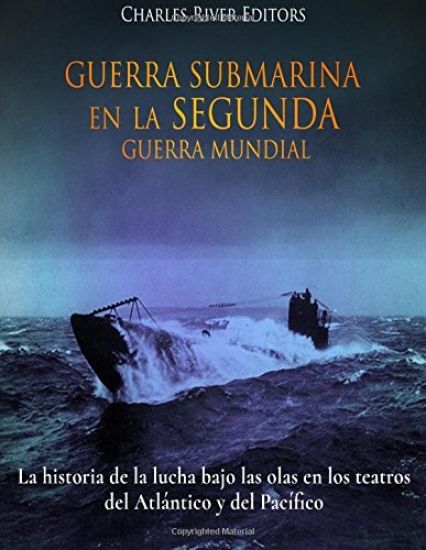
Guerra Submarina en la Segunda Guerra Mundial: La historia de la lucha bajo las olas en los teatros del Atlántico y del Pacífico
El peligro merode bajo las aguas fr as y grises del Mar del Norte y tambi n bajo las brillantes olas azules del Atl ntico tropical durante la Segunda Guerra Mundial, cuando el Tercer Reich de Hitler intentaba estrangular las l neas de suministro de los Aliados con ataques de U-Boot (abreviatura del alem n Unterseeboot - plural U-Boote). Submarinos alemanes y brit nicos peinaban el vasto campo de batalla oce nico en busca de presas, mientras los cient ficos desarrollaban nuevas tecnolog as y contramedidas. La guerra submarina comenz tentativamente durante la Guerra Civil estadounidense (aunque los Pa ses Bajos e Inglaterra hab an hecho peque os prototipos siglos atr s, y el sargento estadounidense Ezra Lee pilot en vano el monoplaza Turtle contra el HMS Eagle cerca de Nueva York en 1776). La invenci n del torpedo por parte del brit nico Robert Whitehead introdujo el arma que ser a luego usada con m s frecuencia por los submarinos. Mejoramientos continuos al dise o de Whitehead conllevaron a los torpedos militares que fueron desplegados contra las rutas mar timas de env o durante ambas Guerras Mundiales. Los submarinos tuvieron un impacto decisivo en el resultado de la Batalla del Pac fico en la Segunda Guerra Mundial. La flota submarina de los Estados Unidos, bajo el mando general, si bien no exclusivamente, del Vicealmirante Charles Lockwood, estrangul las l neas de suministro y tr fico naval del Imperio del Jap n. Sus "asaltos al comercio" lisiaron la capacidad japonesa, tanto de mantener abastecidas sus unidades en el frente, como de fabricar las armas, embarcaciones y veh culos que necesitaba para continuar con xito la lucha. Tanto los Estados Unidos como Jap n produjeron excelentes submarinos de alta tecnolog a en el contexto de la era de la II Guerra Mundial. Los submarinos Clase I de la Armada Imperial Japonesa (AIJ) demostraron excelente estabilidad en aguas dif ciles y ofrec an la versatilidad que les daba su gran tama o, incluyendo la capacidad de servir como naves nodrizas para mini submarinos, como portaaviones para aviones exploradores, o incluso como bombarderos especializados. Los torpedos Tipo 93 Long Lance y Tipo 95 que llevaban eran lo suficientemente poderosos para hundir buques capitales como acorazados y portaviones, desde varias millas de distancia. Los submarinos de la Marina de los Estados Unidos (US Navy - USN), si bien m s peque os, pod an sumergirse profundamente, moverse r pidamente y proporcionar tanto potencia de fuego como probabilidades de supervivencia. Aunque sus torpedos Tipo XIV y Tipo XVIII no igualaban al Tipo 93 japon s, igualmente ten an potencia letal, particularmente tras ser mejorados a finales de 1943. El USS Archerfish tambi n demostr a los buques capitales japoneses la letalidad de los submarinos estadounidenses. Los submarinistas de ambas flotas demostraron inmenso valor, osad a y habilidad en el ejercicio de su deber. Ambos grupos de hombres exhibieron agresi n, patriotismo y esp ritu de lucha en igual medida, independientemente del lente cultural a trav s del cual se manifestaron estos rasgos. Ambas marinas produjeron con xito oficiales submarinistas profesionales y altamente capacitados. Los japoneses, sin embargo, decidieron utilizar sus submarinos principalmente como apoyo para grandes acciones de flota a distancias visuales, lo cual nunca ocurri . En lugar de eso, los submarinos llevaron a cabo ataques espor dicos y descoordinados, y el resto del tiempo, permanecieron en guardias de vigilancia o vieron su tiempo desperdiciado en transporte de suministros y evacuaciones subacu ticas.

Mary Surratt: The Life of the Alleged Lincoln Conspirator Who Became the First Woman Executed by the U.S. Government
*Includes pictures *Explains the conspiracy and includes accounts of Surratt's involvement and trial *Includes online resources and a bibliography for further reading *Includes a table of contents "Only in the case of Dr. Samuel Alexander Mudd is there as much controversy as to the guilt or innocence of one of the defendants." - Laurie Verge Before the night of April 14, 1865, John Wilkes Booth was one of the most famous actors of his time, and President Abraham Lincoln had even watched him perform, but his most significant performance at a theater did not take place on the stage. That night, Booth became one of history's most infamous assassins when he shot President Lincoln at Ford's Theatre in Washington, D. C. Perhaps not surprisingly, the actor's flair for the dramatic came at a cost to the plot. It took almost no time for the shocked public and the federal government to begin unraveling Booth's conspiracy, which had mostly faltered from the beginning. Following the shooting, America's most famous manhunt commenced, and it was a 12 day pursuit that became the stuff of legends and controversy itself. Eight others were eventually tried for their alleged involvement in the plot and convicted, and four were hanged shortly thereafter as a result of some of the nation's most famous trials. Though the conspiracy and the other conspirators as a whole are often forgotten, the most well-known among them today is probably Mary Surratt, whose boarding house was used by the conspirators (including her son) to hatch and plan out the conspiracy that ultimately culminated with the Lincoln assassination. However, while the cases against the other conspirators were strong, the ties between Surratt, who professed innocence, were more tenuous, and it mostly fell on the military tribunal to insinuate that Surratt was aware of the planning going on in the house. In addition to that, while Mrs. Surratt was being detained, the conspirator who attacked Secretary of State Seward, Lewis Powell, showed up in disguise at her boarding house three days after the attacks, further damning her by association. The trial was no less controversial, as it was handled by a military tribunal that was short on professional counsel on both sides. A number of witnesses were called, and the defense sought to impeach witness testimony and poke for inaccuracies, but in the end, Surratt was sentenced to hang, and all of her appeals for clemency either went unheard or were rejected. On July 7, 1865, Mary Surratt became the first woman executed by the U. S. government. Mary Surratt: The Life of the Alleged Lincoln Conspirator Who Became the First Woman Executed by the U. S. Government comprehensively covers the controversial life and trial of Mary Surratt. Along with pictures of the important people and places, you will learn about the alleged conspirator like you never have before.
Religions of the World: The History of Buddhism

Religions of the World: The History of Buddhism

Charles River

Createspace Independent Publishing Platform
2018
nidottu
*Explains how Buddhism spread from the time of the Buddha to the present day. *Explains the Buddha's life and the different teachings of different Buddhist sects. *Includes pictures depicting the Buddha and other important people, places, and events. *Includes Book 1 of the Hymns of the Sama Veda A lot of ink has been spilled covering the lives of history's most influential figures, but how much of the forest is lost for the trees? Throughout time, people have been religious by nature, and billions today adhere to unique faiths across the world. In Charles River Editors' Religions of the World, readers can get caught up to speed on today's religions and yesterday's religions in the time it takes to finish a commute, while learning interesting facts long forgotten or never known. In the West, Buddhism is a religion that everyone has heard of but one that few truly understand aside from Buddhists themselves. For almost 2,500 years, Buddhism has been dominant on the Indian subcontinent, based on the traditions, beliefs, and practices that came about from the teachings of the Buddha (Siddhartha Gautama), the Sansrkit word for "the awakened one." Today, three distinct branches of Buddhism have mostly fanned out across Asia, and it's believed that upwards of half a billion people practice Buddhism today, and some of the traditional practices and principles of the religion, including the concepts of karma, reincarnation and the practice of yoga are all commonplace ideas across the world. Who was the Buddha, how did Buddhism become one of the world's major religions, and what are the main concepts and teachings of the religion? Religions of the World: The History of Buddhism examines the history and main tenets of Buddhism, explaining the way the religion has evolved over time, the similarities it shares with other religions and the differences that make it unique. Along with pictures of important figures and places, you will learn about Buddhism like you never have before, in no time at all.
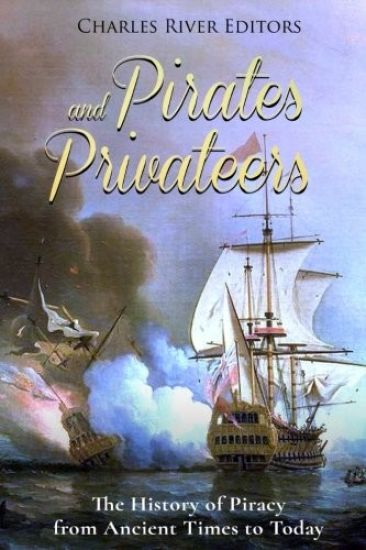
Pirates and Privateers: The History of Piracy from Ancient Times to Today

Pirates and Privateers: The History of Piracy from Ancient Times to Today

Charles River

Createspace Independent Publishing Platform
2018
nidottu
*Includes pictures *Includes online resources and a bibliography for further reading The people who have lived outside the boundaries of normal societies and refused to play by the rules have long fascinated the world, and nowhere is this more evident than the continuing interest in the pirates of centuries past. As the subjects of books, movies, and even theme park rides, people continue to let their imaginations go when it comes to pirates, with buried treasure, parrots, and walking the plank all ingrained in pop culture's perception of them. The word "pirate" conjures up a romantic image of wild sea-faring rogues, living free on the high seas, and the pirates people usually think of lived during the Golden Age of Piracy, when fighting ships were powered by sail and fights between them were decided with cannons and boarding actions. Indeed, it would be an understatement to say that pop culture's perception of piracy and pirates has been primarily influenced by Captain Edward Teach, known to the world as Blackbeard, the most famous pirate of all time. An English pirate who terrorized the high seas near the Carolinas in the early 18th century, Blackbeard was the gold standard, and in the 300 years since his death he has inspired legends that have spanned books like Treasure Island. Of course, like any legendary figure, Blackbeard is remembered today based more on myths than reality. People continue to let their imaginations go when it comes to pirates, picturing them as the types who captured booty, hid buried treasure, and fought with superhuman strength. People have long claimed that pirates' ghosts still haunt the Atlantic Ocean - Blackbeard's contemporaries were so scared of him that they claimed to have seen his headless body swim around his pirate boat three times. In reality, there have been pirates of some sort throughout recorded history. Whether free-living criminals or the state-sponsored pirates known as privateers, the one constant has been the nature of their crimes. Pirates are seaborne bandits who use force of arms to steal from ships and coastal communities, yet their names have acquired a strange glamour. Due to their violent crimes, pirates and privateers were rightly feared by ordinary people in their own age, but distance has allowed the sense of violence to fade and the sense of adventure to rise. Some, like Sir Francis Drake and Captain Henry Morgan, became national heroes. Others, like Blackbeard, Anne Bonny, and Mary Read, became figures of legend, their style of living turned into children's stories and theme park rides, cleansed of its bloodshed and brutality. Pirates and Privateers: The History and Legacy of Commerce Raiding during the Age of Exploration explore the history of piracy, from ancient times to the modern age. We'll look at what life was like for pirates, particularly during the Golden Age of the Caribbean buccaneers. Along with pictures of important people, places, and events, you will learn about pirates and privateers like never before.
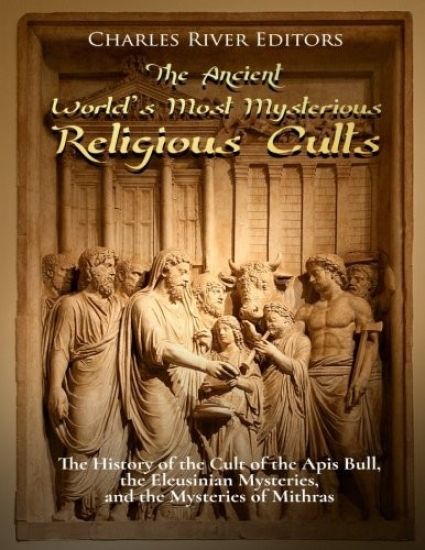
The Ancient World's Most Mysterious Religious Cults: The History of the Cult of the Apis Bull, the Eleusinian Mysteries, and the Mysteries of Mithras
*Includes pictures *Includes ancient accounts *Includes online resources and a bibliography for further reading Africa may have given rise to the first human beings, and Egypt probably gave rise to the first great civilizations, which continue to fascinate modern societies across the globe nearly 5,000 years later. From the Library and Lighthouse of Alexandria to the Great Pyramid at Giza, the Ancient Egyptians produced several wonders of the world, revolutionized architecture and construction, created some of the world's first systems of mathematics and medicine, and established language and art that spread across the known world. With world-famous leaders like King Tut and Cleopatra, it's no wonder that today's world has so many Egyptologists. To the ancient Egyptians, the gods and goddesses were all around them and could be seen daily in nature. Nearly every animal found in ancient Egypt, both domestic and wild, were associated with a god or goddess, which can be seen in Egyptian art where deities are often depicted with human bodies and animal heads. The Apis cult began early in Egyptian history and gradually rose to prominence until, like the other animal cults, it became the object of popular veneration for all Egyptians. Despite gaining popularity with Egyptians of the lower classes, the Apis cult was also patronized by all of Egypt's kings, which included foreign kings who wanted to legitimize their rule in the eyes of the Egyptian people. Ancient Greece and its mythology has fascinated people for thousands of years, and few elements have intrigued people quite like the Eleusinian Mysteries, which the Greeks believed transformed the initiates and gave them knowledge that eased both the living of life on earth and allayed fears of death, allowing an acceptance of their ultimate fate. The influence of the Eleusinian Mysteries was also far reaching; for example, the Telesterion is reminiscent of the labyrinthine, symbolic structures that can be found all over pre-historic Europe, ranging from those in Ireland to Malta and Crete to the Shetlands. The larger precinct of Eleusis, combining as it did caves, terraces and buildings carved into the rock again, all echo that ancient past. The external journey of the initiate is mirrored in his internal journey, and what can be seen is that the spiritual torch of classical Greece, as exemplified in these rites, hides the much older worship of deities. It was the spirit of those older gods and goddesses that ultimately pervaded Eleusis. In the early Roman Empire, as Christianity struggled to gain a foothold and survive in the polytheistic pool of Roman theology, its greatest rivals weren't the Caesars or the Roman aristocracy but rather the faith and devotion of the common Roman legionary. The faith of these men was centered on the god Mithras, who, they believed, led them to victory upon the field of battle and had done so for nearly four centuries. Despite this widespread belief among soldiers, the cult of Mithras was not a creation of the Romans, although they would eventually add their own rituals and mysteries to the ancient religion. In fact, the Mithraic religion was an Indo-Persian creation, a theology which managed to travel from India and back into the Hellenic and Roman world by way of Alexander the Great's conquest of the Persian Empire. Of course, if the Mithras cult began as a Roman interpretation of some elements of Zoroastrian theology, then new questions are raised. Perhaps the most obvious question is why the Romans would adopt one of their biggest enemies' gods. The answer to this question may never be revealed, but the fact that the Romans worshiped Mithra demonstrates the strength and vitality of foreign cultures, even when Rome conquered them.
Los fantasmas de Inglaterra: Una Colección de Historias de Fantasmas a través de la Nación Inglesa
Inglaterra es una antigua tierra llena de historia y tradici n, llena de ruinas prehist ricas, majestuosos castillos, y un paisaje esculpido de milenios de vida humana... Su paisaje ondulado est salpicado de t mulos funerarios prehist ricos y c rculos de piedra. Los castillos inquietantes cuentan historias de derramamiento de sangre y honor. Las iglesias medievales han elaborado vitrales y esculturas horripilantes, reflejando una mezcla de esperanza y oscuridad. Cada aldea y pueblo tiene historias que se remontan a siglos atr s, y fiestas populares con ra ces paganas. Por lo tanto, no es sorprendente que muchos crean que Inglaterra es una tierra llena de fantasmas. Durante siglos, la gente ha contado historias de fantasmas que han acechado sus edificios hist ricos, extra as criaturas acechando en sus bosques primitivos y caminos inexplicables que unen sus antiguos sitios. Los Fantasmas de Inglaterra: Una Colecci n de Historias de Fantasmas a trav s de la Naci n Inglesa ofrece una muestra de las muchas historias extra as de fantasmas y fen menos inexplicables que hacen de Inglaterra un lugar tan intrigante. Adem s de fotos de personas importantes, lugares y eventos, aprender s sobre los fantasmas de Inglaterra como nunca antes.
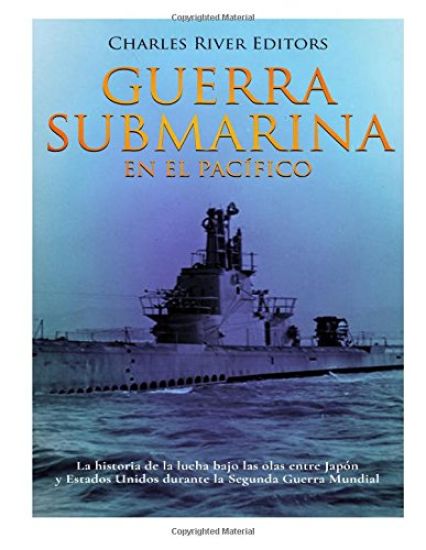
Guerra submarina en el Pacífico: La historia de la lucha bajo las olas entre Japón y Estados Unidos durante la Segunda Guerra Mundial
Los submarinos tuvieron un impacto decisivo en el resultado de la Batalla del Pac fico en la Segunda Guerra Mundial. La flota submarina de los Estados Unidos, bajo el mando general, si bien no exclusivamente, del Vicealmirante Charles Lockwood, estrangul las l neas de suministro y tr fico naval del Imperio del Jap n. Sus "asaltos al comercio" lisiaron la capacidad japonesa, tanto de mantener abastecidas sus unidades en el frente, como de fabricar las armas, embarcaciones y veh culos que necesitaba para continuar con xito la lucha. Tanto los Estados Unidos como Jap n produjeron excelentes submarinos de alta tecnolog a en el contexto de la era de la II Guerra Mundial. Los submarinos Clase I de la Armada Imperial Japonesa (AIJ) demostraron excelente estabilidad en aguas dif ciles y ofrec an la versatilidad que les daba su gran tama o, incluyendo la capacidad de servir como naves nodrizas para mini submarinos, como portaaviones para aviones exploradores, o incluso como bombarderos especializados. Los torpedos Tipo 93 Long Lance y Tipo 95 que llevaban eran lo suficientemente poderosos para hundir buques capitales como acorazados y portaviones, desde varias millas de distancia. Los submarinos de la Marina de los Estados Unidos (US Navy - USN), si bien m s peque os, pod an sumergirse profundamente, moverse r pidamente y proporcionar tanto potencia de fuego como probabilidades de supervivencia. Aunque sus torpedos Tipo XIV y Tipo XVIII no igualaban al Tipo 93 japon s, igualmente ten an potencia letal, particularmente tras ser mejorados a finales de 1943. El USS Archerfish tambi n demostr a los buques capitales japoneses la letalidad de los submarinos estadounidenses. Los submarinistas de ambas flotas demostraron inmenso valor, osad a y habilidad en el ejercicio de su deber. Ambos grupos de hombres exhibieron agresi n, patriotismo y esp ritu de lucha en igual medida, independientemente del lente cultural a trav s del cual se manifestaron estos rasgos. Ambas marinas produjeron con xito oficiales submarinistas profesionales y altamente capacitados. Los japoneses, sin embargo, decidieron utilizar sus submarinos principalmente como apoyo para grandes acciones de flota a distancias visuales, lo cual nunca ocurri . En lugar de eso, los submarinos llevaron a cabo ataques espor dicos y descoordinados, y el resto del tiempo, permanecieron en guardias de vigilancia o vieron su tiempo desperdiciado en transporte de suministros y evacuaciones subacu ticas. Los nipones nunca corrigieron estos problemas, posiblemente debido a factores culturales. Los impetuosos y democr ticos estadounidenses, desconfiados de la autoridad y acostumbrados a hacerse valer, confrontaron bulliciosamente a sus comandantes cuando sintieron que algo estaba mal. El problema de los torpedos provoc reyertas entre los capitanes de submarinos y los almirantes que casi llegaron a los pu os, pero al final, los almirantes examinaron y corrigieron el problema. A pesar de constituir apenas el 1.6% del tonelaje total de la USN en el Pac fico, la flota submarina infligi enormes p rdidas a la AIJ y la crucial marina mercante japonesa. Los submarinos hundieron el 55% de los nav os mercantes perdidos, o aproximadamente 1.300 embarcaciones; en total, los Aliados hundieron el 77% del transporte naval japon s. Los submarinos tambi n hundieron 214 acorazados japoneses, 82 de ellos de mil toneladas o m s -4 portaaviones, 4 portaaviones escolta, un buque de batalla, 4 cruceros pesados, 9 cruceros ligeros, 38 destructores y 23 submarinos- lo que representaba aproximadamente el 30% de toda la Armada Imperial Japonesa. Las estilizadas naves depredadoras hechas en los astilleros de Virginia, Wisconsin o el estado de Washington devastaron los activos navales y de carga del Imperio del Sol Naciente, muy por encima de proporci n en relaci n con sus n meros, y a un costo de 42 submarinos en "patrulla eterna".

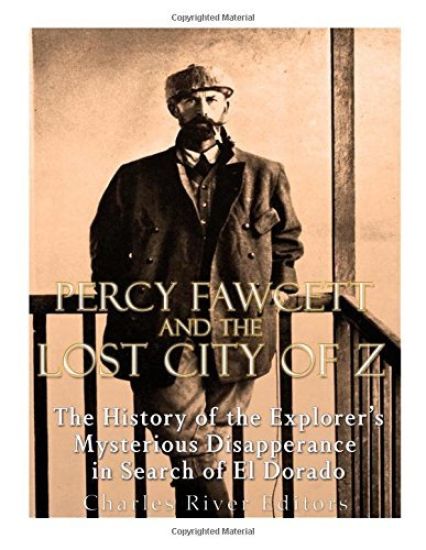
Percy Fawcett and the Lost City of Z: The History of the Explorer's Mysterious Disappearance in Search of El Dorado

Percy Fawcett and the Lost City of Z: The History of the Explorer's Mysterious Disappearance in Search of El Dorado

Charles River

Createspace Independent Publishing Platform
2018
nidottu

Halvin toimitettuna 18,90 €

*Includes pictures *Includes Fawcett's accounts of his own expeditions *Profiles all the theories surrounding the expedition's disappearance *Includes online resources and a bibliography for further reading "There, I believed, lay the greatest secrets of the past yet preserved in our world of today. I had come to the turn of the road; and for better or worse I chose the forest path." - Percy Fawcett The heroes of each generation reflect the conditions, priorities, and goals of the era in which they reside. In the United States and throughout Europe, the wilderness explorer enjoyed widespread public adulation long before leading sports figures, rock stars, and astronauts of later decades. The ingenuity of the Industrial Revolution gave way to early manned flight, and other breakthroughs in communication, and travel. The British Empire flourished across the globe, incorporating entirely dissimilar cultures into its stylized world view. Within this social canon, the explorer of the Victorian and post-Victorian eras fit perfectly within a nationalistic urge to unveil the secrets of every continent. Even expeditions to both poles became the rage among home-bound vicarious adventurers. Throughout climes featuring thick ice and palm trees alike, the maps of the day featured enormous blank spots where no modern man or woman had ever set foot. Among the largest was, and continues to be, the rain forest of the Amazon, particularly in the vast Mato Grosso region of Brazil. The explorers who stepped forward to cast light on such unknown expanses were often driven by obsessive personalities, and lived in the cracks between hard science and the metaphysical. None were more driven than Colonel Percival (Percy) Harrison Fawcett of the British Army. Fawcett, a veteran of the service, a skilled surveyor, and a tough-minded swashbuckler with a soft spot for psychics and astrologists, captured the public's fascination with his numerous treks into the untraveled jungles of Brazil, which he called "the last great blank space in the world." The first few were simple map-making expeditions, none of them intending to turn the world of archaeology or anthropology upside down. It was, however, Fawcett's later expeditions and his final trek in 1925 that piqued the imaginations of the masses who hung on every outlandish discovery of the age. In the end, he drew more attention to the world of the Amazon by being devoured by it, disappearing without a trace, never to be seen again. The subject of his search was equally riveting, the pursuit of the Lost City of 'Z', somewhere in the Brazilian Amazon. The literary world had already been set ablaze by Tarzan, and other works by Edgar Rice Burroughs and his contemporaries. Readers were still consumed by the stories of Jules Verne, and a collective fantasy viewed the remaining exotic regions of the world as haunted by strange creatures once thought extinct or impossible, indigenous people with no knowledge of the outer world, and even the secretive work of extraterrestrial beings. Shangri-la, El Dorado, and the gold-laden Seven Cities of Cibola served as prime material for the era's imagination. Against that backdrop, the Amazon served as the perfect stage for a generation of literary thrills, and Colonel Fawcett seemed eager to oblige. Percy Fawcett and the Lost City of Z: The History of the Explorer's Mysterious Disappearance in Search of El Dorado looks at the history of Fawcett's expeditions in search of the reputed lost city, and his controversial disappearance. Along with pictures of important people, places, and events, you will learn about Percy Fawcett and the Lost City of Z like never before.
The Stonewall Brigade and Hood's Brigade: The History of the Most Famous Units in Robert E. Lee's Army of Northern Virginia during the Civil War
*Includes pictures *Includes accounts of the battles *Includes a bibliography for further reading April 18, 1861 marked the date Southern forces started pouring into Harper's Ferry, Virginia. Six days earlier, shots had been fired at Fort Sumter in Charleston Harbor, South Carolina, marking the beginning of the Civil War, and Virginia officially seceded from the Union April 17. The following day, men arrived in the town where John Brown's attempted uprising was quelled less than two years earlier. The men came from all portions of the Confederate States of America (C. S. A.) and the border states of Kentucky and Maryland, but the preponderance of volunteers came from Virginia. Once the Confederate troops occupied Harpers Ferry, martial law was declared and so-called "feather bed" Confederate military officers, often referred to as "swells," were replaced by professional soldiers with military training. One such man who arrived from the Virginia Military Institute (VMI) was Thomas Jonathan Jackson, who on April 27 was ordered by Virginia Governor John Letcher to take control of the troops converging on Harpers Ferry. He did as ordered and began to form what became the renowned Stonewall Brigade. Jackson and his brigade earned the nickname "Stonewall" at First Manassas by turning the tide of that battle, and they would become known as the legendary foot cavalry by bottling up 3 different Union armies in the Shenandoah Valley in 1862. The Stonewall Brigade went on to fight in every major battle in the Eastern theater of the American Civil War, to the extent that of the 6,000 men who fought with the brigade over the course of four years, less than 200 remained by the time General Robert E. Lee surrendered at Appomattox Courthouse on April 9, 1865. They were organized, trained, and mentored by one of the most revered military leaders in American history, and they made a decisive impact on battles like First Manassas, the 1862 Valley Campaign, and Chancellorsville. The brigade was virtually a spent force by the end of the Battle of Spotsylvania Courthouse in May 1864, which took place nearly a year after Stonewall Jackson himself had been mortally wounded at Chancellorsville. Organized in Richmond, Virginia on October 22, 1861, Hood's Texas Brigade was one of the most formidable fighting forces of the Confederate States of America (C. S. A.) during the American Civil War. At times undisciplined, the men who comprised this brigade were a group of fearless and determined volunteers-turned-soldiers. Over the course of the Civil War, the Texas Brigade engaged over 4,000 men and was comprised of the only Texans to fight with General Robert E. Lee's Army of Northern Virginia in the Eastern Theater. With the exception of Chancellorsville, these men fought in every major battle in the East, and they also participated in significant battles in the Western Theater. Of the more than 4,000 men who fought with the brigade over the course of the war, approximately 600 remained to surrender at Appomattox. The brigade suffered a horrific casualty rate of sixty-one percent and were lauded for their courage by men such as generals Thomas "Stonewall" Jackson, James Longstreet, and Lee. It is estimated that 56,000 Texans served in the Confederate Army during the Civil War, yet the approximately 4,000 men, organized into 32 companies, that formed the Texas Brigade were the only Texans who fought in both theaters of operation. They have been compared to the famous Stonewall Brigade in terms of bravery, skill, and fortitude, and naturally, their fighting directly contributed to the outcome of crucial battles like Antietam and Gettysburg. As a result, they helped change the course of history.
World War I at Sea: The History and Legacy of Naval Tactics and Operations during the Great War
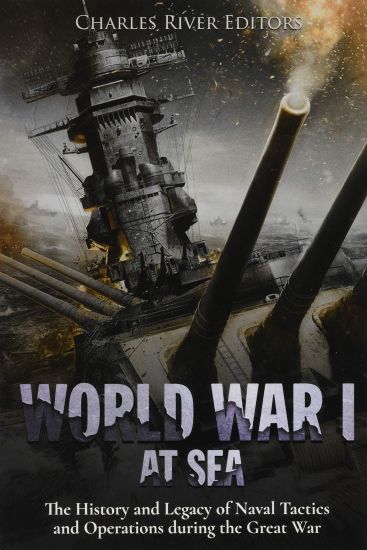
*Includes pictures *Includes online resources and a bibliography for further reading World War I, also known in its time as the "Great War" or the "War to End all Wars", was an unprecedented holocaust in terms of its sheer scale. Fought by men who hailed from all corners of the globe, it saw millions of soldiers do battle in brutal assaults of attrition which dragged on for months with little to no respite. Tens of millions of artillery shells and untold hundreds of millions of rifle and machine gun bullets were fired in a conflict that demonstrated man's capacity to kill each other on a heretofore unprecedented scale, and as always, such a war brought about technological innovation at a rate that made the boom of the Industrial Revolution seem stagnant. As a result, World War I was the first truly industrial war, and it created a paradigm which reached its zenith with World War II and towards which virtually all equipment, innovation and training were dedicated throughout the Cold War and the remainder of the 20th century. To this day, modern warfare remains synonymous with tanks and mass infantry battles, although a confrontation of this nature has not occurred (except briefly during Operation Desert Storm) since World War II. The arms race before the war and the attempt to break the deadlock of the Western and Eastern Fronts by any means possible changed the face of battle in ways that would have previously been deemed unthinkable. Before 1914, flying machines were objects of public curiosity; the first flights of any account on rotor aircraft had been made less than 5 years before and were considered to be the province of daredevils and lunatics. By 1918, all the great powers were fielding squadrons of fighting aircraft armed with machine-guns and bombs, to say nothing of light reconnaissance planes. Tanks, a common feature on the battlefield by 1918, had not previously existed outside of the realm of science fiction stories written by authors like H. G. Wells. Machine guns had gone from being heavy, cumbersome pieces with elaborate water-cooling systems to single-man-portable, magazine-fed affairs like the Chauchat, the Lewis Gun and the M1918 BAR. To these grim innovations were added flamethrowers, hand grenades, zeppelins, observation balloons, poison gas, and other improvements or inventions that revolutionized the face of warfare. The most iconic images of the First World War are of the war on land. They depict the trench lines, the shell holes, and the barbed wire. They show a generation of young men in uniform, living in holes dug from the dirt, rifle in hand, waiting for the next devastating artillery bombardment. But part of that same generation faced a very different war, one that was just as important in deciding the fate of Europe, but which is often forgotten in popular histories. This was the war at sea. It was vital to the economic side of the war, as the Allies cut off Germany's supply lines from the outside world and so placed a squeeze on their opponents' military industries. Here events took place that would draw America into the war, providing the Allies with a new pool of manpower and so ensuring that the scales of the conflict tipped in their favorThe war at sea saw innovations tested. Some, such as Germany's submarine fleet, were a huge success that defined the future for warfare. Some, such as seaborne planes, played only a small part but acted as a prelude to bigger changes to come. Some, such as battlecruisers, were costly failures. At sea just as much as on land, this was a war that would shape the future of the world. World War I at Sea: The History and Legacy of Naval Tactics and Operations during the Great War examines how the war revolutionized naval operations. Along with pictures of important people, places, and events, you will learn about World War I at sea like never before.
The Ghosts of England: A Collection of Ghost Stories across the English Nation

The Ghosts of England: A Collection of Ghost Stories across the English Nation

Charles River

Createspace Independent Publishing Platform
2017
nidottu
*Includes pictures *Includes online resources and a bibliography for further reading England is an ancient land steeped in history and tradition, filled with prehistoric ruins, majestic castles, and a countryside sculpted from millennia of human habitation.. Its rolling countryside is dotted with prehistoric burial mounds and stone circles. Brooding castles hold tales of bloodshed and honor. Medieval churches have elaborate stained glass windows and gruesome carvings, reflecting a mixture of hope and darkness. Every hamlet and village has tales that go back centuries, and folk festivals with roots in pagan times. Thus, it is not surprising that many believe England is a land filled with ghosts. For centuries, people have told tales of ghosts stalking its historic buildings, strange creatures lurking in its primeval forests, and unexplained paths linking its ancient sites. The Ghosts of England: A Collection of Ghost Stories across the English Nation offers a sampling of the many strange ghost stories and unexplained phenomena that make England such an intriguing place. Along with pictures of important people, places, and events, you will learn about the ghosts of England like never before.
History for Kids: The Illustrated Lives of Founding Fathers - George Washington, Thomas Jefferson, Benjamin Franklin, Alexander Hamilton
*Perfect for ages 7-9 *Includes an original introduction and biography for each Founding Father *Includes pictures and illustrations of the Founding Fathers and important people, places, and events in their lives. *Talks about the legends and myths regarding the Founding Fathers. In Charles River Editors' History for Kids series, your children can learn about history's most important people and events in an easy, entertaining, and educational way. Pictures help bring the story to life, and the concise but comprehensive book will keep your kid's attention all the way to the end. The Founding Fathers have held a special place in American society since the nation gained its freedom, and many of them had become national heroes even before then. Over 200 years later, Americans still look with reverence to these men, often debating with each other what the Founding Fathers would think about a certain issue, or how they would judge a certain law or legislation. In many respects, these men have become icons, whose words, thoughts and deeds are rarely questioned. Every American is taught a pristine narrative of the life and legacy of George Washington and can easily recite the highlights and myths of Washington's life. Thomas Jefferson was instrumental in authoring the Declaration of Independence, laying out the ideological groundwork of the notion of states' rights, leading one of the first political parties, and overseeing the expansion of the United States during his presidency. Before the United States of America even existed, the first American celebrity was Benjamin Franklin, who dabbled throughout his life in many fields as an author, printer, political theorist, politician, postmaster, scientist, musician, inventor, satirist, civic activist, statesman, and diplomat. Despite being one of the youngest delegates at the Constitutional Convention, James Madison was the Convention's most influential thinker, and the man most responsible for the final draft of the U. S. Constitution, forever earning the name "Father of the Constitution). And if the American Dream has come to represent the ability to climb the social ladder with skill and hard work, no Founding Father represented the new America more than Alexander Hamilton, an orphan who rose to become one of the influential Founding Fathers at the Constitutional Convention, the driving force behind the Federalist Papers, and the leader of a political party before engaging in the country's most famous duel. Like all legends, the staggering accomplishments of the Founding Fathers not only earned them monuments and memorials but helped enshrine their legacies, to the point that they are looked at almost as demigods above reproach. This kids book examines all of the important events and actions these men took, but it also analyzes what these men were really like, and how their personalities and passions helped shape the destiny of the country they founded and led. Along with pictures of the Founding Fathers and important people, places and events in their lives, your kids will learn about these legendary Founding Fathers like never before.
Baldr: The Origins and History of the Famous Norse God Whose Death Leads to Ragnarok

Baldr: The Origins and History of the Famous Norse God Whose Death Leads to Ragnarok

Andrew Scott; Charles River

Createspace Independent Publishing Platform
2017
nidottu
*Includes pictures *Includes medieval accounts *Includes online resources and a bibliography for further reading Much of what is known of the Norse myths comes from the 10th century onwards. Until this time and, indeed, for centuries afterwards, Norse culture (particularly that of Iceland, where the myths were eventually transcribed) was an oral culture. In fact, in all Scandinavian countries well into the thirteenth century laws were memorized by officials known as "Lawspeakers" who recited them at the "Thing." The Thing was the legislative assembly in Scandinavia "held for judicial purposes." One of the most famous of these Lawspeakers was the Icelander Snorri Sturluson, a masterful writer who wrote the Prose Edda in the thirteenth century. There are other sources for the Norse myths, namely the later "Poetic Edda," a collection of poems and prose work, and other sagas but the Snorri's Prose Edda is the most complete work whose attribution is known to modern scholars. It is believed that Snorri, a Christian, recorded these pagan beliefs so as to preserve and explain the stylistic poetry of Iceland, particularly the popular descriptive devices known as kennings. A kenning is made up of a base word and a modifying word that is used to describe a separate object. For example, "Gold" had a great many kennings, one of which was "Sif's Hair." If, however, the memory of Loki cutting off Sif's hair and replacing it with gold were lost, then this kenning would make no sense to later readers. There are many of these allusions to the myths and it is thanks to them that the myths have survived. The Norse Myths also appear to follow a chronological narrative, which the historian John Lindow describes as having a "Mythical Past, Present and Future." Loki features in each of these literary "epochs" and it helps to understand the complexity of his character, as well as the belief system, to view the myths in this way. Baldr: The Origins and History of the Famous Norse God Whose Death Leads to Ragnarok looks at the story and the legendary Norse deity. Along with pictures depicting important people, places, and events, you will learn about Baldr like never before.
The Spanish Armada: The History and Legacy of Spain's Notorious Naval Debacle

The Spanish Armada: The History and Legacy of Spain's Notorious Naval Debacle

Charles River

Createspace Independent Publishing Platform
2017
nidottu
*Includes pictures *Includes footnotes and a bibliography for further reading "My loving people, we have been persuaded by some that are careful of our safety, to take heed how we commit ourself to armed multitudes for fear of treachery; but I assure you, I do not desire to live to distrust my faithful and loving people ... I know I have the body but of a weak and feeble woman, but I have the heart and stomach of a king, and of a King of England too, and think foul scorn that Parma or Spain, or any Prince of Europe should dare to invade the borders of my realm." - Queen Elizabeth I On July 12, 1588, the legendary Armada started for the English channel. The Spanish plan was to take this invasion, led by the Duke of Parma, to the coast of southeast England, where they would be released to conquer Elizabethan England for the Spanish monarch and Catholic Christendom. The Armada included over 150 ships, 8,000 sailors and 18,000 soldiers, and it boasted a firepower of 1,500 brass guns and 1,000 iron guns. Just leaving port itself took the entire Armada two days. As everyone who has been taught history now knows, the Armada was one of the most famous military debacles in history. Now whether it was simple mathematical miscalculation or plain bad luck, coupled with English fire ships assailing the Spanish ships, the Armada was decisively defeated. The Armada ultimately found its reluctant way home in awful conditions, having permanently lost over one third of the ships, and on the Irish coast, the Armada had suffered further losses. Not yet knowing what had happened to the Armada, internal English gentry and militias sought to secure and protect England. This is when Elizabeth I consolidated her image as mother-protector of her people; inspecting her troops, long and to this day a regal tradition, at Tilbury on August 8, 1588, Elizabeth adorned herself in honor and rallied her people to fight the Spanish. When the Armada was indeed defeated, Elizabeth was hailed as a great savior of England, one who was willing to risk her own life to protect her children and her kingdom. In actuality, Elizabeth's luck had not been insignificant, but her preparations had also been immaculate, and indeed her pageantry had paid off. The monarch's procession to a service of thanksgiving at St Paul's Cathedral further solidified public support, and the vanquishing of the Armada became an unbelievably potent propaganda tool to warn away other sovereigns and kingdoms looking at England with desire. Rightly or wrongly, the English people including many of Elizabeth's Catholic subjects who did not relish the idea of Spanish rule interpreted this victory as a manifestation of divine favor and of England's sacrosanct status under its virgin ruler. What was ignored in the middle of the celebrations was that the Anglo-Spanish War did continue and would continue until 1604. In reality, on the facts it seems that this conflict often did favor Spain. After all, the Spanish retained the Netherlands, thus hanging the scepter of possible invasion from that side. The Spanish Armada looks at the ill-fated expedition from its origins to its demise. Along with pictures of important people, places, and events, you will learn about the Armada like never before, in no time at all.
Otto von Bismarck: The Life and Legacy of the German Empire's First Chancellor

Otto von Bismarck: The Life and Legacy of the German Empire's First Chancellor

Charles River

Createspace Independent Publishing Platform
2017
nidottu
*Includes pictures *Includes Bismarck's quotes about his life and career *Includes online resources and a bibliography for further reading In 1832, 17 year old Otto von Bismarck had just entered university and was already rejecting the republican indoctrination of his grade school years. Unlike so many of his day who had championed representative government, Bismarck longed for the glory of a nation he believed would only be found under a single, strong leader. Though his early university days showed him he would be isolated by this thinking, he strongly believed not only in the ideal of a national German state, but in its possibility. In his memoirs, Bismarck recalls that at this young age, he "retained his] own private National sentiments, and his] belief that in the near future events would lead to German unity; in fact, he] made a bet with his] American friend Coffin that this aim would be attained in twenty years." Though it would take longer than he had predicted, Germany would eventually be united and he would be the person responsible for accomplishing it. Bismarck would go on to accomplish his goal and strengthen Germany into a modern political state by embracing specific political principles, despite their lack of popularity. Bismarck biographer Jonathan Steinberg refers to these principles as the "Prussian legacy," including "the army inherited from the 'genius King' Frederick the Great; the fusion of the Junker class with the army and the bureaucracy, the pervasive idea of 'Deinst' or service; the rigid distinction between the nobility and the bourgeoisie; and] a military conception of honor." As "the most interesting character of the nineteenth century," Bismarck would spend his life in service of the Hohenzollern Kings, elevating William I from a Prussian King near abdication King to the first German emperor. He would alienate many along the way, but under William, he would retain what he wanted most: the power to shape Germany's future. Otto von Bismarck: The Life and Legacy of the German Empire's First Chancellor looks at the life and work of Germany's most famous politician. Along with pictures of important people, places, and events, you will learn about Otto von Bismarck like never before.
World War I at Sea: The History and Legacy of Naval Tactics and Operations during the Great War
*Includes pictures *Includes online resources and a bibliography for further reading World War I, also known in its time as the "Great War" or the "War to End all Wars", was an unprecedented holocaust in terms of its sheer scale. Fought by men who hailed from all corners of the globe, it saw millions of soldiers do battle in brutal assaults of attrition which dragged on for months with little to no respite. Tens of millions of artillery shells and untold hundreds of millions of rifle and machine gun bullets were fired in a conflict that demonstrated man's capacity to kill each other on a heretofore unprecedented scale, and as always, such a war brought about technological innovation at a rate that made the boom of the Industrial Revolution seem stagnant. As a result, World War I was the first truly industrial war, and it created a paradigm which reached its zenith with World War II and towards which virtually all equipment, innovation and training were dedicated throughout the Cold War and the remainder of the 20th century. To this day, modern warfare remains synonymous with tanks and mass infantry battles, although a confrontation of this nature has not occurred (except briefly during Operation Desert Storm) since World War II. The arms race before the war and the attempt to break the deadlock of the Western and Eastern Fronts by any means possible changed the face of battle in ways that would have previously been deemed unthinkable. Before 1914, flying machines were objects of public curiosity; the first flights of any account on rotor aircraft had been made less than 5 years before and were considered to be the province of daredevils and lunatics. By 1918, all the great powers were fielding squadrons of fighting aircraft armed with machine-guns and bombs, to say nothing of light reconnaissance planes. Tanks, a common feature on the battlefield by 1918, had not previously existed outside of the realm of science fiction stories written by authors like H. G. Wells. Machine guns had gone from being heavy, cumbersome pieces with elaborate water-cooling systems to single-man-portable, magazine-fed affairs like the Chauchat, the Lewis Gun and the M1918 BAR. To these grim innovations were added flamethrowers, hand grenades, zeppelins, observation balloons, poison gas, and other improvements or inventions that revolutionized the face of warfare. The most iconic images of the First World War are of the war on land. They depict the trench lines, the shell holes, and the barbed wire. They show a generation of young men in uniform, living in holes dug from the dirt, rifle in hand, waiting for the next devastating artillery bombardment. But part of that same generation faced a very different war, one that was just as important in deciding the fate of Europe, but which is often forgotten in popular histories. This was the war at sea. It was vital to the economic side of the war, as the Allies cut off Germany's supply lines from the outside world and so placed a squeeze on their opponents' military industries. Here events took place that would draw America into the war, providing the Allies with a new pool of manpower and so ensuring that the scales of the conflict tipped in their favorThe war at sea saw innovations tested. Some, such as Germany's submarine fleet, were a huge success that defined the future for warfare. Some, such as seaborne planes, played only a small part but acted as a prelude to bigger changes to come. Some, such as battlecruisers, were costly failures. At sea just as much as on land, this was a war that would shape the future of the world. World War I at Sea: The History and Legacy of Naval Tactics and Operations during the Great War examines how the war revolutionized naval operations. Along with pictures of important people, places, and events, you will learn about World War I at sea like never before.
The Three Wise Men: The History and Legacy of the Biblical Magi

The Three Wise Men: The History and Legacy of the Biblical Magi

Charles River

Createspace Independent Publishing Platform
2017
nidottu

Halvin toimitettuna 17,60 €

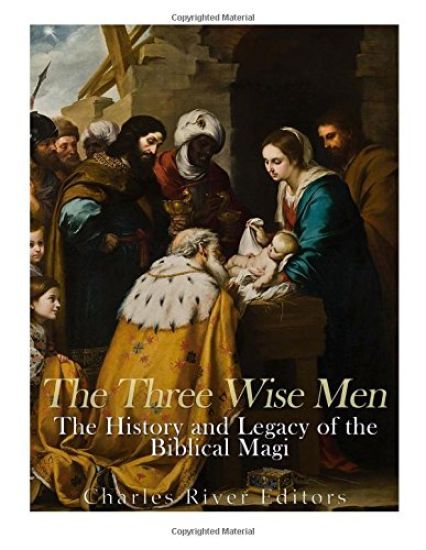
*Includes pictures *Includes Biblical and other accounts of the Magi *Includes a bibliography for further reading In almost every nativity scene today are shown three kings presenting gifts to the newborn baby Jesus, and though everyone is familiar with the Three Wise Men, they are also some of the most mysterious characters from the Bible. According to Scripture, they journeyed from an unnamed land to Bethlehem, bearing gifts for Jesus Christ, and then disappeared. They were the first Christian pilgrims, they later became the patron saints of travelers, and their image is on millions of Christmas cards. Nevertheless, over 2,000 years later, little is known of where they came from and where they went, and most of what people think they know about the Magi does not actually come from the Bible but from assorted myths that have emerged over the millennia. The Bible does not, in fact, say that the three men were kings - this was a detail added later. Most startling of all is that the Bible does not even say that there were three men. Moreover, it seems unlikely that the Magi were actually present on the night that Jesus was born. According to the Book of Luke, Joseph and Mary brought Jesus to the Temple in Jerusalem 40 days after Jesus was born, which means they had remained in Bethlehem for some time after his birth: "And when the days for their purification according to the law of Moses were completed, they brought Him up to Jerusalem to present Him to the Lord." In fact, in the course of describing the visit of the Magi, the Bible clearly notes there had been time enough for Joseph and Mary to find a house in Bethlehem: "On coming to the house, they saw the child with his mother Mary, and they bowed down and worshiped him. Then they opened their treasures and presented him with gifts of gold, frankincense and myrrh. And having been warned in a dream not to go back to Herod, they returned to their country by another route." These Magi were wealthy and well-educated. They likely came from Persia, but they had been ordered by King Herod to discover the location of Christ, purportedly so that Herod could pay homage to the child, but in all likelihood to murder the newborn threat to his power. Word quickly reached King Herod of the arrival of a new-born "King of the Jews," and since he was understandably unwilling to allow any threat to his own authority, Herod was determined to do away with this child. He sent soldiers to kill all of the boys that were up to two years old in and around Bethlehem - an event known as the "Massacre of the Innocents". It was a tragic event for many families in the city, but Jesus was evidently safe on his way to Egypt with his parents. So what exactly is known of these mysterious figures that lived in the time of Christ? There is still plenty of intrigue and mystery surrounding the Magi's story, but it's apparent they were inextricably linked to that of Herod the Great, who ruled over Judea when Jesus was born and who is to this day reviled as the evil king who tried to kill the Christ child during the slaughter of the innocents. Herod, the king that the Romans had placed on a throne he had no right to, was prone to violent rages and extreme paranoia. He had a fearsome reputation, having already killed his own wife, several sons, and hundreds of political opponents, and is said to have suffered from all kinds of ailments, including chronic kidney disease and gangrene. Yet there was another side to this brutal king; he was the greatest builder in the history of the land, and he left behind magnificent monuments that still dazzle the eye 2,000 years later. Who was Herod the Great - a murderous madman, a brilliant king, or both? The Three Wise Men: The History and Legacy of the Biblical Magi examines the known and unknown about some of the most important figures in the Bible. Along with pictures depicting important people, places, and events, you will learn about the Magi like never befor
The Spanish Inquisition: The History and Legacy of the Catholic Church's Notorious Persecution of Heretics
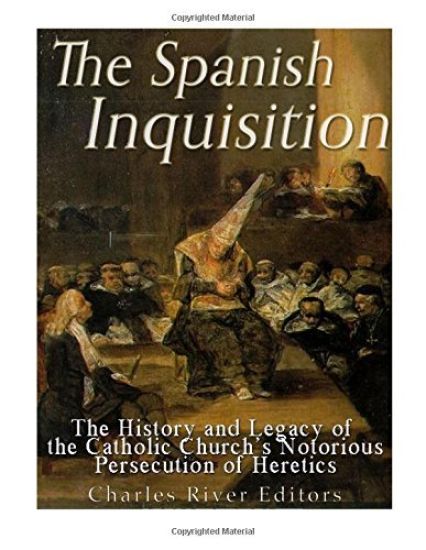
*Includes pictures *Includes contemporary descriptions of the Inquisition *Includes online resources and a bibliography for further reading "Persecution is not an original feature in any religion; but it is always the strongly marked feature of all law-religions, or religions established by law." - Thomas Paine, Rights of Man In many modern societies, laws have been put in place to protect citizens from discrimination based on their gender, beliefs, race, and sexuality. The sheer thought of having these rights impeded upon in any way is something people in the West often consider unthinkable. In this day and age, people will fight tooth and nail to right cases of discrimination and injustice, from seeking legal action to filing criminal charges against the discriminating party. Multiple organizations around the world exist to help combat and protect its citizens from prejudicial inequities. Social media has also become a channel for those around the world to voice these injustices. Those around the world who empathize with the discriminated band together and condemn the accused bigots. Resulting boycotts, petitions, and negative backlash from social media and the Internet have been known to play a significant role in contributing to the downfall of individuals and corporations that have been accused of discrimination of any kind. The road to the modern age of cultural harmony and acceptance is one of the finest feats of human progress, but having said that, there was once a time when the mere doubt of a religious figure's existence was not only punishable by law, it could very well cost a man his life. This was the crime of heresy. This kind of religious persecution has been around for thousands of years, and Christians were often the victims, but when the Catholic Church began its rapid expansion throughout Europe during the Middle Ages, the tables were turned. In 1184, Pope Lucius III issued a papal bull that would kick off a long-standing tradition of heretic-hunting, and as a result, the Age of the Inquisitions commenced. In a twist of events, the persecuted became the persecutors. From then on, the Roman Catholic Church took it upon itself to hold tribunals, or judicial courts, in a quest to exterminate heresy once and for all. These inquisitions, which would plague Europe for centuries, is believed to have seen hundreds of thousands persecuted for beliefs that went against the Church. A startling portion of them would be brutally tortured and sent to their deaths. None of these would hold a candle to the one birthed in the 15th century - the Spanish Inquisition. The notorious inquisition, the subject of multiple documentaries, movies, and other pop culture mediums, is an era darkly remembered for its oppression, barbarous torture, and religious tyranny. Serving as a backdrop for it all was a deadly disease, a man likened to Satan, and the tumultuous rise and fall of one of the most dreadful periods in European history. The Spanish Inquisition: The History and Legacy of the Catholic Church's Notorious Persecution of Heretics looks at how the Inquisition came to be, and how people were tortured and executed. Along with pictures depicting important people, places, and events, you will learn about the Inquisition like never before.
The Three Mile Island Accident: The History and Legacy of America's Worst Nuclear Meltdown
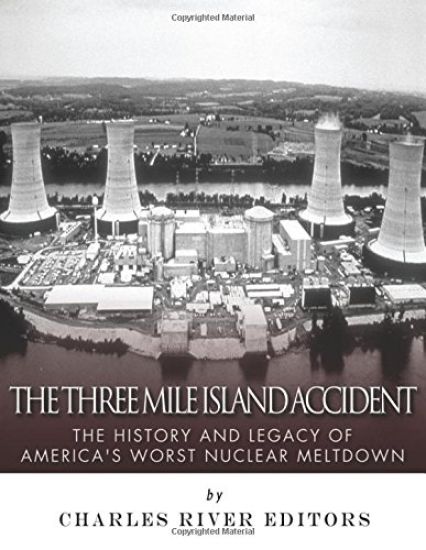
*Includes pictures *Includes accounts of the meltdown by officials and local civilians *Includes a bibliography for further reading "On Wednesday, March 28, 1979, 36 seconds after the hour of 4:00 a.m., several water pumps stopped working in the unit 2 nuclear power plant on Three Mile Island, 10 miles southeast of Harrisburg, Pennsylvania. Thus began the accident at Three Mile Island. In the minutes, hours, and days that followed, a series of events --compounded by equipment failures, inappropriate procedures, and human errors and ignorance -- escalated into the worst crisis yet experienced by the nation's nuclear power industry. The accident focused national and international attention on the nuclear facility at Three Mile Island and raised it to a place of prominence in the minds of hundreds of millions. For the people living in such communities as Royalton, Goldsboro, Middletown, Hummelstown, Hershey, and Harrisburg, the rumors, conflicting official statements, a lack of knowledge about radiation releases, the continuing possibility of mass evacuation, and the fear that a hydrogen bubble trapped inside a nuclear reactor might explode were real and immediate. ... The reality of the accident, the realization that such an accident could actually occur, renewed and deepened the national debate over nuclear safety and the national policy of using nuclear reactors to generate electricity." - Findings in a report by the Presidential Commission established to investigate the accident Uranium is best known for the destructive power of the atom bombs, which ushered in the nuclear era at the end of World War II, but given the effectiveness of nuclear power, plants like those at Three Mile Island in Pennsylvania were constructed to generate energy for Americans during the second half of the 20th century. While nuclear power plants were previously not an option and thus opened the door to new, more efficient, and more affordable forms of energy for domestic consumption, the use of nuclear energy understandably unnerved people living during the Cold War and amidst ongoing nuclear detonations. After all, the damage wrought on Hiroshima and Nagasaki made clear to everyone what nuclear energy was capable of inflicting, and the health problems encountered by people exposed to the radiation also demonstrated the horrific side effects that could come with the use of nuclear weapons or the inability to harness the technology properly. Thus, it seemed that everyone's worst fears were realized on March 28, 1979 when the nuclear plant at Three Mile Island suffered a partial meltdown. Since it occurred years before Russia's Chernobyl disaster took place, the accident, a combination of mechanical and management failures, was at the time the worst civilian nuclear disaster yet, and the predictions of its consequences were dire. Given the release of radioactive material, nearby residents feared for their lives, and the nature of the radioactive contamination meant it would take nearly 15 years and $1 billion to fully clean up after the disaster. Fortunately, the human cost was eventually ruled insignificant, but the scare forced the implementation of new regulations in an effort to ensure the use of nuclear energy was safer. As a result, Three Mile Island, while still well-known among Americans today, remains more of a caution tale than a tragedy. The Three Mile Island Accident chronicles the worst nuclear meltdown in American history and the changes made in the aftermath of the accident. Along with pictures and a bibliography, you will learn about Three Mile Island like never before, in no time at all.