Kirjojen hintavertailu – 12 903 727 kirjaa ja 27 kauppaa

Kirjailija

Charles River

Kirjat ja teokset yhdessä paikassa: 4 673 kirjaa, julkaisuja vuosilta 2013–2022, suosituimpiin kuuluu William Powell and Myrna Loy: The Lives and Careers of One of Classical Hollywood's Most Iconic Duos. Vertaile teosten hintoja ja tarkista saatavuus suomalaisista kirjakaupoista.

4 673 kirjaa

Kirjojen julkaisuvuodet: 2013–2022.

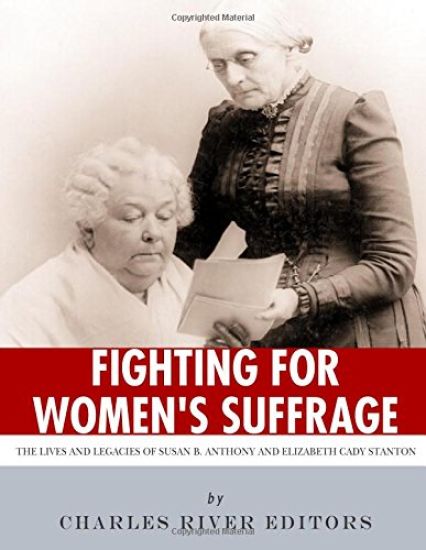
Fighting for Women's Suffrage: The Lives and Legacies of Susan B. Anthony and Elizabeth Cady Stanton
*Includes pictures of Anthony, Stanton, and other important people in their lives. *Includes Anthony's and Stanton's comments on social issues like education, employment, suffrage, abolition, abortion, and more. *Includes bibliographies of each woman for further reading. "The true woman will not be exponent of another, or allow another to be such for her. She will be her own individual self... Stand or fall by her own individual wisdom and strength... She will proclaim the 'glad tidings of good news' to all women, that woman equally with man was made for her own individual happiness, to develop... every talent given to her by God, in the great work of life." - Susan B. Anthony "The moment we begin to fear the opinions of others and hesitate to tell the truth that is in us, and from motives of policy are silent when we should speak, the divine floods of light and life no longer flow into our souls." - Elizabeth Cady Stanton Together, Susan B. Anthony and Elizabeth Cady Stanton formed the most important partnership in the history of women's rights in America. The women worked seamlessly, with Stanton providing the forceful ideology and Anthony providing the tireless advocacy. Stanton would later characterize their relationship, ""It is often said, by those who know Miss Anthony best, that she has been my good angel, always pushing and goading me to work, and that but for her pertinacity I should never have accomplished the little I have. On the other hand it has been said that I forged the thunderbolts and she fired them. Perhaps all this is, in a measure, true." Despite their partnership, the two women are often remembered quite differently. Stanton is something of an unsung hero in the history of the feminist movement. Though she is still primarily known as an advocate of women's suffrage and is closely linked to the better known Susan B. Anthony, Stanton was shunned by many of her fellow suffragists because her ideas seem too radical and because many were disturbed by her barely Deist view of religion. Over a century after her death, modern feminists tend to overlook Stanton in favor of Anthony, while remembering that Stanton enjoyed taking on the traditional 19th century gender roles of being the mother of a large family and remaining devoted to her husband throughout her life. And while Anthony's comments about abortion are still fiercely debated by pro-life and pro-choice crowds, Stanton held conservative views toward abortion. It's clear that Elizabeth Cady Stanton was very much her own woman, certainly a fitting description that she would not have wanted any other way. Meanwhile, over the last 100 years, Susan B. Anthony has become one of the most venerated women in American history, even though she was one of the most hated women in American history during her lifetime. Anthony took note of her contemporaries' distaste for her but remained defiant, asserting, "I have encountered riotous mobs and have been hung in effigy, but my motto is: Men's rights are nothing more. Women's rights are nothing less." Today, of course, every American is taught about their nation's most famous suffragist, who tirelessly advocated and lobbied for women to be granted the right to vote. Though it wouldn't become legal until 14 years after Anthony's death, Anthony took it upon herself to illegally vote in 1872, which initiated one of the late 19th century's most famous political court cases. Fighting for Women's Suffrage chronicles the lives and partnership of the two women, examining their ideologies, advocacy, and writings. Along with pictures, you will learn about Stanton and Anthony like you never have before, in no time at all.
Casanova: As Aventuras e o Legado do Sedutor Mais Famoso do Mundo

Casanova: As Aventuras e o Legado do Sedutor Mais Famoso do Mundo

Charles River

Createspace Independent Publishing Platform
2017
nidottu
Ao contr rio do modo como a lenda da sedu o frequentemente retratada atrav s das lentes rosadas de Hollywood, o verdadeiro Giacomo Casanova n o possu a o maxilar forte e esculpido de Heath Ledger, ou o olhar azul e penetrante de Richard Chamberlain. Na realidade, retratos do verdadeiro Casanova mostram um rosto simples e nada memor vel, com um maxilar rechonchudo, um nariz proeminente e entortado, olhos esbugalhados e de p lpebras pesadas. Em suma, ainda que ele certamente n o fosse feio, ele estava longe de ser tido como uma beldade. N o obstante, Casanova se envolveu em centenas de encontros, e o que quer que lhe faltasse em encantos est ticos, ele sem d vida compensava com charme, mist rio, e um magnetismo animalesco. Ele tamb m era bem despojado quanto a isso tudo: "O amor verdadeiro o amor que as vezes surge ap s prazer sexual: se ele surge, imortal; o outro tipo inevitavelmente deteriora, pois embasado somente na mera fantasia." E de fato, as fabulosas fa anhas er ticas do cativante e carism tico Casanova eram t o espetaculares que seu sobrenome foi imortalizado at mesmo em defini es de dicion rios de alta reputa o, tais como o Merriam-Webster - "um amante, e em especial, um homem que um amante prom scuo e inescrupuloso". Ainda que Casanova seja conhecido na cultura popular, acima de tudo, como um amante bom de papo e descarado, o homem de verdade era coberto com camadas cintilantes de perversidades astutas, c lculos vigilantes, e um anseio inextingu vel por aventura. Ele vestiu muitas m scaras, mas cada uma parecia ter sido feita exclusivamente para ele, pois ele n o era somente um aventureiro com apetite sexual insaci vel, mas tamb m um eloquente escritor, um curador m stico, um espi o experiente, e um g nio da improvisa o que carregava in meros truques dentro de suas mangas decoradas. Ironicamente, parece que o pr prio Casanova, ainda que orgulhoso de suas escapadelas indiscretas, tinha medo de entrar para a hist ria somente como o primeiro Hugh Hefner. Ao mesmo tempo, ele n o queria nenhum detalhe alterado ou omitido de sua rica e fascinante vida, e portanto, escolheu compor uma autobiografia em 12 volumes, algumas se es da qual ainda hoje s o consideradas por muitos homens como um manual da sedu o e do desfloramento de mulheres "virtuosas". Historiadores modernos, entretanto, elogiam suas mem rias como um dos retratos mais vividamente descritivos e precisos das normas e costumes europeus no s culo 18. Uma comiss o governamental francesa at chegou ao ponto de honr -la com o t tulo de "tesouro nacional". Um de seus contempor neos, o Pr ncipe Charles de Ligne, talvez o tenha resumido da melhor maneira quando comentou respeito de Casanova: "As nicas coisas sobre as quais ele n o tem nenhum conhecimento, s o aquelas nas quais ele se considera o expert: as regras da dan a, a l ngua Francesa, bom gosto, o jeito do mundo, savoir vivre. Apenas as suas com dias n o possuem humor, apenas suas obras filos ficas s o destitu das de filosofia - todo o resto, est repleto deles; sempre h algo de subst ncia, inovador, picante, profundo. Ele um po o de conhecimento, mas cita Homero e Hor cio ad nauseam. Sua sagacidade e seus gracejos s o como alfinetadas. Ele sens vel e generoso, mas incomode-o ao m nimo e ele se torna desagrad vel, vingativo e detest vel. Ele n o acredita em nada exceto o que for mais incr vel, sendo supersticioso a respeito de tudo. Ele ama e deseja a tudo... Ele se orgulha de n o ser nada... Nunca diga que j ouviu a hist ria que ele vai lhe contar... Nunca deixe de cumpriment -lo ao cruzar caminhos, pois o menor insulto o tornar seu inimigo."
French Legends: The Life and Legacy of King Louis XIV

French Legends: The Life and Legacy of King Louis XIV

Charles River

Createspace Independent Publishing Platform
2017
nidottu
*Includes famous art depicting Louis XIV and important people, places, and events in his life. *Includes pictures of the Palace of Versailles. *Discusses the reign and legacy of Europe's longest reigning king. "Every time I create an appointment, I create a hundred malcontents and one ingrate." - Louis XIV A lot of ink has been spilled covering the lives of history's most influential figures, but how much of the forest is lost for the trees? In Charles River Editors' French series, readers can get caught up to speed on the lives of France's most important men and women in the time it takes to finish a commute, while learning interesting facts long forgotten or never known. France's most famous King, and Europe's longest serving, Louis XIV (1638-1715) is often viewed today as a symbol of royal extravagance and splendor. Reigning for over 72 years, the legacy of the "Sun King" is remembered for the magnificent Palace of Versailles, the patronizing of arts and theater, and the apocryphal quote "L'Etat c'est moi" (I am the State). Although it is more than fair to associate the Sun King with vanity and unfathomable spending on luxury, the laser sharp focus on the superficial aspects of the man and his reign have come to overshadow just how effective he was as a ruler. Becoming King as a child and assuming actual power in his early 20s, Louis spent nearly 55 years centralizing and consolidating power in his monarchy by bringing the aristocracy to heel and keeping religious divisions from devolving into violence, thereby passing off to his successor an absolute monarchy with a very solid foundation. At the same time, his foreign policies, though often criticized as quests for glory, helped establish France as the dominant power on the European continent and firmly in control of an overseas colonial empire that stretched both east and west. And of course, while his spending and extravagance are viewed critically today, his construction of the Europe's most famous palace and his patronizing of the arts established the kind of culture and society that France is still famous for across the world today. French Legends: The Life and Legacy of King Louis XIV looks at the life and reign of one of history's most famous Kings, explaining his influence in a historical light and analyzing the monumental legacy he left behind. Along with pictures of important people, places, and events, you will learn about the Sun King like you never have before, in no time at all.
Liver-Eating Johnson: The Life and Legacy of the Famous Mountain Man

Liver-Eating Johnson: The Life and Legacy of the Famous Mountain Man

Charles River

Createspace Independent Publishing Platform
2017
nidottu
*Includes pictures *Includes online resources and a bibliography for further reading To possess and develop western North America became a high priority for the United States government even before its constitution had been complete. For President Thomas Jefferson, the vast terrain of plains, mountains, and extensive coastlines offered both long-term prosperity and protection from competing international powers. To take ownership of the continent's natural resources and establish ports on both coasts from which to trade products with the world was alluring to several European powers as well. Spain contested the land to the south, following exploration of present-day Florida, and France was heavily invested in what was to become large tracts of eastern Canada. Britain was eager to erect forts and trading posts along the Pacific, thanks to the earlier efforts of Captain John Cooke, who had explored much of the Pacific coast. Early in the 19th-century, crossings such as the Lewis and Clark Expedition and John Jacob Astor's first business ventures in the Northwest demonstrated the impracticality of traversing the hostile environment for the common citizen but solidified Jefferson's claim on the land. Railroads were still some decades off, and passable roads were all but non-existent. From its first interactions with numerous Indian cultures, the government understood that the western portion of the continent was already "owned" by a variety of indigenous tribes, despite their alternate concept of ownership. To gain possession of the coasts and the interior meant there would be new languages to be learned, hundreds of treaties to be struck, and wars to be fought over several regions. No familiar institutions of power were suitable for creating a foothold in the continent's interior, especially in the Rocky Mountain region. The U. S. Army eventually made inroads to the Great Plains and beyond, but the first true explorers of the far west's interior arose from within a relatively small culture embodied by the American mountain man. By the golden age of the mountain man in the mid-19th-century, there were perhaps only 3,000 living in the West. Their origins were disparate, although they included many Anglo-Americans. A good number hailed from wilderness regions of Kentucky and Virginia and throughout the newly purchased Louisiana Territory, which occupied the entire central section of the continent. French Canadians traveled from the north to work in the fur trade, while Creole-Europeans represented approximately 15% of the men known to be living the isolated mountain life. Although the most enduring accomplishments belonged to the mountain men who had discovered, charted, and helped build the great passes through the Rockies to the west, others have retained public fascination for simply being colorful and elusive historical personalities. Such was the case of a legend who came to be known by the singularly unappetizing moniker of Liver-Eating Johnson. One of the mountain men who had been present from the peak of mountain culture to its twilight, his literal accomplishments are few and of limited scope in the sense of exploration, however, he is intimately associated with a dangerous life of intrigue, revenge, and physical horrors unspeakable in polite society. While his colleagues took steps to tame the American wilderness, he became a symbol of its savagery. Johnson's protracted war of vengeance speaks of a constant interaction with the Crow culture of the northwest and the territories of Wyoming and Montana in particular. Liver-Eating Johnson: The Life and Legacy of the Famous Mountain Man looks at the life and legends of one of the West's most famous men. Along with pictures of important people, places, and events, you will learn about Liver-Eating Johnson like never before.
Ivan the Terrible: Russia's Most Insane Tsar

Ivan the Terrible: Russia's Most Insane Tsar

Charles River

Createspace Independent Publishing Platform
2017
nidottu
*Includes pictures of Ivan the Terrible and important people and places in his life. *Includes historical accounts that describe Ivan the Terrible and his notorious rule and discusses the authenticity of these accounts. *Includes footnotes and a bibliography for further reading. 16th century Russia remains, for most Western audiences, a dark and terrifying space, wrapped in mystery and myth and isolated from states such as England or France, whose heroes are well-known throughout Europe. The traditional dichotomy between East and West is most apparent in the discussion of the remarkable political figures that defined this century. While Western rulers, such as Elizabeth I, Francis I or Charles V, Holy Roman Emperor, have been endlessly and almost exhaustively treated in historical works, their Eastern counterparts have rarely attracted the attention of professional historians outside their respective regions. As a result, readers in search of reliable information on Ivan IV's personality and reign is faced with a rather bleak situation. They can either resort to the extremely biased image conveyed by Russian historiography, or to the often superficial and sensationalist histories written by Western authors, who, perhaps unintentionally, crafted a narrative that fit the stereotypes regarding what the West thought of the East at the time. While certain factual aspects regarding Ivan IV's reign can certainly be deduced from the primary sources that have withstood the test of time, the majority of accounts dating from the 16th century and after must be evaluated critically, and read in light of certain traditions and ideas that circulated in the region regarding the model ruler and the tyrant. Naturally, this makes it hard for contemporary audiences to determine whether Ivan IV was worthy of the epithet "Groznyi" ("the Terrible"). . As if to demonstrate the cultural disconnect between East and West, "Groznyi" in the original Russian was a term mostly used to designate an "awful" or "awe-inspiring" personality, especially in a political context. That a Renaissance ruler would inspire a feeling of reverence mixed with fear was neither surprising, nor should it necessarily be seen in a negative light. Many of Ivan IV's contemporaries held a similar unofficial title, including Richard III of England, Louis IX of France, Christian II of Denmark, Sigismondo Malatesta in Rimini and Cesare Borgia. It was thus not extraordinary for a ruler to be regarded and designated as "terrible" in the context of 16th century Europe, as long as he maintained the unity and prosperity of his kingdom and succeeded in keeping the reins of power. Nevertheless, the term "Groznyi" appealed to popular imagination throughout the centuries, and, similarly to Vlad Dracula's descriptive epithet of "Tepes" ("the Impaler"), it also stimulated the creation and transmission of a varied and often contradictory tradition of folk tales and songs that featured the nation's heroes. At the same time, there were many common motifs within this tradition that circulated in Western Europe as well, and that heavily influenced the way in which Ivan IV was perceived and subsequently depicted in historiography. Ivan the Terrible: Russia's Most Insane Tsar explores the life and legacy of the notorious tsar's life, as well as the debate over his personality and actions. Along with pictures of important people, places, and events, you will learn about Ivan the Terrible like you never have before, in no time at all.

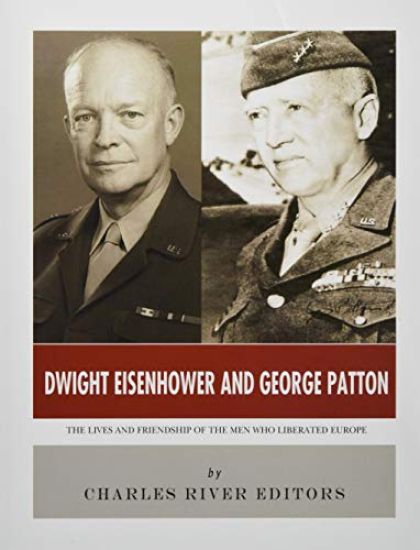
Dwight Eisenhower and George Patton: The Lives and Friendship of the Men Who Liberated Europe
*Weaves the lives and careers of both generals into one entertaining and educational narrative. *Includes Patton's most colorful and inspiring quotes, including his famous Speech to the Third Army. *Includes pictures of Eisenhower, Patton and other important people, places, and events. *Discusses the decades-long friendship between both generals. *Explains their roles in North Africa, Sicily, D-Day and the Battle of the Bulge. *Includes a Bibliography for further reading. During the middle of the 20th century, the United States completed its transformation into one of the world's superpowers, and few were as instrumental in this development as Dwight D. Eisenhower (1890-1969), A career military man, Ike was too young to serve in combat during World War I, but he began a long and productive career collaborating with future military legends George Patton and Douglas MacArthur while serving some of the nation's other famous generals, including George Marshall and John J. Pershing. Amazingly, he had never served in anything but administrative positions before World War II. By 1942, Eisenhower was given the role of appointed Supreme Commander Allied (Expeditionary) Force in North Africa, and after his success there, Eisenhower oversaw the invasion of Sicily in 1943, which at the time had been the largest amphibious invasion in history. In both campaigns he had the fortune of commanding George Patton. With those successes, President Roosevelt picked Eisenhower to be the Supreme Allied Commander of the Allied Expeditionary Force, leaving him in charge of Operation Overlord and the defining moment of his military career, D-Day. By the time he died in 1969, President Nixon aptly described Eisenhower as "the world's most admired and respected man, truly the first citizen of the world." Rommel, Guderian, Liddell-Hart and JFC Fuller were all early exponents and practitioners of armored warfare, tactics that were to break the stalemate that had characterized World War I. Advocates of the tank and above all speed, it was their ideas which decimated Saddam Hussein's forces in the 1990 Gulf War. But among the proponents and practitioners of armored warfare, the brash, bold, arrogant and eccentric George S. Patton remains the world's greatest armored commander by the one yardstick that really counts: the battlefield. In 1944-45, Patton's Third Army raced across northern Europe, covering more ground and destroying more enemy resources than any other equivalent force in history. Patton is one of America's most celebrated generals and one of the most famous generals of the 20th century, but his story has its origins in the form of a shy, dyslexic boy who could cry uncontrollably and who viewed his own emotional intelligence as unmanly. Patton was a fascinating, complicated and controversial man whose life story ranges between genius, folly and tragedy, with absolute determination the one constant theme. Between the two World Wars, he wrote at length about mechanized warfare and tactics, and during the Second World War he worked his way up colorfully, controversially, and capably, all of which made him more conspicuous during the war. Patton's shocking death just a few months after the war ended ensured that the general died at the height of his fame and would always be remembered for his legendary attitude and exploits. This book profiles the lives, careers, friendship and legacies of the two legendary generals, along with pictures, a bibliography and a Table of Contents.
Corea del Norte. La historia del conspicuo reino ermitaño

Corea del Norte. La historia del conspicuo reino ermitaño

Charles River

Createspace Independent Publishing Platform
2017
nidottu
"No hay fuerza en el mundo capaz de detener la poderosa marcha de nuestro ej rcito y nuestro pueblo, que sostienen en alto la bandera de los soles del gran camarada Kim Il-sung y el gran camarada Kim Jong-il, y contin an avanzando bajo el liderazgo del partido con una fe inquebrantable en la victoria." -Kim Jong-un En 2014, la Estaci n Espacial Internacional divulg una serie de fotograf as que hicieron que cibernautas de todo el mundo se pellizcaran el brazo de incredulidad por m s de un motivo. Para empezar, el mundo qued asombrado por la definici n n tida y la resoluci n estelar de las im genes captadas por los lentes NightPod de la agencia espacial, que mostraban sorprendentes tomas satelitales del mundo iluminado por deslumbrantes luces de ciudad. Pero fueron unos primeros planos de la frontera entre China y Corea del Norte lo que provoc reacciones mucho mayores que el resto de las fotos, ya que las im genes, pese a su ptima calidad, no dejaban de ser preocupantes. Respaldadas por un video secuencial del rea, mostraban un enorme parche negro -de aproximadamente 75.000 kil metros cuadrados, para ser precisos- flanqueado por dos largos tramos dorados de c mulos de luz que representaban a las ciudades m s grandes de la regi n. De un lado, estaban los titilantes territorios chinos, y del otro, las relucientes extensiones de Corea del Sur. El parche negro en cuesti n era tan oscuro, que habr a podido confundirse con una prolongaci n del Mar Amarillo o del Mar de Jap n. A primera vista, no se ve a ning n indicio de vida, aparte de un destello m nimo en el centro del abismo. Ese destello no era otra cosa que la ciudad de Pyongyang, y la pieza faltante del rompecabezas no era otra que la Rep blica Democr tica Popular de Corea. Corea del Norte ha sido desde hace mucho tiempo el objeto de chistes, as como un blanco perenne de censura internacional, pero la sorprendente foto satelital era todo menos divertida, pues demostraba las condiciones verdaderamente catastr ficas en las que se hallan los propios norcoreanos. Las estad sticas muestran que un surcoreano promedio consume hasta 10.162 kilowatios-hora de energ a al a o, mientras que sus vecinos del norte consumen s lo 739. Esta es s lo una de una serie de dificultades que afectan al estado, impidi ndole un progreso adecuado. El conjunto desigual de ciudades desparramadas pero l nguidas, y de provincias miserables y empobrecidas, contrasta en su silencio pavoroso con las bulliciosas metr polis a ambos lados de ellas. Corea del Norte se halla atrapada en un burbuja impenetrable e insonorizada, y el Estado mismo est congelado en el tiempo. Exceptuando una porci n de la capital, donde residen el Comandante Supremo y las lites de Corea del Norte, el horizonte descolorido de Pyongyang con sus edificios mon tonos y compactos, aunque supone una gran mejora con respecto al resto del estado, parece sacado directamente, en el mejor de los casos, de los a os 70. Entonces, por qu Corea del Norte difiere tanto de sus vecinos, si s lo unas meras fronteras la separan de ellos? Debido a una sucesi n de tiran as reforzadas por el nepotismo. He aqu una naci n entera adoctrinada por una propaganda escalofriante y pasmosa, moldeada por el miedo y una ignorancia forzada; purgas masivas aparentemente aplicadas por capricho, sin juicios justos; una paranoia sin igual y asesinatos a sangre fr a a diestra y siniestra, casi a la vuelta de cada esquina; una periferia empobrecida de p ramos des rticos habitados por masas desnutridas, alrededor de un mundo que fulgura con la grosera opulencia y las riquezas superfluas de la lite. Todo esto suena como los elementos de un periodo particularmente peligroso de una autocracia impuesta por alg n monarca desquiciado de una poca pret rita, o tal vez como un gui n estereotipado para un thriller ambientado en un futuro dist pico. Pero, por desgracia, la descripci n coincide c
Legends of the Frontier: Daniel Boone, Davy Crockett and Jim Bowie

Legends of the Frontier: Daniel Boone, Davy Crockett and Jim Bowie

Charles River

Createspace Independent Publishing Platform
2017
nidottu
*Discusses some of the legends and controversies surrounding the lives and deaths of the three frontier legends. *Includes the story about Crockett's famous Not Yours To Give speech, and the debate over whether he actually gave it. *Includes pictures of Boone, Bowie, Crockett and other important people and places in their lives. *Includes a Bibliography on each man for further reading. The Wild West and the frontier have long held a special place in the narrative of American history, and all of the legends and folk heroes who lived in the 19th century owe their reputation to the original American frontier folk hero, Daniel Boone. Boone was literally a trailblazer: the legendary pioneer established his Wilderness Road by striking west into present-day Kentucky and establishing Boonesborough, one of the earliest white settlements west of the Appalachians. Hundreds of thousands of settlers would follow his path by the end of the 18th century. While that was an important and proud legacy for the former Revolutionary War militiaman and Virginia State Assemblyman, Boone became known for the outsized tales and adventures associated with his foray into the frontier. Far and wide, people spoke of Boone's expert marksmanship, his encounters with wild bears, and his hardscrabble frontier life, making him a living legend and the prototypical Western frontier folk hero in America. Following right in Boone's path was "The King of the Wild Frontier", Davy Crockett. Also a living legend in his own life. Crockett was a hardscrabble frontiersman who could spin a good yarn but who also took a no-nonsense approach that brought him from the backwoods of Tennessee to the halls of Congress. Though he served during the presidency of another Westerner, Andrew Jackson, Crockett was very much his own man, and he was distrustful of other politicians, a sentiment that has only endeared him further to subsequent generations of Americans. Jim Bowie he was known across America in his lifetime for a controversy other than the Battle of the Alamo. In what became known as the notorious Sandbar Fight of 1827, a duel between two men turned into a large fight that included Bowie, who was shot and stabbed during the melee but still managed to stab to death the sheriff of Rapides Parish in Louisiana with a large knife that has since become universally known as the Bowie knife. Jim Bowie was famous in his lifetime, but like Crockett it was his death in Texas that made him an American legend. Though there is still some mystery and controversy surrounding exactly what transpired at the Battle of the Alamo, the deaths of Crockett, Bowie, William B. Travis and the rest of the defenders at the hands of Santa Anna's Mexican soldiers became a symbol of sacrifice and defiance, and the battle itself became a rallying cry throughout the rest of Texas' War for Independence. Naturally, it also cemented the legacies of both Bowie and Crockett as well. Legends of the Frontier chronicles the life, myths and legends of the three frontier legends, examining the known and unknown in an attempt to separate fact from fiction. Along with pictures of important people and places, you will learn about Boone, Crockett and Bowie like you never have before, in no time at all.

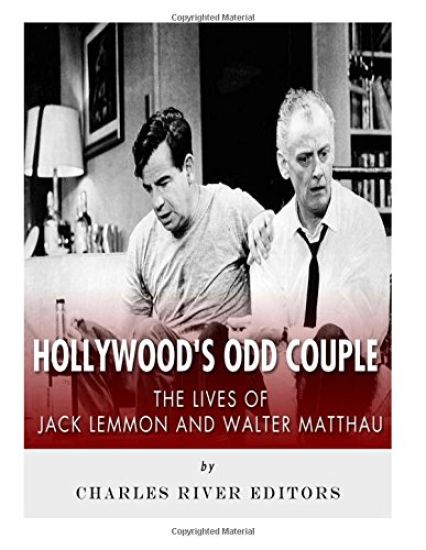
Hollywood's Odd Couple: The Lives of Jack Lemmon and Walter Matthau

Hollywood's Odd Couple: The Lives of Jack Lemmon and Walter Matthau

Charles River

Createspace Independent Publishing Platform
2017
nidottu
*Includes pictures *Includes the actors' quotes *Includes a bibliography for further reading "Every actor looks all his life for a part that will combine his talents with his personality...'The Odd Couple' was mine. That was the plutonium I needed. It all started happening after that." - Walter Matthau "It's hard enough to write a good drama, it's much harder to write a good comedy, and it's hardest of all to write a drama with comedy. Which is what life is." - Jack Lemmon Walter Matthau and Jack Lemmon are probably best remembered for their films together, but both were clearly established actors in Hollywood by the time they appeared in their first film together. The great film director Billy Wilder once noted of Jack Lemmon that Lemmon "was my everyman", and Lemmon did indeed represent a great everyman to American audiences during the latter half of the 20th century. For rich, poor, and working class audiences alike, Lemmon was an accessible leading male, someone certainly less stately than Cary Grant or Laurence Olivier and seemingly more approachable even than archetypal leading men such as Jimmy Stewart or Henry Fonda. Viewers may not have known Lemmon on a personal level, yet his easygoing demeanor made it easy for the American public to feel as if they knew Lemmon. His wide appeal is summarized nicely by Richard T. Stanley, who noted that he "had the personality and versatile talent to star in any era," and Lemmon became intimately associated with other famous figures of Hollywood, including Billy Wilder and Matthau. Before his movies with Lemmon, Matthau most often played shady criminals in dramatic films, and his character in Elia Kazan's A Face in the Crowd (1957) offers one of the best examples. Matthau's major breakthrough did not occur until 1965, when he starred in the stage production of The Odd Couple, which was later adapted into the film that might be the duo's best known movie together. In several of their movies, viewers witness all of the core elements of the Lemmon-Matthau dynamic. Lemmon plays the straight man to Matthau's shadier, conniving character, and a sharp contrast exists between the two: Lemmon is relatively short and conventionally handsome, while Matthau is far taller and appears far more clownish, and the contrast would grow starker as they aged and Matthau became rather stocky. Even though Lemmon is invariably tempted by Matthau's schemes, he denounces them at the conclusion but doesn't reject or condemn Matthau as a person. A romantic plot often develops between leading ladies and the two actors, but the chief relationship is usually between Lemmon and Matthau, whose comedic value as a team is greater than the sum of its parts. It is all the more noteworthy that while Lemmon and Matthau are often mentioned in the pantheon of legendary male comedy teams, they were not natural comics in the manner of Laurel and Hardy or Abbot and Costello. Instead, they became great comics when acting alongside their comic foil, and while it is Matthau who took primacy in The Fortune Cookie (he did win an Academy Award, after all), in The Odd Couple, Saul Austerlitz argues that the opposite occurs in the subsequent movie: "Matthau has the showier role as gruff, sloppy sportswriter Oscar Madison, but Lemmon steals the show as the prim... Felix Unger." In an act of homage toward their legendary partnership, Lemmon was buried near Matthau, who died about a year before Lemmon, and upon Matthau's death, Lemmon stated, "I have lost someone I loved as a brother, as a closest friend, and a remarkable human being. We have also lost one of the best damn actors we'll ever see." Lemmon may have put it even more aptly when he said, "Death ends a life, not a relationship." Hollywood's Odd Couple chronicles the lives, careers, and partnership between the two actors. Along with pictures and a bibliography, you will learn about Lemmon and Matthau like never before
Defeat at Gettysburg

Defeat at Gettysburg

Charles River

Createspace Independent Publishing Platform
2017
nidottu
*Weaves the lives and careers of the three generals into one entertaining and educational narrative. *Includes pictures of each general, and important people, places, and events in their lives. *Includes an original introduction for each general. *Includes a bibliography for each general for further reading. Without question, the most famous battle of the Civil War took place outside of the small town of Gettysburg, Pennsylvania, which happened to be a transporation hub, serving as the center of a wheel with several roads leading out to other Pennsylvanian towns. From July 1-3, 1863, Lee's Army of Northern Virginia battled Meade's Army of the Potomac in the biggest and bloodiest fighting of the war, leaving nearly 50,000 casualties. After the South had lost the war, the importance of Gettysburg as one of the "high tide" marks of the Confederacy became apparent to everyone, making the battle all the more important in the years after it had been fought. Former Confederate comrades like James Longstreet and Jubal Early would go on to argue who was responsible for the loss at Gettysburg (and thus the war) in the following decades. With the exception of George Washington, perhaps the most famous general in American history is Robert E. Lee (January 19, 1807 - October 12, 1870), despite the fact he led the Confederate Army of Northern Virginia against the Union in the Civil War. Lee is remembered today for constantly defeating the Union's Army of the Potomac in the Eastern theater from 1862-1865, considerably frustrating Lincoln and his generals. But Lee wasn't perfect, and of all the battles Lee fought in, he was most criticized for Gettysburg, particularly his order of Pickett's Charge on the third and final day of the war. Despite the fact his principle subordinate and corps leader, General James Longstreet, advised against the charge, Lee went ahead with it, ending the army's defeat at Gettysburg with a violent climax that left half of the men who charged killed or wounded. Had Longstreet died on the field in early May 1864, he would almost certainly be considered one of the South's biggest heroes. However, it was his performance at Gettysburg and arguments with other Southern generals after the Civil War that tarnished his image. After the South lost the war and Gettysburg came to be viewed as one of its biggest turning points, former Confederate generals looked to that battle to find scapegoats to blame for losing the war. Longstreet was charged with being slow to attack on the second day of the Battle of Gettysburg, allowing the Union to man Little Round Top. JEB Stuart (1833-1864), the most famous cavalry officer of the Civil War, was equal parts great and grandiose, brilliant in conducting reconnaissance and capable of leading both cavalry and infantry at battles like Chancellorsville. However, Stuart's role at Gettysburg was far more controversial. Given great discretion in his cavalry operations before the battle, Stuart's cavalry was too far removed from the Army of Northern Virginia to warn Lee of the Army of the Potomac's movements. Lee's army inadvertently stumbled into the Union army at Gettysburg, walking blindly into what became the largest battle of the war. Stuart has been heavily criticized ever since, and it is said Lee took him to task when he arrived on the second day, leading Stuart to offer his resignation. Lee didn't accept it, but he would later note in his after battle report that the cavalry had not updated him as to the Army of the Potomac's movements. Defeat at Gettysburg covers the critical decisions the three leaders made at Gettysburg, but it also comprehensively covers their entire lives and military careers. Along with bibliographies and pictures, you will learn about Lee, Longstreet, and Stuart like you never have before.
Colonizing and Decolonizing Africa: The History and Legacy of European Imperialism across the African Continent
*Includes pictures *Includes accounts *Includes online resources and a bibliography for further reading The modern history of Africa was, until very recently, written on behalf of the indigenous races by the white man, who had forcefully entered the continent during a particularly hubristic and dynamic phase of European history. In 1884, Prince Otto von Bismark, the German chancellor, brought the plenipotentiaries of all major powers of Europe together, to deal with Africa's colonization in such a manner as to avoid provocation of war. This event-known as the Berlin Conference of 1884-1885-galvanized a phenomenon that came to be known as the Scramble for Africa. The conference established two fundamental rules for European seizure of Africa. The first of these was that no recognition of annexation would granted without evidence of a practical occupation, and the second, that a practical occupation would be deemed unlawful without a formal appeal for protection made on behalf of a territory by its leader, a plea that must be committed to paper in the form of a legal treaty. This began a rush, spearheaded mainly by European commercial interests in the form of Chartered Companies, to penetrate the African interior and woo its leadership with guns, trinkets and alcohol, and having thus obtained their marks or seals upon spurious treaties, begin establishing boundaries of future European African colonies. The ease with which this was achieved was due to the fact that, at that point, traditional African leadership was disunited, and the people had just staggered back from centuries of concussion inflicted by the slave trade. Thus, to usurp authority, to intimidate an already broken society, and to play one leader against the other was a diplomatic task so childishly simple, the matter was wrapped up, for the most part, in less than a decade. During World War II, when Roosevelt and Churchill met at what came to be known as the Atlantic Conference, Churchill's pleas for U. S. manpower and aid were accepted, but only under clear conditions. If the United States was to come to the aid of Britain, it would be for the purpose of defeating the Germans and the Japanese and not to support the insupportable institutions of empire. Britain and, by extension, France and Portugal, the only remaining major European shareholders in foreign empire, would have to commit to decolonization as a basic prerequisite of substantial U. S. assistance. The French too were a major imperial power with a great deal to lose from such a monumental change, but their view of the global chessboard was somewhat different. France lay under German occupation, and an armistice had been signed on behalf of the French nation by Marshall Philippe P tain, commencing the era of Vichy France. In London, meanwhile, the firebrand French General Charles de Gaulle urged a continuation of the resistance, believing the French mainland to be only a small part of the picture. France was much more than just France. De Gaulle established the Free French movement in Britain, based on the loyalty and the ongoing Free French control of a majority of her overseas territories. The Free French movement and the Free French army based themselves in Francophone Africa. The saga of the Free French movement would impact the war in both North Africa and Europe, but most specifically, it would serve to radically redefine the French view of itself and her relationship with her overseas territories. Most importantly, it would set the tone for a style of decolonization very different from the British. Colonizing and Decolonizing Africa: The History and Legacy of European Imperialism across the African Continent examines the turbulent history of imperialism across Africa and the consequences it has had. Along with pictures of important people, places, and events, you will learn about the colonization and decolonization of Africa like never before.
Christ the Redeemer: The History and Legacy of the Western Hemisphere's Most Famous Christian Monument
*Includes pictures *Includes online resources and a bibliography for further reading "In Him we have redemption through His blood, the forgiveness of our trespasses, according to the riches of His grace." - Ephesians 1:7 Particularly to those who harbor an inexplicable and irrational fear of heights, a trip to the pinnacle of Mount Corcovado is bound to rouse the kaleidoscope of butterflies in one's stomach, and at the very least, cover one's palms with a glistening film of sweat. A maximum of 345 passengers board the boxy, ribbon-red Trem do Corcovado. These modern, Swiss-made train carriages are perfectly safe, but the mechanical whirring and the rhythmic click-click-clicks as the train chugs up a set of sturdy tracks about 2.4-miles in length, to a summit that is 2,329-feet above ground, only adds to the suspense. But they say that what lies on the top of Corcovado makes the jarring trip up the mountain well worth its while, for this is none other than the home of the Cristo Redentor, one of the most famous statues in the world. Others say this fabled monument is best appreciated after dark and from a distance, ideally from the crest of Sugar Loaf Mountain, the aptly-named loaf-shaped peak sitting opposite the Corcovado. Under the twinkling night sky, with Corcovado cloaked by layers of lingering fog, the glowing figure seems to float above the constellation of city lights, like the city's very own North Star, guiding and guarding over the maze of modern buildings and classic "shanty towns" of Rio de Janeiro. But the Cristo Redentor is far more than just a princely statue or a tourist trap for urban explorers and adrenaline addicts. As one of the masterminds behind the statue once described the masterpiece, it is a "monument to science, art, and religion." Padre Omar, the rector of its chapel, called it "a religious symbol, a cultural symbol, and a symbol of Brazil." So significant and irreplaceable is the statue to the locals that modern artists continue to pay homage to the iconic landmark through graffiti art, elaborate murals, and intricately detailed sand sculptures on the Copacabana beach. Many of the Catholic Brazilian youth have also chosen to ink their skin with exquisite tattoos featuring the statue, from minimalist and standalone shoulder or arm pieces to massive chest and full back tattoos. Christ the Redeemer: The History and Legacy of the Western Hemisphere's Most Famous Christian Monument chronicles the events leading up to the monument's conception, its construction, and the great architects and engineers behind the majestic monument. It also examines the legacy of this iconic Brazilian landmark. Along with pictures depicting important people, places, and events, you will learn about Christ the Redeemer like never before.
Los Filisteos: La Historia de los Enemigos Más Notorios de los Antiguos Israelitas

Los Filisteos: La Historia de los Enemigos Más Notorios de los Antiguos Israelitas

Charles River

Createspace Independent Publishing Platform
2017
nidottu
"Goliat se detuvo ante los soldados israelitas, y los desafi ' Para qu est n ordenando sus filas para la batalla? No soy yo un filisteo? Y no est n ustedes al servicio de Sa l? Por qu no escogen a alguien que se me enfrente? Si es capaz de hacerme frente y matarme, nosotros les serviremos a ustedes; pero, si yo lo venzo y lo mato, ustedes ser n nuestros esclavos y nos servir n'. Dijo adem s el filisteo: ' Yo desaf o hoy al ej rcito de Israel Elijan a un hombre que pelee conmigo ' (...) David le contest 'T vienes contra m con espada, lanza y jabalina, pero yo vengo a ti en el nombre del Se or Todopoderoso, el Dios de los ej rcitos de Israel, a quien has desafiado. Hoy mismo el Se or te entregar en mis manos; y yo te matar y te cortar la cabeza. Hoy mismo echar los cad veres del ej rcito filisteo a las aves del cielo y a las fieras del campo, y todo el mundo sabr que hay un Dios en Israel'". (I Samuel 17 Santa Biblia NVI) Hoy en d a, el t rmino "filisteo" es con frecuencia usado como un eufemismo para describir a una persona particularmente tosca, inculta, ignorante y posiblemente violenta. La mayor a de las personas probablemente no conoce la etimolog a de la palabra cuando la usan, y aquellos que s , probablemente s lo conozcan a los filisteos como villanos del Antiguo Testamento, enemigos eternos de los hebreos antes e inmediatamente despu s de que stos formaran el Reino de Israel. Otros tal vez conozcan a los filisteos gracias a la historia B blica de David y Goliat, puesto que el "gigante" era no s lo mucho m s grande que David, sino tambi n un l der filisteo que comandaba una gran hueste de hombres. Aunque el Viejo Testamento proporciona una fuente fiable para algunos aspectos de la cultura filistea, naturalmente los pinta como un grupo de guerreros sedientos de sangre cuyo nico prop sito era oprimir al pueblo hebreo/israelita. Al corroborarse con fuentes antiguas de Egipto y Mesopotamia, en conjunto con estudios arqueol gicos modernos, una examinaci n revela que la reputaci n que los filisteos recibieron del Antiguo Testamento era parcialmente merecida, pero tambi n que su cultura abarcaba mucho m s. De hecho, la evidencia indica que as como los filisteos eran una sociedad guerrera que luch con los israelitas por un n mero de a os, tambi n desarrollaron aspectos avanzados de su cultura, incluyendo un gobierno sofisticado, una religi n nica, y arte (especialmente alfarer a). Puede que los filisteos no hayan desarrollado un vasto imperio como lo hicieran los egipcios, babilonios y asirios, pero sus contribuciones a la historia del Antiguo Oriente Pr ximo ciertamente no fue m nima tampoco. La presencia e influencia de los filisteos en la historia del Antiguo Oriente fue breve, y su salida del registro hist rico fue especialmente r pida, pero mientras estuvieron presentes fueron una considerable fuerza en la regi n. Los filisteos: La historia de los enemigos m s notorios de los antiguos israelitas ofrece una mirada a la historia de una de las m s famosas sociedades mencionadas en la Biblia, en conjunto con im genes de personas importantes, lugares y eventos. Aprender s sobre los filisteos como nunca antes, y en poco tiempo.
Kashmir: The History and Legacy of the Indian Subcontinent's Most Disputed Territory

Kashmir: The History and Legacy of the Indian Subcontinent's Most Disputed Territory

Charles River

Createspace Independent Publishing Platform
2017
nidottu
*Includes pictures *Includes online resources and a bibliography for further reading After the Sepoy Rebellion, India was governed directly from England through a dedicated department: the India Office, headed by the Secretary of State for India. The territory was divided into "British India", which came under direct British control, and the Princely States. The latter were the territories and sovereignties of various powerful tradition leaders, remnants of the old system of rule, who were permitted, under various weights of British superintendentship, to maintain their positions and continue their rule. British India ultimately covered some 54 percent of the landmass and 77 percent of the population. By the time the British began to contemplate a withdrawal from India, 565 princely states were officially recognized, in addition to thousands of zamindaris and jagirs, which were in effect feudal estates. The stature of each Princely State was defined by the number of guns fired in salute upon a ceremonial occasion honoring one or other of the princes. These ranged from nine-gun to twenty-one-gun salutes and, in a great many cases, no salute at all. The Princely States were reasonably evenly spread between ancient Muslim and Hindu dynasties, but bearing in mind the minority status of Muslims in India, Muslims were disproportionately represented. This tended to grant Muslims an equally disproportionate share of what power was devolved to local leaderships, and it positioned powerful Muslim leaders to exert a similarly unequal influence on British policy. It stands to reason, therefore, as India began the countdown to independence after World War II, that the Indian Muslim leadership would begin to express anxiety over the prospect of universal suffrage and majority rule. At less than 20 percent of the population, Indian Muslims would inevitably find themselves overwhelmed by the Hindu majority, and as the British prepared to divest themselves of India, ancient enmities between Hindu and Muslim, long papered over by the secular and remote government of Britain, began once again to surface. At the heart of the geopolitical dispute that resulted is Kashmir, which has often been described as the most beautiful place on earth, but also the most dangerous. Nestled between the Karakoram mountains to the north and the Himalayas to the south, the Vale of Kashmir is a place of mythic beauty, in part the inspiration for James Hilton's Shangri-La, and certainly one of the most unspoiled and lovely regions of South Asia. It also, however, happens to be the fault line of a bitter conflict between two major regional powers, India and Pakistan, who both lay claim its central valley, and its wide and mountainous hinterland. Kashmir, or Jammu and Kashmir, as it is marked on modern maps, sits more or less midway along a vast geographic and cultural boundary that stretches from the Caspian Sea to northern Myanmar, and which through history has separated south from central Asia. South of this region, at the turn of the 19th century, lay India, not quite yet a unified concept, and ruled largely by a collection of princely states, part of the declining Mughal Empire, and the British East India Company. Over, and within this disputed territory, the two nations have fought three wars and numerous skirmishes. If, however, a major, all-out war breaks out in this region, between two powers armed with nuclear weapons, as has often been threatened, a global catastrophe might easily erupt in one of the most populous regions on earth. Kashmir: The History and Legacy of the Indian Subcontinent's Most Disputed Territory chronicles the remarkable history of the area and the influence it has had over the centuries. Along with pictures depicting important people, places, and events, you will learn about Kashmir like never before.
From the Sugar Act to the Shot Heard Round the World: America Before the Revolution, 1764-1775
*Chronicles the major events that brought about the American Revolution, including the Boston Massacre, Boston Tea Party, the Midnight Ride of Paul Revere, and the Battles of Lexington & Concord. *Includes pictures of important people, places, and events. "The Revolution was effected before the war commenced. The Revolution was in the minds and hearts of the people.... This radical change in the principles, opinions, sentiments, and affections of the people was the real American Revolution." - John Adams, 1818 A lot of ink has been spilled covering the lives of history's most influential figures, but how much of the forest is lost for the trees? In Charles River Editors' American Legends series, readers can get caught up to speed on the lives of America's most important men and women in the time it takes to finish a commute, while learning interesting facts long forgotten or never known. The American Revolution is replete with seminal moments that every American learns in school, from the "shot heard 'round the world" to the Declaration of Independence, but the events that led up to the fighting at Lexington & Concord were borne out of 10 years of division between the British and their American colonies over everything from colonial representation in governments to taxation, the nature of searches, and the quartering of British regulars in private houses. From 1764-1775, a chain of events that included lightning rods like the Townshend Acts led to bloodshed in the form of the Boston Massacre, while the Boston Tea Party became a symbol of nonviolent protest. In the summer of 1774, patriot groups around the 13 colonies communicated with each other and brought about the first council that would unite all of them. That September, 56 delegates who had been chosen by their colonial legislatures to attend the First Continental Congress met in Philadelphia to craft a united response to the Intolerable Acts, debate the merits of a boycott of British trade, declare their rights and demand redress. The First Continental Congress eventually petitioned the British government to end the Intolerable Acts, while also determining to convene again the following summer. As it turned out, the Revolution would be underway before the Second Continental Congress would convene. From the Sugar Act to the Shot Heard Round the World chronicles the momentous events of the decade leading up to the Revolution, culminating with the legendary midnight ride of Paul Revere and the Battles of Lexington and Concord. It comprehensively covers the roles played by men like Samuel Adams, Thomas Jefferson, John Hancock and Joseph Warren, and the way the political outlook evolved from peace to separation. Along with pictures of important people, places, and events, you will learn about the run-up to the Revolution like you never have before, in no time at all.
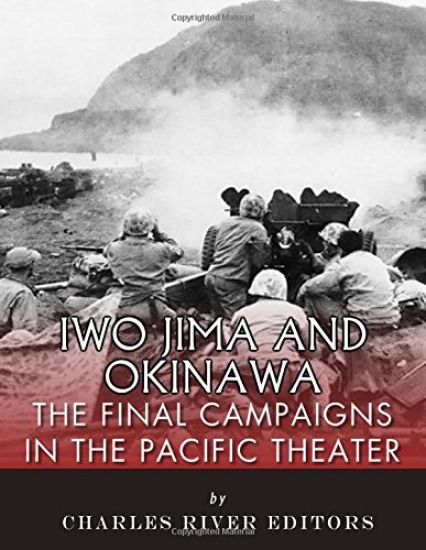
Iwo Jima and Okinawa: The Final Campaigns in the Pacific Theater

Iwo Jima and Okinawa: The Final Campaigns in the Pacific Theater

Charles River

Createspace Independent Publishing Platform
2017
nidottu
*Includes historic pictures of the fighting. *Includes pictures of important people, places, and events. *Includes a bibliography for further reading. On February 23, 1945, one of the most famous photographs in American history was taken atop Mount Suribachi, as five American soldiers began to raise an American flag. The picture, which most Americans are instantly familiar with, has come to symbolize the strength and sacrifice of America's armed forces, and though many realize it was taken during the Battle of Iwo Jima, much of the actual battle and the context of the picture itself have been overshadowed. The Battle of Iwo Jima, code name "Operation Detachment," is more of a misnomer than anything. It was fought as part of a large American invasion directed by steps toward the Japanese mainland, and it was more like a siege that lasted 36 days from February-March 1945, with non-stop fighting every minute. In fact, the iconic flag-raising photo was taken just four days into the battle, and as that picture suggests, the battle was not a pristine tactical event but an unceasing horror with no haven for protection. As veteran and author James F. Christ put it in the foreword of his exhaustive study of the action, "it is carnage...that is what Iwo was...the Gettysburg of the Pacific." Iwo Jima defined the classical amphibious assault of the World War II era, as much as the Normandy invasion did, but it came later in the war. In Europe, the Battle of the Bulge had already been won, and German forces would surrender in early May. However, the Japanese Empire was still at a considerable level of strength and state of resolve, and an essential offensive, grinding from island to island with naval unit to naval unit and air to air was met with maniacal resistance by the enemy. When Admiral Chester Nimitz was directed to capture an island in the Bonin group, Iwo Jima stood out for its importance in making progress against the mainland, with three airfields that would allow American air forces to attack the Japanese mainland. But the Japanese were also well aware of how important Iwo Jima was, and they fought desperately in bunkers and tunnels that required the Americans to carefully clear them out gradually. Less than 5% of the Japanese soldiers on Iwo Jima were taken alive, and American casualties were estimated at 26,000, with 6,800 killed or captured. Near the end of 1944, as Allied forces were pushing across the Pacific and edging ever closer to Japan, plans were drawn up to invade the Ryuku islands, the most prominent of them being Okinawa. Military planners anticipated that an amphibious campaign would last a week, but instead of facing 60,000 Japanese defenders as estimated, there were closer to 120,000 on the island at the beginning of the campaign in April 1945. The Battle of Okinawa was the largest amphibious operation in the Pacific theater, and it would last nearly 3 months and wind up being the fiercest in the Pacific theater during the war, with nearly 60,000 American casualties and over 100,000 Japanese soldiers killed. In addition, the battle resulted in an estimated 40,000-150,000 Japanese civilian casualties. Okinawa witnessed every conceivable horror of war both on land and at sea. American ground forces on Okinawa had to deal with bad weather (including a typhoon), anti-tank moats, barbed wire, mines, caves, underground tunnel networks, and fanatical Japanese soldiers who were willing to use human shields while fighting to the death. Allied naval forces supporting the amphibious invasion had to contend with Japan's notorious kamikazes, suicide pilots who terrorized sailors as they frantically tried to shoot down the Japanese planes before they could hit Allied ships. As one sailor aboard the USS Miami recalled, "They came in swarms from all directions. The barrels of our ship's guns got so hot we had to use firehoses to cool them down."
Splitting the Confederacy: The History of the Union Campaigns to Take the Mississippi River
*Includes pictures *Includes accounts of the fighting *Includes online resources and a bibliography for further reading In 1860, New Orleans was just as unique a city as it is today. It was racially and linguistically diverse, with many French, German, and Spanish speakers, and a population of white, black, and mixed-race inhabitants. Louisiana's population was 47% slave and also had one of the largest numbers of free blacks in the country. Situated near the mouth of the continent's largest river, the Mississippi, it was an international center for trade and industry. New Orleans was the sixth largest city in the country and the largest in any of the states that would end up joining the Confederacy. The volume of trade through its port was second only to New York, and the city's commercial ties with England and Spain and cultural ties with France meant that the European powers would be looking closely at how the city fared in the Civil War, especially after it was occupied by Union forces. The Lincoln administration, fearful of European meddling in the war effort, had to constantly keep European opinion in mind when dealing with the captured city, and the story of New Orleans in the Civil War is one of far-reaching political, racial, and social tensions. Given its importance, it's somewhat surprising in retrospect that the Union managed to capture New Orleans in an easier manner than places like Vicksburg and Atlanta. Admiral David Farragut's naval forces battered their shaky Confederate counterparts and were able to get over a dozen ships upriver past a couple of crucial Confederate forts along the Mississippi. By May 1862, Union forces occupied the city and General Benjamin Butler became its military governor, leaving the last true bastion of Confederate defenses on the Mississippi at Vicksburg. At the start of 1863, Robert E. Lee's Army of Northern Virginia had been frustrating the Union in the Eastern theater for several months, but the situation in the West was completely different. The Confederates had lost control of several important states throughout 1862, and after New Orleans was taken by the Union, the North controlled almost all of the Mississippi River, which Confederate general James Longstreet called "the lungs of the Confederacy". By taking control of that vital river, the North would virtually cut the Confederacy in two, putting the South in a dire situation. The only domino left to fall was the stronghold of Vicksburg, and both sides knew it. The Union Army of the Tennessee, led by Ulysses S. Grant, would spend months trying to encircle the army and eventually force John Pemberton's Confederate army to surrender. Grant eventually succeeded on July 4, 1863, but since it came a day after the climactic finish of the Battle of Gettysburg, Vicksburg was (and still is) frequently overlooked as one of the turning points of the Civil War. In fact, had the Confederate's military leadership listened to Longstreet, who advocated detaching soldiers from Lee's army to head west and help the Confederates deal with Grant or Rosecrans in that theater, the Battle of Gettysburg might never have happened. While many read about the siege of Vicksburg in the summer of 1863, as well as the desperate straits the Confederate soldiers and Vicksburg residents found themselves in, Grant's initial attempts to advance towards Vicksburg met with several miserable failures, and it took several months just to get to the point where the Union forces could start a siege. Splitting the Confederacy: The History of the Union Campaigns to Take the Mississippi River chronicles the history of the crucial campaigns that helped the North win the war. Along with pictures of important people, places, and events, you will learn about the Union capture of the Mississippi River like never before.
Fighting for the Lost Cause: The Life and Career of General Jubal Early

Fighting for the Lost Cause: The Life and Career of General Jubal Early

Charles River

Createspace Independent Publishing Platform
2017
nidottu
*Includes pictures of Early and important people, places, and events in his life. *Includes excerpts from Early's autobiography discussing battles like Gettysburg, Antietam, Fredericksburg, Chancellorsville, and more. *Discusses Early's influence on the Lost Cause and Civil War history. *Includes a Bibliography for further reading. Jubal Early (1816-1894) fought two big wars during his life. About 150 years ago, Early played an important role as a general for the Confederacy, fighting his way up the ranks until he was eventually given an independent command by Robert E. Lee in late 1864. Early served under Stonewall Jackson and Robert E. Lee, rising from regiment commander to Corps commander in the Army of Northern Virginia, and he played crucial roles in key battles like Gettysburg and in the Shenandoah Valley campaigns. During his raid toward Washington D. C., his forces nearly killed President Lincoln during a battle at Fort Stevens, making Lincoln the only sitting president to come under live fire. However, it was Early's writing that truly changed history. During the 1870s, Early was one of the writers for the Southern Historical Society who helped establish the Lost Cause, a cultural phenomenon that dominated the writing of Civil War history for a century and is still a widely held view today. His autobiography, Lieutenant General Jubal A. Early, Confederate States of America, is a perfect example of Lost Cause writing, in which the Confederacy is unable to overcome the North's vast advantage in men and resources. At the same time, the Lost Cause was primarily a creation of men from Virginia, so in turn they deified Lee and are widely responsible for Lee's immense popularity today. And since Lee could do no wrong in their eyes, writers like Early looked for others to blame for the South's loss, especially at Gettysburg, which was widely viewed then and now as the chief turning point of the war. For years, Early and James Longstreet argued in writing over who was to blame for the loss at Gettysburg, leading both men to attack each other in print. Those who personally knew Early wouldn't have been shocked by his writing. Though Lee admired Early and playfully referred to him as his "Bad Old Man" due to Early's short temper, that same temper crossed many of Early's subordinates. Early also alienated subordinates by being quick to point the finger at them for mistakes, even if they were his fault. Nevertheless, Early's biography is a great read not just for the story it tells but also as one of the best examples of Lost Cause writing, and how the Lost Cause was developed in the years after the war. Fighting for the Lost Cause: The Life and Career of General Jubal Early chronicles the life and career of Early and analyzes his war record, but it also looks at the critical role he played in creating and perpetuating the historiography of the Civil War. Along with pictures of important people, places, and events in his life, you will learn about General Early like you never have before, in no time at all.