Kirjojen hintavertailu – 12 903 727 kirjaa ja 27 kauppaa

Kirjailija

Charles River

Kirjat ja teokset yhdessä paikassa: 4 673 kirjaa, julkaisuja vuosilta 2013–2022, suosituimpiin kuuluu William Powell and Myrna Loy: The Lives and Careers of One of Classical Hollywood's Most Iconic Duos. Vertaile teosten hintoja ja tarkista saatavuus suomalaisista kirjakaupoista.

4 673 kirjaa

Kirjojen julkaisuvuodet: 2013–2022.

Thor: Los orígenes, historia y evolución del dios nórdico

Thor: Los orígenes, historia y evolución del dios nórdico

Jesse Harasta; Charles River

Createspace Independent Publishing Platform
2017
nidottu
"Al otro lado del puente de arcoiris de Asgard, Donde retumba el rugido de los cielos, En maravillado asombro contemplar n, Al dios del trueno, poderoso Thor " - Tema musical del programa de televisi n Mighty Thor (1966) "S lo Thor luch all con furor terrible, Nunca reposa cuando ve estas cosas; Se han roto juramentos, palabras y promesas, Los firmes acuerdos que entre ellos hab a..." - V lusp L nea #26 de la Edda Po tica (o Edda Mayor) Un martillo que ning n mortal puede levantar. Un flamante dios de la tormenta, con cabello cual llamas. Un h roe-dios-alien gena que defiende a la humanidad. La esv stica. Incluso el nombre Thursday jueves en ingl s] es "Thor's Day" el d a de Thor]. A pesar de la virtual desaparici n de la religi n aut ctona y mitolog a n rdica siglos atr s, a n se encuentra con regularidad en la sociedad moderna al dios de la tormenta, Thor, quien contin a siendo tra do de vuelta a la vida en forma de literatura y m s recientemente, como protagonista de pel culas taquilleras de Hollywood. Qu tiene en particular este dios, entre los cientos (si no miles) de deidades que fueron arrojadas al basurero de la historia por las grandes religiones del mundo, que captura de tal manera la imaginaci n de las personas hasta el d a de hoy? Una mejor comprensi n del atractivo de Thor puede hallarse pr cticamente en cualquiera de los aspectos de la historia y evoluci n de esta figura a lo largo de los siglos, incluyendo los or genes del dios, las im genes evocativas con las que es descrito, e incluso los paralelismos entre Thor y otros dioses y h roes similares. Todo esto ha sido alimentado por la literatura, como las historias sobre Thor encontradas en la Edda Mayor o po tica y la Edda Menor o prosaica, as como la conexi n que las sociedades han tenido con Thor por cientos de a os, incluso hoy en d a. El presente trabajo tambi n examina el declive y desplazamiento de la mitolog a escandinava/n rdica por parte del Cristianismo, las razones por las que Thor fue a menudo el ltimo dios que adoraron los n rdicos y los vestigios actuales del "Thorismo", incluyendo los paralelos con otras fes, su rol en el renacimiento de un Neo-paganismo y su aparici n en otros medios como un h roe de historietas y pel culas. En conjunto con fotograf as y bibliograf a, aprender s sobre Thor como nunca antes, y en nada de tiempo.
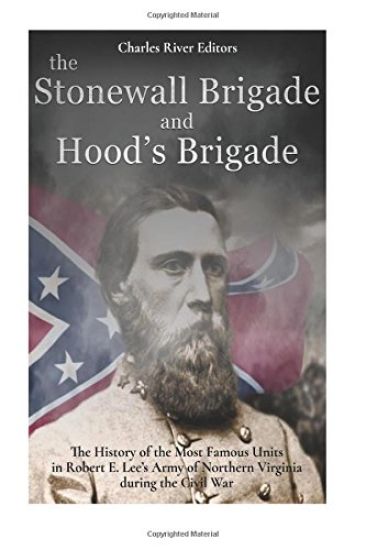
The Stonewall Brigade and Hood's Brigade: The History of the Most Famous Units in Robert E. Lee's Army of Northern Virginia during the Civil War
*Includes pictures *Includes accounts of the battles *Includes a bibliography for further reading April 18, 1861 marked the date Southern forces started pouring into Harper's Ferry, Virginia. Six days earlier, shots had been fired at Fort Sumter in Charleston Harbor, South Carolina, marking the beginning of the Civil War, and Virginia officially seceded from the Union April 17. The following day, men arrived in the town where John Brown's attempted uprising was quelled less than two years earlier. The men came from all portions of the Confederate States of America (C. S. A.) and the border states of Kentucky and Maryland, but the preponderance of volunteers came from Virginia. Once the Confederate troops occupied Harpers Ferry, martial law was declared and so-called "feather bed" Confederate military officers, often referred to as "swells," were replaced by professional soldiers with military training. One such man who arrived from the Virginia Military Institute (VMI) was Thomas Jonathan Jackson, who on April 27 was ordered by Virginia Governor John Letcher to take control of the troops converging on Harpers Ferry. He did as ordered and began to form what became the renowned Stonewall Brigade. Jackson and his brigade earned the nickname "Stonewall" at First Manassas by turning the tide of that battle, and they would become known as the legendary foot cavalry by bottling up 3 different Union armies in the Shenandoah Valley in 1862. The Stonewall Brigade went on to fight in every major battle in the Eastern theater of the American Civil War, to the extent that of the 6,000 men who fought with the brigade over the course of four years, less than 200 remained by the time General Robert E. Lee surrendered at Appomattox Courthouse on April 9, 1865. They were organized, trained, and mentored by one of the most revered military leaders in American history, and they made a decisive impact on battles like First Manassas, the 1862 Valley Campaign, and Chancellorsville. The brigade was virtually a spent force by the end of the Battle of Spotsylvania Courthouse in May 1864, which took place nearly a year after Stonewall Jackson himself had been mortally wounded at Chancellorsville. Organized in Richmond, Virginia on October 22, 1861, Hood's Texas Brigade was one of the most formidable fighting forces of the Confederate States of America (C. S. A.) during the American Civil War. At times undisciplined, the men who comprised this brigade were a group of fearless and determined volunteers-turned-soldiers. Over the course of the Civil War, the Texas Brigade engaged over 4,000 men and was comprised of the only Texans to fight with General Robert E. Lee's Army of Northern Virginia in the Eastern Theater. With the exception of Chancellorsville, these men fought in every major battle in the East, and they also participated in significant battles in the Western Theater. Of the more than 4,000 men who fought with the brigade over the course of the war, approximately 600 remained to surrender at Appomattox. The brigade suffered a horrific casualty rate of sixty-one percent and were lauded for their courage by men such as generals Thomas "Stonewall" Jackson, James Longstreet, and Lee. It is estimated that 56,000 Texans served in the Confederate Army during the Civil War, yet the approximately 4,000 men, organized into 32 companies, that formed the Texas Brigade were the only Texans who fought in both theaters of operation. They have been compared to the famous Stonewall Brigade in terms of bravery, skill, and fortitude, and naturally, their fighting directly contributed to the outcome of crucial battles like Antietam and Gettysburg. As a result, they helped change the course of history.
Legends of The Enlightenment: The Life and Legacy of Voltaire

Legends of The Enlightenment: The Life and Legacy of Voltaire

Charles River

Createspace Independent Publishing Platform
2017
nidottu
*Includes pictures. *Includes Voltaire's quotes. *Includes footnotes and a bibliography for further reading. "To hold a pen is to be at war." - Voltaire "All men are equal; it is not their birth, but virtue itself that makes the difference." - Voltaire The grand narrative of the Enlightenment, usually recounted and understood in terms of progress and modernity, generally appears as a simplified evolution from the trappings of superstition, feudalism, and everything "irrational" to a world more similar to today's world. Alongside the Renaissance, the Enlightenment is credited for the transition to an adherence to reason, secularism, and promotion of values such as individual and collective freedom and liberty. At the heart of the movement in France was Fran ois-Marie Arouet, better known by the pen name Voltaire, whose voluminous writings advocated for greater liberalism, including the freedom of religion and the separation of church and state. In addition to the classic Candide, Voltaire was a biting polemic whose satirical attacks on the Catholic Church were among the fiercest of his day. He also understood the risks he was taking with these writings, at one point explaining, "It is dangerous to be right in matters where established men are wrong." The Enlightenment is looked upon fondly, and it serves to reinforce the notion that the present is superior to the past, but things did not change as rapidly or as completely as many believe. In fact, some recent historians have challenged the belief that the Enlightenment was responsible for the French Revolution, which is a vital issue when it comes to Voltaire. After all, Voltaire, as his contemporaries and as most of his modern readers know him, is widely regarded as the pinnacle of Enlightenment thought, the symbol of the era of reason, and the harbinger of modern values. In that regard, his work is often considered to be the backbone of the French Revolution, which began about a decade after his death. Voltaire was unquestionably monumental, but he was also an exceptional product of his age, and his writings can introduce readers to the broader picture of the Enlightenment as a sum of contrasting and varied forces, tendencies and events. That Voltaire's own narrative should be read with caution and a critical eye is evident from the onset, as even salient facts in his biography bear the mark of self-fashioning and constantly draw the reader towards a tempting but simplified perspective of a progressive personal history. While it's important to assess his influence, it's also important to disentangle the actual man from his reputation, which was established in large part by his own writings. As one historian has aptly explained, "telling the story of the life of Voltaire is...as much about describing the self-conscious construction and mythologization of an intellectual identity as it is about enumerating the objective events that marked his career." Legends of The Enlightenment: The Life and Legacy of Voltaire examines the life and works of one of the most famous philosophers of the 18th century. Along with pictures of important people, places, and events, you will learn about Voltaire like never before, in no time at all.
Odín: Los orígenes, historia y evolución del dios nórdico

Odín: Los orígenes, historia y evolución del dios nórdico

Charles River; Jesse Harasta

Createspace Independent Publishing Platform
2017
nidottu
Un anciano con un solo ojo, con un manto gris y sombrero de ala ancha, apoy ndose de un bast n. Un vagabundo que aparece cuando menos se le espera, trayendo triunfo o perdici n. El dios de la profec a, la poes a y el destino. Un cambiaformas. Un hechicero. El dios Od n es una figura dram tica en la mitolog a n rdica y es a n parte del imaginario popular. Ha sido la inspiraci n para figuras como Gandalf el Gris, de J. R. R. Tolkien, y todav a figura en literatura moderna tan variada como los c mics de Marvel o la novela de Neil Gaiman American Gods (2001). Junto a su hijo Thor, Od n es uno de los dioses n rdicos mejor conocidos y a menudo es f cil olvidar que alguna vez estuvo en el coraz n de un pante n adorado con devoci n por millones de europeos en la Edad Media. Od n tiene muchos nombres y t tulos (m s de doscientos, seg n una fuente), pero su t tulo m s conocido es el de "Padre de todos" o "Padre Universal", el co-creador de la Tierra (el "Midgard"), la humanidad y todas las criaturas que habitan este mundo. Es tambi n, de forma importante, el dios de la profec a, el xtasis y la poes a, todos roles conectados muy estrechamente en el mundo n rdico, donde la l nea entre poeta y profeta era borrosa y eran vistos como poseedores de inspiraci n a trav s de una especie de furia ext tica. Estos roles estaban conectados al patronazgo de Od n sobre el conocimiento, en especial aquel de tipo m stico, ya que l era el descubridor de las runas m gicas y canciones que luego transmiti a la humanidad. Esto no lleg sin sacrificio, puesto que hubo de arrancarse su propio ojo y yacer muerto por nueve d as para adquirirlo. Od n era tambi n dios de la vida y de la muerte, y era famoso por llevarse a su reino de Valhalla todas las almas de los guerreros que hab an ca do en combate. Este rol estaba vinculado a su rol como un dios de la guerra, posici n que tal vez no parezca obvia para el lector moderno, trat ndose de un dios del conocimiento y la sabidur a. Sin embargo, Od n era el rey de los dioses y el Se or de Asgard; por lo tanto, en el entendimiento n rdico, una de sus m s cruciales tareas era la defensa de ese reino mediante el poder o militar de ser necesario. Sus seguidores vivientes lo invocaban en la batalla, y se dec a que lleg a tomar campeones e incluso a llevar al triunfo a ej rcitos humanos. Resulta til comparar a Od n con otras dos deidades prominentes: Thor y Zeus. Thor, hijo de Od n, era tambi n un dios n rdico de la guerra, mientras que Zeus era otro dios-rey. Sin embargo en ambos casos, Od n se diferencia mucho de estos dioses. l era m s enigm tico, y su poder m s sutil e indirecto. Od n era un dios de misterios, del descubrimiento del conocimiento oculto, y aunque es poderoso en la batalla, las historias donde brilla m s son aquellas en las que adopta humildes formas y consigue que otros divulguen informaci n que de otra forma no dar a. Esto difiere de las naturalezas temperamentales y el orgullo de los otros dos dioses. Od n era siempre un dios que planeaba muchos pasos adelante, que estaba dispuesto a hacer sacrificios extremos de corto plazo para llevar adelante sus planes y trabajaba continuamente para doblegar la naturaleza de su destino. Este libro explora la figura de Od n, incluyendo sus or genes, las historias sobre l contadas, la manera en que era adorado y los fragmentos y memorias que de l han sobrevivido hasta la era moderna. En conjunto con im genes y una bibliograf a, aprender s sobre Od n como nunca antes, y en nada de tiempo.

Ur and Uruk: The History and Legacy of the Ancient Sumerians' Two Most Important Cities
*Includes pictures *Examines the Sumerians' culture, daily life at the cities, and architecture *Includes ancient accounts describing the cities *Includes a bibliography for further reading In southern Iraq, a crushing silence hangs over the dunes. For nearly 5,000 years, the sands of the Iraqi desert have held the remains of the oldest known civilization: the Sumerians. When American archaeologists discovered a collection of cuneiform tablets in Iraq in the late 19th century, they were confronted with a language and a people who were at the time only scarcely known to even the most knowledgeable scholars of ancient Mesopotamia. The exploits and achievements of other Mesopotamian peoples, such as the Assyrians and Babylonians, were already known to a large segment of the population through the Old Testament and the nascent field of Near Eastern studies had unraveled the enigma of the Akkadian language that was widely used throughout the region in ancient times, but the discovery of the Sumerian tablets brought to light the existence of the Sumerian culture, which was the oldest of all the Mesopotamian cultures. Although the Sumerians continue to get second or even third billing compared to the Babylonians and Assyrians, perhaps because they never built an empire as great as the Assyrians or established a city as enduring and great as Babylon, they were the people who provided the template of civilization that all later Mesopotamians built upon. The Sumerians are credited with being the first people to invent writing, libraries, cities, and schools in Mesopotamia (Ziskind 1972, 34), and many would argue that they were the first people to create and do those things anywhere in world. No site better represents the importance of the Sumerians than the city of Uruk. Between the fourth and the third millennium BCE, Uruk was one of several city-states in the land of Sumer, located in the southern end of the Fertile Crescent, between the two great rivers of the Tigris and the Euphrates. Discovered in the late 19th century by the British archaeologist William Loftus, it is this site that has revealed much of what is now known of the Sumerian, Akkadian, and Neo-Sumerian people. Although Uruk was not the only city that the Sumerians built during the Uruk period, it was by far the greatest and also the source of most of the archeological and written evidence concerning early Sumerian culture (Kuhrt 2010, 1:23). Uruk went from being the world's first major city to the most important political and cultural center in the ancient Near East in relatively quick fashion. Long before Alexandria was a city and even before Memphis and Babylon had attained greatness, the ancient Mesopotamian city of Ur stood foremost among ancient Near Eastern cities. Today, the greatness and cultural influence of Ur has been largely forgotten by most people, partially because its monuments have not stood the test of time the way other ancient culture's monuments have. For instance, the monuments of Egypt were made of stone while those of Ur and most other Mesopotamian cities were made of mud brick and as will be discussed in this report, mud-brick may be an easier material to work with than stone but it also decays much quicker. The same is true to a certain extent for the written documents that were produced at Ur. At its height Ur was the center of a great dynasty that controlled most of Mesopotamia directly through a well maintained army and bureaucracy and the areas that were not under its direct control were influenced by Ur's diplomats and religious ideas. Ur was also a truly resilient city because it survived the downfall of the Sumerians, outright destruction at the hands of the Elamites, and later occupations by numerous other peoples, which included Saddam Hussein more recently.
The SS Baychimo: The History and Mystery of the Famous Arctic Ghost Ship

The SS Baychimo: The History and Mystery of the Famous Arctic Ghost Ship

Charles River

Createspace Independent Publishing Platform
2017
nidottu
*Includes pictures *Includes accounts of the ship's journeys and its life as a ghost ship *Includes online resources and a bibliography for further reading By the early decades of the 20th century, the fur trade had tapered off some from its heyday in the 19th century, but it still proved profitable enough for hunters to live for months at a time in remote regions of Alaska. Their only contact with the outside world consisted of the company ships that came to buy their furs and bring them supplies. One of these vessels was the steamer Baychimo, a Hudson's Bay Company ship that plied the treacherous waters off Alaska, Arctic Canada, and Siberia for many years, supplying remote outposts of Inuit and Anglo trappers and bringing back their catch of furs. Her sailors were experts at handling Arctic waters, but one year the weather proved too much for them. In October of 1931, the Baychimo was carrying $1 million in furs for the Hudson's Bay Company when it was trapped by early winter pack ice in the Beaufort Sea. Ice is a powerful force of nature that can crush even the strongest of ships, so the captain had no choice but to order his crew of 14 men to unload all equipment essential for their survival and abandon the Baychimo. The cargo was too valuable to give up, however, so they retrieved lumber from the ship's carpentry stores with which to build a small house on the nearby ice. The captain hoped the ice would shift and free his vessel, at which point they could use one of the lifeboats to row back to the Baychimo and steam back home. In the worst-case scenario, they would have to spend the winter on the ice and wait for spring thaw. They wouldn't be the first Arctic crew to have done that. The Hudson's Bay Company airlifted out part of the crew, while the captain and remaining sailors hunkered down for a long wait, hoping the ice would break apart soon. Nature had other ideas. On November 24, a month into their vigil, the crew had to hide inside their makeshift home as a fierce windstorm howled over the bleak icescape. However, when they could finally emerge into the daylight, they saw their ship had disappeared. An Inuit reported the Baychimo had drifted some 45 miles south and was once more trapped in the pack ice. The crew followed his directions to their wayward vessel, removing part of the cargo of furs. They presumed their ship would soon sink in the ice, so they trudged across the frozen wasteland back to civilization. It must have been an epic journey, but the Baychimo had started on an even greater one; the ship was still afloat, and began to travel with the currents. Inupiat hunters spotted it south of Barrow, and the following spring, a trapper found it trapped in the ice on the Beaufort Sea. He hadn't heard of the missing ship, and being curious, he boarded it. When he discovered it was a ghost ship, he left. The ghost ship continued to be sighted in the region for years afterwards. In August of 1932, a group of Alaskan traders boarded her, exploring the abandoned galleys and cabins before leaving. The following March, a group of Inuit boarded her and got trapped for 10 days when a freak storm blew up. The last known boarding of the Baychimo occurred in November of 1939, when Captain Hugh Polson went aboard with the intention of salvaging her. He was soon driven off by encroaching pack ice. The Baychimo continued to float in the waters between Alaska and Siberia, mostly in the Beaufort Sea. The latest confirmed report was by some Native Americans in 1969, between Barrow and Icy Cape, almost four decades after it had been lost. It's remarkable that it survived storms, pack ice, and encroaching rust after all that time. While it presumably sank sometime in 1969 or shortly thereafter, since it had been regularly reported up to that point and no reports exist after that final sighting, some believe the Baychimo still plies the Arctic waters somewhere.
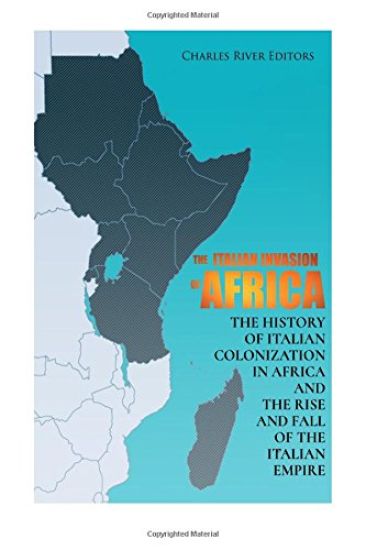
The Italian Invasion of Africa: The History of Italian Colonization in Africa and the Rise and Fall of the Italian Empire
*Includes pictures *Includes online resources and a bibliography for further reading The modern history of Africa was, until very recently, written on behalf of the indigenous races by the white man, who had forcefully entered the continent during a particularly hubristic and dynamic phase of European history. In 1884, Prince Otto von Bismarck, the German chancellor, brought the plenipotentiaries of all major powers of Europe together, to deal with Africa's colonization in such a manner as to avoid provocation of war. This event-known as the Berlin Conference of 1884-1885-galvanized a phenomenon that came to be known as the Scramble for Africa. The conference established two fundamental rules for European seizure of Africa. The first of these was that no recognition of annexation would granted without evidence of a practical occupation, and the second, that a practical occupation would be deemed unlawful without a formal appeal for protection made on behalf of a territory by its leader, a plea that must be committed to paper in the form of a legal treaty. This began a rush, spearheaded mainly by European commercial interests in the form of Chartered Companies, to penetrate the African interior and woo its leadership with guns, trinkets and alcohol, and having thus obtained their marks or seals upon spurious treaties, begin establishing boundaries of future European African colonies. The ease with which this was achieved was due to the fact that, at that point, traditional African leadership was disunited, and the people had just staggered back from centuries of concussion inflicted by the slave trade. Thus, to usurp authority, to intimidate an already broken society, and to play one leader against the other was a diplomatic task so childishly simple, the matter was wrapped up, for the most part, in less than a decade. It is debatable whether Italian engagement in Africa pertained to this era of colonization or to a later era better associated with the rise of fascism, for the only African territory that the Italians acquired during the era of European imperialism was Eritrea, and it was only nominally held. It was only later, under Benito Mussolini, that Italian possession expanded in the Horn of Africa to include Ethiopia and Somalia. The Italian conquest of coastal Libya took place in 1911, and it was also established as a unified colony under Mussolini in 1934. Only two territories in Africa were not colonized in the formal sense of the word, and these were Ethiopia (which was occupied briefly by the Italians during World War II) and Liberia. The former, Ethiopia, existed during this period, as it had for centuries, as an imperial monarchy, and although various European powers held strong diplomatic interests in the country, it never became subject to formal annexation. Liberia, on the other hand, was a curiosity. It comprises a stretch of the West African coast that was known historically as the Pepper Coast, or the Grain Coast, as others were known as the Slave and Gold Coasts. It experienced periods of visitation by both the Portuguese and the British, but its permanent settlement by outsiders came about under very unusual circumstances. However, it cannot be underestimated how important Italian participation in the "Great Game" was, given what would transpire in the early 1940s. When World War II broke out, Italy's alignment with Nazi Germany meant that Italian possessions in Africa would turn the region into a crucial theater at the start of the war, and ultimately, the Italians' inability to stave off the Allies in Africa would lead to further German involvement there, at a time when Hitler could least afford to draw resources away from the fight against the Soviets. All of it would culminate in one of the most famous battles of the war at El Alamein, pitting the legendary Desert Fox, Erwin Rommel, against the British.
Liver-Eating Johnson: The Life and Legacy of the Famous Mountain Man

Liver-Eating Johnson: The Life and Legacy of the Famous Mountain Man

Charles River

Createspace Independent Publishing Platform
2017
nidottu
*Includes pictures *Includes online resources and a bibliography for further reading To possess and develop western North America became a high priority for the United States government even before its constitution had been complete. For President Thomas Jefferson, the vast terrain of plains, mountains, and extensive coastlines offered both long-term prosperity and protection from competing international powers. To take ownership of the continent's natural resources and establish ports on both coasts from which to trade products with the world was alluring to several European powers as well. Spain contested the land to the south, following exploration of present-day Florida, and France was heavily invested in what was to become large tracts of eastern Canada. Britain was eager to erect forts and trading posts along the Pacific, thanks to the earlier efforts of Captain John Cooke, who had explored much of the Pacific coast. Early in the 19th-century, crossings such as the Lewis and Clark Expedition and John Jacob Astor's first business ventures in the Northwest demonstrated the impracticality of traversing the hostile environment for the common citizen but solidified Jefferson's claim on the land. Railroads were still some decades off, and passable roads were all but non-existent. From its first interactions with numerous Indian cultures, the government understood that the western portion of the continent was already "owned" by a variety of indigenous tribes, despite their alternate concept of ownership. To gain possession of the coasts and the interior meant there would be new languages to be learned, hundreds of treaties to be struck, and wars to be fought over several regions. No familiar institutions of power were suitable for creating a foothold in the continent's interior, especially in the Rocky Mountain region. The U. S. Army eventually made inroads to the Great Plains and beyond, but the first true explorers of the far west's interior arose from within a relatively small culture embodied by the American mountain man. By the golden age of the mountain man in the mid-19th-century, there were perhaps only 3,000 living in the West. Their origins were disparate, although they included many Anglo-Americans. A good number hailed from wilderness regions of Kentucky and Virginia and throughout the newly purchased Louisiana Territory, which occupied the entire central section of the continent. French Canadians traveled from the north to work in the fur trade, while Creole-Europeans represented approximately 15% of the men known to be living the isolated mountain life. Although the most enduring accomplishments belonged to the mountain men who had discovered, charted, and helped build the great passes through the Rockies to the west, others have retained public fascination for simply being colorful and elusive historical personalities. Such was the case of a legend who came to be known by the singularly unappetizing moniker of Liver-Eating Johnson. One of the mountain men who had been present from the peak of mountain culture to its twilight, his literal accomplishments are few and of limited scope in the sense of exploration, however, he is intimately associated with a dangerous life of intrigue, revenge, and physical horrors unspeakable in polite society. While his colleagues took steps to tame the American wilderness, he became a symbol of its savagery. Johnson's protracted war of vengeance speaks of a constant interaction with the Crow culture of the northwest and the territories of Wyoming and Montana in particular. Liver-Eating Johnson: The Life and Legacy of the Famous Mountain Man looks at the life and legends of one of the West's most famous men. Along with pictures of important people, places, and events, you will learn about Liver-Eating Johnson like never before.
James Meredith and the University of Mississippi: The History of the School's Integration During the Civil Rights Movement
*Includes pictures *Includes contemporary accounts of the integration, including Meredith's own *Includes online resources and a bibliography for further reading *Includes a table of contents Though Thomas Jefferson in the Declaration of Independence wrote that the United States would be founded on the principles that all men were created equal, nearly 200 years would pass before the principle was put into any real practice. Although the end of the Civil War opened the door for the passage of the Civil War Amendments, which abolished slavery, and, in theory, granted the descendants of both free and enslaved blacks the same rights as those enjoyed by whites, those rights were not respected or practiced during the century following the war. Most aspects of life, including schooling, remained segregated on every level, especially throughout the Jim Crow South, and the years following the desegregation triumph of Brown v. Board of the Education in 1954 saw little done to accomplish the instructions given by the Supreme Court, especially at the university level. Enter James Meredith, a young man of 28 who decided to make it his life's mission to change that situation. In doing so, he took aim at the very heart of Southern segregation: the University of Mississippi. He might have chosen any school, but Meredith had a special interest in Mississippi, as it was his native state; he had grown up near his hometown's current mayor and likely had something of a personal score to settle, as well as a political one. He applied to the university in 1961 not only to get an education but to give one in an effort to teach the white people of Mississippi and the nation that they could no longer exclude their black neighbors from their lives. Of course, he also aimed to empower black citizens and demonstrate that they were indeed citizens with the same rights and responsibilities as anyone else. For his own part, Meredith seemed to feel a great responsibility than that he placed on others, for he insisted that he would willingly die for the cause of integrating American society. Indeed, having served most of his adult life in the United States military, he saw himself as a soldier, equal in heart and task to the many others who had gone before him. He would later admit that he was often surprised he had survived his battle, but he was always certain he would triumph, because while death was always an option, failure never was. Meredith is still remembered for the almost surreal scenes that came with his admission to the school, but those historic moments required a prolonged fight. After a drawn out lawsuit that involved the State of Mississippi appealing the lower court's decision, he was finally set to attend the university in September 1962, only to be repeatedly prevented by a mob, which included Mississippi Governor Ross Barnett. Governor Barnett had earlier attempted to stop Meredith's admission by changing state laws to ban anyone who had been convicted of a state crime; Meredith's "crime" had been false voter registration. An avowed segregationist, Barnett asserted, "The Good Lord was the original segregationist. He put the black man in Africa. ... He made us white because he wanted us white, and He intended that we should stay that way." And according to Barnett, the reason so many blacks lived in Mississippi at the time was because "they love our way of life here, and that way is segregation." Barnett would later be fined $10,000 and sentenced to jail for contempt (though he never ended up going to jail or paying the fine). On September 30, Meredith was escorted by U. S. Marshals sent in by Attorney General Robert Kennedy. A white mob attacked the Marshals, and nearly 200 people were injured. President John F. Kennedy finally had to send in the Army to allow Meredith to stay at school, and Meredith would receive a bachelor's degree in political science in August 1963.
Lourdes: The History and Legacy of France's Most Famous Christian Pilgrimage Site

Lourdes: The History and Legacy of France's Most Famous Christian Pilgrimage Site

Charles River

Createspace Independent Publishing Platform
2017
nidottu
*Includes pictures *Includes online resources and a bibliography for further reading They say that judgment does not exist in Lourdes. Once one sets foot on this hallowed soil, all barriers of race, social status, background, and religious differences cease to exist. One is no more than a humble soul in search of a renewal of one's connection to God. In a statement released to the French press in mid-August of 2008, Father Jacques Nieuviarts guaranteed the following: "Those who touch the rock at the grotto in Lourdes... Perhaps they are praying to be imbued with the strength of this rock. Those who drink the water from the fountain feel that their inner thirst is being quenched, that they have been changed, and that the water has purified them... In lighting the candle, they open themselves up to the clarity that comes from God, and when they depart leaving a burning candle, their prayer continues in union with the prayers of all the other people who have placed their lighted candles at the grotto..." Given these promises of inner peace and spiritual awakenings, not to mention the countless cases - both claimed and "verified" - of miraculous healing this supernatural town is teeming with, it comes as no surprise that this once unassuming town has now become the second most popular tourist destination in France, following Paris. Over the years, this formerly quaint, but rinky-dink, gray-roofed cottage town has more than succeeded in putting itself on the map through its mystical sanctuaries built on miracles, but how exactly did they achieve such a designation? And how much truth, if any at all, is there in these so-called miracles? Lourdes: The History and Legacy of France's Most Famous Christian Pilgrimage Site chronicles the remarkable history of the site and the religious influence it has had over the centuries. Along with pictures depicting important people, places, and events, you will learn about Lourdes like never before.
Kashmir: The History and Legacy of the Indian Subcontinent's Most Disputed Territory

Kashmir: The History and Legacy of the Indian Subcontinent's Most Disputed Territory

Charles River

Createspace Independent Publishing Platform
2017
nidottu
*Includes pictures *Includes online resources and a bibliography for further reading After the Sepoy Rebellion, India was governed directly from England through a dedicated department: the India Office, headed by the Secretary of State for India. The territory was divided into "British India", which came under direct British control, and the Princely States. The latter were the territories and sovereignties of various powerful tradition leaders, remnants of the old system of rule, who were permitted, under various weights of British superintendentship, to maintain their positions and continue their rule. British India ultimately covered some 54 percent of the landmass and 77 percent of the population. By the time the British began to contemplate a withdrawal from India, 565 princely states were officially recognized, in addition to thousands of zamindaris and jagirs, which were in effect feudal estates. The stature of each Princely State was defined by the number of guns fired in salute upon a ceremonial occasion honoring one or other of the princes. These ranged from nine-gun to twenty-one-gun salutes and, in a great many cases, no salute at all. The Princely States were reasonably evenly spread between ancient Muslim and Hindu dynasties, but bearing in mind the minority status of Muslims in India, Muslims were disproportionately represented. This tended to grant Muslims an equally disproportionate share of what power was devolved to local leaderships, and it positioned powerful Muslim leaders to exert a similarly unequal influence on British policy. It stands to reason, therefore, as India began the countdown to independence after World War II, that the Indian Muslim leadership would begin to express anxiety over the prospect of universal suffrage and majority rule. At less than 20 percent of the population, Indian Muslims would inevitably find themselves overwhelmed by the Hindu majority, and as the British prepared to divest themselves of India, ancient enmities between Hindu and Muslim, long papered over by the secular and remote government of Britain, began once again to surface. At the heart of the geopolitical dispute that resulted is Kashmir, which has often been described as the most beautiful place on earth, but also the most dangerous. Nestled between the Karakoram mountains to the north and the Himalayas to the south, the Vale of Kashmir is a place of mythic beauty, in part the inspiration for James Hilton's Shangri-La, and certainly one of the most unspoiled and lovely regions of South Asia. It also, however, happens to be the fault line of a bitter conflict between two major regional powers, India and Pakistan, who both lay claim its central valley, and its wide and mountainous hinterland. Kashmir, or Jammu and Kashmir, as it is marked on modern maps, sits more or less midway along a vast geographic and cultural boundary that stretches from the Caspian Sea to northern Myanmar, and which through history has separated south from central Asia. South of this region, at the turn of the 19th century, lay India, not quite yet a unified concept, and ruled largely by a collection of princely states, part of the declining Mughal Empire, and the British East India Company. Over, and within this disputed territory, the two nations have fought three wars and numerous skirmishes. If, however, a major, all-out war breaks out in this region, between two powers armed with nuclear weapons, as has often been threatened, a global catastrophe might easily erupt in one of the most populous regions on earth. Kashmir: The History and Legacy of the Indian Subcontinent's Most Disputed Territory chronicles the remarkable history of the area and the influence it has had over the centuries. Along with pictures depicting important people, places, and events, you will learn about Kashmir like never before.
Day 1 of the Battle of Shiloh: The History of the Fighting that Nearly Ended Ulysses S. Grant's Civil War Career
*Includes pictures *Includes accounts of the fighting by generals and soldiers on both sides *Includes online resources and a bibliography for further reading *Includes a table of contents "The turning point of our fate." - Jefferson Davis on the death of Albert Sidney Johnston at Shiloh "Probably no single battle of the war gave rise to such wild and damaging reports." - William Tecumseh Sherman After Union General Ulysses S. Grant captured Fort Henry and Fort Donelson in early 1862, Confederate General Albert Sidney Johnston, widely considered the Confederacy's best general, concentrated his forces in northern Georgia and prepared for a major offensive that culminated with the biggest battle of the war to that point, the Battle of Shiloh. On the morning of April 6, Johnston directed an all out attack on Grant's army around Shiloh Church, and though Grant's men had been encamped there, they had failed to create defensive fortifications or earthworks. They were also badly caught by surprise. With nearly 45,000 Confederates attacking, Johnston's army began to steadily push Grant's men back toward the river. As fate would have it, the Confederates may have been undone by friendly fire at Shiloh. Johnston advanced out ahead of his men on horseback while directing a charge near a peach orchard when he was hit in the lower leg by a bullet that historians now widely believe was fired by his own men. Nobody thought the wound was serious, including Johnston, who continued to aggressively lead his men and even sent his personal physician to treat wounded Union soldiers taken captive. But the bullet had clipped an artery, and shortly after being wounded Johnston began to feel faint in the saddle. With blood filling up his boot, Johnston unwittingly bled to death. The delay caused by his death, and the transfer of command to subordinate P. G. T. Beauregard, bought the Union defenders critical time on April 6, and the following day Grant's reinforced army struck back and pushed the Confederate army off the field. The Battle of Shiloh lasted two days, but the battle over the battle had just begun. Grant's army had just won the biggest battle in the history of North America, with nearly 24,000 combined casualties among the Union and Confederate forces. Usually the winner of a major battle is hailed as a hero, but Grant was hardly a winner at Shiloh. The Battle of Shiloh took place before costlier battles at places like Antietam and Gettysburg, so the extent of the casualties at Shiloh shocked the nation. Moreover, at Shiloh the casualties were viewed as needless; Grant was pilloried for allowing the Confederates to take his forces by surprise, as well as the failure to build defensive earthworks and fortifications, which nearly resulted in a rout of his army. Speculation again arose that Grant had a drinking problem, and some even assumed he was drunk during the battle. Though the Union won, it was largely viewed that their success owed to the heroics of General Sherman in rallying the men and Don Carlos Buell arriving with his army, and General Buell was happy to receive the credit at Grant's expense. As a result of the Battle of Shiloh, Grant was demoted to second-in-command of all armies in his department, an utterly powerless position. And when word of what many considered a "colossal blunder" reached Washington, several congressmen insisted that Lincoln replace Grant in the field. Lincoln famously defended Grant, telling critics, "I can't spare this man. He fights." Day 1 of the Battle of Shiloh: The History of the Fighting that Nearly Ended Ulysses S. Grant's Civil War Career explains the campaign and events that led up to the controversial first day of the battle, and how the fighting that day affected the careers of the major generals involved.
The Temple of Solomon: The History of Jerusalem's First Jewish Temple

The Temple of Solomon: The History of Jerusalem's First Jewish Temple

Charles River

Createspace Independent Publishing Platform
2017
nidottu
*Includes pictures *Includes Biblical accounts describing the Temple *Includes a bibliography for further reading "In the four hundred and eightieth year after the Israelites came out of Egypt, in the fourth year of Solomon's reign over Israel, in the month of Ziv, the second month, he began to build the temple of the Lord." - 1 Kings 6:1 "In the year that king Uzziah died. I saw the LORD sitting upon a throne high and lifted up, and His train filled the hekhal (sanctuary)." - Isaiah 6:1 There was not any one entity more central to the Yahwistic Judean religion during the monarchy than the temple of Solomon. It symbolized the presence of YHWH in the nation, as well as his enduring protection of the nation and the Davidic royal throne. Judean worshippers directed their prayers toward the Solomonic temple, and eventually, the Judean prophets and theologians declared that this was the only legitimate location where priests could perform sacrifices and other religious rites for YHWH. Its significance can be seen most clearly in the dramatic cognitive dissonance experienced by the Judeans in Babylonian captivity after the destruction of the temple, which had been so central to their religious conception that they had great difficulty reconciling its destruction with their continued belief in YHWH at all. The Temple and the Biblical descriptions of it have fascinated people for centuries and led to all kinds of conjecture and imagination. In addition to countless works of art, Isaac Newton tried to make a model of it in his writings, and he wrote about the temple extensively. Even Freemasons give a nod to Solomon's Temple by calling their meeting places temples as well. That said, the Temple remains an enduring mystery due to conflicting accounts and descriptions of it in the Bible, and some scholars have even put forth theories that the structure was not originally designed to serve religious purposes in the first place. The Temple Mount remains the holiest place in Judaism over 2,000 years later, and due in part to that religious sensitivity and the current placement of the Al-Aqsa mosque there, archaeological work is almost nonexistent. As a result, some have continued to question whether Solomon's Temple ever actually existed, pointing not only to lack of physical evidence but also the fact that contemporary Jewish literature aside from the Bible makes no mention of it. The political tensions between the modern state of Israel and the Palestinians have also made the temple and all of Jerusalem contentious issues. The Temple of Solomon: The History of the Jerusalem's First Jewish Temple discusses the history, mystery and controversy surrounding the temple, examining the Bible and historical record in an attempt to separate fact from fiction. Along with pictures and a bibliography, you will learn about Solomon's Temple like never before, in no time at all.
Odín: Los orígenes, historia y evolución del dios nórdico

Odín: Los orígenes, historia y evolución del dios nórdico

Charles River; Jesse Harasta

Createspace Independent Publishing Platform
2017
nidottu
Un anciano con un solo ojo, con un manto gris y sombrero de ala ancha, apoy ndose de un bast n. Un vagabundo que aparece cuando menos se le espera, trayendo triunfo o perdici n. El dios de la profec a, la poes a y el destino. Un cambiaformas. Un hechicero. El dios Od n es una figura dram tica en la mitolog a n rdica y es a n parte del imaginario popular. Ha sido la inspiraci n para figuras como Gandalf el Gris, de J. R. R. Tolkien, y todav a figura en literatura moderna tan variada como los c mics de Marvel o la novela de Neil Gaiman American Gods (2001). Junto a su hijo Thor, Od n es uno de los dioses n rdicos mejor conocidos y a menudo es f cil olvidar que alguna vez estuvo en el coraz n de un pante n adorado con devoci n por millones de europeos en la Edad Media. Od n tiene muchos nombres y t tulos (m s de doscientos, seg n una fuente), pero su t tulo m s conocido es el de "Padre de todos" o "Padre Universal", el co-creador de la Tierra (el "Midgard"), la humanidad y todas las criaturas que habitan este mundo. Es tambi n, de forma importante, el dios de la profec a, el xtasis y la poes a, todos roles conectados muy estrechamente en el mundo n rdico, donde la l nea entre poeta y profeta era borrosa y eran vistos como poseedores de inspiraci n a trav s de una especie de furia ext tica. Estos roles estaban conectados al patronazgo de Od n sobre el conocimiento, en especial aquel de tipo m stico, ya que l era el descubridor de las runas m gicas y canciones que luego transmiti a la humanidad. Esto no lleg sin sacrificio, puesto que hubo de arrancarse su propio ojo y yacer muerto por nueve d as para adquirirlo. Od n era tambi n dios de la vida y de la muerte, y era famoso por llevarse a su reino de Valhalla todas las almas de los guerreros que hab an ca do en combate. Este rol estaba vinculado a su rol como un dios de la guerra, posici n que tal vez no parezca obvia para el lector moderno, trat ndose de un dios del conocimiento y la sabidur a. Sin embargo, Od n era el rey de los dioses y el Se or de Asgard; por lo tanto, en el entendimiento n rdico, una de sus m s cruciales tareas era la defensa de ese reino mediante el poder o militar de ser necesario. Sus seguidores vivientes lo invocaban en la batalla, y se dec a que lleg a tomar campeones e incluso a llevar al triunfo a ej rcitos humanos. Resulta til comparar a Od n con otras dos deidades prominentes: Thor y Zeus. Thor, hijo de Od n, era tambi n un dios n rdico de la guerra, mientras que Zeus era otro dios-rey. Sin embargo en ambos casos, Od n se diferencia mucho de estos dioses. l era m s enigm tico, y su poder m s sutil e indirecto. Od n era un dios de misterios, del descubrimiento del conocimiento oculto, y aunque es poderoso en la batalla, las historias donde brilla m s son aquellas en las que adopta humildes formas y consigue que otros divulguen informaci n que de otra forma no dar a. Esto difiere de las naturalezas temperamentales y el orgullo de los otros dos dioses. Od n era siempre un dios que planeaba muchos pasos adelante, que estaba dispuesto a hacer sacrificios extremos de corto plazo para llevar adelante sus planes y trabajaba continuamente para doblegar la naturaleza de su destino. Este libro explora la figura de Od n, incluyendo sus or genes, las historias sobre l contadas, la manera en que era adorado y los fragmentos y memorias que de l han sobrevivido hasta la era moderna. En conjunto con im genes y una bibliograf a, aprender s sobre Od n como nunca antes, y en nada de tiempo.
Thor: As Origens, História e Evolução do Deus Nórdico

Thor: As Origens, História e Evolução do Deus Nórdico

Jesse Harasta; Charles River

Createspace Independent Publishing Platform
2017
nidottu
"Atrav s da ponte de arco- ris de Asgard, Onde os C us Trovejantes brandem, Voc contemplar ao perder o f lego, O Deus do Trov o, Poderoso Thor " - M sica tema do programa de televis o Poderoso Thor (1966) "Em f ria crescente ent o levantou-se Thor, -- Raramente permanece sentado quando escuta tais coisas, -- E os juramentos foram quebrados as palavras e v nculos, As poderosas promessas entre eles feitas." - V lusp Linha #26 da Edda Po tica Um martelo que mortal algum pode levantar. Um deus da tempestade com cabelos de fogo. Um alien gena-her i-deus de hist rias em quadrinho que defende a humanidade. A su stica. At mesmo o dia da semana, "Thursday" - quinta feira em ingl s - tem seu nome ("Thor's Day", o dia de Thor). Apesar do virtual desaparecimento da religi o e mitologia n rdica v rios s culos atr s, a sociedade moderna ainda frequentemente depara-se com o deus da tempestade Thor, que continua a ser trazido de volta vida na forma da literatura, e foi recentemente o protagonista de filmes de grande or amento de Hollywood. Por que que este deus, dentre as centenas (sen o milhares) de divindades entregues lixeira da hist ria ao dar lugar para as religi es hoje mais comuns do mundo, captura tanto a imagina o das pessoas nos dias atuais? Uma melhor compreens o da atra o de Thor pode ser encontrada em quase todo aspecto da hist ria e da evolu o da figura ao decorrer dos s culos, incluindo as origens do deus, as imagens evocativas usadas para descrev -lo, e at mesmo paralelos entre Thor e outros deuses e her is similares. Tudo isso foi extensivamente explorado pela literatura, em hist rias sobre Thor encontradas na Edda prosaica e po tica, e a conex o que sociedades tiveram com Thor por centenas de anos, chegando at mesmo contemporaneidade. Essa obra tamb m examina o decl nio e substitui o da mitologia n rdica pelo cristianismo, as raz es pelas quais Thor foi frequentemente o ltimo deus adorado pelos n rdicos, e o que restou hoje do Thorismo, incluindo seus paralelos em outras f s, seu papel no reavivado Neopaganismo e sua apari o em outras m dias como her i de gibis e filmes. Junto de gravuras e uma bibliografia, voc aprender sobre Thor como nunca antes, e sem perda de tempo.