Kirjojen hintavertailu – 12 903 727 kirjaa ja 27 kauppaa
Kirjailija
Charles River
Kirjat ja teokset yhdessä paikassa: 4 673 kirjaa, julkaisuja vuosilta 2013–2022, suosituimpiin kuuluu William Powell and Myrna Loy: The Lives and Careers of One of Classical Hollywood's Most Iconic Duos. Vertaile teosten hintoja ja tarkista saatavuus suomalaisista kirjakaupoista.
*Includes over 25 pictures *Includes directions for certain parts of some of Thailand's cities. Imagine a place where you can see Buddhist temples, ride elephants, and observe monks during the day, then visit markets, Western style bars, or take cooking classes at your hotel in the afternoon or at night. Welcome to Thailand, one of the most unique vacation spots on Earth. Thailand has become increasingly popular for tourists, offering exotic surroundings in Southeast Asia, distinctly different cultures, wonderful food, and friendly people and businesses that recognize the country's allure as a tourist destination. Along with an industrialized economy and millions of expatriates, Thailand has become one of the most popular places for all kinds of different visitors, from historians to honeymooners. With each passing year, millions of expatriates relocate to the country. Experience Thailand takes readers to Thailand's main cities and beyond, exposing them to local architecture, art, nature, cuisine, dance, and more in a way that will make a trip to Thailand an unforgettable experience. Whether you're planning a trip to Thailand, or looking to learn more about the city, this guide is for you With over 25 photographs of places and things Thailand has to offer, you'll learn about the different parts of the city, including: Bangkok The Grand Palace and Royal Palace The White Temple Chiang Mai The Elephant Conservation Center And more Experience Thailand today
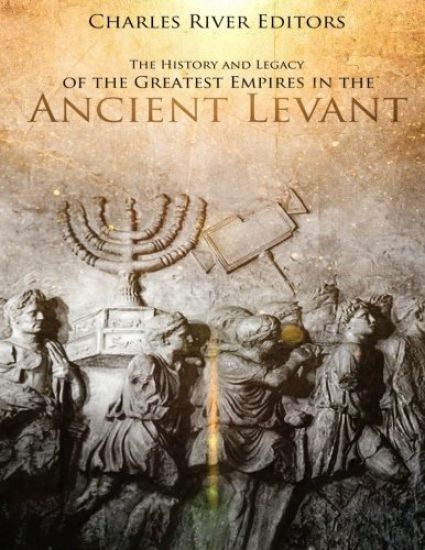
*Includes pictures *Includes ancient accounts *Includes online resources and a bibliography for further reading The pages of world history textbooks contain a litany of "lost" empires and civilizations, but usually, upon further review, it is revealed that these so called lost empires are often just lesser known cultures that had a less apparent impact on history than other more well-known civilizations. When one scours the pages of history for a civilization that was inexplicably lost, but had a great impact during its time, very few candidates can be found, but the Hittites are a notable example. Compared to some of their contemporaries - including the Egyptians, Assyrians, and Babylonians - the Hittites were somewhat distant both culturally and geographically. The Hittites were an Indo-European speaking in an ocean of Afro-Asiatic and Semitic groups, their homeland was to the north of Mesopotamia, and it contained no major river like the Nile, Tigris, or Euphrates Rivers. The Hittite empire was also far less enduring than its neighbors, as it only existed from about 1800-1200 BCE (van de Mieroop 2007, 156), which was considerably shorter than most of the other major kingdoms of the Near East. Of all the peoples of the ancient Near East, the Phoenicians are among the most recognizable but also perhaps the least understood. The Phoenicians never built an empire like the Egyptians and Assyrians; in fact, the Phoenicians never created a unified Phoenician state but instead existed as independent city-state kingdoms scattered throughout the Mediterranean region. However, despite the fact there was never a "Phoenician Empire," the Phoenicians proved to be more prolific in their exploration and colonization than any other peoples in world history until the Spanish during the Age of Discovery. The Phoenicians were well-known across different civilizations throughout the ancient world, and their influence can be felt across much of the West today because they are credited with inventing the forerunner to the Greek alphabet, from which the Latin alphabet was directly derived. Nonetheless, the Phoenicians left behind few written texts, so modern historians have been forced to reconstruct their past through a variety of ancient Egyptians, Assyrian, Babylonian, Greek, and Roman sources. It's not even clear what the Phoenicians called themselves, because the name "Phoenician" is derived from the Greek word "phoinix", which possibly relates to the dyes they produced and traded (Markoe 2000, 10). The mystery of the ancient Phoenicians is further compounded by the fact that archaeologists have only been able to excavate small sections of the three primary Phoenician cities: Byblos, Sidon, and Tyre. Although the Biblical accounts of the Assyrians are among the most interesting and are often corroborated with other historical sources, the Assyrians were much more than just the enemies of the Israelites and brutal thugs. A historical survey of ancient Assyrian culture reveals that although they were the supreme warriors of their time, they were also excellent merchants, diplomats, and highly literate people who recorded their history and religious rituals and ideology in great detail. For a time, the Seleucids commanded the largest empire in the world as it stretched from the high plains and deserts of what is now Afghanistan in the east to parts of the Levant and Asia Minor in the west. The empire's early kings were strong and shrewd and committed to the ideas of Hellenism as much as holding power and expanding the realm of their empire, but later rulers did not prove as capable. In time, the Seleucid royal house often descended into orgies of violence which were driven by ambitious men and women. Despite its troubles and its sheer size and scope, the Seleucid Empire lasted for several centuries, and it would not truly reach its end until the 1st century BCE.
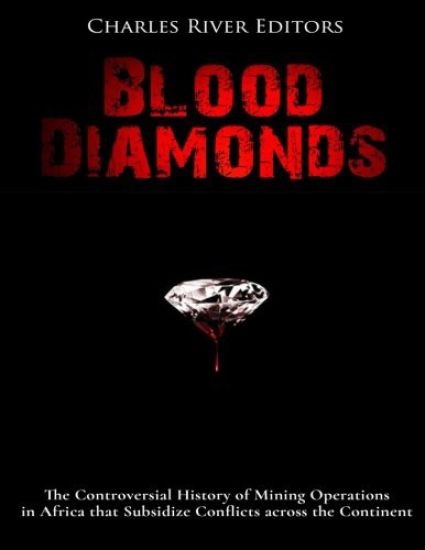
Sometime early in November 1985, a clandestine prison escape took place at the Plymouth County Correctional Facility in Massachusetts. With the usual prop of knotted together sheets, Charles Taylor an ex-Liberian government official, alumni student of Bentley College, Massachusetts, and fugitive from Liberian justice, scaled the wall and climbed into the rear passenger's seat of a car waiting to take him to New York. There, he was collected by his wife, Jewel Taylor, and spirited away. Thereafter, Charles Taylor slipped out of sight. The event attracted a few lines in the local press and a desultory police investigation but nothing more. Within a few weeks, the matter was closed and Charles Taylor was forgotten. Then, on Boxing Day 1989, BBC's Focus on Africa program aired an interview with Charles Taylor as he was somewhere in West Africa, announcing the commencement of a war. He spoke by satellite telephone, which at the time was the acme of modern communications, speaking with an identifiably American accent. His message was simply that his organization, the National Patriotic Front of Liberia-or the NPFL-had launched an invasion of Liberia with the purpose of overthrowing the current head of state, Master Sergeant Samuel Kanyon Doe. Thus began an improbable decade of anarchic and self-consuming violence that overwhelmed the tiny nation of Liberia and spread to neighboring Sierra Leone in one of the signature African civil conflicts of the late 20th century. It was during the Liberian and Sierra Leonean civil wars that the phenomenon of drug-addled and heavily-armed youth, many of them just children, were recruited and mobilized by local warlords against each other and the institutions of state and economy. It marked the beginning of television warfare, with the press following the conflict at every stage, documenting in excruciating detail the horror and violence of a thoroughly modern, budget revolution. The commercial exploitation of Sierra Leonean diamonds began in the early 1930s, in the Kono District in the east of the country. The first discoveries had been made by a British-held concern called Consolidated African Selection Trust, or CAST, in which a British shareholder body, Selection Trust Limited, shared a significant interest with the diamond giant De Beers. Transparency, of course, was not by any means absolute, but under British colonial oversight, the movement of diamonds out of the country was regulated and royalties channeled reasonably appropriately. In the past, all diamond mining in Sierra Leone had fallen under the control of the Sierra Leone Selection Trust-or SLST-a private investor body with exclusive rights to mine diamonds in Sierra Leone. By the mid-1950s and 1960s, illegal and illicit mining had taken over large areas of production. Figures vary, but by the 1960s, one can assume a figure of upwards of 100,000 illegal miners, both domestic and foreign, were active in the Kono District. Armed groups began to appear, challenging private SLST security, eventually fermenting a situation of anarchy under which regulated and taxed diamond production diminished to a trickle. Naturally, the corruption was at its most pervasive and creative surrounding diamonds. The industry was effectively criminalized, becoming the basis of a patrimonial shadow system geared toward sustaining wealth and power at its center. Distrustful of his own countrymen and tribal opponents, Stevens handed off much of the day to day business of diamonds to Lebanese businessmen who had been a somewhat anomalous presence in Sierra Leone since the end of the 19th century. From a peak of over two million carats officially exported in 1970, legitimate diamond exports dropped to 595,000 carats in 1980 and 48,000 carats in 1988.
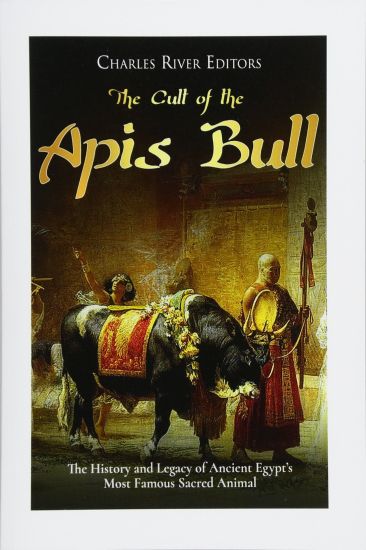
*Includes pictures *Includes ancient accounts *Includes online resources and a bibliography for further reading Africa may have given rise to the first human beings, and Egypt probably gave rise to the first great civilizations, which continue to fascinate modern societies across the globe nearly 5,000 years later. From the Library and Lighthouse of Alexandria to the Great Pyramid at Giza, the Ancient Egyptians produced several wonders of the world, revolutionized architecture and construction, created some of the world's first systems of mathematics and medicine, and established language and art that spread across the known world. With world-famous leaders like King Tut and Cleopatra, it's no wonder that today's world has so many Egyptologists. Perhaps the most intriguing aspect of ancient Egyptian civilization was its inception from the ground up, as the ancient Egyptians had no prior civilization which they could use as a template. In fact, ancient Egypt itself became a template for the civilizations that followed. The Greeks and the Romans were so impressed with Egyptian culture that they often attributed many attributes of their own culture - usually erroneously - to the Egyptians. With that said, some minor elements of ancient Egyptian culture were, indeed, passed on to later civilizations. Egyptian statuary appears to have had an initial influence on the Greek version, and the ancient Egyptian language continued long after the pharaonic period in the form of the Coptic language. To the ancient Egyptians, the gods and goddesses were all around them and could be seen daily in nature. Nearly every animal found in ancient Egypt, both domestic and wild, were associated with a god or goddess, which can be seen in Egyptian art where deities are often depicted with human bodies and animal heads. Or sometimes the deities are portrayed as complete animals. Since deities were associated with certain animals, all animals of a specific species were given divine and protected status. The reverence that ancient Egyptians had for certain animals evolved during the long duration of Pharaonic history until by the Late Period animals of specific species were mummified by the thousands as offerings for their associated deities. For instance, ibises were mummified for the god Thoth, while cats were mummified for the goddess Bastet. Modern archaeologists have uncovered most of the Late Period animal mummies in the region near the modern village of Saqqara, which has become known as the "Sacred Animal Necropolis." Although most of the animal mummies discovered in the Sacred Animal Necropolis of Saqqara are the thousands of nameless ibises, falcons, crocodiles, and cats, the region was also home to another, more important animal cult. By the time the Greeks took control of Egypt in the late 4th century BCE, the Apis cult was certainly one of the most influential, if not the most influential, of all the many different religious institutions that existed in the country at that time. Through a combination of modern archaeological excavations as well as Egyptian texts and classical historical accounts, the meaning, scope, and importance of the Apis cult can be better understood.
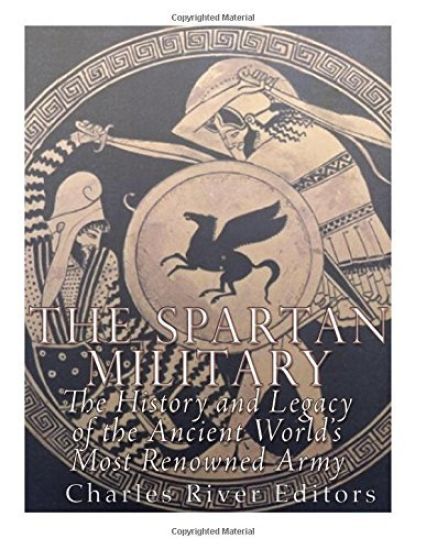
*Includes pictures *Includes ancient accounts describing the Spartan military *Includes online resources and a bibliography for further reading *Includes a table of contents "The only men in the world with whom war brought a respite from training for war." - Plutarch's description of Spartan warriors "The walls of Sparta were its young men, and its borders the points of their spears." - attributed to King Agesilaos There have been no shortage of great warrior societies in history, including the Romans, Mongols, Macedonians, and Vikings, the list goes on. Yet one humble city in particular, nestled in a valley near the Eurotas river in the Greek region of the Peloponnese and once ridiculed as little more than a cluster of villages inhabited by uncouth shepherds, produced the most famous warrior elite the world has ever known. The most unique city-state in Ancient Greece was Sparta, which continues to fascinate contemporaneous society. It is not entirely clear why Sparta placed such a great emphasis on having a militaristic society, but the result was that military fitness was a preoccupation from birth. If a Spartan baby did not appear physically fit at birth, it was left to die. Spartan children underwent military training around the age of 7 years old, and every male had to join the army around the age of 18. The Spartans, whose carefully constructed approach to warfare and - there is no other word for it - Spartan way of life, earned the grudging admiration of all of Greece and succeeded in establishing themselves in the years following the reforms of the semi-legendary ruler Lycurgus as the greatest military force in all of Hellas. Athens might have the mightiest fleet and the greatest cadre of philosophers and dramatists, Thessaly might have had the most vaunted cavalry, and the great city-states of Argos, Thebes and Corinth all had their own claims to fame, but on the battlefield the Spartan phalanx stood without peer. So feared were they in Greece that their very appearance on the battlefield could cause entire enemy armies to flee in terror, and in one of history's most famous battles, 300 Spartan warriors headed a combined Greek force which held off the hundreds of thousands of Persian warriors of Xerxes's invading army for three days at Thermopylae, inflicting an estimated 20,000 casualties upon them before dying to the last man rather than retreating. Sparta will forever be known for its military prowess, but they had lives off the battlefield as well, and their way of life was also unique. For example, Spartan females were formally educated, which was a rarity among the city-states, and the Spartan way of life was entirely dependent on a class of indentured servants known as the helots. Yet the Laws of Lycurgus, which ordered all Spartans to disregard art (with the exception of song, which the Spartans prized, and some forms of music and poetry), to distrust philosophy, and to abhor excess in all things, were designed to create the perfect warrior society, and they did. As a result, the Spartans became notorious for "Laconic phrases." The Spartan Military: The History and Legacy of the Ancient World's Most Renowned Army looks at the history of the Spartan military, and how it became one of the most fearsome fighting forces in history. Along with pictures depicting important people, places, and events, you will learn about the Spartan military like never before.
"Los que buscan las leyes de la Naturaleza como soporte para sus nuevas obras colaboran con el creador "- Antoni Gaud . A mediados del siglo XIX, la Catalu a espa ola experiment una profunda transformaci n cuando fue empujada no en una, sino en dos pocas doradas: la Renaixen a y la Revoluci n Industrial. Fue durante este per odo explosivo de creatividad, prosperidad floreciente y patriotismo vigorizado que naci un icono inconformista y fascinantemente exc ntrico, uno que estaba a punto de asaltar Catalu a con su brillante ojo para el arte no ortodoxo y sus ideas legendarias -o como algunos dir an, notoriamente- descabelladas. Salvador Dal , el c lebre surrealista, fue uno de los muchos que encontrar a en l una fuente de inspiraci n, aunque alguna vez delirando sobre la Sagrada Familia, el punto culminante de la carrera de este icono, dijo: "Los que no han o do hablar de la esencia crom tica y resplandeciente de su color, la asombrosa polifon a de sus torres como tubos de rgano y sorprendidos por su naturalismo mutante, son traidores". Este icono en cuesti n, por supuesto, no es otro que lo que muchos consideran el patriarca del movimiento modernista catal n: Antoni Gaud . Antoni Gaud La vida y el Legado del Arquitecto del Modernismo Catal n examina su vida y trayectoria profesional, c mo su religiosidad y su amor por la naturaleza configuraron su arte, y c mo una peligrosa obsesi n acab conduciendo al tr gico final de un genio. Adem s de fotos que muestran personas importantes, lugares y eventos, usted aprender sobre Gaud como nunca antes.
*Includes pictures *Includes online resources and a bibliography for further reading On September 29, 2017, U. S. Secretary of State Rex Tillerson stated that the United States did not recognize the decision of the Iraqi Kurdish independence referendum. "The vote and the results lack legitimacy and we continue to support a united, federal, democratic and prosperous Iraq." For all of the international community's efforts to support and provide safe haven to refugees as well as religious and ethnic minorities, it is the Kurdish people who have had a particularly difficult situation within this realm. Following skirmishes with the Iraqi government and international condemnation of the move, the Iraqi Kurds are not retracting the independence request at the moment. The Kurds lack a well-defined boundary - by international standards - and broach the lands of Iran, Iraq, Syria, and Turkey. All of these neighboring countries have had a contentious relationship with the Kurdish people. The Kurds have different languages, different religious traditions, and different cultures. And much like the Jewish people and the Palestinians, they seek an independent homeland in which they have the right to self-determination. Due to the difficult political and military situation in the Fertile Crescent region of the Middle East, the Kurds have yet to successfully create their own nation with recognized borders. And it would not be an easy task; while the Kurds of the different countries in this region all collectively refer to themselves as "Kurds," there are many differences among these groups. Admitting that the Kurds deserve an independent state also means a loss in territory for Turkey, Syria, Iran, and Iraq which these countries heavily rely on for economic and strategic military reasons. The United States and its allies' refusal to recognize the Kurdish referendum appears to be based on the fact that the Islamic State of Iraq and Syria (ISIS) is still prominent in the region. They maintain that ISIS and other extremist groups look forward to instances of instability and a call for Kurdish independence would throw Iraq into even more turmoil. The U. K. Ambassador to Iraq stated that "now was] not the right time" to hold the referendum. This begs the question of whether there ever will be a right time. This is the question that the Kurdish people have asked the international community throughout history. By delving deeper into their ethnic, religious, and political history, it is possible to understand the larger issues of statelessness and the striving for independence. At the same time, the relationships between the Kurds and the ruling regimes of the day have changed and altered the political landscape in the Middle East. The Kurds' relationship with European and American governments also led to a certain expectation that outside support would somehow usher in the creation or at least the support of the Kurdish state, yet that has not come to pass. Assessing the violent treatment of the Kurds by governments opposed to their independence will also illustrate the horrors and struggles of the Kurdish community over the years. All of this history culminates in the historic referendum in September 2017 and its implications for the region. The Kurds: The History of the Middle Eastern Ethnic Group and Their Quest for Kurdistan examines the group and the contentious issues surrounding them. Along with pictures of important people, places, and events, you will learn about the Kurds like never before.
*Includes pictures *Includes ancient accounts *Includes online resources and a bibliography for further reading The pages of world history textbooks contain a litany of "lost" empires and civilizations, but usually, upon further review, it is revealed that these so called lost empires are often just lesser known cultures that had a less apparent impact on history than other more well-known civilizations. When one scours the pages of history for a civilization that was inexplicably lost, but had a great impact during its time, very few candidates can be found, but the Hittites are a notable example. Compared to some of their contemporaries - including the Egyptians, Assyrians, and Babylonians - the Hittites were somewhat distant both culturally and geographically. The Hittites were an Indo-European speaking in an ocean of Afro-Asiatic and Semitic groups, their homeland was to the north of Mesopotamia, and it contained no major river like the Nile, Tigris, or Euphrates Rivers. The Hittite empire was also far less enduring than its neighbors, as it only existed from about 1800-1200 BCE (van de Mieroop 2007, 156), which was considerably shorter than most of the other major kingdoms of the Near East. Of all the peoples of the ancient Near East, the Phoenicians are among the most recognizable but also perhaps the least understood. The Phoenicians never built an empire like the Egyptians and Assyrians; in fact, the Phoenicians never created a unified Phoenician state but instead existed as independent city-state kingdoms scattered throughout the Mediterranean region. However, despite the fact there was never a "Phoenician Empire," the Phoenicians proved to be more prolific in their exploration and colonization than any other peoples in world history until the Spanish during the Age of Discovery. The Phoenicians were well-known across different civilizations throughout the ancient world, and their influence can be felt across much of the West today because they are credited with inventing the forerunner to the Greek alphabet, from which the Latin alphabet was directly derived. Nonetheless, the Phoenicians left behind few written texts, so modern historians have been forced to reconstruct their past through a variety of ancient Egyptians, Assyrian, Babylonian, Greek, and Roman sources. It's not even clear what the Phoenicians called themselves, because the name "Phoenician" is derived from the Greek word "phoinix", which possibly relates to the dyes they produced and traded (Markoe 2000, 10). The mystery of the ancient Phoenicians is further compounded by the fact that archaeologists have only been able to excavate small sections of the three primary Phoenician cities: Byblos, Sidon, and Tyre. Although the Biblical accounts of the Assyrians are among the most interesting and are often corroborated with other historical sources, the Assyrians were much more than just the enemies of the Israelites and brutal thugs. A historical survey of ancient Assyrian culture reveals that although they were the supreme warriors of their time, they were also excellent merchants, diplomats, and highly literate people who recorded their history and religious rituals and ideology in great detail. For a time, the Seleucids commanded the largest empire in the world as it stretched from the high plains and deserts of what is now Afghanistan in the east to parts of the Levant and Asia Minor in the west. The empire's early kings were strong and shrewd and committed to the ideas of Hellenism as much as holding power and expanding the realm of their empire, but later rulers did not prove as capable. In time, the Seleucid royal house often descended into orgies of violence which were driven by ambitious men and women. Despite its troubles and its sheer size and scope, the Seleucid Empire lasted for several centuries, and it would not truly reach its end until the 1st century BCE.
Adem s de Jes s, no hay otro personaje trazado m s v vidamente en los evangelios que Pedro. Hablar de San Pedro es hablar de un hombre de acci n. No en balde es el ap stol m s mencionado en el Nuevo Testamento: un total de 195 veces. En comparaci n, Juan, el siguiente m s popular, alcanza apenas 29 menciones. Es en los momentos decisivos, donde se requiere una acci n r pida y categ rica, donde el l der de los ap stoles brilla; ah Pedro no tiene rival en el c rculo interno de personas que segu an a Jes s de Nazareth. Es la inacci n y en la incertidumbre donde vacila, se derrumba, muestra su lado humano. Con todo eso, y a pesar de ello, se convirti en el hombre de confianza de Jes s, y con el tiempo, en el l der de la naciente Iglesia. Reconstruir la biograf a de Sim n Pedro, el pescador galileo, implica lanzar las redes sobre aguas de las m ltiples tradiciones sobre el l der de los Doce, el hombre siempre presente en los puntos de inflexi n de la historia. Con buenas razones se ha dicho que la narraci n evang lica est escrita desde su punto de vista. Es l a quien Jes s llama primero cuando se halla trabajando en la orilla del mar; es Pedro quien proclama con ciego entusiasmo que su maestro es el Mes as; quien discute con l sobre las consecuencias y el significado de ese t tulo; quien llora amargamente ante su fracaso; quien se introduce en a la casa del sumo sacerdote donde tienen preso al rab , y quien despu s de la crucifixi n se arroja a las oscuras aguas, antes de la salida del sol, cuando cree verlo parado en la orilla del mar. Pedro ya era un hombre casado con oficio permanente en Caperna m cuando Jes s de Nazaret pas a su lado y le dijo: "S gueme y te har pescador de hombres". A pesar de que los cuatro evangelios can nicos suelen tener desacuerdos entre s , todos coinciden en un aspecto crucial: la preeminencia de Pedro. Sim n Bar-jon s (el hijo de Jon s) fue portavoz y l der de los ap stoles, el disc pulo de confianza del Se or e, ir nicamente, el que una y otra vez le fall por medio de su incomprensi n, sus titubeos, sus negaciones e impulsividad, como cuando desenfund la espada para herir, cuando su maestro claramente estaba en contra de la violencia. Sin embargo, de acuerdo a varios reportes independientes, Jes s resucitado fue a aparecerse antes que nadie a l, como para confirmarlo en su encargo de "apacentar a sus ovejas". Nunca en la Iglesia primitiva se puso jam s en duda la primac a del tosco pescador. Despu s de aquella funesta celebraci n de Pascua donde pareci terminar el sue o, el l der de los Doce fue el primero en salir del encierro, identificarse como seguidor del rebelde que acaba de ser crucificado, y ponerse a predicar con un valor que compens con creces su anterior cobard a. Con l comenz la Iglesia m s numerosa del mundo. Considerando todo esto, resulta extra o que se conozcan tan pocos detalles sobre su vida tras la muerte de Jes s. Que Sim n "Cefas", el pescador de Galilea es una figura hist rica, es un hecho que nadie -ni siquiera los que dudan de la existencia de Jes s- pondr a en duda. La evidencia textual va directamente hasta los a os en que vivi en Jerusal n, y al menos un contempor neo menciona un encuentro con l en sus escritos. Pero los detalles son escasos. Ir nicamente la mayor parte de la informaci n confiable proviene de otro l der cristiano con quien tuvo enfrentamientos: Pablo. Tradiciones y leyendas sobre la vida de San Pedro hay muchas -sin mencionar multitud de escritos atribuidos a l-; algunas pueden contener memorias hist ricas, otras son par bola; pero lo que no es leyenda es que en vida, y durante dos mil a os, Pedro fue y ha sido objeto de acaloradas controversias.
Aunque los ej rcitos de las antiguas ciudades-estado griegas o "hel nicas" (poleis, singular polis) inclu an tanto la caballer a (hippeis) como la infanter a ligera (psiloi, peltastes, gymnetes), su base era sin duda la infanter a pesada conocida hoy en d a como hoplitas. Armados hasta los dientes con su distintivo escudo redondo (aspis o hoplon), casco de cresta alta (corys) y lanza larga (dory), los hoplitas fueron unos de los soldados m s eficientes de su tiempo. Lucharon en formaci n apretada de falange, y m s all de los confines de sus peque os poleis, los hoplitas griegos eran tambi n apreciados como mercenarios en todo el mundo antiguo. La mayor a de los historiadores creen que el hoplita se convirti en el soldado de infanter a dominante en casi todas las ciudades-estados griegos alrededor del siglo VIII a. C. Los hoplitas eran responsables de adquirir su propio equipo, as que no todos los hoplitas podr an haber estado igualmente armados, pero considerando el estilo de la guerra, necesitaban tanta uniformidad como fuera posible. Como la mayor a de la infanter a fuera de Grecia, los hoplitas tambi n portaban lanzas, pero mientras que las armas persas eran cortas y ligeras, por ejemplo, las lanzas griegas eran gruesas entre 2 y 3 metros de largo. Estas lanzas estaban rematadas por una punta de 22 cent metros, con una punta de culata de "aspecto de lagarto" en la parte inferior que podr a ser usada como una punta de lanza secundaria si el arma principal se romp a, o para plantar la lanza erguida cuando estaba en reposo. Cada hoplita tambi n llevaba un espada corta, dise ado espec ficamente para empujar en los estrechos confines en una pelea cuerpo a cuerpo (el arma espartana, los xifos, era tan corta que era virtualmente una daga, su espada apenas de 30 cent metros de largo). A diferencia de la infanter a persa, los hoplitas no llevaban arcos. Aunque los griegos empleaban infanter a ligera, en forma de honderos, jabalinas y arqueros, su papel era extremadamente secundario al de la infanter a pesada. Esto se debi en gran parte a la armadura que cada hoplita llevaba puesta en la batalla, que consist a en rodilleras de bronce que cubr an al portador desde el tobillo hasta la rodilla, una falda de cuero o lino acolchado para proteger el rea de la ingle, y una pechera pesada hecha de bronce o lino acolchado bajo escamas de bronce superpuestas. Para protegerse la cabeza, los hoplitas llevaban el famoso casco que es quiz s su caracter stica m s emblem tica, un casco de bronce en toda la cara con p mulos altos y un grueso nasal que oscurec a y proteg a sus rostros por completo, rematado por una cresta de crin que a ad a otro pie a su altura. Los cascos se usaban de frente para la infanter a de l nea y de lado para los oficiales, para hacerlos m s reconocibles a sus propias tropas en el fragor de la batalla. Los espartanos, debido a la ferocidad de su entrenamiento y a la intensidad de sus ejercicios, eran incomparables en la guerra de falange. Eran los nicos soldados griegos a tiempo completo, con la mayor a de las otras ciudades enviando a las milicias ciudadanas en su lugar, as que evitaron el tradicional problema hoplita de filtrarse a la derecha, a la "sombra" del escudo de su compa ero de rango. Este bordeado significaba que las formaciones indisciplinadas a menudo se encontraban desbancadas, y todos los ej rcitos, incluyendo los espartanos, enviaban su unidad de lite (en el caso de los espartanos los hippeis) a la extrema derecha para mantener la l nea estable. La izquierda estaba tradicionalmente reservada para los skiritai, los exploradores espartanos, que la consideraban un puesto de honor. Hoplitas: La Historia y Legado de los Antiguos Soldados Griegos que Revolucionaron la Guerra de Infanter a examina c mo los hoplitas cambiaron el mundo. Adem s de fotograf as que muestran personas, lugares y eventos importantes, aprender acerca d
"Los que buscan las leyes de la Naturaleza como soporte para sus nuevas obras colaboran con el creador "- Antoni Gaud . A mediados del siglo XIX, la Catalu a espa ola experiment una profunda transformaci n cuando fue empujada no en una, sino en dos pocas doradas: la Renaixen a y la Revoluci n Industrial. Fue durante este per odo explosivo de creatividad, prosperidad floreciente y patriotismo vigorizado que naci un icono inconformista y fascinantemente exc ntrico, uno que estaba a punto de asaltar Catalu a con su brillante ojo para el arte no ortodoxo y sus ideas legendarias -o como algunos dir an, notoriamente- descabelladas. Salvador Dal , el c lebre surrealista, fue uno de los muchos que encontrar a en l una fuente de inspiraci n, aunque alguna vez delirando sobre la Sagrada Familia, el punto culminante de la carrera de este icono, dijo: "Los que no han o do hablar de la esencia crom tica y resplandeciente de su color, la asombrosa polifon a de sus torres como tubos de rgano y sorprendidos por su naturalismo mutante, son traidores". Este icono en cuesti n, por supuesto, no es otro que lo que muchos consideran el patriarca del movimiento modernista catal n: Antoni Gaud . Antoni Gaud La vida y el Legado del Arquitecto del Modernismo Catal n examina su vida y trayectoria profesional, c mo su religiosidad y su amor por la naturaleza configuraron su arte, y c mo una peligrosa obsesi n acab conduciendo al tr gico final de un genio. Adem s de fotos que muestran personas importantes, lugares y eventos, usted aprender sobre Gaud como nunca antes.
*Includes pictures *Includes online resources and a bibliography for further reading "When General Kim Jong-il was born, the clouds opened up, and he came down from heaven, and then there was a huge snowstorm When General Kim Jong-il shouts out loud, storms always happen, huge storms always happen " - "Dear Leader," a state-issued anthem dedicated to Kim Jong-il North Korea has long been the butt of jokes, and it has been a longstanding target of international criticism, but the startling satellite image was anything but amusing, for it demonstrated the truly catastrophic conditions North Koreans find themselves in. Statistics show that the average South Korean uses up to 10,162 kilowatt hours of power per year, whereas their neighbors in the north consume only 739. This is only one amongst a slew of stumbling blocks affecting the state, impeding it from proper progress. The mismatching network of sprawling, yet lifeless cities and squalid, poverty-stricken provinces stands eerily silent next to the bustling metropolises on either side of it. North Korea is trapped in an impenetrable, soundproof bubble, the entire state frozen in time. Notwithstanding a fractional sliver of the capital, where the Supreme Commander and the North Korean elites resided, the faded Pyongyang skyline and its blocky, monotone buildings - while a vast improvement from the rest of the state - seemed to be lifted straight out of the '70s at best. So why is North Korea so starkly different from its neighbors when nothing more but mere borders separate them? A tyrannical lineage secured by nepotism. An entire nation indoctrinated by chilling, mindboggling propaganda, molded by fear and forced ignorance. Mass purges doled out seemingly on whims, without fair trials. Unparalleled paranoia and cold-blooded assassinations left and right, seemingly around every curve and corner. An impoverished sphere of barren wastelands inhabited by malnourished masses, orbiting a world glittering with the gross opulence and superfluous riches of the elite. These sound like the elements of a particularly perilous period of autocracy enforced by some mad monarch of a bygone era, or perhaps a generic blurb for a far-fetched thriller set in a dystopian future. Alas, the description matches the modern state of North Korea almost flawlessly. To say that the so-called "Supreme Commanders" of North Korea have been sticklers for submission would trivialize the more-than-troubling state of affairs that has plagued this precarious place for decades. The fearsome Kim regime, though relatively fresh in comparison to powerful dynasties that lasted for centuries, has become one of history's most controversial bloodlines, and not without cause. After his father, Kim Il-sung, Kim Jong-il was the second of the despotic Kims that have terrorized North Korea for decades. While lampooned widely across the West, Kim Jong-il, a fan of cinema, all but mastered the art of propaganda in North Korea to heighten his image. A clip from a quirky North Korean children's show that has recently emerged went so far as to depict his supernatural birth in question. A bespectacled man sporting a Mister Rogers-esque mustard sweater and a wispy, peppered beard can be seen surrounded by a group of kindergarteners who appear to be captivated by the eccentric narrator's every word. He tells them about the "Great General from Heaven," who was born on what the locals call the "sacred Mount Paektu," the tallest cluster of mountain ranges on the entire Korean peninsula with its staggering height of 9,000 ft. Kim Jong-il: The Controversial Life and Legacy of North Korea's Second Supreme Leader analyzes the known and unknown about the despised despot. Along with pictures depicting important people, places, and events, you will learn about Kim Jong-il like never before.
*Includes pictures *Includes Bismarck's quotes about his life and career *Includes online resources and a bibliography for further reading In 1832, 17 year old Otto von Bismarck had just entered university and was already rejecting the republican indoctrination of his grade school years. Unlike so many of his day who had championed representative government, Bismarck longed for the glory of a nation he believed would only be found under a single, strong leader. Though his early university days showed him he would be isolated by this thinking, he strongly believed not only in the ideal of a national German state, but in its possibility. In his memoirs, Bismarck recalls that at this young age, he "retained his] own private National sentiments, and his] belief that in the near future events would lead to German unity; in fact, he] made a bet with his] American friend Coffin that this aim would be attained in twenty years." Though it would take longer than he had predicted, Germany would eventually be united and he would be the person responsible for accomplishing it. Bismarck would go on to accomplish his goal and strengthen Germany into a modern political state by embracing specific political principles, despite their lack of popularity. Bismarck biographer Jonathan Steinberg refers to these principles as the "Prussian legacy," including "the army inherited from the 'genius King' Frederick the Great; the fusion of the Junker class with the army and the bureaucracy, the pervasive idea of 'Deinst' or service; the rigid distinction between the nobility and the bourgeoisie; and] a military conception of honor." As "the most interesting character of the nineteenth century," Bismarck would spend his life in service of the Hohenzollern Kings, elevating William I from a Prussian King near abdication King to the first German emperor. He would alienate many along the way, but under William, he would retain what he wanted most: the power to shape Germany's future. Otto von Bismarck: The Life and Legacy of the German Empire's First Chancellor looks at the life and work of Germany's most famous politician. Along with pictures of important people, places, and events, you will learn about Otto von Bismarck like never before.
*Includes pictures *Includes ancient accounts *Includes a bibliography for further reading In 323 BCE, Alexander the Great was on top of the world. Never a man to sit on his hands or rest upon his laurels, Alexander began planning his future campaigns, which may have included attempts to subdue the Arabian Peninsula or make another incursion into India. But fate had other plans for the young Macedonian king. One night, while feasting with his admiral Nearchus, he drank too much and took to bed with a fever. At first, it seemed like the fever was merely a consequence of his excess, and there was not much concern for his health, but when a week had elapsed and there was still no sign of his getting better, his friends and generals began to grow concerned. The fever grew, consuming him to the point that he could barely speak. After two weeks, on June 11, 323 B. C., Alexander the Great, King of Macedon, Hegemon of the League of Corinth, King of Kings, died. On his deathbed, some historians claim that when he was pressed to name a successor, Alexander muttered that his empire should go "to the strongest". Other sources claim that he passed his signet ring to his general Perdiccas, thereby naming him successor, but whatever his choices were or may have been, they were ignored. Alexander's generals, all of them with the loyalty of their own corps at their backs, would tear each other apart in a vicious internal struggle that lasted almost half a century before four factions emerged victorious: Macedonia, the Seleucid Empire in the east, the Kingdom of Pergamon in Asia Minor, and the Ptolemaic dynasty in Egypt. During the course of these wars, Alexander's only heir, the posthumously born Alexander IV, was murdered, extinguishing his bloodline for ever. For a time, the Seleucids commanded the largest empire in the world as it stretched from the high plains and deserts of what is now Afghanistan in the east to parts of the Levant and Asia Minor in the west. The empire's early kings were strong and shrewd and committed to the ideas of Hellenism as much as holding power and expanding the realm of their empire, but later rulers did not prove as capable. In time, the Seleucid royal house often descended into orgies of violence which were driven by ambitious men and women. Despite its troubles and its sheer size and scope, the Seleucid Empire lasted for several centuries, and it would not truly reach its end until the heyday of the legendary Roman general Pompey the Great in the 1st century BCE. Although Alexander never lived to rule over Egypt, one of his generals, Ptolemy I, did, and it was he who established the last great pharaonic dynasty in Egypt, known as the Ptolemaic Dynasty. Despite the infighting among them, one thing Alexander's generals did agree upon was their Hellenistic culture. Most famously, Ptolemy's line firmly established the Hellenistic culture of the Greeks while ruling over Egypt, and by marrying within their family line, the Ptolemaic pharaohs kept their Hellenistic heritage until the very end of Ptolemy's line, which died with Cleopatra in 30 BCE. The Ptolemies gave ancient Egypt an injection of vitality that had not been seen in the Nile Valley for centuries, preserving many aspects of native Egyptian culture while adding their own layer of Hellenic culture. The first few Ptolemaic rulers proved as able as any of their Egyptian predecessors as they worked to make Egypt a first-rate power in the world once again. Unfortunately, these able rulers were followed by a succession of corrupt and greedy kings, more concerned with personal wealth and power than the stability and greatness of their kingdom. Eventually, Ptolemaic Egypt collapsed due to weak rulers, internal social problems, and the rising power of Rome, but before the Ptolemaic Dynasty was extinguished, it proved to be one of the most impressive royal houses in ancient Egyptian history.
*Includes pictures *Includes online resources and a bibliography for further reading On September 29, 2017, U. S. Secretary of State Rex Tillerson stated that the United States did not recognize the decision of the Iraqi Kurdish independence referendum. "The vote and the results lack legitimacy and we continue to support a united, federal, democratic and prosperous Iraq." For all of the international community's efforts to support and provide safe haven to refugees as well as religious and ethnic minorities, it is the Kurdish people who have had a particularly difficult situation within this realm. Following skirmishes with the Iraqi government and international condemnation of the move, the Iraqi Kurds are not retracting the independence request at the moment. The Kurds lack a well-defined boundary - by international standards - and broach the lands of Iran, Iraq, Syria, and Turkey. All of these neighboring countries have had a contentious relationship with the Kurdish people. The Kurds have different languages, different religious traditions, and different cultures. And much like the Jewish people and the Palestinians, they seek an independent homeland in which they have the right to self-determination. Due to the difficult political and military situation in the Fertile Crescent region of the Middle East, the Kurds have yet to successfully create their own nation with recognized borders. And it would not be an easy task; while the Kurds of the different countries in this region all collectively refer to themselves as "Kurds," there are many differences among these groups. Admitting that the Kurds deserve an independent state also means a loss in territory for Turkey, Syria, Iran, and Iraq which these countries heavily rely on for economic and strategic military reasons. The United States and its allies' refusal to recognize the Kurdish referendum appears to be based on the fact that the Islamic State of Iraq and Syria (ISIS) is still prominent in the region. They maintain that ISIS and other extremist groups look forward to instances of instability and a call for Kurdish independence would throw Iraq into even more turmoil. The U. K. Ambassador to Iraq stated that "now was] not the right time" to hold the referendum. This begs the question of whether there ever will be a right time. This is the question that the Kurdish people have asked the international community throughout history. By delving deeper into their ethnic, religious, and political history, it is possible to understand the larger issues of statelessness and the striving for independence. At the same time, the relationships between the Kurds and the ruling regimes of the day have changed and altered the political landscape in the Middle East. The Kurds' relationship with European and American governments also led to a certain expectation that outside support would somehow usher in the creation or at least the support of the Kurdish state, yet that has not come to pass. Assessing the violent treatment of the Kurds by governments opposed to their independence will also illustrate the horrors and struggles of the Kurdish community over the years. All of this history culminates in the historic referendum in September 2017 and its implications for the region. The Kurds: The History of the Middle Eastern Ethnic Group and Their Quest for Kurdistan examines the group and the contentious issues surrounding them. Along with pictures of important people, places, and events, you will learn about the Kurds like never before.