Kirjojen hintavertailu – 12 903 725 kirjaa ja 27 kauppaa

Kirjailija

Charles River

Kirjat ja teokset yhdessä paikassa: 4 673 kirjaa, julkaisuja vuosilta 2013–2022, suosituimpiin kuuluu William Powell and Myrna Loy: The Lives and Careers of One of Classical Hollywood's Most Iconic Duos. Vertaile teosten hintoja ja tarkista saatavuus suomalaisista kirjakaupoista.

4 673 kirjaa

Kirjojen julkaisuvuodet: 2013–2022.

The First Battle of Heligoland Bight: The History and Legacy of the Royal Navy's Greatest Victory in World War I
*Includes pictures*Includes excerpts of sailors' accounts*Includes a bibliography for further readingThe most iconic images of the First World War are of the war on land. They depict the trench lines, the shell holes, and the barbed wire. They show a generation of young men in uniform, living in holes dug from the dirt, rifle in hand, waiting for the next devastating artillery bombardment. But part of that same generation faced a very different war, one that was just as important in deciding the fate of Europe, but which is often forgotten in popular histories. This was the war at sea. It was vital to the economic side of the war, as the Allies cut off Germany's supply lines from the outside world and so placed a squeeze on their opponents' military industries. Here events took place that would draw America into the war, providing the Allies with a new pool of manpower and so ensuring that the scales of the conflict tipped in their favor. The war at sea saw innovations tested. Some, such as Germany's submarine fleet, were a huge success that defined the future for warfare. Some, such as seaborne planes, played only a small part but acted as a prelude to bigger changes to come. Some, such as battlecruisers, were costly failures. At sea just as much as on land, this was a war that would shape the future of the world. On August 28, 1914, a British naval force of 31 destroyers, two light cruisers, and a submarine force emerged from the early morning mist on a mission deep into German home waters. Their target was Heligoland Bight, a bay on the German North Sea coastline located at the mouth of the Elbe River. Their objective was aggressive and daring: to ambush and destroy the daily German destroyer patrols defending Heligoland Bight. The raid was an aggressive departure from British strategy up to that point in the war, which had consisted of the British Navy utilizing a distant blockade to cut Germany off from their oceanic supply chains. As such, the raid took the Germans by complete surprise. The Heligoland Operation was the brainchild of British Commodores Roger Keyes and Reginald Tyrwhitt, and their goal for the raid was different from the pre-war British naval strategy against Germany. The raid was not designed to produce a decisive naval engagement between dueling heavy capital ships, but instead centered on light cruisers and destroyers, small and fast ships combining their speed and fast-firing guns to attack the Germans in their home waters to limit German incursion into the North Sea. The British wanted the attack to send a clear message to the German Navy that any German operation in the North Sea, whether large or small, was in perpetual danger of a British attack. Heligoland Bight was not an easy target. The area is located deep in German home waters and was heavily defended at the outset of the war by several large caliber shore cannons, a zeppelin hanger, and large patrols of destroyers and submarines. It was also a strategic position as it guarded the entrance to Kiel, the major naval anchorage of the German High Seas Fleet. To complicate matters, the British raid force was within striking distance of several powerful German battlecruisers, docked nearby and ready to reinforce German destroyer patrols. Despite these obstacles, the British Navy succeeded in scoring a decisive victory. Without the loss of a single British ship, the British raid force managed to sink several German cruisers and destroyers. As the final engagement ended and the British withdrew to their home water, news of their victory spread throughout Britain, providing a major morale boost for British soldiers and civilians. Overnight, the British commanders of the Heligoland Bight Operation had become heroes.

The Edomites: The History and Legacy of the Kingdom of Edom in the Ancient Near East
*Includes pictures*Includes excerpts of the Bible and ancient accounts*Includes a bibliography for further reading "These are the kings who ruled in the land of Edom before a king ruled the children of Israel. And Bela ben Beor ruled in Edom, and the name of his city was Dinhabah. And Bela died, and Jobab ben Zerah from Bozrah ruled in his place. And Jobab died, and Husham of the land of Temani ruled in his place. And Husham died, and Hadad ben Bedad, who struck Midian in the field of Moab, ruled in his place, and the name of his city was Avith. And Hadad died, and Samlah of Masrekah ruled in his place. And Samlah died, and Saul of Rehoboth on the river ruled in his place. And Saul died, and Baal-hanan ben Achbor ruled in his place. And Baal-hanan ben Achbor died, and Hadar ruled in his place, and the name of his city was Pau, and his wife's name was Mehetabel bat Matred bat Mezahab. And these are the names of the clans of Esau by their families, by their places, by their names: clan Timnah, clan Alvah, clan Jetheth, clan Aholibamah, clan Elah, clan Pinon, clan Kenaz, clan Teman, clan Mibzar, clan Magdiel, clan Iram." - Genesis 36The ancient Edomites were just one of the many cultures inhabiting the Levant during the Late Bronze Age and early Iron Age, but they remain known thousands of years later thanks to mentions in the Old Testament. The Bible indicates that the Edomites and their kingdom had a complex relationship first with the Hebrews and then with the Israelites. According to the Bible, the Edomites were descended from a different branch of the Israelites' family tree and as such were treated as "brothers" at times, but at other times they were sworn enemies. Given those facts, understanding the true nature of the Edomites and their culture has been somewhat problematic for historians due to the lack of source material. Most of the references to the Edomites come from the Bible, which, while historically accurate about many points, is clearly biased against the enemies of Israel. Thus, scholars have also turned to texts from the Egyptians and Assyrians and excavations from the Levant to form a more comprehensive image of a culture that in many ways was very similar to that of the Israelites. Such assessments reveal that the Edomites' origins can be traced back to the wider Canaanite culture that was dominant in the Levant in the Late Bronze Age. During that time, the Edomites came into contact with the Egyptians and also reencountered the Hebrews. After coming back into contact with the Hebrews, the Edomites seemingly faded from the historical record until the creation of the Kingdom of Israel in the early 1st millennium BCE. The Edomites then played a subservient and clearly inferior role to the Israelites, at least politically, until the time was right and they could make a major play for their longtime rival's land. Ultimately, the Edomites flourished for several centuries only to suffer the same fate as the Israelites. They were swept up in the storm of wars and migrations that characterized the Near East from the end of the Bronze Age until the dominance of the Achaemenid Persian Empire. The Edomites: The History and Legacy of the Kingdom of Edom in the Ancient Near East examines how the culture flourished in parts of modern Jordan and Israel before the Babylonian conquest. Along with pictures depicting important people, places, and events, you will learn about Edom like never before.
The Battle of Kosovo: The History and Legacy of the Battle Between the Serbs and Ottomans that Forged Serbia's National Identity
*Includes pictures*Includes a bibliography for further readingThe Balkan area has historically been one of the world's most combustible regions. Home to several national groups and at a crossroads of Europe, Asia, and the Middle East, the Balkans have exerted an outsized role on world affairs. Infamously, the 1914 assassination of Austrian Archduke Franz Ferdinand by a Serb nationalist, Gavrilo Princip, was the final straw that led to World War I. The Balkans, however, had been flammable long before Princip's bullets murdered the Austrian monarch-in-waiting. A number of countries had attempted to expand their borders within the Balkan region, and many of these had been supported by larger continental powers, such as Russia, Britain, France, Austria, Germany, and Italy. The main cause of this instability was the decline of empire in the Balkans, where the Ottoman Empire had held sway over the southeast section of the Balkans since the 15th century and the Austrian Habsburgs were dominant in the northwest of the region. The wake of World War I would produce Yugoslavia, a multiethnic nation made up of Serbs, Croats, Bosnians, Slovenes, Macedonians, and Montenegrins. In addition to the nationalities that would be part of Yugoslavia, the Balkans was home to a number of other identities, ethnicities, and traditions, including the Greeks, Bulgarians, Romanians, Albanians, and Turks. Yugoslavia eventually fractured as a result of the different ethnic groups all harboring their own sense of nationality and culture, and one of the most dominant groups at the center of the infighting was the Serbs. Notions of a Serb-nation focused on the 1389 Battle of Kosovo, on the "Field of Blackbirds," where the Ottomans had defeated a Serb army but nevertheless gave Serbia a sense of identity in a hostile region. Kosovo also became an integral part of any notion of a Serb state, and as a predominantly Christian Orthodox people, Serbia also gained fraternal support from co-religionists, most notably Russia. The jostling between the Russians, Austrians, and Serbians in the wake of Franz Ferdinand's assassination would bring about what was then history's deadliest conflict. Given how tightly the Serbs have historically been clinging to the Battle of Kosovo, which was fought on June 28, 1389 on the Kosovo plain in southern Serbia against the fledgling Ottoman Empire, it's somewhat surprising what actually happened there. There can be no doubt that it is regarded as an important and indeed iconic battle in European history, but at first glance it is difficult to see why. Though neither side fielded more than 40,000 men, it was a bloody battle that all but spelled the end of the Serbian nation. Records of the actual battle itself are scarce, so historians have attempted to reconstruct a likely chain of events thanks to written down strategies, numbers, and information from other similar battles. The Serbian and Turkish sources often contradict each other, and what modern history books relay about the events are based on the general assumption and what most likely is true. Of course, the lack of actual documentation is the very reason the battle has become so easy to mythologize, and while Kosovo did not have any decisive effect on the course of Ottoman history or that of its other neighbors, the Serbs still regard it as a momentous conflict that resonates to the present day. The Battle of Kosovo: The History and Legacy of the Battle Between the Serbs and Ottomans that Forged Serbia's National Identity chronicles the Balkans in the 14th century, the circumstances that brought the Serbs and Ottomans to the Kosovo plain, and the subsequent events that gave rise to the potent cultural phenomenon now known as the Kosovo Myth. Along with pictures of important people, places, and events, you will learn about the battle like never before.
The Battle of Kosovo: The History and Legacy of the Battle Between the Serbs and Ottomans that Forged Serbia's National Identity
*Includes pictures*Includes a bibliography for further readingThe Balkan area has historically been one of the world's most combustible regions. Home to several national groups and at a crossroads of Europe, Asia, and the Middle East, the Balkans have exerted an outsized role on world affairs. Infamously, the 1914 assassination of Austrian Archduke Franz Ferdinand by a Serb nationalist, Gavrilo Princip, was the final straw that led to World War I. The Balkans, however, had been flammable long before Princip's bullets murdered the Austrian monarch-in-waiting. A number of countries had attempted to expand their borders within the Balkan region, and many of these had been supported by larger continental powers, such as Russia, Britain, France, Austria, Germany, and Italy. The main cause of this instability was the decline of empire in the Balkans, where the Ottoman Empire had held sway over the southeast section of the Balkans since the 15th century and the Austrian Habsburgs were dominant in the northwest of the region. The wake of World War I would produce Yugoslavia, a multiethnic nation made up of Serbs, Croats, Bosnians, Slovenes, Macedonians, and Montenegrins. In addition to the nationalities that would be part of Yugoslavia, the Balkans was home to a number of other identities, ethnicities, and traditions, including the Greeks, Bulgarians, Romanians, Albanians, and Turks. Yugoslavia eventually fractured as a result of the different ethnic groups all harboring their own sense of nationality and culture, and one of the most dominant groups at the center of the infighting was the Serbs. Notions of a Serb-nation focused on the 1389 Battle of Kosovo, on the "Field of Blackbirds," where the Ottomans had defeated a Serb army but nevertheless gave Serbia a sense of identity in a hostile region. Kosovo also became an integral part of any notion of a Serb state, and as a predominantly Christian Orthodox people, Serbia also gained fraternal support from co-religionists, most notably Russia. The jostling between the Russians, Austrians, and Serbians in the wake of Franz Ferdinand's assassination would bring about what was then history's deadliest conflict. Given how tightly the Serbs have historically been clinging to the Battle of Kosovo, which was fought on June 28, 1389 on the Kosovo plain in southern Serbia against the fledgling Ottoman Empire, it's somewhat surprising what actually happened there. There can be no doubt that it is regarded as an important and indeed iconic battle in European history, but at first glance it is difficult to see why. Though neither side fielded more than 40,000 men, it was a bloody battle that all but spelled the end of the Serbian nation. Records of the actual battle itself are scarce, so historians have attempted to reconstruct a likely chain of events thanks to written down strategies, numbers, and information from other similar battles. The Serbian and Turkish sources often contradict each other, and what modern history books relay about the events are based on the general assumption and what most likely is true. Of course, the lack of actual documentation is the very reason the battle has become so easy to mythologize, and while Kosovo did not have any decisive effect on the course of Ottoman history or that of its other neighbors, the Serbs still regard it as a momentous conflict that resonates to the present day. The Battle of Kosovo: The History and Legacy of the Battle Between the Serbs and Ottomans that Forged Serbia's National Identity chronicles the Balkans in the 14th century, the circumstances that brought the Serbs and Ottomans to the Kosovo plain, and the subsequent events that gave rise to the potent cultural phenomenon now known as the Kosovo Myth. Along with pictures of important people, places, and events, you will learn about the battle like never before.
The Achaemenid Persian Empire's Most Famous Kings: The Lives and Reigns of Cyrus the Great, Darius the Great, and Xerxes I
*Includes pictures*Includes excerpts of ancient accounts*Includes a bibliography for further readingAt one point in antiquity, the Achaemenid Persian Empire was the largest empire the world had ever seen, but aside from its role in the Greco-Persian Wars and its collapse at the hands of Alexander the Great, it has been mostly overlooked. When it has been studied, the historical sources have mostly been Greek, the very people the Persians sought to conquer. Needless to say, their versions were biased. It was not until excavations in the region during the 20th century that many of the relics, reliefs, and clay tablets that offer so much information about Persian life could be studied for the first time. Through archaeological remains, ancient texts, and work by a new generation of historians, a picture can today be built of this remarkable civilization and their most famous leaders. When considering this empire's rulers, the two most often referenced are Xerxes, the leader of the Persian invasion of Greece which caused the heroic sacrifice of the Spartans and their allies at Thermopylae, or Cyrus the Great, the man who created the empire. While he was one of the most influential men in the ancient world, research on Cyrus the Great is simultaneously fascinating and frustrating. The Persians' ancestors did not write (in fact, in their epic poems and myths, they claim that it was something taught to man by demons and therefore something to be avoided), and though the Iranians had taken up writing in their governmental and administrative functions by the time Cyrus lived, the kings still did not learn to write. Put simply, it was considered a functional skill, but not of the greatest importance. As a result, while plenty of ancient sources mention the great Persian king, Persian sources themselves are rare, and those sources that do exist, such as the Babylonian Chronicle, are largely dry and state only the basic facts and large events. By contrast, Greek sources about Cyrus embrace the artistic aspect of their work so highly that the accuracy often comes into question, and sometimes deep scrutiny is necessary to attempt to separate the fact from the fiction. In the end, the full truth about Cyrus and his reign may never be truly understood. Darius I took the throne after the death of Cyrus's son, Cambyses II, and though his reign would not have been possible without the construction of the empire and the administrative groundwork laid by Cyrus the Great before him, Darius proved himself just as worthy of the epithet. Reigning for over 35 years, Darius kept control of the massive Persian Empire despite numerous rebellions and uprisings, and he also managed to implement reforms and improvements that established the empire's golden age. He followed the example of Cyrus before him in his foreign policy and mode of kingship as well, offering tolerance and patience to various cultures and religions, and even treating his enemies fairly in most cases. Perhaps his ultimate success can be seen most clearly in the passage of power at the end of his life. By that time, his reign had been long and stable, and though he died of illness somewhat unexpectedly, his kingdom was still so firmly established that the kingship passed to his son Xerxes without any question or upheaval. Under Darius the Great's rule, the empire reached its greatest extent, stretching from the Indus Valley and Central Asia in the east to Libya and the Danube River in the west. Xerxes remains one of the most famous rulers in history because he led the Second Persian War against the Greeks. That war was a veritable clash of civilizations, and had the Persians triumphed, Classical Athens would have been snuffed out and Greece would never have formed the backbone of Roman and Western culture. This book looks at the lives of the Persian rulers who brought the empire to the peak of its power.
The Achaemenid Persian Empire's Most Famous Kings: The Lives and Reigns of Cyrus the Great, Darius the Great, and Xerxes I
*Includes pictures*Includes excerpts of ancient accounts*Includes a bibliography for further readingAt one point in antiquity, the Achaemenid Persian Empire was the largest empire the world had ever seen, but aside from its role in the Greco-Persian Wars and its collapse at the hands of Alexander the Great, it has been mostly overlooked. When it has been studied, the historical sources have mostly been Greek, the very people the Persians sought to conquer. Needless to say, their versions were biased. It was not until excavations in the region during the 20th century that many of the relics, reliefs, and clay tablets that offer so much information about Persian life could be studied for the first time. Through archaeological remains, ancient texts, and work by a new generation of historians, a picture can today be built of this remarkable civilization and their most famous leaders. When considering this empire's rulers, the two most often referenced are Xerxes, the leader of the Persian invasion of Greece which caused the heroic sacrifice of the Spartans and their allies at Thermopylae, or Cyrus the Great, the man who created the empire. While he was one of the most influential men in the ancient world, research on Cyrus the Great is simultaneously fascinating and frustrating. The Persians' ancestors did not write (in fact, in their epic poems and myths, they claim that it was something taught to man by demons and therefore something to be avoided), and though the Iranians had taken up writing in their governmental and administrative functions by the time Cyrus lived, the kings still did not learn to write. Put simply, it was considered a functional skill, but not of the greatest importance. As a result, while plenty of ancient sources mention the great Persian king, Persian sources themselves are rare, and those sources that do exist, such as the Babylonian Chronicle, are largely dry and state only the basic facts and large events. By contrast, Greek sources about Cyrus embrace the artistic aspect of their work so highly that the accuracy often comes into question, and sometimes deep scrutiny is necessary to attempt to separate the fact from the fiction. In the end, the full truth about Cyrus and his reign may never be truly understood. Darius I took the throne after the death of Cyrus's son, Cambyses II, and though his reign would not have been possible without the construction of the empire and the administrative groundwork laid by Cyrus the Great before him, Darius proved himself just as worthy of the epithet. Reigning for over 35 years, Darius kept control of the massive Persian Empire despite numerous rebellions and uprisings, and he also managed to implement reforms and improvements that established the empire's golden age. He followed the example of Cyrus before him in his foreign policy and mode of kingship as well, offering tolerance and patience to various cultures and religions, and even treating his enemies fairly in most cases. Perhaps his ultimate success can be seen most clearly in the passage of power at the end of his life. By that time, his reign had been long and stable, and though he died of illness somewhat unexpectedly, his kingdom was still so firmly established that the kingship passed to his son Xerxes without any question or upheaval. Under Darius the Great's rule, the empire reached its greatest extent, stretching from the Indus Valley and Central Asia in the east to Libya and the Danube River in the west. Xerxes remains one of the most famous rulers in history because he led the Second Persian War against the Greeks. That war was a veritable clash of civilizations, and had the Persians triumphed, Classical Athens would have been snuffed out and Greece would never have formed the backbone of Roman and Western culture. This book looks at the lives of the Persian rulers who brought the empire to the peak of its power.
Darius the Great and Xerxes I: The History of the Achaemenid Persian Emperors Who Invaded Ancient Greece
*Includes pictures*Includes excerpts of ancient accounts*Includes a table of contentsIt was not until the excavations of the 1930s that many of the relics, reliefs, and clay tablets that offer so much information about Persian life could be studied for the first time. Through archaeological remains, ancient texts, and work by a new generation of historians, a picture can today be built of this remarkable civilization and their capital city. Although the city had been destroyed, the legacy of the Persians survived, even as they mostly remain an enigma to the West and are not nearly as well understood as the Greeks, Romans, or Egyptians. In a sense, the Achaemenid Persian Empire holds some of the most enduring mysteries of ancient civilization. When considering this empire's rulers, the two most often referenced are Xerxes, the leader of the Persian invasion of Greece which caused the heroic sacrifice of the Spartans and their allies at Thermopylae, or Cyrus the Great, the man who created the Persian Empire. But the Persians had another critical ruler sandwiched between them, and Cyrus's accomplishments and Xerxes's defeats would not have been possible without him. That king was Xerxes's own father, Darius I, best known as Darius the Great. Darius I took the throne after the death of Cyrus's son, Cambyses II, and though his reign would not have been possible without the construction of the empire and the administrative groundwork laid by Cyrus the Great before him, Darius proved himself just as worthy of the epithet. Reigning for over 35 years, Darius kept control of the massive Persian Empire despite numerous rebellions and uprisings, and he also managed to implement reforms and improvements that established the empire's golden age. He followed the example of Cyrus before him in his foreign policy and mode of kingship as well, offering tolerance and patience to various cultures and religions, and even treating his enemies fairly in most cases. Perhaps his ultimate success can be seen most clearly in the passage of power at the end of his life. By that time, his reign had been long and stable, and though he died of illness somewhat unexpectedly, his kingdom was still so firmly established that the kingship passed to his son Xerxes without any question or upheaval. Under Darius the Great's rule, the empire reached its greatest extent, stretching from the Indus Valley and Central Asia in the east to Libya and the Danube River in the west. Xerxes remains one of the most famous rulers in history because he led the Second Persian War against the Greeks. That war was a veritable clash of civilizations, and had the Persians triumphed, Classical Athens would have been snuffed out and Greece would never have formed the backbone of Roman and Western culture. Simply put, the West as it is today might never have existed. Not surprisingly, the majority of surviving sources regarding Xerxes are the product of Greek writers, so it was inevitable that the Persian king has been depicted in unflattering terms for thousands of years. The details of his invasion of Greece cast him as the villain in the dramatic Greek retelling of the tragic 300 Spartans holding the pass at Thermopylae, and focus on the loss at Salamis solidified his reputation as a failure despite another 15 years of successful rule after withdrawing from the Greek mainland. Although Herodotus's Histories offer a less biased account than some later sources, he still depicted Xerxes as a figure of tragic failings, listening too often to the wrong councilors and eventually collapsing on the weight of his own hubris. This classic appearance as a tragic hero figure gives some pause for doubt, as the literary stereotype is almost too perfect and suggests a lack of depth and nuance that characterizes all accurate investigations of historical individuals.
Earth 2060: Murder on Paradise (Part 1 of The Percy Harper Trilogy)

Earth 2060: Murder on Paradise (Part 1 of The Percy Harper Trilogy)

I. a. King; Charles River

Independently Published
2019
nidottu
In the year 2060, Earth is divided into 10 sectors. AI has made many jobs obsolete, people are having difficulties finding meaning in life, and many are taking legalized drugs or living in a massive virtual simulation called The World (TW). Humans have also colonized Mars and are beginning to set up on Europa and Callisto, two of Jupiter's moons. The colony on Mars is quite active but primarily a place for hedonism - drinking, drugs, sex, and gambling, are the tamer of the pursuits there. Back on Earth, there are still vast inequities, even though most people receive income grants. There are some very wealthy people that, though it is denied, control most of the economy and government. Corruption is rife, but to keep control over people, that corruption is deftly hidden. Percy Harper lives in the city of Victoria in Sector 10, an old school homicide detective who doesn't trust AI, though he has an AI partner called Albert (Albert can be found in Percy's swatch, and when Percy calls him IA, short for "Intelligent Asshole," Albert merely finds it amusing). Despite his controversial ways, Percy is grudgingly seen as the best detective in Sector 10, even as he avoids relying on modern methods. He has a very strong sense of justice and believes that justice is not always consistent with the law. Percy was married to Tess, who was murdered five years ago by Wang Hu, the head of Baijiu Club, a massive mafia. Percy killed Wang Hu under suspicious circumstances and nearly lost his job, and Baijiu Club still has him in their radar and often follows him. That said, the new boss Hong Tao is happy Percy killed Wang Hu and cleared the way for him to take over. The complicated relationship between Percy and Hong Tao is prevalent throughout the story. Meanwhile, Percy has to care for his 15-year-old daughter, Kirby, even as he continues struggling to cope with his wife's death. In Murder on Paradise, the first part of the Percy Harper Trilogy, a CEO of a personalized drug company, My Experience, is found dead at home in his bed. At first Percy thinks it was some kinky drug fueled sexual game gone wrong, and with the security cameras off, there is no AI to help them. But then irregularities appear in the CEO's business, and Percy begins to question the CEO's messy divorce with his ex-wife Emma, who remains bitter and is now a reckless drug addict. Could she have done it? Percy also begins to suspect Verda Quince, a self-made billionaire with a personal history that nobody is sure about. Verda has business interests in nearly every industry, including on Mars Colony, and it is widely assumed she will own most of Europa when things get started there. She is a shareholder in The World and owns or is a shareholder in companies producing the personalized hallucinogenic drugs most people use. Like Percy, Verda believes in money, justice, and fairness, and when the law gets in her way, she has no qualms about breaking it. Indeed, she prefers to do the job herself, a kind of vigilante style that Percy can't help but be attracted to. Could Verda be responsible? And if so, can Percy find it in himself to bring her to justice? Murder on Paradise is full of twists and turns as Percy races to uncover the mystery while fighting his own personal demons.
Earth 2060: Murder on Paradise (Part 1 of The Percy Harper Trilogy)

Earth 2060: Murder on Paradise (Part 1 of The Percy Harper Trilogy)

I. a. King; Charles River

Independently Published
2019
nidottu
In the year 2060, Earth is divided into 10 sectors. AI has made many jobs obsolete, people are having difficulties finding meaning in life, and many are taking legalized drugs or living in a massive virtual simulation called The World (TW). Humans have also colonized Mars and are beginning to set up on Europa and Callisto, two of Jupiter's moons. The colony on Mars is quite active but primarily a place for hedonism - drinking, drugs, sex, and gambling, are the tamer of the pursuits there. Back on Earth, there are still vast inequities, even though most people receive income grants. There are some very wealthy people that, though it is denied, control most of the economy and government. Corruption is rife, but to keep control over people, that corruption is deftly hidden. Percy Harper lives in the city of Victoria in Sector 10, an old school homicide detective who doesn't trust AI, though he has an AI partner called Albert (Albert can be found in Percy's swatch, and when Percy calls him IA, short for "Intelligent Asshole," Albert merely finds it amusing). Despite his controversial ways, Percy is grudgingly seen as the best detective in Sector 10, even as he avoids relying on modern methods. He has a very strong sense of justice and believes that justice is not always consistent with the law. Percy was married to Tess, who was murdered five years ago by Wang Hu, the head of Baijiu Club, a massive mafia. Percy killed Wang Hu under suspicious circumstances and nearly lost his job, and Baijiu Club still has him in their radar and often follows him. That said, the new boss Hong Tao is happy Percy killed Wang Hu and cleared the way for him to take over. The complicated relationship between Percy and Hong Tao is prevalent throughout the story. Meanwhile, Percy has to care for his 15-year-old daughter, Kirby, even as he continues struggling to cope with his wife's death. In Murder on Paradise, the first part of the Percy Harper Trilogy, a CEO of a personalized drug company, My Experience, is found dead at home in his bed. At first Percy thinks it was some kinky drug fueled sexual game gone wrong, and with the security cameras off, there is no AI to help them. But then irregularities appear in the CEO's business, and Percy begins to question the CEO's messy divorce with his ex-wife Emma, who remains bitter and is now a reckless drug addict. Could she have done it? Percy also begins to suspect Verda Quince, a self-made billionaire with a personal history that nobody is sure about. Verda has business interests in nearly every industry, including on Mars Colony, and it is widely assumed she will own most of Europa when things get started there. She is a shareholder in The World and owns or is a shareholder in companies producing the personalized hallucinogenic drugs most people use. Like Percy, Verda believes in money, justice, and fairness, and when the law gets in her way, she has no qualms about breaking it. Indeed, she prefers to do the job herself, a kind of vigilante style that Percy can't help but be attracted to. Could Verda be responsible? And if so, can Percy find it in himself to bring her to justice? Murder on Paradise is full of twists and turns as Percy races to uncover the mystery while fighting his own personal demons.
The Battle of Manzikert: The History and Legacy of the Seljuk Turks' Decisive Victory over the Byzantine Empire
*Includes pictures*Includes a bibliography for further readingThe Byzantine Empire existed for over a thousand years, with a history spanning from the division of the Roman Empire in 395 until the Ottomsn conquest of Constantinople in 1453. It was formed from the previous Eastern Roman Empire, and during its long existence, the Byzantine inhabitants were very proud to call themselves Romans. However, many things changed during the long lifespan of the Byzantine Empire, starting with a Hellenization in the 6th century. The use of the Latin language diminished and Greek took its place, while the typical Roman culture gave way to a more Hellenistic one. The Hellenization of Byzantium was detrimental to the relationship with the Holy Roman Empire, and the Christian world from that point would be split in two. The subsequent strengthening of the Orthodox Church caused many civil wars and conflicts to arise during the centuries, which shattered and reshaped the territory time after time. By the end of the Byzantine Empire's existence, the old age had weakened both the state and church, making it an easy target for invading forces. The most notable invaders were the the Turkish-speaking Seljuks, led through a series of battles by Kutalmishouglu Suleiman, who supported different usurpers against the Byzantine emperor. The expansion of the Seljuks was so successful that when Suleiman died, he had put all of Bithynia under his control as well as several important harbor towns along the shores on the Asian side of Bosphorus. With that accomplishment, he had managed to separate the Byzantines living in Anatolia from their emperor in Constantinople. This immediately weakened the unity of the Byzantine Empire. When another invading Muslim army took control of what is now Syria, Israel, and Northern Africa, the dismembered Byzantine Empire lost significant portions of land, but that allowed it to grow into a smaller and stronger unity. It took a lot of power struggles and battles on many fronts for the empire to recapture some of the lands, but gradually the Byzantine Empire lost all influence in Anatolia. By the end of the 11th century, the Hellenic culture and Greek language were replaced by Islam and Turkish. Of all the conflicts that brought this state of affairs into being, perhaps none were as instrumental as the Battle of Manzikert, a fact noted by Turkey's current leader. In the Republic of Turkey, Victory Day is an important commemoration that remembers the Battle of Dumlupinar (August 26-30, 1922), when a Greek invasion of western Anatolia was effectively halted. Mustafa Kemal Pasha, the founder of modern Turkey, rescued Anatolia (Asia Minor) from an attempt by Greece to conquer the Greek-speaking regions. This nationalistic conflict severed Turkey from its imperial Ottoman past and set it on a path as a free, independent, and secular nation. The memory of the battle still stirs up powerful emotions in the national psyche, not only in Turkey but amongst Armenians, Greeks, and other ethnicities who recall hundreds of years of oppression, particularly the Turkish-initiated genocides of the early 20th century. For all these nations, the Battle of Manzikert is no simple matter of historical record: its consequences reach down to the present day and impact their lives. For historians, the study of the battle is usually a more academic consideration. Traditionally, it has been regarded as marking the end of Christian hegemony in Asia Minor and the beginning of the rise of Islam as a rival to Christianity in the battle over the fate of Western Civilization. While contemporary historians do agree that Manzikert had momentous consequences, the extent to which it actually changed the course of history is a matter of lively debate.
John Barrymore: The Life and Legacy of Early 20th Century America's Most Famous Actor
*Includes pictures*Includes a bibliography for further reading"A man is not old until regrets take the place of dreams." - John BarrymoreMovie stars are revered for their ability to captivate audiences, and Hollywood began to flourish before the onset of television, allowing movies to enjoy relatively uncontested supremacy over American entertainment. The popularity of various actors would thus extend well beyond the success of any of their individual films, reflecting their much broader cultural significance as monuments of Hollywood during its Golden Age. In the 1920s, the burgeoning movie industry was starting to come into its own, and virtually no actor was as famous - or infamous - as John Barrymore. Like many other film stars his age, Barrymore's career had started in other forms of entertainment, in his case theater, and by the time movies were becoming popular, Barrymore was one of the world's foremost Shakespearean actors. After standout performances in productions of Richard III and Hamlet, Barrymore transitioned for a time to working on films, including Dr. Jekyll and Mr. Hyde (1920), Sherlock Holmes (1922) and The Sea Beast (1926). His career would not be hampered by the end of the silent film era either, and he would continue to star in movies throughout the 1930s, including in critically acclaimed films like Grand Hotel (1932), Twentieth Century (1934) and Midnight (1939). For a time, Barrymore was one of the most popular actors of the day, but more than 75 years after his death, he is likely better remembered more for his family lineage and his contributions to pop culture, voluntarily and involuntarily. Barrymore hailed from an acting family, and he would become the patriarch whose descendants continued to be acclaimed actors, most recently his granddaughter Drew Barrymore. But while that might be his most tangential legacy in the 21st century, Barrymore's personal life continues to draw interest, from his many marriages and paramours to the substance abuse that was common knowledge by the end of his life. Barrymore even tried to play to his reputation and get in on the joke, often taking on roles that served as parodies of his own outlandish behavior. In a self-deprecating reference to his love life, he once joked, "I am thinking of taking a fifth wife. Why not? Solomon had a thousand wives and he is a synonym for wisdom." And when he appeared in My Dear Children in 1939, a critic for the New York Times noted, "Although he has recklessly played the fool for a number of years, he is nobody's fool in My Dear Children but a superbly gifted actor on a tired holiday." As it turned out, he didn't have much time left after that performance, as all of his excesses took a fatal toll on him in 1942, at the age of 60. John Barrymore: The Life and Legacy of Early 20th Century America's Most Famous Actor chronicles the dramatic life and career of Barrymore on and off the screen. Along with pictures depicting important people, places, and events, you will learn about Barrymore like never before.
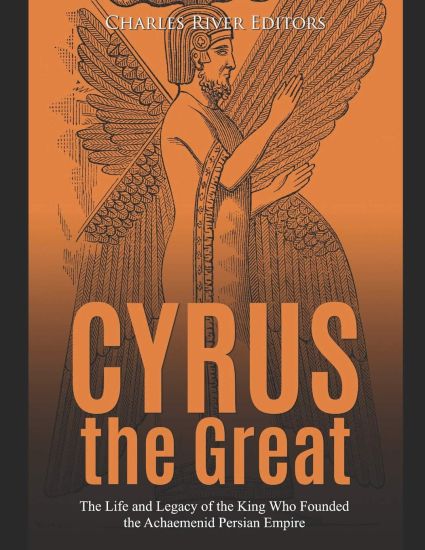
Cyrus the Great: The Life and Legacy of the King Who Founded the Achaemenid Persian Empire
*Includes pictures*Includes excerpts of ancient accounts*Includes a bibliography for further reading"I am Cyrus the king, an Achaemenian." - An inscription found at the Persian capital of PasargadaeAt one point in antiquity, the Achaemenid Persian Empire was the largest empire the world had ever seen, but aside from its role in the Greco-Persian Wars and its collapse at the hands of Alexander the Great, it has been mostly overlooked. When it has been studied, the historical sources have mostly been Greek, the very people the Persians sought to conquer. Needless to say, their versions were biased. It was not until excavations in the region during the 20th century that many of the relics, reliefs, and clay tablets that offer so much information about Persian life could be studied for the first time. Through archaeological remains, ancient texts, and work by a new generation of historians, a picture can today be built of this remarkable civilization and their most famous leaders. When considering this empire's rulers, the two most often referenced are Xerxes, the leader of the Persian invasion of Greece which caused the heroic sacrifice of the Spartans and their allies at Thermopylae, or Cyrus the Great, the man who created the empire. While he was one of the most influential men in the ancient world, research on Cyrus the Great is simultaneously fascinating and frustrating. The Persians' ancestors did not write (in fact, in their epic poems and myths, they claim that it was something taught to man by demons and therefore something to be avoided), and though the Iranians had taken up writing in their governmental and administrative functions by the time Cyrus lived, the kings still did not learn to write. Put simply, it was considered a functional skill, but not of the greatest importance. As a result, while plenty of ancient sources mention the great Persian king, Persian sources themselves are rare, and those sources that do exist, such as the Babylonian Chronicle, are largely dry and state only the basic facts and large events. By contrast, Greek sources about Cyrus embrace the artistic aspect of their work so highly that the accuracy often comes into question, and sometimes deep scrutiny is necessary to attempt to separate the fact from the fiction. In the end, the full truth about Cyrus and his reign may never be truly understood. Of course, this reality has deepened the mystique that surrounds Cyrus even to this day, and it has elevated his status from conqueror and king to enlightened humanist monarch and ideal ruler. In fact, a modern misconception based on the Cyrus Cylinder has labeled him the first proponent of civil rights, though this is somewhat of an exaggeration. The argument hinges on the Cylinder being a unique artifact in listing the ideology by which Cyrus intended to rule, but it equally ignores the fact that such declarations were commonplace among kings of the ancient Near East and more a tool of monarchal propaganda than a sweeping declaration of human rights. That said, Cyrus was a fair and rational leader, particularly compared to the many brutal kings and warlords of ancient times. The high praise he received, even from his enemies, must certainly not be dismissed, and the admiration directed toward him came from many other exceptional individuals, including Alexander the Great, a bitter enemy of the empire Cyrus founded. Whatever the underlying issues, the incredible achievements of Cyrus distinguish him as one of the greatest kings in history, and his life, conquests, reforms, and rule continue to be of great interest over 2,500 years later. Cyrus the Great: The Life and Legacy of the King Who Founded the Achaemenid Persian Empire looks at the life of the Persian leader and the major legacy he left. Along with pictures depicting important people, places, and events, you will learn about Cyrus the Great like never before.
The Edomites: The History and Legacy of the Kingdom of Edom in the Ancient Near East
*Includes pictures*Includes excerpts of the Bible and ancient accounts*Includes a bibliography for further reading "These are the kings who ruled in the land of Edom before a king ruled the children of Israel. And Bela ben Beor ruled in Edom, and the name of his city was Dinhabah. And Bela died, and Jobab ben Zerah from Bozrah ruled in his place. And Jobab died, and Husham of the land of Temani ruled in his place. And Husham died, and Hadad ben Bedad, who struck Midian in the field of Moab, ruled in his place, and the name of his city was Avith. And Hadad died, and Samlah of Masrekah ruled in his place. And Samlah died, and Saul of Rehoboth on the river ruled in his place. And Saul died, and Baal-hanan ben Achbor ruled in his place. And Baal-hanan ben Achbor died, and Hadar ruled in his place, and the name of his city was Pau, and his wife's name was Mehetabel bat Matred bat Mezahab. And these are the names of the clans of Esau by their families, by their places, by their names: clan Timnah, clan Alvah, clan Jetheth, clan Aholibamah, clan Elah, clan Pinon, clan Kenaz, clan Teman, clan Mibzar, clan Magdiel, clan Iram." - Genesis 36The ancient Edomites were just one of the many cultures inhabiting the Levant during the Late Bronze Age and early Iron Age, but they remain known thousands of years later thanks to mentions in the Old Testament. The Bible indicates that the Edomites and their kingdom had a complex relationship first with the Hebrews and then with the Israelites. According to the Bible, the Edomites were descended from a different branch of the Israelites' family tree and as such were treated as "brothers" at times, but at other times they were sworn enemies. Given those facts, understanding the true nature of the Edomites and their culture has been somewhat problematic for historians due to the lack of source material. Most of the references to the Edomites come from the Bible, which, while historically accurate about many points, is clearly biased against the enemies of Israel. Thus, scholars have also turned to texts from the Egyptians and Assyrians and excavations from the Levant to form a more comprehensive image of a culture that in many ways was very similar to that of the Israelites. Such assessments reveal that the Edomites' origins can be traced back to the wider Canaanite culture that was dominant in the Levant in the Late Bronze Age. During that time, the Edomites came into contact with the Egyptians and also reencountered the Hebrews. After coming back into contact with the Hebrews, the Edomites seemingly faded from the historical record until the creation of the Kingdom of Israel in the early 1st millennium BCE. The Edomites then played a subservient and clearly inferior role to the Israelites, at least politically, until the time was right and they could make a major play for their longtime rival's land. Ultimately, the Edomites flourished for several centuries only to suffer the same fate as the Israelites. They were swept up in the storm of wars and migrations that characterized the Near East from the end of the Bronze Age until the dominance of the Achaemenid Persian Empire. The Edomites: The History and Legacy of the Kingdom of Edom in the Ancient Near East examines how the culture flourished in parts of modern Jordan and Israel before the Babylonian conquest. Along with pictures depicting important people, places, and events, you will learn about Edom like never before.
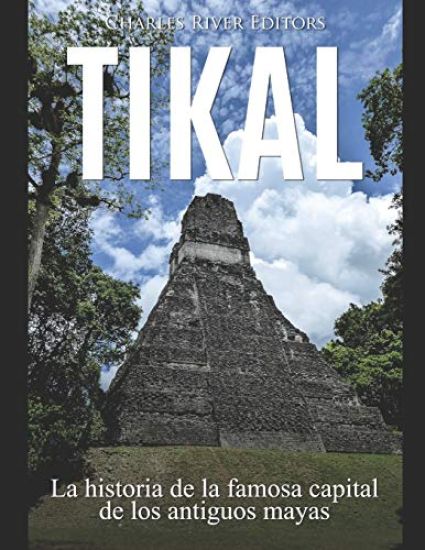
Tikal: La historia de la famosa capital de los antiguos mayas
* Incluye fotos* Incluye una bibliograf a para leer m sMuchas civilizaciones antiguas han influenciado e inspirado a las personas en el siglo XXI. Los griegos y romanos contin an fascinando a Occidente hoy en d a. Pero, de todas las civilizaciones del mundo, ninguna ha intrigado tanto a las personas como los mayas, cuya cultura, astronom a, lengua y misteriosa desaparici n siguen siendo cautivantes. En 2012 especialmente, hubo un enfoque renovado sobre los mayas, cuyo avanzado calendario llev a muchos a especular que el mundo terminar a en la misma fecha en que termina el calendario maya, pero en todo caso, el enfoque en el escenario del "d a del juicio final" eclips la verdadera contribuci n de los mayas a la astronom a, la lengua, los deportes y el arte. Los mayas mantuvieron el poder en Yucat n durante m s de mil a os, y en el apogeo de su "periodo Cl sico" (siglos III al IX EC), la ciudad de Tikal fue uno de los centros de poder del imperio. Los arque logos creen que Tikal se hab a construido ya en el siglo V o IV AEC, y que con el tiempo se convirti en una capital pol tica, econ mica y militar que era parte importante de una amplia red a lo largo y ancho de Mesoam rica, a pesar del hecho de que fue aparentemente conquistada por Teotihuac n en el siglo IV EC. Parece que los gobernantes extranjeros llegaron a asimilar la cultura maya, asegurando as que Tikal continuara siendo una base de poder, y como resultado, la ciudad no ser a abandonada hasta aproximadamente el siglo X de nuestra era. Como uno de los lugares m s importantes de los antiguos mayas, la construcci n en Tikal fue impresionante, y aunque al parecer fue conquistada, los registros de la ciudad estaban inusualmente bien conservados. Estos incluyen una lista de los gobernantes din sticos de la ciudad, as como de las tumbas y monumentos a ellos dedicados. Gracias a esta preservaci n, Tikal ofrece a los investigadores su mejor vistazo al mundo de los antiguos mayas, y ha hecho mucho por ayudar a los estudiosos a comprender la historia maya. Tikal: La historia de la famosa capital de los antiguos mayas abarca la historia de la ciudad, as como la especulaci n y debate que la rodean. En conjunto con fotograf as y una bibliograf a, aprender sobre Tikal como nunca antes, y en muy poco tiempo.
John Dee: The Life and Legacy of the English Occultist, Alchemist, and Philosopher Who Became Queen Elizabeth I's Spiritual Advisor
*Includes pictures*Includes excerpts of contemporary accounts*Includes a bibliography for further reading"Who does not understand should either learn, or be silent." - John DeeWith the golden glow of the candlelight kissing his cheeks, he hovered over a spirit mirror, a flat, exquisitely lustrous "shew-stone" fashioned out of raven-black obsidian. Gazing intently upon his reflection in the dark volcanic glass, he chanted in hushed tones as he ran his fingers across the engravings on the oat-colored wax wheel next to him, the Sigilla iEmeth, which featured a septogram and runic carvings and symbols in minuscule print. Contrary to what one might expect, it was not a phantom, hobgoblin, or demon that he sought, but rather, the seraphic voice, and perhaps even the face of an angel - the one bridge between mankind and their Creator, one who holds the key to all of life's unanswerable questions. Was this man delusional? Perhaps so, but perhaps not. But there was no question among those on hand that this was not an ignorant, philistine, unlettered buffoon of a man who readily boarded the train of groundless superstition. Far from it, this was a man who held not only a master's degree, but a doctorate, and his simultaneously stimulating and mesmerizing lectures drew crowds of royals and nobles from near and far. This was a man who was well-versed in a host of academic fields, and he would go on to serve as one of his queen's foremost personal advisers. He was also a prolific author whose revolutionary ideas helped charted the path for the burgeoning British Empire. The man in question is none other than John Dee, one of the greatest scientific minds of his time, but also one of the most controversial. He was a learned man in fields as varied as mathematics and astronomy, centuries before they became formalized fields of study, but he is better remembered for performing magic and alchemy. Instead of astronomy, he became renowned across England for astrology, and he was one of the country's most notorious occult writers during his life. Given the variety that the Elizabethan Era had to offer, it should come as little surprise that some eccentric characters with seemingly unique skills pushed to the forefront and became lauded members of society. Over the course of her long reign, Queen Elizabeth I became one of England's most famous and influential rulers, and it was an age when the arts, commerce, and trade flourished. It was the epoch of gallantry and great, enduring literature. It was also an age of wars and military conflicts in which men were the primary drivers and women often were pawns. John Dee himself has been credited with coming up with the name "British Empire" in the first place. As all of this suggests, to say that John Dee was a storied man would be a grave understatement, to say the least. His multifaceted reputation preceded him, and his name became synonymous with both brilliance and disconcerting eccentricity. By all means, he certainly looked the part - the occultist towered over his peers, his wiry frame cloaked in a charcoal-black "artist's gown" with a ruffled white collar, his veined hands peeking out of his flared sleeves. He bore a pasty, pallid complexion, which seemed almost ghostly, paired with a magnificent beard that was "as white as milk." Chilling rumors about his immeasurable magical abilities have kept his name alive for centuries. Legend has it that this was a man who singlehandedly cast a crippling curse on the Spanish Armada as the fleet sailed towards England, conjuring up the merciless storms and violent waves that threatened to swallow the ill-starred convoy whole, and left them with no choice but to turn back. This was a man who was once branded "the greatest rogue in the neighborhood of London."
The Battle of Chaldiran: The History and Legacy of the Ottoman Empire's Decisive Victory Over the Safavid Dynasty in Anatolia
*Includes pictures*Includes a bibliography for further readingThe town of Caldiran (Chaldiran) in Turkey is home to about 60,000 people. On a plain close to the Iranian border, it it backdropped by the Armenian Ranges and very close to a Faultline, which has ensured it's suffered from seismic activity many times in the past. But in the early 16th century, it was the site of different kinds of faultlines, serving as a battleground between the region's two greatest powers as they clashed over politics and religion. In the wake of taking Constantinople, the Ottoman Empire would spend the next few centuries expanding its size, power, and influence on the way to becoming one of the world's most important geopolitical players. It was a rise that would not truly start to wane until the 19th century, and while its most memorable conflicts were fought against the Europeans, the course of Ottoman history was greatly impacted by events against the other major Muslim power in its region: the Safavid Empire. Naturally, the two powers quickly took up the geopolitical positions of the old Byzantine and Persian Empires in the time before Islam and fought over much of the same territory, including Mesopotamia, the Caucuses, today's eastern Turkey and the Persian Gulf. Their first battle was fought in 1514, their first real war was fought from 1532-1555, and they continued to spar regularly until the early 19th century, when European colonialism forced them both onto the defensive. Echoes of these conflicts can be seen in the recent sparring between Iran and Turkey through proxies in Iraq and Syria. On August 23, 1514 the two sides clashed at Chaldiran in a contest for hegemony over the Middle East, and the results have affected the Middle East ever since. Regrettably, few concrete details of the actual battle survive, a not uncommon obstacle when studying battles from the Middle Ages. However, the course of the conflict can be reconstructed from the politics of the time, knowledge of the characters involved, the contemporary records are available, and what followed the battle. There is no lasting monument to the battle in Chaldiran on site, but there is on the Iranian side of the border, nearly 20 miles to the east near the village of Gala Ashaki. It consists of a domed tomb for a Persian general, Sayyed Sharif-al-Din Ali Shirazi, who fell in the battle. He was the chief religious cleric of Shah Ismail I, the first of the Safavid rulers of Persia and a leader who brought a monumental religious shift to the Middle East. Believing himself the "Shadow of God" and his chosen vessel, he set about transforming Persia and the globe through his fanatical religious militia, the Qizilbash. He meant to lead not only Persia but the entire Islamic world, but this vision was vehemently opposed by Sultan Selim I of the Ottoman Empire. Selim the Grim had fought tenaciously for possession of his throne, and he too believed himself chosen by God to rule all Muslims. The battle is depicted in a magnificent painting in Sayyed Sharif-al-Din Ali Shirazi's tomb. In the foreground of the representation, Shah Ismail I of Persia leads his Qizilbash in a charge against the Ottoman cavalry, riding over the corpses of the slain. In the middle, Sultan Selim (who did not actually participate in the battle, though he was present) leads an almost leisurely advance toward the Persian cavalry, preceded by two Janissaries armed with axes. In the background, the Ottoman artillery delivers a barrage into the Qizilbash, who are falling or fleeing. It seems to be a chronological depiction of the conflict, and though the figure Ismail is clearly the centerpiece, there is no attempt to mask the fact that the battle was a catastrophic defeat for the Persians.