Kirjojen hintavertailu – 12 903 725 kirjaa ja 27 kauppaa

Kirjailija

Charles River

Kirjat ja teokset yhdessä paikassa: 4 673 kirjaa, julkaisuja vuosilta 2013–2022, suosituimpiin kuuluu William Powell and Myrna Loy: The Lives and Careers of One of Classical Hollywood's Most Iconic Duos. Vertaile teosten hintoja ja tarkista saatavuus suomalaisista kirjakaupoista.

4 673 kirjaa

Kirjojen julkaisuvuodet: 2013–2022.

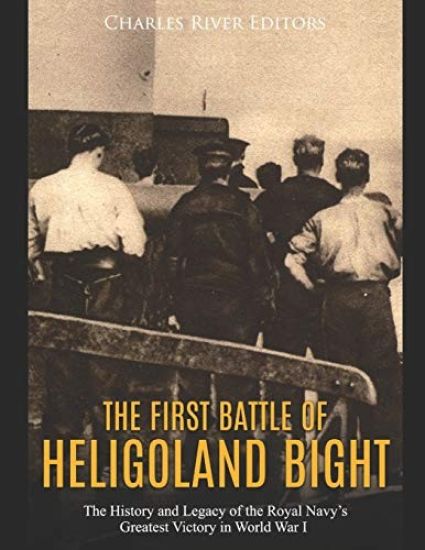
The First Battle of Heligoland Bight: The History and Legacy of the Royal Navy's Greatest Victory in World War I
*Includes pictures*Includes excerpts of sailors' accounts*Includes a bibliography for further readingThe most iconic images of the First World War are of the war on land. They depict the trench lines, the shell holes, and the barbed wire. They show a generation of young men in uniform, living in holes dug from the dirt, rifle in hand, waiting for the next devastating artillery bombardment. But part of that same generation faced a very different war, one that was just as important in deciding the fate of Europe, but which is often forgotten in popular histories. This was the war at sea. It was vital to the economic side of the war, as the Allies cut off Germany's supply lines from the outside world and so placed a squeeze on their opponents' military industries. Here events took place that would draw America into the war, providing the Allies with a new pool of manpower and so ensuring that the scales of the conflict tipped in their favor. The war at sea saw innovations tested. Some, such as Germany's submarine fleet, were a huge success that defined the future for warfare. Some, such as seaborne planes, played only a small part but acted as a prelude to bigger changes to come. Some, such as battlecruisers, were costly failures. At sea just as much as on land, this was a war that would shape the future of the world. On August 28, 1914, a British naval force of 31 destroyers, two light cruisers, and a submarine force emerged from the early morning mist on a mission deep into German home waters. Their target was Heligoland Bight, a bay on the German North Sea coastline located at the mouth of the Elbe River. Their objective was aggressive and daring: to ambush and destroy the daily German destroyer patrols defending Heligoland Bight. The raid was an aggressive departure from British strategy up to that point in the war, which had consisted of the British Navy utilizing a distant blockade to cut Germany off from their oceanic supply chains. As such, the raid took the Germans by complete surprise. The Heligoland Operation was the brainchild of British Commodores Roger Keyes and Reginald Tyrwhitt, and their goal for the raid was different from the pre-war British naval strategy against Germany. The raid was not designed to produce a decisive naval engagement between dueling heavy capital ships, but instead centered on light cruisers and destroyers, small and fast ships combining their speed and fast-firing guns to attack the Germans in their home waters to limit German incursion into the North Sea. The British wanted the attack to send a clear message to the German Navy that any German operation in the North Sea, whether large or small, was in perpetual danger of a British attack. Heligoland Bight was not an easy target. The area is located deep in German home waters and was heavily defended at the outset of the war by several large caliber shore cannons, a zeppelin hanger, and large patrols of destroyers and submarines. It was also a strategic position as it guarded the entrance to Kiel, the major naval anchorage of the German High Seas Fleet. To complicate matters, the British raid force was within striking distance of several powerful German battlecruisers, docked nearby and ready to reinforce German destroyer patrols. Despite these obstacles, the British Navy succeeded in scoring a decisive victory. Without the loss of a single British ship, the British raid force managed to sink several German cruisers and destroyers. As the final engagement ended and the British withdrew to their home water, news of their victory spread throughout Britain, providing a major morale boost for British soldiers and civilians. Overnight, the British commanders of the Heligoland Bight Operation had become heroes.
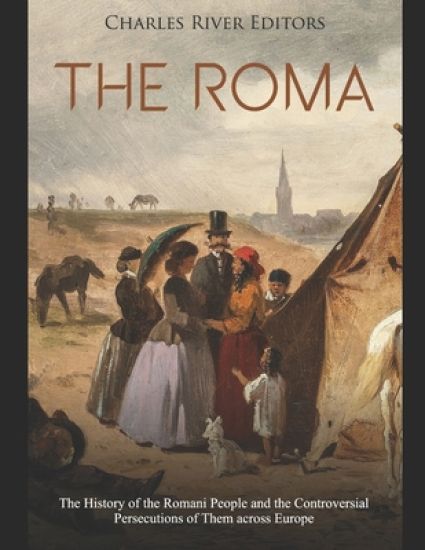
The Roma: The History of the Romani People and the Controversial Persecutions of Them across Europe
*Includes pictures*Includes a bibliography for further reading"We are all wanderers on this earth. Our hearts are full of wonder, and our souls are deep with dreams." - Old Romani ProverbIn the 21st century, cultural differences and individuality are often celebrated and protected across much of the world, and given society's conscientious awareness of such phenomena, it is therefore all the more surprising when considering the ignorance or indifference that the world at large exhibits towards the Romani people. Otherwise known as the "Roma," or by their popular misnomer, "the gypsies," the members of this highly undervalued and grossly misrepresented community have long been considered outcasts. More often than not, the Romani are branded by even those who fancy themselves liberals as "pikeys," "gyppos," and "gips." There's also a regrettably common term, "gypped," meaning "to cheat, or swindle," which perpetuates the damaging stereotype that the Roma are dishonest nuisances and societal pests. Even well-intentioned attempts to shine the spotlight on the community have sometimes been counterproductive, for they are often reduced to no more than exotic, whimsical entertainers for the privileged. According to a shocking email authored by an anonymous whistleblower in 2012, the staff at the Laurieston Job Center in Glasgow's Southside regularly referred to their Romani customers as "gypos, scum, beggars, suicide bombers, thieves, and pedophiles]." The whistleblower cited the staff's disturbing comments regarding an unnamed Romani woman, who had brought her two children along to the job center: "The staff were all joking and saying they should sanction her for claiming whilst pimping out her kids. They then went on to make horrible remarks about the children, saying they were 'mongs.'"On August 5th of the same year, over 700 far-right "activists" stormed the heavily Romani-populated Hungarian village of Devescer. "Gypsy criminals," the mob chanted as they hurled rocks, paving stones, and other projectiles at the homes of their prey. "We will set your homes on fire. You will burn inside your homes " The police, who were called to the scene, supposedly stood on the sidelines with their arms crossed, unwilling to intervene. The dangerous blanket statements issued by various European politicians in recent years are also a cause for concern. In 1992, Bert Karlsson, a prominent member of the Swedish New Democracy Party, claimed that "Gypsies were] responsible for 90% of crime against senior citizens." In June 2008, the conservative Italian Prime Minister Silvio Berlusconi ordered the fingerprinting of the 150,000 Romani, children included, as a way to crack down on street crime. In France, political parties from either end of the spectrum have blamed the Romani for the nation's problems, economic and otherwise. The Gypsies, asserted one interior minister, were responsible for one in every 10 crimes. It's fair to wonder why the abhorrent treatment of the Romani continues to slip below the radar of many social justice warriors, particularly in this age of globalization. This is all the more confounding given that many are aware of the ways the Roma have been persecuted over several centuries, most notoriously during the Holocaust. The Roma: The History of the Romani People and the Controversial Persecutions of Them across Europe examines their history, from their origins to today. Along with pictures depicting important people, places, and events, you will learn about the Roma like never before.
Eli Whitney: The Life and Legacy of the American Inventor Whose Cotton Gin Transformed the Antebellum South
*Includes pictures*Includes a bibliography for further readingBetween the 18th and early 19th centuries, the West experienced massive leaps in technological, scientific, and economical advancement. This powerful period has since been immortalized as the great Industrial Revolution, during which Britain and other European countries became a formidable force that boasted unmatched economical growth, drastic changes in living conditions, and even the emergence of a neglected social class. Vast portions of rural lands were transformed into interconnected, complex, and multitasking cities, and dozens of innovative inventions and products were churned out in bulk and sold to the masses for the first time ever. Some of the greatest thinkers and creators ventured forth from the shadows. Scientists, engineers, merchants, and manufacturers alike were at the height of their prime, nurtured by a culture that embraced the vision of growth, progress, and industrial unity. In the 1600s, cotton and silk fabrics that bore colorful and exotic printed patterns, known as "calico," were flying off the shelves of the East India Company's stores. The rapidly escalating demand for calico had taken a visible toll on the European textile businesses. The trend spread across Europe and North America, and picking cotton was such an arduous task that even when relying almost entirely on slave labor, it was hard to make cotton a profitable industry in North America. That all changed with Eli Whitney's invention of the cotton gin near the end of the 18th century. Able to more effectively separate the cotton fiber from seeds, Whitney's cotton gin turned the cotton industry into one of the antebellum South's biggest cash cows, and as a result, the region became even more dependent on slave labor than before. The cotton gin exponentially increased the labor output, which in turn brought an exponential increase in the number of slaves throughout the South, despite the fact the international slave trade was banned in the fledgling United States in the early 19th century. By the dawn of the Civil War, there were over 3 million slaves in the South, and cotton was so crucial to the Southern economy that the Confederacy would try to compel European countries to intervene on their side by refusing to export cotton to them. The Industrial Revolution's changes also meant mass production was taking hold on both sides of the Atlantic, and Whitney's principle of interchangeable parts was put to good use not only by the inventor himself, but by several other progressive business executives. After inventing the cotton gin, Whitney had won several lawsuits against farmers for non-payment by suing their states, and with an amassed figure of $90,000, he was able to start additional businesses. When war with France seemed like it was looming and the national armory could only produce 1,000 muskets in three years, Whitney intervened. His assembly line system with easily changeable parts produced 10,000 weapons in three years, and he devised numerous machine tools with which to facilitate the process. This would also be an important component of future corporate models and technological advances in automation and firearms manufacturing, influencing such products as Henry Ford's cars and Oliver Winchester's repeating rifles. Eli Whitney: The Life and Legacy of the American Inventor Whose Cotton Gin Transformed the Antebellum South looks at the life and inventions of one of America's first crucial inventors. Along with pictures depicting important people, places, and events, you will learn about Eli Whitney like never before.
The Gullah: The History and Legacy of the African American Ethnic Group in the American Southeast
*Includes pictures*Includes a bibliography for further reading"If you do not know where you're going, you should know where you come from." - Old Gullah ProverbCharming drawls, bluegrass bops, NASCAR, mouthwatering barbecues, and the Great Smoky Mountains are all customs that make America's Deep South home to some of the most vibrant, powerfully evocative, and culturally rich subregions on the continent, tethered to a heritage that rose from the ashes of the Civil War. There exists, however, a lesser-known, but equally indispensable subculture based within a 500-mile radius of the coastal South Atlantic states and Sea Islands. These culture bearers, who refer to themselves as the Gullah Geechee, or the "Gullah" for short, are the descendants and rightful heirs of the once-shackled slaves who resided in these parts. As the guardians and torch holders of the incredible legacy left behind by their persevering ancestors, the modern Gullah spare no effort in preserving the inherently unique customs and traditions, complete with their own creole tongue, that have been passed down from one generation to the next. Of course, the first Gullah people were not natives of the Deep South, nor were they eager immigrants who willingly crossed the North Atlantic in the hopes of landing opportunities available only in the "land of the free." Rather, the Gullah were normal, everyday people who were forcibly extracted from their homes and shipped like chattel to a foreign land, where they were sold, purchased, and put to work on plantations, mines, factories, and elsewhere. Simply put, they were an ill-starred, yet fiercely diligent people who made the most out of their unimaginably horrific fates, constructing their own colorful customs and a remarkable legacy for their future successors. A number of notable figures have been linked with the Gullah in recent years. Michelle Obama, for instance, is said to be a descendant of a Gullah slave who once dwelled in a cotton plantation in the Low Country region of South Carolina. Little Melvinia was no older than eight when she arrived at the plantation of one Henry Wells Shields, soon after adopting the surname of her "master," as per the customs of the mid-19th century. A teenaged Melvinia was ripped from her home once more in 1852 and relocated to Georgia, and it was there that she was impregnated by a white man and gave birth to the great-great-grandfather of the former First Lady. South Carolinian boxing icon Smokin' Joe Frazier and Cleveland Browns legend Jim Brown of St. Simons Island, Georgia also share Gullah blood. The Gullah: The History and Legacy of the African American Ethnic Group in the American Southeast examines the origins of the people, their culture, and how their history has winded over the centuries. Along with pictures depicting important people, places, and events, you will learn about the Gullah like never before.
The Gullah: The History and Legacy of the African American Ethnic Group in the American Southeast
*Includes pictures*Includes a bibliography for further reading"If you do not know where you're going, you should know where you come from." - Old Gullah ProverbCharming drawls, bluegrass bops, NASCAR, mouthwatering barbecues, and the Great Smoky Mountains are all customs that make America's Deep South home to some of the most vibrant, powerfully evocative, and culturally rich subregions on the continent, tethered to a heritage that rose from the ashes of the Civil War. There exists, however, a lesser-known, but equally indispensable subculture based within a 500-mile radius of the coastal South Atlantic states and Sea Islands. These culture bearers, who refer to themselves as the Gullah Geechee, or the "Gullah" for short, are the descendants and rightful heirs of the once-shackled slaves who resided in these parts. As the guardians and torch holders of the incredible legacy left behind by their persevering ancestors, the modern Gullah spare no effort in preserving the inherently unique customs and traditions, complete with their own creole tongue, that have been passed down from one generation to the next. Of course, the first Gullah people were not natives of the Deep South, nor were they eager immigrants who willingly crossed the North Atlantic in the hopes of landing opportunities available only in the "land of the free." Rather, the Gullah were normal, everyday people who were forcibly extracted from their homes and shipped like chattel to a foreign land, where they were sold, purchased, and put to work on plantations, mines, factories, and elsewhere. Simply put, they were an ill-starred, yet fiercely diligent people who made the most out of their unimaginably horrific fates, constructing their own colorful customs and a remarkable legacy for their future successors. A number of notable figures have been linked with the Gullah in recent years. Michelle Obama, for instance, is said to be a descendant of a Gullah slave who once dwelled in a cotton plantation in the Low Country region of South Carolina. Little Melvinia was no older than eight when she arrived at the plantation of one Henry Wells Shields, soon after adopting the surname of her "master," as per the customs of the mid-19th century. A teenaged Melvinia was ripped from her home once more in 1852 and relocated to Georgia, and it was there that she was impregnated by a white man and gave birth to the great-great-grandfather of the former First Lady. South Carolinian boxing icon Smokin' Joe Frazier and Cleveland Browns legend Jim Brown of St. Simons Island, Georgia also share Gullah blood. The Gullah: The History and Legacy of the African American Ethnic Group in the American Southeast examines the origins of the people, their culture, and how their history has winded over the centuries. Along with pictures depicting important people, places, and events, you will learn about the Gullah like never before.
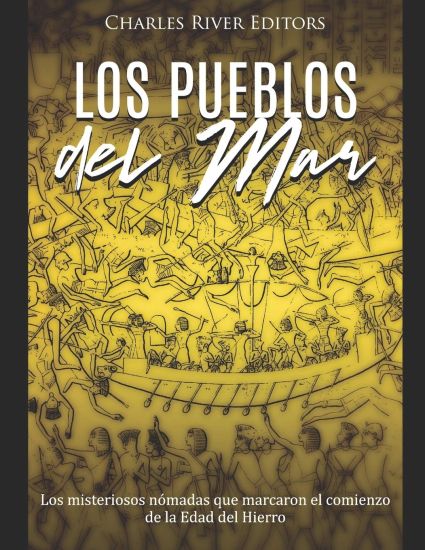
Los Pueblos del Mar: Los misteriosos nómadas que marcaron el comienzo de la Edad del Hierro
"Los aurigas egipcios] eran guerreros (...) y todos buenos oficiales, de mano pronta. Sus caballos estaban temblando en cada miembro, listos para aplastar los pa ses extranjeros] bajo sus patas (...) Aquellos que llegaron a mi frontera, su semilla ya no es m s; su alma y coraz n est n acabados por siempre jam s". -Una inscripci n realizada durante el reinado de Rams s IIICuando los estudiosos observan el paso de la historia, ciertas pocas y transiciones a nuevos periodos tienden a destacar. La transici n de la temprana Edad Moderna a la Edad Industrial a finales del siglo XVIII y el colapso del Imperio romano son dos de las m s conocidas, pero podr a decirse que la transici n de la Edad del Bronce a la del Hierro a finales del siglo XIII y principios del XII AEC cambi la estructura y el curso de la historia mundial de forma m s fundamental que cualquier periodo anterior o posterior. Durante este periodo, numerosos reinos ricos y duraderos de la regi n del Mediterr neo oriental colapsaron, y surgieron nuevos en sus lugares. En el centro de este periodo de agitaci n hab a un grupo de personas conocido hoy como los Pueblos del Mar, la traducci n al espa ol del nombre que les dieron los egipcios. No obstante, a pesar de su papel prominente en la historia, los Pueblos del Mar siguen siendo tan misteriosos como fueron influyentes; aunque los egipcios documentaron su presencia y las guerras contra ellos, nunca ha estado claro d nde exactamente se originaron los Pueblos del Mar, o qu los movi a invadir varias partes de la regi n en n meros masivos. Al igual que con cualquier asunto hist rico del mundo antiguo, las fuentes pueden ser un problema. Los antiguos egipcios hicieron registro de sus interacciones con los Pueblos del Mar en textos escritos, as como en relieves pict ricos y, por ende, proporcionan la descripci n contempor nea m s completa de ellos, pero la naturaleza de la historiograf a del antiguo Egipto era bastante diferente al concepto moderno, de manera que las fuentes no pueden considerarse completamente confiables. Fuentes griegas posteriores, tanto historiogr ficas como mitol gicas, pueden ayudar a completar algunos detalles m s, pero se sospecha de esas fuentes por haber sido escritas varios siglos despu s del surgimiento de los Pueblos del Mar. La arqueolog a moderna es beneficiosa para determinar c mo viv a la gente y, posiblemente, hacia d nde se movieron, pero tambi n hay problemas cuando se conf a y/o depende demasiado de la informaci n arqueol gica, pues la dataci n de la cultura material no es una ciencia exacta. Finalmente, a menudo se emplea la evidencia ling stica para determinar los or genes geogr ficos y los que ser an los puntos de desembarco de muchos de los Pueblos del Mar, pero suele surgir confusi n si el gentilicio de un grupo se refiere espec ficamente a su lugar de origen u hogar final. Naturalmente, el misterio que rodea a los Pueblos del Mar ha conducido a toda clase de teor as que buscan identificarlos. Si bien muchas teor as son plausibles, hay otras m s fantasiosas que han pretendido asociar a los Pueblos del Mar con el Oc ano Atl ntico e incluso con Troya. Los Pueblos del Mar: Los misteriosos n madas que marcaron el comienzo de la Edad del Hierro narra la controvertida historia y el misterio que rodea a los invasores que causaron estragos en todo el Medio Oriente al final de la Edad del Bronce. En conjunto con fotograf as de personas, lugares y eventos importantes, aprender sobre los Pueblos del Mar como nunca antes y en nada de tiempo.
John Moses Browning: The Life and Legacy of the American Gunsmith Who Modernized Automatic and Semi-Automatic Firearms
*Includes pictures*Includes a bibliography for further readingThe Industrial Revolution that unfolded in Western societies at the dawn of the 19th century altered daily life as a rapidly developing paradigm. One historian suggests that in Europe and America, the highest known form of technology was the pipe organ before the rise of factories, steam drive combustion, and railway and communication breakthroughs built upon the mastery of electricity and transformed the standard processes of society. Such a rapid alteration of the prevailing world seemingly took place in a historical instant that propelled technology all the way to the age of powered flight. No less affected were the technological accomplishments that cast their influence over the wars so rampant in Europe through the past centuries. Military weapons benefited from various upgrades and innovations, even as the soldiers and generals remained confined within Napoleonic tactics while struggling to learn about the new principles of physics and engineering. Technological advancement within the field of mechanical engineering experienced a golden age in the 19th century. Virtually every profession that worked in the traditional materials of wood and metal developed a capacity for precision and functionality hitherto unknown. In the arena of portable weaponry for both the military and civilian population, several new inventions with endless variations redefined American and international habits of sport and war, not to mention exploration and frontier survival. The traditional musket had changed little through the previous century, and the insatiable quest for a repeat-firing mechanism remained as the arms industry's highest goal. The world knew that someone would find the solution and that future wars would occur, granting the nation to solve the riddle supremacy on the battlefield. The results of this pursuit were ushered in by several luminaries on the heels of an industrial revolution that had reshaped British industrial technology only a few decades prior. By the late 19th century, the nature of war weaponry, new naval paradigms and the first imaginings of aviation as a primary component of battle required yet another leap in technology. One single artisan arose from among many talents to meet the new challenge at a high level, far from the prestigious pistol and rifle factories of Connecticut. John Moses Browning was raised in what was at the time the "Wild West" of the Utah Country. His educational upbringing was both sparse and basic, but through the impetus of his father's gun-making business, he would become the greatest mind of the arms industry's modern age. Where Colt labored over one solitary concept that eventually led him to the modern repeating revolver, Browning's instinct proved able to visualize concepts far above his formal training and follow them through to a number of diverse and functional weapons. Although Winchester emerged into the greatest salesman of the modern repeating rifle and gathered early designers such as Benjamin Tyler Henry to his workshops, he was no inventor. Talents such as that of Browning were to be absorbed by the Winchester Repeating Arms Company in order to maintain an ongoing superiority in product lines and sales numbers. The major weapons manufacturers soon realized that there was no talent equal to that of the Utah frontiersman, and in time he was employed by all the top gun-makers in the United States and Europe, including Fabrique Nationale in Belgium. There, he was granted well-deserved respect and the right to see his inventions find the light of day, sought after for so long. The breadth of Browning's mechanical brilliance is evidenced by the reality that his designs from the pre-World War I era are still in production, and many are considered to be among the finest available models more than a century later.
Eli Whitney: The Life and Legacy of the American Inventor Whose Cotton Gin Transformed the Antebellum South
*Includes pictures*Includes a bibliography for further readingBetween the 18th and early 19th centuries, the West experienced massive leaps in technological, scientific, and economical advancement. This powerful period has since been immortalized as the great Industrial Revolution, during which Britain and other European countries became a formidable force that boasted unmatched economical growth, drastic changes in living conditions, and even the emergence of a neglected social class. Vast portions of rural lands were transformed into interconnected, complex, and multitasking cities, and dozens of innovative inventions and products were churned out in bulk and sold to the masses for the first time ever. Some of the greatest thinkers and creators ventured forth from the shadows. Scientists, engineers, merchants, and manufacturers alike were at the height of their prime, nurtured by a culture that embraced the vision of growth, progress, and industrial unity. In the 1600s, cotton and silk fabrics that bore colorful and exotic printed patterns, known as "calico," were flying off the shelves of the East India Company's stores. The rapidly escalating demand for calico had taken a visible toll on the European textile businesses. The trend spread across Europe and North America, and picking cotton was such an arduous task that even when relying almost entirely on slave labor, it was hard to make cotton a profitable industry in North America. That all changed with Eli Whitney's invention of the cotton gin near the end of the 18th century. Able to more effectively separate the cotton fiber from seeds, Whitney's cotton gin turned the cotton industry into one of the antebellum South's biggest cash cows, and as a result, the region became even more dependent on slave labor than before. The cotton gin exponentially increased the labor output, which in turn brought an exponential increase in the number of slaves throughout the South, despite the fact the international slave trade was banned in the fledgling United States in the early 19th century. By the dawn of the Civil War, there were over 3 million slaves in the South, and cotton was so crucial to the Southern economy that the Confederacy would try to compel European countries to intervene on their side by refusing to export cotton to them. The Industrial Revolution's changes also meant mass production was taking hold on both sides of the Atlantic, and Whitney's principle of interchangeable parts was put to good use not only by the inventor himself, but by several other progressive business executives. After inventing the cotton gin, Whitney had won several lawsuits against farmers for non-payment by suing their states, and with an amassed figure of $90,000, he was able to start additional businesses. When war with France seemed like it was looming and the national armory could only produce 1,000 muskets in three years, Whitney intervened. His assembly line system with easily changeable parts produced 10,000 weapons in three years, and he devised numerous machine tools with which to facilitate the process. This would also be an important component of future corporate models and technological advances in automation and firearms manufacturing, influencing such products as Henry Ford's cars and Oliver Winchester's repeating rifles. Eli Whitney: The Life and Legacy of the American Inventor Whose Cotton Gin Transformed the Antebellum South looks at the life and inventions of one of America's first crucial inventors. Along with pictures depicting important people, places, and events, you will learn about Eli Whitney like never before.
Los Pueblos del Mar: Los misteriosos nómadas que marcaron el comienzo de la Edad del Hierro
"Los aurigas egipcios] eran guerreros (...) y todos buenos oficiales, de mano pronta. Sus caballos estaban temblando en cada miembro, listos para aplastar los pa ses extranjeros] bajo sus patas (...) Aquellos que llegaron a mi frontera, su semilla ya no es m s; su alma y coraz n est n acabados por siempre jam s". -Una inscripci n realizada durante el reinado de Rams s IIICuando los estudiosos observan el paso de la historia, ciertas pocas y transiciones a nuevos periodos tienden a destacar. La transici n de la temprana Edad Moderna a la Edad Industrial a finales del siglo XVIII y el colapso del Imperio romano son dos de las m s conocidas, pero podr a decirse que la transici n de la Edad del Bronce a la del Hierro a finales del siglo XIII y principios del XII AEC cambi la estructura y el curso de la historia mundial de forma m s fundamental que cualquier periodo anterior o posterior. Durante este periodo, numerosos reinos ricos y duraderos de la regi n del Mediterr neo oriental colapsaron, y surgieron nuevos en sus lugares. En el centro de este periodo de agitaci n hab a un grupo de personas conocido hoy como los Pueblos del Mar, la traducci n al espa ol del nombre que les dieron los egipcios. No obstante, a pesar de su papel prominente en la historia, los Pueblos del Mar siguen siendo tan misteriosos como fueron influyentes; aunque los egipcios documentaron su presencia y las guerras contra ellos, nunca ha estado claro d nde exactamente se originaron los Pueblos del Mar, o qu los movi a invadir varias partes de la regi n en n meros masivos. Al igual que con cualquier asunto hist rico del mundo antiguo, las fuentes pueden ser un problema. Los antiguos egipcios hicieron registro de sus interacciones con los Pueblos del Mar en textos escritos, as como en relieves pict ricos y, por ende, proporcionan la descripci n contempor nea m s completa de ellos, pero la naturaleza de la historiograf a del antiguo Egipto era bastante diferente al concepto moderno, de manera que las fuentes no pueden considerarse completamente confiables. Fuentes griegas posteriores, tanto historiogr ficas como mitol gicas, pueden ayudar a completar algunos detalles m s, pero se sospecha de esas fuentes por haber sido escritas varios siglos despu s del surgimiento de los Pueblos del Mar. La arqueolog a moderna es beneficiosa para determinar c mo viv a la gente y, posiblemente, hacia d nde se movieron, pero tambi n hay problemas cuando se conf a y/o depende demasiado de la informaci n arqueol gica, pues la dataci n de la cultura material no es una ciencia exacta. Finalmente, a menudo se emplea la evidencia ling stica para determinar los or genes geogr ficos y los que ser an los puntos de desembarco de muchos de los Pueblos del Mar, pero suele surgir confusi n si el gentilicio de un grupo se refiere espec ficamente a su lugar de origen u hogar final. Naturalmente, el misterio que rodea a los Pueblos del Mar ha conducido a toda clase de teor as que buscan identificarlos. Si bien muchas teor as son plausibles, hay otras m s fantasiosas que han pretendido asociar a los Pueblos del Mar con el Oc ano Atl ntico e incluso con Troya. Los Pueblos del Mar: Los misteriosos n madas que marcaron el comienzo de la Edad del Hierro narra la controvertida historia y el misterio que rodea a los invasores que causaron estragos en todo el Medio Oriente al final de la Edad del Bronce. En conjunto con fotograf as de personas, lugares y eventos importantes, aprender sobre los Pueblos del Mar como nunca antes y en nada de tiempo.
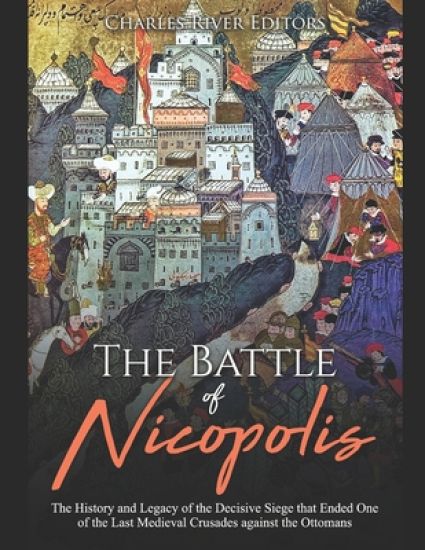
The Battle of Nicopolis: The History and Legacy of the Decisive Siege that Ended One of the Last Medieval Crusades against the Ottomans
*Includes pictures*Includes a bibliography for further readingIn terms of geopolitics, perhaps the most seminal event of the Middle Ages was the successful Ottoman siege of Constantinople in 1453. The city had been an imperial capital as far back as the 4th century, when Constantine the Great shifted the power center of the Roman Empire there, effectively establishing two almost equally powerful halves of antiquity's greatest empire. Constantinople would continue to serve as the capital of the Byzantine Empire even after the Western half of the Roman Empire collapsed in the late 5th century. Naturally, the Ottoman Empire would also use Constantinople as the capital of its empire after their conquest effectively ended the Byzantine Empire, and thanks to its strategic location, it has been a trading center for years and remains one today under the Turkish name of Istanbul. Naturally, the Byzantines and Europeans didn't take the Ottoman incursions laying down, and in the generations before the Ottoman victory at Constantinople, European alliances frequently tried to check Ottoman advances, couching their campaigns in the terms of crusading. One of them came near the end of the 14th century, and it presaged what was to come in the 15th century. The Ottoman campaigns of the 14th century would provide the context for the events that led to the Battle of Nicopolis. One of the last major crusades was launched in 1396 by Pope Boniface IX, and the timing was perfect for the European kingdoms to unite and form a strong threat to the Ottomans. The 100-year war between France and England was in a state of truce, and King Richard II had just married Princess Isabella of France. Thus, both the English and the Franks would be able to send forces to join in a crusade, and so would Hungary, Bulgaria, Venice, Genoa, Croatia, Wallachia, the Holy Roman Empire, and the Knights Hospitaller. It is estimated that both the Crusader forces and the Ottoman armies consisted of somewhere between 15,000-20 000 men each, but the sources all tell different stories. Some tell of armies the size of hundreds of thousands of men, and some say that the enemy force was at least twice the size of their own army. In fact, the actual participation of English soldiers has not been proven, and records of such an army being sent abroad at the time don't exist. Genoa and Venice were probably also more engaged in other areas under their rule, although they surely sent a smaller convoy to support the crusaders. On the Ottoman side, numbers vary just as much, but the coalition of Serbs and Turkmen could probably be numbered to less than 20,000. Nicopolis was a natural sight for such a battle. In 1393, the Tsar of Bulgaria, Ivan Shishman, defended it in a last stand against the invading Ottoman Empire, but the well-known battle named after the town occurred in 1396, when an army of knights from all over Europe faced an Ottoman army. This battle is famous for representing the last time that Christian Europe (or at least most of it) united under a single banner to fight a common foe, and the military venture is often called the Last Crusade. The name may not be entirely accurate, for nations continued to fight the Islamic Ottomans under the crusaders' banner for another 300 years, but this campaign represented the final time in which the nobility, if not the commoners, of Europe acted as one, and as such it marked the waning of the Middle Ages, the period when the Catholic Church held absolute sway over Europe and shaped its society and culture. The Battle of Nicopolis: The History and Legacy of the Decisive Siege that Ended One of the Last Medieval Crusades against the Ottomans chronicles the events and conflicts that led to one of medieval Europe's most notorious battles. Along with pictures of important people, places, and events, you will learn about the Battle of Nicopolis like never before.
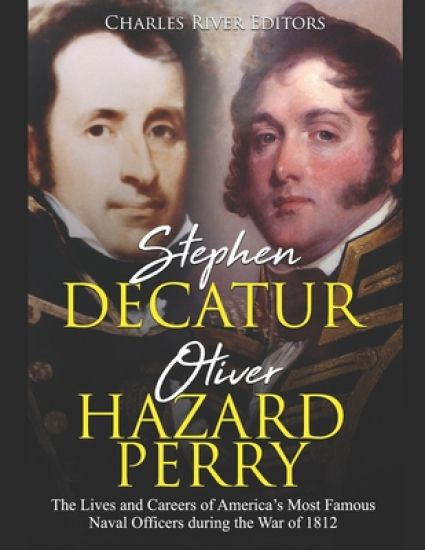
Stephen Decatur and Oliver Hazard Perry: The Lives and Careers of America's Most Famous Naval Officers during the War of 1812
*Includes pictures*Includes a bibliography"We have met the enemy and they are ours." - Oliver Hazard PerrySandwiched between the Revolution and the Civil War, the War of 1812 is one of America's forgotten conflicts, and the stalemated nature of the war (which resolved virtually none of either side's war aims) has also ensured that it is often given merely a cursory overview. Great Britain, as the leader of several coalitions of conservative European countries trying to isolate and snuff out the revolutionary spirit and the ambitions of Napoleon, had been at war with France almost continuously since 1792. Under President Thomas Jefferson (1801-1809) and James Madison (1809-1817), the United States tried to steer a course that would keep it from being drawn into the European war and defend its neutrality on the high seas. However, both Britain and France wanted to hurt the other side economically by keeping goods out of their enemy's hands. Thus, they did not faithfully respect the rights of neutral nations. The British government in 1807 had issued the "Orders in Council," which enforced a naval blockade against France, and with a shortage of seamen to man the Royal Navy, Britain also felt justified in stopping and sometimes firing on ships flying the American flag in the name of apprehending escaped British sailors. The other main cause of war was distress on the Northwestern frontier, where the British in Canada were supporting Indian resistance to American settlement. So-called "War Hawks" from that region in Congress pushed for a declaration of war. Some hoped that a war would not only stop Indian depredations but evict the British from Canada and lead to completion of some unfinished business from the American Revolution, namely Canada joining the U. S. Americans had few things to celebrate during the Barbary Wars or the War of 1812, but one of them was the growing prestige of the U. S. Navy, and among those who were instrumental in its development, few were as influential as Stephen Decatur Jr. Decatur had an impact on nearly every war America fought in between the 1780s until his death in 1820, and his stardom ensured that he was a fixture among Washington, D. C.'s elite in his own lifetime. As with John Paul Jones during the American Revolution, Decatur's activities helped instantly associate his name with the fledgling country's success at sea. One of the only major victories the Americans won throughout the War of 1812 came at the Battle of Lake Erie in September 1813, and that action made Oliver Hazard Perry, a veteran of the Barbary Wars and commander of the USS Lawrence, a legend whose name has endured for over 200 years. Perry was so instrumental in the victory that British historian C. S. Forester noted "it was as fortunate for the Americans that the Lawrence still possessed a boat that would float, as it was that Perry was not hit." As one of the biggest naval battles of the war, the results meant that America maintained control of Lake Erie, an important location from which they could recover Detroit and be better positioned to confront the British and Shawnee leader Tecumseh's confederacy. For his part, Perry would forever be remembered as the "Hero of Lake Erie," even as he and compatriot Captain Jesse Elliot would feud over their respective actions during the battle for the rest of Perry's life. Perry received a Congressional Gold Medal and the Thanks of Congress for compelling the surrender of the entire British squadron, the first time that had ever happened, but he wouldn't have much time to enjoy it. He fought in the Second Barbary War in 1815 but died of yellow fever while on a mission in Venezuela in 1819. Despite being just 34 at the time of his death, he was one of the most famous military heroes in the young nation's history, and he has been commemorated with countless monuments across America ever since.
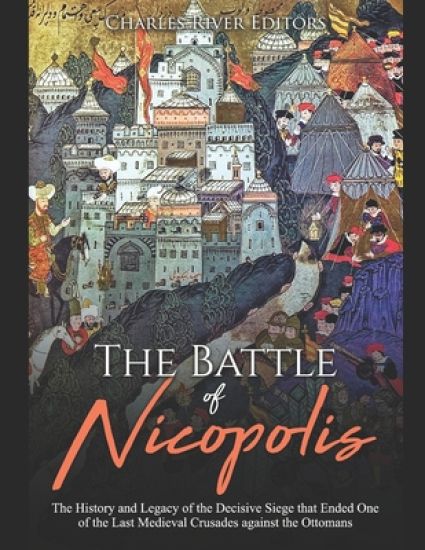
The Battle of Nicopolis: The History and Legacy of the Decisive Siege that Ended One of the Last Medieval Crusades against the Ottomans
*Includes pictures*Includes a bibliography for further readingIn terms of geopolitics, perhaps the most seminal event of the Middle Ages was the successful Ottoman siege of Constantinople in 1453. The city had been an imperial capital as far back as the 4th century, when Constantine the Great shifted the power center of the Roman Empire there, effectively establishing two almost equally powerful halves of antiquity's greatest empire. Constantinople would continue to serve as the capital of the Byzantine Empire even after the Western half of the Roman Empire collapsed in the late 5th century. Naturally, the Ottoman Empire would also use Constantinople as the capital of its empire after their conquest effectively ended the Byzantine Empire, and thanks to its strategic location, it has been a trading center for years and remains one today under the Turkish name of Istanbul. Naturally, the Byzantines and Europeans didn't take the Ottoman incursions laying down, and in the generations before the Ottoman victory at Constantinople, European alliances frequently tried to check Ottoman advances, couching their campaigns in the terms of crusading. One of them came near the end of the 14th century, and it presaged what was to come in the 15th century. The Ottoman campaigns of the 14th century would provide the context for the events that led to the Battle of Nicopolis. One of the last major crusades was launched in 1396 by Pope Boniface IX, and the timing was perfect for the European kingdoms to unite and form a strong threat to the Ottomans. The 100-year war between France and England was in a state of truce, and King Richard II had just married Princess Isabella of France. Thus, both the English and the Franks would be able to send forces to join in a crusade, and so would Hungary, Bulgaria, Venice, Genoa, Croatia, Wallachia, the Holy Roman Empire, and the Knights Hospitaller. It is estimated that both the Crusader forces and the Ottoman armies consisted of somewhere between 15,000-20 000 men each, but the sources all tell different stories. Some tell of armies the size of hundreds of thousands of men, and some say that the enemy force was at least twice the size of their own army. In fact, the actual participation of English soldiers has not been proven, and records of such an army being sent abroad at the time don't exist. Genoa and Venice were probably also more engaged in other areas under their rule, although they surely sent a smaller convoy to support the crusaders. On the Ottoman side, numbers vary just as much, but the coalition of Serbs and Turkmen could probably be numbered to less than 20,000. Nicopolis was a natural sight for such a battle. In 1393, the Tsar of Bulgaria, Ivan Shishman, defended it in a last stand against the invading Ottoman Empire, but the well-known battle named after the town occurred in 1396, when an army of knights from all over Europe faced an Ottoman army. This battle is famous for representing the last time that Christian Europe (or at least most of it) united under a single banner to fight a common foe, and the military venture is often called the Last Crusade. The name may not be entirely accurate, for nations continued to fight the Islamic Ottomans under the crusaders' banner for another 300 years, but this campaign represented the final time in which the nobility, if not the commoners, of Europe acted as one, and as such it marked the waning of the Middle Ages, the period when the Catholic Church held absolute sway over Europe and shaped its society and culture. The Battle of Nicopolis: The History and Legacy of the Decisive Siege that Ended One of the Last Medieval Crusades against the Ottomans chronicles the events and conflicts that led to one of medieval Europe's most notorious battles. Along with pictures of important people, places, and events, you will learn about the Battle of Nicopolis like never before.
'Ndrangheta: The History of Italy's Most Powerful Organized Crime Syndicate
*Includes pictures*Includes a bibliography for further readingThe word "mafia," Sicilian in origin, is synonymous with Italy, but Italy is home to several different mafias, with three being particularly notorious. While the Cosa Nostra of western Sicily is the most infamous, other powerful groups include the ferocious 'Ndrangheta of Calabria and the Camorra, the third-largest mafia, which is active in Naples and the Campania region. A "mafia" is loosely defined as a criminal organization that is interested in social, economic and political power, combining elements of a traditional secret society with those of a business, but further levels of nuance are necessary in order to understand these groups. In a general sense, this is because each mafia creates a myth about the development of the organization, which becomes like an unquestionable truth. In essence, part of what makes its members so completely loyal to it is also what makes outsiders so utterly afraid of it. The 'Ndrangheta (pronounced an-drang-et-ah) is a close neighbor of the Cosa Nostra and currently considered the most powerful (and difficult to spell) criminal organization in Italy. The 'Ndrangheta is centered around Calabria, the most southwestern region of Italy, almost touching the Sicilian city of Messina. Though it began as far back as the late 19th century, it was not until the 1950s that the 'Ndrangheta started to spread its tentacles throughout Italy and then across the entire globe, forming an empire that now ranges from Australia and Turkey to Chile to Canada. The fact that the 'Ndrangheta is overshadowed by the Sicilian Cosa Nostra, as well as by the Neapolitan mafia, the Camorra, allowed it to grow and develop outside of the public eye. For years, people actually considered the Calabrian mafia to be part of the Cosa Nostra as a mere appendage, rather than its own entity. This false belief was perpetuated by the high-profile Sicilian pentito, Tommaso Buscetta, and it was not until the beginning of the 21st century that the 'Ndrangheta came into the public eye due to two dramatic killings, the assassination of a politician and the "Duisburg massacre" in a small German village. Nonetheless, the 'Ndrangheta is actually the second oldest mafia in Italy, and, despite its origins in Calabria, the poorest region of Italy, it is the wealthiest of Italy's illegal criminal organizations. Given that people have always been less familiar with this organization, studies on the 'Ndrangheta have also lagged behind work done on the Camorra and the Cosa Nostra. The government took an early interest in the Camorra and Cosa Nostra, creating a paper trail that does not exist for the 'Ndrangheta, and the region of Calabria suffered numerous earthquakes that destroyed what little archival evidence there was available. Of course, the 'Ndrangheta places a premium on secrecy, and thus far it has only had an extremely low number of traitors who were able to testify to the organization's inner workings. Finally, the fact that the 'Ndrangheta is essentially a plural organization makes it very hard to delineate the parameters of what constitutes an 'Ndrangheta cell and what is simply gang activity. 'Ndrangheta: The History of Italy's Most Powerful Organized Crime Syndicate examines how one of the world's strongest mobs formed, its inner workings, and the events that made it feared around the globe. Along with pictures of important people, places, and events, you will learn about the 'Ndrangheta like never before.
The Chisholm Trail: The History and Legacy of 19th Century America's Most Famous Cattle Drive Route
*Includes pictures*Includes a bibliography for further readingThe Lewis and Clark Expedition, notwithstanding its merits as a feat of exploration, was also the first tentative claim on the vast interior and the western seaboard of North America by the United States. It set in motion the great movement west that began almost immediately with the first commercial overland expedition funded by John Jacob Astor's Pacific Fur Company and would continue with the establishment of the Oregon Trail and California Trail. The westward movement of Americans in the 19th century was one of the largest and most consequential migrations in history, but the journey itself was fraught with risk. It's easy for people with modern transportation to comfortably reminisce about the West, but many pioneers discovered that the traveling came with various kinds of obstacles and danger, including bitter weather, potentially deadly illnesses, and hostile Native Americans, not to mention an unforgiving landscape that famous American explorer Stephen Long deemed "unfit for human habitation." 19th century Americans were all too happy and eager for the transcontinental railroad to help speed their passage west and render overland paths obsolete. Around the time that the Civil War ended in 1865, the open ranges of south Texas were full of the cattle, known as longhorns. Hundreds of thousands of the distinctive steer, with their horns spanning as much as seven feet from tip to tip, roamed free on the range, so cattle ranchers took advantage of the bounty and claimed the wild longhorns as their own. With a beef shortage on the East Coast, the demand for cattle was high, so the ranchers just needed to get the cattle north from Texas to the nearest railroad. Tennessee native Jesse Chisholm was a trader, not a cattleman, but the trail he blazed from his trading post in Wichita, Kansas to the Red River in Texas became crucial to cattle drivers. The trail was straight, with few river crossing and no large hills to navigate, and in some spots it was over 400 yards wide. This made the Chisholm Trail ideal for both trade wagons and driving cattle. Between 1867 and 1872, over one million head of cattle were herded from Texas to Kansas, where they were then loaded onto a train and shipped east. In due time, cattle drives became a hallmark sight of the West, and they've frequently been depicted in modern media alongside typical Western images such as cowboys, saloons, mining towns, and Native Americans. Thus, even as the existence of paths like the Chisholm Trail proved brief, the Chisholm Trail provided a vital link in the cattle industry in a pivotal point in American history, ensuring it remains intimately associated with the legends of the Old West. The Chisholm Trail: The History and Legacy of 19th Century America's Most Famous Cattle Drive Route examines how the various paths were forged, the people most responsible for them, and the most famous events associated with the trail's history. Along with pictures depicting important people, places, and events, you will learn about the Chisholm Trail like never before.
Stephen Decatur and Oliver Hazard Perry: The Lives and Careers of America's Most Famous Naval Officers during the War of 1812
*Includes pictures*Includes a bibliography"We have met the enemy and they are ours." - Oliver Hazard PerrySandwiched between the Revolution and the Civil War, the War of 1812 is one of America's forgotten conflicts, and the stalemated nature of the war (which resolved virtually none of either side's war aims) has also ensured that it is often given merely a cursory overview. Great Britain, as the leader of several coalitions of conservative European countries trying to isolate and snuff out the revolutionary spirit and the ambitions of Napoleon, had been at war with France almost continuously since 1792. Under President Thomas Jefferson (1801-1809) and James Madison (1809-1817), the United States tried to steer a course that would keep it from being drawn into the European war and defend its neutrality on the high seas. However, both Britain and France wanted to hurt the other side economically by keeping goods out of their enemy's hands. Thus, they did not faithfully respect the rights of neutral nations. The British government in 1807 had issued the "Orders in Council," which enforced a naval blockade against France, and with a shortage of seamen to man the Royal Navy, Britain also felt justified in stopping and sometimes firing on ships flying the American flag in the name of apprehending escaped British sailors. The other main cause of war was distress on the Northwestern frontier, where the British in Canada were supporting Indian resistance to American settlement. So-called "War Hawks" from that region in Congress pushed for a declaration of war. Some hoped that a war would not only stop Indian depredations but evict the British from Canada and lead to completion of some unfinished business from the American Revolution, namely Canada joining the U. S. Americans had few things to celebrate during the Barbary Wars or the War of 1812, but one of them was the growing prestige of the U. S. Navy, and among those who were instrumental in its development, few were as influential as Stephen Decatur Jr. Decatur had an impact on nearly every war America fought in between the 1780s until his death in 1820, and his stardom ensured that he was a fixture among Washington, D. C.'s elite in his own lifetime. As with John Paul Jones during the American Revolution, Decatur's activities helped instantly associate his name with the fledgling country's success at sea. One of the only major victories the Americans won throughout the War of 1812 came at the Battle of Lake Erie in September 1813, and that action made Oliver Hazard Perry, a veteran of the Barbary Wars and commander of the USS Lawrence, a legend whose name has endured for over 200 years. Perry was so instrumental in the victory that British historian C. S. Forester noted "it was as fortunate for the Americans that the Lawrence still possessed a boat that would float, as it was that Perry was not hit." As one of the biggest naval battles of the war, the results meant that America maintained control of Lake Erie, an important location from which they could recover Detroit and be better positioned to confront the British and Shawnee leader Tecumseh's confederacy. For his part, Perry would forever be remembered as the "Hero of Lake Erie," even as he and compatriot Captain Jesse Elliot would feud over their respective actions during the battle for the rest of Perry's life. Perry received a Congressional Gold Medal and the Thanks of Congress for compelling the surrender of the entire British squadron, the first time that had ever happened, but he wouldn't have much time to enjoy it. He fought in the Second Barbary War in 1815 but died of yellow fever while on a mission in Venezuela in 1819. Despite being just 34 at the time of his death, he was one of the most famous military heroes in the young nation's history, and he has been commemorated with countless monuments across America ever since.
'Ndrangheta: The History of Italy's Most Powerful Organized Crime Syndicate
*Includes pictures*Includes a bibliography for further readingThe word "mafia," Sicilian in origin, is synonymous with Italy, but Italy is home to several different mafias, with three being particularly notorious. While the Cosa Nostra of western Sicily is the most infamous, other powerful groups include the ferocious 'Ndrangheta of Calabria and the Camorra, the third-largest mafia, which is active in Naples and the Campania region. A "mafia" is loosely defined as a criminal organization that is interested in social, economic and political power, combining elements of a traditional secret society with those of a business, but further levels of nuance are necessary in order to understand these groups. In a general sense, this is because each mafia creates a myth about the development of the organization, which becomes like an unquestionable truth. In essence, part of what makes its members so completely loyal to it is also what makes outsiders so utterly afraid of it. The 'Ndrangheta (pronounced an-drang-et-ah) is a close neighbor of the Cosa Nostra and currently considered the most powerful (and difficult to spell) criminal organization in Italy. The 'Ndrangheta is centered around Calabria, the most southwestern region of Italy, almost touching the Sicilian city of Messina. Though it began as far back as the late 19th century, it was not until the 1950s that the 'Ndrangheta started to spread its tentacles throughout Italy and then across the entire globe, forming an empire that now ranges from Australia and Turkey to Chile to Canada. The fact that the 'Ndrangheta is overshadowed by the Sicilian Cosa Nostra, as well as by the Neapolitan mafia, the Camorra, allowed it to grow and develop outside of the public eye. For years, people actually considered the Calabrian mafia to be part of the Cosa Nostra as a mere appendage, rather than its own entity. This false belief was perpetuated by the high-profile Sicilian pentito, Tommaso Buscetta, and it was not until the beginning of the 21st century that the 'Ndrangheta came into the public eye due to two dramatic killings, the assassination of a politician and the "Duisburg massacre" in a small German village. Nonetheless, the 'Ndrangheta is actually the second oldest mafia in Italy, and, despite its origins in Calabria, the poorest region of Italy, it is the wealthiest of Italy's illegal criminal organizations. Given that people have always been less familiar with this organization, studies on the 'Ndrangheta have also lagged behind work done on the Camorra and the Cosa Nostra. The government took an early interest in the Camorra and Cosa Nostra, creating a paper trail that does not exist for the 'Ndrangheta, and the region of Calabria suffered numerous earthquakes that destroyed what little archival evidence there was available. Of course, the 'Ndrangheta places a premium on secrecy, and thus far it has only had an extremely low number of traitors who were able to testify to the organization's inner workings. Finally, the fact that the 'Ndrangheta is essentially a plural organization makes it very hard to delineate the parameters of what constitutes an 'Ndrangheta cell and what is simply gang activity. 'Ndrangheta: The History of Italy's Most Powerful Organized Crime Syndicate examines how one of the world's strongest mobs formed, its inner workings, and the events that made it feared around the globe. Along with pictures of important people, places, and events, you will learn about the 'Ndrangheta like never before.
La guerra mexicano-americana y la guerra hispanoamericana: la historia de los principales conflictos que dieron lugar a la expansión de América en Amé
"Por lo general, a los oficiales del ej rcito les era indiferente si se consumaba la anexi n o no; mas no as para todos ellos. Por mi parte, estaba amargamente opuesto a la medida, y hasta este d a considero la guerra que de ella result , como una de las m s injustas que haya librado alguna vez una naci n m s fuerte contra una m s d bil. Fue un caso de una rep blica que sigui el mal ejemplo de las monarqu as europeas, al no considerar la justicia en su deseo de adquirir territorio adicional". - Ulysses S. GrantLa pol tica del "destino manifiesto" aument las tensiones con M xico en la d cada de 1840. La mitad norte de M xico formaba la frontera occidental del territorio que hab a sido adquirido en la Compra de Luisiana. Naturalmente, la noci n de que los Estados Unidos se expandieran hacia el Oc ano Pac fico alarmaba a M xico, que para entonces comprend a lo que hoy es la costa oeste de los Estados Unidos. Sin embargo, M xico comenz a ver por primera vez la expansi n estadounidense como un problema serio con la migraci n de estadounidenses hacia el territorio nordeste mexicano. Estos estadounidenses se declararon independientes de M xico y crearon una naci n en la provincia mexicana de Texas. Tras ganar la independencia en 1836, Texas se convirti en una rep blica independiente. En 1845, Texas solicit formalmente la anexi n a los Estados Unidos. Esto enfureci al gobierno mexicano, que a n consideraba a Texas como parte de su territorio. M xico hab a advertido anteriormente que la anexi n de Texas dar a causa para declarar la guerra a los Estados Unidos. En febrero de 1848, el Tratado de Guadalupe Hidalgo dio fin a la Guerra de Estados Unidos y M xico. ste ltimo accedi a vender m s de la mitad de su territorio por menos de la mitad del dinero que los Estados Unidos hab an ofrecido tan solo dos a os antes. Con el ej rcito estadounidense ocupando sus principales ciudades, M xico no tuvo m s opci n que aceptar los t rminos impuestos por el pa s vencedor. El nuevo territorio adquirido en el tratado inclu a todo o parte de los hoy estados de California, Nevada, Nuevo M xico, Arizona, Texas, Colorado, Utah y Wyoming. En 1898, una de las ltimas posesiones de Espa a en el Nuevo Mundo, Cuba, estaba librando una guerra por su independencia, y si bien Cuba estaba t cnicamente exenta de la Doctrina Monroe por ser ya un territorio espa ol cuando dicha Doctrina fue emitida, muchos estadounidenses cre an que los Estados Unidos deb an ponerse del lado de Cuba en contra de Espa a. En un principio, el presidente republicano William McKinley quer a evitar cualquier guerra, y por su parte, Espa a tambi n quer a evitar cualquier conflicto con los Estados Unidos y su poderosa marina. No obstante, Espa a tambi n quer a conservar Cuba, a la que ve a como una de sus provincias m s que una colonia. Cuba era tambi n de gran importancia para la econom a espa ola, pues produc a mercanc as valiosas, tales como el az car, y ten a un pujante puerto en La Habana. Aunque los espa oles lucharon contra el ej rcito estadounidense hasta llegar a un punto muerto en Puerto Rico, Espa a se vio obligada a hacer las paces despu s de que la Marina de EE. UU destruyera sus flotas tanto del Pac fico como del Atl ntico. La derrota militar en Cuba signific que Espa a tendr a que darle a Cuba su independencia, y la destrucci n de su marina signific que tendr a que ceder sus colonias de ultramar a los Estados Unidos. Subsiguientemente, Estados Unidos gan la posesi n de Filipinas, Puerto Rico y Guam, lo que marc el verdadero comienzo del imperialismo estadounidense.