Kirjojen hintavertailu – 12 903 727 kirjaa ja 27 kauppaa
Kirjailija
Charles River
Kirjat ja teokset yhdessä paikassa: 4 673 kirjaa, julkaisuja vuosilta 2013–2022, suosituimpiin kuuluu William Powell and Myrna Loy: The Lives and Careers of One of Classical Hollywood's Most Iconic Duos. Vertaile teosten hintoja ja tarkista saatavuus suomalaisista kirjakaupoista.
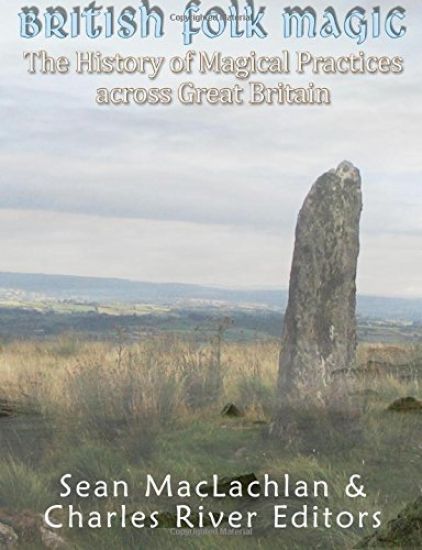
*Includes pictures *Includes contemporary descriptions of various practices of magic *Includes online resources and a bibliography for further reading *Includes a table of contents "The Anglo-Saxon charms... are of outstanding importance because they provide more than vague references of exceptional and short texts. They cannot be said to reveal everything, for there are numerous points in which they lamentably fail us, but they are numerous enough and, taken as a body, complete enough to give more than a tantalising hint of a strange world. The veil of mystification enveloping magic appears to be thin and transparent here." - G. Storms, Anglo-Saxon Magic (1948) Great Britain is an ancient land steeped in history and tradition. Its rolling countryside is dotted with prehistoric burial mounds and stone circles. Brooding castles hold tales of bloodshed and honor. Medieval churches have elaborate stained glass windows and gruesome carvings, reflecting a mixture of hope and darkness. Through all of this runs a deep current of the practice of magic. Court magicians thrilled royal patrons with tales of communing with the dead in moldering graveyards, alchemists labored in hidden laboratories tried to turn base metals into gold, and in the countryside, local "cunning folk" mixed herbs and made incantations. These practices stand in contrast to high magic, including such occult arts as astrology, divination, necromancy, and alchemy, which required literacy, an extensive and expansive personal library, and a fair amount of education. As such, some magicians became important figures in the royal court, such as the famous John Dee, who practiced alchemy and wrote a dictionary documenting the language of angels. Most commoners were not literate and couldn't afford education or books, and thus their magic consisted of separate traditions and techniques that only occasionally overlapped with high magic. Before the 20th century, with its radios, televisions, and international travel, all levels of British society were fascinated by magic and superstition. At the same time, a comprehensive look at British folk magic is simply impossible. Large volumes have been written about the local beliefs in regions and individual counties, and there has been considerable variation of practices over space and time, but much has been lost. Since folk magicians were for the most part illiterate and worked in a hostile cultural environment throughout much of their history, little was written down. That said, there is still a rich body of literature about British folk magic. While the practitioners of folk magic may have been poor, the tradition in which they worked certainly was not. Many of their spells had ancient roots and expressed a deep knowledge of the people and the land in which they lived. It was an enduring system of magic that survived religious persecution, the laughter of the educated classes, and the march of modernism (at least to some extent). Traces of these folk practices have survived up to the present time, making it unlikely that they will ever die out completely. British Folk Magic: The History of Magical Practices across Great Britain offers a sampling of Britain's folk magic, including the common cures and spells carried out by regular people. Along with pictures of important people, places, and events, you will learn about British folk magic like never before.
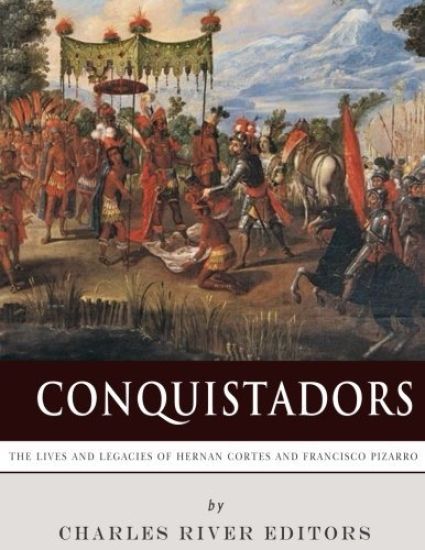
*Includes Cortes's letter to King Charles V describing Tenochtitlan and the Aztec Empire. *Includes descriptions of both the Aztec and Inca Empires. *Includes pictures of the Conquistadors and important people and places in their lives. *Includes a Bibliography for further reading. "Among these temples there is one which far surpasses all the rest, whose grandeur of architectural details no human tongue is able to describe; for within its precincts, surrounded by a lofty wall, there is room enough for a town of five hundred families." - Hern n Cort s "Friends and comrades On that side south] are toil, hunger, nakedness, the drenching storm, desertion, and death; on this side ease and pleasure. There lies Peru with its riches; here, Panama and its poverty. Choose, each man, what best becomes a brave Castilian. For my part, I go to the south." - Francisco Pizarro During the Age of Exploration, some of the most famous and infamous individuals were Spain's best known conquistadors. Naturally, as the best known conquistador, Hern n Cort s (1485-1547) is also the most controversial. Like Christopher Columbus before him, Cort s was lionized for his successes for centuries without questioning his tactics or motives, while indigenous views of the man have been overwhelmingly negative for the consequences his conquests had on the Aztecs and other natives in the region. Just about the only thing everyone agrees upon is that Cort s had a profound impact on the history of North America. Of course, the lionization and demonization of Cort s often take place without fully analyzing the man himself, especially because there are almost no contemporaneous sources that explain what his thinking and motivation was. If anything, Cort s seemed to have been less concerned with posterity or the effects of the Spanish conquest on the natives than he was on relations with the Mother Country itself. Of the few things that are known about Cort s, it appears that he was both extremely ambitious and fully cognizant of politics and political intrigue, even in a New World thousands of miles west of Spain itself. Cort s spent much of his time in Mexico and the New World defending himself against other Spanish officials in the region, as well as trying to portray and position himself in a favorable light back home. If Columbus and Cort s were the pioneers of Spain's new global empire, Pizarro consolidated its immense power and riches, and his successes inspired a further generation to expand Spain's dominions to unheard of dimensions. Furthermore, he participated in the forging of a new culture: like Cort s, he took an indigenous mistress with whom he had two mixed-race children, and yet the woman has none of the lasting fame of Cort s's Do a Marina. With all of this in mind, it is again remarkable that Pizarro remains one of the less well-known and less written about of the explorers of his age. On the other hand, there are certain factors that may account for the conqueror of Peru's relative lack of lasting glory. For one, he was a latecomer in more than one sense. Cort s's reputation was built on being the first to overthrow a great empire, so Pizarro's similar feat, even if it bore even greater fruit in the long run, would always be overshadowed by his predecessor's precedent. But Pizarro also lacked the youthful glamour of Cort s: already a wizened veteran in his 50s by the time he undertook his momentous expedition, he proceeded with the gritty determination of a hardened soldier rather than the audacity and cunning of a young courtier. Conquistadors looks at the lives of the two distant relatives, the empires they conquered, and their legacies. Along with pictures of important people, places, and events, you will learn about Cortes and Pizarro like you never have before.
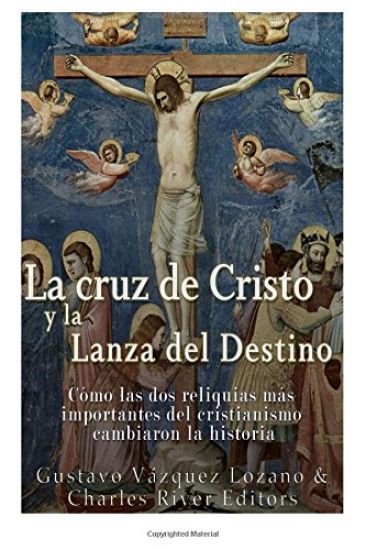
Que Jes s de Nazareth (ca. 4 AC-30 DC) fue crucificado es una de las afirmaciones m s cercanas a un hecho hist rico que pueda hacerse sobre su l. Sobre los detalles de qu hizo o dijo la academia ha pasado siglos debatiendo, pero en este hecho, que sufri la pena capital a manos de la autoridad romana por medio de la crucifixi n, coincide la abrumadora mayor a de los historiadores del mundo antiguo. Que hubo una cruz donde sufri y muri es, por tanto, la siguiente afirmaci n l gica. De hecho, su caso no es raro: como l, hubo muchos otros jud os que perecieron clavados a un madero en las afueras de Jerusal n; miles de acuerdo al historiador Josefo, testigo presencial de la gran rebeli n contra Roma. La cruz, que era un s mbolo de fracaso y verg enza para quienes mor an en ella y sus familias, fue considerada desde el inicio del cristianismo como el momento triunfal en la carrera de su mes as; su crucifixi n el momento de su ascensi n a su trono como verdadero rey de los jud os. De ah que, una vez terminada la persecuci n contra el cristianismo, y pasados los suficientes a os, comenzaran a surgir los interesados en buscar la evidencia. Ir en pos de, contemplar, besar y en el mejor de los casos llevarse a casa un pedazo de la hist rica cruz fue una de las obsesiones primero de los creyentes, despu s de reyes y emperadores. Junto con la cruz, siguiendo el relato evang lico, aparece otro objeto que incluso m s que el Santo Grial, ha mantenido de una forma u otra su enigm tica e inquietante presencia a lo largo de la historia: la lanza de Longinus, el soldado romano que perfor el costado de Jes s. La Verdadera Cruz era una reliquia de sanaci n y protecci n, pero la lanza, de acuerdo a la leyenda, era para la guerra y la conquista. "Aqu l que posea esta lanza y descubra su secreto tendr el destino del mundo en sus manos, para bien o para mal." As lo creyeron los antiguos emperadores del Sacro Imperio Romano, Napole n e incluso Adolph Hitler. No es casual que a esta codiciada reliquia le haya conocido desde tiempos inmemoriales como la Lanza del Destino. Hasta aqu la leyenda. El verdadero problema surge al apartar el mito y tratar de identificar c mo y cu ndo aparecieron por primera vez estas dos reliquias en la historia, y de ah seguir su complicada historia de siglos, pasando de generaci n en generaci n, de mano en mano de reyes y papas; de creyentes a enemigos del cristianismo; c mo fueron perdidas y recuperadas, repartidas en fragmentos por todo el mundo y en ocasiones vueltas a reunir; alguna vez robadas y utilizadas como impresionante medio de propaganda; incluso extraviadas y finalmente recuperadas y depositadas en los lugares donde hoy se veneran. Es posible que la cruz de Jes s haya sido encontrada trescientos a os despu s de su muerte y que sus fragmentos todav a puedan contemplarse en diversas iglesias del mundo? Se sabe con certeza que a mediados del siglo IV (ca. 350 DC) una antiqu sima cruz era venerada en Jerusal n y se utilizaba en la liturgia de la Semana Santa. La lanza apareci en la siguiente centuria en la Bas lica del Monte Si n en Jerusal n. De entrada, los siglos que las separan del evento de la crucifixi n (ca. 30 DC) hace problem tico abogar por su autenticidad. Opiniones en favor y en contra de la Cruz que se veneraba en Jerusal n desde los tiempos del emperador Constantino y de la lanza que empu Carlomagno en su coronaci n, los hay a favor y en contra. Pero hay casos en los que la historia de un objeto, y los tumultos que provocaron a su alrededor, resultan m s apasionantes que la cuesti n de la autenticidad en s misma. Este volumen sigue la complicada trayectoria de las dos reliquias existentes m s importantes del cristianismo, su aparici n en Palestina, su traslado a Bizancio y su dispersi n por toda Europa despu s del saqueo de Constantinopla, y c mo en el trayecto de diecis is siglos cambiaron el cu
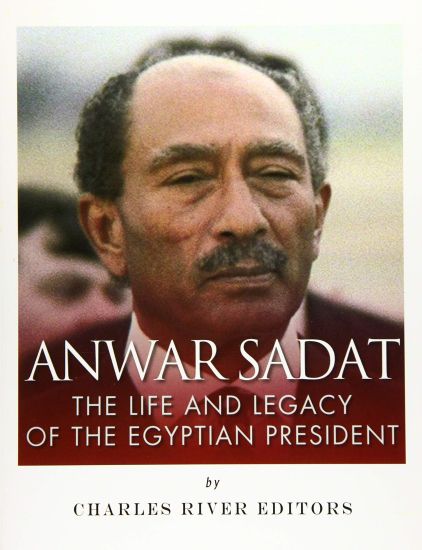
*Includes pictures *Includes Sadat's own quotes about his life and career *Includes footnotes and a bibliography for further reading On a beautiful sunny day in March 1979, as thousands of Egyptians awaited in anticipation, a plane landed in Cairo. Moments later, Egyptian President Anwar Sadat stepped out, welcomed by thunderous cheers from an overjoyed crowd. He had just returned to his country from Washington D. C., where five days earlier he had signed a historic treaty with Israeli Prime Minister Menachem Begin and U. S. President Jimmy Carter, bringing an end to three decades of war and hostilities between Israelis and Egyptians. Few moments in the history of this region were as momentous and poignant as the signing of this treaty, the first between Israel and any Arab country, and Egyptians across the country hailed Sadat as their hero and expressed pride in their leader, the bringer of peace. Egypt had good reason to celebrate the treaty. Since 1948, the country joined other Arab states and went to war with Israel on four occasions: the 1948 Arab-Israeli War, the 1956 War, the 1967 Six-Day War, and the 1973 Yom Kippur War. All were ultimately unsuccessful in fully defeating Israel, and Egypt, of all the Arab states, experienced the heaviest losses, both in human casualties and financially. It was Sadat's deep-seated resolve and the will of the Egyptian people that forged the path to the unprecedented normalization of relations between Israel and an Arab country. Pride in and respect for Anwar Sadat was not limited to his people either, as much of the world touted Sadat as a great world leader and peacemaker. Together with Begin, Sadat was awarded the Nobel Peace Prize in 1978 for their efforts in negotiating the peace treaty. Sadat was applauded by leaders of democratic nations across the world, and he opened up a new chapter of Egyptian foreign relations, establishing the country as a modernized and stable power in the historically tumultuous Middle East. As with many historic moments that inspired significant change, not everyone was supportive of Sadat's peace efforts. Only two years after the signing of the Egyptian-Israeli Peace Treaty, President Sadat was assassinated by members of an Islamic fundamentalist group, the Egyptian Islamic Jihad, in October 1981. As a president who succeeded the revolutionary Gamal Abdel Nasser and was succeeded by the long-reigning Hosni Mubarak, Sadat and his legacy are often overshadowed by the forceful prowess and authoritative legacies of Nasser and Mubarak, his presidency reduced to the peace treaty and the subsequent Nobel Prize he received. In fact, Sadat appeared to have suffered from a misrepresented image for much of his military and political career. Though the significance and true impact of Sadat and his legacy may be difficult to define, it can certainly be said that Sadat inhabits a unique place in Egyptian history. Compared to Nasser's chaotic and rallying rule and Mubarak's oppressive reign, Sadat's presidency was marked with stability, reform, and above all, a yearning for peace. The peace efforts that Sadat undertook permanently changed the political, economic, and social character of Egypt, and though he was praised as a hero by many yet cursed as traitor by some, a majority of Egyptians fell in the former group, or at least acknowledged Sadat's courage and hard work. Anwar Sadat: The Life and Legacy of the Egyptian President chronicles the life and legacy of one of Egypt's most famous presidents. Along with pictures of important people, places, and events, you will learn about Sadat like never before, in no time at all.
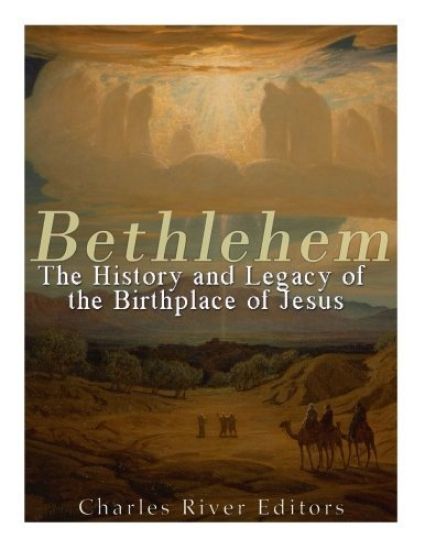
*Includes pictures *Includes accounts of the Nativity and Bethlehem's holy sites *Includes online resources and a bibliography for further reading "But as for you, Bethlehem Ephrathah, Too little to be among the clans of Judah, From you One will go forth for Me to be ruler in Israel His goings forth are from long ago, From the days of eternity." - The Book of Micah, Chapter 5 Bethlehem is amongst the oldest cities in the world, one that has been conquered and ruled by Caananites, Jews, Romans, Arabs, Crusaders, the Mamluks of Egypt, and the Ottomans. In the last century alone, it has been controlled by various different parties. The British took Bethlehem during World War I and controlled the city from 1920-1948, and in the wake of the 1948 war between Israel and its neighbors, Jordan annexed Bethlehem and controlled it until the Six Day War in 1967. It was during the Six Day War that Israel took control of Bethlehem, remaining in power over the city until 1995, when, in compliance with the Oslo Peace Accords, control of the city and of the surrounding West Bank was handed over to the Palestinian National Authority. The Palestinians continue to administer affairs in Bethlehem to the present day. What was it that caused this one small, unassuming settlement to be the focus of so much attention and strife? The primary reason that Bethlehem is so famous today is the Biblical passages that relate the town as the birthplace of Jesus Christ. Moreover, the oldest continuously used Christian church in the world is the Church of the Nativity in Bethlehem. Like the town itself, the Church of the Nativity has gone through numerous cycles of creation and ruin. First built above the Cave of the Nativity by Emperor Constantine's mother, Helena, in May 339, the church existed for almost two centuries before it was destroyed during the Samarian revolt in 529 CE. The church was later reconstructed by the Byzantine emperor Justinian in 565, and it is this structure that has largely survived to the present day. Today, the Church of the Nativity is a UNESCO World Heritage Site, alongside the pilgrimage route that led between Bethlehem and Jerusalem. The church and its surrounding complex of convents, monasteries, and chapels are fortress-like in appearance, reflecting the turbulent history of not only Bethlehem but the religious communities connected to the site. It was a focal point in the conflicts of the Crusades, and like many other towns in the Holy Land it fell into decline after the European armies were forced from the Holy Land. Despite being under Arab rule, Greek and Syrian Christian communities have continued to live and operate in the site, which was respected by both the Christian and Islamic faiths. It was also an important site for Judaism, being the location where many events of the Old Testament took place. Bethlehem is the burial place of Rachel, wife of Jacob, and it is where the story of Ruth and her mother-in-law Naomi took place. It was also known as the city of David because it was the place where King David was anointed by Samuel. Needless to say, all of its history and religious import make it one of the most important places on the planet. Bethlehem: The History and Legacy of the Birthplace of Jesus looks at the history of the city and its importance in antiquity. Along with pictures depicting important people, places, and events, you will learn about Bethlehem like never before.
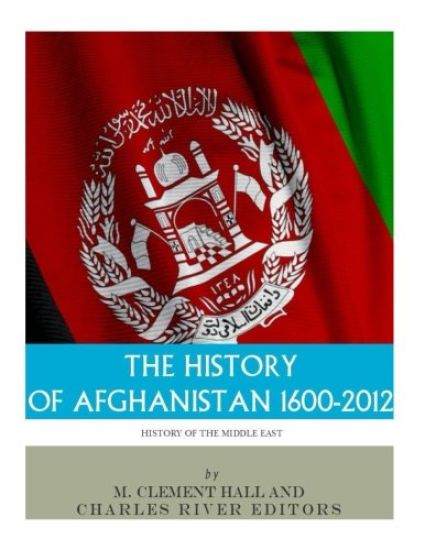
"We have men and we have rocks in plenty, but we have nothing else." - Dost Mohammad Khan to John Lawrence In the 21st century, as NATO's operation against the Taliban and al-Qaeda has dragged on for over a decade, the old maxim that Afghanistan is the graveyard of empires has been revived. Indeed, the rugged, desolate, and mountainous region was a place that many Westerners likely could not have found on a map before the attacks of September 11, and now the nation's border with Pakistan is one of the world's hottest spots. Thanks to Afghanistan and the "Af-Pak" theater, people continue to learn about groups like the Haqqani Network, NATO's struggles to subdue the Taliban and affiliated militants in Afghanistan are merely the latest chapter in Afghanistan's very turbulent history. Well before the current conflict, Afghanistan frustrated the Soviet Union, and various tribes and religions have attempted to gain traction there over the last several centuries. The history of Afghanistan is a lesson in convolution. How did Afghanistan get to where it is today, at the forefront of global affairs? The history of Afghanistan and its people stretch back several centuries, and it is a unique history of empire, culture, pride, and religious nationalism. The History of Afghanistan comprehensively and descriptively covers this history, progressing through a timeline dating back to antiquity and examining all of the different religious, political, foreign, and military issues that affect Afghanistan and are affected by Afghanistan today. The History of Afghanistan will bring readers up to speed on one of the world's crucial countries today.
*Includes accounts of Spartacus and the Third Servile War written by ancient historians Plutarch, Sallust, Appian, Osorius, and Florus. *Includes pictures of historic art depicting Spartacus and important people, places, and events in his life. *Includes a Bibliography for further reading. " Spartacus] was a Thracian from the nomadic tribes and not only had a great spirit and great physical strength, but was, much more than one would expect from his condition, most intelligent and cultured, being more like a Greek than a Thracian. They say that when he was first taken to Rome to be sold, a snake was seen coiled round his head while he was asleep and his wife, who came from the same tribe and was a prophetess subject to possession by the frenzy of Dionysus, declared that this sign meant that he would have a great and terrible power which would end in misfortune..." - Plutarch, Life of Crassus Spartacus is the world's most famous slave, and one of the most notorious figures of Ancient Rome. A slave enamored of freedom and willing to fight and die for it, he became especially popular in the years following the Enlightenment, after which he was widely viewed as a poignant champion of liberty in the 18th and 19th centuries. As a result, he became a symbol during struggles like the French Revolution, the American Revolution, the American Civil War and the struggle for emancipation. Today, his dual life as a gladiator and a "freedom fighter" makes him fascinating to audiences around the world. His tale, a blend of violent spectacle and civil rights, has been adapted for film (Stanley Kubrick's memorable Spartacus), television (Starz's popular television series), and in literature (appearing in everything from historical novels to comics). To this day, Spartacus (Spartaco) is a popular first name in central and southern Italy, and his name has been adopted by sports teams like FC Spartak Moscow and FC Spartak Plovdiv. The Soviet Union's internal version of the Olympics, the Spartakiad, also derived its name from Spartacus. The reason for Spartacus's enduring appeal is obvious. Firstly, he was a gladiator, a profession so violently spectacular that to this days it remains one of the most popular and fascinating aspects of ancient Rome - as testified by the popularity of such productions as Gladiator and the endless queues of tourist outside the ruins of the Colosseum. Secondly, he was a man who, at least on the surface, fought for freedom - not just his but that of every slave in his region of Italy - and he did so almost two millennia before slavery was officially abolished in the United States. Legends of the Ancient World: The Life and Legacy of Spartacus chronicles the life, legends, and legacy of the Roman slave and rebel, examining the historical record and what is known and unknown about the man. Along with pictures depicting important people and places, as well as a bibliography and Table of Contents, you will learn about Spartacus like you never have before, in no time at all.
*Includes pictures. *Includes a bibliography and footnotes. "Be who God meant you to be and you will set the world on fire." - St. Catherine of Siena A lot of ink has been spilled covering the lives of history's most influential figures, but how much of the forest is lost for the trees? In Charles River Editors' Catholic Legends series, readers can get caught up to speed on the lives of the Church's most important men and women in the time it takes to finish a commute, while learning interesting facts long forgotten or never known. As one of the two patron saints of Italy and one of six patron saints of Europe, it's immediately apparent that Catherine of Siena was one of Catholicism's most important figures, and possibly its most influential woman. Famous today for adhering to the tenets of the Dominican order and living a material-free life, Catherine worked in her day to help reunite the Catholic Church after a schism had brought some of the base of power to Avignon, France. At the same time, she also sought to bring together the disparate Italian states that were constantly at war with each other. However, Catherine's life after death has also been incredibly influential. Revived by the Risorgimento, repurposed into an instrument of Catholic nationalism by 19th century scholars, and eventually embraced by fascism as a symbol of Italian virtues and the embodiment of the idea of Romanita, Catherine of Siena's reputation is both blurred and strikingly sharp, depending on the function she is given by those who remember her. Recognized by the Catholic Church as a saint in 1461, as well as a Doctor of the Church and one of the patron saints of Italy in 1970, Catherine of Siena's life and actions have stimulated the imagination and piety of many since the early 15th century. More than 500 years after her death, her legacy was seized and even untowardly exploited during the early 20th century, leading to a pronounced tendency of scholarly demystification that attempted to strip her of credibility as part of the general process of the deconstruction of fascist symbols and emblems. Scholars trying to distance themselves from their past have questioned even the basic tenets of her hagiography and have attempted to turn her into a second hand figure in Italian history, isolating her from the historical and cultural context from which she stemmed. On the other hand, Catholic believers who relied on her intercession and regarded her as a model of conduct have emphasized her qualities and have sometimes attempted to make the staples of hagiographic writing more palatable to the modern reader. Catherine's extreme ascetic practices, her considerable involvement in the political turmoil of 14th century Italy, and her extensive epistolary exchanges are only a few reasons why she is a compelling figure, and one in need of objective analysis. Catherine's life and legacy are crucial toward understanding female religiosity, mysticism and asceticism during the medieval period. At the same time, the historical sources regarding most medieval individuals can be sketchy, so the sources on her life must be closely analyzed, including her letters and the main hagiographic writings of Raymond of Capua and Tomaso Caffarini, two of her confessors. Although the historical biographies of saints cannot be completely recovered "as they truly happened" there is still great value in studying such narratives, regardless of the reader's confessional orientation. Catholic Legends: The Life and Legacy of St. Catherine of Siena details the remarkable life of one of the Catholic Church's most famous saints, while also covering the controversies over her legacy. Along with pictures and a bibliography, you will learn about St. Catherine of Siena like you never have before, in no time at all.
*Chronicles the history leading up to the First Continental Congress to the final adjournment of the Second Continental Congress in 1789. *Includes pictures of important people, places, and events. *Discusses the seminal work of the Continental Congress, including the Declaration of Independence and Articles of Confederation. "The appointment of the delegates to both these congresses was generally by popular conventions, though in some instances by state assemblies. But in neither case can the appointing body be considered the original depositary of the power by which the delegates acted; for the conventions were either self-appointed "committees of safety" or hastily assembled popular gatherings, including but a small fraction of the population to be represented, and the state assemblies had no right to surrender to another body one atom of the power which had been granted to them, or to create a new power which should govern the people without their will. The source of the powers of congress is to be sought solely in the acquiescence of the people, without which every congressional resolution, with or without the benediction of popular conventions or state legislatures, would have been a mere brutum fulmen; and, as the congress unquestionably exercised national powers, operating over the whole country, the conclusion is inevitable that the will of the whole people is the source of national government in the United States, even from its first imperfect appearance in the second continental congress." - Cyclop dia of Political Science, 1899 The American Revolution is replete with seminal moments that every American learns in school, from the "shot heard 'round the world" to the Declaration of Independence, but in many ways the stories of the First and Second Continental Congress have been obscured by other events in Revolutionary history. In the summer of 1774, patriot groups around the 13 colonies communicated with each other and brought about the first council that would unite all of them. That September, 56 delegates who had been chosen by their colonial legislatures to attend the First Continental Congress met in Philadelphia to craft a united response to the Intolerable Acts, debate the merits of a boycott of British trade, declare their rights and demand redress. The First Continental Congress eventually petitioned the British government to end the Intolerable Acts, while also determining to convene again the following summer. As it turned out, the Revolution would be underway before the Second Continental Congress could convene, and that body would eventually oversee an 8 year war effort. The Second Continental Congress was the first American experiment with a federal government, and it learned important lessons and set several precedents, including civilian control of the military, financing a war effort, negotiating diplomatically with European powers like France, adopting the Declaration of Independence, and creating and implementing the Articles of Confederation. By the time the Continental Congress gave way to the Congress of the Confederation (which itself gave way to the Constitution), the United States had gone full circle. Once a confederation of individual states who fashioned themselves and operated as separate countries, the United States was now one truly united country, ready to confront the heavy task of governing democratically without the assistance of a hereditary monarch. American Legends: The Continental Congress chronicles the history that led up to the formation of the First and Second Continental Congress, analyzes what each Continental Congress accomplished while meeting, and analyzes their legacy. Along with pictures of important people, places, and events, you will learn about the Continental Congress like you never have before, in no time at all.
A lot of ink has been spilled covering the lives of history's most influential figures, but how much of the forest is lost for the trees? In Charles River Editors' American Legends series, readers can get caught up to speed on the lives of America's most important men and women in the time it takes to finish a commute, while learning interesting facts long forgotten or never known. Abraham Lincoln (1809-1865) is one of the most famous Americans in history and one of the country's most revered presidents. Schoolchildren can recite the life story of Lincoln, the "Westerner" who educated himself and became a self made man, rising from lawyer to leader of the new Republican Party before becoming the 16th President of the United States. Lincoln successfully navigated the Union through the Civil War but didn't live to witness his crowning achievement, becoming the first president assassinated when he was shot at Ford's Theater by John Wilkes Booth on April 14, 1865. In the generation after the Civil War, Lincoln became an American deity and one of the most written about men in history. With such a sterling reputation, even historians hesitate to write a critical word; in Team of Rivals Doris Kearns Goodwin casts Lincoln as an almost superhuman puppet master in control of his Cabinet's political machinations and the war's direction, juggling the balancing act flawlessly. As a result, Lincoln the man is far less known than Lincoln the myth. American Legends: The Life of Abraham Lincoln humanizes the leader who rose from humble roots to the highest office in the land, discussing lesser-known facts about Lincoln while tracking his rise, his monumental presidency, and his legacy. Along with pictures of Lincoln and other important people and events in his life, you will learn about Lincoln like you never have before, in no time at all.
*Includes pictures *Includes stories about Bigfoot, pirates, ghosts, and other mysteries *Includes online resources and a bibliography for further reading Canada has the reputation of being a boring place. More tranquil than its southern neighbor, it goes along in its quiet way sustaining one of the most stable and prosperous democracies in the world, and does so with little fuss or drama. It doesn't get in the news much, which considering the content of most news stories is a good thing. People get along, the economy is expanding, and there are no regular disasters. While all this makes Canada a pleasant place to live, it does not make it particularly interesting. But dig a little below the surface, and you'll find a different Canada, a stranger Canada, one of murder, mystery, and paranormal experiences. The stories that follow will show that Canada, far from being a dull, staid nation where nothing much happens, is an epicenter of the mysterious. Mysterious Canada: A Collection of Hauntings, Mysteries, and Strange Creatures Across the Canadian Nation offers a sampling of the many strange stories and unexplained phenomena that make Canada such an intriguing place. It is part of an ongoing series by Sean McLachlan and Charles River Editors that covers the mysteries and oddities of various places across the world, including The Weird Wild West, Weird West Coast, Mysteries of the South, Mysterious New England, and Weird Ireland. Along with pictures of important people, places, and events, you will learn about the weird legends and mysteries of Canada like never before.
*Includes pictures *Includes contemporary accounts of Pontiac's War *Includes online resources and a bibliography for further reading "It is important for us, my brothers, that we exterminate from our lands this nation which seeks only to destroy us... Therefore, my brothers, we must all swear their destruction and wait no longer. Nothing prevents us: They are few in numbers, and we can accomplish it." - Pontiac Throughout history, there have been men of war and men of peace, but few have actually had a war named after them. One of them was Pontiac, also known as Obwandiyag, an Odawa chief who left his mark on history by continuing the battle against the British after their official triumph during the French and Indian War. While modern historians question how important Pontiac's role was in shaping America's destiny, his leadership during Pontiac's War was seen at that time as important enough to warrant significant articles and even a few 18th century books. Since these books were written by the British, or at least men who supported their cause, the descriptions of Pontiac were often not complimentary. Likewise, 19th century authors tended to portray him as something of an evil genius who plotted against the British and then drove his people into battle. Not surprisingly, 20th century scholarship depicted him differently, portraying Pontiac as an important leader who had more influence over his own local band of Native Americans than over some vast army. When it comes to Pontiac, a few facts are certain. For one thing, he certainly led the first major attack of Pontiac's War in May 1763, when he and 300 of his men attacked Fort Detroit in what is now the city by the same name. Unfortunately for his cause, Pontiac failed to gauge just how strong the British presence there was, and his attack was quickly repelled. On the other hand, he was not a man who gave up easily, so instead of retreating, he and his warriors would lay siege to the British stronghold. In the days that followed, word spread of his efforts, and in short order nearly 1,000 men from various tribes in the area had joined him. They remained camped around the fort throughout the summer before finally giving up the siege. While Pontiac and his ever-growing band of men were laying siege to Fort Detroit, other tribes heard of his efforts to keep the fight going and began to attack other settlements and enclaves. Thus, even after he did give up on the fort, Pontiac continued to fight, next attacking area in the Illinois Country, an area that included much of what is now the Midwestern United States. As time went, on his popularity and power increased to the point that the British ultimately sought him out to make peace. That is how, in July 1766, Pontiac came to meet with Sir William Johnson, the British Superintendent of Indian Affairs for the colonies. Together, the two men carved out a peace treaty that held for the remainder of the British presence in the region. Unfortunately, Pontiac's involvement in this treaty made him something of a pariah among some tribal leaders in the area. There was already a growing sense of resentment due to his reputation as a leader during the war, and many complained that he claimed a level of authority he had no right to have. This unrest grew to the point of violence, and in 1769, a warrior from the Peoria tribe attacked and killed Pontiac while he was visiting the small French villages of Cahokia. Pontiac: The Life and Legacy of the Famous Native American Chief examines the life of one of North America's most famous figures. Along with pictures of important people, places, and events, you will learn about Pontiac like never before.
*Includes pictures *Includes ancient accounts of Byblos *Includes a bibliography for further reading Of all the peoples of the ancient Near East, the Phoenicians are among the most recognizable but also perhaps the least understood. The Phoenicians never built an empire like the Egyptians and Assyrians; in fact, the Phoenicians never created a unified Phoenician state but instead existed as independent city-state kingdoms scattered throughout the Mediterranean region. However, despite the fact there was never a "Phoenician Empire," the Phoenicians proved to be more prolific in their exploration and colonization than any other peoples in world history until the Spanish during the Age of Discovery. Byblos, known today as Jubayl, has been known by many names over the ages: the Phoenicians called it Gebal; for the Egyptians it was Kepen or Kupna; the Assyrians and Akkadians referred to it as Gubla (this name was repeated throughout the Old Testament); the Arabs called it Jbeil, and eventually the European Crusaders gave it the name of Gibelet. This lengthy etymology reflects the city's unique heritage significance, because Byblos is one of the oldest continuously inhabited cities ever to have existed in the world. The city was frequently mentioned in the great archives of antiquity, but its origins lie in the depths of prehistory. Its strategic location, with plenty of shipbuilding wood coming from the nearby mountains, made many powerful states eager to control the territory. Over time, Byblos and its surrounding area were occupied by the Amorites, Canaanites, Phoenicians, Assyrians, Persians, Macedonians, Romans, Arabs, Crusaders, Mamelukes, and Ottomans. From the earliest of times, Byblos was an active commercial center, trading extensively with Egypt, where it exported cedar wood from the Phoenician homelands in exchange for papyrus. As a result, Egypt would have a significant influence on the art and culture of Byblos, and the city quickly assumed a position of supremacy in the Mediterranean, thanks in part to its early use of writing. Archaeological evidence uncovered at the city show the existence of a Phoenician alphabet being used from as early as 1200 BCE, and the remains of Phoenician cities along the coast of Lebanon bear witness to the important role they played as a meeting place between the east and west, making it a focal point for the fusion of cultures in the ancient world. The Phoenicians did not generally seek political advantages or territorial expansion in their homeland-their interest was primarily in international trade. Much of the coastline of the area is heavily urbanized, which likely obscures many further interesting structures that might completely change the narrative of the site if they were uncovered. Moreover, many of the archaeological remains are openly exposed to the elements. The construction of a modern jetty has modified the coastal configuration, which has exacerbated the problem of wave energy from the strong storms that regularly batter the coast. Some attempts at coastal engineering have been made to prevent environmental change, and the site's environmental heritage significance has been recognized (being the first archaeological coastline in Lebanon to also become a protected natural landscape), but further steps will need to be taken preserve the unique heritage of Byblos. Byblos: The History and Legacy of the Oldest Ancient Phoenician City chronicles the tumultuous history of one of the most important cities of antiquity. Along with pictures depicting important people, places, and events, you will learn about Byblos like never before.
*Includes pictures *Includes ancient accounts of Athenian democracy by Aristotle, Plutarch, and others *Includes footnotes, online resources and a bibliography for further reading *Includes a table of contents In today's modern world every political regime, even the most authoritarian or repressive, describes itself as democracy or a Democratic People's Republic. The concept of rule by the people, on behalf of the people, has come to be accepted as the norm, and very few would overtly espouse the cause of dictatorship, absolute monarchy or oligarchy as the most desirable political system upon which to base the government of any country. It is also generally accepted that democracy, as a political ideology, began in Greece, specifically in Athens, in the 7th century B. C. and reached its zenith in the 5th century under the leadership of Pericles. Dating an exact starting point is impossible, but at the beginning of the 7th century B. C. Solon inaugurated a series of reforms that began the movement away from rule by individuals, or tyrants, and by the end of that century the reforms of Cleisthenes provided the basis of the Athenian democratic system that culminated in the radical institutions introduced by Ephialtes and Pericles in the 5th century. The result was the first, and possibly only, truly participative democratic state. Of course, not every inhabitant of Athens enjoyed the right to vote. Only full citizens could do that, and they represented approximately 30% of Athens's male population, numbering between 30,000 and 60,000 during Athens' Golden Age and declining rapidly throughout the Peoloponnesian War. The remainder was made up of metics and slaves, who vastly outnumbered free citizens and, indeed, almost all other slave populations in Hellas, a fact which the Athenians often conveniently chose to forget when singing the praises of their democracy. There is a very strong indication that foreign chattel slaves were an utter necessity to Athens' economy, and though they did not serve as fleet rowers as they would have done in Rome, they still carried out the myriad of unpleasant and demeaning jobs which allowed Athenian citizens the free time to actively participate in the city's politics. In many ways, without slaves, there would have been no democracy in Athens. Women also had vastly inferior rights in Athens than those of many other poleis (chiefly Sparta), and were virtually regarded as the property of their fathers, brothers and husbands. Women enjoyed no political rights and precious few legal ones, they were forced into arranged marriages at an extremely young age, and they were even fed differently from their brothers while growing up, leading to an average mortality age that was extremely lower than that of men of comparable social class. Ironically, between 322 B. C. and the 19th century, Athenian democracy was almost totally forgotten. If there was any mention of democracy in Athens at all, it was in reference to so-called but largely mythical notions of Solonian democracy as recorded in Plutarch's Life of Solon or Aristotle's Politics. At the beginning of the 19th century, scholars such as August Boeckh began the evaluation and study of democratic Athenian institutions, and inscriptions and the writings of Thucydides and Demosthenes, among others, were used to re-construct those democratic bodies and to gain an understanding of their workings. Later in the century, academics, particularly George Grote, provided new insights into the Athenian democratic processes, and today there is a much fuller understanding of what contributed to Athenian political life. That said, the questions of how and why Athens came to develop the political system it did remain a major area of academic contention. Athenian Democracy: The History of the World's First Democracy in Ancient Athens looks at the history of the democratic government Athens formed, as well as its legacy.
*Includes pictures *Includes medieval accounts *Includes online resources and a bibliography for further reading "Brothers shall fight and fell each other, And sisters' sons shall kinship stain; Hard is it on earth, with mighty whoredom; Axe-time, sword-time, shields are sundered, Wind-time, wolf-time, ere the world falls; Nor ever shall men each other spare." One of the most fascinating elements of Norse cosmology is the fact that its end is foretold in crushing detail. This end of times will come about in a mighty battle called "Ragnar k", an event translated as either "the Fate of the Gods" or (in Richard Wagner's re-imagining) "the Twilight of the Gods." Moreover, not only is the event foretold, but the characters of this drama seem to know of its coming. This is in line with the Germanic faith in the concept of "fate." For the German pagans, fate or destiny was an integral part of human existence; while people may not know them ahead of time, their stories are written before they are born, and this was true of the gods as well. Although the gods seem to accept their fates, this concept was not the same as that of "destiny" in Christianity (especially Calvinist pre-destination), because the Norse believed that fate could perhaps be warped and shifted. According to historian Rudolph Simek, Ragnar k, the "Final Destiny of the Gods," was comprised of four principal cataclysmic events: the Fimbulwinter, a mighty winter that lasted three years; Surtr's "world fire" that consumed everything; the sinking of the earth beneath the waves whipped up by the "Midgard Serpent;" and the darkening/disappearance of the sun after Fenris-Wolf devoured it. Afterwards, there is also a resurrection of humanity and the gods that is often forgotten but gives a fascinating insight into the socio-political mindset of the Norse storytellers. The actual description of Ragnar k appears best in the medieval prose text, the Gylfaginning, and the prophetic poem the V lusp , but Ragnar k's antecedents are equally fascinating and present a catalog of crimes and errors that led to the fated "twilight" of the gods. This idea of "destiny," of fate, is key to understanding the culture behind these strange tales. Many of the allusions to characters, objects, and events in the sources available today are still mysterious to historians. Much has been lost to the abyss of time, but, although these references and connections often bemuse people, there is still enough poetic majesty in the sources that have survived to captivate readers and give a sense of what the medieval Scandinavian mindset was. A lot can be learned about people by probing how they envisaged the end of their world. Many people today believe that the Ragnar k is the tale of where all good fails, ushering in a future devoid of hope in which the gods, the supposed progenitors of "goodness," ultimately lose. However, an analysis of the legend and its origins make this viewpoint less tenable. Ragnar k: The Origins and History of the Apocalypse in Norse Mythology looks at the story and the legendary Norse mythology behind it. Along with pictures depicting important people, places, and events, you will learn about Ragnar k like never before.
*Includes two dozen pictures of Kennedy, Oswald, locations in Dealey Plaza, and other seminal moments before, during, and after the assassination. *Explains the lead-up to November 22, 1963 and why Kennedy took his fateful trip to Texas. *Discusses the different findings of the various investigations of the assassination and explains the conspiracy theories "We never had any hope of saving his life." - A doctor in the emergency room In the 19th century, the Scottish writer Thomas Carlyle famously wrote, "The history of the world is but the biography of great men", popularizing the "Great Man" theory that the course of history is shaped by a select few heroic individuals. While historians and others continue to debate the accuracy of the Great Man theory of history, there is no question that the course of history is permanently altered by decisive moments in time, where a different result would have produced drastically different outcomes. Charles River Editors' Decisive Moments in History examines the events that changed history forever and set the world down the path it finds itself on today. In the annals of American history, few moments have been so thoroughly seared into the nation's conscience that Americans can remember exactly where and when they heard about an earth-shattering event. In the 20th century, there was Pearl Harbor and the assassination of President John F. Kennedy. November 22, 1963 started as a typical Friday, and many Americans were unaware that President Kennedy was even heading to Dallas, Texas. John and Jackie arrived in Dallas in the morning, with Texas Governor John Connally alongside them and Vice President Lyndon B. Johnson due to arrive later to meet them there. The Kennedys and the Connallys intended to participate in public events later in the day, and Jackie and John were welcomely surprised by the warm reception they received. A public parade was hosted for the President and First Lady that afternoon, and the First Couple rode with the Connallys in an open motorcade en route to a speech Kennedy would deliver later. As they waved to the people lining the streets, around 12:30 p.m. Central Standard Time, Governor Connally's wife turned around to the first couple and said, "Mr. President, you can't say Dallas doesn't love you." Moments later, the most controversial assassination in American history took place as a series of shots were fired at the motorcade. The indelible images provided by the Zapruder film of Kennedy being hit in the throat and head, followed by Jackie crawling over the backseat toward the trunk are now instantly recognizable. Within minutes, the news of the shooting began to spread from Dallas across the nation, and everyone's worst fears were confirmed when the President was declared dead about half an hour after the shooting. In the wake of the shooting, Lee Harvey Oswald was arrested, proclaimed his innocence, and was then murdered himself by Jack Ruby two days later. The day after that, the President was given a state funeral and procession. The unbelievable chain of events that took place in those 72 hours understandably left the nation shell-shocked. Despite countless official and unofficial investigations, the assassination is just as mysterious and confusing as ever, and conspiracy theories continue to run rampant nearly 50 years after the assassination. Was Lee Harvey Oswald a patsy? Was he a lone gunman? Was the assassination ordered by the mob? Decisive Moments in History: The Assassination of John F. Kennedy chronicles the entire chain of events leading up to the assassination and its immediate aftermath, examines the different conclusions reached by different investigations, and discusses the conspiracy theories and legacy of the assassination. Along with pictures of important people, places, and events, you will learn about the Kennedy assassination like you never have before, in no time at all.
*Includes pictures *Includes Carnegie's own quotes about his life and career *Includes online resources and a bibliography for further reading *Includes a table of contents "While the law of competition] may be sometimes hard for the individual, it is best for the race, because it insures the survival of the fittest in every department. We accept and welcome, therefore, as conditions to which we must accommodate ourselves, great inequality of environment, the concentration of business, industrial and commercial, in the hands of the few, and the law of competition between these, as being not only beneficial, but essential for the future progress of the race." - Andrew Carnegie A lot of ink has been spilled covering the lives of history's most influential figures, but how much of the forest is lost for the trees? In Charles River Editors' American Legends series, readers can get caught up to speed on the lives of America's most important men and women in the time it takes to finish a commute, while learning interesting facts long forgotten or never known. The Gilded Age and the dawn of the 20th century are often remembered as an era full of monopolies, trusts, and economic giants in heavy industries like oil and steel. Men like John Rockefeller built empires and financiers like J. P. Morgan merged and consolidated them. The era also made names like Astor, Cooke, and Vanderbilt instantly recognizable across the globe. Over time, the unfathomable wealth generated by the businesses made the individuals on top incredibly rich, and that in turn led to immense criticism and an infamous epithet used to rail against them: robber barons. Dozens of these men would be pilloried as "robber barons," but few of them were as wealthy or influential as Andrew Carnegie, who built America's foremost steel empire. Ironically, Carnegie epitomized the American Dream, migrating with his poor family to America in the mid-19th century and rising to the top of the business world in his adopted country. A prodigious writer in addition to his keen sense of business, Carnegie was one of the most outspoken champions of capitalism at a time when there was pushback among lower social classes who witnessed the great disparities in wealth; as he once put it, "Upon the sacredness of property civilization itself depends-the right of the laborer to his hundred dollars in the savings bank, and equally the legal right of the millionaire to his millions." In a similar vein, he said, "Those who would administer wisely must, indeed, be wise, for one of the serious obstacles to the improvement of our race is indiscriminate charity." While Carnegie's rise and wealth didn't necessarily separate him from other 19th century business magnates, it was in the field of philanthropy that he left his most unique mark, even as it paved the way for others to follow his lead. One of his most famous quotes was that "the man who dies thus rich dies disgraced," and for the last 15 years of his life, he contributed to countless causes, including the Carnegie library, Carnegie Corporation of New York, Carnegie Endowment for International Peace, Carnegie Institution for Science, Carnegie Trust for the Universities of Scotland, Carnegie United Kingdom Trust, Carnegie Hero Fund, Carnegie Mellon University and Carnegie Museums of Pittsburgh. Carnegie put it succinctly, "Surplus wealth is a sacred trust which its possessor is bound to administer in his lifetime for the good of the community." American Legends: The Life of Andrew Carnegie examines the life and career of America's most famous entrepreneurs. Along with pictures of important people, places, and events, you will learn about Carnegie like never before, in no time at all.
Mar a Magdalena es probablemente la figura m s c lebre del cristianismo popular, una mujer de nuestro tiempo, la que los medios de comunicaci n y las sensibilidades modernas pueden abrazar con mayor convicci n. La industria del entretenimiento como el cine, el teatro y la literatura de aeropuerto han tenido desde hace m s de cien a os una obsesi n con esta pelirroja, que lleg a su cl max en la primera d cada de este siglo y no parece que vaya a desvanecerse. Magdalena tiene todo para ser una super-estrella: joven y atractiva, liberada e inteligente, ejemplo de una espiritualidad m s libre, no sometida por una Iglesia controlada por hombres; en la mente de muchos, Magdalena encarna la oposici n a un sistema dominado por ancianos con sotana, lo "sagrado femenino", y por si fuera poco, tiene el mejor partido del mundo: el mism simo Jesucristo. Hasta aqu la imagen presentada por la cultura popular. Esta Magdalena afrancesada, de pelo suelto y brillante, que aparece en innumerables obras de artes medievales y modernas con un manto rojo, s mbolo de rebeld a y libertad (aunque en la Edad Media la intenci n era mostrarla como una mujer descarriada), es una creaci n de la Iglesia occidental, y m s recientemente de los medios masivos de comunicaci n. Es la Magdalena enterrada bajo siglos de luchas intertextuales, homil as condescendientes, leyendas medievales, novelas en busca de ventas y documentales para la televisi n por cable. Pero hubo una Mar a hist rica, la mujer llamada Miriam (su nombre hebreo) nacida en Galilea en tiempos del rey Herodes, y que muri , muy probablemente, en la actual Turqu a, venerada, cuando el cristianismo era solamente una variante del juda smo. Seguramente ella misma no se hubiera reconocido en nuestros retratos modernos o en la idea que el cristiano promedio ha tenido de ella desde hace 1500 a os. Si desde el siglo XVIII ha habido una b squeda del Jes s hist rico, el hombre real que camin en las colinas de Galilea y muri en una cruz en Jerusal n, hace falta tambi n una b squeda similar de la Magdalena hist rica; no por simple curiosidad; la figura en cuesti n no es menor: si hemos de dar cr dito a las fuentes del siglo I, Mar a de Magdala fue la primera cristiana de la historia, la primera en proclamar la tesis fundamental del cristianismo, la resurrecci n de Jes s. A pesar de la escasa informaci n confiable, hay algunos hechos que podemos saber con certeza sobre esta mujer; por ejemplo, que era una respetada y bien recordada seguidora de Jes s de Nazareth, una de las mujeres que apoyaron al movimiento del galileo desde su primera etapa. Algunos estudiosos de la Biblia creen ver evidencia interna en los evangelios que Magdalena era una mujer mayor de edad, muy probablemente bien acomodada, si no es que rica. "Por todos los indicios", opina E. P. Sanders en su libro The Historical Figure of Jesus, "ten a ochenta y seis a os, no ten a hijos, y ten a la tendencia a cuidar j venes desarraigados". Magdalena no s lo permaneci al lado de Jes s en su hora de mayor desgracia, la crucifixi n; tambi n tuvo una extra a experiencia junto a su tumba el domingo en la madrugada despu s de la Pascua. Los evangelios difieren en los detalles, pero no en el hecho de que le sucedi a ella.
*Includes historic artwork depicting St. Francis and important people, places, and events in his life. A lot of ink has been spilled covering the lives of history's most influential figures, but how much of the forest is lost for the trees? In Charles River Editors' Catholic Legends series, readers can get caught up to speed on the lives of the Church's most important men and women in the time it takes to finish a commute, while learning interesting facts long forgotten or never known. Alongside St. Ignatius, who founded the Jesuits, St. Francis of Assisi is widely regarded as one of the most venerated saints in the Catholic Church due to his work establishing religious Orders that have done an incalculable amount of good and service for societies. Like St. Ignatius, St. Francis also got his start as a soldier who experienced a vision that put him on a more divine path. St. Francis eventually became a pillar of the Church, both living in poverty to assist those in greatest need and in establishing the Franciscan Order, the Order of Poor Clares, an enclosed order for women, and the Third Order of Brothers and Sisters of Penance. Near the end of his life, he became the first person recorded in history to bear the stigmata, the Passion wounds that Christ suffered in crucifixion, which only added to his ultimate aura and legacy. Catholic Legends: The Life and Legacy of St. Francis of Assisi details the remarkable life he lived and analyzes the enduring impact his work has had on the Church and the world at large. Along with historic depictions of St. Francis of Assisi and other important places and events in his life, you will learn about this most venerated saint like you never have before, in no time at all.
*Includes pictures *Includes online resources and a bibliography for further reading "There is no force in the world that can block the powerful march of our army and people, who are holding high the banner of the suns of great Comrade Kim Il-sung and great Comrade Kim Jong-il and continuing to advance under the leadership of the party and with strong faith in sure victory." - Kim Jong-un In 2014, the International Space Station unleashed a series of photographs that had netizens around the globe simultaneously slapping their cheeks in disbelief for more reasons than one. For starters, the world was astounded by the crisp definition and stellar resolution of the images captured by the space agency's NightPod lenses, which showed striking satellite shots of the world at nighttime, illuminated by its dazzling city lights. But it was a close-up snap of the China-North Korea border that elicited reactions far greater than the rest, for the image, as terrific as it was, was equally troubling. Backed by a time-lapse video of the area, the images show an enormous patch of pitch-blackness - roughly 47,000 square miles of it, to be precise - flanked by 2 sweeping stretches of gold, the coruscating clusters of light marking the largest cities in the land. On one side lay the shimmering Chinese territories, and the other, the glittering grounds of South Korea. The patch of black in question was so dark it could very well be mistaken for an extension of either the Yellow Sea or the Sea of Japan. At first glance, it would seem as if there was not an inkling of life in sight, had it not been for the tiny twinkle floating in the center of the abyss. This twinkle was none other than the city of Pyongyang, and the missing piece of the puzzle was none other than the Democratic People's Republic of Korea. North Korea has long been the butt of jokes, and it has been a longstanding target of international criticism, but the startling satellite image was anything but amusing, for it demonstrated the truly catastrophic conditions North Koreans find themselves in. Statistics show that the average South Korean uses up to 10,162 kilowatt hours of power per year, whereas their neighbors in the north consume only 739. This is only one amongst a slew of stumbling blocks affecting the state, impeding it from proper progress. The mismatching network of sprawling, yet lifeless cities and squalid, poverty-stricken provinces stands eerily silent next to the bustling metropolises on either side of it. North Korea is trapped in an impenetrable, soundproof bubble, the entire state frozen in time. Notwithstanding a fractional sliver of the capital, where the Supreme Commander and the North Korean elites resided, the faded Pyongyang skyline and its blocky, monotone buildings - while a vast improvement from the rest of the state - seemed to be lifted straight out of the '70s at best. So why is North Korea so starkly different from its neighbors when nothing more but mere borders separate them? A tyrannical lineage secured by nepotism. An entire nation indoctrinated by chilling, mindboggling propaganda, molded by fear and forced ignorance. Mass purges doled out seemingly on whims, without fair trials. Unparalleled paranoia and cold-blooded assassinations left and right, seemingly around every curve and corner. An impoverished sphere of barren wastelands inhabited by malnourished masses, orbiting a world glittering with the gross opulence and superfluous riches of the elite. These sound like the elements of a particularly perilous period of autocracy enforced by some mad monarch of a bygone era, or perhaps a generic blurb for a far-fetched thriller set in a dystopian future. Alas, the description matches the modern state of North Korea almost flawlessly.