Kirjojen hintavertailu – 12 903 727 kirjaa ja 27 kauppaa

Kirjailija

Charles River

Kirjat ja teokset yhdessä paikassa: 4 673 kirjaa, julkaisuja vuosilta 2013–2022, suosituimpiin kuuluu William Powell and Myrna Loy: The Lives and Careers of One of Classical Hollywood's Most Iconic Duos. Vertaile teosten hintoja ja tarkista saatavuus suomalaisista kirjakaupoista.

4 673 kirjaa

Kirjojen julkaisuvuodet: 2013–2022.

Celtic Mythology and the Religion of the Ancient Celts

Celtic Mythology and the Religion of the Ancient Celts

Jesse Harasta; Charles River

Createspace Independent Publishing Platform
2017
nidottu
*Includes pictures. *Includes ancient accounts describing the Celts and their religious practices. *Includes footnotes and a bibliography. "Throughout all of Gaul there are two classes of people who are treated with dignity and honor. This does not include the common people, who are little better than slaves and never have a voice in councils. Many of these align themselves with a patron voluntarily, whether because of debt or heavy tribute or out of fear of retribution by some other powerful person. Once they do this, they have given up all rights and are scarcely better than servants. The two powerful classes mentioned above are the Druids and the warriors. Druids are concerned with religious matters, public and private sacrifices, and divination." - Julius Caesar The Celts are one of the most well-known groups in Europe and one of the least understood. Depending on which classifications are used, the Celts are also one of the oldest civilizations in Europe. In the centuries before Christ, the Celts were spread out across much of continental Europe, and though they are mostly identified with Gaul, evidence suggests they also spread as far as Portugal. Though they were spread out across Europe before the height of the Roman Empire, most people associate the Celts with the British Isles today, particularly Ireland and Scotland. After they had been relegated to those smaller regions as a result of the Romans and other migrations, the culture of the Celts as it is currently understood began to congeal during the Early Middle Ages, and Celtic culture, folklore, and legend have all become inextricably intertwined with Irish history and British history as a whole. Historically, Celtic cultures differ from their English and French neighbors in a number of ways, including social organization, language, values and economic systems, but one of the most captivating of these has always been their myths. Celtic Myths, which can be read in translation without needing special training in grammar, are more accessible than the Celtic languages, and unlike the other distinctive features that have faded over the centuries, myths still have their immediacy and power when read today. While much has undoubtedly been lost from the ancient Celts over time, medieval manuscripts help scholars understand how Celtic myths have reached the form they have today. Like many ancient belief systems, Celtic mythology shares Indo-European roots, meaning Celtic beliefs have cousins in related societies like the Norse, Greeks, Romans and Slavs, with a foundation of shared mythmaking that goes back several millennia. Descriptions of Celtic mythology by their contemporaries, including the Ancient Romans and Greeks, provide a hazy picture, while the tales recorded by Christian monks and undoubtedly bear the stamp of their own religious affiliations. Celtic Mythology: The Religion of the Ancient Celts examines the history and legacy of the religion practiced by the Ancient Celts. Along with pictures and a bibliography, you will learn about Celtic mythology like you never have before, in no time at all.
The Middle East in World War I: The History and Legacy of the Biggest Campaigns in the Great War's Forgotten Theater
*Includes pictures *Includes accounts of the campaigns *Includes online resources and a bibliography for further reading World War I, also known in its time as the "Great War" or the "War to End all Wars", was an unprecedented holocaust in terms of its sheer scale. Fought by men who hailed from all corners of the globe, it saw millions of soldiers do battle in brutal assaults of attrition which dragged on for months with little to no respite. Tens of millions of artillery shells and untold hundreds of millions of rifle and machine gun bullets were fired in a conflict that demonstrated man's capacity to kill each other on a heretofore unprecedented scale, and as always, such a war brought about technological innovation at a rate that made the boom of the Industrial Revolution seem stagnant. Early in the war, the Ottomans knew the Dardanelles strait would most certainly be attacked and had prepared significant defenses. The plan drafted by the then First Lord of the Admiralty, Winston Churchill, was meant to destroy Ottoman defenses along the Dardanelles. However, Allied forces comprised of British, Irish, Australian and New Zealand troops were unable to penetrate the Ottoman defenses, advancing only about 100 meters from the shores. The Ottomans, led by German General Liman von Sanders, further reinforced their positions. The later attempt of the British to establish a new beachhead was more successful, yet the British government refused to send significant reinforcements. The successful defense of Gallipoli, however, convinced both Enver and Djemal that a second operation should be launched. Reinforcements arrived from Gallipoli and the Ottomans launched the second attempt in August 1916. British forces had, however, moved eastward toward Palestine, and they defeated the Ottoman forces at the Battle of Romani. The battle was the first clear British victory over the Ottomans and their German allies, resulting in a successful counter-offensive that led British General Edmund Allenby in Jerusalem. A final push with the Megiddo offensive and renewed campaign in Mesopotamia brought Entente forces even further into the Ottoman Empire. The war to push the Ottoman Empire out of the Middle East ended up being a total success, and it has had far-reaching ramifications in the past 100 years. The Turks lost control of the Levant, the Saudi peninsula, and Mesopotamia, but now it was up to the victors to determine what should happen with the diverse populations of Arabs, Kurds, Jews, Sunnis, Shia, Christians, Druze, and various other groups that lived in this vast region. Even before final victory, the British and the French had come to an agreement about how to divide up the spoils. On May 16, 1916, British diplomat Mark Sykes and his French counterpart Francois Georges-Picot signed what has become popularly known as the Sykes-Picot Agreement. It divided the conquered lands into spheres of influence. The French got direct control of what is now Lebanon, coastal Syria, and portions of southern Turkey. The British got control of much of what is now Iraq, Kuwait, and the east coast of Saudi Arabia. Between these two areas were a French sphere of influence and a British sphere of influence. The Holy Land was made an Allied Condominium, ruled jointly by Britain and France under the advisement of the other Allies and the Sharif of Mecca. The Middle East in World War I: The History and Legacy of the Biggest Campaigns in the Great War's Forgotten Theater examines the history of this crucial but often overlooked theater. Along with pictures of important people, places, and events, you will learn about the Middle East in World War I like never before.
Alfred Hitchcock's Legendary Leading Ladies: The Lives of Grace Kelly, Ingrid Bergman, Joan Fontaine, and Kim Novak

Alfred Hitchcock's Legendary Leading Ladies: The Lives of Grace Kelly, Ingrid Bergman, Joan Fontaine, and Kim Novak

Charles River

Createspace Independent Publishing Platform
2017
nidottu

Halvin toimitettuna 21,70 €

*Includes pictures *Includes quotes and summaries of the famous Hitchcock movies *Includes bibliographies for further reading *Includes a table of contents Considering that her film career lasted just six years, it would seem as though the reputation of Grace Kelly far outweighs her actual output. Indeed, from the time of her arrival in Hollywood in 1951 through her final film, High Society, in 1956, Kelly acted in just 11 films, leaving viewers to wonder whether Kelly was still in the beginning of her career or whether High Society was a proper culmination to an extraordinarily brief stay in the film industry? Ultimately, it is might be most accurate to state that Kelly was still in the prime of her career, but it's unclear what direction her career would have taken, as well as who inherited the void she left. Despite the short resume, Kelly is one of America's most famous actresses, and she left an indelible impact on Hollywood. Kelly brought a well-heeled, almost regal quality that deviated from the film noir roles and musical showgirls who had populated the screen during the 1930s and 1940s, and it is this new identity Kelly brought to the motion picture industry that remains her overriding trademark. Ingrid Bergman's fame cannot be doubted, but the international quality of her career has prevented most people from gaining a complete understanding of her filmography. Moreover, the immense success of her most famous films obscured her other achievements; one of Bergman's persistent lamentations late in her career was that even though she appeared in other films she deemed more significant, the only film of hers that people wanted to discuss was Casablanca. As a result, her early films in Sweden, the Italian Neorealist films she made with famous director and future husband Roberto Rossellini, and her French film with Jean Renoir have all been relegated to the margins. Bergman is thus recognized as a Hollywood star rather than an actress who should be identified with an array of different film industries, reducing the enormous scope of her career to a relatively small proportion of her filmography. In 1939, Olivia de Havilland had her most memorable role as Melanie Hamilton in Gone With the Wind (1939), perhaps the most famous movie in American history, but Hollywood legend has it that she only got the role because her own younger sister, Joan Fontaine, was asked to audition for the part and recommended Olivia instead so that she could audition for Scarlett O'Hara. Although Fontaine and de Havilland would make history by becoming the only sisters to both win an Academy Award for Best Actress, that anecdote was just one of the various stories about the siblings that has shed light on their notoriously contentious and complicated relationship. As Fontaine once put it, "I married first, won the Oscar before Olivia did, and if I die first, she'll undoubtedly be livid because I beat her to it " De Havilland herself once said, "Joan is very bright and sharp and can be cutting." An art student in her early 20s, Novak found herself in Los Angeles by chance and appeared as an extra in a 1954 film to earn money, only to be almost immediately discovered by Columbia and turned into a star when she appeared in Picnic (1955). Picnic began a 10 year run that witnessed Novak become one of the biggest names in Hollywood, starring in major hits like Pal Joey (1957), Middle of the Night (1959), The Notorious Landlady (1962), and Of Human Bondage (1964). However, Novak's most famous role was as one of Alfred Hitchcock's legendary "icy blondes" in Vertigo (1958), beguiling Jimmy Stewart's character to the point of madness in what is widely considered one of the greatest films ever made. In addition to being one of the country's most recognizable and alluring sex icons, the girl who originally wanted to be an artist had reached the upper echelon of Hollywood itself, all before she turned 30.
Mysterious Canada: A Collection of Hauntings, Mysteries, and Strange Creatures Across the Canadian Nation
*Includes pictures *Includes stories about Bigfoot, pirates, ghosts, and other mysteries *Includes online resources and a bibliography for further reading Canada has the reputation of being a boring place. More tranquil than its southern neighbor, it goes along in its quiet way sustaining one of the most stable and prosperous democracies in the world, and does so with little fuss or drama. It doesn't get in the news much, which considering the content of most news stories is a good thing. People get along, the economy is expanding, and there are no regular disasters. While all this makes Canada a pleasant place to live, it does not make it particularly interesting. But dig a little below the surface, and you'll find a different Canada, a stranger Canada, one of murder, mystery, and paranormal experiences. The stories that follow will show that Canada, far from being a dull, staid nation where nothing much happens, is an epicenter of the mysterious. Mysterious Canada: A Collection of Hauntings, Mysteries, and Strange Creatures Across the Canadian Nation offers a sampling of the many strange stories and unexplained phenomena that make Canada such an intriguing place. It is part of an ongoing series by Sean McLachlan and Charles River Editors that covers the mysteries and oddities of various places across the world, including The Weird Wild West, Weird West Coast, Mysteries of the South, Mysterious New England, and Weird Ireland. Along with pictures of important people, places, and events, you will learn about the weird legends and mysteries of Canada like never before.
Brandy Station and the March to Gettysburg: The History of the Confederate Invasion of Pennsylvania Before the Biggest Battle of the Civil War
*Includes pictures *Includes accounts of the fighting written by generals and soldiers on both sides *Includes online resources and a bibliography for further reading *Includes a table of contents Buoyed by his recent successes at the Battle of Chancellorsville, Confederate cavalry commander JEB Stuart held a field review on June 5, but when Robert E. Lee couldn't attend that one, he held another one in Lee's presence on June 8. During that one, the Confederates paraded nearly 9,000 mounted troops and four batteries of horse artillery for review, which included mock battles near Brandy Station. Some of the cavalrymen and newspaper reporters at the scene complained that all Stuart was doing was "feeding his ego and exhausting the horses," and he was referred to as a "headline-hunting show-off." More importantly, Union Army of the Potomac commander Joseph Hooker interpreted Stuart's presence around Culpeper as a precursor to a raid on his army's supply lines. In response, he ordered his cavalry commander, Maj. General Alfred Pleasonton, to take a combined force of 8,000 cavalry and 3,000 infantry on a raid to "disperse and destroy" the 9,500 Confederates. Crossing the Rappahannock River in two columns on June 9, 1863 at Beverly's Ford and Kelly's Ford, the first infantry unit caught Stuart completely off guard, and the second surprised him yet again. In addition to being the largest cavalry battle of the war, the chaos and confusion that ensued across the battlefield also made Brandy Station unique in that most of the fighting was done while mounted and using sabers. As Lee's army moved into Pennsylvania, Stuart's cavalry screened his movements, thereby engaging in the more traditional cavalry roles, but it's widely believed that he was still smarting over the results of June 9. As a result, many historians think it likely that he had already planned to remove the negative effect of Brandy Station by duplicating one of his now famous rides around the enemy army, much as he did to McClellan's Army of the Potomac during the Peninsula Campaign in 1862. This time, however, as Lee began his march north through the Shenandoah Valley in western Virginia, it is highly unlikely that is what he wanted or expected. To complicate matters even more, as Stuart set out on June 25 on what was probably a glory-seeking mission, he was unaware that his intended path was blocked by columns of Union infantry that would invariably force him to veer farther east than he or Lee had anticipated. Ultimately, his decision would prevent him from linking up with Ewell as ordered and deprive Lee of his primary cavalry force as he advanced deeper and deeper into unfamiliar enemy territory. According to Halsey Wigfall (son of Confederate States Senator Louis Wigfall) who was in Stuart's infantry, "Stuart and his cavalry left Lee's] army on June 24 and did not contact his] army again until the afternoon of July 2, the second day of the Gettysburg] battle." As it would turn out, Lee's army inadvertently stumbled into Union cavalry and then the Union army at Gettysburg on the morning of July 1, 1863, unaware of the force in their front. From July 1-3, Lee's army tried everything in its power to decisively defeat George Meade's Union Army of the Potomac, unleashing ferocious assaults that inflicted nearly 50,000 casualties in all. Day 1 of the battle would have been one of the 25 biggest battles of the Civil War itself, and it ended with a tactical Confederate victory. But over the next two days, Lee would try and fail to dislodge the Union army with attacks on both of its flanks during the second day and Pickett's Charge on the third and final day. After the South had lost the war, the importance of Gettysburg as one of the "high tide" marks of the Confederacy became apparent to everyone, making the battle all the more important in the years after it had been fought.
Squanto: The Life and Legacy of the Patuxet Native Who Saved the Pilgrims of the Mayflower
*Includes pictures *Includes contemporary accounts of Squanto *Includes online resources and a bibliography for further reading Squanto is a name so familiar to Americans that it is part of the very fabric of the nation's history, but somewhat fittingly, given the nation's less-than-stellar record concerning Native American culture, even some of the nation's foremost historians cannot agree on how it is to be spelled. In fact, a more correct pronunciation of his name would have been Tisquantum, sometimes spelled by 17th century people who wrote about him as Tasquantum or Tusquantum. As Shakespeare asked, "What's in a name?" In this case, not much it seems, for while Squanto's name could have meant "the rage of the Manitou" in his native language, there was nothing rageful about this man who, in spite of a lifetime of hardship and mistreatment, nonetheless had the strength of character to look past skin color and help a small group of starving English families survive their first winter in the "New World." At the same time, one of the obstacles in understanding Squanto's life is the fact that almost everything now known about him is based on information recorded by others who had a certain stake in what they wrote. As historian Jeffery Miller noted, "In their transatlantic correspondence, the Pilgrims presented an image of powerful conquerors subjecting territory through diplomacy and just war. However, as their writings reveal, they relied heavily on Native allies, such as Squanto, the Indian guide who had explained the meaning of the Narragansetts' snakeskin bundle. For centuries, Squanto has been celebrated as a selfless mediator who showed the Pilgrims how to plant corn and helped them survive their first winters. However, the details of Squanto's life and his role in English alliances are more complicated than admiring portraits reveal. Taken captive by traders in the early part of the seventeenth century, Squanto had traveled widely before meeting the Pilgrims, even living in London from 1616 to 1617. When he returned home, he found that his tribe had been destroyed by plague. ... While gunpowder diplomacy offered the Pilgrims a way to publicize their legitimacy, it offered Squanto a means to appear powerful in the eyes of other Natives through his association with the Pilgrims and their weapons." In fact, Squanto paid a high personal price in order to help the Pilgrims, and inadvertently secure himself a place in American history. Historian George Sabato has observed, "One of the earliest accounts of an Indian being captured and enslaved is that of Squanto. Squanto is traditionally introduced as the Indian who facilitated communication between the Pilgrims and the Indians. The part of the story generally not told is that Squanto had been captured and brought to England as a slave, later to be brought back to America with Captain John Smith. While in England, Squanto learned English and became a Christian. This is the 'secret revealed' as to how Squanto was able to speak English to the Pilgrims and serve as their translator, and was able to teach them to farm." Squanto: The Life and Legacy of the Patuxet Native Who Saved the Pilgrims of the Mayflower examines the life of one of North America's most famous figures. Along with pictures of important people, places, and events, you will learn about Squanto like never before.
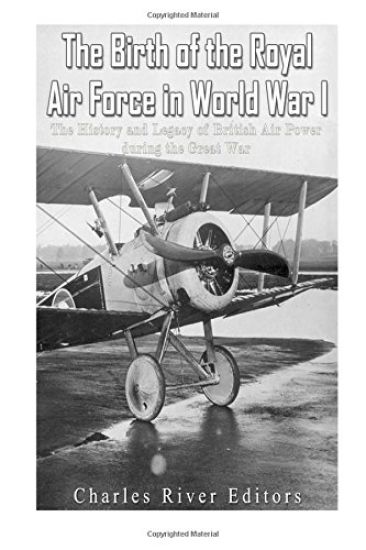
The Birth of the Royal Air Force in World War I: The History and Legacy of British Air Power during the Great War
*Includes pictures *Includes contemporary accounts *Includes online resources and a bibliography for further reading One of the most important breakthroughs in military technology associated with World War I, and certainly the one that continues to capture the public imagination, was the use of airplanes, which were a virtual novelty a decade before. While the war quickly ground to a halt in its first few months, the skies above the Western Front became increasingly busy. The great powers had already been acquiring aircraft for potential uses, but given that aerial warfare had never been a major component of any conflict, it's understandable that few on either side had any idea what the planes were capable of doing. Furthermore, at the start of the war, all sides' aircraft were ill-equipped for combat mostly because the idea that planes might somehow fight was still a novel one, and the adaptations had not yet been developed that would allow the aerial battles later in the war. As a result, aircraft were used almost entirely for reconnaissance early on, allowing generals to gain unprecedented levels of information about enemy movements. Such intelligence allowed the French to counter German movements in what became the First Battle of the Marne, ending Germany's hopes for victory through the Schlieffen plan. Similarly, in the east, German planes were vital in tracking, encircling and destroying Russian forces at Tannenberg. Some armies, such as the French, saw air intelligence as a strategic matter, with aircraft capable mainly of identifying enemy forces before battle and contributing to advanced preparations. The Germans, on the other hand, believed that aircraft could provide tactical information once battle had commenced. Pilots such as Oswald Boelcke, Germany's first great aerial officer, would fly over enemy positions in two-seat aircraft with a spotter in the back, identifying Allied positions and using colored lights to direct the fire of artillery on the ground. Of course, spotting took on great importance because of the growing range and power of artillery. Much of the fire from the great guns was aimed indirectly since the gunners could not see their targets and thus relied on intelligence from others to direct them. Maps of enemy-held territory were often woefully inadequate to start with, and with the need to know where moving enemy formations were positioned, the business gained an added complexity, but aircraft could cut through this by providing up-to-date intelligence on enemy positions and sending it back to the gun batteries which were lobbing shells over their own front lines. The Royal Air Force (RAF), Britain's legendary air arm, was born in the skies above the First World War. The British had previously used balloons for spotting and reconnaissance for decades, and in the years leading up to the war, planes started seeing military use. They mostly provided reconnaissance, though experiments were made in using them offensively. During the Boer War of 1899-1902, the British Army used the crews of helium-filled balloons to plot and help target artillery fire. But these were small, tentative steps. The first patent to fit a machine gun to a plane, taken out in 1910, had not yet led to active fighting vehicles, and there was no doctrine, no tactics, and no combat between massed air fleets. That changed during World War I, as the skies above the Western Front became the crucible in which the preceding fragments of aerial warfare were smelted in the white hot heat of war. For the British, this meant the creation of a large and unified flying force which by 1918 would become the RAF. The Birth of the Royal Air Force in World War I: The History and Legacy of British Air Power during the Great War examines the creation and evolution of the RAF over the course of World War I.
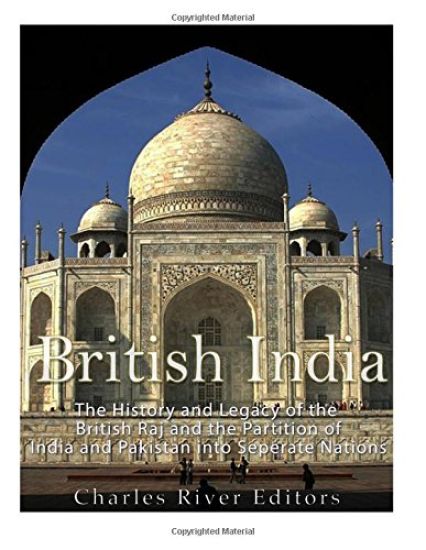
British India: The History and Legacy of the British Raj and the Partition of India and Pakistan into Separate Nations
*Includes pictures *Includes contemporary accounts of British India *Includes online resources and a bibliography for further reading The British East India Company served as one of the key players in the formation of the British Empire. From its origins as a trading company struggling to keep up with its superior Dutch, Portuguese, and Spanish competitors to its tenure as the ruling authority of the Indian subcontinent to its eventual hubristic downfall, the East India Company serves as a lens through which to explore the much larger economic and social forces that shaped the formation of a global British Empire. As a private company that became a non-state global power in its own right, the East India Company also serves as a cautionary tale all too relevant to the modern world's current political and economic situation. To the Indian people, the events of 1857 are known as the first War for Independence. For the British, the time is referred to as a mutiny, an uprising, or a rebellion. It is ironic that a similar story played out just under 100 years earlier, during the American Revolution, or as the Americans called it, the War for Independence. Whatever the moniker, in 1857, one of the Indian armies, the Bengal, mutinied. In the most cursory histories of the period, the cause of the rebellion is simply cited as an oversight, a change in the type of grease used in powder cartridges rumored to contain animal fat. This revelation horrified both Hindus and Muslims. The British response, which either failed to recognize the need to address the growing rumors or attempted to force Muslim and Hindu soldiers to use the ammunition despite their objections, made things worse. Once it had put a stop to the rebellion by defeating the various Indian rebel groups individually, the British government ended up ruling India directly. However, as McLeod pointed out, "Like much of British imperial expansion, taking formal control of India was not intentional. Instead when British lives and trading interests (represented by the East India Company) were threatened by violent reaction to encroaching westernization, London felt obligated to step in to take control of both the situation and the country." The news was delivered to the Indian people in a proclamation by the English government in 1858. Ultimately, the East India Company's activity across the Indian subcontinent led to further British involvement there, and the British Raj, a period of British dominance and rule over India that formally began in 1857 and lasted until 1947, remains a highly debated topic amongst historians, political scientists, the British people, and the people of modern India. By the time the British began to contemplate a withdrawal from India, 565 princely states were officially recognized, in addition to thousands of zamindaris and jagirs, which were in effect feudal estates. The stature of each Princely State was defined by the number of guns fired in salute upon a ceremonial occasion honoring one or other of the princes. These ranged from nine-gun to twenty-one-gun salutes and, in a great many cases, no salute at all. It stands to reason, therefore, as India began the countdown to independence after World War II, that the Indian Muslim leadership would begin to express anxiety over the prospect of universal suffrage and majority rule. At less than 20 percent of the population, Indian Muslims would inevitably find themselves overwhelmed by the Hindu majority, and as the British prepared to divest themselves of India, ancient enmities between Hindu and Muslim, long papered over by the secular and remote government of Britain, began once again to surface. British India: The History and Legacy of the British Raj and the Partition of India and Pakistan into Separate Nations looks at the centuries of British involvement in the region and its aftermath.
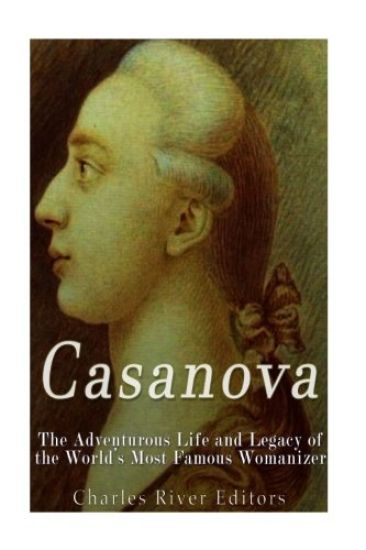
Casanova: The Adventurous Life and Legacy of the World's Most Famous Womanizer

Casanova: The Adventurous Life and Legacy of the World's Most Famous Womanizer

Charles River

Createspace Independent Publishing Platform
2017
nidottu
*Includes pictures *Includes Casanova's quotes about his own life *Includes online resources and a bibliography for further reading "I have often met with happiness after some imprudent step which ought to have brought ruin upon me, and although passing a vote of censure upon myself I would thank God for his mercy." - Casanova Contrary to how the libidinous legend is often seen through the rose-tinted lenses of Hollywood, the real Giacomo Casanova did not have Heath Ledger's strong, chiseled jaw or the piercing, lagoon-blue eyes of Richard Chamberlain. Rather, portraits of the actual Casanova show a plain, somewhat forgettable face, with a doughy jaw, a prominent, faintly crooked nose, and close-set, protruding eyes. In essence, while he was certainly not unattractive, he was far from someone who would be envisioned as synonymous with womanizing. Nonetheless, Casanova engaged in hundreds of trysts, and whatever the man lacked in aesthetic appeal, he indisputably made up for in charm, mystique, and raw, animal magnetism. He was also quite matter of fact about it all: "Real love is the love that sometimes arises after sensual pleasure: if it does, it is immortal; the other kind inevitably goes stale, for it lies in mere fantasy." Indeed, the fabled erotic exploits of the captivating, charismatic Casanova were so spectacular that his surname has been immortalized with its own entry in Merriam-Webster, among many other reputable dictionaries - "a lover, especially, a man who is a promiscuous and unscrupulous lover." Though Casanova has been cemented in pop culture, above all else, as a silver-tongued, licentious lover, the man was scintillatingly gift-wrapped with layers of artful deceit, vigilant calculation, and an inextinguishable hankering for adventure. He donned many hats, yet each one seemed to be styled especially for him, for he was not just an adventurer with an insatiable sexual appetite, he was a witty wordsmith, a mystical healer, a seasoned spy, and an improvisational genius who harbored endless tricks up his frilly sleeves. Ironically, it seems that Casanova himself, while proud of his blush-inducing escapades, feared simply being remembered as one of history's first Hugh Hefners. Likewise, he did not want a single detail altered or omitted from his richly riveting life, and as such, he chose to compose a 12-volume autobiography, sections of which many men to this day refer to as a handbook for seduction and the deflowering of "virtuous" women. Modern historians, on the other hand, praise his memoirs as some of the most vividly descriptive and accurate portrayals of 18th century European norms and customs. A French government commission even went so far as to crown it a "national treasure." But is all the praise and celebrity so often showered upon the man merited, or was he no more than just a lustful fiend with no sense of morality? If one were to truly peruse the pages of Casanova's life, one would quickly spot the dark and unsightly realities of his amorous advances, some of which, if factual, would land him in the bottom of the present-day prison food chain. At the same time, while it would be easy to write him off as another excessively glorified character from the days of yore, his tough - and at times, traumatic - childhood and experiences, albeit inexcusable for his less-than-savory actions, provide some insight into the man who became a master at making his own luck. Casanova: The Adventurous Life and Legacy of the World's Most Famous Womanizer chronicles the remarkable story of one of history's most fascinating individuals. Along with pictures of important people, places, and events, you will learn about Casanova like never before.
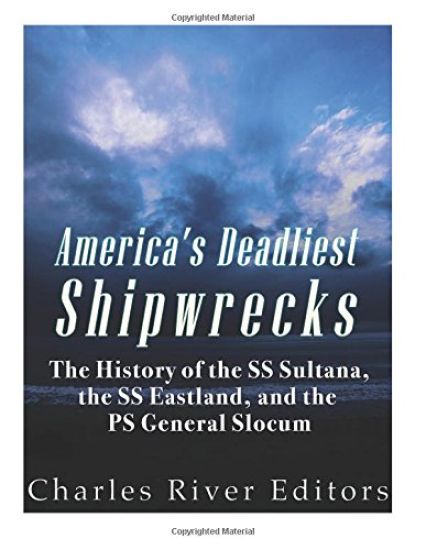
America's Deadliest Shipwrecks: The History of the SS Sultana, the SS Eastland, and the PS General Slocum
*Includes pictures *Includes contemporary accounts of the disasters *Includes online resources and bibliographies for further reading *Includes a table of contents The Sultana is a historical footnote because of the Civil War, but it was also intimately tied to the war. Although Robert E. Lee's surrender to Ulysses Grant at Appomattox was not technically the end of the Civil War, it took one of the last remaining Confederate armies out of the field. In fact, just the day before the disaster, as the Sultana was sailing up the Mississippi River to her rendezvous with destiny, Union Army soldiers cornered and killed Lincoln's assassin, John Wilkes Booth. Perhaps the cruelest irony of the disaster is that the Sultana was packed full of men who had survived every conceivable trial and tribulation of the war, from wounds and sicknesses to being prisoners. Having lost hundreds of thousands, America was almost numb to the loss of a couple of thousand more, especially when many of the dead were soldiers themselves, and in a sense, it was left for future generations to try to unravel what went wrong and to pay tribute to the men who died on that dark night. Under normal conditions, a ship that sank with more than 1,000 passengers aboard - most of whom died - would be big news, yet today the sinking of the PS General Slocum is often overlooked if not entirely forgotten. While it might have generated the type of publicity and reaction of the Johnstown Flood of 1889 or the Galveston Hurricane of 1900 under normal circumstances, deadliest disaster in New York City's history before 9/11, and the second deadliest maritime disaster in peacetime in American history has become something of a historical footnote. On June 15, 1904, an annual gala was held on the passenger ship PS General Slocum as it steamed up the East River, with about 1,400 people from St. Mark's Evangelical Lutheran Church. Consisting mostly of German immigrants, the boat was packed with women and children, and when a small fire started on the ship shortly after the trip began, faulty equipment was unable to put it out or stop it from spreading. On top of that, the lifeboats were tied up and the crew, which never conducted emergency drills, was unprepared for a potential disaster. When parents put life preservers on their children and then had them enter the water, they soon learned that the life preservers were also faulty and didn't float. As the disaster unfolded, over 1,000 passengers burned to death or drowned, many swept under the water by the East River's current and weighed down by heavy wool clothing. Few people on board knew how to swim, exacerbating the situation, and eventually the overcrowded decks began to collapse, crushing some unfortunate victims. When people discuss deadly maritime disasters during the second decade of the 20th century in which more than 800 people were killed, they're often talking about the Titanic or Lusitania, not the Eastland on the Chicago River. However, shockingly enough, on July 24, 1915, a ship full of sightseers out for a day on the Great Lakes capsized while still tied to a dock, sending more than 2,500 passengers into the frigid water. By the time the ship was righted and rescue efforts were completed, nearly 850 people had been killed. As unbelievable as the incident seemed, the Eastland was actually susceptible to just such a problem as a result of its issues with listing, and on top of that, the ship seemed to have all sorts of bad luck in its past, including a collision with another boat and even a mutiny on board. If anything, the safety protocols established after the sinking of the Titanic, most notably the inclusion of enough lifeboats on board for every passenger, made the Eastland even more top heavy and contributed to the disaster. Ultimately, several individuals were charged with crimes in connection with the Eastland disaster, but none would be found guilty.
Casanova: The Adventurous Life and Legacy of the World's Most Famous Womanizer

Casanova: The Adventurous Life and Legacy of the World's Most Famous Womanizer

Charles River

Createspace Independent Publishing Platform
2017
nidottu
*Includes pictures *Includes Casanova's quotes about his own life *Includes online resources and a bibliography for further reading "I have often met with happiness after some imprudent step which ought to have brought ruin upon me, and although passing a vote of censure upon myself I would thank God for his mercy." - Casanova Contrary to how the libidinous legend is often seen through the rose-tinted lenses of Hollywood, the real Giacomo Casanova did not have Heath Ledger's strong, chiseled jaw or the piercing, lagoon-blue eyes of Richard Chamberlain. Rather, portraits of the actual Casanova show a plain, somewhat forgettable face, with a doughy jaw, a prominent, faintly crooked nose, and close-set, protruding eyes. In essence, while he was certainly not unattractive, he was far from someone who would be envisioned as synonymous with womanizing. Nonetheless, Casanova engaged in hundreds of trysts, and whatever the man lacked in aesthetic appeal, he indisputably made up for in charm, mystique, and raw, animal magnetism. He was also quite matter of fact about it all: "Real love is the love that sometimes arises after sensual pleasure: if it does, it is immortal; the other kind inevitably goes stale, for it lies in mere fantasy." Indeed, the fabled erotic exploits of the captivating, charismatic Casanova were so spectacular that his surname has been immortalized with its own entry in Merriam-Webster, among many other reputable dictionaries - "a lover, especially, a man who is a promiscuous and unscrupulous lover." Though Casanova has been cemented in pop culture, above all else, as a silver-tongued, licentious lover, the man was scintillatingly gift-wrapped with layers of artful deceit, vigilant calculation, and an inextinguishable hankering for adventure. He donned many hats, yet each one seemed to be styled especially for him, for he was not just an adventurer with an insatiable sexual appetite, he was a witty wordsmith, a mystical healer, a seasoned spy, and an improvisational genius who harbored endless tricks up his frilly sleeves. Ironically, it seems that Casanova himself, while proud of his blush-inducing escapades, feared simply being remembered as one of history's first Hugh Hefners. Likewise, he did not want a single detail altered or omitted from his richly riveting life, and as such, he chose to compose a 12-volume autobiography, sections of which many men to this day refer to as a handbook for seduction and the deflowering of "virtuous" women. Modern historians, on the other hand, praise his memoirs as some of the most vividly descriptive and accurate portrayals of 18th century European norms and customs. A French government commission even went so far as to crown it a "national treasure." But is all the praise and celebrity so often showered upon the man merited, or was he no more than just a lustful fiend with no sense of morality? If one were to truly peruse the pages of Casanova's life, one would quickly spot the dark and unsightly realities of his amorous advances, some of which, if factual, would land him in the bottom of the present-day prison food chain. At the same time, while it would be easy to write him off as another excessively glorified character from the days of yore, his tough - and at times, traumatic - childhood and experiences, albeit inexcusable for his less-than-savory actions, provide some insight into the man who became a master at making his own luck. Casanova: The Adventurous Life and Legacy of the World's Most Famous Womanizer chronicles the remarkable story of one of history's most fascinating individuals. Along with pictures of important people, places, and events, you will learn about Casanova like never before.
Arlington National Cemetery: The History of America's Most Famous Military Cemetery

Arlington National Cemetery: The History of America's Most Famous Military Cemetery

Charles River

Createspace Independent Publishing Platform
2017
nidottu
*Includes pictures *Explains the transformation of Arlington from a private estate to a military cemetery *Includes contemporary accounts describing Arlington and its history *Includes a bibliography for further reading *Includes a table of contents "Looking across this field, we see the scale of heroism and sacrifice. All who are buried here understood their duty. All stood to protect America. And all carried with them memories of a family that they hoped to keep safe by their sacrifice." - President George W. Bush, 2005 Cemeteries are by their very nature tragic places, as they would never exist were it not for the inevitably cold hand of death that will certainly take out each person eventually. Given that fact, each bears its own unique history, whether it be the Valley of the Kings in Egypt or a small family plot in rural Georgia. Naturally, Arlington National Cemetery, sitting as it does on the very edge of the nation's capital upon a hill across the Potomac River, bears its own tragic aura, but it's certainly ironic that it was never intended to be a cemetery at all. Indeed, the very land was not meant to house the nation's dead but to support the family of the nation's father, George Washington himself. How Arlington went within just a few tragic months from stately mansion to solemn sepulcher is one of the most unusual stories in American history, but in many ways it is also one of the most fitting. As author Karl Decker observed in 1892, "It stands as a connecting link between the historic time of struggle, in which the Government was first established, and the later and equally important years of strife that saw the principles for which the colonists fought once more triumphant, and the fabric of Constitutional Government more firmly based upon a federation of loyal States. With every important epoch in the history of the country Arlington has had its connection. It brings forth recollections of Washington as vividly as phantoms of the past century." Nothing could emphasize how divisive the Civil War was than the fate of Arlington, which was the place Confederate general Robert E. Lee called home. By marrying into the Custis family, Lee merged his family with relatives of Washington, but during the war, the fact that the Confederacy's most famous general had a house overlooking the Union capital bedeviled many, especially politicians. When the war's ghastly carnage filled up cemeteries around Washington, U. S. Army Quartermaster General Montgomery Meigs ultimately proposed using Arlington as a cemetery, both for its location and for its connection with Lee, and Union soldiers were being buried near Lee's estate nearly a year before the war ended. Although the government would negotiate with Lee's family over the property after the war, from that point forward the cemetery expanded, and in addition to becoming the resting place for veterans, memorials and monuments of all kinds are scattered across the grounds. While the Lee house is still a tourist attraction, the grave site of slain president John F. Kennedy is on the grounds, as is a monument to the USS Maine and similar other tragedies. Arlington National Cemetery: The History of America's Most Famous Military Cemetery traces the history and legacy of the national park. Along with pictures of important people, places, and events, you will learn about the history of Arlington Cemetery like never before, in no time at all.

Loki: The Origins and History of the Famous Norse Trickster God

Loki: The Origins and History of the Famous Norse Trickster God

Andrew Scott; Charles River

Createspace Independent Publishing Platform
2017
nidottu
*Includes pictures *Includes medieval accounts of Loki *Includes online resources and a bibliography for further reading Much of what is known of the Norse myths comes from the 10th century onwards. Until this time and, indeed, for centuries afterwards, Norse culture (particularly that of Iceland, where the myths were eventually transcribed) was an oral culture. In fact, in all Scandinavian countries well into the thirteenth century laws were memorized by officials known as "Lawspeakers" who recited them at the "Thing." The Thing was the legislative assembly in Scandinavia "held for judicial purposes." One of the most famous of these Lawspeakers was the Icelander Snorri Sturluson, a masterful writer who wrote the Prose Edda in the thirteenth century. There are other sources for the Norse myths, namely the later "Poetic Edda," a collection of poems and prose work, and other sagas but the Snorri's Prose Edda is the most complete work whose attribution is known to modern scholars. It is believed that Snorri, a Christian, recorded these pagan beliefs so as to preserve and explain the stylistic poetry of Iceland, particularly the popular descriptive devices known as kennings. A kenning is made up of a base word and a modifying word that is used to describe a separate object. For example, "Gold" had a great many kennings, one of which was "Sif's Hair." If, however, the memory of Loki cutting off Sif's hair and replacing it with gold were lost, then this kenning would make no sense to later readers. There are many of these allusions to the myths and it is thanks to them that the myths have survived. The Norse Myths also appear to follow a chronological narrative, which the historian John Lindow describes as having a "Mythical Past, Present and Future." Loki features in each of these literary "epochs" and it helps to understand the complexity of his character, as well as the belief system, to view the myths in this way. While not as well-known as Thor or Odin, Loki's name is immediately recognizable to many, and his history is as enigmatic as his characters. Fittingly, as historian Rudolph Simek put it, his "sources are just as varied as his interpretations." He first appears in j lfr r Hv ni s 9th century poem Haustl ng, recorded in the Sk ldskaparm l, but the etymology of his name has still not been solved. Rudolph Simek has made a tentative assertion that Loki was related to the Old Norse "luka" (meaning to "close") and has surmised that there could be a connection between this and his role in the "closing" of the world during the apocalyptic event Ragnar k. Whatever the original meaning of his name, the surviving image of Loki is multifaceted but mostly negative. "Father of the Gods" enemies' Loki has been interpreted as a fool, a trickster and a devil, the latter being connected with his being a harbinger for the Norse "end of days" and the subsequent revival of peace and godliness that had clear echoes in the Christian Apocalypse. There is no evidence of cult activity for Loki, and despite many attempts at defining one, there appears to be no obvious religious "function" to his character. Nevertheless, he permeates many of the key moments in Norse mythology - for good and bad - beginning and ending with his role as "father of monsters." Loki: The Origins and History of the Famous Norse Trickster God looks at the story and the legendary Norse deity. Along with pictures depicting important people, places, and events, you will learn about Loki like never before.
The Gallipoli Campaign of World War I: The History and Legacy of the Ottoman Empire's Lone Victory during the Great War
*Includes pictures *Includes accounts of the fighting *Includes online resources and a bibliography for further reading Early in the war, the Ottomans knew the Dardanelles strait would most certainly be attacked and had prepared significant defenses. The plan drafted by the then First Lord of the Admiralty, Winston Churchill, was meant to destroy Ottoman defenses along the Dardanelles. However, Allied forces comprised of British, Irish, Australian and New Zealand troops were unable to penetrate the Ottoman defenses, advancing only about 100 meters from the shores. The Ottomans, led by German General Liman von Sanders, further reinforced their positions. The later attempt of the British to establish a new beachhead was more successful, yet the British government refused to send significant reinforcements. In December 1915, what was certainly the most successful part of the Gallipoli offensive, the evacuation of the British forces began. The Ottomans' successful defense of the Dardanelles led to Churchill's resignation. More importantly, it bolstered the rising popularity of Mustafa Kemal, then Lieutenant Colonel, and offered hope that the Ottomans could indeed counter-balance their territorial losses. The successful defense of Gallipoli, however, convinced both Enver and Djemal that a second operation should be launched. Reinforcements arrived from Gallipoli and the Ottomans launched the second attempt in August 1916. British forces had, however, moved eastward toward Palestine, and they defeated the Ottoman forces at the Battle of Romani. The battle was the first clear British victory over the Ottomans and their German allies, resulting in a successful counter-offensive that led British General Edmund Allenby in Jerusalem. A final push with the Megiddo offensive and renewed campaign in Mesopotamia brought Entente forces even further into the Ottoman Empire. The Arab revolt has been engraved in modern memories by movies such as Lawrence of Arabia as a widespread nationalistic movement against the cruel Ottoman occupier. The reality is far more complex. In 1914, as the Ottomans entered the war, the Arabs' loyalty to the Sultan and Caliph was not in question. Arab nationalism did indeed emerge in the wake of the revolution of 1908, but it mostly attracted Arab intellectuals as the local population remained loyal subjects of the Empire. European encroachment on several former Ottoman provinces such as Algeria, Libya, Tunisia and Egypt made the danger of a possible Arab revolt relatively clear. The fall of the Ottoman Empire set the geopolitical scene of the new Middle East. In 1920, two years after the end of the war, the region was already experiencing growing instability. The issues and trends that would plague the region until today were growing. On April 4, Arab riots broke out in Jerusalem, fueled by the growing hostility against the Zionist movement. The British passivity would convince one of the Jewish leaders, Vladimir Jabotinsky (the future founder of the Israeli right-wing), of the strategic necessity of a strong Jewish military as the core of the future state. Just two weeks later in Turkey, the Grand National Assembly in Ankara set the foundation of the Turkish state, opening the way for 8 years of reforms. In Iraq, a Shiite revolt broke out in the south, as locals demanded the creation of an Islamic state. The British compromise was to place Faisal, the son of Sharif Hussein and a Sunni, on the throne. His father, meanwhile, was embroiled in a conflict with a local tribe, the Ibn Saud, that sought to carve a new kingdom in the Arabian Peninsula. These challenges, divides, and conflicts all stem from the power vacuum slowly left by the once powerful Ottoman Empire, and much of it stemmed from the events surrounding Gallipoli in 1915.
The Mystery of the Lady Be Good: The History of the World War II Plane's Disappearance and Discovery
*Includes pictures *Includes accounts of the Lady Be Good's fateful mission *Includes online resources and a bibliography for further reading "Things pretty well mixed up. Got lost returning, out of gas, jumped, landed in the desert at 2 a.m. in the morning." - Excerpt from a log kept by 2nd Lieutenant Robert F. Toner of the Lady Be Good Nazi Germany's North African defeat opened up the possibility of taking the war in the west to the European continent for the first time since France's lightning conquest by the Wehrmacht in 1940. The British and Americans debated the merits of landing in France directly in 1943, but they ultimately opted against it. The Soviets railed at the Westerners as "bastards of allies" - conveniently forgetting that they aided and abetted Hitler's violent expansionism in eastern Europe for over a year, starting in 1939 - but a 1943 "D-Day" style landing in France might have proven a strategic and logistical impossibility. Complex reasons lay behind England's successful insistence on the Mediterranean theater rather than the French theater as the scene of the next western Allied strike against Nazi Germany. Chief among these remained Britain's determination to keep a postwar empire, one that Churchill and his cabinet hoped would include Iraq and Iran, the source of oil needed to ensure that England continued to "rule the waves" with a powerful modern navy. This strategic imperative, indeed, formed the backbone of the British choice of Sicily as the target for military operations in the summer of 1943. Naturally, the preparations also included bombing missions over Italy ahead of an amphibious landing, and on April 4, 1943, one of the planes that took off from Libya to bomb Naples was the Lady Be Good, a B-24D Liberator bomber with a crew that had never flown a combat mission. The operation, which included over a dozen planes, was undone by poor flying conditions almost from the start, and the Lady Be Good never even made into formation with the others attacking Naples, thus flying out the mission on its own. Around midnight, pilot 1st Lt William J. Hatton radioed for directions back to base, but after that, the plane and its crew were never heard from again. A search and rescue effort found nothing, and it would be over a decade before the remains of the plane, which many assumed went down in the Mediterranean, was found deep in the desert over 400 miles away from the base. The mystery further deepened when no human remains were found at the crash site, which suggested the crew had bailed out of the plane. Eventually, the remains of several members of the crew were found, and it led to the stunning discovery that multiple survivors undertook a desperate journey to safety before perishing in the desert, one that was actually documented in some of the men's diaries. The government's Mortuary Affairs concluded, "The aircraft flew on a 150 degree course toward Benina Airfield. The craft radioed for a directional reading from the HF/DF station at Benina and received a reading of 330 degrees from Benina. The actions of the pilot in flying 440 miles into the desert, however, indicate the navigator probably took a reciprocal reading off the back of the radio directional loop antenna from a position beyond and south of Benina but 'on course'. The pilot flew into the desert, thinking he was still over the Mediterranean."
Audrey Hepburn and Katharine Hepburn: Hollywood's Most Iconic Starlets

Audrey Hepburn and Katharine Hepburn: Hollywood's Most Iconic Starlets

Charles River

Createspace Independent Publishing Platform
2017
nidottu
*Includes pictures of the actresses and important people, places, and scenes. *Includes the actresses' own quotes about their lives and careers. *Includes a Bibliography of each actress for further reading. Early in her career, there was no actress more controversial than Katharine Hepburn. Late in her career, there was no actress more beloved than Katharine Hepburn. Famously labeled "box office poison" in 1938, it is clear that Hollywood was not prepared for the young actress, but even after being scorned by the general public, she still retained a magnetism that would endear her to the public for decades to come. After a tumultuous first decade as an actress, Hepburn became arguably the biggest box office sensation in the industry, and in an era when most actresses were unable to secure starring roles after reaching middle age, she remained a leading lady even after turning 60. Aside from being one of the most recognized and acclaimed actresses in history, Katharine Hepburn's career is also of great importance because she forced Americans to reevaluate their expectations for female behavior, both in films themselves and off the movie set as well. As society began to pay greater attention to the importance of strong roles for women, Hepburn's career gained an even greater importance, and at a time in which women were expected to be passive, she was a fiercely individual figure who offered a daring alternative to the conventions of femininity that had long existed in American culture. For someone whose career ended over 30 years ago, Audrey Hepburn continues to retain her popularity and exert a strong influence over how people view beauty and sophistication. She remains an American icon, despite the fact that she did not even move to the United States until 1953 (at the age of 24) and spent the majority of her life living in Europe, while her characters in films such as Roman Holiday (1953) and Breakfast at Tiffany's (1961) are still held up as the paragon of delicate femininity and elegance. After undergoing a revival in popularity throughout the 1990s, her renewed popularity has refused to wane, and even though she acted in just 25 films, Hepburn is viewed in high regard by the entertainment establishment. When the American Film Institute listed their Top 100 actresses of the past century, Audrey trailed only Katharine Hepburn and Bette Davis. Audrey Hepburn has been canonized as one of the preeminent actresses in history, but the majority of the other actresses on the American Film Institute list appeared in far more films than she did, and many of her films are almost entirely forgotten at the present moment. People are still familiar with Breakfast at Tiffany's, Roman Holiday, and Funny Face (1957), but Paris When it Sizzles (1964) and How to Steal a Million (1966) were virtually forgotten not long after their release. In light of the relative obscurity of many of Hepburn's films, it is worthwhile to consider exactly what Hepburn possessed that gave her such enduring popularity and significance. Obviously, she was very attractive, but so are many actresses; in fact, it seemed to be Hepburn's ability to be both attractive and angelic that seemed to set her apart. She brought a different kind of beauty to Hollywood; in the words of Barry Paris, she was the "diametric opposite of the European sex goddess." Hollywood's Most Iconic Starlets looks at the life of the iconic actress on and off the silver screen. Along with pictures of important people, places, and events, you will learn about Audrey Hepburn and Katharine Hepburn like you never have before.
El Vaticano y la Santa Sede: La historia y el legado del gobierno de la Iglesia Católica Romana
Cada a o, millones de personas visitan un espectacular circuito compuesto por maravillosas agrupaciones de edificios interconectados y encantadoras casas coloreadas de beige, arena y dem s matices terrosos. Al acercarse pueden ver el exterior renacentista de esas construcciones, y los exquisitos detalles capturados en las estatuas colocadas en el tope de palacios y catedrales. Cruzar las puertas de estos lugares hist ricos, es entrar en todo un mundo nuevo, incluso m s cautivador que la vista de la ciudad ba ada con el p rpura y el melocot n del crep sculo. Ubicado en Roma, este fascinante destino no es otro que la Ciudad del Vaticano. El Vaticano es una locaci n encantadora para la literatura, la m sica, y para la resplandeciente pantalla de plata, por muy buenas razones. Por supuesto, ser el estado soberano m s peque o del mundo con solo 44 hect reas es apenas uno de sus atractivos. Como sede secular de la Iglesia Cat lica, su atrayente y azarosa historia, sin mencionar la riqueza del arte y la arquitectura que contiene, hace que la influencia y la importancia del Vaticano supere con creces a su tama o. El Vaticano es ante todo conocido como el centro por excelencia del Catolicismo, por lo que m s de uno se sorprende al enterarse que la zona alberg un santuario pagano. Antes del siglo I EC, el Ager Vaticanus, el antiguo nombre de la ciudad, hac a referencia a los territorios al oeste del r o T ber. Este territorio se extend a desde la colina del Jan culo al Monte Mario, con el Mons Vaticanus, o Colina Vaticana, ubicada en el centro. En su mayor parte, las tierras pantanosas del Ager Vaticanus eran inhabitables; cualquier pedazo de la misma que los labradores cultivasen produc a muy poco o nada, y de acuerdo a Cicer n, el famoso pol tico romano que vivi en el siglo I AEC, las uvas eran agrias y rancio el vino producido a partir de ellas. La nica se al de vida parece haber sido hallada en un pueblo etrusco, ya extinto, llamado "Vaticum" en la Colina Vaticana. Esta puede haber sido la fuente etimol gica de "Vaticanus", que m s tarde se convirti en "Vaticano". El Vaticano y la Santa Sede: la historia y el legado del gobierno de la Iglesia Cat lica Romana examina el notable impacto que ha tenido el Vaticano en el mundo a lo largo de unos 2000 a os. Junto con im genes de personajes, lugares y eventos, usted aprender sobre el Vaticano como nunca antes.
Decisive Moments of World War II: The Battle of Britain, Pearl Harbor, D-Day and the Manhattan Project
*Comprehensively covers 4 key turning points in World War II. *Includes pictures of important people, places, and events. *Includes an original introduction for each decisive moment. *Includes bibliographies for further reading. *Explains what went right and what went wrong for the combatants at Pearl Harbor, D-Day and the Battle of Britain. During World War II, the free world literally hung in the balance, with the Axis and Allies engaging in warfare on an unprecedented scale. Though the ultimate result is now known, in 1940 it looked very much like the Axis might win the war and usher in a new world order. It took several important decisive moments to help turn the war. The Battle of Britain, fought throughout the summer and early autumn of 1940, was unquestionably epic in scope. The largest air campaign in history at the time, the vaunted Nazi Luftwaffe sought to smash the RAF as a prelude to German invasion, leaving the British public and its pilots engaged in what they believed was a desperate fight for national survival. That's what it looked like to the rest of the world too, as free men everywhere held their breaths. Could these pilots, many not yet old enough to shave, avoid the fate of Poland and France? The fate of the free world, at least as Europe knew it, hung in the balance over the skies of Britain during those tense months. All Americans are familiar with the "day that will live in infamy." At 9:30 a.m. on Sunday, December 7, 1941, Pearl Harbor, the advanced base of the United States Navy's Pacific Fleet, was ablaze. It had been smashed by aircraft launched by the carriers of the Imperial Japanese Navy. All eight battleships had been sunk or badly damaged, 350 aircraft had been knocked out, and over 2,000 Americans lay dead. Pearl Harbor was unquestionably one of the seminal events in American history, and given the nature of the surprise attack, the entry of the U. S. into the war, and the lingering controversies and conspiracy theories, the attack on Pearl Harbor continues to be a highly charged and heavily debated event. On June 6, 1944, a date that will forever be known as D-Day, the Allies commenced the liberation of Europe by staging the largest and most complex amphibious invasion in human history. The complex operation would require tightly coordinated naval and air bombardment, paratroopers, and even inflatable tanks that would be able to fire on fortifications from the coastline, all while landing over 150,000 men across nearly 70 miles of French beaches. Given the incredibly complex plan, it's no surprise that General Eisenhower had already written a letter apologizing for the failure of the invasion, which he carried in his coat pocket throughout the day. While the War raged in Europe and the Pacific, a dream team of Nobel Laureates was working on a project so secretive that vice president Harry Truman didn't know of it when he took the presidency after FDR's death. This secretive project, The Manhattan Project, would ultimately yield the "Little Boy" and "Fat Man" bombs that released more than 100 Terajoules of energy at Hiroshima and Nagaski; changing the course of the War and the course of civilization. Decisive Moments of World War II covers the strategic situation and the logistics that went into the planning for the Battle of Britain, Pearl Harbor and D-Day, as well as examining the course and collaboration of the Allies on the Manhattan Project. Along with pictures of important people, places, and events, you will learn about these key turning points like you never have before.