Kirjojen hintavertailu – 12 903 725 kirjaa ja 27 kauppaa

Kirjailija

Charles River

Kirjat ja teokset yhdessä paikassa: 4 673 kirjaa, julkaisuja vuosilta 2013–2022, suosituimpiin kuuluu William Powell and Myrna Loy: The Lives and Careers of One of Classical Hollywood's Most Iconic Duos. Vertaile teosten hintoja ja tarkista saatavuus suomalaisista kirjakaupoista.

4 673 kirjaa

Kirjojen julkaisuvuodet: 2013–2022.

Stephen Decatur: The Life and Legacy of the Youngest Navy Captain in American History
*Includes pictures*Includes a bibliography for further reading"Our country, right or wrong." - Stephen DecaturBetween the Revolutionary War and the Civil War, the United States engaged in several wars that have mostly been overlooked. The War of 1812 is one of America's forgotten conflicts, and the stalemated nature of the war (which resolved virtually none of either side's war aims) has also ensured that it is often given merely a cursory overview. Great Britain, as the leader of several coalitions of conservative European countries trying to isolate and snuff out the revolutionary spirit and the ambitions of Napoleon, had been at war with France almost continuously since 1792. Under President Thomas Jefferson (1801-1809) and James Madison (1809-1817), the United States tried to steer a course that would keep it from being drawn into the European war and defend its neutrality on the high seas. However, both Britain and France wanted to hurt the other side economically by keeping goods out of their enemy's hands. Thus, they did not faithfully respect the rights of neutral nations. The British government in 1807 had issued the "Orders in Council," which enforced a naval blockade against France, and with a shortage of seamen to man the Royal Navy, Britain also felt justified in stopping and sometimes firing on ships flying the American flag in the name of apprehending escaped British sailors. In the same vein, American shipping was disrupted by piracy across the globe, especially in the Mediterranean, leading to multiple conflicts known as the Barbary Wars. Americans had few things to celebrate during the Barbary Wars or the War of 1812, but one of them was the growing prestige of the U. S. Navy, and among those who were instrumental in its development, few were as influential as Stephen Decatur Jr. Decatur had an impact on nearly every war America fought in between the 1780s until his death in 1820, and his stardom ensured that he was a fixture among Washington, D. C.'s elite in his own lifetime. As with John Paul Jones during the American Revolution, Decatur's activities helped instantly associate his name with the fledgling country's success at sea. Stephen Decatur: The Life and Legacy of the Youngest Navy Captain in American History chronicles the various roles he played for the Navy and how he became one of America's most memorable naval heroes. Along with pictures depicting important people, places, and events, you will learn about Decatur like never before.
Stephen Decatur: The Life and Legacy of the Youngest Navy Captain in American History
*Includes pictures*Includes a bibliography for further reading"Our country, right or wrong." - Stephen DecaturBetween the Revolutionary War and the Civil War, the United States engaged in several wars that have mostly been overlooked. The War of 1812 is one of America's forgotten conflicts, and the stalemated nature of the war (which resolved virtually none of either side's war aims) has also ensured that it is often given merely a cursory overview. Great Britain, as the leader of several coalitions of conservative European countries trying to isolate and snuff out the revolutionary spirit and the ambitions of Napoleon, had been at war with France almost continuously since 1792. Under President Thomas Jefferson (1801-1809) and James Madison (1809-1817), the United States tried to steer a course that would keep it from being drawn into the European war and defend its neutrality on the high seas. However, both Britain and France wanted to hurt the other side economically by keeping goods out of their enemy's hands. Thus, they did not faithfully respect the rights of neutral nations. The British government in 1807 had issued the "Orders in Council," which enforced a naval blockade against France, and with a shortage of seamen to man the Royal Navy, Britain also felt justified in stopping and sometimes firing on ships flying the American flag in the name of apprehending escaped British sailors. In the same vein, American shipping was disrupted by piracy across the globe, especially in the Mediterranean, leading to multiple conflicts known as the Barbary Wars. Americans had few things to celebrate during the Barbary Wars or the War of 1812, but one of them was the growing prestige of the U. S. Navy, and among those who were instrumental in its development, few were as influential as Stephen Decatur Jr. Decatur had an impact on nearly every war America fought in between the 1780s until his death in 1820, and his stardom ensured that he was a fixture among Washington, D. C.'s elite in his own lifetime. As with John Paul Jones during the American Revolution, Decatur's activities helped instantly associate his name with the fledgling country's success at sea. Stephen Decatur: The Life and Legacy of the Youngest Navy Captain in American History chronicles the various roles he played for the Navy and how he became one of America's most memorable naval heroes. Along with pictures depicting important people, places, and events, you will learn about Decatur like never before.
La guerra mexicano-americana y la guerra hispanoamericana: la historia de los principales conflictos que dieron lugar a la expansión de América en Amé
"Por lo general, a los oficiales del ej rcito les era indiferente si se consumaba la anexi n o no; mas no as para todos ellos. Por mi parte, estaba amargamente opuesto a la medida, y hasta este d a considero la guerra que de ella result , como una de las m s injustas que haya librado alguna vez una naci n m s fuerte contra una m s d bil. Fue un caso de una rep blica que sigui el mal ejemplo de las monarqu as europeas, al no considerar la justicia en su deseo de adquirir territorio adicional". - Ulysses S. GrantLa pol tica del "destino manifiesto" aument las tensiones con M xico en la d cada de 1840. La mitad norte de M xico formaba la frontera occidental del territorio que hab a sido adquirido en la Compra de Luisiana. Naturalmente, la noci n de que los Estados Unidos se expandieran hacia el Oc ano Pac fico alarmaba a M xico, que para entonces comprend a lo que hoy es la costa oeste de los Estados Unidos. Sin embargo, M xico comenz a ver por primera vez la expansi n estadounidense como un problema serio con la migraci n de estadounidenses hacia el territorio nordeste mexicano. Estos estadounidenses se declararon independientes de M xico y crearon una naci n en la provincia mexicana de Texas. Tras ganar la independencia en 1836, Texas se convirti en una rep blica independiente. En 1845, Texas solicit formalmente la anexi n a los Estados Unidos. Esto enfureci al gobierno mexicano, que a n consideraba a Texas como parte de su territorio. M xico hab a advertido anteriormente que la anexi n de Texas dar a causa para declarar la guerra a los Estados Unidos. En febrero de 1848, el Tratado de Guadalupe Hidalgo dio fin a la Guerra de Estados Unidos y M xico. ste ltimo accedi a vender m s de la mitad de su territorio por menos de la mitad del dinero que los Estados Unidos hab an ofrecido tan solo dos a os antes. Con el ej rcito estadounidense ocupando sus principales ciudades, M xico no tuvo m s opci n que aceptar los t rminos impuestos por el pa s vencedor. El nuevo territorio adquirido en el tratado inclu a todo o parte de los hoy estados de California, Nevada, Nuevo M xico, Arizona, Texas, Colorado, Utah y Wyoming. En 1898, una de las ltimas posesiones de Espa a en el Nuevo Mundo, Cuba, estaba librando una guerra por su independencia, y si bien Cuba estaba t cnicamente exenta de la Doctrina Monroe por ser ya un territorio espa ol cuando dicha Doctrina fue emitida, muchos estadounidenses cre an que los Estados Unidos deb an ponerse del lado de Cuba en contra de Espa a. En un principio, el presidente republicano William McKinley quer a evitar cualquier guerra, y por su parte, Espa a tambi n quer a evitar cualquier conflicto con los Estados Unidos y su poderosa marina. No obstante, Espa a tambi n quer a conservar Cuba, a la que ve a como una de sus provincias m s que una colonia. Cuba era tambi n de gran importancia para la econom a espa ola, pues produc a mercanc as valiosas, tales como el az car, y ten a un pujante puerto en La Habana. Aunque los espa oles lucharon contra el ej rcito estadounidense hasta llegar a un punto muerto en Puerto Rico, Espa a se vio obligada a hacer las paces despu s de que la Marina de EE. UU destruyera sus flotas tanto del Pac fico como del Atl ntico. La derrota militar en Cuba signific que Espa a tendr a que darle a Cuba su independencia, y la destrucci n de su marina signific que tendr a que ceder sus colonias de ultramar a los Estados Unidos. Subsiguientemente, Estados Unidos gan la posesi n de Filipinas, Puerto Rico y Guam, lo que marc el verdadero comienzo del imperialismo estadounidense.
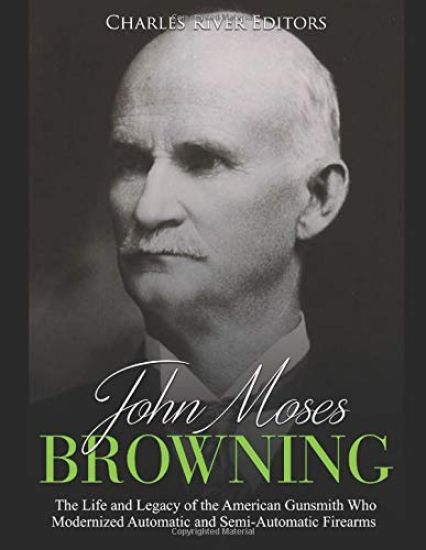
John Moses Browning: The Life and Legacy of the American Gunsmith Who Modernized Automatic and Semi-Automatic Firearms
*Includes pictures*Includes a bibliography for further readingThe Industrial Revolution that unfolded in Western societies at the dawn of the 19th century altered daily life as a rapidly developing paradigm. One historian suggests that in Europe and America, the highest known form of technology was the pipe organ before the rise of factories, steam drive combustion, and railway and communication breakthroughs built upon the mastery of electricity and transformed the standard processes of society. Such a rapid alteration of the prevailing world seemingly took place in a historical instant that propelled technology all the way to the age of powered flight. No less affected were the technological accomplishments that cast their influence over the wars so rampant in Europe through the past centuries. Military weapons benefited from various upgrades and innovations, even as the soldiers and generals remained confined within Napoleonic tactics while struggling to learn about the new principles of physics and engineering. Technological advancement within the field of mechanical engineering experienced a golden age in the 19th century. Virtually every profession that worked in the traditional materials of wood and metal developed a capacity for precision and functionality hitherto unknown. In the arena of portable weaponry for both the military and civilian population, several new inventions with endless variations redefined American and international habits of sport and war, not to mention exploration and frontier survival. The traditional musket had changed little through the previous century, and the insatiable quest for a repeat-firing mechanism remained as the arms industry's highest goal. The world knew that someone would find the solution and that future wars would occur, granting the nation to solve the riddle supremacy on the battlefield. The results of this pursuit were ushered in by several luminaries on the heels of an industrial revolution that had reshaped British industrial technology only a few decades prior. By the late 19th century, the nature of war weaponry, new naval paradigms and the first imaginings of aviation as a primary component of battle required yet another leap in technology. One single artisan arose from among many talents to meet the new challenge at a high level, far from the prestigious pistol and rifle factories of Connecticut. John Moses Browning was raised in what was at the time the "Wild West" of the Utah Country. His educational upbringing was both sparse and basic, but through the impetus of his father's gun-making business, he would become the greatest mind of the arms industry's modern age. Where Colt labored over one solitary concept that eventually led him to the modern repeating revolver, Browning's instinct proved able to visualize concepts far above his formal training and follow them through to a number of diverse and functional weapons. Although Winchester emerged into the greatest salesman of the modern repeating rifle and gathered early designers such as Benjamin Tyler Henry to his workshops, he was no inventor. Talents such as that of Browning were to be absorbed by the Winchester Repeating Arms Company in order to maintain an ongoing superiority in product lines and sales numbers. The major weapons manufacturers soon realized that there was no talent equal to that of the Utah frontiersman, and in time he was employed by all the top gun-makers in the United States and Europe, including Fabrique Nationale in Belgium. There, he was granted well-deserved respect and the right to see his inventions find the light of day, sought after for so long. The breadth of Browning's mechanical brilliance is evidenced by the reality that his designs from the pre-World War I era are still in production, and many are considered to be among the finest available models more than a century later.
Carl von Clausewitz: The Life and Legacy of the Prussian General Who Wrote On War
*Includes pictures*Includes a bibliography for further readingCarl Philipp Gottfried von Clausewitz died almost 200 years ago, yet he remains one of the most important and influential of all military thinkers. His teachings combined strategy with military knowledge to produce a dialectic approach to the philosophy of warfare, and his work is still widely taught in military academies around the world. There are few senior military leaders anywhere who are not familiar with his seminal book, On War. In fact, with the exception of Napoleon Bonaparte, no man was more influential on the military tactics and strategy of 19th century warfare than Clausewitz, a Prussian soldier and military theorist who stressed the moral and political aspects of war. On War was mandatory for all military students and officers to read during the 19th century, and it was common practice for generals during the American Civil War to carry Clausewitz's treatise and read it to assist them in strategy and tactics. On War covered every conceivable facet of warfare, using historical battles as examples of what to do and what not to do. The treatise discusses how opposite forces interact, and how unexpected new developments unfolding under the "fog of war" called for rapid decisions by alert commanders. In opposition to Antoine-Henri Jomini, he argued war could not be quantified or graphed or reduced to mapwork and graphs. Perhaps most importantly, Clausewitz realized the correlation between politics and war. Clausewitz had many aphorisms, of which the most famous is, "War is not merely a political act, but also a political instrument, a continuation of political relations, a carrying out of the same by other means." This view of warfare is still the standard viewpoint of war today. What it is easy to overlook is that during his life and in the period when On War was first published, Clausewitz was regarded as a fairly insignificant figure, but in hindsight it's easy to understand why his concepts have stood the test of time. While other military theorists focused on aspects of war that were applicable only to the tactics, equipment, and weapons of a particular period, Clausewitz looked instead at the philosophy which underpinned the strategy of warfare, something that remains unchanged by military technology or politics. Indeed, that approach has ensured Clausewitz remained relevant despite changes in tactics and technology. Soviet leader Vladimir Lenin studied Clausewitz and referred to him as "one of the great military writers," and the strategy of deterrence pursued by the United States during the Cold War was inspired in part by President Dwight D. Eisenhower's reading of Clausewitz's book as a young officer in the Army in the 1920s. General George S. Patton was an avid reader of Clausewitz, as was Chinese Communist leader Mao Zedong, who organized a Clausewitz seminar for Communist Party members in the 1930s. The influential British military writer and thinker Basil Liddell Hart was clearly influenced by Clausewitz's writings. The list of those who were directly influenced or inspired by their reading of Clausewitz would cover many pages, so it's all the more remarkable that On War was not completed at the time of his death in 1831. It was left to his widow, the Countess Marie von Br hl, to gather together writings that her husband had been working on for a number of years and pull these together into the book, which was first published in 1832. Nearly 190 years later, On War remains one of the most significant and brilliant expositions on political-military analysis and strategy ever produced, and it is also still one of the most influential books ever written on military (and non-military) strategic thinking.
Carl von Clausewitz: The Life and Legacy of the Prussian General Who Wrote On War
*Includes pictures*Includes a bibliography for further readingCarl Philipp Gottfried von Clausewitz died almost 200 years ago, yet he remains one of the most important and influential of all military thinkers. His teachings combined strategy with military knowledge to produce a dialectic approach to the philosophy of warfare, and his work is still widely taught in military academies around the world. There are few senior military leaders anywhere who are not familiar with his seminal book, On War. In fact, with the exception of Napoleon Bonaparte, no man was more influential on the military tactics and strategy of 19th century warfare than Clausewitz, a Prussian soldier and military theorist who stressed the moral and political aspects of war. On War was mandatory for all military students and officers to read during the 19th century, and it was common practice for generals during the American Civil War to carry Clausewitz's treatise and read it to assist them in strategy and tactics. On War covered every conceivable facet of warfare, using historical battles as examples of what to do and what not to do. The treatise discusses how opposite forces interact, and how unexpected new developments unfolding under the "fog of war" called for rapid decisions by alert commanders. In opposition to Antoine-Henri Jomini, he argued war could not be quantified or graphed or reduced to mapwork and graphs. Perhaps most importantly, Clausewitz realized the correlation between politics and war. Clausewitz had many aphorisms, of which the most famous is, "War is not merely a political act, but also a political instrument, a continuation of political relations, a carrying out of the same by other means." This view of warfare is still the standard viewpoint of war today. What it is easy to overlook is that during his life and in the period when On War was first published, Clausewitz was regarded as a fairly insignificant figure, but in hindsight it's easy to understand why his concepts have stood the test of time. While other military theorists focused on aspects of war that were applicable only to the tactics, equipment, and weapons of a particular period, Clausewitz looked instead at the philosophy which underpinned the strategy of warfare, something that remains unchanged by military technology or politics. Indeed, that approach has ensured Clausewitz remained relevant despite changes in tactics and technology. Soviet leader Vladimir Lenin studied Clausewitz and referred to him as "one of the great military writers," and the strategy of deterrence pursued by the United States during the Cold War was inspired in part by President Dwight D. Eisenhower's reading of Clausewitz's book as a young officer in the Army in the 1920s. General George S. Patton was an avid reader of Clausewitz, as was Chinese Communist leader Mao Zedong, who organized a Clausewitz seminar for Communist Party members in the 1930s. The influential British military writer and thinker Basil Liddell Hart was clearly influenced by Clausewitz's writings. The list of those who were directly influenced or inspired by their reading of Clausewitz would cover many pages, so it's all the more remarkable that On War was not completed at the time of his death in 1831. It was left to his widow, the Countess Marie von Br hl, to gather together writings that her husband had been working on for a number of years and pull these together into the book, which was first published in 1832. Nearly 190 years later, On War remains one of the most significant and brilliant expositions on political-military analysis and strategy ever produced, and it is also still one of the most influential books ever written on military (and non-military) strategic thinking.
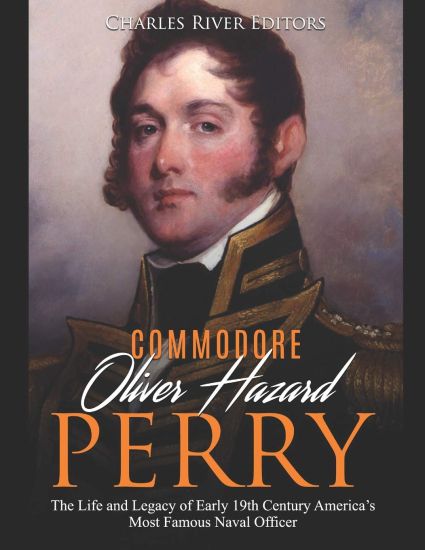
Commodore Oliver Hazard Perry: The Life and Legacy of Early 19th Century America's Most Famous Naval Officer
*Includes pictures*Includes excerpts of contemporary accounts*Includes a bibliography for further reading"We have met the enemy and they are ours." - Oliver Hazard PerrySandwiched between the Revolution and the Civil War, the War of 1812 is one of America's forgotten conflicts, and the stalemated nature of the war (which resolved virtually none of either side's war aims) has also ensured that it is often given merely a cursory overview. Great Britain, as the leader of several coalitions of conservative European countries trying to isolate and snuff out the revolutionary spirit and the ambitions of Napoleon, had been at war with France almost continuously since 1792. Under President Thomas Jefferson (1801-1809) and James Madison (1809-1817), the United States tried to steer a course that would keep it from being drawn into the European war and defend its neutrality on the high seas. However, both Britain and France wanted to hurt the other side economically by keeping goods out of their enemy's hands. Thus, they did not faithfully respect the rights of neutral nations. The British government in 1807 had issued the "Orders in Council," which enforced a naval blockade against France, and with a shortage of seamen to man the Royal Navy, Britain also felt justified in stopping and sometimes firing on ships flying the American flag in the name of apprehending escaped British sailors. The other main cause of war was distress on the Northwestern frontier, where the British in Canada were supporting Indian resistance to American settlement. So-called "War Hawks" from that region in Congress pushed for a declaration of war. Some hoped that a war would not only stop Indian depredations but evict the British from Canada and lead to completion of some unfinished business from the American Revolution, namely Canada joining the U. S. Americans had few things to celebrate during the War of 1812, and fighting on the frontier against the British and their native allies didn't go any better than the conflict did in other theaters, but one of the only major victories the Americans won came at the Battle of Lake Erie in September 1813. That action made Oliver Hazard Perry, a veteran of the Barbary Wars and commander of the USS Lawrence, a legend whose name has endured for over 200 years. Perry was so instrumental in the victory that British historian C. S. Forester noted "it was as fortunate for the Americans that the Lawrence still possessed a boat that would float, as it was that Perry was not hit." As one of the biggest naval battles of the war, the results meant that America maintained control of Lake Erie, an important location from which they could recover Detroit and be better positioned to confront the British and Shawnee leader Tecumseh's confederacy. For his part, Perry would forever be remembered as the "Hero of Lake Erie," even as he and compatriot Captain Jesse Elliot would feud over their respective actions during the battle for the rest of Perry's life. Perry received a Congressional Gold Medal and the Thanks of Congress for compelling the surrender of the entire British squadron, the first time that had ever happened, but he wouldn't have much time to enjoy it. He fought in the Second Barbary War in 1815 but died of yellow fever while on a mission in Venezuela in 1819. Despite being just 34 at the time of his death, he was one of the most famous military heroes in the young nation's history, and he has been commemorated with countless monuments across America ever since. Commodore Oliver Hazard Perry: The Life and Legacy of Early 19th Century America's Most Famous Naval Officer chronicles how he became one of America's most memorable military heroes. Along with pictures depicting important people, places, and events, you will learn about Perry like never before.
Commodore Oliver Hazard Perry: The Life and Legacy of Early 19th Century America's Most Famous Naval Officer
*Includes pictures*Includes excerpts of contemporary accounts*Includes a bibliography for further reading"We have met the enemy and they are ours." - Oliver Hazard PerrySandwiched between the Revolution and the Civil War, the War of 1812 is one of America's forgotten conflicts, and the stalemated nature of the war (which resolved virtually none of either side's war aims) has also ensured that it is often given merely a cursory overview. Great Britain, as the leader of several coalitions of conservative European countries trying to isolate and snuff out the revolutionary spirit and the ambitions of Napoleon, had been at war with France almost continuously since 1792. Under President Thomas Jefferson (1801-1809) and James Madison (1809-1817), the United States tried to steer a course that would keep it from being drawn into the European war and defend its neutrality on the high seas. However, both Britain and France wanted to hurt the other side economically by keeping goods out of their enemy's hands. Thus, they did not faithfully respect the rights of neutral nations. The British government in 1807 had issued the "Orders in Council," which enforced a naval blockade against France, and with a shortage of seamen to man the Royal Navy, Britain also felt justified in stopping and sometimes firing on ships flying the American flag in the name of apprehending escaped British sailors. The other main cause of war was distress on the Northwestern frontier, where the British in Canada were supporting Indian resistance to American settlement. So-called "War Hawks" from that region in Congress pushed for a declaration of war. Some hoped that a war would not only stop Indian depredations but evict the British from Canada and lead to completion of some unfinished business from the American Revolution, namely Canada joining the U. S. Americans had few things to celebrate during the War of 1812, and fighting on the frontier against the British and their native allies didn't go any better than the conflict did in other theaters, but one of the only major victories the Americans won came at the Battle of Lake Erie in September 1813. That action made Oliver Hazard Perry, a veteran of the Barbary Wars and commander of the USS Lawrence, a legend whose name has endured for over 200 years. Perry was so instrumental in the victory that British historian C. S. Forester noted "it was as fortunate for the Americans that the Lawrence still possessed a boat that would float, as it was that Perry was not hit." As one of the biggest naval battles of the war, the results meant that America maintained control of Lake Erie, an important location from which they could recover Detroit and be better positioned to confront the British and Shawnee leader Tecumseh's confederacy. For his part, Perry would forever be remembered as the "Hero of Lake Erie," even as he and compatriot Captain Jesse Elliot would feud over their respective actions during the battle for the rest of Perry's life. Perry received a Congressional Gold Medal and the Thanks of Congress for compelling the surrender of the entire British squadron, the first time that had ever happened, but he wouldn't have much time to enjoy it. He fought in the Second Barbary War in 1815 but died of yellow fever while on a mission in Venezuela in 1819. Despite being just 34 at the time of his death, he was one of the most famous military heroes in the young nation's history, and he has been commemorated with countless monuments across America ever since. Commodore Oliver Hazard Perry: The Life and Legacy of Early 19th Century America's Most Famous Naval Officer chronicles how he became one of America's most memorable military heroes. Along with pictures depicting important people, places, and events, you will learn about Perry like never before.
Mining Towns in the Wild West: The History of the Construction and Abandonment of the Frontier's Most Famous Sites
*Includes pictures*Includes a bibliography for further readingThe Lewis and Clark Expedition, notwithstanding its merits as a feat of exploration, was also the first tentative claim on the vast interior and the western seaboard of North America by the United States. It set in motion the great movement west that began almost immediately with the first commercial overland expedition funded by John Jacob Astor's Pacific Fur Company and would continue with the establishment of the Oregon Trail and California Trail. The westward movement of Americans in the 19th century was one of the largest and most consequential migrations in history, and as it so happened, paths across the West were being formalized and coming into use right around the time gold was discovered in the lands that became California in January 1848. Located thousands of miles away from the country's power centers on the East Coast at the time, the announcement came a month before the Mexican-American War had ended, and among the very few Americans that were near the region at the time, many of them were Army soldiers who were participating in the war and garrisoned there. San Francisco was still best known for being a Spanish military and missionary outpost during the colonial era, and only a few hundred called it home. Mexico's independence, and its possession of those lands, had come only a generation earlier. Everything changed almost literally overnight. While the Mexican-American War technically concluded with a treaty in February 1848, the announcement brought an influx of an estimated 90,000 "Forty-Niners" to the region in 1849, hailing from other parts of America and even as far away as Asia. All told, an estimated 300,000 people would come to California over the next few years, and while the California Gold Rush brought about the first major mining towns and established Los Angeles and San Francisco as major cities, other boomtowns would be built almost overnight alongside the discovery of other mineral deposits like silver. Perhaps the most famous was Tombstone, a frontier boomtown in Arizona that came to symbolize everything about the Wild West. In many ways, Tombstone fit all the stereotypes associated with that era in American history. A dusty place on the outskirts of civilization, Tombstone brought together miners, cowboys, lawmen, saloons, gambling, brothels, and everything in between, creating an environment that was always colorful and occasionally fatal. Those characteristics might not have distinguished Tombstone from other frontier outposts like Deadwood in the Dakotas, but some of the most famous legends of the West called Tombstone home for many years, most notably the Earp brothers and Doc Holliday. And ultimately, the relationships and rivalries forged by those men in Tombstone culminated in the legendary Gunfight at the O. K. Corral on October 26, 1881. The West's most famous fight all but ensured that Tombstone would be the epicenter of Western lore, but that did nothing to stop the dwindling of the city's population at the end of the 19th century. Fires, the negative environmental effects of so much mining, and the closing of the frontier all made sure that the populations in such places never grew back to anything resembling their peaks in the late 19th century, and today, the remains of such mining towns tend to be objects of curiosity and tourism sites than anything else. Mining Towns in the Wild West: The History of the Construction and Abandonment of the Frontier's Most Famous Sites profiles some of the most important events and camps that popped up in response to mineral discoveries, their history, and how they were often left behind nearly as quickly as they peaked. Along with pictures of important people, places, and events, you will learn about the West's mining towns like never before.
The Battle of Shanghai: The History and Legacy of the Battle that Started the Second Sino-Japanese War
*Includes pictures*Includes a bibliography for further readingOn October 29, 1937, a large crowd of people gathered on the bank of the Wusong River in Shanghai to watch a spectacle, a life and death struggle unfolding directly in front of them across the river. The crowd was a curious blend of Chinese, European, and American civilians and journalists. Their focus was on the Sihang Warehouse across the river, but it wasn't the warehouse itself that fascinated the onlookers. Instead, it was the men inside the warehouse, the men of the 524th Regiment, the 88th Division of the Chinese Nationalist Army. The soldiers were elite, and they were widely considered the best of the Nationalist Army. They proudly called themselves "the Generalissimo's Own," after Jiang Jieshi, the generalissimo of the Nationalist government and leader of China. The Chinese soldiers were prepared to fight and die to the last man, and they were making their last stand there. By then, the city of Shanghai was in shambles. The Imperial Japanese Military had invaded Shanghai on August 13, 1937, rapidly reducing the once-prosperous city to a pile of burning rubble after three months of brutal urban combat. Countless blazing fires raged throughout the city, some of which had been caused by the fighting, but most had been set by the retreating Chinese Army in a futile effort to stall the Japanese invaders. The Chinese Nationalist Army had fought valiantly against the Japanese, but the Chinese were hopelessly outgunned. Possessing few heavy weapons, aircraft, and artillery, the Nationalist Army could not hope to defeat the Japanese, who possessed superior firepower in every engagement against the Chinese troops. Causality rates for the Nationalist Army were horrific, with some units being completely wiped out in the fighting. Many Nationalist Army units would be completely annihilated in the three months of house-to-house fighting. As spectators watched from across the river, a barrage of Japanese artillery slammed the warehouse, creating enormous craters on the walls and sending shockwaves throughout the building. The Sihang Warehouse was six stories tall and made from thick concrete, making it the ideal building to defend against an enemy with superior firepower, but the Chinese soldiers could only hope to hold out for so long. The bulk of their army had already retreated, leaving the 524th the only Chinese unit left in the city. Rubble and the smell of cordite filled the air around the warehouse as the Japanese pressed their attack. Light tanks supported waves of infantry as the might of Imperial Japan focused its rage against a single Chinese warehouse. People watched nervously from across the river as the Japanese soldiers advanced. Some bystanders put up large signs bearing Chinese characters large enough to be seen across the river like some bizarre sporting event. They were mean to warn the soldiers in the warehouse of any approaching Japanese attacks. There were whispers among the people watching that the soldiers in the warehouse were called "The Lost Battalion." The Western newspapers had dubbed the battle for the warehouse the Chinese Alamo. The Battle of Shanghai was a brutal testament to a new era of modern warfare which, according to many historians, signified the beginning of the Second Sino-Japanese War, and hence World War II. Despite the stand, China was a nation broken into petty warlord fiefdoms and wracked by civil war between Nationalist and Communist forces. This civil war became inextricably intertwined with the Second Sino-Japanese War and World War II, and the sheer scale of the horrors of the conflict remain hard to believe today, even as action in that theater is often overlooked because of events in Europe. Indeed, the Japanese launched a brutal campaign across the fragmented realms that made up China, committing atrocities just as horrendous as their Axis ally in Europe.
Mining Towns in the Wild West: The History of the Construction and Abandonment of the Frontier's Most Famous Sites
*Includes pictures*Includes a bibliography for further readingThe Lewis and Clark Expedition, notwithstanding its merits as a feat of exploration, was also the first tentative claim on the vast interior and the western seaboard of North America by the United States. It set in motion the great movement west that began almost immediately with the first commercial overland expedition funded by John Jacob Astor's Pacific Fur Company and would continue with the establishment of the Oregon Trail and California Trail. The westward movement of Americans in the 19th century was one of the largest and most consequential migrations in history, and as it so happened, paths across the West were being formalized and coming into use right around the time gold was discovered in the lands that became California in January 1848. Located thousands of miles away from the country's power centers on the East Coast at the time, the announcement came a month before the Mexican-American War had ended, and among the very few Americans that were near the region at the time, many of them were Army soldiers who were participating in the war and garrisoned there. San Francisco was still best known for being a Spanish military and missionary outpost during the colonial era, and only a few hundred called it home. Mexico's independence, and its possession of those lands, had come only a generation earlier. Everything changed almost literally overnight. While the Mexican-American War technically concluded with a treaty in February 1848, the announcement brought an influx of an estimated 90,000 "Forty-Niners" to the region in 1849, hailing from other parts of America and even as far away as Asia. All told, an estimated 300,000 people would come to California over the next few years, and while the California Gold Rush brought about the first major mining towns and established Los Angeles and San Francisco as major cities, other boomtowns would be built almost overnight alongside the discovery of other mineral deposits like silver. Perhaps the most famous was Tombstone, a frontier boomtown in Arizona that came to symbolize everything about the Wild West. In many ways, Tombstone fit all the stereotypes associated with that era in American history. A dusty place on the outskirts of civilization, Tombstone brought together miners, cowboys, lawmen, saloons, gambling, brothels, and everything in between, creating an environment that was always colorful and occasionally fatal. Those characteristics might not have distinguished Tombstone from other frontier outposts like Deadwood in the Dakotas, but some of the most famous legends of the West called Tombstone home for many years, most notably the Earp brothers and Doc Holliday. And ultimately, the relationships and rivalries forged by those men in Tombstone culminated in the legendary Gunfight at the O. K. Corral on October 26, 1881. The West's most famous fight all but ensured that Tombstone would be the epicenter of Western lore, but that did nothing to stop the dwindling of the city's population at the end of the 19th century. Fires, the negative environmental effects of so much mining, and the closing of the frontier all made sure that the populations in such places never grew back to anything resembling their peaks in the late 19th century, and today, the remains of such mining towns tend to be objects of curiosity and tourism sites than anything else. Mining Towns in the Wild West: The History of the Construction and Abandonment of the Frontier's Most Famous Sites profiles some of the most important events and camps that popped up in response to mineral discoveries, their history, and how they were often left behind nearly as quickly as they peaked. Along with pictures of important people, places, and events, you will learn about the West's mining towns like never before.
Mysterious Polynesia: The Myths, Legends, and Mysteries of the Polynesians
*Includes pictures*Includes a bibliography for further readingTaking into account similarities of appearance, customs and languages spread across a vast region of scattered islands, it was obvious that the Polynesian race emerged from a single origin, and that origin Cook speculated was somewhere in the Malay Peninsula or the "East Indies." In this regard, he was not too far from the truth. The origins of the Polynesian race have been fiercely debated since then, and it was only relatively recently, through genetic and linguistic research, that it can now be stated with certainty that the Polynesian race originated on the Chinese mainland and the islands of Taiwan, the Philippines, Malaysia and Indonesia. Oceania was, indeed, the last major region of the Earth to be penetrated and settled by people, and Polynesia was the last region of Oceania to be inhabited. The vehicle of this expansion was the outrigger canoe, and aided by tides and wind patterns, a migration along the Malay Archipelago, and across the wide expanses of the South Pacific, began sometime between 3000 and 1000 BCE, reaching the western Polynesian Islands in about 900 BCE. The name Polynesia derives from the ancient Greek meaning "many islands." The word was first used to describe the entirety of the South Sea Islands by the 18th century French writer and traveler Charles de Brosses, but technically, Polynesia refers specifically to an area described by a vast triangle that stretches across the southern Pacific, with Hawaii, Easter Island and New Zealand serving as the points. Close to the center of this triangle lies Tahiti, with the west limit defined by Samoa and Tonga, with a slight irregularity in the western edge of the triangle that serves to exclude Fiji, the Solomon Islands, the New Hebrides, and a handful of Melanesian and Micronesian islands. The Melanesian demographic tends to differ quite dramatically from the Polynesian in both appearance and culture, the former tending to be of darker complexion, while the latter is more characteristic of the South Seas islanders of popular mythology. Furthermore, not all of the islands included in the broad delineation of Polynesia are the tiny islets and atolls of popular imagination, resplendent with blue lagoons, white sand beaches and pristine coral reefs. Most are located within the tropics and have all the characteristics of an island paradise, but many others, such as Easter Island, the Chatham Islands, and New Zealand, lie well to the south and are, as a consequence, temperate in climate and biology. While the timing of the populations' movements can be accurately plotted, the motivations and methodology have tended to come to light only through the study of the oral tradition and the folklore associated with many dispersed, but culturally associated peoples. Indeed, when scholars go through the traditions and mythology passed down by people who are dispersed across thousands of miles of water and islands, they are amazed at the striking similarities. Typically, the cultural memories related to these waves of migration speak of warfare and internecine quarrels, often with the defeated chief or king leading an expedition away and thereafter assuming the role of the "first man" in the creation of a new society and political structure. Mysterious Polynesia: The Myths, Legends, and Mysteries of the Polynesians chronicles some of these remarkable stories, as well as lingering mysteries across the region. Along with pictures of important people, places, and events, you will learn about Polynesia like never before.
Babe Ruth: The Life and Legacy of Major League Baseball's Most Famous Player
*Includes pictures*Includes a bibliography for further reading"I only have one superstition: I make sure to touch all the bases when I hit a home run." - Babe RuthAs one of America's oldest and most beloved sports, baseball has long been touted as the national pastime, but of all the millions of people who have played it over the last few centuries, the first name that many associate with Major League Baseball is Babe Ruth, whose career spanned over 20 years on the way to becoming the sport's biggest legend. The Bambino came onto the scene as a pitcher for the Boston Red Sox, only to be infamously sold to the rival New York Yankees, where he went on to set records for most home runs (714), runs batted in (2,213), walks (2,062), slugging percentage (.690), and on-base plus slugging (1.164). The Sultan of Swat's records would take decades to be surpassed, but he also managed to win more than 20 games as a pitcher for Boston, along with three World Series before heading to New York. Boston wouldn't win another championship for over 80 years after Ruth's departure, a drought famously referred to as "The Curse of the Bambino." As if he wasn't accomplished enough in Boston, Ruth went on to become a pop culture fixture in New York while playing 15 years for the Yankees on some of the sport's most legendary teams. In addition to leading the Bronx Bombers to four World Series during his time there, Ruth set several single season and career records, elevating the team and MLB itself in ways that athletes could hardly dream of today. Ruth's impact could be keenly felt in a 1922 article authored by Heywood Broun, "Cutting the Heart of the Plate," which said of him, "No one ever requires more than one glance to identify Babe Ruth. Even a wholly ignorant person who had never heard of him would probably stop in wonder at the sight of Babe waddling by. It must be clear to all beholders that here is some great, primitive force harking back to the dim days of the race. William Jennings Bryan might well look upon the Babe and recant. To be sure, a certain ingenuity was required to fit just the proper name upon this personality. As George Herman Ruth he might have gone far but he could hardly have reached the heights. The man who made him by the gift of 'Babe' ought to draw a substantial royalty from Ruth's mighty income. But probably no single individual hit upon the happy thought. Undoubtably a mass movement was required. Babe Ruth has all the vigor and vitality of a piece of folk literature." Over a century after his MLB debut, Ruth remains as well known as ever, and people continue to discuss his exploits both on and off the field. Ruth used to wink at his reputation, joking, "I learned early to drink beer, wine and whiskey. And I think I was about 5 when I first chewed tobacco." Biographer Leigh Montville described a typical scene after a game: "The outrageous life fascinated pitcher Waite] Hoyt, the...freedom of it, the nonstop, pell-mell charge into excess. How did a man drink so much and never get drunk? ... The puzzle of Babe Ruth never was dull, no matter how many times Hoyt picked up the pieces and stared at them. After games he would follow the crowd to the Babe's suite. No matter what the town, the beer would be iced and the bottles would fill the bathtub." Given the passage of time, people tend to debate how good Ruth would be today, including most recently a current MLB reliever, Adam Ottavino, who claimed he would strike out Ruth every time. That claim became even more controversial when Ottavino joined none other than the Yankees ahead of the 2019 season, which led to the reliever walking back some of the comments. But even as far back as 1929, Bucky Harris may have foreseen debates of this kind by pointing out, "These other home run hitters are neck and neck. When the Babe was doing his stuff, he was miles ahead of his field."
The CIA: The History and Legacy of the Central Intelligence Agency
*Includes pictures*Includes a bibliography for further readingThough it might be hard to believe, the Americans did not have a covert operations organization when they joined the war, and like the British, it took them some time to realize it could be a powerful tool. As a result, the Office of Strategic Services (OSS) was not established until June 13, 1942, six months after the attack on Pearl Harbor. Voices within the Pentagon, State Department, and White House all opposed the establishment of this new and untested organization that would carry out activities normally considered unacceptable, so officials within the OSS had to fight for the very existence of the organization, battling through layers of bureaucracy to get the resources he needed and ensure its independence of action. They also worked hard to justify the use of covert tactics in warfare, to the extent that its leader, William "Wild Bill" Donovan, cited precedents that stretched back to the Bible. In time, all the hard work led to the growth of the OSS into an organization with over 13,000 staff and 40 offices scattered across the world. Its purposes were initially similar to that of Britain's Special Operations Executive, including espionage, sabotage, and intelligence assessments, but with time and experience, it expanded to include economic, psychological, and guerrilla warfare, as well as counter-intelligence work. And of course, it would all chart a path for the early days of America's most famous intelligence agency, the CIA. The 28-year period from 1933-1961, bracketed on one end by Hitler's rise to power in Germany and on the other by the very height of the Cold War, was marked by a remarkably stable succession of American presidents. In fact, only three men held office in this period, and that predictability led to a general stability among government agencies. The CIA had five different directors in its first 15 years, from 1946-1961, but nine different directors in the next 20, with four of those directors serving less than a year. Although plagued by its own share of problems in its early existence during World War II and the early Cold War years, the agency's early problems, smoothed over by a string of tenured presidents, paled in comparison to those it would face in the coming decades. The presidency became much more tumultuous and plagued by scandal and tragedy in the following decades. Beginning with Kennedy, the country had five presidents in the span of less than 20 years, and none of them completed two full terms, so it is perhaps not surprising that the CIA felt its way through its own tough days during this period. To place the agency's blame for its own very real mistakes at the feet of the ever-churning office of the presidency is not entirely fair, because in many cases the CIA made its own bed and was forced to lie in it, but the continuously changing executive landscape and the subsequent jerky and often haphazard changes of directions certainly played a part in the agency's troubles of this period. Through the 1980s and 1990s, presidential terms regained a measure of predictability, but the agency continued to struggle through the traps it had set for itself in the prior decades while trying to find its place in the new world of computers, 24 hour news coverage, and the sheer avalanche of information that came with technological advancements. When the Soviet Union collapsed in 1991, it appeared the CIA might no longer have an adversary formidable enough to keep the agency funded and staffed, but 9/11 ended that fairy tale and brought the CIA's next era into sharp focus. A war on terrorism replaced the Soviet Union as the spy service's primary foil, and the years following the 9/11 attacks were dire for the agency, but the misguided invasion of Iraq and persistent claims of detainee torture and murder sullied the spy agency's reputation right from the start of the 21st century.
The California Trail: The History and Legacy of the 19th Century Routes that Led Americans to the Golden State
*Includes pictures*Includes a bibliography for further readingThe Lewis and Clark Expedition, notwithstanding its merits as a feat of exploration, was also the first tentative claim on the vast interior and the western seaboard of North America by the United States. It set in motion the great movement west that began almost immediately with the first commercial overland expedition funded by John Jacob Astor's Pacific Fur Company and would continue with the establishment of the Oregon Trail and California Trail. The westward movement of Americans in the 19th century was one of the largest and most consequential migrations in history, and among the paths that blazed west, the California Trail was one of the most well-known. The trail was not a single road but a network of paths that began at several "jumping off" points. As it so happened, the paths were being formalized and coming into use right around the time gold was discovered in the lands that became California in January 1848. Located thousands of miles away from the country's power centers on the East Coast at the time, the announcement came a month before the Mexican-American War had ended, and among the very few Americans that were near the region at the time, many of them were Army soldiers who were participating in the war and garrisoned there. San Francisco was still best known for being a Spanish military and missionary outpost during the colonial era, and only a few hundred called it home. Mexico's independence, and its possession of those lands, had come only a generation earlier. At the same time, the journey itself was fraught with risk. It's easy for people with modern transportation to comfortably reminisce about the West, but many pioneers discovered that the traveling came with various kinds of obstacles and danger, including bitter weather, potentially deadly illnesses, and hostile Native Americans, not to mention an unforgiving landscape that famous American explorer Stephen Long deemed "unfit for human habitation." 19th century Americans were all too happy and eager for the transcontinental railroad to help speed their passage west and render overland paths obsolete. One of the main reasons people yearned for new forms of transportation was because of the most notorious and tragic disaster in the history of westward travel. While people still romanticize the Wild West, many Americans are also familiar with the fate of the Donner Party, a group of 87-90 people heading for California who met with disaster in the Sierra Nevada mountain range during the winter of 1846-1847. The party knew the journey would take months, but early snowfalls in the mountains left dozens of people trapped in snow drifts that measured several feet, stranding them in a manner that made it virtually impossible for them to go any further for several weeks. The plight of the Donner Party made news across the nation, even before the surviving members were rescued and brought to safety, and by the time the doomed expedition was over, less than 50 of them made it to California. As writer Ethan Rarick summed it up, "more than the gleaming heroism or sullied villainy, the Donner Party is a story of hard decisions that were neither heroic nor villainous." The California Trail: The History and Legacy of the 19th Century Routes that Led Americans to the Golden State examines how the various paths were forged, the people most responsible for them, and the most famous events associated with the trail's history. Along with pictures depicting important people, places, and events, you will learn about the California Trail like never before.
The Great Barrier Reef and Uluru: The History and Legacy of Australia's Most Famous Landmarks
*Includes pictures*Includes a bibliography for further reading"Coral is a very beautiful and unusual animal. Each coral head consists of thousand of individual polyps. These polyps are continually budding and branching into genetically identical neighbors." - Antony Garrett ListPeople have always loved to build things, whether it's a feat of engineering in an underground subway or the construction of the world's tallest skyscraper. Thus, it's somewhat ironic that the largest structure ever built was not made by humans but by incredibly tiny organisms known as coral polyps. Over the course of tens of thousands of years, these small organisms have put together a collection of nearly 3,000 reefs that form a collective stretching across 130,000 square miles. It is often mistakenly claimed that the Great Wall of China can be seen in space, but it's absolutely true that the enormous Great Barrier Reef is visible. The sheer size of the Great Barrier Reef is mind-boggling, but its importance extends far past its physical extent. Put simply, the Great Barrier Reef is one of the most beautiful spots on the planet, offering kaleidoscopic colors thanks to the coral and the species that call it home. This is understandable because a staggering number of species inhabit the Great Barrier Reef, ranging from starfish and turtles to alligators and birds. Scientists have counted about 1,500 different fish species using the reef, and it's estimated that even 1.5 million birds use the site. In designating it a World Heritage Site, UNESCO wrote of the Great Barrier Reef, "The Great Barrier Reef is a site of remarkable variety and beauty on the north-east coast of Australia. It contains the world's largest collection of coral reefs, with 400 types of coral, 1,500 species of fish and 4,000 types of mollusc. It also holds great scientific interest as the habitat of species such as the dugong ('sea cow') and the large green turtle, which are threatened with extinction." Unfortunately, an ecosystem as complex as the Great Barrier Reef is also vulnerable to a host of threats, whether it's fishing, oil spills, or climate change. J. E. N. Veron, former chief scientist of the Australian Institute of Marine Science, described watching how coral was affected during what's known as a mass bleaching event: "And then I saw a whammy, a mass bleaching event ... where everything turns white and dies. Sometimes it's only the fast-growing branching corals, but some of the others are horrible to see; corals that are four, five, six hundred years old-they die, too... It's real, day in, day out, and I work on this, day in, day out. It's like seeing a house on fire in slow motion... There's a fire to end all fires, and you're watching it in slow motion, and you have been for years." In fact, scientists fear that the Great Barrier Reef has lost most of its coral cover in the last 30 years, which poses a danger to the species that inhabit it, some of which are already endangered. The magnificent monolith the locals call "Uluru," situated in the heart of Australia, hovers over a patchy bed of desert poplars and spinifex grasslands. The pleasant, but otherwise unexceptional surroundings of the spellbinding sandstone landform only further accentuates its majesty, one that can be appreciated from a variety of angles. To lime-colored budgerigars, mighty brown falcons, passengers in planes and helicopters, and other creatures blessed with the gift of flight, the free-form rock is reminiscent of the fossil of a spiky fish, a misshapen arrowhead, or perhaps a peculiar, ocher-tinged seashell peeking out of the sand. To those gazing upon the natural gem on solid ground, the flat-topped, burnt sienna beauty, marked with character-forming dimples, ripples, and ridges, looks more like a sleeping, thousand-year-old turtle, particularly through squinted eyes.
La Camorra: The Notorious History and Legacy of the Neapolitan Mafia
*Includes pictures*Includes a bibliography for further reading"I saw four knights with lance and buckler, black capes around their shoulders. They saw me and smiled. At that moment I understood that I was given the task of rebuilding the Camorra on new and more efficient bases, so that the tradition of our fathers would not be lost. I am the reincarnation of the most glorious moments of the Neapolitan past, I am the messiah for the suffering prisoners, I dispense justice, I am the only real judge who takes from the usurers and gives the poor. I am the true law, I do not recognize the Italian justice." - Don Raffaele Cutolo The history of Naples is long and tortured, or at least for centuries that was how its history has been told. Inhabited almost continuously from the Neolithic era to the present, Naples was founded by the Greeks and conquered by the Romans. After the fall of the Roman Empire, Naples passed between various foreign rulers for its entire history prior to Italian unification. Starting in 1040, when the Norman French invaders conquered Campania, Naples was ruled in a dizzying succession by Germans, then French, then Spanish, then Austrians, then Spanish, then French, and then Spanish. Nonetheless, Naples does not enjoy an excellent reputation, within the context of Italy or of Europe. High rates of petty crime, a decaying urban fabric and the infamous presence of the mafia (known in Naples as the Camorra) all combine to ensure fewer tourists venture to explore Naples, and many Italians (civilians and politicians alike) consider it the ultimate "problem city." Nonetheless, it bears keeping in mind the words of one of Naples' foremost historians, John Marino, who noted, "Naples, like each of Italy's cities, is] unique, but far less different than is generally believed." The word "mafia," Sicilian in origin, is synonymous with Italy, but Italy is home to several different mafias, with three being particularly notorious. While the Cosa Nostra of western Sicily is the most infamous, other powerful groups include the ferocious 'Ndrangheta of Calabria and the Camorra, the third-largest mafia, which is active in Naples and the Campania region. A "mafia" is loosely defined as a criminal organization that is interested in social, economic and political power, combining elements of a traditional secret society with those of a business, but further levels of nuance are necessary in order to understand these groups. In a general sense, this is because each mafia creates a myth about the development of the organization, which becomes like an unquestionable truth. In essence, part of what makes its members so completely loyal to it is also what makes outsiders so utterly afraid of it. In the particular case of the Camorra, the difficulty of understanding an underground criminal association is made all the more intense because it is so heterogeneous in terms of its development, its different functions, and the diversity of economic sectors in which it operates. To reflect that diversity, some scholars like to refer to it as Camorre, the plural version of Camorra. This decision is more than just a question of semantics, because using the plural form helps emphasize the internal differences and conflicts within the Neapolitan mafia, which, in turn, helps explain the very nature of the organization itself. The Neapolitan mafia is famous for its pervasive nature, which is due to the fact that it is organized in a horizontal, decentralized way. This means there is not one single "boss" who dictates policy and can be more strategic in how and when violence is deployed. Unlike other mafias, in the Camorra there has been no long-term reigning family, nor extensive coordination between families to form an alliance and function as a unified mafia for their shared benefit.
Uluru: The History and Legacy of the Australian Landmark Considered Sacred by the Local Aborigines
*Includes pictures*Includes a bibliography for further readingThe magnificent monolith the locals call "Uluru," situated in the heart of Australia, hovers over a patchy bed of desert poplars and spinifex grasslands. The pleasant, but otherwise unexceptional surroundings of the spellbinding sandstone landform only further accentuates its majesty, one that can be appreciated from a variety of angles. To lime-colored budgerigars, mighty brown falcons, passengers in planes and helicopters, and other creatures blessed with the gift of flight, the free-form rock is reminiscent of the fossil of a spiky fish, a misshapen arrowhead, or perhaps a peculiar, ocher-tinged seashell peeking out of the sand. To those gazing upon the natural gem on solid ground, the flat-topped, burnt sienna beauty, marked with character-forming dimples, ripples, and ridges, looks more like a sleeping, thousand-year-old turtle, particularly through squinted eyes. Its striking appearance aside, Uluru, also known as "Ayers Rock," is far more than an unmissable landmark. Uluru represents an inimitable symbol of life and culture, and a place of worship sacred to the region's aboriginal inhabitants. Given the long and riveting history attached to this hallowed rock, the aura of mysticality and mystery that clings to Uluru should come as no surprise. Not only does the rock's flaky surface change color throughout the day - going from a deep violet with hints of gray to a light lilac, to a fiery orange-red during sunrise, and from its usual apricot-gold to a faded orange, to a dreamy purplish-pink at dusk - Uluru, they say, is an endless source of inexplicable happenings and paranormal occurrences. Although the natives have spared no effort in underscoring the rock's spiritual and cultural significance to the Aborigines, their pleas for visitors to respect the rock have been repeatedly ignored. Indeed, the lack of courtesy displayed towards Uluru has heightened in recent years, and the land's inhabitants have been forced to navigate the so-called age of the "social media influencer." Thousands of tourists swarm the rock every year, sticking their head through aboriginal spy holes and modeling pretentious yoga poses with captions to match. Perhaps most notoriously, a 25-year-old French-born exotic dancer named Alizee Sery angered netizens around the globe in 2010 when she hiked up to the top of Uluru and stripped down to nothing but an Akubra cattleman hat, bikini bottoms, and white go-go boots. Sery spoke to various news outlets shortly thereafter and defended the strip tease, filmed for a documentary, which she claimed was meant as an homage to the indigenous peoples. According to Sery's partially paternalistic explanation, "'My project is a tribute to the greatness of the rock. What we need to remember is that traditionally, the Aboriginal people were living naked. So stripping down was a return to what it was like." Aboriginal elders, on the other hand, branded the attention-seeking stunt "stupid" and compared it to relieving oneself on the Vatican steps. As Kon Vatskalis, Minister of the Northern Territory Government, put it, "How would... French people feel if an Australian danced semi-naked on the altar of the Notre Dame?" Uluru: The History and Legacy of the Australian Landmark Considered Sacred by the Local Aborigines examines the geological origins of the famous rock, its most interesting characteristics, and its history. Along with pictures depicting important people, places, and events, you will learn about Uluru like never before.
Vampires and Werewolves: The Legends and Folk Tales about History's Most Notorious Mythical Beings
*Includes pictures*Includes excerpts of medieval accountsPeople have always been afraid of the dead. Since the dawn of humanity, people have both cared for those who have deceased yet also tried to keep them away. There are a myriad of legends and beliefs about the dead coming back, and one of the more persistent ones is of the vampire. Werewolves have long been a staple of popular culture. In the 19th century and 20th century, there were countless books, plays, and films about people who turned into wolves or wolf like humanoids and went on rampages. The figure of the werewolf is so familiar that people across the world are familiar with the folklore, and the beliefs that they transform during a full moon, can only be stopped with silver, and transmit their disease by biting their victims. In fact, those beliefs were not originally part of werewolf folklore, but later embellishments by artists. The belief in lycanthropy is far older and more complex than most people suspect, dating all the way back to antiquity, and werewolves were once assumed to be very real. Indeed, people were even put on trial and executed because the courts of law were convinced they could change their form and kill innocent people. For thousands of years, werewolves have represented a strange and ancient tradition that still echoes through culture to this day. Likewise, while everyone has heard of vampires, few people are truly familiar with the history and folklore that have made the mythical beings so popular. Indeed, there are so many legends from so many cultures that it is difficult to come up with a hard definition, and folklore is by its very nature unscientific, but most people in the Western world think of vampires as those who come back from the grave to suck the blood or life essence from the living. This common understanding of vampires actually obscures many European and most non-European traditions of bloodsucking monsters. For example, in China, Japan, and the Middle East, there are spirits that will drain the life force of an unwary person, but these magical beings were never mortal humans. In African and Native American traditions, there are monsters that do the same, but while they are supposed to be of this Earth, they too are not human beings. Furthermore, folklore changes over time, so the vampires people are familiar with today (and the ones some people claim to actually meet) bear little resemblance to the vampires of early modern Europe. Vampires and Werewolves: The Legends and Folk Tales about History's Most Notorious Mythical Beings chronicles how ancient stories about these mysterious supernatural beings became popular and affected history. Along with pictures and a bibliography, you will learn about vampires and werewolves like never before.