Kirjojen hintavertailu – 12 903 725 kirjaa ja 27 kauppaa

Kirjailija

Charles River

Kirjat ja teokset yhdessä paikassa: 4 673 kirjaa, julkaisuja vuosilta 2013–2022, suosituimpiin kuuluu William Powell and Myrna Loy: The Lives and Careers of One of Classical Hollywood's Most Iconic Duos. Vertaile teosten hintoja ja tarkista saatavuus suomalaisista kirjakaupoista.

4 673 kirjaa

Kirjojen julkaisuvuodet: 2013–2022.

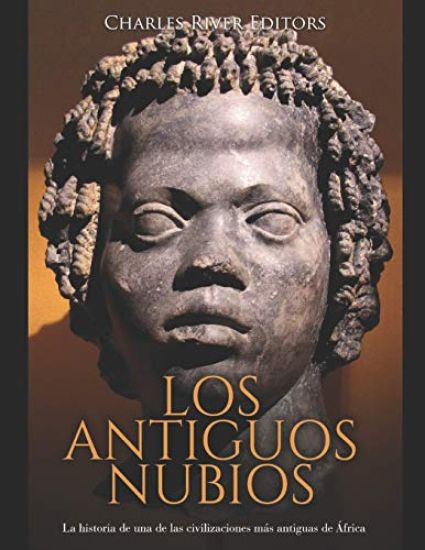
Los antiguos nubios: La historia de una de las civilizaciones más antiguas de África
Durante los varios siglos en que el antiguo Egipto se irgui como una de las m s grandes civilizaciones, si no la m s grande, del mundo antiguo, los conflictos con sus enemigos jugaban a menudo un rol central en textos jerogl ficos y arte de los templos y tumbas. Los tres principales enemigos de los egipcios eran los libios que ocupaban el desierto occidental y sus oasis, los llamados asi ticos que viv an en el Levante, y finalmente los nubios al sur de Egipto. Entre los tres pueblos, los nubios eran los m s "egipcianizados" y, en momentos, fueron integrales para el desarrollo de la historia egipcia. Verdaderamente, los nubios fueron el m s grande de todos los pueblos subsaharianos en tiempos premodernos y merecen ser estudiados por derecho propio, aparte de la historia antigua egipcia. Desafortunadamente, dado que los nubios tomaron prestado mucho en t rminos culturales de su vecino al norte, a menudo es dif cil para los estudiosos separar aspectos de la antigua cultura nubia que fueran verdaderamente nicos y "nubios", de aquellos que eran egipcios. Un historiador se al "Como era de esperar, se ven rasgos nubios fuertes y coloraci n oscura en sus trabajos de escultura y relieve. Esta dinast a se ubica entre las m s grandiosas, cuya fama sobrepas por mucho su tenencia real del trono. Resulta especialmente interesante que fue un miembro de esta dinast a quien decret que ning n 'Nehsy' (nubios ribere os del principado de Kush), excepto los que ven an por razones diplom ticas o comerciales, deb a pasar junto a la fortaleza egipcia en el extremo sur de la segunda catarata del Nilo. Por qu esta familia real de ascendencia nubia prohibir a que otros nubios entraran al territorio egipcio? Porque los gobernantes egipcios de ascendencia nubia se hab an vuelto egipcios culturalmente; como faraones, exhib an actitudes t picamente egipcias y adoptaron pol ticas t picamente egipcias". Robert S. Bianchi fue incluso m s lejos: "Intentar describir a los nubios durante el transcurso del Nuevo Reino de Egipto es una tarea extremadamente dif cil, porque su presencia parece haberse pr cticamente evaporado del registro hist rico. El resultado ha sido descrito como una asimilaci n nubia de gran escala a la sociedad egipcia. Esta asimilaci n fue tan completa que enmascar todas las identidades tnicas de Nubia en lo que respecta a restos arqueol gicos, bajo el impenetrable revestimiento de la cultura material de Egipto". Un examen en profundidad de los antiguos nubios revela que, si bien estaban estrechamente relacionados de muchas formas a los egipcios, produjeron una cultura que ten a muchos atributos propios nicos y estaba mucho m s avanzada que cualquier otra cultura en el frica subsahariana. Aunque los antiguos nubios han recibido menos atenci n que los egipcios y, por ende, no son tan bien conocidos para el p blico en general, fueron verdaderamente un pueblo destacable que dej un legado cultural que ha resistido el paso del tiempo. Los antiguos nubios: La historia de una de las civilizaciones m s antiguas de frica examina la historia de este grupo y su influencia a trav s de la regi n. En conjunto con fotograf as de personas, lugares y eventos importantes, aprender sobre la antigua Nubia como nunca antes, y en nada de tiempo.

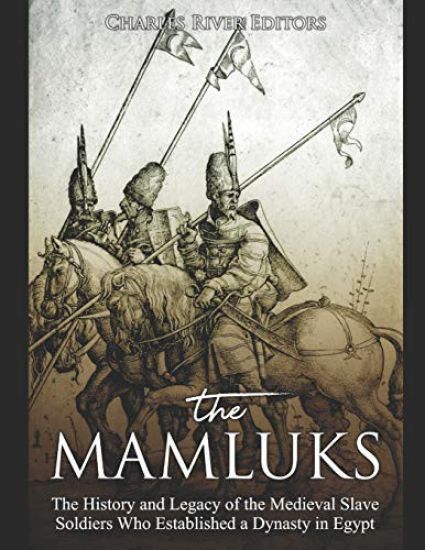
The Mamluks: The History and Legacy of the Medieval Slave Soldiers Who Established a Dynasty in Egypt
*Includes pictures*Includes a bibliography for further readingEgypt in the 14th century was a glorious kingdom to behold. Spice merchants from Europe, Asia and Africa sailed up the Nile River to the great port city of Alexandria, carrying riches such as silk, jewels and spices. Cairo, the capital of Egypt, was the greatest city in the Islamic world, with a larger population and more wealth and splendor than any city in Europe. Cairo was a shining pinnacle of cosmopolitan splendor in the medieval world, and besides being a major trading hub, Cairo was famous for its scholars and intellectual class, offering countless academic opportunities for scholars across the Islamic world. The culture of Cairo was dynamic and famous for its wide range of intellectual debates on Islamic sciences and other academic fields, all of which far surpassed any contemporary city at the time. From across the Islamic world, scholars from all the major schools of thought were represented in Cairo. Spirited lectures occurred frequently in public squares and madrasas were often packed with patrons eagerly listening to readings by famed scholars. Cairo was a city filled with art, trade and knowledge. However, there was another factor that made Cairo infamous. The city represented the last bastion of the Muslim world - a great Islamic caliphate, centered in Iraq, had once stretched from the edges of Central Asia to Spain, but invasions by outside enemies had mostly overrun this once mighty empire. The Mongol armies, pouring forth from their grasslands in Asia, had sacked Baghdad in 1258, destroying the caliphate and sending the Islamic world into a state of deep peril. Moreover, European crusaders had launched multiple invasions into Palestine and the Levant, threatening the very existence of the Muslim world. Ultimately these foreign invaders were all stopped by one group: the Mamluks of Egypt, a group of warriors, slaves, and kings. Hailing from the Eurasian steppes, the Mamluks were not Arab, but ethnically Turkish, enslaved at a young age, and sold into military service in Egypt, where they underwent intense military training in Cairo. Thus, these Turkish warriors were utterly alien from the Arab populations they eventually ruled over in ethnicity, language and culture, but they were remarkably skilled in the mounted warfare styles of the nomadic tribes of the Eurasian grasslands and other aspects of medieval warfare. As a result, the Mamluks were some of the finest professional soldiers of their time, which they proved on multiple occasions through their brilliant military campaigns against the numerous enemies of Islamic Egypt. Critically, the Mamluks were one of the only groups to defeat the seemingly unstoppable Mongol hordes in open battle, potentially saving the Islamic world from annihilation. It could be argued that without the Mamluks, the Islamic world would have been completely destroyed, changing the course of history. As the Mamluks took power in Egypt, they rapidly became the center of the Islamic world. Egypt's political system made it unique when compared to other parts of the Muslim world, and though the daily management of the kingdom required interactions between the foreign Mamluks and their Egyptian subjects, a vast degree of separation remained the law of the land. The Mamluks held a tight grip on political and military power (ordinary Egyptians were even forbidden to ride horses), and this system of recruitment from abroad and social isolation created an elite army loyal to the state and succeeded in barring the ruled people, even the sons of the Mamluks, from entering the ruling classes. Nothing symbolized this system better than the Citadel, a complex of mosques, offices, living quarters, stables, and palace that stood on a rocky prominence 250 feet above the city of Cairo. It was from the Citadel that the Mamluk sultan presided over his royal court and regiments.
Native Americans in the Civil War: The History and Legacy of Various Indian Tribes' Participation in the War Between the States
*Includes pictures*Includes a bibliography for further readingFew people need to be reminded in the 21st century of the cost of European imperialism and colonization on indigenous and native cultures around the world. The increasingly controversial view of "Columbus Day," still represented on the United States commemorative calendar, attests quite clearly to an ambiguous modern view of early European encounters with Native Americans. Slavery, disease, land and resource appropriation and the rapid disintegration of indigenous societies are all characteristics of European global expansion. There are those societies, particularly in Asia and Africa, that proved resilient enough to weather the European imperialism, but others, most notably those of Australia and North America, certainly did not. By far the most important element in the Civil War from a native standpoint was what happened in and to Indian Territory, now part of the state of Oklahoma. There was a parallel civil war in Indian Territory, with the Cherokee nation splitting in two. While the 100,000 inhabitants of Indian Territory represent most of the experiences during the Civil War, many others were affected by it all over the country. In fact, men from more than two dozen tribal peoples actively participated in the Civil War by fighting for one side or the other. There were full-size Indian regiments fighting for the Confederacy, and full-size Indian regiments fighting for the Union. Indians joined sharpshooter regiments, functioned as scouts, piloted Union ships, and served as guerrillas, while some joined units of United States Colored Troops. Recent estimates are that more than 28,000 Indians served as Civil War soldiers. One difference between Confederates and Union Indian troops is that Confederate Indian units were generally officered by Indians, and Union formations were usually led by white officers, but some Indians in the Union forces did eventually work their way into command. Some 10,000 Indians are thought to have died in Indian Territory as a result of the Civil War, including soldiers, but also as a consequence of a total breakdown of law and order and chronic guerilla war. That estimate could be low, because the Cherokee population alone dropped from 21,000 before the Civil War to 15,000 after it. While Indian Territory was the main stage in American Indian participation in the Civil War, it was not the only element. The Iroquois in New York produced a few hundred Union troops who served mostly with Pennsylvania units, and Ely Parker, who was General Grant's secretary and who drew up the terms for Lee's surrender at Appomattox, became a brigadier general, making him the only Indian Union general. There were remnant tribes in Michigan who joined a sharpshooter regiment, the tiny Caddo tribe in South Carolina soldiered for the Confederacy, and the Eastern Cherokee defended western North Carolina from Union raids and repressed Unionist sentiment. Late in the Civil War, the Lumbee tribe in North Carolina skirmished with Confederate Home Guards. Union politicians in Kansas used war powers to remove Kansas Indians to Indian Territory. There were also many tribal peoples affected by the war who were not direct participants on either side. The Confederate invasion of New Mexico Territory (what is now New Mexico and Arizona) and the Union response profoundly affected the Apache and Navajo. The withdrawal of federal troops to the East weakened federal influence in much of the West, and state militias became more important and were much less concerned about Indian rights and welfare. Native Americans in the Civil War: The History and Legacy of Various Indian Tribes' Participation in the War Between the States explains the various roles played by Native Americans in America's deadliest war.
David Dixon Porter: The Life and Legacy of the Distinguished Union Rear Admiral during the Civil War
*Includes pictures*Includes a bibliography for further reading"Porter is but a Commander. He has, however, stirring and positive qualities, is fertile in resources, has great energy, excessive and sometimes not over-scrupulous ambition, is impressed with and boastful of his own powers, given to exaggeration in relation to himself, -a Porter infirmity, -is not generous to older and superior living officers, whom he is too ready to traduce, but is kind and patronizing to favorites who are juniors, and generally to official inferiors. Is given to cliquism but is brave and daring like all his family... It is a question, with his mixture of good and bad traits, how he will succeed." - Secretary of the Navy Gideon WellesAmericans have long been fascinated by the Civil War, marveling at the size of the battles, the leadership of the generals, and the courage of the soldiers. Since the war's start over 150 years ago, the battles have been subjected to endless debate among historians and the generals themselves. The Civil War was the deadliest conflict in American history, and had the two sides realized it would take 4 years and inflict over a million casualties, it might not have been fought. Since it did, however, historians and history buffs alike have been studying and analyzing the biggest battles ever since. After the first year of the Civil War, the Confederacy was faced with a serious problem. While the South had enjoyed some stunning victories on land, they had been all but cut off from the world at sea. The more industrialized North had realized that in case of an extended war, the best way to defeat the Confederacy was to starve it of supplies. The rebels started the war with no real navy to speak of, and so the federal government quickly set up a blockade of all Southern ports and river mouths. By depriving the South of revenues derived from its main export, cotton, the North seriously injured the Southern economy. Without European intervention and the ability to build a navy that could rival the Union's, the Confederacy was mostly reduced to token resistance and using fast moving ships that could evade the blockade and import and export goods. Again, that was only partially successful, and today, the blockade runners are better known for their extracurricular activities; most notably, some of the crews also acted as privateers on the high seas, attacking U. S. shipping and taking any loot for themselves. The daring exploits of these commerce raiders caught the imagination of Southern soldiers and civilians and buoyed up morale, even as the war news turned increasingly grim. Meanwhile, the North managed to have spectacular success jointly coordinating operations between the Army and Navy, thanks in large measure to the leadership of officers like David Farragut and David Dixon Porter. While generals like Ulysses S. Grant and William Tecumseh Sherman received the lion's share of the credit for Union victories, especially in the Western Theater, naval forces were instrumental in the capture of New Orleans and Vicksburg, as well as at Fort Donelson and Fort Henry. Porter was recognized throughout the Civil War for his service, even as he was subjected to the kind of politicking that marked the war effort in Washington, and he became just the second man in the history of the U. S. Navy to attain the rank of Admiral. He would also have a distinguished career after the war as he helped reform the Navy. David Dixon Porter: The Life and Legacy of the Distinguished Union Rear Admiral during the Civil War chronicles Porter's upbringing and how it prepared him for his important service in the Civil War. Along with pictures depicting important people, places, and events, you will learn about Porter like never before.
Ancient Egyptian Language and Writing: The History and Legacy of Hieroglyphs and Scripts in Ancient Egypt
*Includes pictures*Includes excerpts of ancient accounts*Includes a bibliography for further readingPerhaps not surprisingly given how advanced they were in comparison to contemporaries, the Egyptians invented one of the first writing systems ever, and for centuries, people thought these ancient texts held some sort of secret, be it aliens, advanced technology lost to the world, or mystical cures for all of the world's ills. Even the ancient Egyptians saw their writing systems as full of mystery and hidden knowledge - according to Egyptian mythology, writing was invented by the ibis-headed god Thoth, the most intellectual of the gods. He was a scribe, also associated with mathematics, medicine, and astronomy, and could appear as either an ibis or a baboon. Thoth was originally a lunar god, strongly associated with recording events and time. He is more commonly known as the scribe who records judgment in the famous weighing of the heart scene in which a person's fate in the afterlife is decided To the Egyptians, writing was a gift of the gods and should be used accordingly. It was powerful and had the ability to create. For example, written formula offerings could provide sustenance in multiple ways, including being written, depicting the offerings, and read aloud. Each of these methods brought offerings to the recipient for all of eternity. Speaking words was especially powerful as shown in myths where the gods create in this fashion. One such myth is the "Memphite Theology," where the creator god Ptah creates other beings through the "thoughts of his heart and the words of his mouth." Furthermore, writing a person or a god's name gave them power, and erasing their names took the power away. By placing his name on it, a person or king could usurp a statue from someone else. Since writing was hieroglyphic, it was also art, and the images held power. This is evidenced by signs or images being disfigured in tombs or funerary settings, so as not to hurt the owners. These so-called "mutilated signs" were often of serpents or other animals that were able to harm the deceased. The signs might also be left incomplete for the same purpose. That being said, real people wrote these texts. Some of the scribes might have considered themselves magicians, but they weren't time travelers, aliens, or gods. Ancient Egyptian writing is often extremely complex and filled with puns, vague statements about religious mysteries, and general witty banter. In addition to those extremely well-written and thought-out texts, there is also a range of personal letters, administrative texts, and even graffiti. When reading some of these texts, it is remarkable how similar the people of ancient Egypt were to people today when it came to their daily concerns and even the jokes they told. The ancient Egyptian language was Afro-Asiatic, distantly related to Semitic and African ones, and the writing system only used consonants and not vowels, due to the root system. This is similar to how Arabic or Hebrew is written today. Most words had a root of two or three consonants, and the vowels changed based on the form of the word. Ancient Egyptian Language and Writing: The History and Legacy of Hieroglyphs and Scripts in Ancient Egypt examines the history of writing in Egypt, and how it evolved over thousands of years. Along with pictures depicting important people, places, and events, you will learn about Egyptian language and writing like never before.
The Battle of Hamburger Hill: The History and Legacy of One of the Vietnam War's Most Controversial Battles
*Includes pictures*Includes a bibliography for further reading"We are in for some tough fighting ahead, but I feel we have never before been more capable of success than now. The NVA we are going to meet out there will be highly trained, well-equipped, hard-core troops who will stand and fight, especially when we get close to his base camps and supply depots." - Colonel John Hoefling, 2nd Brigade, March 1, 1969 The Vietnam War could have been called a comedy of errors if the consequences weren't so deadly and tragic. In 1951, while war was raging in Korea, the United States began signing defense pacts with nations in the Pacific, intending to create alliances that would contain the spread of Communism. As the Korean War was winding down, America joined the Southeast Asia Treaty Organization, pledging to defend several nations in the region from Communist aggression. One of those nations was South Vietnam. Faced with such a determined opponent, skilled in asymmetrical warfare and enjoying considerable popular support, the Americans would ultimately choose to fight a war of attrition. While the Americans did employ strategic hamlets, pacification programs, and other kinetic counterinsurgency operations, they largely relied on a massive advantage in firepower to overwhelm and grind down the Viet Cong and NVA in South Vietnam. The goal was simple: to reach a "crossover point" at which communist fighters were being killed more quickly than they could be replaced. American ground forces would lure the enemy into the open, where they would be destroyed by a combination of artillery and air strikes. One of the most infamous battles of the Vietnam War, the Battle of Hamburger Hill - officially, part of Operation Apache Snow - occurred in spring of 1969. Towering over the perilous, elephant grass choked length of the A Shau Valley, Hill 937, otherwise known as Hamburger Hill or Dong Ap Bia ("Crouching Beast Mountain"), rose to a height of over 3,074 feet above sea level. The Americans launched a series of 11 attacks against this low mountain's NVA defenders, leading to fierce combat involving both advanced weaponry and infantry tactics unchanged since World War II. The Battle of Hamburger Hill ranks as one of the most famous - or infamous - of the Vietnam War. Over time, however, all nuance and context have vanished, leaving a legend of pointless butchery which ignores the very real strategic and tactical considerations that converged to produce the encounter. The battle pitted several battalions of the 101st Airborne Division, one of America's most famous fighting units, against the 29th Regiment of the NVA. The latter's toughness, skill, courage, and zeal earned it the unofficial sobriquet of "The Pride of Ho Chi Minh." Both units fought extremely hard and with great determination, inflicting high casualties on one another. The change from an elusive strategy to one of aggression marked a shift in North Vietnamese action, too. Documents captured during the battle indicated the 29th moved into the A Shau Valley and occupied Hill 937 as a staging area for a second full-scale attack on the city of Hue. This, in turn, triggered a shift in American military thinking, though as was often the case during the war, the results suffered from the effects of large-scale political interference. The Battle of Hamburger Hill: The History and Legacy of One of the Vietnam War's Most Controversial Battles chronicles one of the most controversial campaigns of the war, and the effects it had on both sides. Along with pictures of important people, places, and events, you will learn about the Battle of Hamburger Hill like never before.
NASA's Pioneer and Voyager Missions: The History and Legacy of the First Space Probes to Explore the Outer Solar System and Beyond
*Includes pictures*Includes a bibliography for further readingToday the Space Race is widely viewed poignantly and fondly as a race to the Moon that culminated with Apollo 11 "winning" the Race for the United States. In fact, it encompassed a much broader range of competition between the Soviet Union and the United States that affected everything from military technology to successfully launching satellites that could land on Mars or orbit other planets in the Solar System. Moreover, the notion that America "won" the Space Race at the end of the 1960s overlooks just how competitive the Space Race actually was in launching people into orbit, as well as the major contributions the Space Race influenced in leading to today's International Space Station and continued space exploration. Space exploration was always an expensive business, and throughout NASA's history, the agency has had to justify to Congress its need for every dollar it intended to spend. This problem has helped NASA to be more careful and more creative with the money they did receive, and scientists had to justify the equipment they wanted to include on each space probe. They had to justify the size and the power demand, too. If they wanted too much, the entire mission might be scrubbed, and all their work would have been for naught. This made planning and designs leaner and more efficient, as scientists and engineers were more careful with their recommendations. At the same time, scientists have been repeatedly surprised by their discoveries. Some of those discoveries revealed the dangers of space, like the Van Allen radiation belt, dangerous to astronauts without the right kind of protection. NASA also discovered the massive radiation belt surrounding Jupiter thanks to the Pioneer probes in 1973 and 1974. Similarly, with the knowledge that Titan, the largest moon of Saturn, has a thick atmosphere, later missions were sent to investigate the moon up close. Thus, the Huygens lander pierced the Titan atmosphere in January of 2005 to investigate. Although Apollo 11's successful mission to the Moon is seen as the culmination of the Space Race, and the Apollo program remains NASA's most famous, one of the space agency's most successful endeavors came a few years later. In fact, the Pioneer program was the most diversified sequence of any of NASA's programs, and though they're now remembered for being among the first probes in history to reach the Outer Solar System, the elaborate planning changed goals several times over several years before resulting in historic successes. NASA had wanted to do a Grand Tour of the Solar System toward the end of the 1970s to take advantage f the scheduled alignment of planets, which meant the Pioneer missions were meant to be test runs prior to the main events (Voyager 1 and Voyager 2), and a great many things discovered by Pioneer 10 and Pioneer 11 were essential to the successful planning of the Voyager probes. In 1977, the Voyager spacecraft were launched from Earth to explore the outer Solar System, and incredibly, the now-ancient technology from the 1970s is still working, sending daily reports back to the planet that sent the two robotic envoys on their way over 40 years ago. Voyager 1 and 2 have done far more than accomplish their original missions. In fact, they are now exploring interstellar space, far beyond the outer planets in the cold wasteland between the stars. Each spacecraft carries a copy of a golden record which contains an introduction to Earth, should some alien civilization happen to encounter either Voyager 1 or Voyager 2. In the first Star Trek movie, writers imagined just that, creating a story of a Voyager spacecraft being captured and adapted for its own uses.
Los antiguos libios y nubios: la historia y el legado de los vecinos más destacados del antiguo Egipto en África
Durante los varios siglos en que el antiguo Egipto se irgui como una de las m s grandes civilizaciones, si no la m s grande, del mundo antiguo, los conflictos con sus enemigos jugaban a menudo un rol central en textos jerogl ficos y arte de los templos y tumbas. Los tres principales enemigos de los egipcios eran los libios que ocupaban el desierto occidental y sus oasis, los llamados asi ticos que viv an en el Levante, y finalmente los nubios al sur de Egipto. Entre los tres pueblos, los nubios eran los m s "egipcianizados" y, en momentos, fueron integrales para el desarrollo de la historia egipcia. Verdaderamente, los nubios fueron el m s grande de todos los pueblos subsaharianos en tiempos premodernos y merecen ser estudiados por derecho propio, aparte de la historia antigua egipcia. Desafortunadamente, dado que los nubios tomaron prestado mucho en t rminos culturales de su vecino al norte, a menudo es dif cil para los estudiosos separar aspectos de la antigua cultura nubia que fueran verdaderamente nicos y "nubios", de aquellos que eran egipcios. Un historiador se al "Como era de esperar, se ven rasgos nubios fuertes y coloraci n oscura en sus trabajos de escultura y relieve. Esta dinast a se ubica entre las m s grandiosas, cuya fama sobrepas por mucho su tenencia real del trono. Resulta especialmente interesante que fue un miembro de esta dinast a quien decret que ning n 'Nehsy' (nubios ribere os del principado de Kush), excepto los que ven an por razones diplom ticas o comerciales, deb a pasar junto a la fortaleza egipcia en el extremo sur de la segunda catarata del Nilo. Por qu esta familia real de ascendencia nubia prohibir a que otros nubios entraran al territorio egipcio? Porque los gobernantes egipcios de ascendencia nubia se hab an vuelto egipcios culturalmente; como faraones, exhib an actitudes t picamente egipcias y adoptaron pol ticas t picamente egipcias". Las guerras entre libios y egipcios alcanzaron un punto febril durante el Nuevo Reino, cuando los libios organizaron coaliciones anti egipcias e incluso formaron una alianza con los misteriosos Pueblos del Mar. Para el Nuevo Reino tard o, Egipto era un campo armado, pero ultimadamente no fue capaz de contener la marea de la migraci n libia. Los libios supieron sacar ventaja de sus n meros, finalmente conquistando Egipto y estableciendo dos dinast as. Sus antepasados crearon otras dos. Lamentablemente, la historia temprana de Libia est repleta de lagunas, pues los libios no se alfabetizaron hasta principios de la Edad del Hierro, y los arque logos modernos han descubierto poco de su cultura material. Como resultado, los estudios modernos sobre los antiguos libios se ven obligados a sintetizar evidencia arqueol gica utilizando referencias textuales y pict ricas egipcias, fuentes cl sicas y referencias b blicas, para poder llegar a una imagen m s completa. La relaci n entre los libios y los egipcios fue realmente compleja, y una revisi n a profundidad de la historia libia desde el periodo Neol tico hasta mediados del siglo VI AEC demuestra cu n importantes fueron los libios en el mundo antiguo.
The Mamluks: The History and Legacy of the Medieval Slave Soldiers Who Established a Dynasty in Egypt
*Includes pictures*Includes a bibliography for further readingEgypt in the 14th century was a glorious kingdom to behold. Spice merchants from Europe, Asia and Africa sailed up the Nile River to the great port city of Alexandria, carrying riches such as silk, jewels and spices. Cairo, the capital of Egypt, was the greatest city in the Islamic world, with a larger population and more wealth and splendor than any city in Europe. Cairo was a shining pinnacle of cosmopolitan splendor in the medieval world, and besides being a major trading hub, Cairo was famous for its scholars and intellectual class, offering countless academic opportunities for scholars across the Islamic world. The culture of Cairo was dynamic and famous for its wide range of intellectual debates on Islamic sciences and other academic fields, all of which far surpassed any contemporary city at the time. From across the Islamic world, scholars from all the major schools of thought were represented in Cairo. Spirited lectures occurred frequently in public squares and madrasas were often packed with patrons eagerly listening to readings by famed scholars. Cairo was a city filled with art, trade and knowledge. However, there was another factor that made Cairo infamous. The city represented the last bastion of the Muslim world - a great Islamic caliphate, centered in Iraq, had once stretched from the edges of Central Asia to Spain, but invasions by outside enemies had mostly overrun this once mighty empire. The Mongol armies, pouring forth from their grasslands in Asia, had sacked Baghdad in 1258, destroying the caliphate and sending the Islamic world into a state of deep peril. Moreover, European crusaders had launched multiple invasions into Palestine and the Levant, threatening the very existence of the Muslim world. Ultimately these foreign invaders were all stopped by one group: the Mamluks of Egypt, a group of warriors, slaves, and kings. Hailing from the Eurasian steppes, the Mamluks were not Arab, but ethnically Turkish, enslaved at a young age, and sold into military service in Egypt, where they underwent intense military training in Cairo. Thus, these Turkish warriors were utterly alien from the Arab populations they eventually ruled over in ethnicity, language and culture, but they were remarkably skilled in the mounted warfare styles of the nomadic tribes of the Eurasian grasslands and other aspects of medieval warfare. As a result, the Mamluks were some of the finest professional soldiers of their time, which they proved on multiple occasions through their brilliant military campaigns against the numerous enemies of Islamic Egypt. Critically, the Mamluks were one of the only groups to defeat the seemingly unstoppable Mongol hordes in open battle, potentially saving the Islamic world from annihilation. It could be argued that without the Mamluks, the Islamic world would have been completely destroyed, changing the course of history. As the Mamluks took power in Egypt, they rapidly became the center of the Islamic world. Egypt's political system made it unique when compared to other parts of the Muslim world, and though the daily management of the kingdom required interactions between the foreign Mamluks and their Egyptian subjects, a vast degree of separation remained the law of the land. The Mamluks held a tight grip on political and military power (ordinary Egyptians were even forbidden to ride horses), and this system of recruitment from abroad and social isolation created an elite army loyal to the state and succeeded in barring the ruled people, even the sons of the Mamluks, from entering the ruling classes. Nothing symbolized this system better than the Citadel, a complex of mosques, offices, living quarters, stables, and palace that stood on a rocky prominence 250 feet above the city of Cairo. It was from the Citadel that the Mamluk sultan presided over his royal court and regiments.
NASA's Pioneer and Voyager Missions: The History and Legacy of the First Space Probes to Explore the Outer Solar System and Beyond
*Includes pictures*Includes a bibliography for further readingToday the Space Race is widely viewed poignantly and fondly as a race to the Moon that culminated with Apollo 11 "winning" the Race for the United States. In fact, it encompassed a much broader range of competition between the Soviet Union and the United States that affected everything from military technology to successfully launching satellites that could land on Mars or orbit other planets in the Solar System. Moreover, the notion that America "won" the Space Race at the end of the 1960s overlooks just how competitive the Space Race actually was in launching people into orbit, as well as the major contributions the Space Race influenced in leading to today's International Space Station and continued space exploration. Space exploration was always an expensive business, and throughout NASA's history, the agency has had to justify to Congress its need for every dollar it intended to spend. This problem has helped NASA to be more careful and more creative with the money they did receive, and scientists had to justify the equipment they wanted to include on each space probe. They had to justify the size and the power demand, too. If they wanted too much, the entire mission might be scrubbed, and all their work would have been for naught. This made planning and designs leaner and more efficient, as scientists and engineers were more careful with their recommendations. At the same time, scientists have been repeatedly surprised by their discoveries. Some of those discoveries revealed the dangers of space, like the Van Allen radiation belt, dangerous to astronauts without the right kind of protection. NASA also discovered the massive radiation belt surrounding Jupiter thanks to the Pioneer probes in 1973 and 1974. Similarly, with the knowledge that Titan, the largest moon of Saturn, has a thick atmosphere, later missions were sent to investigate the moon up close. Thus, the Huygens lander pierced the Titan atmosphere in January of 2005 to investigate. Although Apollo 11's successful mission to the Moon is seen as the culmination of the Space Race, and the Apollo program remains NASA's most famous, one of the space agency's most successful endeavors came a few years later. In fact, the Pioneer program was the most diversified sequence of any of NASA's programs, and though they're now remembered for being among the first probes in history to reach the Outer Solar System, the elaborate planning changed goals several times over several years before resulting in historic successes. NASA had wanted to do a Grand Tour of the Solar System toward the end of the 1970s to take advantage f the scheduled alignment of planets, which meant the Pioneer missions were meant to be test runs prior to the main events (Voyager 1 and Voyager 2), and a great many things discovered by Pioneer 10 and Pioneer 11 were essential to the successful planning of the Voyager probes. In 1977, the Voyager spacecraft were launched from Earth to explore the outer Solar System, and incredibly, the now-ancient technology from the 1970s is still working, sending daily reports back to the planet that sent the two robotic envoys on their way over 40 years ago. Voyager 1 and 2 have done far more than accomplish their original missions. In fact, they are now exploring interstellar space, far beyond the outer planets in the cold wasteland between the stars. Each spacecraft carries a copy of a golden record which contains an introduction to Earth, should some alien civilization happen to encounter either Voyager 1 or Voyager 2. In the first Star Trek movie, writers imagined just that, creating a story of a Voyager spacecraft being captured and adapted for its own uses.
Admiral David Farragut: The Life and Legacy of the American Civil War's Most Famous Naval Officer
*Includes pictures*Includes a bibliography for further readingAmericans have long been fascinated by the Civil War, marveling at the size of the battles, the leadership of the generals, and the courage of the soldiers. Since the war's start over 150 years ago, the battles have been subjected to endless debate among historians and the generals themselves. The Civil War was the deadliest conflict in American history, and had the two sides realized it would take 4 years and inflict over a million casualties, it might not have been fought. Since it did, however, historians and history buffs alike have been studying and analyzing the biggest battles ever since. After the first year of the Civil War, the Confederacy was faced with a serious problem. While the South had enjoyed some stunning victories on land, they had been all but cut off from the world at sea. The more industrialized North had realized that in case of an extended war, the best way to defeat the Confederacy was to starve it of supplies. The rebels started the war with no real navy to speak of, and so the federal government quickly set up a blockade of all Southern ports and river mouths. By depriving the South of revenues derived from its main export, cotton, the North seriously injured the Southern economy. While the Confederates tried to rely on blockade runners, the Union Navy assigned many ships the task of tracking them down and stopping them, and by the last year of the war, blockade running had been all but strangled. Several major ports had fallen to the Union, and the rest were tightly blockaded. The blockade runners had also suffered from attrition, so much so that by the end of the war, more than 1,100 of the ships had been captured and another 355 had been sunk or run aground. Meanwhile, the North managed to have spectacular success jointly coordinating operations between the Army and Navy, thanks in large measure to the leadership of officers like David Farragut. While generals like Ulysses S. Grant and William Tecumseh Sherman received the lion's share of the credit for Union victories, especially in the Western Theater, naval forces were instrumental in the capture of New Orleans and Vicksburg, as well as at Fort Donelson and Fort Henry, and Farragut was immediately recognized for his service. Congress made him the nation's first Rear Admiral in history in 1862, and Farragut would also go on to become the first man in the history of the U. S. Navy to attain the rank of Admiral. Despite his experiences throughout the Civil War, Farragut's name has become almost universally associated with a famous quote attributed to him during the Battle of Mobile Bay, when his flotilla encountered mines while trying to subdue the Confederacy's last major open port. After one of the ships hit a mine and sank, the others began to pull back, only for Farragut to urge his forces forward, yelling, "Damn the torpedoes " The ensuing victory earned Farragut another promotion in rank, and by the time Farragut died in 1870 at the age of 69, he had served in the U. S. Navy for nearly 60 years, ensuring that he would forever be remembered as one of his country's most important naval officers. Admiral David Farragut: The Life and Legacy of the American Civil War's Most Famous Naval Officer chronicles Farragut's upbringing and how it prepared him for his important service in the Civil War. Along with pictures depicting important people, places, and events, you will learn about Farragut like never before.
The Catacombs of Rome and Paris: The History and Legacy of Europe's Most Famous Ossuaries
*Includes pictures*Includes a bibliography for further readingAn inexplicable draft of wind dances across the dirt floors of the narrow passageway, which seems to stretch on with no end. The flickering flames of the torches mounted onto the rough, sandpaper-like walls of stone create eerie shadows on the dirt floors. One can hear the disembodied whispers intermingling with the chill of the musty air, prompting the hair on many people's arms to raise. Logically speaking, this is nothing more than the trick of the mind, but the whispers unquestionably feel tangible and real, especially considering the visitor is in the company of thousands upon thousands of corpses stacked onto the walls from floor to ceiling. This kind of imagery is often what springs to mind at the mention of the Roman catacombs, but there was so much more to these underground cemeteries. In the late 18th century, as political unrest stirred in the heart of Paris, local residents of the neighborhoods surrounding the city's urban cemeteries faced a pressing crisis: the putrefying stink of rotting corpses, many of which were likely friends and family members, crept into every house and business due to overflowing burial grounds. The city's population had long since outgrown its centuries-old cemeteries, and mass graves packed tightly with corpses lay open for months at a time, sometimes upwards of a year, as they waited for more bodies to join. Before long, over-filled charnel houses spilled bones into their neighboring churches. During and after the Enlightenment, science was a popular tool, and many began to question the potential health detriments that such ongoing decay might bring. With growing concerns and rising complaints, the anciens regime of France took steps to begin the long process of transferring old bones from charnel houses and old graves into the miles of tunnels beneath the city streets, now known as the Paris Catacombs. As the French government engaged in this initial step, however, a revolution broke out across the country, initially bringing moderate change before transitioning into a brutal Reign of Terror by the revolutionaries. The chaos would witness a frightened return to a more moderate republic, and finally the rise of Napoleon Bonaparte, yet throughout all of this upheaval, the topic of burial reform in Paris remained pressing and the conversation began to shift from merely a practical issue of space and health to a discussion that included legislators, priests, moralists, and everyday citizens. Put simply, the newly formed government had to decide what to do with the dead, no matter the politics. The Catacombs of Rome and Paris: The History and Legacy of Europe's Most Famous Ossuaries examines the origins of these necropolises, their development throughout the years, and the period of rediscovery that put these subterranean cemeteries on the map. Along with pictures depicting important people, places, and events, you will learn about the Roman and Parisian catacombs like never before.
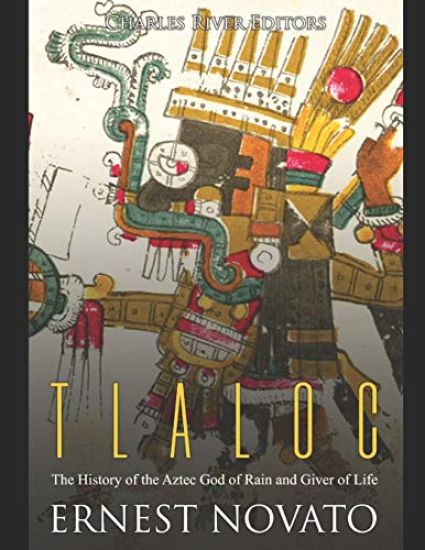
Tlaloc: The History of the Aztec God of Rain and Giver of Life

Tlaloc: The History of the Aztec God of Rain and Giver of Life

Ernest Novato; Charles River

Independently Published
2019
nidottu
*Includes pictures*Includes a bibliography for further readingGilgamesh, Hercules, Aeneas, and Lancelot are instantly recognized as mythological heroes in the West, evoking visions of Persian monsters, ghastly labors, and the founding and glorification of cities, but the name Quetzalcoatl is as mysterious as its spelling. Even those who have come across his name when learning about the history of Mesoamerica - particularly the Aztec and the god's role in the Spanish conquest of their empire - are often unaware that the Mesoamerican deity has tales that equal any of those in the repertoire of the mythological figures mentioned above, and the tale of his transmission into modern times is no less fascinating. As archaeologists quickly learned, there are numerous temples dedicated to gods all across Mesoamerica, from the Olmec and Toltec to the Aztec and Maya. Furthermore, thousands of people still gather in the ruins of Mesoamerican cities, even as researchers learn more about the civilizations that continue to generate interest among modern societies. Gods and myths reflect the societies that created them. The lustrous Garden of Eden was dreamed up by those for whom such verdant plenty could only be magical when compared with their usually arid environment. Peoples who endured harsh winters sang of eternal hearth fires and those who were threatened by dangerous animals told stories of humans who could tame them. Of course, these deities also often reflected the nuanced difficulties their creators experienced in their daily lives, and this is the case with the Aztec god Tlaloc. As the great scholar of Mesoamerican history and religion Kay Almere Read put it, "Rain and water deities constitute perhaps the largest, one of the oldest, most pervasive and complex group of gods and goddesses in Mesoamerica." The Valley of Mexico is the central elevated basin that contains Mexico City at its heart today. Surrounded by mountains and volcanoes, the Valley's lowest point is actually some 2200 meters above sea level and just like the plains of Mesopotamia or the Nile Delta, it is one of humanity's great birthplaces of civilization. Inhabited for over 12,000 years, it was the home to such creative cultures as the Teotihuacan, the Toltec, and the Aztec. These cultures built vast empires and colored them with sophisticated art and architecture, which is invaluable for scholars who study the groups today, and symbols of Tlaloc have been pervasive across their ruins. One of the reasons for the prevalence of Tlaloc in the Valley of Mexico is that in the semi-arid climate, water was a powerful daily symbol. Although there were no naturally occurring water connections to the sea, the high altitude of the mountains and volcanoes that surrounded it caught the rain water well and formed five important lakes: Xochimilco, Xaltocan, Zumpango, Chalco and Texcoco. As the largest, Texcoco was where the Aztecs eventually built their capital city Tenochtitlan. Since this was not a desert culture, their god Tlaloc was not just a reflection of an opposite extreme they desired; instead, he was a complex god that reflected the duality of water as both a boon and a force for destruction. From his home in Tlalocan, Tlaloc was able to send good and bad waters to the people of the Valley of Mexico and beyond. He was the lord of the chthonic powers of Mexico even as far south as the Maya, who called him Chaac and connected him with warfare and agriculture much the same way the Aztec did. The Aztec tell the story of Tlaloc blessing their rise to regional dominance by sending a famine to the Toltec, and his duality of good waters vs. bad waters was a product of the largely two-season system in Mexico. Tlaloc: The History of the Aztec God of Rain and Giver of Life examines the origins of the deity and his place in the pantheon of gods.