Kirjojen hintavertailu – 12 903 725 kirjaa ja 27 kauppaa

Kirjailija

Charles River

Kirjat ja teokset yhdessä paikassa: 4 673 kirjaa, julkaisuja vuosilta 2013–2022, suosituimpiin kuuluu William Powell and Myrna Loy: The Lives and Careers of One of Classical Hollywood's Most Iconic Duos. Vertaile teosten hintoja ja tarkista saatavuus suomalaisista kirjakaupoista.

4 673 kirjaa

Kirjojen julkaisuvuodet: 2013–2022.

The California Trail: The History and Legacy of the 19th Century Routes that Led Americans to the Golden State
*Includes pictures*Includes a bibliography for further readingThe Lewis and Clark Expedition, notwithstanding its merits as a feat of exploration, was also the first tentative claim on the vast interior and the western seaboard of North America by the United States. It set in motion the great movement west that began almost immediately with the first commercial overland expedition funded by John Jacob Astor's Pacific Fur Company and would continue with the establishment of the Oregon Trail and California Trail. The westward movement of Americans in the 19th century was one of the largest and most consequential migrations in history, and among the paths that blazed west, the California Trail was one of the most well-known. The trail was not a single road but a network of paths that began at several "jumping off" points. As it so happened, the paths were being formalized and coming into use right around the time gold was discovered in the lands that became California in January 1848. Located thousands of miles away from the country's power centers on the East Coast at the time, the announcement came a month before the Mexican-American War had ended, and among the very few Americans that were near the region at the time, many of them were Army soldiers who were participating in the war and garrisoned there. San Francisco was still best known for being a Spanish military and missionary outpost during the colonial era, and only a few hundred called it home. Mexico's independence, and its possession of those lands, had come only a generation earlier. At the same time, the journey itself was fraught with risk. It's easy for people with modern transportation to comfortably reminisce about the West, but many pioneers discovered that the traveling came with various kinds of obstacles and danger, including bitter weather, potentially deadly illnesses, and hostile Native Americans, not to mention an unforgiving landscape that famous American explorer Stephen Long deemed "unfit for human habitation." 19th century Americans were all too happy and eager for the transcontinental railroad to help speed their passage west and render overland paths obsolete. One of the main reasons people yearned for new forms of transportation was because of the most notorious and tragic disaster in the history of westward travel. While people still romanticize the Wild West, many Americans are also familiar with the fate of the Donner Party, a group of 87-90 people heading for California who met with disaster in the Sierra Nevada mountain range during the winter of 1846-1847. The party knew the journey would take months, but early snowfalls in the mountains left dozens of people trapped in snow drifts that measured several feet, stranding them in a manner that made it virtually impossible for them to go any further for several weeks. The plight of the Donner Party made news across the nation, even before the surviving members were rescued and brought to safety, and by the time the doomed expedition was over, less than 50 of them made it to California. As writer Ethan Rarick summed it up, "more than the gleaming heroism or sullied villainy, the Donner Party is a story of hard decisions that were neither heroic nor villainous." The California Trail: The History and Legacy of the 19th Century Routes that Led Americans to the Golden State examines how the various paths were forged, the people most responsible for them, and the most famous events associated with the trail's history. Along with pictures depicting important people, places, and events, you will learn about the California Trail like never before.
The Battle of Grunwald: The History and Legacy of the the Polish-Lithuanian-Teutonic War's Decisive Battle
*Includes pictures*Includes a bibliography for further reading"We accept the swords you send us, and in the name of Christ, before whom all stiff-necked pride must bow, we shall do battle." - PolishKing Vladislav II As the dissipating fog gave way to an unnerving sight, the mass of frightening figures clad head to toe in gleaming armor would have been enough to take anyone's breath away. Some of them were mounted on the backs of handsome stallions, while others leaned forward with squared shoulders, ready to attack. In one swift motion, the men unsheathe their swords and raise it over their heads, their weapons winking as the glare of the sunlight bounces off the blade. To the somewhat trained eye, these warriors in Norman-inspired gear would have appeared to be one of the Crusader forces, but it is that bold black cross painted across their chests and shields that give them away. These men were none other than the fabled Teutonic Knights. The knights of the Teutonic Order have since been compared to the surreal creature that appeared to the biblical Ezekiel, one that bore 2 faces - one of a man's, and one of a lion's. The human side of the creature is said to symbolize the order's charity, whereas the lion was a metaphor for its valor and gallant spirit, which they relied on to vanquish the heathens of the world. Like other secretive groups, the mystery surrounding the Teutonic Knights has helped their legacy endure. While some conspiracy theorists attempt to tie the group to other alleged secret societies like the Illuminati, other groups have tried to assert connections with the Teutonic Knights to bolster their own credentials. Who they were and what they had in their possession continue to be a source of great intrigue even among non-historical circles. While the military orders are now often tied to religion or conspiracy theories, they did once wield great power and influence in Europe, and their actions had consequences centuries after they had reached their peak. This was made clear in the wake of a major battle fought between German and Russian forces from August 26-30, 1914 during the First World War. It occurred in Masuria, a region of marshes, woodland, and numerous lakes in northern Poland, almost 400,000 men were involved, and it was a decisive victory for the Germans, who annihilated the Russian army. The Germans named the battle after Tannenberg (Polish Stebark), and the battle, though widely fought over 100 miles, did indeed encompass the village, but there was a historical reason for assigning the name to the battle. On July 15, 1410, Tannenberg was the site of another decisive battle between the army of the Germanic Teutonic Order and that of Poland-Lithuania, a battle now commonly referred to as the Battle of Grunwald (after another nearby village). German nationalism saw the destruction of the Russians as vengeance upon the Slavs for the defeat of 1410, and the Nazis also exploited that sentiment during their invasions of Poland and Russia. Conversely, for Poles and Russians, the Teutonic Knights were precursors of the rapacious Germans of the Second and Third Reichs, and Grunwald was a symbol of freedom and resistance. These sentiments remain strong to this day. These considerations aside, the Battle of Grunwald was significant for a number of reasons. It marked the end of the German colonization of Slavic and Baltic lands in northeastern Europe that had begun in the 12th century. It therefore also marked the beginning of an age when the Slavic (principally the Polish) peoples could grow and expand without interference from the West. The battle also signified the end of the Teutonic Knights as a major power and marked the rise of the Polish-Lithuanian Commonwealth.
The Fall of Saigon: The History of the Battle for South Vietnam's Capital and the End of the Vietnam War
*Includes pictures*Includes a bibliography for further readingThe Vietnam War could have been called a comedy of errors if the consequences weren't so deadly and tragic. In 1951, while war was raging in Korea, the United States began signing defense pacts with nations in the Pacific, intending to create alliances that would contain the spread of Communism. As the Korean War was winding down, America joined the Southeast Asia Treaty Organization, pledging to defend several nations in the region from Communist aggression. One of those nations was South Vietnam. Before the Vietnam War, most Americans would have been hard pressed to locate Vietnam on a map. South Vietnamese President Diem's regime was extremely unpopular, and war broke out between Communist North Vietnam and South Vietnam around the end of the 1950s. Kennedy's administration tried to prop up the South Vietnamese with training and assistance, but the South Vietnamese military was feeble. A month before his death, Kennedy signed a presidential directive withdrawing 1,000 American personnel, and shortly after Kennedy's assassination, new President Lyndon B. Johnson reversed course, instead opting to expand American assistance to South Vietnam. Over the next few years, the American military commitment to South Vietnam grew dramatically, and the war effort became both deeper and more complex. The strategy included parallel efforts to strengthen the economic and political foundations of the South Vietnamese regime, to root out the Viet Cong guerrilla insurgency in the south, combat the more conventional North Vietnamese Army (NVA) near the Demilitarized Zone between north and south, and bomb military and industrial targets in North Vietnam itself. In public, American military officials and members of the Johnson administration stressed their tactical successes and offered rosy predictions; speaking before the National Press Club in November 1967, General Westmoreland claimed, "I have never been more encouraged in the four years that I have been in Vietnam. We are making real progress... I am absolutely certain that whereas in 1965 the enemy was winning, today he is certainly losing." Ripe for the plucking by North Vietnam, the country of South Vietnam found itself in an unenviable position in 1974. American forces rapidly withdrew, leaving only a few advisers and other personnel in place of the large forces deployed in the Southeast Asian theater until recently. President Gerald Ford and his staff, completely outmatched at the negotiations during the American retreat, parleyed from a position of weakness. The North Vietnamese gave essentially no useful concessions since they had no reason to, and they secured an American withdrawal without needing to remove their own advance units from South Vietnamese territory in return. Naturally, these facts reflected themselves in the morale of the two sides. South Vietnamese morale collapsed to catastrophic levels and remained there, though the ARVN (Army of the Republic of Vietnam) forces occasionally managed gallant, even heroic stands. The North Vietnamese, by contrast, felt confident of victory, from the highest to the lowest ranks. A mix of Marxist zeal and barely expressed but very real nationalism strengthened the resolve of the North Vietnamese's commanders and soldiers as well. A haunting fear remained among the North Vietnamese that the Americans would return, but each fresh success with no American response made this concern recede further into the background. As 1975 dawned, the NVA prepared for a final series of campaigns to conquer the territory of South Vietnam, leading to a chain of events that culminated with the fall of Saigon and some of the most infamous footage in 20th century America's history. The Fall of Saigon: The History of the Battle for South Vietnam's Capital and the End of the Vietnam War examines how the war ended.
Robert Frost: The Life and Legacy of the Famous 20th Century American Poet
*Includes pictures*Includes a bibliography for further reading"I'd like to get away from earth awhileAnd then come back to it and begin over. May no fate willfully misunderstand meAnd half grant what I wish and snatch me awayNot to return. Earth's the right place for love: I don't know where it's likely to go better. I'd like to go by climbing a birch tree, And climb black branches up a snow-white trunkToward heaven, till the tree could bear no more, But dipped its top and set me down again. That would be good both going and coming back. One could do worse than be a swinger of birches." - Robert Frost, "Birches"Of all the authors and poets American schoolchildren may be exposed to over the course of their education, Robert Frost is often one of the first, and on rare occasions that he is not, it is still a near certainty that some of his most famous poems will be discussed at some point. Many will have memorized "Stopping by Woods on a Snowy Evening" before finishing grade school or will instantly recall the end of "The Road Not Taken." Frost may not be as remembered or influential as other American literary giants, or even poets such as Emily Dickinson and Walt Whitman, but his career was historic in terms of its length and breadth of accomplishments. Over the course of several decades, Frost became the first to win four Pulitzer Prizes for Poetry, and he also earned such recognitions as a Congressional Medal of Honor before being made the poet laureate of Vermont shortly before the end of his life. The many works he put out and the various styles of prose all greatly influenced his contemporaries and future generations of writers, even as he ably described a rural America of a seemingly bygone era and managed to instill universal ideas and teachings therein. Poet Amy Lowell may have described his abilities best early on in Frost's career, writing of him, "He tells you what he has seen exactly as he has seen it. And in the word exactly lies the half of his talent. The other half is a great and beautiful simplicity of phrase, the inheritance of a race brought up on the English Bible. Mr. Frost's work is not in the least objective. He is not writing of people whom he has met in summer vacations, who strike him as interesting, and whose life he thinks worthy of perpetuation. Mr. Frost writes as a man under the spell of a fixed idea. He is as racial as his own puppets. One of the great interests of the book is the uncompromising New Englander it reveals. ... Art is rooted in the soil, and only the very greatest men can be both cosmopolitan and great. Mr. Frost is as New England as Burns is Scotch, Synge Irish, or Mistral Proven al." Robert Frost: The Life and Legacy of the Famous 20th Century American Poet looks at his remarkable life and work. Along with pictures depicting important people, places, and events, you will learn about Robert Frost like never before.
Robert Frost: The Life and Legacy of the Famous 20th Century American Poet
*Includes pictures*Includes a bibliography for further reading"I'd like to get away from earth awhileAnd then come back to it and begin over. May no fate willfully misunderstand meAnd half grant what I wish and snatch me awayNot to return. Earth's the right place for love: I don't know where it's likely to go better. I'd like to go by climbing a birch tree, And climb black branches up a snow-white trunkToward heaven, till the tree could bear no more, But dipped its top and set me down again. That would be good both going and coming back. One could do worse than be a swinger of birches." - Robert Frost, "Birches"Of all the authors and poets American schoolchildren may be exposed to over the course of their education, Robert Frost is often one of the first, and on rare occasions that he is not, it is still a near certainty that some of his most famous poems will be discussed at some point. Many will have memorized "Stopping by Woods on a Snowy Evening" before finishing grade school or will instantly recall the end of "The Road Not Taken." Frost may not be as remembered or influential as other American literary giants, or even poets such as Emily Dickinson and Walt Whitman, but his career was historic in terms of its length and breadth of accomplishments. Over the course of several decades, Frost became the first to win four Pulitzer Prizes for Poetry, and he also earned such recognitions as a Congressional Medal of Honor before being made the poet laureate of Vermont shortly before the end of his life. The many works he put out and the various styles of prose all greatly influenced his contemporaries and future generations of writers, even as he ably described a rural America of a seemingly bygone era and managed to instill universal ideas and teachings therein. Poet Amy Lowell may have described his abilities best early on in Frost's career, writing of him, "He tells you what he has seen exactly as he has seen it. And in the word exactly lies the half of his talent. The other half is a great and beautiful simplicity of phrase, the inheritance of a race brought up on the English Bible. Mr. Frost's work is not in the least objective. He is not writing of people whom he has met in summer vacations, who strike him as interesting, and whose life he thinks worthy of perpetuation. Mr. Frost writes as a man under the spell of a fixed idea. He is as racial as his own puppets. One of the great interests of the book is the uncompromising New Englander it reveals. ... Art is rooted in the soil, and only the very greatest men can be both cosmopolitan and great. Mr. Frost is as New England as Burns is Scotch, Synge Irish, or Mistral Proven al." Robert Frost: The Life and Legacy of the Famous 20th Century American Poet looks at his remarkable life and work. Along with pictures depicting important people, places, and events, you will learn about Robert Frost like never before.
Samuel Colt and Oliver Winchester: The Lives and Careers of America's Most Influential Gunsmiths
*Includes pictures*Includes a bibliography for further readingGunsmiths in early 19th century America were helped along by noted artisans from Germany, Switzerland, and other European powers, but despite advances made in the European and American musket, the requirement of an exterior spark and percussion to ignite powder for a single-shot discharge remained the paradigm. Similarly, the era was unable to move past the cumbersome weapon that required at least half a minute to reload. The military compensation for such an ungainly and vulnerable process was the alternation of troop lines, in which one fired while the other reloaded from behind. Effective as that was in laying down constant fire and simultaneous reloading, the force as a whole was disabled by a large fraction, and the reloading soldiers were vulnerable to saber attacks on horseback as well. From the bayonet of 1620 to the emergence of repeating firearms in the American Civil War, sometimes referred to as the "first truly modern war," military procedures remained largely the same, based on entrenched European customs. Napoleonic tactics were taught as mainstream at the military academies, and the musket remained in a stagnant state of evolution, but even the most tradition-bound army command was forced to give way at some point to a generation of scientist-inventors, civilian manufacturing centers, and entrepreneurs born during the Industrial Revolution. The old guard dug in its heels, and even well past the Civil War, new technologies were met with stiff resistance. High-ranking officers, drawn from the ranks of martial families steeped in the War of 1812, fended off the new scientific engineering and what they considered the waste of random firing. However, the realities of American expansionism, population redistribution, a labor movement unwilling to cede its members well-being, and the rise of the factory became impossible to ignore. The driving forces behind modern light weaponry were new disciples of mass production, interchangeable parts, and a more developed and aggressive marketing style. Evolution of the modern rifle did not provide all of its own impetus. As the ever-improving cartridge progressed from primitive paper to brass encasement, the weapons required to fire with the charge were forced to change as well. By the time weapons industrialist Samuel Colt was born, the Lewis and Clark Expedition sent to the Pacific by Thomas Jefferson had only recently returned with their report on the first overland continental journey. Outside of a small group of mountain men trapping and trading fur for European fashion magnates, few white settlers had found their way across the Great Plains. The firearms of the Revolution demonstrated little difference between a soldier's flintlock musket and a hunting weapon taken from the mantle. As the civilian entrepreneur and the soldier became increasingly interdependent, the new corporate executives of arms companies became tycoons. Mass production and increasingly sophisticated marketing techniques helped to create the national and international arms merchant, a model upon which global governments expanded. With few exceptions, the nature of the modern firearm as an everyday utility enabled these giants to arm any ideology, or both sides of any conflict. In the manner that Samuel Colt broke open the single-shot tradition in hand weapons, Oliver Fisher Winchester and his celebrated rifle shared the title of "the gun that won the West." In the arena of portable arms, these two men dominated much of the technological and promotive aspects of 19th century weaponry, alternating between resisting and collaborating with rivals. While Colt created the first effective revolver mechanism for the handgun based on the technology of the ship's wheel, it was Oliver Winchester who instituted 140 years of branding dominance by virtue of the first reliable repeating rifle.
Jackie Robinson and Moses Fleetwood Walker: The Lives and Careers of the Players Who Integrated Major League Baseball
*Includes pictures*Includes excerpts of contemporary accounts*Includes a bibliography for further reading"I'm not concerned with your liking or disliking me... All I ask is that you respect me as a human being." - Jackie RobinsonIn his introduction to The Jackie Robinson Reader, sports historian Jules Tygiel succinctly observed, "Extraordinary lives often reveal ordinary truths. Jackie Robinson was born in 1919 and died in 1972. He crammed into these brief fifty-three years a legacy of accomplishment, acclaim, controversy, and influence matched by few Americans. He was, even before his historic baseball breakthrough, an athlete of legendary proportions. He won fame and adulation as the first African-American to play in the major leagues in the twentieth century, launching an athletic revolution that transformed American sports. He garnered baseball's highest honors: Rookie of the Year, Most Valuable Player, and first-ballot election to the Hall of Fame. More significantly, Robinson became a symbol of racial integration and a prominent leader in the civil rights struggle of the 1950s and 1960s. Yet Jackie Robinson's half century among us illuminates not just the contours of an exceptional life, but much about the broader African-American experience of those years." Tygiel is, of course, correct in his assessment of Robinson's life, and any biography of the baseball legend will share with its readers some of the amazing stories of his life, beginning with his difficult birth in Cairo, Georgia, following him across the country to California, and then north to Montreal and south to Florida. Along the way, readers learn of a man once consumed by rage who learned, through time and practice, as well as the influence of several important mentors, to rein in his anger and use it to change the world. Though born in a sharecropper's cabin, he corresponded with presidents. Growing up in the shadow of an Olympian older brother, he found his own place in the sun, and, more importantly, he ¬¬¬¬¬smoothed the journey to success for countless others. His name has gone down not in just one but in two pantheons of history, both on and off the baseball field as a noble fighter for equal rights. Given his legacy, many Americans today believe Jackie Robinson was the first black man to play in Major League Baseball, but that answer is wrong. As far back as the late 19th century, there had been professional baseball leagues that were every bit as segregated as any other aspect of society, but before that, there were, for a brief shining moment, there were teams of black and white men playing with and against each other. One of the first black men to play on such a team was Moses Fleetwood Walker, and he was the first who openly identified as black. In an essay entitled "African-Americans in Toledo Sports," one author observed, "Moses Fleetwood Walker's promising but all too short professional baseball career mirrors the experience of most of the great African American ballplayers before the Negro Leagues began play in the early twentieth century. Walker was a gifted defensive catcher and adequate offensive player, but his career would be cut short by racism... Walker, well educated for a man of any race in the late 19th century, respond to this racism first with ambivalence, later with anger, and finally with prose. Walker's seminal work, Our Home Colony put him directly in line with the thoughts and words of future leader Marcus Garvey in his call for a separation of the races and a return of African Americans to Africa." To this day, over 130 years after he played, Walker's life and his contributions to baseball history remain mostly forgotten, obscuring how a fascinating athlete with many talents experienced racism without letting it break him.
Los antiguos libios y nubios: la historia y el legado de los vecinos más destacados del antiguo Egipto en África
Durante los varios siglos en que el antiguo Egipto se irgui como una de las m s grandes civilizaciones, si no la m s grande, del mundo antiguo, los conflictos con sus enemigos jugaban a menudo un rol central en textos jerogl ficos y arte de los templos y tumbas. Los tres principales enemigos de los egipcios eran los libios que ocupaban el desierto occidental y sus oasis, los llamados asi ticos que viv an en el Levante, y finalmente los nubios al sur de Egipto. Entre los tres pueblos, los nubios eran los m s "egipcianizados" y, en momentos, fueron integrales para el desarrollo de la historia egipcia. Verdaderamente, los nubios fueron el m s grande de todos los pueblos subsaharianos en tiempos premodernos y merecen ser estudiados por derecho propio, aparte de la historia antigua egipcia. Desafortunadamente, dado que los nubios tomaron prestado mucho en t rminos culturales de su vecino al norte, a menudo es dif cil para los estudiosos separar aspectos de la antigua cultura nubia que fueran verdaderamente nicos y "nubios", de aquellos que eran egipcios. Un historiador se al "Como era de esperar, se ven rasgos nubios fuertes y coloraci n oscura en sus trabajos de escultura y relieve. Esta dinast a se ubica entre las m s grandiosas, cuya fama sobrepas por mucho su tenencia real del trono. Resulta especialmente interesante que fue un miembro de esta dinast a quien decret que ning n 'Nehsy' (nubios ribere os del principado de Kush), excepto los que ven an por razones diplom ticas o comerciales, deb a pasar junto a la fortaleza egipcia en el extremo sur de la segunda catarata del Nilo. Por qu esta familia real de ascendencia nubia prohibir a que otros nubios entraran al territorio egipcio? Porque los gobernantes egipcios de ascendencia nubia se hab an vuelto egipcios culturalmente; como faraones, exhib an actitudes t picamente egipcias y adoptaron pol ticas t picamente egipcias". Las guerras entre libios y egipcios alcanzaron un punto febril durante el Nuevo Reino, cuando los libios organizaron coaliciones anti egipcias e incluso formaron una alianza con los misteriosos Pueblos del Mar. Para el Nuevo Reino tard o, Egipto era un campo armado, pero ultimadamente no fue capaz de contener la marea de la migraci n libia. Los libios supieron sacar ventaja de sus n meros, finalmente conquistando Egipto y estableciendo dos dinast as. Sus antepasados crearon otras dos. Lamentablemente, la historia temprana de Libia est repleta de lagunas, pues los libios no se alfabetizaron hasta principios de la Edad del Hierro, y los arque logos modernos han descubierto poco de su cultura material. Como resultado, los estudios modernos sobre los antiguos libios se ven obligados a sintetizar evidencia arqueol gica utilizando referencias textuales y pict ricas egipcias, fuentes cl sicas y referencias b blicas, para poder llegar a una imagen m s completa. La relaci n entre los libios y los egipcios fue realmente compleja, y una revisi n a profundidad de la historia libia desde el periodo Neol tico hasta mediados del siglo VI AEC demuestra cu n importantes fueron los libios en el mundo antiguo.
Los antiguos libios: la misteriosa historia de los vecinos de Egipto al Oeste durante la Antigüedad
Los antiguos egipcios son bien conocidos hoy en d a por los enemigos que tuvieron. En sus textos, los egipcios hicieron abundantes referencias a los "viles asi ticos" y los "desgraciados kushitas, que eran sus vecinos cananeos y nubios, respectivamente. Los nubios y cananeos tambi n fueron representados en numerosos relieves de los templos y tumbas a lo largo y ancho de Egipto, lo que le ha dado a los estudiosos modernos una impresi n general de c mo vest an y luc an esas personas, as como ‒quiz s m s importante‒ c mo los egipcios ve an a estos pueblos. Los nubios y cananeos recibieron la mayor atenci n, como enemigos de Egipto y socios comerciales ocasionales, pero fueron los libios ‒el tercero de los enemigos tradicionales de Egipto‒ quienes m s influenciaron la cultura egipcia. A diferencia de los nubios o los cananeos, los libios estaban casi siempre en guerra con los egipcios. Las razones para los conflictos b licos casi constantes son dif ciles de discernir, pero muy probablemente se originan del hecho de que Libia era pobre en recursos, de manera que los egipcios ten an pocas razones para comerciar con los libios. Por otro lado, los libios codiciaban la riqueza material de Egipto. El resultado fueron numerosas campa as putativas en Libia por parte de los egipcios y asaltos y saqueos de los libios en Egipto. Las guerras entre libios y egipcios alcanzaron un punto febril durante el Nuevo Reino, cuando los libios organizaron coaliciones anti egipcias e incluso formaron una alianza con los misteriosos Pueblos del Mar. Para el Nuevo Reino tard o, Egipto era un campo armado, pero ultimadamente no fue capaz de contener la marea de la migraci n libia. Los libios supieron sacar ventaja de sus n meros, finalmente conquistando Egipto y estableciendo dos dinast as. Sus antepasados crearon otras dos. Lamentablemente, la historia temprana de Libia est repleta de lagunas, pues los libios no se alfabetizaron hasta principios de la Edad del Hierro, y los arque logos modernos han descubierto poco de su cultura material. Como resultado, los estudios modernos sobre los antiguos libios se ven obligados a sintetizar evidencia arqueol gica utilizando referencias textuales y pict ricas egipcias, fuentes cl sicas y referencias b blicas, para poder llegar a una imagen m s completa. La relaci n entre los libios y los egipcios fue realmente compleja, y una revisi n a profundidad de la historia libia desde el periodo Neol tico hasta mediados del siglo VI AEC demuestra cu n importantes fueron los libios en el mundo antiguo. Los antiguos libios: la misteriosa historia de los vecinos de Egipto al Oeste durante la Antig edad examina los diversos grupos y su impacto en la regi n y las culturas que siguieron. En conjunto con fotograf as de lugares, personas y eventos importantes aprender sobre los antiguos libios como nunca antes.
Kosmos 954 and Operation Morning Light: The History of Efforts to Contain Radioactive Debris Spread across Canada by a Soviet Satellite
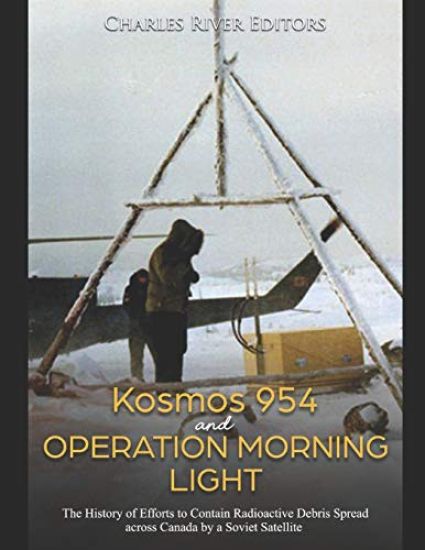
*Includes pictures*Includes a bibliography for further reading"We are just not good enough to tell New York City, for instance, that a satellite is coming and will knock King Kong off the Empire State Building at 2 P. M." - Lieutenant Colonel Yanchek, Space Defense Center chief, 1978 (Wilford, Jan 29, 1978, 1.)In the predawn sky of northern Canada on the morning of January 24th, 1978, a long streak of blue fire suddenly rushed across the starry vista northeast of the remote town of Yellowknife. Those out on the bitterly cold night, with a temperature many tens of degrees below zero Fahrenheit, saw a brilliant leading object sheathed in flames, blue or bluish red, and shining with incandescent intensity. Other, smaller objects or fragments shed off it, arcing or tumbling earthwards on their own trajectories. Even in this remote location, a number of individuals saw and reported the unusual phenomenon. Out under the starry dome of the distant north, where celestial objects appeared with burning clarity through the frigid, pure air, they watched the apparition until it vanished in the northeast, somewhere far over Great Slave Lake. One such observer, a native of the Dog Rib tribe named Jimmy Doctor, recounted what he saw: "That night I saw it I was listening to the radio at home when I heard some noise behind the house. So I got up to see what it was. It was a dog howling into the sky beside my skidoo. I looked up into the sky to see if the moon was still shining. That was when I seen the big flame going north east. I ran outside to see what it was. I thought it was a plane on fire. I didn't know what it was. It sounded like air coming out of a tire. That was the way I saw the satellite." (Heaps, 1978, 54). Of the relatively few people who witnessed it, most assumed they witnessed a burning passenger jet crashing. One thought that it might have something to do with lasers after seeing a program about them on television. Others, observing its speed and unusual appearance, recognized they had not seen a crashing aircraft, but had no ready explanation for it at all. Conversely, Canadian and American officials knew precisely what the people of Yellowknife and the surrounding areas witnessed. Within a short time, teams of scientists and security experts boarded aircraft to converge on the deep wilderness where the Soviet spy satellite Kosmos 954 had just crashed into the atmosphere and burned up over Great Slave Lake, strewing radioactive debris over an area of approximately 48,000 square miles. Those efforts would kick off one of the most unique environmental operations in history. Kosmos 954 and Operation Morning Light: The History of Efforts to Contain Radioactive Debris Spread across Canada by a Soviet Satellite examines how the satellite malfunctioned, the disastrous results, and efforts to clean up the radioactivity. Along with pictures depicting important people, places, and events, you will learn about Operation Morning Light like never before.
Kosmos 954 and Operation Morning Light: The History of Efforts to Contain Radioactive Debris Spread across Canada by a Soviet Satellite
*Includes pictures*Includes a bibliography for further reading"We are just not good enough to tell New York City, for instance, that a satellite is coming and will knock King Kong off the Empire State Building at 2 P. M." - Lieutenant Colonel Yanchek, Space Defense Center chief, 1978 (Wilford, Jan 29, 1978, 1.)In the predawn sky of northern Canada on the morning of January 24th, 1978, a long streak of blue fire suddenly rushed across the starry vista northeast of the remote town of Yellowknife. Those out on the bitterly cold night, with a temperature many tens of degrees below zero Fahrenheit, saw a brilliant leading object sheathed in flames, blue or bluish red, and shining with incandescent intensity. Other, smaller objects or fragments shed off it, arcing or tumbling earthwards on their own trajectories. Even in this remote location, a number of individuals saw and reported the unusual phenomenon. Out under the starry dome of the distant north, where celestial objects appeared with burning clarity through the frigid, pure air, they watched the apparition until it vanished in the northeast, somewhere far over Great Slave Lake. One such observer, a native of the Dog Rib tribe named Jimmy Doctor, recounted what he saw: "That night I saw it I was listening to the radio at home when I heard some noise behind the house. So I got up to see what it was. It was a dog howling into the sky beside my skidoo. I looked up into the sky to see if the moon was still shining. That was when I seen the big flame going north east. I ran outside to see what it was. I thought it was a plane on fire. I didn't know what it was. It sounded like air coming out of a tire. That was the way I saw the satellite." (Heaps, 1978, 54). Of the relatively few people who witnessed it, most assumed they witnessed a burning passenger jet crashing. One thought that it might have something to do with lasers after seeing a program about them on television. Others, observing its speed and unusual appearance, recognized they had not seen a crashing aircraft, but had no ready explanation for it at all. Conversely, Canadian and American officials knew precisely what the people of Yellowknife and the surrounding areas witnessed. Within a short time, teams of scientists and security experts boarded aircraft to converge on the deep wilderness where the Soviet spy satellite Kosmos 954 had just crashed into the atmosphere and burned up over Great Slave Lake, strewing radioactive debris over an area of approximately 48,000 square miles. Those efforts would kick off one of the most unique environmental operations in history. Kosmos 954 and Operation Morning Light: The History of Efforts to Contain Radioactive Debris Spread across Canada by a Soviet Satellite examines how the satellite malfunctioned, the disastrous results, and efforts to clean up the radioactivity. Along with pictures depicting important people, places, and events, you will learn about Operation Morning Light like never before.
Uluru: The History and Legacy of the Australian Landmark Considered Sacred by the Local Aborigines
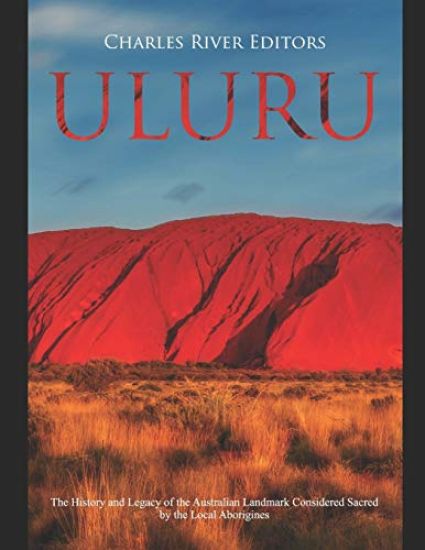
*Includes pictures*Includes a bibliography for further readingThe magnificent monolith the locals call "Uluru," situated in the heart of Australia, hovers over a patchy bed of desert poplars and spinifex grasslands. The pleasant, but otherwise unexceptional surroundings of the spellbinding sandstone landform only further accentuates its majesty, one that can be appreciated from a variety of angles. To lime-colored budgerigars, mighty brown falcons, passengers in planes and helicopters, and other creatures blessed with the gift of flight, the free-form rock is reminiscent of the fossil of a spiky fish, a misshapen arrowhead, or perhaps a peculiar, ocher-tinged seashell peeking out of the sand. To those gazing upon the natural gem on solid ground, the flat-topped, burnt sienna beauty, marked with character-forming dimples, ripples, and ridges, looks more like a sleeping, thousand-year-old turtle, particularly through squinted eyes. Its striking appearance aside, Uluru, also known as "Ayers Rock," is far more than an unmissable landmark. Uluru represents an inimitable symbol of life and culture, and a place of worship sacred to the region's aboriginal inhabitants. Given the long and riveting history attached to this hallowed rock, the aura of mysticality and mystery that clings to Uluru should come as no surprise. Not only does the rock's flaky surface change color throughout the day - going from a deep violet with hints of gray to a light lilac, to a fiery orange-red during sunrise, and from its usual apricot-gold to a faded orange, to a dreamy purplish-pink at dusk - Uluru, they say, is an endless source of inexplicable happenings and paranormal occurrences. Although the natives have spared no effort in underscoring the rock's spiritual and cultural significance to the Aborigines, their pleas for visitors to respect the rock have been repeatedly ignored. Indeed, the lack of courtesy displayed towards Uluru has heightened in recent years, and the land's inhabitants have been forced to navigate the so-called age of the "social media influencer." Thousands of tourists swarm the rock every year, sticking their head through aboriginal spy holes and modeling pretentious yoga poses with captions to match. Perhaps most notoriously, a 25-year-old French-born exotic dancer named Alizee Sery angered netizens around the globe in 2010 when she hiked up to the top of Uluru and stripped down to nothing but an Akubra cattleman hat, bikini bottoms, and white go-go boots. Sery spoke to various news outlets shortly thereafter and defended the strip tease, filmed for a documentary, which she claimed was meant as an homage to the indigenous peoples. According to Sery's partially paternalistic explanation, "'My project is a tribute to the greatness of the rock. What we need to remember is that traditionally, the Aboriginal people were living naked. So stripping down was a return to what it was like." Aboriginal elders, on the other hand, branded the attention-seeking stunt "stupid" and compared it to relieving oneself on the Vatican steps. As Kon Vatskalis, Minister of the Northern Territory Government, put it, "How would... French people feel if an Australian danced semi-naked on the altar of the Notre Dame?" Uluru: The History and Legacy of the Australian Landmark Considered Sacred by the Local Aborigines examines the geological origins of the famous rock, its most interesting characteristics, and its history. Along with pictures depicting important people, places, and events, you will learn about Uluru like never before.
Cantre'r Gwaelod: The Mysterious Legend of the Ancient Sunken Kingdom Known as the Welsh Atlantis
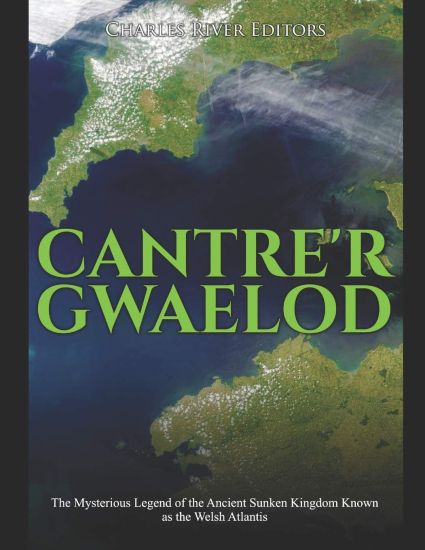
*Includes pictures*Includes excerpts of contemporary sources*Includes a bibliography for further reading"We can trace almost all the disasters of English history to the influence of Wales." - Evelyn Waugh, English novelistWales is a whimsical country with a powerful, complex, myth-filled and oft disputed history. In 2004, geneticists working with geographers and archaeological colleagues undertook a "People of the British Isle" study. They sought out thousands of volunteers, all four of whose grandparents had been born in the same place, and they analyzed their genetic make-up. "Modern genetic analysis can read the patterns of variation in our complete set of DNA . . . that change subtly over time," producing a genetic signature that reveals geographical origins. This provides a window into history and helps explain why Wales is so singular and self contained. (Settlers: Genetics, geography and the peopling of Britain N D). The results of this project confirmed that the Welsh are unique, despite the common belief that the term "Celtic" is an homogenous concept that can be used as an overall term that includes the Irish, the Welsh, the Scottish clans, and Cornwellians. "Celtic" is much more nuanced. The study revealed that there are 17 distinct genetic clusters of people in the modern United Kingdom: the dominant clusters are in Central and Southern England; nine smaller clusters are identified in England and Wales; Western Scotland and Northern Ireland share a great deal of genetic material; and Cornish, Welsh, Irish and Scottish, normally thought of as "Celtic," are significantly genetically diverse. The real kicker is that the present Welsh are much more closely related to the original Britons than the rest of the inhabitants of the United Kingdom. The "settlers" project concludes that "the Welsh are the true, pure Britons, according to the research that has produced the first genetic map of the UK." (Settlers: Genetics, geography and the peopling of Britain. N D)By the time Doggerland had disappeared under the seas, the people who remained, the first Britons, were from the European continent and the Atlantic seaboard, maybe even northern Africa. There was a sudden influx of people from Gaul to Britainn across the channel around 24000 BCE. They were metal workers and perhaps attracted to the newly-discovered copper mine in northern Wales at Great Orme. A complete shoulder cape, dated as having been made in 1500 BCE, was discovered in a burial mound in a field called Bryn yr Ellyllon ("Fairies' Hill") in Mold in Flintshire in Wales in 1833. It had been fashioned from a single gold nugget, weighed 650 grams, and was covered with intricate designs. It had obviously been worn by an important person of slight stature during some kind of ritual practice. However, it seems these people did not stay in Wales very long, or at least not long enough to leave much of a genetic mark. From these origins, tales of an ancient sunken kingdom began to spread, and they have persisted over the centuries, leading many to search for the place called Cantre'r Gwaelod. Cantre'r Gwaelod: The Mysterious Legend of the Ancient Sunken Kingdom Known as the Welsh Atlantis chronicles the origins of the story, the way it spread as it became more popular, and its impact on history. Along with pictures depicting important people, places, and events, you will learn about Cantre'r Gwaelod like never before.
Cantre'r Gwaelod: The Mysterious Legend of the Ancient Sunken Kingdom Known as the Welsh Atlantis
*Includes pictures*Includes excerpts of contemporary sources*Includes a bibliography for further reading"We can trace almost all the disasters of English history to the influence of Wales." - Evelyn Waugh, English novelistWales is a whimsical country with a powerful, complex, myth-filled and oft disputed history. In 2004, geneticists working with geographers and archaeological colleagues undertook a "People of the British Isle" study. They sought out thousands of volunteers, all four of whose grandparents had been born in the same place, and they analyzed their genetic make-up. "Modern genetic analysis can read the patterns of variation in our complete set of DNA . . . that change subtly over time," producing a genetic signature that reveals geographical origins. This provides a window into history and helps explain why Wales is so singular and self contained. (Settlers: Genetics, geography and the peopling of Britain N D). The results of this project confirmed that the Welsh are unique, despite the common belief that the term "Celtic" is an homogenous concept that can be used as an overall term that includes the Irish, the Welsh, the Scottish clans, and Cornwellians. "Celtic" is much more nuanced. The study revealed that there are 17 distinct genetic clusters of people in the modern United Kingdom: the dominant clusters are in Central and Southern England; nine smaller clusters are identified in England and Wales; Western Scotland and Northern Ireland share a great deal of genetic material; and Cornish, Welsh, Irish and Scottish, normally thought of as "Celtic," are significantly genetically diverse. The real kicker is that the present Welsh are much more closely related to the original Britons than the rest of the inhabitants of the United Kingdom. The "settlers" project concludes that "the Welsh are the true, pure Britons, according to the research that has produced the first genetic map of the UK." (Settlers: Genetics, geography and the peopling of Britain. N D)By the time Doggerland had disappeared under the seas, the people who remained, the first Britons, were from the European continent and the Atlantic seaboard, maybe even northern Africa. There was a sudden influx of people from Gaul to Britainn across the channel around 24000 BCE. They were metal workers and perhaps attracted to the newly-discovered copper mine in northern Wales at Great Orme. A complete shoulder cape, dated as having been made in 1500 BCE, was discovered in a burial mound in a field called Bryn yr Ellyllon ("Fairies' Hill") in Mold in Flintshire in Wales in 1833. It had been fashioned from a single gold nugget, weighed 650 grams, and was covered with intricate designs. It had obviously been worn by an important person of slight stature during some kind of ritual practice. However, it seems these people did not stay in Wales very long, or at least not long enough to leave much of a genetic mark. From these origins, tales of an ancient sunken kingdom began to spread, and they have persisted over the centuries, leading many to search for the place called Cantre'r Gwaelod. Cantre'r Gwaelod: The Mysterious Legend of the Ancient Sunken Kingdom Known as the Welsh Atlantis chronicles the origins of the story, the way it spread as it became more popular, and its impact on history. Along with pictures depicting important people, places, and events, you will learn about Cantre'r Gwaelod like never before.
The Battle of Hamburger Hill: The History and Legacy of One of the Vietnam War's Most Controversial Battles
*Includes pictures*Includes a bibliography for further reading"We are in for some tough fighting ahead, but I feel we have never before been more capable of success than now. The NVA we are going to meet out there will be highly trained, well-equipped, hard-core troops who will stand and fight, especially when we get close to his base camps and supply depots." - Colonel John Hoefling, 2nd Brigade, March 1, 1969 The Vietnam War could have been called a comedy of errors if the consequences weren't so deadly and tragic. In 1951, while war was raging in Korea, the United States began signing defense pacts with nations in the Pacific, intending to create alliances that would contain the spread of Communism. As the Korean War was winding down, America joined the Southeast Asia Treaty Organization, pledging to defend several nations in the region from Communist aggression. One of those nations was South Vietnam. Faced with such a determined opponent, skilled in asymmetrical warfare and enjoying considerable popular support, the Americans would ultimately choose to fight a war of attrition. While the Americans did employ strategic hamlets, pacification programs, and other kinetic counterinsurgency operations, they largely relied on a massive advantage in firepower to overwhelm and grind down the Viet Cong and NVA in South Vietnam. The goal was simple: to reach a "crossover point" at which communist fighters were being killed more quickly than they could be replaced. American ground forces would lure the enemy into the open, where they would be destroyed by a combination of artillery and air strikes. One of the most infamous battles of the Vietnam War, the Battle of Hamburger Hill - officially, part of Operation Apache Snow - occurred in spring of 1969. Towering over the perilous, elephant grass choked length of the A Shau Valley, Hill 937, otherwise known as Hamburger Hill or Dong Ap Bia ("Crouching Beast Mountain"), rose to a height of over 3,074 feet above sea level. The Americans launched a series of 11 attacks against this low mountain's NVA defenders, leading to fierce combat involving both advanced weaponry and infantry tactics unchanged since World War II. The Battle of Hamburger Hill ranks as one of the most famous - or infamous - of the Vietnam War. Over time, however, all nuance and context have vanished, leaving a legend of pointless butchery which ignores the very real strategic and tactical considerations that converged to produce the encounter. The battle pitted several battalions of the 101st Airborne Division, one of America's most famous fighting units, against the 29th Regiment of the NVA. The latter's toughness, skill, courage, and zeal earned it the unofficial sobriquet of "The Pride of Ho Chi Minh." Both units fought extremely hard and with great determination, inflicting high casualties on one another. The change from an elusive strategy to one of aggression marked a shift in North Vietnamese action, too. Documents captured during the battle indicated the 29th moved into the A Shau Valley and occupied Hill 937 as a staging area for a second full-scale attack on the city of Hue. This, in turn, triggered a shift in American military thinking, though as was often the case during the war, the results suffered from the effects of large-scale political interference. The Battle of Hamburger Hill: The History and Legacy of One of the Vietnam War's Most Controversial Battles chronicles one of the most controversial campaigns of the war, and the effects it had on both sides. Along with pictures of important people, places, and events, you will learn about the Battle of Hamburger Hill like never before.