Kirjojen hintavertailu – 12 903 725 kirjaa ja 27 kauppaa

Kirjailija

Charles River

Kirjat ja teokset yhdessä paikassa: 4 673 kirjaa, julkaisuja vuosilta 2013–2022, suosituimpiin kuuluu William Powell and Myrna Loy: The Lives and Careers of One of Classical Hollywood's Most Iconic Duos. Vertaile teosten hintoja ja tarkista saatavuus suomalaisista kirjakaupoista.

4 673 kirjaa

Kirjojen julkaisuvuodet: 2013–2022.

The Great Barrier Reef and Uluru: The History and Legacy of Australia's Most Famous Landmarks
*Includes pictures*Includes a bibliography for further reading"Coral is a very beautiful and unusual animal. Each coral head consists of thousand of individual polyps. These polyps are continually budding and branching into genetically identical neighbors." - Antony Garrett ListPeople have always loved to build things, whether it's a feat of engineering in an underground subway or the construction of the world's tallest skyscraper. Thus, it's somewhat ironic that the largest structure ever built was not made by humans but by incredibly tiny organisms known as coral polyps. Over the course of tens of thousands of years, these small organisms have put together a collection of nearly 3,000 reefs that form a collective stretching across 130,000 square miles. It is often mistakenly claimed that the Great Wall of China can be seen in space, but it's absolutely true that the enormous Great Barrier Reef is visible. The sheer size of the Great Barrier Reef is mind-boggling, but its importance extends far past its physical extent. Put simply, the Great Barrier Reef is one of the most beautiful spots on the planet, offering kaleidoscopic colors thanks to the coral and the species that call it home. This is understandable because a staggering number of species inhabit the Great Barrier Reef, ranging from starfish and turtles to alligators and birds. Scientists have counted about 1,500 different fish species using the reef, and it's estimated that even 1.5 million birds use the site. In designating it a World Heritage Site, UNESCO wrote of the Great Barrier Reef, "The Great Barrier Reef is a site of remarkable variety and beauty on the north-east coast of Australia. It contains the world's largest collection of coral reefs, with 400 types of coral, 1,500 species of fish and 4,000 types of mollusc. It also holds great scientific interest as the habitat of species such as the dugong ('sea cow') and the large green turtle, which are threatened with extinction." Unfortunately, an ecosystem as complex as the Great Barrier Reef is also vulnerable to a host of threats, whether it's fishing, oil spills, or climate change. J. E. N. Veron, former chief scientist of the Australian Institute of Marine Science, described watching how coral was affected during what's known as a mass bleaching event: "And then I saw a whammy, a mass bleaching event ... where everything turns white and dies. Sometimes it's only the fast-growing branching corals, but some of the others are horrible to see; corals that are four, five, six hundred years old-they die, too... It's real, day in, day out, and I work on this, day in, day out. It's like seeing a house on fire in slow motion... There's a fire to end all fires, and you're watching it in slow motion, and you have been for years." In fact, scientists fear that the Great Barrier Reef has lost most of its coral cover in the last 30 years, which poses a danger to the species that inhabit it, some of which are already endangered. The magnificent monolith the locals call "Uluru," situated in the heart of Australia, hovers over a patchy bed of desert poplars and spinifex grasslands. The pleasant, but otherwise unexceptional surroundings of the spellbinding sandstone landform only further accentuates its majesty, one that can be appreciated from a variety of angles. To lime-colored budgerigars, mighty brown falcons, passengers in planes and helicopters, and other creatures blessed with the gift of flight, the free-form rock is reminiscent of the fossil of a spiky fish, a misshapen arrowhead, or perhaps a peculiar, ocher-tinged seashell peeking out of the sand. To those gazing upon the natural gem on solid ground, the flat-topped, burnt sienna beauty, marked with character-forming dimples, ripples, and ridges, looks more like a sleeping, thousand-year-old turtle, particularly through squinted eyes.
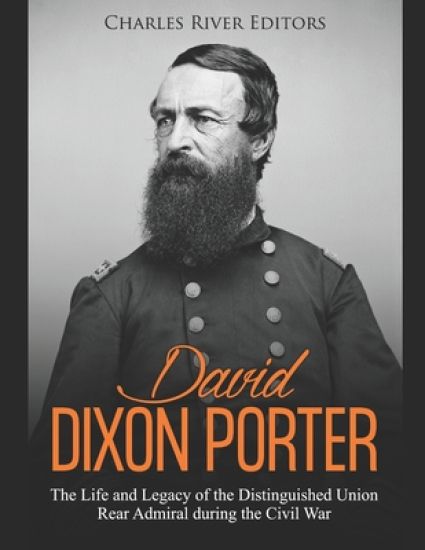
David Dixon Porter: The Life and Legacy of the Distinguished Union Rear Admiral during the Civil War
*Includes pictures*Includes a bibliography for further reading"Porter is but a Commander. He has, however, stirring and positive qualities, is fertile in resources, has great energy, excessive and sometimes not over-scrupulous ambition, is impressed with and boastful of his own powers, given to exaggeration in relation to himself, -a Porter infirmity, -is not generous to older and superior living officers, whom he is too ready to traduce, but is kind and patronizing to favorites who are juniors, and generally to official inferiors. Is given to cliquism but is brave and daring like all his family... It is a question, with his mixture of good and bad traits, how he will succeed." - Secretary of the Navy Gideon WellesAmericans have long been fascinated by the Civil War, marveling at the size of the battles, the leadership of the generals, and the courage of the soldiers. Since the war's start over 150 years ago, the battles have been subjected to endless debate among historians and the generals themselves. The Civil War was the deadliest conflict in American history, and had the two sides realized it would take 4 years and inflict over a million casualties, it might not have been fought. Since it did, however, historians and history buffs alike have been studying and analyzing the biggest battles ever since. After the first year of the Civil War, the Confederacy was faced with a serious problem. While the South had enjoyed some stunning victories on land, they had been all but cut off from the world at sea. The more industrialized North had realized that in case of an extended war, the best way to defeat the Confederacy was to starve it of supplies. The rebels started the war with no real navy to speak of, and so the federal government quickly set up a blockade of all Southern ports and river mouths. By depriving the South of revenues derived from its main export, cotton, the North seriously injured the Southern economy. Without European intervention and the ability to build a navy that could rival the Union's, the Confederacy was mostly reduced to token resistance and using fast moving ships that could evade the blockade and import and export goods. Again, that was only partially successful, and today, the blockade runners are better known for their extracurricular activities; most notably, some of the crews also acted as privateers on the high seas, attacking U. S. shipping and taking any loot for themselves. The daring exploits of these commerce raiders caught the imagination of Southern soldiers and civilians and buoyed up morale, even as the war news turned increasingly grim. Meanwhile, the North managed to have spectacular success jointly coordinating operations between the Army and Navy, thanks in large measure to the leadership of officers like David Farragut and David Dixon Porter. While generals like Ulysses S. Grant and William Tecumseh Sherman received the lion's share of the credit for Union victories, especially in the Western Theater, naval forces were instrumental in the capture of New Orleans and Vicksburg, as well as at Fort Donelson and Fort Henry. Porter was recognized throughout the Civil War for his service, even as he was subjected to the kind of politicking that marked the war effort in Washington, and he became just the second man in the history of the U. S. Navy to attain the rank of Admiral. He would also have a distinguished career after the war as he helped reform the Navy. David Dixon Porter: The Life and Legacy of the Distinguished Union Rear Admiral during the Civil War chronicles Porter's upbringing and how it prepared him for his important service in the Civil War. Along with pictures depicting important people, places, and events, you will learn about Porter like never before.
Babe Ruth: The Life and Legacy of Major League Baseball's Most Famous Player
*Includes pictures*Includes a bibliography for further reading"I only have one superstition: I make sure to touch all the bases when I hit a home run." - Babe RuthAs one of America's oldest and most beloved sports, baseball has long been touted as the national pastime, but of all the millions of people who have played it over the last few centuries, the first name that many associate with Major League Baseball is Babe Ruth, whose career spanned over 20 years on the way to becoming the sport's biggest legend. The Bambino came onto the scene as a pitcher for the Boston Red Sox, only to be infamously sold to the rival New York Yankees, where he went on to set records for most home runs (714), runs batted in (2,213), walks (2,062), slugging percentage (.690), and on-base plus slugging (1.164). The Sultan of Swat's records would take decades to be surpassed, but he also managed to win more than 20 games as a pitcher for Boston, along with three World Series before heading to New York. Boston wouldn't win another championship for over 80 years after Ruth's departure, a drought famously referred to as "The Curse of the Bambino." As if he wasn't accomplished enough in Boston, Ruth went on to become a pop culture fixture in New York while playing 15 years for the Yankees on some of the sport's most legendary teams. In addition to leading the Bronx Bombers to four World Series during his time there, Ruth set several single season and career records, elevating the team and MLB itself in ways that athletes could hardly dream of today. Ruth's impact could be keenly felt in a 1922 article authored by Heywood Broun, "Cutting the Heart of the Plate," which said of him, "No one ever requires more than one glance to identify Babe Ruth. Even a wholly ignorant person who had never heard of him would probably stop in wonder at the sight of Babe waddling by. It must be clear to all beholders that here is some great, primitive force harking back to the dim days of the race. William Jennings Bryan might well look upon the Babe and recant. To be sure, a certain ingenuity was required to fit just the proper name upon this personality. As George Herman Ruth he might have gone far but he could hardly have reached the heights. The man who made him by the gift of 'Babe' ought to draw a substantial royalty from Ruth's mighty income. But probably no single individual hit upon the happy thought. Undoubtably a mass movement was required. Babe Ruth has all the vigor and vitality of a piece of folk literature." Over a century after his MLB debut, Ruth remains as well known as ever, and people continue to discuss his exploits both on and off the field. Ruth used to wink at his reputation, joking, "I learned early to drink beer, wine and whiskey. And I think I was about 5 when I first chewed tobacco." Biographer Leigh Montville described a typical scene after a game: "The outrageous life fascinated pitcher Waite] Hoyt, the...freedom of it, the nonstop, pell-mell charge into excess. How did a man drink so much and never get drunk? ... The puzzle of Babe Ruth never was dull, no matter how many times Hoyt picked up the pieces and stared at them. After games he would follow the crowd to the Babe's suite. No matter what the town, the beer would be iced and the bottles would fill the bathtub." Given the passage of time, people tend to debate how good Ruth would be today, including most recently a current MLB reliever, Adam Ottavino, who claimed he would strike out Ruth every time. That claim became even more controversial when Ottavino joined none other than the Yankees ahead of the 2019 season, which led to the reliever walking back some of the comments. But even as far back as 1929, Bucky Harris may have foreseen debates of this kind by pointing out, "These other home run hitters are neck and neck. When the Babe was doing his stuff, he was miles ahead of his field."
Antoni Gaudi and Frank Lloyd Wright: The Lives and Works of the Most Influential Modern Architects
*Includes pictures*Includes a bibliography for further reading"Those who look for the laws of Nature as a support for their new works collaborate with the creator." - Antoni GaudiHalfway into the 19th century, Spain's Catalonia underwent a sweeping transformation when it was thrust into not one, but 2 golden eras - the Renaixen a and the Industrial Revolution. It was during this explosive period of creativity, thriving prosperity, and invigorated patriotism that a steadfastly nonconforming and fascinatingly eccentric icon was born, one that was about to take Catalonia by storm with his brilliant eye for unorthodox art and his legendary - or as some would say, notoriously - out-of-the-box ideas. Salvador Dal , the celebrated surrealist, was one of many who would find a fount of inspiration in him, even once raving about the Sagrada Familia, the highlight of this icon's career: "Those who have not heard about the chromatic and shining essence of its color, the astonishing polyphony of its towers as organ pipes and shocked by its mutant naturalism, are traitors." This icon in question, of course, is none other than what many now consider to be the patriarch of the Catalan Modernism movement: Antoni Gaud . Across the pond, America's most innovative and prolific architect was Frank Lloyd Wright, whose works are almost too vast and diverse to list. Recognized for designing unique churches and distinctive commercial buildings, and admired for his geometric style house designs, Wright has been widely imitated, and his work continues to influence architecture not only in the United States but around the world. Laymen often think they know the definition of "a Frank Lloyd Wright," but they probably don't fully understand the brilliant mind of the man, nor the intricacies of his Prairie Style. Yet it endures because he has made it so. In many ways, Wright's architectural career has overshadowed other aspects of his life. In the course of creating innovative kinds of offices, churches, schools, skyscrapers, hotels, and museums, not to mention furniture and stained-glass decorations, Wright wrote over a dozen books and toured America and Europe at large, often giving widely acclaimed speeches. Despite a somewhat hardscrabble start to life in the Midwest, Wright became known for his flamboyant and entertaining lifestyle, which included multiple marriages and scandals like the murders at his Taliesin studio in 1914. But through it all, Wright continued working nearly up until his death, and in 1991 the American Institute of Architects recognized him as "the greatest American architect of all time"Antoni Gaudi and Frank Lloyd Wright: The Lives and Works of the Most Influential Modern Architects examines the lives of both men, their most memorable works, and the lasting legacies each left. Along with pictures depicting important people, places, and events, you will learn about Antoni Gaudi and Frank Lloyd Wright like never before.
Vampires and Werewolves: The Legends and Folk Tales about History's Most Notorious Mythical Beings
*Includes pictures*Includes excerpts of medieval accountsPeople have always been afraid of the dead. Since the dawn of humanity, people have both cared for those who have deceased yet also tried to keep them away. There are a myriad of legends and beliefs about the dead coming back, and one of the more persistent ones is of the vampire. Werewolves have long been a staple of popular culture. In the 19th century and 20th century, there were countless books, plays, and films about people who turned into wolves or wolf like humanoids and went on rampages. The figure of the werewolf is so familiar that people across the world are familiar with the folklore, and the beliefs that they transform during a full moon, can only be stopped with silver, and transmit their disease by biting their victims. In fact, those beliefs were not originally part of werewolf folklore, but later embellishments by artists. The belief in lycanthropy is far older and more complex than most people suspect, dating all the way back to antiquity, and werewolves were once assumed to be very real. Indeed, people were even put on trial and executed because the courts of law were convinced they could change their form and kill innocent people. For thousands of years, werewolves have represented a strange and ancient tradition that still echoes through culture to this day. Likewise, while everyone has heard of vampires, few people are truly familiar with the history and folklore that have made the mythical beings so popular. Indeed, there are so many legends from so many cultures that it is difficult to come up with a hard definition, and folklore is by its very nature unscientific, but most people in the Western world think of vampires as those who come back from the grave to suck the blood or life essence from the living. This common understanding of vampires actually obscures many European and most non-European traditions of bloodsucking monsters. For example, in China, Japan, and the Middle East, there are spirits that will drain the life force of an unwary person, but these magical beings were never mortal humans. In African and Native American traditions, there are monsters that do the same, but while they are supposed to be of this Earth, they too are not human beings. Furthermore, folklore changes over time, so the vampires people are familiar with today (and the ones some people claim to actually meet) bear little resemblance to the vampires of early modern Europe. Vampires and Werewolves: The Legends and Folk Tales about History's Most Notorious Mythical Beings chronicles how ancient stories about these mysterious supernatural beings became popular and affected history. Along with pictures and a bibliography, you will learn about vampires and werewolves like never before.
Chechnya: The History of the Chechen Republic and the Ongoing Conflict with Russia
*Includes pictures*Includes a bibliography for further reading"There is no people under the sun more vile and deceitful than this one." - Soviet inscription on a statue of 19th century Russian general Aleksey Yermolov in Grozny"Troops assembled villagers and townspeople, loaded them onto trucks - many deportees remembered that they were Studebakers, fresh from Lend-Lease deliveries over the Iranian border - and delivered them at previously designated railheads. ... Those who could not be moved were shot. ... A] few fighters aside, the entire Chechen and Ingush nations, 496,460 people, were deported from their homeland." - Norman NaimarkToday, Chechnya is a republic with some degree of autonomy in the contemporary Russian Federation. Its population is just over a million people, and it stretches over an area of 17,000 square kilometers. The majority of Chechnya's population is comprised of Sunni Muslims, meaning religion has played a key role in the territory's development. In southwestern Russia, landlocked within 100 kilometers of the Caspian Sea, Chechnya is north of the Caucasian mountains, bordering other North Caucasus provinces such as North Ossetia, and Dagestan, and Georgia. Russia itself is a well-established Slavic, Orthodox Christian country, though its majority Muslim provinces were not obvious to outsiders until the post-Soviet conflicts of the 1990s. The history of the Chechen people in the region is, nevertheless, long-established, and Chechnya has become synonymous with conflict, civil war, and discontent. While many people are aware of that, few understand how things reached that point. The area is complex and fascinating, representing one of the world's true fault lines in terms of religion, empire, and geography. To understand Chechen history, it is necessary to understand the region's development, including invasion, settlement, emigration, and the various confrontations and conflicts that have transpired there. Chechnya: The History of the Chechen Republic and the Ongoing Conflict with Russia examines the history of one of the most controversial regions in the world. Along with pictures depicting important people, places, and events, you will learn about Chechnya like never before.
Chechnya: The History of the Chechen Republic and the Ongoing Conflict with Russia
*Includes pictures*Includes a bibliography for further reading"There is no people under the sun more vile and deceitful than this one." - Soviet inscription on a statue of 19th century Russian general Aleksey Yermolov in Grozny"Troops assembled villagers and townspeople, loaded them onto trucks - many deportees remembered that they were Studebakers, fresh from Lend-Lease deliveries over the Iranian border - and delivered them at previously designated railheads. ... Those who could not be moved were shot. ... A] few fighters aside, the entire Chechen and Ingush nations, 496,460 people, were deported from their homeland." - Norman NaimarkToday, Chechnya is a republic with some degree of autonomy in the contemporary Russian Federation. Its population is just over a million people, and it stretches over an area of 17,000 square kilometers. The majority of Chechnya's population is comprised of Sunni Muslims, meaning religion has played a key role in the territory's development. In southwestern Russia, landlocked within 100 kilometers of the Caspian Sea, Chechnya is north of the Caucasian mountains, bordering other North Caucasus provinces such as North Ossetia, and Dagestan, and Georgia. Russia itself is a well-established Slavic, Orthodox Christian country, though its majority Muslim provinces were not obvious to outsiders until the post-Soviet conflicts of the 1990s. The history of the Chechen people in the region is, nevertheless, long-established, and Chechnya has become synonymous with conflict, civil war, and discontent. While many people are aware of that, few understand how things reached that point. The area is complex and fascinating, representing one of the world's true fault lines in terms of religion, empire, and geography. To understand Chechen history, it is necessary to understand the region's development, including invasion, settlement, emigration, and the various confrontations and conflicts that have transpired there. Chechnya: The History of the Chechen Republic and the Ongoing Conflict with Russia examines the history of one of the most controversial regions in the world. Along with pictures depicting important people, places, and events, you will learn about Chechnya like never before.
Ancient Egyptian Language and Writing: The History and Legacy of Hieroglyphs and Scripts in Ancient Egypt
*Includes pictures*Includes excerpts of ancient accounts*Includes a bibliography for further readingPerhaps not surprisingly given how advanced they were in comparison to contemporaries, the Egyptians invented one of the first writing systems ever, and for centuries, people thought these ancient texts held some sort of secret, be it aliens, advanced technology lost to the world, or mystical cures for all of the world's ills. Even the ancient Egyptians saw their writing systems as full of mystery and hidden knowledge - according to Egyptian mythology, writing was invented by the ibis-headed god Thoth, the most intellectual of the gods. He was a scribe, also associated with mathematics, medicine, and astronomy, and could appear as either an ibis or a baboon. Thoth was originally a lunar god, strongly associated with recording events and time. He is more commonly known as the scribe who records judgment in the famous weighing of the heart scene in which a person's fate in the afterlife is decided To the Egyptians, writing was a gift of the gods and should be used accordingly. It was powerful and had the ability to create. For example, written formula offerings could provide sustenance in multiple ways, including being written, depicting the offerings, and read aloud. Each of these methods brought offerings to the recipient for all of eternity. Speaking words was especially powerful as shown in myths where the gods create in this fashion. One such myth is the "Memphite Theology," where the creator god Ptah creates other beings through the "thoughts of his heart and the words of his mouth." Furthermore, writing a person or a god's name gave them power, and erasing their names took the power away. By placing his name on it, a person or king could usurp a statue from someone else. Since writing was hieroglyphic, it was also art, and the images held power. This is evidenced by signs or images being disfigured in tombs or funerary settings, so as not to hurt the owners. These so-called "mutilated signs" were often of serpents or other animals that were able to harm the deceased. The signs might also be left incomplete for the same purpose. That being said, real people wrote these texts. Some of the scribes might have considered themselves magicians, but they weren't time travelers, aliens, or gods. Ancient Egyptian writing is often extremely complex and filled with puns, vague statements about religious mysteries, and general witty banter. In addition to those extremely well-written and thought-out texts, there is also a range of personal letters, administrative texts, and even graffiti. When reading some of these texts, it is remarkable how similar the people of ancient Egypt were to people today when it came to their daily concerns and even the jokes they told. The ancient Egyptian language was Afro-Asiatic, distantly related to Semitic and African ones, and the writing system only used consonants and not vowels, due to the root system. This is similar to how Arabic or Hebrew is written today. Most words had a root of two or three consonants, and the vowels changed based on the form of the word. Ancient Egyptian Language and Writing: The History and Legacy of Hieroglyphs and Scripts in Ancient Egypt examines the history of writing in Egypt, and how it evolved over thousands of years. Along with pictures depicting important people, places, and events, you will learn about Egyptian language and writing like never before.
The Pioneer Program: The History and Legacy of NASA's Unmanned Space Missions to the Outer Solar System
*Includes pictures*Includes a bibliography for further readingToday the Space Race is widely viewed poignantly and fondly as a race to the Moon that culminated with Apollo 11 "winning" the Race for the United States. In fact, it encompassed a much broader range of competition between the Soviet Union and the United States that affected everything from military technology to successfully launching satellites that could land on Mars or orbit other planets in the Solar System. Moreover, the notion that America "won" the Space Race at the end of the 1960s overlooks just how competitive the Space Race actually was in launching people into orbit, as well as the major contributions the Space Race influenced in leading to today's International Space Station and continued space exploration. Space exploration was always an expensive business, and throughout NASA's history, the agency has had to justify to Congress its need for every dollar it intended to spend. This problem has helped NASA to be more careful and more creative with the money they did receive, and scientists had to justify the equipment they wanted to include on each space probe. They had to justify the size and the power demand, too. If they wanted too much, the entire mission might be scrubbed, and all their work would have been for naught. This made planning and designs leaner and more efficient, as scientists and engineers were more careful with their recommendations. At the same time, scientists have been repeatedly surprised by their discoveries. Some of those discoveries revealed the dangers of space, like the Van Allen radiation belt, dangerous to astronauts without the right kind of protection. NASA also discovered the massive radiation belt surrounding Jupiter thanks to the Pioneer probes in 1973 and 1974. Similarly, with the knowledge that Titan, the largest moon of Saturn, has a thick atmosphere, later missions were sent to investigate the moon up close. Thus, the Huygens lander pierced the Titan atmosphere in January of 2005 to investigate. Although Apollo 11's successful mission to the Moon is seen as the culmination of the Space Race, and the Apollo program remains NASA's most famous, one of the space agency's most successful endeavors came a few years later. In fact, the Pioneer program was the most diversified sequence of any of NASA's programs, and though they're now remembered for being among the first probes in history to reach the Outer Solar System, the elaborate planning changed goals several times over several years before resulting in historic successes. NASA had wanted to do a Grand Tour of the Solar System toward the end of the 1970s to take advantage of the scheduled alignment of planets, which meant the Pioneer missions were meant to be test runs prior to the main events (Voyager 1 and Voyager 2), and a great many things discovered by Pioneer 10 and Pioneer 11 were essential to the successful planning of the Voyager probes. The Pioneer Program: The History and Legacy of NASA's Unmanned Space Missions to the Outer Solar System examines the origins behind the missions, the space probes involved, and the historic results. Along with pictures of important people, places, and events, you will learn about the Pioneer program like never before.
The Pioneer Program: The History and Legacy of NASA's Unmanned Space Missions to the Outer Solar System
*Includes pictures*Includes a bibliography for further readingToday the Space Race is widely viewed poignantly and fondly as a race to the Moon that culminated with Apollo 11 "winning" the Race for the United States. In fact, it encompassed a much broader range of competition between the Soviet Union and the United States that affected everything from military technology to successfully launching satellites that could land on Mars or orbit other planets in the Solar System. Moreover, the notion that America "won" the Space Race at the end of the 1960s overlooks just how competitive the Space Race actually was in launching people into orbit, as well as the major contributions the Space Race influenced in leading to today's International Space Station and continued space exploration. Space exploration was always an expensive business, and throughout NASA's history, the agency has had to justify to Congress its need for every dollar it intended to spend. This problem has helped NASA to be more careful and more creative with the money they did receive, and scientists had to justify the equipment they wanted to include on each space probe. They had to justify the size and the power demand, too. If they wanted too much, the entire mission might be scrubbed, and all their work would have been for naught. This made planning and designs leaner and more efficient, as scientists and engineers were more careful with their recommendations. At the same time, scientists have been repeatedly surprised by their discoveries. Some of those discoveries revealed the dangers of space, like the Van Allen radiation belt, dangerous to astronauts without the right kind of protection. NASA also discovered the massive radiation belt surrounding Jupiter thanks to the Pioneer probes in 1973 and 1974. Similarly, with the knowledge that Titan, the largest moon of Saturn, has a thick atmosphere, later missions were sent to investigate the moon up close. Thus, the Huygens lander pierced the Titan atmosphere in January of 2005 to investigate. Although Apollo 11's successful mission to the Moon is seen as the culmination of the Space Race, and the Apollo program remains NASA's most famous, one of the space agency's most successful endeavors came a few years later. In fact, the Pioneer program was the most diversified sequence of any of NASA's programs, and though they're now remembered for being among the first probes in history to reach the Outer Solar System, the elaborate planning changed goals several times over several years before resulting in historic successes. NASA had wanted to do a Grand Tour of the Solar System toward the end of the 1970s to take advantage of the scheduled alignment of planets, which meant the Pioneer missions were meant to be test runs prior to the main events (Voyager 1 and Voyager 2), and a great many things discovered by Pioneer 10 and Pioneer 11 were essential to the successful planning of the Voyager probes. The Pioneer Program: The History and Legacy of NASA's Unmanned Space Missions to the Outer Solar System examines the origins behind the missions, the space probes involved, and the historic results. Along with pictures of important people, places, and events, you will learn about the Pioneer program like never before.
The Battle of Grunwald: The History and Legacy of the the Polish-Lithuanian-Teutonic War's Decisive Battle
*Includes pictures*Includes a bibliography for further reading"We accept the swords you send us, and in the name of Christ, before whom all stiff-necked pride must bow, we shall do battle." - PolishKing Vladislav II As the dissipating fog gave way to an unnerving sight, the mass of frightening figures clad head to toe in gleaming armor would have been enough to take anyone's breath away. Some of them were mounted on the backs of handsome stallions, while others leaned forward with squared shoulders, ready to attack. In one swift motion, the men unsheathe their swords and raise it over their heads, their weapons winking as the glare of the sunlight bounces off the blade. To the somewhat trained eye, these warriors in Norman-inspired gear would have appeared to be one of the Crusader forces, but it is that bold black cross painted across their chests and shields that give them away. These men were none other than the fabled Teutonic Knights. The knights of the Teutonic Order have since been compared to the surreal creature that appeared to the biblical Ezekiel, one that bore 2 faces - one of a man's, and one of a lion's. The human side of the creature is said to symbolize the order's charity, whereas the lion was a metaphor for its valor and gallant spirit, which they relied on to vanquish the heathens of the world. Like other secretive groups, the mystery surrounding the Teutonic Knights has helped their legacy endure. While some conspiracy theorists attempt to tie the group to other alleged secret societies like the Illuminati, other groups have tried to assert connections with the Teutonic Knights to bolster their own credentials. Who they were and what they had in their possession continue to be a source of great intrigue even among non-historical circles. While the military orders are now often tied to religion or conspiracy theories, they did once wield great power and influence in Europe, and their actions had consequences centuries after they had reached their peak. This was made clear in the wake of a major battle fought between German and Russian forces from August 26-30, 1914 during the First World War. It occurred in Masuria, a region of marshes, woodland, and numerous lakes in northern Poland, almost 400,000 men were involved, and it was a decisive victory for the Germans, who annihilated the Russian army. The Germans named the battle after Tannenberg (Polish Stebark), and the battle, though widely fought over 100 miles, did indeed encompass the village, but there was a historical reason for assigning the name to the battle. On July 15, 1410, Tannenberg was the site of another decisive battle between the army of the Germanic Teutonic Order and that of Poland-Lithuania, a battle now commonly referred to as the Battle of Grunwald (after another nearby village). German nationalism saw the destruction of the Russians as vengeance upon the Slavs for the defeat of 1410, and the Nazis also exploited that sentiment during their invasions of Poland and Russia. Conversely, for Poles and Russians, the Teutonic Knights were precursors of the rapacious Germans of the Second and Third Reichs, and Grunwald was a symbol of freedom and resistance. These sentiments remain strong to this day. These considerations aside, the Battle of Grunwald was significant for a number of reasons. It marked the end of the German colonization of Slavic and Baltic lands in northeastern Europe that had begun in the 12th century. It therefore also marked the beginning of an age when the Slavic (principally the Polish) peoples could grow and expand without interference from the West. The battle also signified the end of the Teutonic Knights as a major power and marked the rise of the Polish-Lithuanian Commonwealth.
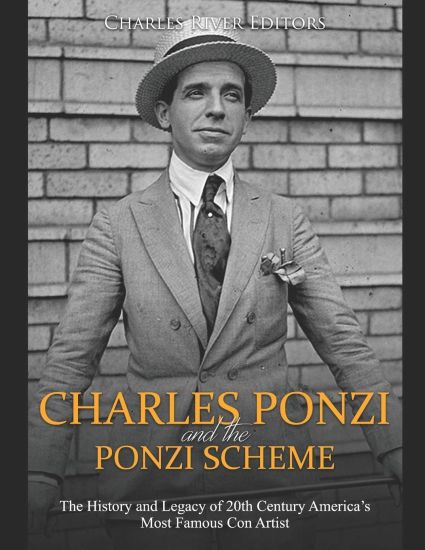
Charles Ponzi and the Ponzi Scheme: The History and Legacy of 20th Century America's Most Famous Con Artist
*Includes pictures*Includes a bibliography for further reading"I went looking for trouble, and I found it." - Charles Ponzi Though few people are familiar with the story of his life, Charles Ponzi's name is almost instantly recognizable thanks to the famous financial scandal named after him. This is somewhat ironic because, while his last name has become synonymous with financial scandal and many recognize how a Ponzi scheme works, some have argued that Ponzi really did not know what he was doing while it was taking place. When reading many of the books and articles written about him, it does seem as though Ponzi believed he would be able to pay back his investors at one point or another. In fact, the scheme that Ponzi created was not a new one - it was historically known as "robbing Peter to pay Paul" - but Ponzi became famous for it because he was able to create a scam in this way on a massive scale. When he was finally caught, it led to the investigation and collapse of several estates and banks, and Massachusetts subsequently found itself in a banking crisis. Moreover, one of the most interesting aspects of the affair is that people from many different social backgrounds and classes were affected by Ponzi's scandal. He took money from teenagers who had savings as low as $20, and he also took millions from New York City's elite. Ponzi's scheme involved scamming investors by promising them a bigger return on their investments than was actually possible. Every investor's money would just be put into a large pool to pay back past investors, and while Ponzi was hardly the first person to engage in such a scheme, the 1920s were ripe for this kind of financial conning. The Roaring Twenties became famous for frivolity, flappers, and Prohibition. Famously depicted in F. Scott Fitzgerald's The Great Gatsby, life after World War I in America was a time of great spending, and people believed that it as possible for them to make great fortunes, no matter what their social background was. The rich wanted to be richer, and the poor believed that they could also attain a quick rags-to-riches story. This kind of climate was ripe for individuals such as Ponzi to make their mark on history, for better and worse. Charles Ponzi and the Ponzi Scheme: The History and Legacy of 20th Century America's Most Famous Con Artist looks at the elaborate fraud designed by one of America's most notorious criminals. Along with pictures and a bibliography, you will learn about Ponzi like never before.
Jackie Robinson and Moses Fleetwood Walker: The Lives and Careers of the Players Who Integrated Major League Baseball
*Includes pictures*Includes excerpts of contemporary accounts*Includes a bibliography for further reading"I'm not concerned with your liking or disliking me... All I ask is that you respect me as a human being." - Jackie RobinsonIn his introduction to The Jackie Robinson Reader, sports historian Jules Tygiel succinctly observed, "Extraordinary lives often reveal ordinary truths. Jackie Robinson was born in 1919 and died in 1972. He crammed into these brief fifty-three years a legacy of accomplishment, acclaim, controversy, and influence matched by few Americans. He was, even before his historic baseball breakthrough, an athlete of legendary proportions. He won fame and adulation as the first African-American to play in the major leagues in the twentieth century, launching an athletic revolution that transformed American sports. He garnered baseball's highest honors: Rookie of the Year, Most Valuable Player, and first-ballot election to the Hall of Fame. More significantly, Robinson became a symbol of racial integration and a prominent leader in the civil rights struggle of the 1950s and 1960s. Yet Jackie Robinson's half century among us illuminates not just the contours of an exceptional life, but much about the broader African-American experience of those years." Tygiel is, of course, correct in his assessment of Robinson's life, and any biography of the baseball legend will share with its readers some of the amazing stories of his life, beginning with his difficult birth in Cairo, Georgia, following him across the country to California, and then north to Montreal and south to Florida. Along the way, readers learn of a man once consumed by rage who learned, through time and practice, as well as the influence of several important mentors, to rein in his anger and use it to change the world. Though born in a sharecropper's cabin, he corresponded with presidents. Growing up in the shadow of an Olympian older brother, he found his own place in the sun, and, more importantly, he ¬¬¬¬¬smoothed the journey to success for countless others. His name has gone down not in just one but in two pantheons of history, both on and off the baseball field as a noble fighter for equal rights. Given his legacy, many Americans today believe Jackie Robinson was the first black man to play in Major League Baseball, but that answer is wrong. As far back as the late 19th century, there had been professional baseball leagues that were every bit as segregated as any other aspect of society, but before that, there were, for a brief shining moment, there were teams of black and white men playing with and against each other. One of the first black men to play on such a team was Moses Fleetwood Walker, and he was the first who openly identified as black. In an essay entitled "African-Americans in Toledo Sports," one author observed, "Moses Fleetwood Walker's promising but all too short professional baseball career mirrors the experience of most of the great African American ballplayers before the Negro Leagues began play in the early twentieth century. Walker was a gifted defensive catcher and adequate offensive player, but his career would be cut short by racism... Walker, well educated for a man of any race in the late 19th century, respond to this racism first with ambivalence, later with anger, and finally with prose. Walker's seminal work, Our Home Colony put him directly in line with the thoughts and words of future leader Marcus Garvey in his call for a separation of the races and a return of African Americans to Africa." To this day, over 130 years after he played, Walker's life and his contributions to baseball history remain mostly forgotten, obscuring how a fascinating athlete with many talents experienced racism without letting it break him.
Samuel Colt and Oliver Winchester: The Lives and Careers of America's Most Influential Gunsmiths
*Includes pictures*Includes a bibliography for further readingGunsmiths in early 19th century America were helped along by noted artisans from Germany, Switzerland, and other European powers, but despite advances made in the European and American musket, the requirement of an exterior spark and percussion to ignite powder for a single-shot discharge remained the paradigm. Similarly, the era was unable to move past the cumbersome weapon that required at least half a minute to reload. The military compensation for such an ungainly and vulnerable process was the alternation of troop lines, in which one fired while the other reloaded from behind. Effective as that was in laying down constant fire and simultaneous reloading, the force as a whole was disabled by a large fraction, and the reloading soldiers were vulnerable to saber attacks on horseback as well. From the bayonet of 1620 to the emergence of repeating firearms in the American Civil War, sometimes referred to as the "first truly modern war," military procedures remained largely the same, based on entrenched European customs. Napoleonic tactics were taught as mainstream at the military academies, and the musket remained in a stagnant state of evolution, but even the most tradition-bound army command was forced to give way at some point to a generation of scientist-inventors, civilian manufacturing centers, and entrepreneurs born during the Industrial Revolution. The old guard dug in its heels, and even well past the Civil War, new technologies were met with stiff resistance. High-ranking officers, drawn from the ranks of martial families steeped in the War of 1812, fended off the new scientific engineering and what they considered the waste of random firing. However, the realities of American expansionism, population redistribution, a labor movement unwilling to cede its members well-being, and the rise of the factory became impossible to ignore. The driving forces behind modern light weaponry were new disciples of mass production, interchangeable parts, and a more developed and aggressive marketing style. Evolution of the modern rifle did not provide all of its own impetus. As the ever-improving cartridge progressed from primitive paper to brass encasement, the weapons required to fire with the charge were forced to change as well. By the time weapons industrialist Samuel Colt was born, the Lewis and Clark Expedition sent to the Pacific by Thomas Jefferson had only recently returned with their report on the first overland continental journey. Outside of a small group of mountain men trapping and trading fur for European fashion magnates, few white settlers had found their way across the Great Plains. The firearms of the Revolution demonstrated little difference between a soldier's flintlock musket and a hunting weapon taken from the mantle. As the civilian entrepreneur and the soldier became increasingly interdependent, the new corporate executives of arms companies became tycoons. Mass production and increasingly sophisticated marketing techniques helped to create the national and international arms merchant, a model upon which global governments expanded. With few exceptions, the nature of the modern firearm as an everyday utility enabled these giants to arm any ideology, or both sides of any conflict. In the manner that Samuel Colt broke open the single-shot tradition in hand weapons, Oliver Fisher Winchester and his celebrated rifle shared the title of "the gun that won the West." In the arena of portable arms, these two men dominated much of the technological and promotive aspects of 19th century weaponry, alternating between resisting and collaborating with rivals. While Colt created the first effective revolver mechanism for the handgun based on the technology of the ship's wheel, it was Oliver Winchester who instituted 140 years of branding dominance by virtue of the first reliable repeating rifle.
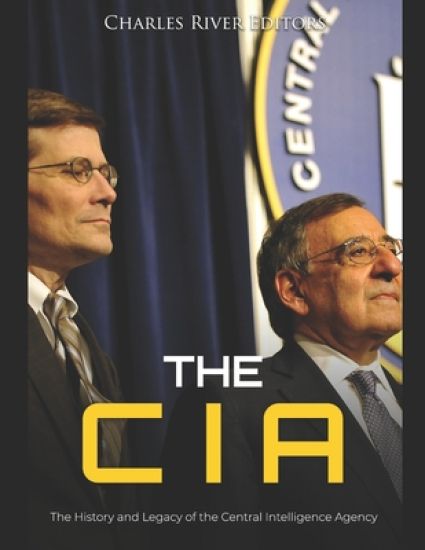
The CIA: The History and Legacy of the Central Intelligence Agency
*Includes pictures*Includes a bibliography for further readingThough it might be hard to believe, the Americans did not have a covert operations organization when they joined the war, and like the British, it took them some time to realize it could be a powerful tool. As a result, the Office of Strategic Services (OSS) was not established until June 13, 1942, six months after the attack on Pearl Harbor. Voices within the Pentagon, State Department, and White House all opposed the establishment of this new and untested organization that would carry out activities normally considered unacceptable, so officials within the OSS had to fight for the very existence of the organization, battling through layers of bureaucracy to get the resources he needed and ensure its independence of action. They also worked hard to justify the use of covert tactics in warfare, to the extent that its leader, William "Wild Bill" Donovan, cited precedents that stretched back to the Bible. In time, all the hard work led to the growth of the OSS into an organization with over 13,000 staff and 40 offices scattered across the world. Its purposes were initially similar to that of Britain's Special Operations Executive, including espionage, sabotage, and intelligence assessments, but with time and experience, it expanded to include economic, psychological, and guerrilla warfare, as well as counter-intelligence work. And of course, it would all chart a path for the early days of America's most famous intelligence agency, the CIA. The 28-year period from 1933-1961, bracketed on one end by Hitler's rise to power in Germany and on the other by the very height of the Cold War, was marked by a remarkably stable succession of American presidents. In fact, only three men held office in this period, and that predictability led to a general stability among government agencies. The CIA had five different directors in its first 15 years, from 1946-1961, but nine different directors in the next 20, with four of those directors serving less than a year. Although plagued by its own share of problems in its early existence during World War II and the early Cold War years, the agency's early problems, smoothed over by a string of tenured presidents, paled in comparison to those it would face in the coming decades. The presidency became much more tumultuous and plagued by scandal and tragedy in the following decades. Beginning with Kennedy, the country had five presidents in the span of less than 20 years, and none of them completed two full terms, so it is perhaps not surprising that the CIA felt its way through its own tough days during this period. To place the agency's blame for its own very real mistakes at the feet of the ever-churning office of the presidency is not entirely fair, because in many cases the CIA made its own bed and was forced to lie in it, but the continuously changing executive landscape and the subsequent jerky and often haphazard changes of directions certainly played a part in the agency's troubles of this period. Through the 1980s and 1990s, presidential terms regained a measure of predictability, but the agency continued to struggle through the traps it had set for itself in the prior decades while trying to find its place in the new world of computers, 24 hour news coverage, and the sheer avalanche of information that came with technological advancements. When the Soviet Union collapsed in 1991, it appeared the CIA might no longer have an adversary formidable enough to keep the agency funded and staffed, but 9/11 ended that fairy tale and brought the CIA's next era into sharp focus. A war on terrorism replaced the Soviet Union as the spy service's primary foil, and the years following the 9/11 attacks were dire for the agency, but the misguided invasion of Iraq and persistent claims of detainee torture and murder sullied the spy agency's reputation right from the start of the 21st century.
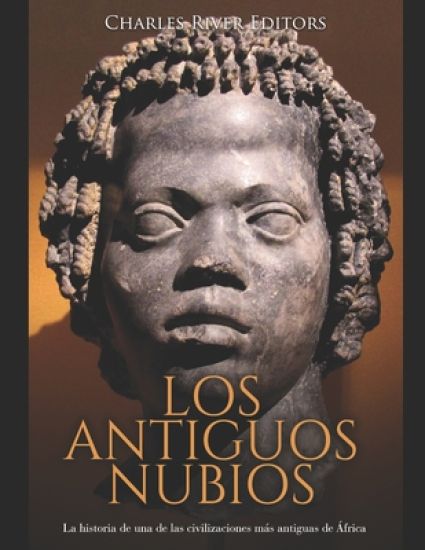
Los antiguos nubios: La historia de una de las civilizaciones más antiguas de África
Durante los varios siglos en que el antiguo Egipto se irgui como una de las m s grandes civilizaciones, si no la m s grande, del mundo antiguo, los conflictos con sus enemigos jugaban a menudo un rol central en textos jerogl ficos y arte de los templos y tumbas. Los tres principales enemigos de los egipcios eran los libios que ocupaban el desierto occidental y sus oasis, los llamados asi ticos que viv an en el Levante, y finalmente los nubios al sur de Egipto. Entre los tres pueblos, los nubios eran los m s "egipcianizados" y, en momentos, fueron integrales para el desarrollo de la historia egipcia. Verdaderamente, los nubios fueron el m s grande de todos los pueblos subsaharianos en tiempos premodernos y merecen ser estudiados por derecho propio, aparte de la historia antigua egipcia. Desafortunadamente, dado que los nubios tomaron prestado mucho en t rminos culturales de su vecino al norte, a menudo es dif cil para los estudiosos separar aspectos de la antigua cultura nubia que fueran verdaderamente nicos y "nubios", de aquellos que eran egipcios. Un historiador se al "Como era de esperar, se ven rasgos nubios fuertes y coloraci n oscura en sus trabajos de escultura y relieve. Esta dinast a se ubica entre las m s grandiosas, cuya fama sobrepas por mucho su tenencia real del trono. Resulta especialmente interesante que fue un miembro de esta dinast a quien decret que ning n 'Nehsy' (nubios ribere os del principado de Kush), excepto los que ven an por razones diplom ticas o comerciales, deb a pasar junto a la fortaleza egipcia en el extremo sur de la segunda catarata del Nilo. Por qu esta familia real de ascendencia nubia prohibir a que otros nubios entraran al territorio egipcio? Porque los gobernantes egipcios de ascendencia nubia se hab an vuelto egipcios culturalmente; como faraones, exhib an actitudes t picamente egipcias y adoptaron pol ticas t picamente egipcias". Robert S. Bianchi fue incluso m s lejos: "Intentar describir a los nubios durante el transcurso del Nuevo Reino de Egipto es una tarea extremadamente dif cil, porque su presencia parece haberse pr cticamente evaporado del registro hist rico. El resultado ha sido descrito como una asimilaci n nubia de gran escala a la sociedad egipcia. Esta asimilaci n fue tan completa que enmascar todas las identidades tnicas de Nubia en lo que respecta a restos arqueol gicos, bajo el impenetrable revestimiento de la cultura material de Egipto". Un examen en profundidad de los antiguos nubios revela que, si bien estaban estrechamente relacionados de muchas formas a los egipcios, produjeron una cultura que ten a muchos atributos propios nicos y estaba mucho m s avanzada que cualquier otra cultura en el frica subsahariana. Aunque los antiguos nubios han recibido menos atenci n que los egipcios y, por ende, no son tan bien conocidos para el p blico en general, fueron verdaderamente un pueblo destacable que dej un legado cultural que ha resistido el paso del tiempo. Los antiguos nubios: La historia de una de las civilizaciones m s antiguas de frica examina la historia de este grupo y su influencia a trav s de la regi n. En conjunto con fotograf as de personas, lugares y eventos importantes, aprender sobre la antigua Nubia como nunca antes, y en nada de tiempo.
Los antiguos libios: la misteriosa historia de los vecinos de Egipto al Oeste durante la Antigüedad
Los antiguos egipcios son bien conocidos hoy en d a por los enemigos que tuvieron. En sus textos, los egipcios hicieron abundantes referencias a los "viles asi ticos" y los "desgraciados kushitas, que eran sus vecinos cananeos y nubios, respectivamente. Los nubios y cananeos tambi n fueron representados en numerosos relieves de los templos y tumbas a lo largo y ancho de Egipto, lo que le ha dado a los estudiosos modernos una impresi n general de c mo vest an y luc an esas personas, as como ‒quiz s m s importante‒ c mo los egipcios ve an a estos pueblos. Los nubios y cananeos recibieron la mayor atenci n, como enemigos de Egipto y socios comerciales ocasionales, pero fueron los libios ‒el tercero de los enemigos tradicionales de Egipto‒ quienes m s influenciaron la cultura egipcia. A diferencia de los nubios o los cananeos, los libios estaban casi siempre en guerra con los egipcios. Las razones para los conflictos b licos casi constantes son dif ciles de discernir, pero muy probablemente se originan del hecho de que Libia era pobre en recursos, de manera que los egipcios ten an pocas razones para comerciar con los libios. Por otro lado, los libios codiciaban la riqueza material de Egipto. El resultado fueron numerosas campa as putativas en Libia por parte de los egipcios y asaltos y saqueos de los libios en Egipto. Las guerras entre libios y egipcios alcanzaron un punto febril durante el Nuevo Reino, cuando los libios organizaron coaliciones anti egipcias e incluso formaron una alianza con los misteriosos Pueblos del Mar. Para el Nuevo Reino tard o, Egipto era un campo armado, pero ultimadamente no fue capaz de contener la marea de la migraci n libia. Los libios supieron sacar ventaja de sus n meros, finalmente conquistando Egipto y estableciendo dos dinast as. Sus antepasados crearon otras dos. Lamentablemente, la historia temprana de Libia est repleta de lagunas, pues los libios no se alfabetizaron hasta principios de la Edad del Hierro, y los arque logos modernos han descubierto poco de su cultura material. Como resultado, los estudios modernos sobre los antiguos libios se ven obligados a sintetizar evidencia arqueol gica utilizando referencias textuales y pict ricas egipcias, fuentes cl sicas y referencias b blicas, para poder llegar a una imagen m s completa. La relaci n entre los libios y los egipcios fue realmente compleja, y una revisi n a profundidad de la historia libia desde el periodo Neol tico hasta mediados del siglo VI AEC demuestra cu n importantes fueron los libios en el mundo antiguo. Los antiguos libios: la misteriosa historia de los vecinos de Egipto al Oeste durante la Antig edad examina los diversos grupos y su impacto en la regi n y las culturas que siguieron. En conjunto con fotograf as de lugares, personas y eventos importantes aprender sobre los antiguos libios como nunca antes.
Charles Ponzi and the Ponzi Scheme: The History and Legacy of 20th Century America's Most Famous Con Artist
*Includes pictures*Includes a bibliography for further reading"I went looking for trouble, and I found it." - Charles Ponzi Though few people are familiar with the story of his life, Charles Ponzi's name is almost instantly recognizable thanks to the famous financial scandal named after him. This is somewhat ironic because, while his last name has become synonymous with financial scandal and many recognize how a Ponzi scheme works, some have argued that Ponzi really did not know what he was doing while it was taking place. When reading many of the books and articles written about him, it does seem as though Ponzi believed he would be able to pay back his investors at one point or another. In fact, the scheme that Ponzi created was not a new one - it was historically known as "robbing Peter to pay Paul" - but Ponzi became famous for it because he was able to create a scam in this way on a massive scale. When he was finally caught, it led to the investigation and collapse of several estates and banks, and Massachusetts subsequently found itself in a banking crisis. Moreover, one of the most interesting aspects of the affair is that people from many different social backgrounds and classes were affected by Ponzi's scandal. He took money from teenagers who had savings as low as $20, and he also took millions from New York City's elite. Ponzi's scheme involved scamming investors by promising them a bigger return on their investments than was actually possible. Every investor's money would just be put into a large pool to pay back past investors, and while Ponzi was hardly the first person to engage in such a scheme, the 1920s were ripe for this kind of financial conning. The Roaring Twenties became famous for frivolity, flappers, and Prohibition. Famously depicted in F. Scott Fitzgerald's The Great Gatsby, life after World War I in America was a time of great spending, and people believed that it as possible for them to make great fortunes, no matter what their social background was. The rich wanted to be richer, and the poor believed that they could also attain a quick rags-to-riches story. This kind of climate was ripe for individuals such as Ponzi to make their mark on history, for better and worse. Charles Ponzi and the Ponzi Scheme: The History and Legacy of 20th Century America's Most Famous Con Artist looks at the elaborate fraud designed by one of America's most notorious criminals. Along with pictures and a bibliography, you will learn about Ponzi like never before.