Kirjojen hintavertailu – 12 903 725 kirjaa ja 27 kauppaa

Kirjailija

Charles River

Kirjat ja teokset yhdessä paikassa: 4 673 kirjaa, julkaisuja vuosilta 2013–2022, suosituimpiin kuuluu William Powell and Myrna Loy: The Lives and Careers of One of Classical Hollywood's Most Iconic Duos. Vertaile teosten hintoja ja tarkista saatavuus suomalaisista kirjakaupoista.

4 673 kirjaa

Kirjojen julkaisuvuodet: 2013–2022.

Tlaloc: The History of the Aztec God of Rain and Giver of Life

Tlaloc: The History of the Aztec God of Rain and Giver of Life

Ernest Novato; Charles River

Independently Published
2019
nidottu
*Includes pictures*Includes a bibliography for further readingGilgamesh, Hercules, Aeneas, and Lancelot are instantly recognized as mythological heroes in the West, evoking visions of Persian monsters, ghastly labors, and the founding and glorification of cities, but the name Quetzalcoatl is as mysterious as its spelling. Even those who have come across his name when learning about the history of Mesoamerica - particularly the Aztec and the god's role in the Spanish conquest of their empire - are often unaware that the Mesoamerican deity has tales that equal any of those in the repertoire of the mythological figures mentioned above, and the tale of his transmission into modern times is no less fascinating. As archaeologists quickly learned, there are numerous temples dedicated to gods all across Mesoamerica, from the Olmec and Toltec to the Aztec and Maya. Furthermore, thousands of people still gather in the ruins of Mesoamerican cities, even as researchers learn more about the civilizations that continue to generate interest among modern societies. Gods and myths reflect the societies that created them. The lustrous Garden of Eden was dreamed up by those for whom such verdant plenty could only be magical when compared with their usually arid environment. Peoples who endured harsh winters sang of eternal hearth fires and those who were threatened by dangerous animals told stories of humans who could tame them. Of course, these deities also often reflected the nuanced difficulties their creators experienced in their daily lives, and this is the case with the Aztec god Tlaloc. As the great scholar of Mesoamerican history and religion Kay Almere Read put it, "Rain and water deities constitute perhaps the largest, one of the oldest, most pervasive and complex group of gods and goddesses in Mesoamerica." The Valley of Mexico is the central elevated basin that contains Mexico City at its heart today. Surrounded by mountains and volcanoes, the Valley's lowest point is actually some 2200 meters above sea level and just like the plains of Mesopotamia or the Nile Delta, it is one of humanity's great birthplaces of civilization. Inhabited for over 12,000 years, it was the home to such creative cultures as the Teotihuacan, the Toltec, and the Aztec. These cultures built vast empires and colored them with sophisticated art and architecture, which is invaluable for scholars who study the groups today, and symbols of Tlaloc have been pervasive across their ruins. One of the reasons for the prevalence of Tlaloc in the Valley of Mexico is that in the semi-arid climate, water was a powerful daily symbol. Although there were no naturally occurring water connections to the sea, the high altitude of the mountains and volcanoes that surrounded it caught the rain water well and formed five important lakes: Xochimilco, Xaltocan, Zumpango, Chalco and Texcoco. As the largest, Texcoco was where the Aztecs eventually built their capital city Tenochtitlan. Since this was not a desert culture, their god Tlaloc was not just a reflection of an opposite extreme they desired; instead, he was a complex god that reflected the duality of water as both a boon and a force for destruction. From his home in Tlalocan, Tlaloc was able to send good and bad waters to the people of the Valley of Mexico and beyond. He was the lord of the chthonic powers of Mexico even as far south as the Maya, who called him Chaac and connected him with warfare and agriculture much the same way the Aztec did. The Aztec tell the story of Tlaloc blessing their rise to regional dominance by sending a famine to the Toltec, and his duality of good waters vs. bad waters was a product of the largely two-season system in Mexico. Tlaloc: The History of the Aztec God of Rain and Giver of Life examines the origins of the deity and his place in the pantheon of gods.
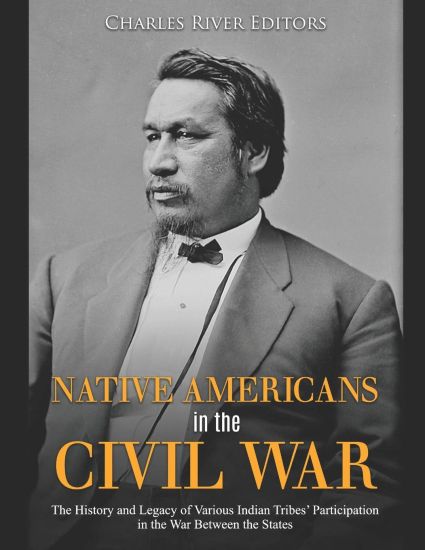
Native Americans in the Civil War: The History and Legacy of Various Indian Tribes' Participation in the War Between the States
*Includes pictures*Includes a bibliography for further readingFew people need to be reminded in the 21st century of the cost of European imperialism and colonization on indigenous and native cultures around the world. The increasingly controversial view of "Columbus Day," still represented on the United States commemorative calendar, attests quite clearly to an ambiguous modern view of early European encounters with Native Americans. Slavery, disease, land and resource appropriation and the rapid disintegration of indigenous societies are all characteristics of European global expansion. There are those societies, particularly in Asia and Africa, that proved resilient enough to weather the European imperialism, but others, most notably those of Australia and North America, certainly did not. By far the most important element in the Civil War from a native standpoint was what happened in and to Indian Territory, now part of the state of Oklahoma. There was a parallel civil war in Indian Territory, with the Cherokee nation splitting in two. While the 100,000 inhabitants of Indian Territory represent most of the experiences during the Civil War, many others were affected by it all over the country. In fact, men from more than two dozen tribal peoples actively participated in the Civil War by fighting for one side or the other. There were full-size Indian regiments fighting for the Confederacy, and full-size Indian regiments fighting for the Union. Indians joined sharpshooter regiments, functioned as scouts, piloted Union ships, and served as guerrillas, while some joined units of United States Colored Troops. Recent estimates are that more than 28,000 Indians served as Civil War soldiers. One difference between Confederates and Union Indian troops is that Confederate Indian units were generally officered by Indians, and Union formations were usually led by white officers, but some Indians in the Union forces did eventually work their way into command. Some 10,000 Indians are thought to have died in Indian Territory as a result of the Civil War, including soldiers, but also as a consequence of a total breakdown of law and order and chronic guerilla war. That estimate could be low, because the Cherokee population alone dropped from 21,000 before the Civil War to 15,000 after it. While Indian Territory was the main stage in American Indian participation in the Civil War, it was not the only element. The Iroquois in New York produced a few hundred Union troops who served mostly with Pennsylvania units, and Ely Parker, who was General Grant's secretary and who drew up the terms for Lee's surrender at Appomattox, became a brigadier general, making him the only Indian Union general. There were remnant tribes in Michigan who joined a sharpshooter regiment, the tiny Caddo tribe in South Carolina soldiered for the Confederacy, and the Eastern Cherokee defended western North Carolina from Union raids and repressed Unionist sentiment. Late in the Civil War, the Lumbee tribe in North Carolina skirmished with Confederate Home Guards. Union politicians in Kansas used war powers to remove Kansas Indians to Indian Territory. There were also many tribal peoples affected by the war who were not direct participants on either side. The Confederate invasion of New Mexico Territory (what is now New Mexico and Arizona) and the Union response profoundly affected the Apache and Navajo. The withdrawal of federal troops to the East weakened federal influence in much of the West, and state militias became more important and were much less concerned about Indian rights and welfare. Native Americans in the Civil War: The History and Legacy of Various Indian Tribes' Participation in the War Between the States explains the various roles played by Native Americans in America's deadliest war.
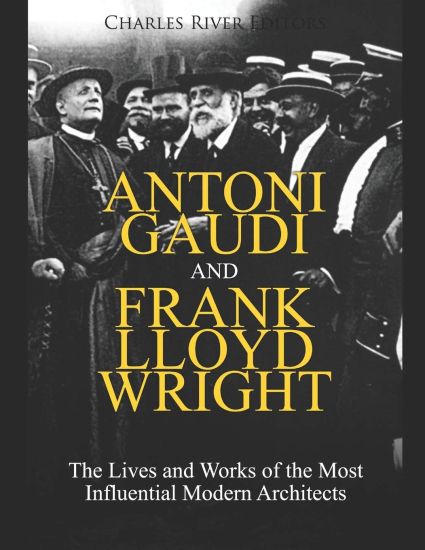
Antoni Gaudi and Frank Lloyd Wright: The Lives and Works of the Most Influential Modern Architects
*Includes pictures*Includes a bibliography for further reading"Those who look for the laws of Nature as a support for their new works collaborate with the creator." - Antoni GaudiHalfway into the 19th century, Spain's Catalonia underwent a sweeping transformation when it was thrust into not one, but 2 golden eras - the Renaixen a and the Industrial Revolution. It was during this explosive period of creativity, thriving prosperity, and invigorated patriotism that a steadfastly nonconforming and fascinatingly eccentric icon was born, one that was about to take Catalonia by storm with his brilliant eye for unorthodox art and his legendary - or as some would say, notoriously - out-of-the-box ideas. Salvador Dal , the celebrated surrealist, was one of many who would find a fount of inspiration in him, even once raving about the Sagrada Familia, the highlight of this icon's career: "Those who have not heard about the chromatic and shining essence of its color, the astonishing polyphony of its towers as organ pipes and shocked by its mutant naturalism, are traitors." This icon in question, of course, is none other than what many now consider to be the patriarch of the Catalan Modernism movement: Antoni Gaud . Across the pond, America's most innovative and prolific architect was Frank Lloyd Wright, whose works are almost too vast and diverse to list. Recognized for designing unique churches and distinctive commercial buildings, and admired for his geometric style house designs, Wright has been widely imitated, and his work continues to influence architecture not only in the United States but around the world. Laymen often think they know the definition of "a Frank Lloyd Wright," but they probably don't fully understand the brilliant mind of the man, nor the intricacies of his Prairie Style. Yet it endures because he has made it so. In many ways, Wright's architectural career has overshadowed other aspects of his life. In the course of creating innovative kinds of offices, churches, schools, skyscrapers, hotels, and museums, not to mention furniture and stained-glass decorations, Wright wrote over a dozen books and toured America and Europe at large, often giving widely acclaimed speeches. Despite a somewhat hardscrabble start to life in the Midwest, Wright became known for his flamboyant and entertaining lifestyle, which included multiple marriages and scandals like the murders at his Taliesin studio in 1914. But through it all, Wright continued working nearly up until his death, and in 1991 the American Institute of Architects recognized him as "the greatest American architect of all time"Antoni Gaudi and Frank Lloyd Wright: The Lives and Works of the Most Influential Modern Architects examines the lives of both men, their most memorable works, and the lasting legacies each left. Along with pictures depicting important people, places, and events, you will learn about Antoni Gaudi and Frank Lloyd Wright like never before.
The Catacombs of Rome and Paris: The History and Legacy of Europe's Most Famous Ossuaries
*Includes pictures*Includes a bibliography for further readingAn inexplicable draft of wind dances across the dirt floors of the narrow passageway, which seems to stretch on with no end. The flickering flames of the torches mounted onto the rough, sandpaper-like walls of stone create eerie shadows on the dirt floors. One can hear the disembodied whispers intermingling with the chill of the musty air, prompting the hair on many people's arms to raise. Logically speaking, this is nothing more than the trick of the mind, but the whispers unquestionably feel tangible and real, especially considering the visitor is in the company of thousands upon thousands of corpses stacked onto the walls from floor to ceiling. This kind of imagery is often what springs to mind at the mention of the Roman catacombs, but there was so much more to these underground cemeteries. In the late 18th century, as political unrest stirred in the heart of Paris, local residents of the neighborhoods surrounding the city's urban cemeteries faced a pressing crisis: the putrefying stink of rotting corpses, many of which were likely friends and family members, crept into every house and business due to overflowing burial grounds. The city's population had long since outgrown its centuries-old cemeteries, and mass graves packed tightly with corpses lay open for months at a time, sometimes upwards of a year, as they waited for more bodies to join. Before long, over-filled charnel houses spilled bones into their neighboring churches. During and after the Enlightenment, science was a popular tool, and many began to question the potential health detriments that such ongoing decay might bring. With growing concerns and rising complaints, the anciens regime of France took steps to begin the long process of transferring old bones from charnel houses and old graves into the miles of tunnels beneath the city streets, now known as the Paris Catacombs. As the French government engaged in this initial step, however, a revolution broke out across the country, initially bringing moderate change before transitioning into a brutal Reign of Terror by the revolutionaries. The chaos would witness a frightened return to a more moderate republic, and finally the rise of Napoleon Bonaparte, yet throughout all of this upheaval, the topic of burial reform in Paris remained pressing and the conversation began to shift from merely a practical issue of space and health to a discussion that included legislators, priests, moralists, and everyday citizens. Put simply, the newly formed government had to decide what to do with the dead, no matter the politics. The Catacombs of Rome and Paris: The History and Legacy of Europe's Most Famous Ossuaries examines the origins of these necropolises, their development throughout the years, and the period of rediscovery that put these subterranean cemeteries on the map. Along with pictures depicting important people, places, and events, you will learn about the Roman and Parisian catacombs like never before.
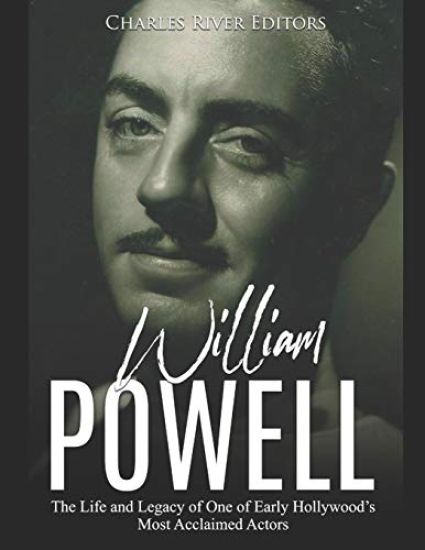
William Powell: The Life and Legacy of One of Early Hollywood's Most Acclaimed Actors
*Includes pictures*Includes a bibliography for further reading"My first scene with Bill, a night shot on the back lot, happened before we'd even met. Woody was apparently too busy for introductions. My instructions were to run out of a building, through a crowd, and into a strange car. When Woody called 'Action, ' I opened the car door, jumped in, and landed smack on William Powell's lap. He looked up nonchalantly: 'Miss Loy, I presume' I said, 'Mr. Powell' And that's how I met the man who would be my partner in fourteen films." - Myrna LoyMovie stars are revered for their ability to captivate audiences, and Hollywood began to flourish before the onset of television, allowing movies to enjoy relatively uncontested supremacy over American entertainment. The popularity of various actors would thus extend well beyond the success of any of their individual films, reflecting their much broader cultural significance as monuments of Hollywood during its Golden Age. In the 1920s, the burgeoning movie industry was starting to come into its own, and while older silent film stars like Charlie Chaplin and Buster Keaton reached the peak of Hollywood, some actors born near the beginning of the 20th century were ready to capitalize. While actors like Humphrey Bogart and Cary Grant remain household names, and actresses like Greta Garbo are still widely remembered, few had careers that enjoyed the success of William Powell. In a career spanning several decades, Powell would receive three Oscar nominations for Best Actor for critically acclaimed movies, so it is somewhat ironic that he is mostly remembered today for his association with the more famous Myrna Loy. Together, they starred in 14 films, including the 1934 box office hit, The Thin Man. One thing that helped Powell's career along in the old days when Hollywood would only cast white actors in major roles, no matter what the nationality of the character was supposed to be, were his dark good looks. In pointing this out, a contemporary profile of Powell explained, "Many people imagine that William Powell has a foreign look. His first big stage success, his first big picture roles, were all in foreign parts - Spanish, Italian, Cuban. As a matter of fact, he is American to the core. Perhaps that look is his heritage from a paternal grandfather named Brady. The black Irish fit into any nationality. There is, too, a good strong strain of Holland Dutch, and a bit of French and English." William Powell: The Life and Legacy of One of Early Hollywood's Most Acclaimed Actors chronicles the long life and diverse career of Powell on and off the screen. Along with pictures depicting important people, places, and events, you will learn about Powell like never before.
Werewolves: The Legends and Folk Tales about Humans Shapeshifting into Wolves
*Includes pictures*Includes excerpts of medieval accounts*Includes a bibliography for further readingWerewolves have long been a staple of popular culture. In the 19th century and 20th century, there were countless books, plays, and films about people who turned into wolves or wolf like humanoids and went on rampages. The figure of the werewolf is so familiar that people across the world are familiar with the folklore, and the beliefs that they transform during a full moon, can only be stopped with silver, and transmit their disease by biting their victims. In fact, those beliefs were not originally part of werewolf folklore, but later embellishments by artists. The belief in lycanthropy is far older and more complex than most people suspect, dating all the way back to antiquity, and werewolves were once assumed to be very real. Indeed, people were even put on trial and executed because the courts of law were convinced they could change their form and kill innocent people. For thousands of years, werewolves have represented a strange and ancient tradition that still echoes through culture to this day. Werewolves: The Legends and Folk Tales about Humans Shapeshifting into Wolves chronicles the ancient traditions and origins behind the belief in the existence of werewolves. Along with pictures of important people, places, and events, you will learn about werewolves like never before.
The Assyrian Empire's Capitals: The History and Legacy of Nineveh, Assur, and Nimrud
*Includes pictures*Includes excerpts of ancient accountsWhen scholars study the history of the ancient Near East, several wars that had extremely brutal consequences (at least by modern standards) often stand out. Forced removal of entire populations, sieges that decimated entire cities, and wanton destruction of property were all tactics used by the various peoples of the ancient Near East against each other, but the Assyrians were the first people to make war a science. When the Assyrians are mentioned, images of war and brutality are among the first that come to mind, despite the fact that their culture prospered for nearly 2,000 years. Like a number of ancient individuals and empires in that region, the negative perception of ancient Assyrian culture was passed down through Biblical accounts, and regardless of the accuracy of the Bible's depiction of certain events, the Assyrians clearly played the role of adversary for the Israelites. Although the Biblical accounts of the Assyrians are among the most interesting and are often corroborated with other historical sources, the Assyrians were much more than just the enemies of the Israelites and brutal thugs. A historical survey of ancient Assyrian culture reveals that although they were the supreme warriors of their time, they were also excellent merchants, diplomats, and highly literate people who recorded their history and religious rituals and ideology in great detail. The Assyrians, like their other neighbors in Mesopotamia, were literate and developed their own dialect of the Akkadian language that they used to write tens of thousands of documents in the cuneiform script (Kuhrt 2010, 1:84). Furthermore, the Assyrians prospered for so long that their culture is often broken down by historians into the "Old", "Middle", and "Neo" Assyrian periods, even though the Assyrians themselves viewed their history as a long succession of rulers from an archaic period until the collapse of the neo-Assyrian Empire in the 7th century BCE. In fact, the current divisions have been made by modern scholars based on linguistic changes, not on political dynasties (van de Mieroop 2007, 179). When Nineveh was at its height, they controlled an empire that encompassed Egypt, Anatolia, Mesopotamia, and parts of Iran. Eventually, the Assyrians overextended themselves and their enemies overthrew them and destroyed much of their cities. Nineveh became lost for centuries, only mentioned in fragments by classical Greek historians, but modern archaeological methods were able to bring the lost city back to life. In northern Iraq, on the banks of the Tigris River, lie the ruins of the ancient city of Assur, the first capital and the most important religious center of the Assyrian Empire. Known today as Qal'at Sherqat, and also as Kilah Shregat, the city dates back to the 3rd millennium BCE. In that time period, the Assyrian army became the largest yet seen, and their warriors were both the greatest and cruelest in the land. They conquered an empire from the Persian Gulf to the Mediterranean Sea; they despoiled the great city of Babylon, and they enslaved the tribes of Israel. Even the pharaoh of Egypt paid them tribute. No army had ever carried war so far. The city of Nimrud was one of the Assyrians' most important cities, and it has been known by many different names throughout its history. In ancient Assyrian, the city was called Kalḫu, a name first attested to in texts dating back to the 13th century BCE. An ancient Assyrian capital during the Neo-Assyrian period, the city has produced many glorious artifacts and provided countless insights into this ancient civilization, but the history of the city after the fall of the Assyrians has proven just as turbulent and interesting.
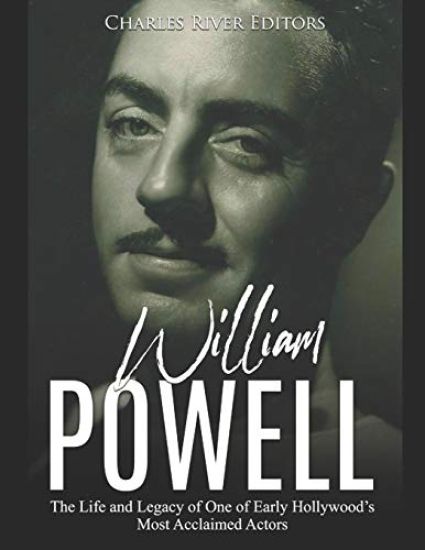
William Powell: The Life and Legacy of One of Early Hollywood's Most Acclaimed Actors
*Includes pictures*Includes a bibliography for further reading"My first scene with Bill, a night shot on the back lot, happened before we'd even met. Woody was apparently too busy for introductions. My instructions were to run out of a building, through a crowd, and into a strange car. When Woody called 'Action, ' I opened the car door, jumped in, and landed smack on William Powell's lap. He looked up nonchalantly: 'Miss Loy, I presume' I said, 'Mr. Powell' And that's how I met the man who would be my partner in fourteen films." - Myrna LoyMovie stars are revered for their ability to captivate audiences, and Hollywood began to flourish before the onset of television, allowing movies to enjoy relatively uncontested supremacy over American entertainment. The popularity of various actors would thus extend well beyond the success of any of their individual films, reflecting their much broader cultural significance as monuments of Hollywood during its Golden Age. In the 1920s, the burgeoning movie industry was starting to come into its own, and while older silent film stars like Charlie Chaplin and Buster Keaton reached the peak of Hollywood, some actors born near the beginning of the 20th century were ready to capitalize. While actors like Humphrey Bogart and Cary Grant remain household names, and actresses like Greta Garbo are still widely remembered, few had careers that enjoyed the success of William Powell. In a career spanning several decades, Powell would receive three Oscar nominations for Best Actor for critically acclaimed movies, so it is somewhat ironic that he is mostly remembered today for his association with the more famous Myrna Loy. Together, they starred in 14 films, including the 1934 box office hit, The Thin Man. One thing that helped Powell's career along in the old days when Hollywood would only cast white actors in major roles, no matter what the nationality of the character was supposed to be, were his dark good looks. In pointing this out, a contemporary profile of Powell explained, "Many people imagine that William Powell has a foreign look. His first big stage success, his first big picture roles, were all in foreign parts - Spanish, Italian, Cuban. As a matter of fact, he is American to the core. Perhaps that look is his heritage from a paternal grandfather named Brady. The black Irish fit into any nationality. There is, too, a good strong strain of Holland Dutch, and a bit of French and English." William Powell: The Life and Legacy of One of Early Hollywood's Most Acclaimed Actors chronicles the long life and diverse career of Powell on and off the screen. Along with pictures depicting important people, places, and events, you will learn about Powell like never before.
Patrice Lumumba: The Life and Legacy of the Pan-African Politician Who Became Congo's First Prime Minister
*Includes pictures*Includes online resources and a bibliography for further reading "Without dignity there is no liberty, without justice there is no dignity, and without independence there are no free men." - Patrice LumumbaThe modern history of Africa was, until very recently, written on behalf of the indigenous races by the white man, who had forcefully entered the continent during a particularly hubristic and dynamic phase of European history. In 1884, Prince Otto von Bismarck, the German chancellor, brought the plenipotentiaries of all major powers of Europe together, to deal with Africa's colonization in such a manner as to avoid provocation of war. This event-known as the Berlin Conference of 1884-1885-galvanized a phenomenon that came to be known as the Scramble for Africa. The conference established two fundamental rules for European seizure of Africa. The first of these was that no recognition of annexation would granted without evidence of a practical occupation, and the second, that a practical occupation would be deemed unlawful without a formal appeal for protection made on behalf of a territory by its leader, a plea that must be committed to paper in the form of a legal treaty. One of the most controversial colonization efforts took place in the Congo, which still conjures up contrasting images of jungles, wildlife, warlords, civil wars, blood diamonds, and the ongoing anarchy of ethnic and tribal warfare. Indeed, the vast expanse of Congo remains one of the most enigmatic and little-known regions of Africa. It is also, undeniably, the original African failed state. It has suffered generations of warlord rule, inter-ethnic violence and insecurity, particularly in the remote and isolated east of the country. The original name of the region derives from the Kingdom of Kongo, a pre-colonial power that ruled a limited region surrounding, and extended south of, the mouth of the Congo River. The first Europeans to discover the mouth of the Congo River were the Portuguese, who incrementally explored the coast of Africa throughout the late 15th century and established diplomatic and trade relations with the Kongo Kingdom before assuming control of what later became Portuguese West Africa, and later still Angola. At that point in history, the European trading powers were only really interested in trade, most particularly the Atlantic Slave Trade, and there was little incentive to penetrate the interior to any depth. The Portuguese made no particular effort, therefore, to explore the Congo River any further inland than the Crystal Mountains or the extensive region of rapids that tended to shield the interior from the coast. For generations the Portuguese simply traded off the coast, while what lay beyond in the dark interior remained a matter of myth and speculation. It was in the nature of Belgium's withdrawal from Africa that power was essentially handed over to the first in line to receive it. Very little of the careful preparation that characterized the British withdrawal from Africa was evident in Congo, in major part due to the fact that the Belgian system of administration allowed for no phased entry of Congolese employees into the executive level, so there was no one trained or experienced in running a government who was in a position to take over from the departing Belgians. The same, indeed, was true in the armed forces. As it turned out, the first in line to take power was a tall, stern-featured ideologue by the name of Patrice Lumumba. Though he was still just 35, his life story was already one full of ideology, politics, and chaos, and things would only get more turbulent once he became the Congo's leader. Patrice Lumumba: The Life and Legacy of the Pan-African Politician Who Became Congo's First Prime Minister looks at one of the most important African leaders of the 20th century.
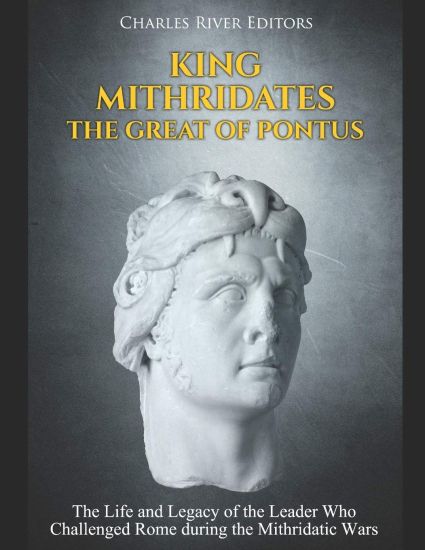
King Mithridates the Great of Pontus: The Life and Legacy of the Leader Who Challenged Rome during the Mithridatic Wars
*Includes pictures*Includes excerpts of ancient accounts*Includes a bibliography for further readingRome faced many formidable enemies over the course of nearly 1,000 years, but perhaps none are as enigmatic and forgotten as King Mithridates the Great of Pontus. Despite numerous ancient sources detailing the life of the foreign monarch and his wars with Rome, and despite being an interesting character who endured years as a fugitive in his youth, enjoyed a fascination with poisons, and held mercy and pragmatic ruthlessness in a delicate balance, very few scholarly books and works have been produced about him. It may be that his largely unsuccessful military campaigns have contributed to his disappearance from active historical examination, but despite his poor record in engagements against the Romans, he dominated much of Asia Minor in the 1st century BCE, and the Romans themselves considered him one of their most dangerous enemies. In fact, upon his death, the Roman soldiers felt that "in the person of Mithridates ten thousand enemies had died." Mithridates was not a significant threat for his great skills on the battlefield, but rather for his shrewd, calculating nature, his relentless persistence, and his indomitable will. For those qualities and the wars that he fought against Rome over the course of more than 40 years, he was certainly an important character in the 1st century BCE, one of the most important eras in history. It took three of Rome's most famous generals - Sulla, Lucullus, and Pompey (all of whom earned a biography in Plutarch's Lives of the Noble Greeks and Romans) - to finally subdue him. In the end, he was not defeated by any external enemy, but by himself. King Mithridates the Great of Pontus: The Life and Legacy of the Leader Who Challenged Rome during the Mithridatic Wars looks at how Mithridates and his kingdom rose in power and became one of the Roman Republic's most legendary enemies. Along with pictures depicting important people, places, and events, you will learn about Mithridates like never before.
Famous Dirigibles: The History and Legacy of Lighter than Air Vehicles from the Renaissance to Today
*Includes pictures*Includes a bibliography for further readingThe Wright Brothers initially underestimated the difficulties involved in flying, and they were apparently surprised by the fact that so many others were working on solving the "problem of human flight" already. Decades before their own historic plane would end up in the National Air & Space Museum, Wilbur and Orville asked the Smithsonian for reading materials and brushed up on everything from the works of their contemporaries to Leonardo Da Vinci. Undeterred by the work, and the fact that several would-be pioneers died in crashes trying to control gliders, the Wright Brothers tested out gliding at Kitty Hawk in North Carolina for several years, working to perfect pilot control before trying powered flight. In December 1903, the brothers had done enough scientific work with concepts like lift to help their aeronautical designs, and they had the technical know-how to work with engines. On December 17, the brothers took turns making history's first successful powered flights. The fourth and final flight lasted nearly a minute and covered nearly 900 feet. The Wright Flyer I had just made history, and minutes later it would be permanently damaged after wind gusts tipped it over; it would never fly again. A decade later, aircraft appeared in the skies over the battlefields of World War I, but they did not represent a complete novelty in warfare either, at least not during the early months of World War I. While airplanes had never before appeared above the field of war, other aerial vehicles had already been in use for decades, and balloons had carried soldiers above the landscape for centuries to provide a high observation point superior to most geological features. The French used a balloon for this purpose at the Battle of Fleurus in 1794, and by the American Civil War, military hydrogen balloons saw frequent use, filled from wagons generating hydrogen from iron filings and sulfuric acid. The balloonist Thaddeus Lowe persuaded President Abraham Lincoln to use the airships for observation, communicating troop movements to the ground with a telegraph wire. Lowe himself reported, "A hawk hovering above a chicken yard could not have caused more commotion than did my balloons when they appeared before Yorktown." (Holmes, 2013, 251). The Confederates agreed with this assessment: "At Yorktown, when almost daily ascensions were made, our camp, batteries, field works and all defenses were plain to the vision of the occupants of the balloons. ...] The balloon ascensions excited us more than all the outpost attacks." Indeed, with advances in dirigible technology, many military thinkers and even aeronautical enthusiasts believed that blimps would remain the chief military aerial asset more or less forever. These men thought airplanes would play a secondary role at best, and that they might even prove a uselessly expensive gimmick soon to fade back into obscurity, leaving the majestic bulk of the dirigible as sole master of the skies. While this obviously did not prove true, dirigibles proved popular in a variety of different ways throughout the 20th century, and they continued to be complements even as airplane technologies rapidly advanced. Famous Dirigibles: The History and Legacy of Lighter than Air Vehicles from the Renaissance to Today looks at the development of the balloons and airships, and how they were primarily used. Along with pictures depicting important people, places, and events, you will learn about dirigibles like never before.
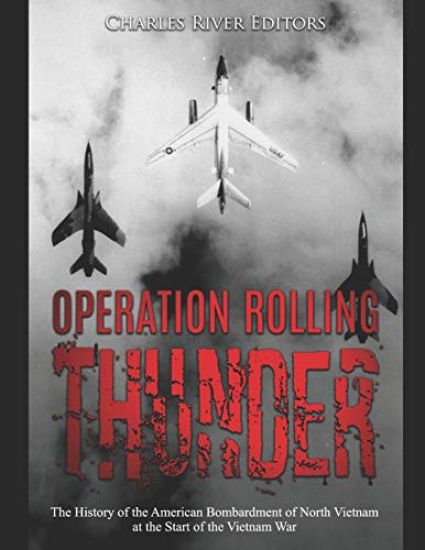
Operation Rolling Thunder: The History of the American Bombardment of North Vietnam at the Start of the Vietnam War
*Includes pictures*Includes a bibliography for further reading"Targeting bore little resemblance to reality in that the sequence of attacks was uncoordinated and the targets were approved randomly - even illogically. The North's airfields, which, according to any rational targeting policy, should have been hit first in the campaign, were also off-limits." - Earl Tilford, U. S. Air Force historianThe Vietnam War could have been called a comedy of errors if the consequences weren't so deadly and tragic. In 1951, while war was raging in Korea, the United States began signing defense pacts with nations in the Pacific, intending to create alliances that would contain the spread of Communism. As the Korean War was winding down, America joined the Southeast Asia Treaty Organization, pledging to defend several nations in the region from Communist aggression. One of those nations was South Vietnam. The seeds of Operation Rolling Thunder, America's elaborately constrained air war against North Vietnam, appeared almost from the first moment that the USA inherited the conflict from the French. The half-communist, half-nationalist Viet Minh rebels of Ho Chi Minh evicted the French in 1954, but not before the latter partially created an anticommunist state, South Vietnam, in the lower half of the nation. Home to many Vietnamese who stood to lose property and potentially their lives in the event of the country's reunification, the new state struggled with both Viet Cong guerrillas supplied by the north and its own internal corruption and factionalism. Many thousands of North Vietnamese fled there to escape Ho Chi Minh's repression and occasional mass executions as well. Faced with such a determined opponent, skilled in asymmetrical warfare and enjoying considerable popular support, the Americans would ultimately choose to fight a war of attrition. While the Americans did employ strategic hamlets, pacification programs, and other kinetic counterinsurgency operations, they largely relied on a massive advantage in firepower to overwhelm and grind down the Viet Cong and NVA in South Vietnam. The goal was simple: to reach a "crossover point" at which communist fighters were being killed more quickly than they could be replaced. American ground forces would lure the enemy into the open, where they would be destroyed by a combination of artillery and air strikes. Naturally, if American soldiers on the ground often had trouble distinguishing combatants from civilians, B-52 bombers flying at up to 30,000 feet were wholly indiscriminate when targeting entire villages. By the end of 1966, American bombers and fighter-bombers in Vietnam dropped about 825 tons of explosive every day, more than all the bombs dropped on Europe during World War II. As Secretary of Defense Robert McNamara wrote to President Johnson in May of 1967, "The picture of the world's greatest superpower killing or seriously injuring 1,000 noncombatants a week, while trying to pound a tiny backward nation into submission on an issue whose merits are hotly disputed, is not a pretty one." (Sheehan, 685). Operation Rolling Thunder: The History of the American Bombardment of North Vietnam at the Start of the Vietnam War chronicles one of the most controversial campaigns of the war, and the effects it had on both sides. Along with pictures of important people, places, and events, you will learn about Operation Rolling Thunder like never before.
The Amber Road: The History and Legacy of the Ancient Trade Network that Moved Amber across Europe
*Includes pictures*Includes ancient accounts*Includes a bibliography for further reading"Pytheas says that the Gutones, a people of Germany, inhabit the shores of an estuary of the Ocean called Mentonomon, their territory extending a distance of six thousand stadia; that, at one day's sail from this territory, is the Isle of Abalus, upon the shores of which, amber is thrown up by the waves in spring, it being an excretion of the sea in a concrete form; as, also, that the inhabitants use this amber by way of fuel, and sell it to their neighbors, the Teutones..." - Pliny the Elder The story of the Silk Road has been a popular topic amongst tourists, academics, economists, state parties, and daydreaming children for many centuries. In many ways the Silk Road can be seen everywhere, and it has existed for as long as people have traveled across Eurasia. Its impact is widely felt among the diverse peoples that live on the continent, through the unique regional art and architectural styles, as well as in countless films, books, academic studies, and organized tours devoted to the ancient trade routes. At the same time, however, the Silk Road is an entirely abstract invention, first coined by the 19th century German geographer Ferdinand von Richthofen. There has never existed a single route - let alone a road - that was used to transfer goods, nor was silk the primary commodity traded across Eurasia. Instead, the Silk Road is more a multi-layered narrative about the rise and fall of nomadic confederations and sedentary societies, the consolidation and dissolution of kingdoms and empires, the exchange of commodities and fine crafts, and the transfer and mixture of ideas, religions, technology, science, art, architecture, myths and legends. It is a story that is relevant for the present-day countries through which this exchange once took place, as they lay claim to the artifacts, heritage sites, and symbolic meaning of the Silk Road for political and economic purposes and to build their national identity. In fact, international trade in the ancient world was a more intricate and far-reaching system than many have been led to believe. The Silk Road and the Incense Trade Route have been heavily investigated in recent decades, but the Amber Road trade network dominating northern Europe has been given far less attention. Amber, the hardened sap of prehistoric trees, has washed up on Baltic shores for generations, and though it had little value to the locals beyond religious symbolism and aesthetic beauty, they learned that foreign civilizations would pay massive sums for the beautiful substance. Though written sources are scattered and tend to come and go depending on the civilization involved, much has been written by ancient authors, particularly of Greek and Roman origins. More importantly, archeologists have traced the spread of amber through the discovery of pieces with specific chemical construction, linking it back to the Baltic region. Once thought to have mainly been exported to Rome, Baltic amber has also been found in Mycenaean Greece, Egypt and Syria, though perhaps not surprisingly, it was Roman demand that formed the height of the amber exchange. Perhaps even more interesting than the movement of the amber is regarding shifting trade operations from government controlled systems to private merchant enterprises to monopolies of guilds and orders, a return to government control, and finally, the selling of the trade to individual countries. It is a fascinating microcosm of changing political and governmental landscapes through millennia of change and development in northern Europe and the wider ancient Mediterranean world. The Amber Road: The History and Legacy of the Ancient Trade Network that Moved Amber across Europe looks at the development of this crucial trade, and its impact on antiquity.
Modern Balloons and Airships: The History and Legacy of Dirigibles during the 20th Century
*Includes pictures*Includes a bibliography for further readingThe Wright Brothers initially underestimated the difficulties involved in flying, and they were apparently surprised by the fact that so many others were working on solving the "problem of human flight" already. Decades before their own historic plane would end up in the National Air & Space Museum, Wilbur and Orville asked the Smithsonian for reading materials and brushed up on everything from the works of their contemporaries to Leonardo Da Vinci. Undeterred by the work, and the fact that several would-be pioneers died in crashes trying to control gliders, the Wright Brothers tested out gliding at Kitty Hawk in North Carolina for several years, working to perfect pilot control before trying powered flight. In December 1903, the brothers had done enough scientific work with concepts like lift to help their aeronautical designs, and they had the technical know-how to work with engines. On December 17, the brothers took turns making history's first successful powered flights. The fourth and final flight lasted nearly a minute and covered nearly 900 feet. The Wright Flyer I had just made history, and minutes later it would be permanently damaged after wind gusts tipped it over; it would never fly again. A decade later, aircraft appeared in the skies over the battlefields of World War I, but they did not represent a complete novelty in warfare either, at least not during the early months of World War I. While airplanes had never before appeared above the field of war, other aerial vehicles had already been in use for decades, and balloons had carried soldiers above the landscape for centuries to provide a high observation point superior to most geological features. The French used a balloon for this purpose at the Battle of Fleurus in 1794, and by the American Civil War, military hydrogen balloons saw frequent use, filled from wagons generating hydrogen from iron filings and sulfuric acid. The balloonist Thaddeus Lowe persuaded President Abraham Lincoln to use the airships for observation, communicating troop movements to the ground with a telegraph wire. Lowe himself reported, "A hawk hovering above a chicken yard could not have caused more commotion than did my balloons when they appeared before Yorktown." (Holmes, 2013, 251). The Confederates agreed with this assessment: "At Yorktown, when almost daily ascensions were made, our camp, batteries, field works and all defenses were plain to the vision of the occupants of the balloons. ...] The balloon ascensions excited us more than all the outpost attacks." Indeed, with advances in dirigible technology, many military thinkers and even aeronautical enthusiasts believed that blimps would remain the chief military aerial asset more or less forever. These men thought airplanes would play a secondary role at best, and that they might even prove a uselessly expensive gimmick soon to fade back into obscurity, leaving the majestic bulk of the dirigible as sole master of the skies. While this obviously did not prove true, dirigibles proved popular in a variety of different ways throughout the 20th century, and they continued to be complements even as airplane technologies rapidly advanced. Modern Balloons and Airships: The History and Legacy of Dirigibles during the 20th Century looks at the development of balloons and airships during the 20th century, and the innovative ways they were used. Along with pictures depicting important people, places, and events, you will learn about modern balloons and airships like never before.
The Soviet Nuclear Weapons Program: The History and Legacy of the USSR's Efforts to Build the Atomic Bomb
*Includes pictures*Includes a bibliography for further readingTens of millions died during World War II as the warring powers raced to create the best fighter planes, tanks, and guns, and eventually that race extended to bombs which carried enough power to destroy civilization itself. While the war raged in Europe and the Pacific, a dream team of Nobel Laureates was working on the Manhattan Project, a program kept so secret that Vice President Harry Truman didn't know about it until he took the presidency after FDR's death in April 1945. The Manhattan Project would ultimately yield the "Little Boy" and "Fat Man" bombs that released more than 100 Terajoules of energy at Hiroshima and Nagasaki, but weeks earlier, on July 16, 1945, the first detonation of a nuclear device took place in Alamogordo, New Mexico. The first bomb was nicknamed the "gadget," to avoid espionage attempts to discover that it was, indeed, a bomb. In some sense, the device detonated in July was not really a "bomb" anyway; it was not a deployable device, though it was a detonatable one. With this success, word reached President Truman, who was then attending the Potsdam Conference, and while there, he presented the news to Soviet leader Joseph Stalin. Stalin feigned surprise; in an ironic twist of fate, espionage missions had revealed American nuclear research to the Soviets before it had even reached Vice President Truman. The attacks on Hiroshima and Nagasaki in August 1945, along with the Cold War-era tests and their accompanying mushroom clouds, would demonstrate the true power and terror of nuclear weapons, but in the late 1930s these bombs were only vaguely being thought through, particularly after the successful first experiment to split the atom by a German scientist. Despite the fact the Nazis' quest for a nuclear weapon began in earnest in 1939, no one really had a handle on how important nuclear weapons would prove to war and geopolitics, so the Germans were hesitant to expend resources on it. Moreover, they were hampered by the fact their policies had compelled Jewish scientists like Liz Meitner and Albert Einstein to flee before the war. For their part, Stalin's regime had been working on a nuclear weapons program since 1942, relying greatly upon successful Soviet espionage to help lead the way. With intelligence sources connected to the Manhattan Project, Stalin was able to keep abreast of the Allies' progress toward creating an atomic bomb, so that by 1945, the Soviets already had a working blueprint of America's first atomic bombs. On August 29, 1949, the Soviets successfully tested an atomic bomb, and with that, the Soviet Union became the second nation after the U. S. to develop and possess nuclear weapons. The nuclear age itself was still in its infancy, but within a few short years the advent of nuclear war loomed over the world and the prospect of a malign dictatorship possessing nuclear superiority kept Western leaders awake at night. The Soviet Nuclear Weapons Program: The History and Legacy of the USSR's Efforts to Build the Atomic Bomb examines the Soviets' race to reach the ultimate goal during and after World War II, and how they went about their objectives. Along with pictures of important people, places, and events, you will learn about Nazi Germany's nuclear weapons program like never before.