Kirjojen hintavertailu – 12 903 725 kirjaa ja 27 kauppaa

Kirjailija

Charles River

Kirjat ja teokset yhdessä paikassa: 4 673 kirjaa, julkaisuja vuosilta 2013–2022, suosituimpiin kuuluu William Powell and Myrna Loy: The Lives and Careers of One of Classical Hollywood's Most Iconic Duos. Vertaile teosten hintoja ja tarkista saatavuus suomalaisista kirjakaupoista.

4 673 kirjaa

Kirjojen julkaisuvuodet: 2013–2022.

Sinn Féin: The History and Legacy of the Irish Republican Political Party
*Includes picturesFrom Gaelic, the words Sinn F in translate loosely into English as "We Ourselves," or "Ourselves Alone." The implications of this are that Ireland, historically subject to the political domination of England, could look to none but itself for liberation. The saga of English predominance in Ireland began in the 12th century following the Norman invasion of England, when a band of Norman adventurers, established on the Welsh mainland, set off across the Irish Sea to test their prospects on the shores of England's western neighbor. Ireland at the time was ruled in provinces by local kings, each with limited power and authority, and often at war with one another. The incoming Normans did not attempt any direct control over the country, and in due course they assimilated with the Irish. Nonetheless, by this means, England gained a foothold in the southeast of the island which was later reinforced in 1171 when the English King Henry II, utilizing intrigues among local rulers, brought over a large army which made landfall in County Wexford. Although for centuries English justification remained confined to Dublin and its surroundings, a region known as the "Pale," the English were in Ireland, and there, in one form or another, they would remain into the modern era. It was not until the 16th century, however, with the establishment in England of the Tudor Dynasty that the English Crown was able to assert control over the entire landmass of Ireland. Thereafter, English rule was exercised through a governor, or a viceroy, with the seat of power established at Dublin Castle. Dublin, of course, quickly became the most important city on the island, from where the civil service, judiciary, military, and the police were controlled. Ireland was in practical terms an English dependency, with English interest predominant, and the Irish consigned to the status of a subject race. The belief took root in Irish political society that complete independence from Westminster would ultimately only be possible through force and violence, and by definition the movements dedicated to achieving this were underground. The "United Irishmen" was one of these, another was the "Young Irelanders," and another was the "Fenians," all of which either plotted to rebel or did rise up in open rebellion. In every case, however, calls for a general rebellion always failed, and the fight was brought to the British only by a handful of radicals with no chance whatsoever of forcefully usurping the control of the greatest empire known to man. Thereafter, a plethora of largely dissociated groups and organizations, each acting individually, took up the fight for Irish independence. This was an age of activism, with the distribution of the printed words, and a flourish of nationalist newspapers and publications, and an emphasis, not only in Ireland, but throughout Europe, of ideas of nationalism, the rediscovery of subject languages and cultures, and a general awareness of the revolutionary message. From out of this melee of conflicting voices, and an increasingly robust Irish revolutionary movement came a voice of peculiar authority. Arthur Joseph Griffiths, a twenty-nine year old journalist, member of the "Irish Republican Brotherhood" and founder of the influential nationalist newspaper the United Irishman, began, through a series of editorials, to articulate a policy of Irish nationalism based on the mobilization of Irish resources, a rediscovery of Irish history and culture and in general an illumination of home-grown Irish capabilities. In May 1900, he published a groundbreaking article that called for the establishment of an umbrella organization under which all of the various nationalist organizations could be brought together. This is generally regarded as the call to action that established the modern Irish republican movement.
The Livonian Brothers of the Sword: The History of the Medieval Catholic Military Order that Fought Pagans in Eastern Europe
*Includes pictures*Includes excerpts of contemporary accounts*Includes a bibliography for further readingFor centuries, Christians and Muslims were embroiled in one of the most infamous territorial disputes of all time, viciously and relentlessly battling one another for the Holy Land. In the heart of Jerusalem sat one of the shining jewels of the Christian faith, the Church of the Holy Sepulchre. Legend has it that this was where their Savior had been buried before his fabled resurrection. What was more, it was said to house the very cross Jesus Christ had died upon. It was for precisely these reasons that fearless pilgrims, near and far, risked their lives and made the treacherous trek to Jerusalem. Like other secretive groups, the mystery surrounding the Catholic military orders that sprung up in the wake of the First Crusade helped their legacies endure. While some conspiracy theorists attempt to tie the groups to other alleged secret socities like the Illuminati, other groups have tried to assert connections with them to bolster their own credentials. Who they were and what they had in their possession continue to be a source of great intrigue. Although many have heard of the Crusades and some of the more famous orders like the Templars, few know about the Livonian Crusade or the Livonian Brothers of the Sword. This organization was one of many Catholic military orders that sprung up during the Middle Ages in response to the papacy's call for holy war, and the Livonian Crusade is the term used to group together dozens of military actions undertaken by German knights in Eastern Europe. In essence, the Holy Roman Empire sought to control influential trade routes throughout the region by subjugating the native peoples and forcefully converting them to Christianity, and in this regard, the differences between the Livonian Crusade and those taking place further east, where crusaders attempted to retake the Christian Holy Land of Jerusalem, are readily apparent. In particular, there was no actual religious justification for the Livonian Crusade, and many of the knights deciding to join were often more interested in the political and economic benefits gained from the war. When it comes to understanding the history of the Livonian Brothers of the Sword, scholars have their work cut out for them, as few primary sources survived the conflict, and the order has had many different names over the years, including the Swordbrothers, the Livonian Order, and the Swordbrothers. All that said, the Livonian Brothers of the Sword bore many similarities to their counterparts in other countries, including being affiliated with the Catholic Church. Many of the knights took vows of celibacy and poverty, and the internal structure of the organization could be compared to the Knights Hospitaller or the Templars. Moreover, while relatively few people know of the Livonian Brothers of the Sword by their original name, the order would go on to become one of the most influential of religious knighthoods by incorporating into the Teutonic Knights. The order was also significant for consolidating the power of the Holy Roman Empire in Eastern Europe, as well as subjugating the native peoples and spreading Christianity by force, leading to numerous tensions that lasted centuries between the future nations of Estonia, Prussia, and others. The Livonian Brothers of the Sword: The History of the Medieval Catholic Military Order that Fought Pagans in Eastern Europe chronicles the known history of the order and examines the important battles the order fought in. Along with pictures of important people, places, and events, you will learn about the Livonian Brothers of the Sword like never before.
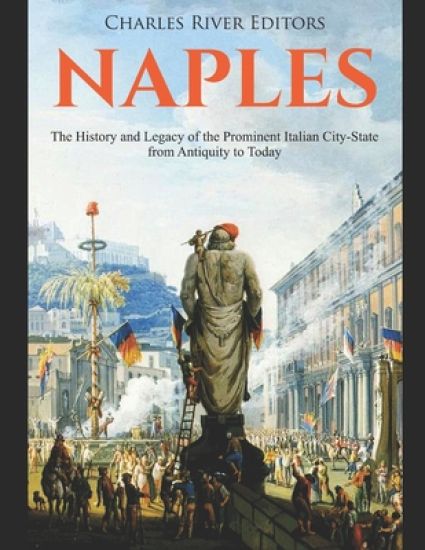
Naples: The History and Legacy of the Prominent Italian City-State from Antiquity to Today
*Includes pictures*Includes a bibliography for further readingThe history of Naples is long and tortured, or at least for centuries that was how its history has been told. Inhabited almost continuously from the Neolithic era to the present, Naples was founded by the Greeks and conquered by the Romans. After the fall of the Roman Empire, Naples passed between various foreign rulers for its entire history prior to Italian unification. Starting in 1040, when the Norman French invaders conquered Campania, Naples was ruled in a dizzying succession by Germans, then French, then Spanish, then Austrians, then Spanish, then French, and then Spanish. Although it is in many ways a microcosm of European history with a revolving door of conquerors, historians like to stress the unique status of Naples thanks to these diverse influences and unique geography. Set on a bay that provided a natural harbor, Naples is home to Mount Vesuvius, the only active volcano on the European mainland. When Vesuvius erupts, the Neapolitans pay the price, and it has earned its reputation as the most dangerous volcano in the world. However, the threat posed by Vesuvius is tempered by a great benefit: Naples is blessed with extremely fertile soil. The natural harbor of Naples and its position on the southwest coast of Italy helps explain its history of multiple rulers, insofar as it made Naples a central locus of trade between Italy, Greece, Byzantium, North Africa, Spain, Holland, Flanders, and Germany. Due to its strategic importance, Naples reached high levels of prosperity, and for the same reason, it also suffered as various foreign powers vied for control of the city and the surrounding area. All the while, the sheer beauty of the bay of Naples, with Vesuvius looming in the distance, has made Naples a place of endless fascination. It boasts imposing castles and fortresses, as well as twisty, turning medieval streets that are home to some of Italy's poorest and most maligned residents. Across the bay are the islands of Capri and Ischia, which only add to the allure of the city. Furthermore, its cuisine - particularly its pizza (which was invented in Naples) and its richly sweet desserts - rates amongst the most appreciated in all of Italy, no doubt thanks to the fertility of the soil that favors agricultural production. Nonetheless, Naples does not enjoy an excellent reputation, within the context of Italy or of Europe. High rates of petty crime, a decaying urban fabric and the infamous presence of the mafia (known in Naples as the Camorra) all combine to ensure fewer tourists venture to explore Naples, and many Italians (civilians and politicians alike) consider it the ultimate "problem city." Nonetheless, it bears keeping in mind the words of one of Naples' foremost historians, John Marino, who noted, "Naples, like each of Italy's cities, is] unique, but far less different than is generally believed." Today, historians have a different view of the twists and turns of the history of Naples, from the Greek founding and the Roman conquest, to the centuries under foreign rule and, finally, to its unification with Italy and present day challenges. Although Naples was constantly changing, many scholars now challenge the notion of Neapolitan tumult, arguing that it overshadows a more complex picture of a city that, in fact, enjoyed periods of stability and productivity. Naples: The History and Legacy of the Prominent Italian City-State from Antiquity to Today dives into the city's origin story, how it became one of the most important places in Europe, and its winding history. Along with pictures of important people, places, and events, you will learn about Naples like never before.
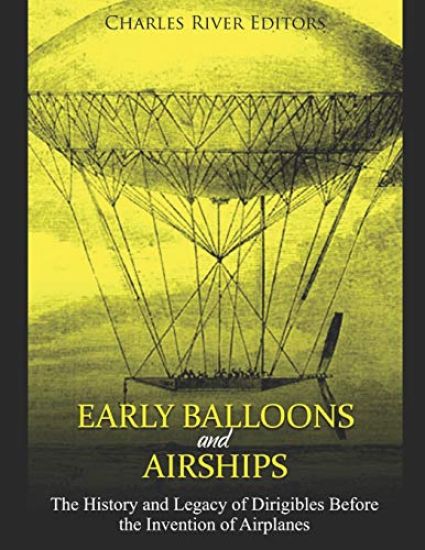
Early Balloons and Airships: The History and Legacy of Dirigibles Before the Invention of Airplanes
*Includes pictures*Includes a bibliography for further readingThe Wright Brothers initially underestimated the difficulties involved in flying, and they were apparently surprised by the fact that so many others were working on solving the "problem of human flight" already. Decades before their own historic plane would end up in the National Air & Space Museum, Wilbur and Orville asked the Smithsonian for reading materials and brushed up on everything from the works of their contemporaries to Leonardo Da Vinci. Undeterred by the work, and the fact that several would-be pioneers died in crashes trying to control gliders, the Wright Brothers tested out gliding at Kitty Hawk in North Carolina for several years, working to perfect pilot control before trying powered flight. In December 1903, the brothers had done enough scientific work with concepts like lift to help their aeronautical designs, and they had the technical know-how to work with engines. On December 17, the brothers took turns making history's first successful powered flights. The fourth and final flight lasted nearly a minute and covered nearly 900 feet. The Wright Flyer I had just made history, and minutes later it would be permanently damaged after wind gusts tipped it over; it would never fly again. A decade later, aircraft appeared in the skies over the battlefields of World War I, but they did not represent a complete novelty in warfare either, at least not during the early months of World War I. While airplanes had never before appeared above the field of war, other aerial vehicles had already been in use for decades, and balloons had carried soldiers above the landscape for centuries to provide a high observation point superior to most geological features. The French used a balloon for this purpose at the Battle of Fleurus in 1794, and by the American Civil War, military hydrogen balloons saw frequent use, filled from wagons generating hydrogen from iron filings and sulfuric acid. The balloonist Thaddeus Lowe persuaded President Abraham Lincoln to use the airships for observation, communicating troop movements to the ground with a telegraph wire. Lowe himself reported, "A hawk hovering above a chicken yard could not have caused more commotion than did my balloons when they appeared before Yorktown." (Holmes, 2013, 251). The Confederates agreed with this assessment: "At Yorktown, when almost daily ascensions were made, our camp, batteries, field works and all defenses were plain to the vision of the occupants of the balloons. ...] The balloon ascensions excited us more than all the outpost attacks." Indeed, with advances in dirigible technology, many military thinkers and even aeronautical enthusiasts believed that blimps would remain the chief military aerial asset more or less forever. These men thought airplanes would play a secondary role at best, and that they might even prove a uselessly expensive gimmick soon to fade back into obscurity, leaving the majestic bulk of the dirigible as sole master of the skies. Early Balloons and Airships: The History of the City's Underground Ossuaries and Burial Network looks at the development of the first balloons and airships, and how they were primarily used. Along with pictures depicting important people, places, and events, you will learn about the first airships like never before.
Early Balloons and Airships: The History and Legacy of Dirigibles Before the Invention of Airplanes
*Includes pictures*Includes a bibliography for further readingThe Wright Brothers initially underestimated the difficulties involved in flying, and they were apparently surprised by the fact that so many others were working on solving the "problem of human flight" already. Decades before their own historic plane would end up in the National Air & Space Museum, Wilbur and Orville asked the Smithsonian for reading materials and brushed up on everything from the works of their contemporaries to Leonardo Da Vinci. Undeterred by the work, and the fact that several would-be pioneers died in crashes trying to control gliders, the Wright Brothers tested out gliding at Kitty Hawk in North Carolina for several years, working to perfect pilot control before trying powered flight. In December 1903, the brothers had done enough scientific work with concepts like lift to help their aeronautical designs, and they had the technical know-how to work with engines. On December 17, the brothers took turns making history's first successful powered flights. The fourth and final flight lasted nearly a minute and covered nearly 900 feet. The Wright Flyer I had just made history, and minutes later it would be permanently damaged after wind gusts tipped it over; it would never fly again. A decade later, aircraft appeared in the skies over the battlefields of World War I, but they did not represent a complete novelty in warfare either, at least not during the early months of World War I. While airplanes had never before appeared above the field of war, other aerial vehicles had already been in use for decades, and balloons had carried soldiers above the landscape for centuries to provide a high observation point superior to most geological features. The French used a balloon for this purpose at the Battle of Fleurus in 1794, and by the American Civil War, military hydrogen balloons saw frequent use, filled from wagons generating hydrogen from iron filings and sulfuric acid. The balloonist Thaddeus Lowe persuaded President Abraham Lincoln to use the airships for observation, communicating troop movements to the ground with a telegraph wire. Lowe himself reported, "A hawk hovering above a chicken yard could not have caused more commotion than did my balloons when they appeared before Yorktown." (Holmes, 2013, 251). The Confederates agreed with this assessment: "At Yorktown, when almost daily ascensions were made, our camp, batteries, field works and all defenses were plain to the vision of the occupants of the balloons. ...] The balloon ascensions excited us more than all the outpost attacks." Indeed, with advances in dirigible technology, many military thinkers and even aeronautical enthusiasts believed that blimps would remain the chief military aerial asset more or less forever. These men thought airplanes would play a secondary role at best, and that they might even prove a uselessly expensive gimmick soon to fade back into obscurity, leaving the majestic bulk of the dirigible as sole master of the skies. Early Balloons and Airships: The History of the City's Underground Ossuaries and Burial Network looks at the development of the first balloons and airships, and how they were primarily used. Along with pictures depicting important people, places, and events, you will learn about the first airships like never before.
Werewolves: The Legends and Folk Tales about Humans Shapeshifting into Wolves
*Includes pictures*Includes excerpts of medieval accounts*Includes a bibliography for further readingWerewolves have long been a staple of popular culture. In the 19th century and 20th century, there were countless books, plays, and films about people who turned into wolves or wolf like humanoids and went on rampages. The figure of the werewolf is so familiar that people across the world are familiar with the folklore, and the beliefs that they transform during a full moon, can only be stopped with silver, and transmit their disease by biting their victims. In fact, those beliefs were not originally part of werewolf folklore, but later embellishments by artists. The belief in lycanthropy is far older and more complex than most people suspect, dating all the way back to antiquity, and werewolves were once assumed to be very real. Indeed, people were even put on trial and executed because the courts of law were convinced they could change their form and kill innocent people. For thousands of years, werewolves have represented a strange and ancient tradition that still echoes through culture to this day. Werewolves: The Legends and Folk Tales about Humans Shapeshifting into Wolves chronicles the ancient traditions and origins behind the belief in the existence of werewolves. Along with pictures of important people, places, and events, you will learn about werewolves like never before.
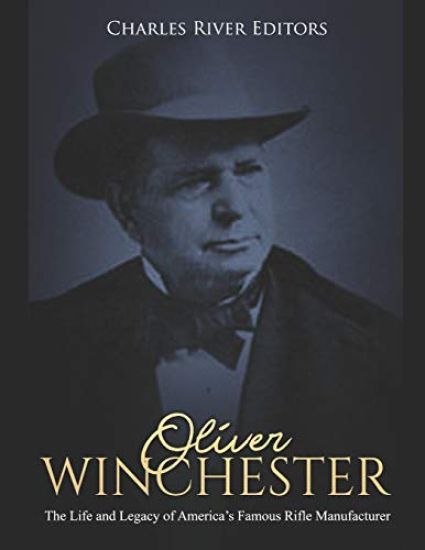
Oliver Winchester: The Life and Legacy of America's Famous Rifle Manufacturer
*Includes pictures*Includes a bibliographyBy the time weapons industrialist Oliver Winchester was born, the Lewis and Clark Expedition sent to the Pacific by Thomas Jefferson had only recently returned with their report on the first overland continental journey. Outside of a small group of mountain men trapping and trading fur for European fashion magnates, few white settlers had found their way across the Great Plains. The firearms of the Revolution demonstrated little difference between a soldier's flintlock musket and a hunting weapon taken from the mantle. Gunsmiths in early 19th century America were helped along by noted artisans from Germany, Switzerland, and other European powers, but despite advances made in the European and American musket, the requirement of an exterior spark and percussion to ignite powder for a single-shot discharge remained the paradigm. Similarly, the era was unable to move past the cumbersome weapon that required at least half a minute to reload. The military compensation for such an ungainly and vulnerable process was the alternation of troop lines, in which one fired while the other reloaded from behind. Effective as that was in laying down constant fire and simultaneous reloading, the force as a whole was disabled by a large fraction, and the reloading soldiers were vulnerable to saber attacks on horseback as well. From the bayonet of 1620 to the emergence of repeating firearms in the American Civil War, sometimes referred to as the "first truly modern war," military procedures remained largely the same, based on entrenched European customs. Napoleonic tactics were taught as mainstream at the military academies, and the musket remained in a stagnant state of evolution, but even the most tradition-bound army command was forced to give way at some point to a generation of scientist-inventors, civilian manufacturing centers, and entrepreneurs born during the Industrial Revolution. The old guard dug in its heels, and even well past the Civil War, new technologies were met with stiff resistance. High-ranking officers, drawn from the ranks of martial families steeped in the War of 1812, fended off the new scientific engineering and what they considered the waste of random firing. However, the realities of American expansionism, population redistribution, a labor movement unwilling to cede its members well-being, and the rise of the factory became impossible to ignore. The driving forces behind modern light weaponry were new disciples of mass production, interchangeable parts, and a more developed and aggressive marketing style. Evolution of the modern rifle did not provide all of its own impetus. As the ever-improving cartridge progressed from primitive paper to brass encasement, the weapons required to fire with the charge were forced to change as well. As the civilian entrepreneur and the soldier became increasingly interdependent, the new corporate executives of arms companies became tycoons. Mass production and increasingly sophisticated marketing techniques helped to create the national and international arms merchant, a model upon which global governments expanded. With few exceptions, the nature of the modern firearm as an everyday utility enabled these giants to arm any ideology, or both sides of any conflict. In the manner that Samuel Colt broke open the single-shot tradition in hand weapons, Oliver Fisher Winchester and his celebrated rifle shared the title of "the gun that won the West." In the arena of portable arms, these two men dominated much of the technological and promotive aspects of 19th century weaponry, alternating between resisting and collaborating with rivals. While Colt created the first effective revolver mechanism for the handgun based on the technology of the ship's wheel, it was Oliver Winchester who instituted 140 years of branding dominance by virtue of the first reliable repeating rifle.
The Livonian Brothers of the Sword: The History of the Medieval Catholic Military Order that Fought Pagans in Eastern Europe
*Includes pictures*Includes excerpts of contemporary accounts*Includes a bibliography for further readingFor centuries, Christians and Muslims were embroiled in one of the most infamous territorial disputes of all time, viciously and relentlessly battling one another for the Holy Land. In the heart of Jerusalem sat one of the shining jewels of the Christian faith, the Church of the Holy Sepulchre. Legend has it that this was where their Savior had been buried before his fabled resurrection. What was more, it was said to house the very cross Jesus Christ had died upon. It was for precisely these reasons that fearless pilgrims, near and far, risked their lives and made the treacherous trek to Jerusalem. Like other secretive groups, the mystery surrounding the Catholic military orders that sprung up in the wake of the First Crusade helped their legacies endure. While some conspiracy theorists attempt to tie the groups to other alleged secret socities like the Illuminati, other groups have tried to assert connections with them to bolster their own credentials. Who they were and what they had in their possession continue to be a source of great intrigue. Although many have heard of the Crusades and some of the more famous orders like the Templars, few know about the Livonian Crusade or the Livonian Brothers of the Sword. This organization was one of many Catholic military orders that sprung up during the Middle Ages in response to the papacy's call for holy war, and the Livonian Crusade is the term used to group together dozens of military actions undertaken by German knights in Eastern Europe. In essence, the Holy Roman Empire sought to control influential trade routes throughout the region by subjugating the native peoples and forcefully converting them to Christianity, and in this regard, the differences between the Livonian Crusade and those taking place further east, where crusaders attempted to retake the Christian Holy Land of Jerusalem, are readily apparent. In particular, there was no actual religious justification for the Livonian Crusade, and many of the knights deciding to join were often more interested in the political and economic benefits gained from the war. When it comes to understanding the history of the Livonian Brothers of the Sword, scholars have their work cut out for them, as few primary sources survived the conflict, and the order has had many different names over the years, including the Swordbrothers, the Livonian Order, and the Swordbrothers. All that said, the Livonian Brothers of the Sword bore many similarities to their counterparts in other countries, including being affiliated with the Catholic Church. Many of the knights took vows of celibacy and poverty, and the internal structure of the organization could be compared to the Knights Hospitaller or the Templars. Moreover, while relatively few people know of the Livonian Brothers of the Sword by their original name, the order would go on to become one of the most influential of religious knighthoods by incorporating into the Teutonic Knights. The order was also significant for consolidating the power of the Holy Roman Empire in Eastern Europe, as well as subjugating the native peoples and spreading Christianity by force, leading to numerous tensions that lasted centuries between the future nations of Estonia, Prussia, and others. The Livonian Brothers of the Sword: The History of the Medieval Catholic Military Order that Fought Pagans in Eastern Europe chronicles the known history of the order and examines the important battles the order fought in. Along with pictures of important people, places, and events, you will learn about the Livonian Brothers of the Sword like never before.
Naples: The History and Legacy of the Prominent Italian City-State from Antiquity to Today
*Includes pictures*Includes a bibliography for further readingThe history of Naples is long and tortured, or at least for centuries that was how its history has been told. Inhabited almost continuously from the Neolithic era to the present, Naples was founded by the Greeks and conquered by the Romans. After the fall of the Roman Empire, Naples passed between various foreign rulers for its entire history prior to Italian unification. Starting in 1040, when the Norman French invaders conquered Campania, Naples was ruled in a dizzying succession by Germans, then French, then Spanish, then Austrians, then Spanish, then French, and then Spanish. Although it is in many ways a microcosm of European history with a revolving door of conquerors, historians like to stress the unique status of Naples thanks to these diverse influences and unique geography. Set on a bay that provided a natural harbor, Naples is home to Mount Vesuvius, the only active volcano on the European mainland. When Vesuvius erupts, the Neapolitans pay the price, and it has earned its reputation as the most dangerous volcano in the world. However, the threat posed by Vesuvius is tempered by a great benefit: Naples is blessed with extremely fertile soil. The natural harbor of Naples and its position on the southwest coast of Italy helps explain its history of multiple rulers, insofar as it made Naples a central locus of trade between Italy, Greece, Byzantium, North Africa, Spain, Holland, Flanders, and Germany. Due to its strategic importance, Naples reached high levels of prosperity, and for the same reason, it also suffered as various foreign powers vied for control of the city and the surrounding area. All the while, the sheer beauty of the bay of Naples, with Vesuvius looming in the distance, has made Naples a place of endless fascination. It boasts imposing castles and fortresses, as well as twisty, turning medieval streets that are home to some of Italy's poorest and most maligned residents. Across the bay are the islands of Capri and Ischia, which only add to the allure of the city. Furthermore, its cuisine - particularly its pizza (which was invented in Naples) and its richly sweet desserts - rates amongst the most appreciated in all of Italy, no doubt thanks to the fertility of the soil that favors agricultural production. Nonetheless, Naples does not enjoy an excellent reputation, within the context of Italy or of Europe. High rates of petty crime, a decaying urban fabric and the infamous presence of the mafia (known in Naples as the Camorra) all combine to ensure fewer tourists venture to explore Naples, and many Italians (civilians and politicians alike) consider it the ultimate "problem city." Nonetheless, it bears keeping in mind the words of one of Naples' foremost historians, John Marino, who noted, "Naples, like each of Italy's cities, is] unique, but far less different than is generally believed." Today, historians have a different view of the twists and turns of the history of Naples, from the Greek founding and the Roman conquest, to the centuries under foreign rule and, finally, to its unification with Italy and present day challenges. Although Naples was constantly changing, many scholars now challenge the notion of Neapolitan tumult, arguing that it overshadows a more complex picture of a city that, in fact, enjoyed periods of stability and productivity. Naples: The History and Legacy of the Prominent Italian City-State from Antiquity to Today dives into the city's origin story, how it became one of the most important places in Europe, and its winding history. Along with pictures of important people, places, and events, you will learn about Naples like never before.
The Sac and Fox: The History and Legacy of the Native American Tribe Forcibly Removed from the Midwest to Oklahoma
*Includes pictures*Includes a bibliographyFew people need to be reminded in the 21st century of the cost of European imperialism and colonization on indigenous and native cultures around the world. The increasingly controversial view of "Columbus Day," still represented on the United States commemorative calendar, attests quite clearly to an ambiguous modern view of early European encounters with Native Americans. Slavery, disease, land and resource appropriation and the rapid disintegration of indigenous societies are all characteristics of European global expansion. There are those societies, particularly in Asia and Africa, that proved resilient enough to weather the European imperialism, but others, most notably those of Australia and North America, certainly did not. The development of North America as a series of British colonies prior to the end of the 18th century went ahead without any definitive policy in regards to the Native Americans who were impacted, displaced and not infrequently overwhelmed by the process. The vast majority of Native American people continued to live in a state of grace long after the formation of the colonies and did not begin to feel the impact until the expansion west. Likewise, there could never be a coordinated, pan-tribal unity to confront this gathering invasion, since the indigenous population of the land was heterogeneous, speaking some 300 separate languages, and thousands of regional dialects, and very often they were at war with one another. Some saw an advantage in collaboration with the forces of colonization, and some not. The fate of the former was usually some form of unequal assimilation, and of the latter, removal or extermination, and often both. Natives in the east, vastly superior in numbers and resistant to the importation of pernicious disease, proved better able to surmount the colonial experience and emerge as an independent nation. No such good fortune attended the colonial experience of Native America. While the introduction of various epidemics of smallpox, measles, diphtheria and many other diseases, and numerous lingering and communicable diseases such as tuberculosis and syphilis, steadily eroded populations, the far greater political and social trauma took place as a consequence of an ongoing, and unending hunger for land. The end of the American Revolution and the 1776 Declaration of Independence introduced no particular change in the circumstances of the indigenous tribes, and no alteration of attitudes across a broad front. As the great territorial acquisitions from France and Mexico were joined to the United States, the attitude of white Americans began to shift in the direction of "Manifest Destiny," and the God-given right of the nation to expand to occupy every corner of the continent. To facilitate this, there was a general interest on the part of the federal government to open these new territories for white settlement. The idea, then, was to push the Indians west of the Mississippi River, where space was infinite, and the problem could be deferred for another generation. Whenever and wherever negotiations to achieve this failed, the US Army would usually appear. The Indian Removal Act was passed by Congress in 1830, under the administration of President Andrew Jackson, which authorized these forced removals. Perhaps the most memorable and iconic episode of this period was the "Trail of Tears," a 20-year exodus of the Cherokee, Muskogee, Seminole, Chickasaw, Choctaw, Ponca, and Ho-Chunk-Winnebago nations across the Mississippi into new territories designated as Indian lands. More than 4,000 men, women and children perished during this tragic episode. The only possible success that the entire policy could claim was that it sent the Indians in as an advance guard to lands that would later be made available to white homesteaders. To the native tribes, it was the beginning of a long nightmare.
The Sac and Fox: The History and Legacy of the Native American Tribe Forcibly Removed from the Midwest to Oklahoma
*Includes pictures*Includes a bibliographyFew people need to be reminded in the 21st century of the cost of European imperialism and colonization on indigenous and native cultures around the world. The increasingly controversial view of "Columbus Day," still represented on the United States commemorative calendar, attests quite clearly to an ambiguous modern view of early European encounters with Native Americans. Slavery, disease, land and resource appropriation and the rapid disintegration of indigenous societies are all characteristics of European global expansion. There are those societies, particularly in Asia and Africa, that proved resilient enough to weather the European imperialism, but others, most notably those of Australia and North America, certainly did not. The development of North America as a series of British colonies prior to the end of the 18th century went ahead without any definitive policy in regards to the Native Americans who were impacted, displaced and not infrequently overwhelmed by the process. The vast majority of Native American people continued to live in a state of grace long after the formation of the colonies and did not begin to feel the impact until the expansion west. Likewise, there could never be a coordinated, pan-tribal unity to confront this gathering invasion, since the indigenous population of the land was heterogeneous, speaking some 300 separate languages, and thousands of regional dialects, and very often they were at war with one another. Some saw an advantage in collaboration with the forces of colonization, and some not. The fate of the former was usually some form of unequal assimilation, and of the latter, removal or extermination, and often both. Natives in the east, vastly superior in numbers and resistant to the importation of pernicious disease, proved better able to surmount the colonial experience and emerge as an independent nation. No such good fortune attended the colonial experience of Native America. While the introduction of various epidemics of smallpox, measles, diphtheria and many other diseases, and numerous lingering and communicable diseases such as tuberculosis and syphilis, steadily eroded populations, the far greater political and social trauma took place as a consequence of an ongoing, and unending hunger for land. The end of the American Revolution and the 1776 Declaration of Independence introduced no particular change in the circumstances of the indigenous tribes, and no alteration of attitudes across a broad front. As the great territorial acquisitions from France and Mexico were joined to the United States, the attitude of white Americans began to shift in the direction of "Manifest Destiny," and the God-given right of the nation to expand to occupy every corner of the continent. To facilitate this, there was a general interest on the part of the federal government to open these new territories for white settlement. The idea, then, was to push the Indians west of the Mississippi River, where space was infinite, and the problem could be deferred for another generation. Whenever and wherever negotiations to achieve this failed, the US Army would usually appear. The Indian Removal Act was passed by Congress in 1830, under the administration of President Andrew Jackson, which authorized these forced removals. Perhaps the most memorable and iconic episode of this period was the "Trail of Tears," a 20-year exodus of the Cherokee, Muskogee, Seminole, Chickasaw, Choctaw, Ponca, and Ho-Chunk-Winnebago nations across the Mississippi into new territories designated as Indian lands. More than 4,000 men, women and children perished during this tragic episode. The only possible success that the entire policy could claim was that it sent the Indians in as an advance guard to lands that would later be made available to white homesteaders. To the native tribes, it was the beginning of a long nightmare.
Operation Rolling Thunder: The History of the American Bombardment of North Vietnam at the Start of the Vietnam War
*Includes pictures*Includes a bibliography for further reading"Targeting bore little resemblance to reality in that the sequence of attacks was uncoordinated and the targets were approved randomly - even illogically. The North's airfields, which, according to any rational targeting policy, should have been hit first in the campaign, were also off-limits." - Earl Tilford, U. S. Air Force historianThe Vietnam War could have been called a comedy of errors if the consequences weren't so deadly and tragic. In 1951, while war was raging in Korea, the United States began signing defense pacts with nations in the Pacific, intending to create alliances that would contain the spread of Communism. As the Korean War was winding down, America joined the Southeast Asia Treaty Organization, pledging to defend several nations in the region from Communist aggression. One of those nations was South Vietnam. The seeds of Operation Rolling Thunder, America's elaborately constrained air war against North Vietnam, appeared almost from the first moment that the USA inherited the conflict from the French. The half-communist, half-nationalist Viet Minh rebels of Ho Chi Minh evicted the French in 1954, but not before the latter partially created an anticommunist state, South Vietnam, in the lower half of the nation. Home to many Vietnamese who stood to lose property and potentially their lives in the event of the country's reunification, the new state struggled with both Viet Cong guerrillas supplied by the north and its own internal corruption and factionalism. Many thousands of North Vietnamese fled there to escape Ho Chi Minh's repression and occasional mass executions as well. Faced with such a determined opponent, skilled in asymmetrical warfare and enjoying considerable popular support, the Americans would ultimately choose to fight a war of attrition. While the Americans did employ strategic hamlets, pacification programs, and other kinetic counterinsurgency operations, they largely relied on a massive advantage in firepower to overwhelm and grind down the Viet Cong and NVA in South Vietnam. The goal was simple: to reach a "crossover point" at which communist fighters were being killed more quickly than they could be replaced. American ground forces would lure the enemy into the open, where they would be destroyed by a combination of artillery and air strikes. Naturally, if American soldiers on the ground often had trouble distinguishing combatants from civilians, B-52 bombers flying at up to 30,000 feet were wholly indiscriminate when targeting entire villages. By the end of 1966, American bombers and fighter-bombers in Vietnam dropped about 825 tons of explosive every day, more than all the bombs dropped on Europe during World War II. As Secretary of Defense Robert McNamara wrote to President Johnson in May of 1967, "The picture of the world's greatest superpower killing or seriously injuring 1,000 noncombatants a week, while trying to pound a tiny backward nation into submission on an issue whose merits are hotly disputed, is not a pretty one." (Sheehan, 685). Operation Rolling Thunder: The History of the American Bombardment of North Vietnam at the Start of the Vietnam War chronicles one of the most controversial campaigns of the war, and the effects it had on both sides. Along with pictures of important people, places, and events, you will learn about Operation Rolling Thunder like never before.
Famous Dirigibles: The History and Legacy of Lighter than Air Vehicles from the Renaissance to Today
*Includes pictures*Includes a bibliography for further readingThe Wright Brothers initially underestimated the difficulties involved in flying, and they were apparently surprised by the fact that so many others were working on solving the "problem of human flight" already. Decades before their own historic plane would end up in the National Air & Space Museum, Wilbur and Orville asked the Smithsonian for reading materials and brushed up on everything from the works of their contemporaries to Leonardo Da Vinci. Undeterred by the work, and the fact that several would-be pioneers died in crashes trying to control gliders, the Wright Brothers tested out gliding at Kitty Hawk in North Carolina for several years, working to perfect pilot control before trying powered flight. In December 1903, the brothers had done enough scientific work with concepts like lift to help their aeronautical designs, and they had the technical know-how to work with engines. On December 17, the brothers took turns making history's first successful powered flights. The fourth and final flight lasted nearly a minute and covered nearly 900 feet. The Wright Flyer I had just made history, and minutes later it would be permanently damaged after wind gusts tipped it over; it would never fly again. A decade later, aircraft appeared in the skies over the battlefields of World War I, but they did not represent a complete novelty in warfare either, at least not during the early months of World War I. While airplanes had never before appeared above the field of war, other aerial vehicles had already been in use for decades, and balloons had carried soldiers above the landscape for centuries to provide a high observation point superior to most geological features. The French used a balloon for this purpose at the Battle of Fleurus in 1794, and by the American Civil War, military hydrogen balloons saw frequent use, filled from wagons generating hydrogen from iron filings and sulfuric acid. The balloonist Thaddeus Lowe persuaded President Abraham Lincoln to use the airships for observation, communicating troop movements to the ground with a telegraph wire. Lowe himself reported, "A hawk hovering above a chicken yard could not have caused more commotion than did my balloons when they appeared before Yorktown." (Holmes, 2013, 251). The Confederates agreed with this assessment: "At Yorktown, when almost daily ascensions were made, our camp, batteries, field works and all defenses were plain to the vision of the occupants of the balloons. ...] The balloon ascensions excited us more than all the outpost attacks." Indeed, with advances in dirigible technology, many military thinkers and even aeronautical enthusiasts believed that blimps would remain the chief military aerial asset more or less forever. These men thought airplanes would play a secondary role at best, and that they might even prove a uselessly expensive gimmick soon to fade back into obscurity, leaving the majestic bulk of the dirigible as sole master of the skies. While this obviously did not prove true, dirigibles proved popular in a variety of different ways throughout the 20th century, and they continued to be complements even as airplane technologies rapidly advanced. Famous Dirigibles: The History and Legacy of Lighter than Air Vehicles from the Renaissance to Today looks at the development of the balloons and airships, and how they were primarily used. Along with pictures depicting important people, places, and events, you will learn about dirigibles like never before.
The Teutonic Knights and Livonian Brothers of the Sword: The History and Legacy of the Holy Roman Empire's Famous Military Orders
*Includes pictures*Includes excerpts of medieval accountsAs the dissipating fog gave way to an unnerving sight, the mass of frightening figures clad head to toe in gleaming armor would have been enough to take anyone's breath away. Some of them were mounted on the backs of handsome stallions, while others leaned forward with squared shoulders, ready to attack. In one swift motion, the men unsheathe their swords and raise it over their heads, their weapons winking as the glare of the sunlight bounces off the blade. To the somewhat trained eye, these warriors in Norman-inspired gear would have appeared to be one of the Crusader forces, but it is that bold black cross painted across their chests and shields that give them away. These men were none other than the fabled Teutonic Knights. The knights of the Teutonic Order have since been compared to the surreal creature that appeared to the biblical Ezekiel, one that bore 2 faces - one of a man's, and one of a lion's. The human side of the creature is said to symbolize the order's charity, whereas the lion was a metaphor for its valor and gallant spirit, which they relied on to vanquish the heathens of the world. Like other secretive groups, the mystery surrounding the Teutonic Knights has helped their legacy endure. While some conspiracy theorists attempt to tie the group to other alleged secret societies like the Illuminati, other groups have tried to assert connections with the Teutonic Knights to bolster their own credentials. Who they were and what they had in their possession continue to be a source of great intrigue even among non-historical circles. Although many have heard of the Crusades and some of the more famous orders like the Templars, few know about the Livonian Crusade or the Livonian Brothers of the Sword. This organization was one of many Catholic military orders that sprung up during the Middle Ages in response to the papacy's call for holy war, and the Livonian Crusade is the term used to group together dozens of military actions undertaken by German knights in Eastern Europe. In essence, the Holy Roman Empire sought to control influential trade routes throughout the region by subjugating the native peoples and forcefully converting them to Christianity, and in this regard, the differences between the Livonian Crusade and those taking place further east, where crusaders attempted to retake the Christian Holy Land of Jerusalem, are readily apparent. In particular, there was no actual religious justification for the Livonian Crusade, and many of the knights deciding to join were often more interested in the political and economic benefits gained from the war. When it comes to understanding the history of the Livonian Brothers of the Sword, scholars have their work cut out for them, as few primary sources survived the conflict, and the order has had many different names over the years, including the Swordbrothers, the Livonian Order, and the Swordbrothers. All that said, the Livonian Brothers of the Sword bore many similarities to their counterparts in other countries, including being affiliated with the Catholic Church. Many of the knights took vows of celibacy and poverty, and the internal structure of the organization could be compared to the Knights Hospitaller or the Templars. Moreover, while relatively few people know of the Livonian Brothers of the Sword by their original name, the order would go on to become one of the most influential of religious knighthoods by incorporating into the Teutonic Knights. The order was also significant for consolidating the power of the Holy Roman Empire in Eastern Europe, as well as subjugating the native peoples and spreading Christianity by force, leading to numerous tensions that lasted centuries between the future nations of Estonia, Prussia, and others.
Mysteries of the Sea: A Collection of Lost Ships, Supernatural Stories, and Other Odd Tales Underneath the Waves
*Includes pictures*Includes a bibliography for further readingWater covers the vast majority of the planet, and people have looked upon the oceans for thousands of years with a mixture of awe and fear. The world's water offers transportation, connections with distant lands, food, and beauty. Furthermore, the deep seas and oceans remain largely unexplored, especially farther below. All of these factors have led to centuries worth of mysteries and stories. Countless people have ventured out on those vast expanses of water, never to return, while others have plumbed the depths and made strange discoveries. The oceans of the world offer no end of intrigue, and people have long been living and telling some of the strangest tales ever heard on the high seas. Mysteries of the Sea: A Collection of Lost Ships, Supernatural Stories, and Other Odd Tales Underneath the Waves chronicles some of the most interesting stories associated with the planet's oceans. Along with pictures of important people, places, and events, you will learn about mysteries of the sea like never before.
The Voyager Program: The History and Legacy of NASA's First Probes that Traveled to the Outer Solar System
*Includes pictures*Includes a bibliography for further readingToday the Space Race is widely viewed poignantly and fondly as a race to the Moon that culminated with Apollo 11 "winning" the Race for the United States. In fact, it encompassed a much broader range of competition between the Soviet Union and the United States that affected everything from military technology to successfully launching satellites that could land on Mars or orbit other planets in the Solar System. Moreover, the notion that America "won" the Space Race at the end of the 1960s overlooks just how competitive the Space Race actually was in launching people into orbit, as well as the major contributions the Space Race influenced in leading to today's International Space Station and continued space exploration. Although Apollo 11's successful mission to the Moon is seen as the culmination of the Space Race, and the Apollo program remains NASA's most famous, one of the space agency's most successful endeavors came about a decade later. In 1977, two spacecraft were launched from Earth to explore the outer Solar System, and incredibly, the now-ancient technology from the 1970s is still working, sending daily reports back to the planet that sent the two robotic envoys on their way over 40 years ago. Voyager 1 and 2 have done far more than accomplish their original missions. In fact, they are now exploring interstellar space, far beyond the outer planets in the cold wasteland between the stars. Each spacecraft carries a copy of a golden record which contains an introduction to Earth, should some alien civilization happen to encounter either Voyager 1 or Voyager 2. In the first Star Trek movie, writers imagined just that, creating a story of a Voyager spacecraft being captured and adapted for its own uses. Whatever happens to these emissaries from Earth, they have delivered a wealth of data about the outer Solar System, and Voyager 2 remains the only probe to travel to Neptune and Uranus. The Voyager Program: The History and Legacy of NASA's First Probes that Traveled to the Outer Solar System examines the origins behind the missions, the space probes involved, and the historic results. Along with pictures of important people, places, and events, you will learn about the Voyager program like never before.
The Voyager Program: The History and Legacy of NASA's First Probes that Traveled to the Outer Solar System
*Includes pictures*Includes a bibliography for further readingToday the Space Race is widely viewed poignantly and fondly as a race to the Moon that culminated with Apollo 11 "winning" the Race for the United States. In fact, it encompassed a much broader range of competition between the Soviet Union and the United States that affected everything from military technology to successfully launching satellites that could land on Mars or orbit other planets in the Solar System. Moreover, the notion that America "won" the Space Race at the end of the 1960s overlooks just how competitive the Space Race actually was in launching people into orbit, as well as the major contributions the Space Race influenced in leading to today's International Space Station and continued space exploration. Although Apollo 11's successful mission to the Moon is seen as the culmination of the Space Race, and the Apollo program remains NASA's most famous, one of the space agency's most successful endeavors came about a decade later. In 1977, two spacecraft were launched from Earth to explore the outer Solar System, and incredibly, the now-ancient technology from the 1970s is still working, sending daily reports back to the planet that sent the two robotic envoys on their way over 40 years ago. Voyager 1 and 2 have done far more than accomplish their original missions. In fact, they are now exploring interstellar space, far beyond the outer planets in the cold wasteland between the stars. Each spacecraft carries a copy of a golden record which contains an introduction to Earth, should some alien civilization happen to encounter either Voyager 1 or Voyager 2. In the first Star Trek movie, writers imagined just that, creating a story of a Voyager spacecraft being captured and adapted for its own uses. Whatever happens to these emissaries from Earth, they have delivered a wealth of data about the outer Solar System, and Voyager 2 remains the only probe to travel to Neptune and Uranus. The Voyager Program: The History and Legacy of NASA's First Probes that Traveled to the Outer Solar System examines the origins behind the missions, the space probes involved, and the historic results. Along with pictures of important people, places, and events, you will learn about the Voyager program like never before.