Kirjojen hintavertailu – 12 903 725 kirjaa ja 27 kauppaa

Kirjailija

Charles River

Kirjat ja teokset yhdessä paikassa: 4 673 kirjaa, julkaisuja vuosilta 2013–2022, suosituimpiin kuuluu William Powell and Myrna Loy: The Lives and Careers of One of Classical Hollywood's Most Iconic Duos. Vertaile teosten hintoja ja tarkista saatavuus suomalaisista kirjakaupoista.

4 673 kirjaa

Kirjojen julkaisuvuodet: 2013–2022.

Mysteries of the Sea: A Collection of Lost Ships, Supernatural Stories, and Other Odd Tales Underneath the Waves
*Includes pictures*Includes a bibliography for further readingWater covers the vast majority of the planet, and people have looked upon the oceans for thousands of years with a mixture of awe and fear. The world's water offers transportation, connections with distant lands, food, and beauty. Furthermore, the deep seas and oceans remain largely unexplored, especially farther below. All of these factors have led to centuries worth of mysteries and stories. Countless people have ventured out on those vast expanses of water, never to return, while others have plumbed the depths and made strange discoveries. The oceans of the world offer no end of intrigue, and people have long been living and telling some of the strangest tales ever heard on the high seas. Mysteries of the Sea: A Collection of Lost Ships, Supernatural Stories, and Other Odd Tales Underneath the Waves chronicles some of the most interesting stories associated with the planet's oceans. Along with pictures of important people, places, and events, you will learn about mysteries of the sea like never before.
The Teutonic Knights and Livonian Brothers of the Sword: The History and Legacy of the Holy Roman Empire's Famous Military Orders
*Includes pictures*Includes excerpts of medieval accountsAs the dissipating fog gave way to an unnerving sight, the mass of frightening figures clad head to toe in gleaming armor would have been enough to take anyone's breath away. Some of them were mounted on the backs of handsome stallions, while others leaned forward with squared shoulders, ready to attack. In one swift motion, the men unsheathe their swords and raise it over their heads, their weapons winking as the glare of the sunlight bounces off the blade. To the somewhat trained eye, these warriors in Norman-inspired gear would have appeared to be one of the Crusader forces, but it is that bold black cross painted across their chests and shields that give them away. These men were none other than the fabled Teutonic Knights. The knights of the Teutonic Order have since been compared to the surreal creature that appeared to the biblical Ezekiel, one that bore 2 faces - one of a man's, and one of a lion's. The human side of the creature is said to symbolize the order's charity, whereas the lion was a metaphor for its valor and gallant spirit, which they relied on to vanquish the heathens of the world. Like other secretive groups, the mystery surrounding the Teutonic Knights has helped their legacy endure. While some conspiracy theorists attempt to tie the group to other alleged secret societies like the Illuminati, other groups have tried to assert connections with the Teutonic Knights to bolster their own credentials. Who they were and what they had in their possession continue to be a source of great intrigue even among non-historical circles. Although many have heard of the Crusades and some of the more famous orders like the Templars, few know about the Livonian Crusade or the Livonian Brothers of the Sword. This organization was one of many Catholic military orders that sprung up during the Middle Ages in response to the papacy's call for holy war, and the Livonian Crusade is the term used to group together dozens of military actions undertaken by German knights in Eastern Europe. In essence, the Holy Roman Empire sought to control influential trade routes throughout the region by subjugating the native peoples and forcefully converting them to Christianity, and in this regard, the differences between the Livonian Crusade and those taking place further east, where crusaders attempted to retake the Christian Holy Land of Jerusalem, are readily apparent. In particular, there was no actual religious justification for the Livonian Crusade, and many of the knights deciding to join were often more interested in the political and economic benefits gained from the war. When it comes to understanding the history of the Livonian Brothers of the Sword, scholars have their work cut out for them, as few primary sources survived the conflict, and the order has had many different names over the years, including the Swordbrothers, the Livonian Order, and the Swordbrothers. All that said, the Livonian Brothers of the Sword bore many similarities to their counterparts in other countries, including being affiliated with the Catholic Church. Many of the knights took vows of celibacy and poverty, and the internal structure of the organization could be compared to the Knights Hospitaller or the Templars. Moreover, while relatively few people know of the Livonian Brothers of the Sword by their original name, the order would go on to become one of the most influential of religious knighthoods by incorporating into the Teutonic Knights. The order was also significant for consolidating the power of the Holy Roman Empire in Eastern Europe, as well as subjugating the native peoples and spreading Christianity by force, leading to numerous tensions that lasted centuries between the future nations of Estonia, Prussia, and others.
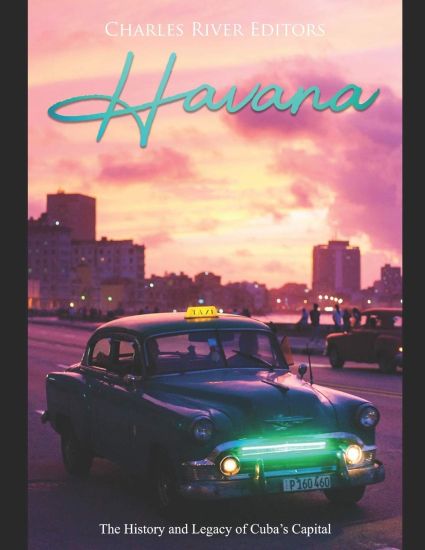
Havana: The History and Legacy of Cuba's Capital

Havana: The History and Legacy of Cuba's Capital

Charles River

Independently Published
2019
nidottu
*Includes pictures*Includes a bibliography for further reading"As far as cities go, Havana is a festering treasure chest, a primary color..." - Brin-Jonathan Butler, Cuban-Canadian authorA trip to Havana, Cuba, otherwise known as the "City of Columns," tops many bucket lists for good reason. The mere mention of this once-hidden gem of a city, situated on the western part of the largest Caribbean island nation, evokes the breathtaking imagery of sun-soaked streets and sprawling, golden-sand beaches surrounded by twinkling, almost impossibly crystalline waters, reminiscent of pastel sapphires. Nostalgic types are more likely to envision the time capsule-like qualities of Havana, namely the delightful rows of brightly-colored buildings painted in various shades of canary-yellow, watermelon-pink, and tangerine-orange, and the funky, non-ironic collection of vintage '50s cars cruising the streets. The stunning murals and mosaics, ranging from realistic and beautifully poignant black-and-white pieces to fantastical abstract works and uniquely traditional, stylized opuses, only add to the intoxicating vibrancy of the city. Even those who aren't there can practically imagine the robust bouquet of classic Cuban cigars mingling with the mouthwatering aroma of freshly brewed, home-grown coffee. Havana: The History and Legacy of Cuba's Capital chronicles the rise of the Cuban city, and the turbulent history that has made it one of the world's most interesting locations. Along with pictures depicting important people, places, and events, you will learn about Havana like never before.
King Mithridates the Great of Pontus: The Life and Legacy of the Leader Who Challenged Rome during the Mithridatic Wars
*Includes pictures*Includes excerpts of ancient accounts*Includes a bibliography for further readingRome faced many formidable enemies over the course of nearly 1,000 years, but perhaps none are as enigmatic and forgotten as King Mithridates the Great of Pontus. Despite numerous ancient sources detailing the life of the foreign monarch and his wars with Rome, and despite being an interesting character who endured years as a fugitive in his youth, enjoyed a fascination with poisons, and held mercy and pragmatic ruthlessness in a delicate balance, very few scholarly books and works have been produced about him. It may be that his largely unsuccessful military campaigns have contributed to his disappearance from active historical examination, but despite his poor record in engagements against the Romans, he dominated much of Asia Minor in the 1st century BCE, and the Romans themselves considered him one of their most dangerous enemies. In fact, upon his death, the Roman soldiers felt that "in the person of Mithridates ten thousand enemies had died." Mithridates was not a significant threat for his great skills on the battlefield, but rather for his shrewd, calculating nature, his relentless persistence, and his indomitable will. For those qualities and the wars that he fought against Rome over the course of more than 40 years, he was certainly an important character in the 1st century BCE, one of the most important eras in history. It took three of Rome's most famous generals - Sulla, Lucullus, and Pompey (all of whom earned a biography in Plutarch's Lives of the Noble Greeks and Romans) - to finally subdue him. In the end, he was not defeated by any external enemy, but by himself. King Mithridates the Great of Pontus: The Life and Legacy of the Leader Who Challenged Rome during the Mithridatic Wars looks at how Mithridates and his kingdom rose in power and became one of the Roman Republic's most legendary enemies. Along with pictures depicting important people, places, and events, you will learn about Mithridates like never before.
King Xerxes I: The Life and Legacy of the Achaemenid Persian Empire's Most Notorious Ruler
*Includes pictures*Includes excerpts of ancient accounts*Includes a bibliography for further readingOne of the Persian Empire's most famous figures is King Xerxes I, if only because he led the Second Persian War against the Greeks. Thanks to legendary clashes at Thermopylae and Salamis, the Persian leader has remained legendary, and the war was a veritable clash of civilizations. Had the Persians triumphed, the Golden Age of Athens would have been snuffed out, and Greece would never have formed the backbone of Roman and Western culture. Simply put, the West as it is today might never have existed. Not surprisingly, the majority of surviving sources regarding Xerxes are the product of Greek writers, so it was inevitable that the Persian king has been depicted in unflattering terms for thousands of years. The details of his invasion of Greece cast him as the villain in the dramatic Greek retelling of the tragic 300 Spartans holding the pass at Thermopylae, and focus on the loss at Salamis that solidified his reputation as a failure despite another 15 years of successful rule after withdrawing from the Greek mainland. Although Herodotus's Histories offer a less biased account than some later sources, he still depicted Xerxes as a figure of tragic failings, listening too often to the wrong councilors and eventually collapsing on the weight of his own hubris. This classic appearance as a tragic hero figure gives some pause for doubt, as the literary stereotype is almost too perfect and suggests a lack of depth and nuance that characterizes all accurate investigations of historical individuals. These early images were only exacerbated by Alexander the Great and his biographers, who maintained a fiery hatred toward Xerxes for his burning of Athens. They targeted many of his building projects after their capture of Persepolis, and they pushed an even bleaker picture of the king, one of an idle, indolent, cowardly, and corrupt ruler. The continuation of this can be traced throughout the passing centuries - Plato considered Xerxes to be a poor reflection of a great father, and another contemporary, Lysias, wrote in his Funeral Oration how Xerxes "had held Greece in contempt, but had been deceived in his hopes, who was dishonored by the event, galled by the disaster, and angered against its authors, and who was unused to ill-hap and unacquainted with true men." Sir Walter Raleigh wrote a History of the World in which, despite including an anecdote in which Alexander considered re-erecting a statue of Xerxes due to the king's virtues, he went on to describe Xerxes as impious, brutal, wicked, foolish, cowardly, and merciless. Author Henry Rawlinson, writing in 1867, claimed that Xerxes's character was far inferior to his more admirable predecessors, while David Stronach asserted in 1978 that Xerxes was significantly less intelligent than his father had been. As usual, the truth lies far more towards the middle, even as Xerxes's frequent portrayal as the villain in the story of a fierce, brave defense of Greece against overwhelming odds has made him a less than popular subject for biographers and historical investigations. However, a few individuals have undertaken to explore the true complexities of his character, and through these works and a few ancient sources, most particularly Herodotus, a more accurate picture can be derived, even if the bias of Greek accounts still colors the information. In reality, very little objective information exists as to the personality and character of the king, so the truth must be estimated through a careful interpretation of his deeds. King Xerxes I: The Life and Legacy of the Achaemenid Persian Empire's Most Notorious Ruler looks at the life of the Persian leader and the major conflicts he led. Along with pictures depicting important people, places, and events, you will learn about Xerxes like never before.
King Xerxes I: The Life and Legacy of the Achaemenid Persian Empire's Most Notorious Ruler
*Includes pictures*Includes excerpts of ancient accounts*Includes a bibliography for further readingOne of the Persian Empire's most famous figures is King Xerxes I, if only because he led the Second Persian War against the Greeks. Thanks to legendary clashes at Thermopylae and Salamis, the Persian leader has remained legendary, and the war was a veritable clash of civilizations. Had the Persians triumphed, the Golden Age of Athens would have been snuffed out, and Greece would never have formed the backbone of Roman and Western culture. Simply put, the West as it is today might never have existed. Not surprisingly, the majority of surviving sources regarding Xerxes are the product of Greek writers, so it was inevitable that the Persian king has been depicted in unflattering terms for thousands of years. The details of his invasion of Greece cast him as the villain in the dramatic Greek retelling of the tragic 300 Spartans holding the pass at Thermopylae, and focus on the loss at Salamis that solidified his reputation as a failure despite another 15 years of successful rule after withdrawing from the Greek mainland. Although Herodotus's Histories offer a less biased account than some later sources, he still depicted Xerxes as a figure of tragic failings, listening too often to the wrong councilors and eventually collapsing on the weight of his own hubris. This classic appearance as a tragic hero figure gives some pause for doubt, as the literary stereotype is almost too perfect and suggests a lack of depth and nuance that characterizes all accurate investigations of historical individuals. These early images were only exacerbated by Alexander the Great and his biographers, who maintained a fiery hatred toward Xerxes for his burning of Athens. They targeted many of his building projects after their capture of Persepolis, and they pushed an even bleaker picture of the king, one of an idle, indolent, cowardly, and corrupt ruler. The continuation of this can be traced throughout the passing centuries - Plato considered Xerxes to be a poor reflection of a great father, and another contemporary, Lysias, wrote in his Funeral Oration how Xerxes "had held Greece in contempt, but had been deceived in his hopes, who was dishonored by the event, galled by the disaster, and angered against its authors, and who was unused to ill-hap and unacquainted with true men." Sir Walter Raleigh wrote a History of the World in which, despite including an anecdote in which Alexander considered re-erecting a statue of Xerxes due to the king's virtues, he went on to describe Xerxes as impious, brutal, wicked, foolish, cowardly, and merciless. Author Henry Rawlinson, writing in 1867, claimed that Xerxes's character was far inferior to his more admirable predecessors, while David Stronach asserted in 1978 that Xerxes was significantly less intelligent than his father had been. As usual, the truth lies far more towards the middle, even as Xerxes's frequent portrayal as the villain in the story of a fierce, brave defense of Greece against overwhelming odds has made him a less than popular subject for biographers and historical investigations. However, a few individuals have undertaken to explore the true complexities of his character, and through these works and a few ancient sources, most particularly Herodotus, a more accurate picture can be derived, even if the bias of Greek accounts still colors the information. In reality, very little objective information exists as to the personality and character of the king, so the truth must be estimated through a careful interpretation of his deeds. King Xerxes I: The Life and Legacy of the Achaemenid Persian Empire's Most Notorious Ruler looks at the life of the Persian leader and the major conflicts he led. Along with pictures depicting important people, places, and events, you will learn about Xerxes like never before.
The Soviet Nuclear Weapons Program: The History and Legacy of the USSR's Efforts to Build the Atomic Bomb
*Includes pictures*Includes a bibliography for further readingTens of millions died during World War II as the warring powers raced to create the best fighter planes, tanks, and guns, and eventually that race extended to bombs which carried enough power to destroy civilization itself. While the war raged in Europe and the Pacific, a dream team of Nobel Laureates was working on the Manhattan Project, a program kept so secret that Vice President Harry Truman didn't know about it until he took the presidency after FDR's death in April 1945. The Manhattan Project would ultimately yield the "Little Boy" and "Fat Man" bombs that released more than 100 Terajoules of energy at Hiroshima and Nagasaki, but weeks earlier, on July 16, 1945, the first detonation of a nuclear device took place in Alamogordo, New Mexico. The first bomb was nicknamed the "gadget," to avoid espionage attempts to discover that it was, indeed, a bomb. In some sense, the device detonated in July was not really a "bomb" anyway; it was not a deployable device, though it was a detonatable one. With this success, word reached President Truman, who was then attending the Potsdam Conference, and while there, he presented the news to Soviet leader Joseph Stalin. Stalin feigned surprise; in an ironic twist of fate, espionage missions had revealed American nuclear research to the Soviets before it had even reached Vice President Truman. The attacks on Hiroshima and Nagasaki in August 1945, along with the Cold War-era tests and their accompanying mushroom clouds, would demonstrate the true power and terror of nuclear weapons, but in the late 1930s these bombs were only vaguely being thought through, particularly after the successful first experiment to split the atom by a German scientist. Despite the fact the Nazis' quest for a nuclear weapon began in earnest in 1939, no one really had a handle on how important nuclear weapons would prove to war and geopolitics, so the Germans were hesitant to expend resources on it. Moreover, they were hampered by the fact their policies had compelled Jewish scientists like Liz Meitner and Albert Einstein to flee before the war. For their part, Stalin's regime had been working on a nuclear weapons program since 1942, relying greatly upon successful Soviet espionage to help lead the way. With intelligence sources connected to the Manhattan Project, Stalin was able to keep abreast of the Allies' progress toward creating an atomic bomb, so that by 1945, the Soviets already had a working blueprint of America's first atomic bombs. On August 29, 1949, the Soviets successfully tested an atomic bomb, and with that, the Soviet Union became the second nation after the U. S. to develop and possess nuclear weapons. The nuclear age itself was still in its infancy, but within a few short years the advent of nuclear war loomed over the world and the prospect of a malign dictatorship possessing nuclear superiority kept Western leaders awake at night. The Soviet Nuclear Weapons Program: The History and Legacy of the USSR's Efforts to Build the Atomic Bomb examines the Soviets' race to reach the ultimate goal during and after World War II, and how they went about their objectives. Along with pictures of important people, places, and events, you will learn about Nazi Germany's nuclear weapons program like never before.
Sinn Féin: The History and Legacy of the Irish Republican Political Party
*Includes picturesFrom Gaelic, the words Sinn F in translate loosely into English as "We Ourselves," or "Ourselves Alone." The implications of this are that Ireland, historically subject to the political domination of England, could look to none but itself for liberation. The saga of English predominance in Ireland began in the 12th century following the Norman invasion of England, when a band of Norman adventurers, established on the Welsh mainland, set off across the Irish Sea to test their prospects on the shores of England's western neighbor. Ireland at the time was ruled in provinces by local kings, each with limited power and authority, and often at war with one another. The incoming Normans did not attempt any direct control over the country, and in due course they assimilated with the Irish. Nonetheless, by this means, England gained a foothold in the southeast of the island which was later reinforced in 1171 when the English King Henry II, utilizing intrigues among local rulers, brought over a large army which made landfall in County Wexford. Although for centuries English justification remained confined to Dublin and its surroundings, a region known as the "Pale," the English were in Ireland, and there, in one form or another, they would remain into the modern era. It was not until the 16th century, however, with the establishment in England of the Tudor Dynasty that the English Crown was able to assert control over the entire landmass of Ireland. Thereafter, English rule was exercised through a governor, or a viceroy, with the seat of power established at Dublin Castle. Dublin, of course, quickly became the most important city on the island, from where the civil service, judiciary, military, and the police were controlled. Ireland was in practical terms an English dependency, with English interest predominant, and the Irish consigned to the status of a subject race. The belief took root in Irish political society that complete independence from Westminster would ultimately only be possible through force and violence, and by definition the movements dedicated to achieving this were underground. The "United Irishmen" was one of these, another was the "Young Irelanders," and another was the "Fenians," all of which either plotted to rebel or did rise up in open rebellion. In every case, however, calls for a general rebellion always failed, and the fight was brought to the British only by a handful of radicals with no chance whatsoever of forcefully usurping the control of the greatest empire known to man. Thereafter, a plethora of largely dissociated groups and organizations, each acting individually, took up the fight for Irish independence. This was an age of activism, with the distribution of the printed words, and a flourish of nationalist newspapers and publications, and an emphasis, not only in Ireland, but throughout Europe, of ideas of nationalism, the rediscovery of subject languages and cultures, and a general awareness of the revolutionary message. From out of this melee of conflicting voices, and an increasingly robust Irish revolutionary movement came a voice of peculiar authority. Arthur Joseph Griffiths, a twenty-nine year old journalist, member of the "Irish Republican Brotherhood" and founder of the influential nationalist newspaper the United Irishman, began, through a series of editorials, to articulate a policy of Irish nationalism based on the mobilization of Irish resources, a rediscovery of Irish history and culture and in general an illumination of home-grown Irish capabilities. In May 1900, he published a groundbreaking article that called for the establishment of an umbrella organization under which all of the various nationalist organizations could be brought together. This is generally regarded as the call to action that established the modern Irish republican movement.

Modern Balloons and Airships: The History and Legacy of Dirigibles during the 20th Century
*Includes pictures*Includes a bibliography for further readingThe Wright Brothers initially underestimated the difficulties involved in flying, and they were apparently surprised by the fact that so many others were working on solving the "problem of human flight" already. Decades before their own historic plane would end up in the National Air & Space Museum, Wilbur and Orville asked the Smithsonian for reading materials and brushed up on everything from the works of their contemporaries to Leonardo Da Vinci. Undeterred by the work, and the fact that several would-be pioneers died in crashes trying to control gliders, the Wright Brothers tested out gliding at Kitty Hawk in North Carolina for several years, working to perfect pilot control before trying powered flight. In December 1903, the brothers had done enough scientific work with concepts like lift to help their aeronautical designs, and they had the technical know-how to work with engines. On December 17, the brothers took turns making history's first successful powered flights. The fourth and final flight lasted nearly a minute and covered nearly 900 feet. The Wright Flyer I had just made history, and minutes later it would be permanently damaged after wind gusts tipped it over; it would never fly again. A decade later, aircraft appeared in the skies over the battlefields of World War I, but they did not represent a complete novelty in warfare either, at least not during the early months of World War I. While airplanes had never before appeared above the field of war, other aerial vehicles had already been in use for decades, and balloons had carried soldiers above the landscape for centuries to provide a high observation point superior to most geological features. The French used a balloon for this purpose at the Battle of Fleurus in 1794, and by the American Civil War, military hydrogen balloons saw frequent use, filled from wagons generating hydrogen from iron filings and sulfuric acid. The balloonist Thaddeus Lowe persuaded President Abraham Lincoln to use the airships for observation, communicating troop movements to the ground with a telegraph wire. Lowe himself reported, "A hawk hovering above a chicken yard could not have caused more commotion than did my balloons when they appeared before Yorktown." (Holmes, 2013, 251). The Confederates agreed with this assessment: "At Yorktown, when almost daily ascensions were made, our camp, batteries, field works and all defenses were plain to the vision of the occupants of the balloons. ...] The balloon ascensions excited us more than all the outpost attacks." Indeed, with advances in dirigible technology, many military thinkers and even aeronautical enthusiasts believed that blimps would remain the chief military aerial asset more or less forever. These men thought airplanes would play a secondary role at best, and that they might even prove a uselessly expensive gimmick soon to fade back into obscurity, leaving the majestic bulk of the dirigible as sole master of the skies. While this obviously did not prove true, dirigibles proved popular in a variety of different ways throughout the 20th century, and they continued to be complements even as airplane technologies rapidly advanced. Modern Balloons and Airships: The History and Legacy of Dirigibles during the 20th Century looks at the development of balloons and airships during the 20th century, and the innovative ways they were used. Along with pictures depicting important people, places, and events, you will learn about modern balloons and airships like never before.
Oliver Winchester: The Life and Legacy of America's Famous Rifle Manufacturer
*Includes pictures*Includes a bibliographyBy the time weapons industrialist Oliver Winchester was born, the Lewis and Clark Expedition sent to the Pacific by Thomas Jefferson had only recently returned with their report on the first overland continental journey. Outside of a small group of mountain men trapping and trading fur for European fashion magnates, few white settlers had found their way across the Great Plains. The firearms of the Revolution demonstrated little difference between a soldier's flintlock musket and a hunting weapon taken from the mantle. Gunsmiths in early 19th century America were helped along by noted artisans from Germany, Switzerland, and other European powers, but despite advances made in the European and American musket, the requirement of an exterior spark and percussion to ignite powder for a single-shot discharge remained the paradigm. Similarly, the era was unable to move past the cumbersome weapon that required at least half a minute to reload. The military compensation for such an ungainly and vulnerable process was the alternation of troop lines, in which one fired while the other reloaded from behind. Effective as that was in laying down constant fire and simultaneous reloading, the force as a whole was disabled by a large fraction, and the reloading soldiers were vulnerable to saber attacks on horseback as well. From the bayonet of 1620 to the emergence of repeating firearms in the American Civil War, sometimes referred to as the "first truly modern war," military procedures remained largely the same, based on entrenched European customs. Napoleonic tactics were taught as mainstream at the military academies, and the musket remained in a stagnant state of evolution, but even the most tradition-bound army command was forced to give way at some point to a generation of scientist-inventors, civilian manufacturing centers, and entrepreneurs born during the Industrial Revolution. The old guard dug in its heels, and even well past the Civil War, new technologies were met with stiff resistance. High-ranking officers, drawn from the ranks of martial families steeped in the War of 1812, fended off the new scientific engineering and what they considered the waste of random firing. However, the realities of American expansionism, population redistribution, a labor movement unwilling to cede its members well-being, and the rise of the factory became impossible to ignore. The driving forces behind modern light weaponry were new disciples of mass production, interchangeable parts, and a more developed and aggressive marketing style. Evolution of the modern rifle did not provide all of its own impetus. As the ever-improving cartridge progressed from primitive paper to brass encasement, the weapons required to fire with the charge were forced to change as well. As the civilian entrepreneur and the soldier became increasingly interdependent, the new corporate executives of arms companies became tycoons. Mass production and increasingly sophisticated marketing techniques helped to create the national and international arms merchant, a model upon which global governments expanded. With few exceptions, the nature of the modern firearm as an everyday utility enabled these giants to arm any ideology, or both sides of any conflict. In the manner that Samuel Colt broke open the single-shot tradition in hand weapons, Oliver Fisher Winchester and his celebrated rifle shared the title of "the gun that won the West." In the arena of portable arms, these two men dominated much of the technological and promotive aspects of 19th century weaponry, alternating between resisting and collaborating with rivals. While Colt created the first effective revolver mechanism for the handgun based on the technology of the ship's wheel, it was Oliver Winchester who instituted 140 years of branding dominance by virtue of the first reliable repeating rifle.
Havana: The History and Legacy of Cuba's Capital

Havana: The History and Legacy of Cuba's Capital

Charles River

Independently Published
2019
nidottu
*Includes pictures*Includes a bibliography for further reading"As far as cities go, Havana is a festering treasure chest, a primary color..." - Brin-Jonathan Butler, Cuban-Canadian authorA trip to Havana, Cuba, otherwise known as the "City of Columns," tops many bucket lists for good reason. The mere mention of this once-hidden gem of a city, situated on the western part of the largest Caribbean island nation, evokes the breathtaking imagery of sun-soaked streets and sprawling, golden-sand beaches surrounded by twinkling, almost impossibly crystalline waters, reminiscent of pastel sapphires. Nostalgic types are more likely to envision the time capsule-like qualities of Havana, namely the delightful rows of brightly-colored buildings painted in various shades of canary-yellow, watermelon-pink, and tangerine-orange, and the funky, non-ironic collection of vintage '50s cars cruising the streets. The stunning murals and mosaics, ranging from realistic and beautifully poignant black-and-white pieces to fantastical abstract works and uniquely traditional, stylized opuses, only add to the intoxicating vibrancy of the city. Even those who aren't there can practically imagine the robust bouquet of classic Cuban cigars mingling with the mouthwatering aroma of freshly brewed, home-grown coffee. Havana: The History and Legacy of Cuba's Capital chronicles the rise of the Cuban city, and the turbulent history that has made it one of the world's most interesting locations. Along with pictures depicting important people, places, and events, you will learn about Havana like never before.
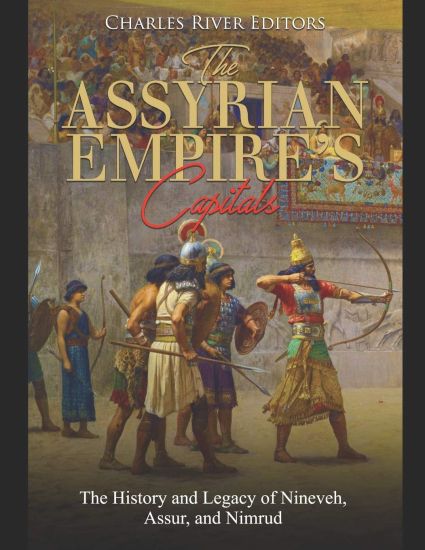
The Assyrian Empire's Capitals: The History and Legacy of Nineveh, Assur, and Nimrud
*Includes pictures*Includes excerpts of ancient accountsWhen scholars study the history of the ancient Near East, several wars that had extremely brutal consequences (at least by modern standards) often stand out. Forced removal of entire populations, sieges that decimated entire cities, and wanton destruction of property were all tactics used by the various peoples of the ancient Near East against each other, but the Assyrians were the first people to make war a science. When the Assyrians are mentioned, images of war and brutality are among the first that come to mind, despite the fact that their culture prospered for nearly 2,000 years. Like a number of ancient individuals and empires in that region, the negative perception of ancient Assyrian culture was passed down through Biblical accounts, and regardless of the accuracy of the Bible's depiction of certain events, the Assyrians clearly played the role of adversary for the Israelites. Although the Biblical accounts of the Assyrians are among the most interesting and are often corroborated with other historical sources, the Assyrians were much more than just the enemies of the Israelites and brutal thugs. A historical survey of ancient Assyrian culture reveals that although they were the supreme warriors of their time, they were also excellent merchants, diplomats, and highly literate people who recorded their history and religious rituals and ideology in great detail. The Assyrians, like their other neighbors in Mesopotamia, were literate and developed their own dialect of the Akkadian language that they used to write tens of thousands of documents in the cuneiform script (Kuhrt 2010, 1:84). Furthermore, the Assyrians prospered for so long that their culture is often broken down by historians into the "Old", "Middle", and "Neo" Assyrian periods, even though the Assyrians themselves viewed their history as a long succession of rulers from an archaic period until the collapse of the neo-Assyrian Empire in the 7th century BCE. In fact, the current divisions have been made by modern scholars based on linguistic changes, not on political dynasties (van de Mieroop 2007, 179). When Nineveh was at its height, they controlled an empire that encompassed Egypt, Anatolia, Mesopotamia, and parts of Iran. Eventually, the Assyrians overextended themselves and their enemies overthrew them and destroyed much of their cities. Nineveh became lost for centuries, only mentioned in fragments by classical Greek historians, but modern archaeological methods were able to bring the lost city back to life. In northern Iraq, on the banks of the Tigris River, lie the ruins of the ancient city of Assur, the first capital and the most important religious center of the Assyrian Empire. Known today as Qal'at Sherqat, and also as Kilah Shregat, the city dates back to the 3rd millennium BCE. In that time period, the Assyrian army became the largest yet seen, and their warriors were both the greatest and cruelest in the land. They conquered an empire from the Persian Gulf to the Mediterranean Sea; they despoiled the great city of Babylon, and they enslaved the tribes of Israel. Even the pharaoh of Egypt paid them tribute. No army had ever carried war so far. The city of Nimrud was one of the Assyrians' most important cities, and it has been known by many different names throughout its history. In ancient Assyrian, the city was called Kalḫu, a name first attested to in texts dating back to the 13th century BCE. An ancient Assyrian capital during the Neo-Assyrian period, the city has produced many glorious artifacts and provided countless insights into this ancient civilization, but the history of the city after the fall of the Assyrians has proven just as turbulent and interesting.
The Amber Road: The History and Legacy of the Ancient Trade Network that Moved Amber across Europe
*Includes pictures*Includes ancient accounts*Includes a bibliography for further reading"Pytheas says that the Gutones, a people of Germany, inhabit the shores of an estuary of the Ocean called Mentonomon, their territory extending a distance of six thousand stadia; that, at one day's sail from this territory, is the Isle of Abalus, upon the shores of which, amber is thrown up by the waves in spring, it being an excretion of the sea in a concrete form; as, also, that the inhabitants use this amber by way of fuel, and sell it to their neighbors, the Teutones..." - Pliny the Elder The story of the Silk Road has been a popular topic amongst tourists, academics, economists, state parties, and daydreaming children for many centuries. In many ways the Silk Road can be seen everywhere, and it has existed for as long as people have traveled across Eurasia. Its impact is widely felt among the diverse peoples that live on the continent, through the unique regional art and architectural styles, as well as in countless films, books, academic studies, and organized tours devoted to the ancient trade routes. At the same time, however, the Silk Road is an entirely abstract invention, first coined by the 19th century German geographer Ferdinand von Richthofen. There has never existed a single route - let alone a road - that was used to transfer goods, nor was silk the primary commodity traded across Eurasia. Instead, the Silk Road is more a multi-layered narrative about the rise and fall of nomadic confederations and sedentary societies, the consolidation and dissolution of kingdoms and empires, the exchange of commodities and fine crafts, and the transfer and mixture of ideas, religions, technology, science, art, architecture, myths and legends. It is a story that is relevant for the present-day countries through which this exchange once took place, as they lay claim to the artifacts, heritage sites, and symbolic meaning of the Silk Road for political and economic purposes and to build their national identity. In fact, international trade in the ancient world was a more intricate and far-reaching system than many have been led to believe. The Silk Road and the Incense Trade Route have been heavily investigated in recent decades, but the Amber Road trade network dominating northern Europe has been given far less attention. Amber, the hardened sap of prehistoric trees, has washed up on Baltic shores for generations, and though it had little value to the locals beyond religious symbolism and aesthetic beauty, they learned that foreign civilizations would pay massive sums for the beautiful substance. Though written sources are scattered and tend to come and go depending on the civilization involved, much has been written by ancient authors, particularly of Greek and Roman origins. More importantly, archeologists have traced the spread of amber through the discovery of pieces with specific chemical construction, linking it back to the Baltic region. Once thought to have mainly been exported to Rome, Baltic amber has also been found in Mycenaean Greece, Egypt and Syria, though perhaps not surprisingly, it was Roman demand that formed the height of the amber exchange. Perhaps even more interesting than the movement of the amber is regarding shifting trade operations from government controlled systems to private merchant enterprises to monopolies of guilds and orders, a return to government control, and finally, the selling of the trade to individual countries. It is a fascinating microcosm of changing political and governmental landscapes through millennia of change and development in northern Europe and the wider ancient Mediterranean world. The Amber Road: The History and Legacy of the Ancient Trade Network that Moved Amber across Europe looks at the development of this crucial trade, and its impact on antiquity.
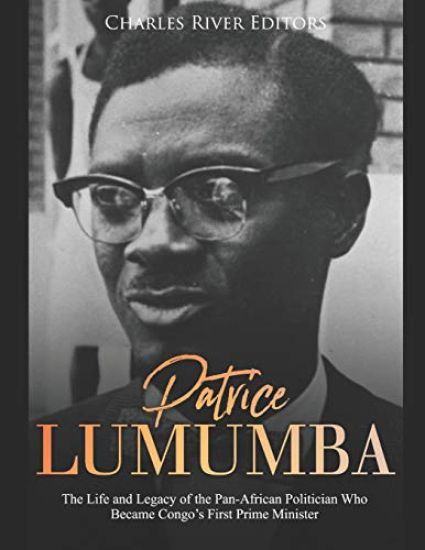
Patrice Lumumba: The Life and Legacy of the Pan-African Politician Who Became Congo's First Prime Minister
*Includes pictures*Includes online resources and a bibliography for further reading "Without dignity there is no liberty, without justice there is no dignity, and without independence there are no free men." - Patrice LumumbaThe modern history of Africa was, until very recently, written on behalf of the indigenous races by the white man, who had forcefully entered the continent during a particularly hubristic and dynamic phase of European history. In 1884, Prince Otto von Bismarck, the German chancellor, brought the plenipotentiaries of all major powers of Europe together, to deal with Africa's colonization in such a manner as to avoid provocation of war. This event-known as the Berlin Conference of 1884-1885-galvanized a phenomenon that came to be known as the Scramble for Africa. The conference established two fundamental rules for European seizure of Africa. The first of these was that no recognition of annexation would granted without evidence of a practical occupation, and the second, that a practical occupation would be deemed unlawful without a formal appeal for protection made on behalf of a territory by its leader, a plea that must be committed to paper in the form of a legal treaty. One of the most controversial colonization efforts took place in the Congo, which still conjures up contrasting images of jungles, wildlife, warlords, civil wars, blood diamonds, and the ongoing anarchy of ethnic and tribal warfare. Indeed, the vast expanse of Congo remains one of the most enigmatic and little-known regions of Africa. It is also, undeniably, the original African failed state. It has suffered generations of warlord rule, inter-ethnic violence and insecurity, particularly in the remote and isolated east of the country. The original name of the region derives from the Kingdom of Kongo, a pre-colonial power that ruled a limited region surrounding, and extended south of, the mouth of the Congo River. The first Europeans to discover the mouth of the Congo River were the Portuguese, who incrementally explored the coast of Africa throughout the late 15th century and established diplomatic and trade relations with the Kongo Kingdom before assuming control of what later became Portuguese West Africa, and later still Angola. At that point in history, the European trading powers were only really interested in trade, most particularly the Atlantic Slave Trade, and there was little incentive to penetrate the interior to any depth. The Portuguese made no particular effort, therefore, to explore the Congo River any further inland than the Crystal Mountains or the extensive region of rapids that tended to shield the interior from the coast. For generations the Portuguese simply traded off the coast, while what lay beyond in the dark interior remained a matter of myth and speculation. It was in the nature of Belgium's withdrawal from Africa that power was essentially handed over to the first in line to receive it. Very little of the careful preparation that characterized the British withdrawal from Africa was evident in Congo, in major part due to the fact that the Belgian system of administration allowed for no phased entry of Congolese employees into the executive level, so there was no one trained or experienced in running a government who was in a position to take over from the departing Belgians. The same, indeed, was true in the armed forces. As it turned out, the first in line to take power was a tall, stern-featured ideologue by the name of Patrice Lumumba. Though he was still just 35, his life story was already one full of ideology, politics, and chaos, and things would only get more turbulent once he became the Congo's leader. Patrice Lumumba: The Life and Legacy of the Pan-African Politician Who Became Congo's First Prime Minister looks at one of the most important African leaders of the 20th century.
The United States Camel Corps: The History of the U.S. Army's Use of Camels in the Southwest during the 19th Century
*Includes pictures*Includes contemporary accounts*Includes a bibliography for further readingIn the 1850s, Americans widely believed that the area from the 97th Meridian to the Rocky Mountains was vast, sterile, and useless, fit only for wandering natives and something to be endured rather than enjoyed by the people traveling through. Putting the eastern border near the point where the Great Plains begin, a common name for the huge region was "The Great American Desert," and the acquisition of the Southwest from Mexico added to the already huge area, commonly considered desert wasteland. Suddenly, the United States had a million square miles of Great American Desert to administrate, an area where the resident native warriors considerably outnumbered the small U. S. Army. In fact, the use of the word "desert" probably contributed to the idea behind using camels in the region, thanks to their reputation as "ships of the desert." With that in mind, the United States Camel Corps was a military experiment in the 1850s that brought camels from Egypt and Turkey to Texas and California. The cast of characters in this story is larger than life and includes U. S. Army and Navy officers, explorers, writers, politicians, and diplomats. The most famous person involved was Jefferson Davis, a U. S. Senator from Mississippi who went on to become Secretary of War and the Confederacy's only president. The project also utilized Haji Ali (also known as "Hi Jolly"), the U. S. Army's first Muslim employee, and it even had a small effect on the Civil War. One of the camels, Doug, was used by the Confederates at Vicksburg, and locals despised the Red Ghost, a feral camel that terrorized rural Arizona. The most important result of this historical footnote probably has no resonance in American history, and in fact, the name "United States Camel Corps" was never formalized, but it seems to be what historians call a retronym, a name given after a phenomenon has receded into the past. How long the name of "Camel Corps" has been in existence is unknown, but it has been used in literature for close to a century. What the troopers themselves called the unit remains unknown. However, the unit was extraordinarily important to Mexico, thanks to a man named Elias, one of the Syrian-Arab cameleers. Hired and brought over to teach American soldiers how to handle camels, Elias eventually moved to Sonora, Mexico, married a Yaqui Mexican woman, and had a son who went on to become a formidable and energetic president of Mexico. The United States Camel Corps: The History of the U. S. Army's Use of Camels in the Southwest during the 19th Century looks at the unique unit, from its origins to its record. Along with pictures depicting important people, places, and events, you will learn about the United States Camel Corps like never before.
The United States Camel Corps: The History of the U.S. Army's Use of Camels in the Southwest during the 19th Century
*Includes pictures*Includes contemporary accounts*Includes a bibliography for further readingIn the 1850s, Americans widely believed that the area from the 97th Meridian to the Rocky Mountains was vast, sterile, and useless, fit only for wandering natives and something to be endured rather than enjoyed by the people traveling through. Putting the eastern border near the point where the Great Plains begin, a common name for the huge region was "The Great American Desert," and the acquisition of the Southwest from Mexico added to the already huge area, commonly considered desert wasteland. Suddenly, the United States had a million square miles of Great American Desert to administrate, an area where the resident native warriors considerably outnumbered the small U. S. Army. In fact, the use of the word "desert" probably contributed to the idea behind using camels in the region, thanks to their reputation as "ships of the desert." With that in mind, the United States Camel Corps was a military experiment in the 1850s that brought camels from Egypt and Turkey to Texas and California. The cast of characters in this story is larger than life and includes U. S. Army and Navy officers, explorers, writers, politicians, and diplomats. The most famous person involved was Jefferson Davis, a U. S. Senator from Mississippi who went on to become Secretary of War and the Confederacy's only president. The project also utilized Haji Ali (also known as "Hi Jolly"), the U. S. Army's first Muslim employee, and it even had a small effect on the Civil War. One of the camels, Doug, was used by the Confederates at Vicksburg, and locals despised the Red Ghost, a feral camel that terrorized rural Arizona. The most important result of this historical footnote probably has no resonance in American history, and in fact, the name "United States Camel Corps" was never formalized, but it seems to be what historians call a retronym, a name given after a phenomenon has receded into the past. How long the name of "Camel Corps" has been in existence is unknown, but it has been used in literature for close to a century. What the troopers themselves called the unit remains unknown. However, the unit was extraordinarily important to Mexico, thanks to a man named Elias, one of the Syrian-Arab cameleers. Hired and brought over to teach American soldiers how to handle camels, Elias eventually moved to Sonora, Mexico, married a Yaqui Mexican woman, and had a son who went on to become a formidable and energetic president of Mexico. The United States Camel Corps: The History of the U. S. Army's Use of Camels in the Southwest during the 19th Century looks at the unique unit, from its origins to its record. Along with pictures depicting important people, places, and events, you will learn about the United States Camel Corps like never before.
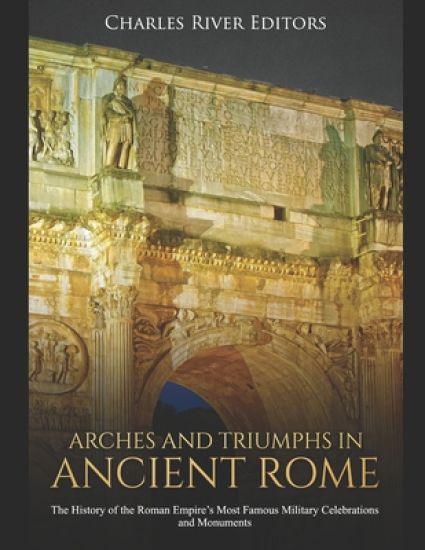
Arches and Triumphs in Ancient Rome: The History of the Roman Empire's Most Famous Military Celebrations and Monuments
*Includes pictures*Includes excerpts of ancient accounts*Includes a bibliography for further readingSome of the most iconic symbols of the Roman Empire that have survived into the modern world today are the arches that Romans erected to commemorate military victories and glorify individual emperors. The story of how arches came to be used throughout the Roman world in such a way is one that involves the evolution of the military and its leaders into the political forces that came to dominate the state, and those arches, along with the triumphs that came to be associated with many of them, were key parts in the process of exhibiting the might of both Rome. At the same time, they were meant to mark the individual achievements of Rome's rulers, making them an enormous and expensive PR exercise that steadily grew over the years. At its most basic, and in its earliest incarnation, the arch was a celebration of achievement and, as such, was part of a whole series of methods used by the Romans to record, reward, and publicize success. However, as the imperial period progressed, the arch came to symbolize much more and became exclusively associated with imperial might through the building of Triumphal Arches. The story of those arches is inextricably linked to the promotion of Rome as the greatest of all powers, and of its leaders as the most worthy and able of all commanders. The building process of arches was long and protracted, but it typically served the empire well. Indeed, the success of this physical statement can perhaps be best measured by the number of similar arches erected around the world centuries after the end of the Roman Empire, including the Arc de Triomphe in Paris, the Narva Triumphal Arch in Saint Petersburg, the Wellington Arch in London, and the India Gate in Delhi. Arches and Triumphs in Ancient Rome: The History of the Roman Empire's Most Famous Military Celebrations and Monuments examines the events surrounding the celebrations, accounts of them, and how they influenced other architectural monuments. Along with pictures depicting important people, places, and events, you will learn about the arches and triumphs like never before.