Kirjojen hintavertailu – 12 903 725 kirjaa ja 27 kauppaa
Kirjailija
Charles River
Kirjat ja teokset yhdessä paikassa: 4 673 kirjaa, julkaisuja vuosilta 2013–2022, suosituimpiin kuuluu William Powell and Myrna Loy: The Lives and Careers of One of Classical Hollywood's Most Iconic Duos. Vertaile teosten hintoja ja tarkista saatavuus suomalaisista kirjakaupoista.
*Includes pictures. *Includes Morrison's quotes about his life and career. *Includes footnotes and a bibliography for further reading. "I see myself as an intelligent, sensitive human, with the soul of a clown which forces me to blow it at the most important moments." - Jim Morrison In the mid-1960s, an era on the cusp of change from the musical and social norms of the previous decade, the emergence of Jim Morrison, the charismatic poet/musician of The Doors, helped to transform the subgenre of rock n' roll as a stylistic flavor to the full-fledged institution of Rock Music. Morrison accomplished this transformation by avoiding membership in any of the known categories of modern rock music during the age of protest, but at the same time, he became the general symbol of anti-authoritarianism for his generation and the next, especially as rock music began to base itself on the urge of youth to revolt. In conjunction with that, The Doors became one of the most famous bands on the planet in the late '60s. Of course, Morrison accomplished all of this by being extreme, in every sense of the word. His poetry was assaultive, blatant and graphic, a sign of the times, and his voice was mystical and haunting, lacking any sense of what was previously or typically considered vocal beauty. Whether intentional or not, Morrison also led the charge of excessive defiance toward anything hierarchical or rule-laden, and the acting out of his subconscious urges on public stages around the world surpassed any of the frightening new artists that were unraveling the fabric of '50s behavior, including The Beatles and Elvis Presley. He took these qualities past the point that American audiences had previously experienced, and listeners were simultaneously tested, taunted and incited by the unorthodox stage performer. Such a dynamic would come to serve as the perfect outlet to one with a "lust for anything forbidden by the authority of conservative Middle America," and for one who was endlessly "fascinated by crowd dynamics". Morrison was aware of that trend himself, as he once put it, "Each generation wants new symbols, new people, new names. They want to divorce themselves from their predecessors." All the while, Morrison's writing and performances, as well as his most bizarre antics, were all fueled by drugs. Much like everything else, he took a metaphysical approach to using them, saying, "I believe in a long, prolonged, derangement of the senses in order to obtain the unknown." At the same time, he could be more down-to-earth about addictions, as he pointed out about alcohol, "It's like gambling somehow. You go out for a night of drinking and you don't know where you're going to end up the next day. It could work out good or it could be disastrous. It's like the throw of the dice." Fittingly, Morrison was just as controversial in death as he was in life. When he died in Paris, presumably of a heroin overdose, theories cropped up over how he actually died or whether he even faked his death. In the process, he also helped immortalize the "27 Club" with Janis Joplin and Jimi Hendrix, who had both died at the age of 27 within weeks of each other less than a year before Morrison. American Legends: The Life of Jim Morrison examines the life and career of one of America's most famous rock stars. Along with pictures of important people, places, and events, you will learn about Jim Morrison like never before, in no time at all.
*Includes pictures. *Includes Wood's quotes about her own life and career. *Includes a bibliography for further reading. "Stardom is only a byproduct of acting. I don't think being a movie star is a good enough reason for existing." - Natalie Wood A lot of ink has been spilled covering the lives of history's most influential figures, but how much of the forest is lost for the trees? In Charles River Editors' American Legends series, readers can get caught up to speed on the lives of America's most important men and women in the time it takes to finish a commute, while learning interesting facts long forgotten or never known. Few actresses have ever gotten off to the kind of career start that Natalie Wood did during the 1950s. After appearing in film and on TV as a child, Wood broke out by appearing in the classic Rebel Without a Cause alongside James Dean in 1955, despite the fact she was still just 15 years old. She earned an Oscar nomination for Best Supporting Actress in that role, one of three Academy Award nominations she would rack up before the age of 25. That included starring in Splendor in the Grass (1961), West Side Story (1961), and Gypsy (1962), and altogether, she was in over 50 films, . Given that she was a successful actress for several decades, it's no surprise that Wood generated a lot of press during her career, and her personal life was tabloid fodder in particular. When she married star actor Robert Wagner, they had one of Hollywood's most famous and most successful marriages. But Wood was also notorious for relying on psychoanalysts, to the extent that she would become heavily reliant on constantly having access to one. People were also caught by surprise when Wood retired after the birth of her daughter in 1970, and unfortunately, that has contributed to the fact that she is best remembered today for her mysterious drowning in 1981. Wood was on a boat with Robert Wagner and Christopher Walken when she fell overboard on the night of November 28, and her drowning was ruled accidental, with the coroner noting that she was inebriated and under the effects of pain medication. However, that ruling has been controversial ever since because of the fact that when her body was found, Wood had bruises on her arms and a cut on her cheek, and nobody else on the boat could account for the timing of her disappearance. While the odd circumstances have led some to suspect foul play, investigations have continued over the years and haven't been able to shed much new light on her death. American Legends: The Life of Natalie Wood examines the life and career of one of America's favorite child stars. Along with pictures of important people, places, and events, you will learn about Natalie Wood like never before, in no time at all.
*Includes pictures. *Includes Barnum's own quotes about his life and career. *Highlights Barnum's entertainment career and transition into the circus. *Includes a bibliography for further reading. "I was a farmhand, a merchant, a clerk, a boss, a theater director and a bank director; I lived in prisons and palaces, I knew poverty and abundance, I've traveled extensively on two continents, I've met all kinds of people and seen the human character in all its guises, and time and again I have been in the greatest danger. Amidst such a diversity of events, I had to undergo difficult times, but I'm definitely not complaining, and I believe that my life was a happy one, because I always saw the positive side of things." - P. T. Barnum A lot of ink has been spilled covering the lives of history's most influential figures, but how much of the forest is lost for the trees? In Charles River Editors' American Legends series, readers can get caught up to speed on the lives of America's most important men and women in the time it takes to finish a commute, while learning interesting facts long forgotten or never known. Americans have loved traveling circuses for generations, and none represent the country's love for entertainment quite like the most famous of them all, the Ringling Bros. and Barnum & Bailey Circus. Circus promoters have long been viewed as somewhat shady hucksters, but none could top Phineas Taylor Barnum, who used a blend of traditional circus entertainment, freak show exhibits, and outright hoaxes to create "The Greatest Show on Earth". Barnum introduced America to Jumbo the Elephant, one of the most legendary acts in the history of the circus, as well as "exhibits" like Joice Heth, an elderly African American woman Barnum advertised as a 161 year old who nursed George Washington. He also notoriously perpetrated hoaxes with General Tom Thumb and claimed to have a live mermaid, so it's no surprise that Barnum is often apocryphally quoted as saying, "There's a sucker born every minute." While he didn't actually say that, he said something similar: "Nobody ever lost a dollar by underestimating the taste of the American public." In fact, Barnum had specialized in circus entertainment decades before traveling circuses were truly a national sensation, particularly thanks to the popularity of the Barnum American Museum in New York City. Barnum's museum offered something for everyone across its different halls, from poetic readings to animal exhibits, and all the while, Barnum was defiant when confronted by criticism, reminding people, "I am a showman by profession...and all the gilding shall make nothing else of me." Of course, Barnum was selling himself short by calling himself merely a showman, because during the course of his adventurous life, he was a shrewd businessman, a politician, and the country's most famous and notorious promoter of both entertainment and himself. American Legends: The Life of P. T. Barnum examines the life and career of the man most responsible for the kinds of circus entertainment that still fascinate Americans of all ages. Along with pictures of important people, places, and events, you will learn about P. T. Barnum like never before, in no time at all.
*Includes pictures. *Includes Flynn's quotes about his life and career. *Includes a bibliography for further reading. "The public has always expected me to be a playboy, and a decent chap never lets his public down." - Errol Flynn Hollywood has never lacked leading men who could captivate viewers with dramatic performances that depict them as suave romantics or dashing heroes, especially during the Golden Age of Hollywood when stars like Humphrey Bogart, Clark Gable, and Cary Grant graced screens. But in 1940, the 4th most popular star in the U. S. was a foreign actor from Australia, and unlike other movie stars, he was more notorious for his pursuits off the screen than on it. In an era long before social media and TMZ, Errol Flynn represented the epitome of a swashbuckling playboy, with enough mystery and intrigue surrounding him and his background to fascinate even those who didn't see his movies. An article in Time magazine got to the heart of the matter in 1938 when it noted, "Of all the heroes of Hollywood, Errol Flynn has by long odds the greatest amount of non-phony glamor. His life has been as adventurous as any of the swashbuckling characters he has portrayed. At 18 he was a member of the English Olympic boxing team. At 19 he was master of an island trading schooner in the South Seas. He has chased head-hunters in New Guinea and "recruited" blacks for British miners. Once he made $5,000 mining gold, got drunk and blew it all on a schooner, The Sirocco, which he sailed in the South Seas and wrote a book about (Beam Ends)." Even Hollywood stars accustomed to mingling with each other were awestruck by Flynn, who was an industry newcomer in 1935 but a huge star in just a few years. When Olivia de Havilland, who would eventually become an Academy Award winner and played Melanie in Gone With the Wind, met Flynn ahead of appearing with him in Captain Blood (1935), she recalled, "And I walked onto the set, and they said, 'Would you please stand next to Mr. Flynn' and I saw him. Oh my Oh my Struck dumb. I knew it was what the French call a coup de foudre. So I took my position next to him... We had never met, and we just stood there next to each other. Oh " Studio head Jack Warner once offered quite a flattering description as well: "He was all the heroes in one magnificent, sexy, animal package. I just wish we had someone around today half as good as Flynn." Naturally, when he was at the peak of his powers both on and off the screen, Flynn frequently joked about his lifestyle and traded upon it for popularity, with comments like "I like my whisky old and my women young" and "Women won't let me stay single and I won't let me stay married." Not surprisingly, Flynn was just as fast and loose with his money, to the extent that he once asserted, "Any man who has $10,000 left when he dies is a failure." This led many to assume that far from being content with life, Flynn was actually "tormented" (as de Havilland once put it) or covering up his own insecurities, as actress Ann Sheridan suggested: "He was one of the wild characters of the world, but he also had a strange, quiet side. He camouflaged himself completely. In all the years I knew him, I never knew what really lay underneath, and I doubt if many people did." Flynn himself suggested that was the case, once saying, "I suppose most of us act all our lives. We have a facade, a front. We imagine ourselves to be what we're not, don't we?" While Flynn's adventurous lifestyle helped cast him in the mold of a 20th century Lord Byron, his quotes and lifestyle also hinted at a self-fulfilling prophecy that would prove destructive, and although he quickly found himself at the top of Hollywood, the same lifestyle that helped make him popular also took its toll on his health, work, and finances.
*Includes pictures. *Includes Ford's quotes about his own life and career. *Discusses the controversies surrounding Ford and Nazi Germany. *Includes a bibliography for further reading. "A business that makes nothing but money is a poor business." - Henry Ford "I don't know much about history, and I wouldn't give a nickel for all the history in the world. It means nothing to me. History is more or less bunk. It's tradition. We don't want tradition. We want to live in the present and the only history that is worth a tinker's damn is the history we make today." - Henry Ford in a 1916 newspaper interview. A lot of ink has been spilled covering the lives of history's most influential figures, but how much of the forest is lost for the trees? In Charles River Editors' American Legends series, readers can get caught up to speed on the lives of America's most important men and women in the time it takes to finish a commute, while learning interesting facts long forgotten or never known. Few Americans have a reputation and legacy anything like Henry Ford's, the man whose name is still associated with one of the world's most famous car companies. Ford is unquestionably one of his country's most famous industrialists, and his use of an assembly line to mass produce automobiles was not only innovative but also made it possible for Americans to own cars en masse. To this day, Ford Motor Company's Model T is a household name more than a century after they were manufactured, not only because they were famous cars but because they represented affordable purchases that revolutionized the way people traveled across the country. Cars would never be a luxury item only for the wealthy again. Although Ford's use of an assembly line meant human labor was not as necessary as it would otherwise be, he became known for advocating on behalf of labor rights, including offering an unprecedented $5 work day (the equivalent of $120 today), which doubled how much his workers were previously making and helped ensure his company would be both popular and a destination for workers. Ford helped Detroit become the Motor Capital, and he was progressive when it came to hiring minorities and women. In the process, Ford, who was born into a farming family of modest means, also enriched himself beyond his wildest imaginations, with Forbes magazine recently estimating that his net worth in today's dollars was nearly $190 billion. However, while Ford may arguably be America's most famous businessman, part of that is due to his virulent anti-Semitism and his association with Nazi Germany in the 1930s and the lead up to World War II. He invested in a weekly publication that became notorious for its screeds, and Ford was the only American praised in Hitler's Mein Kampf because of his antagonism towards Jews. Hitler went so far as to call Ford an "inspiration". On his 75th birthday, Ford was awarded the Grand Cross of the German Eagle, which was the highest honor a non-German could receive from Nazi Germany, but one acquaintance later claimed that Ford was disgusted when he saw footage of Nazi concentration camps and what had happened to Jews across Europe. American Legends: The Life of Henry Ford profiles the life and career of one of America's most famous and infamous industrialists. Along with pictures of important people, places, and events, you will learn about Henry Ford like never before, in no time at all.
*Includes pictures. *Includes Fonda's own quotes about her life and career. *Includes a bibliography for further reading. "Being Henry Fonda's daughter got me started. But it didn't keep me working." - Jane Fonda A lot of ink has been spilled covering the lives of history's most influential figures, but how much of the forest is lost for the trees? In Charles River Editors' American Legends series, readers can get caught up to speed on the lives of America's most important men and women in the time it takes to finish a commute, while learning interesting facts long forgotten or never known. Growing up in the shadow of one of America's most famous actors would be intimidating for anyone, but few have emerged out of that shadow like Jane Fonda, the oldest daughter of screen legend Henry Fonda. In fact, when Jane co-starred with her father in the last film he made, On Golden Pond, he won the Academy Award for Best Actor for it. However, she has accomplished more than enough in her own career to make her father proud, winning 2 Academy Awards, an Emmy and 7 Golden Globe Awards herself. Jane burst onto the scene in the early 1960s, when she was still in her 20s, and when she performed in Sunday in New York, one critic labeled her "the loveliest and most gifted of all our new young actresses". She has been acting at least off and on from that point forward, earning critical acclaim both for her acting skills and for many of the movies she appeared in. However, today many people associate Jane Fonda with political causes, most notoriously her stance against the Vietnam War. Indeed, she might still be the face of the anti-Vietnam movement because of an episode that earned her the notorious nickname "Hanoi Jane". In addition to speaking out against the war, Fonda actually traveled to Hanoi in July 1972 and was photographed sitting in a North Vietnamese anti-aircraft battery, immediately earning widespread condemnation that sought to brand her as anti-American. Fonda has spent the rest of her life trying to explain her regret over it, telling Barbara Walters in a 1988 interview, "I would like to say something, not just to Vietnam veterans in New England, but to men who were in Vietnam, who I hurt, or whose pain I caused to deepen because of things that I said or did. I was trying to help end the killing and the war, but there were times when I was thoughtless and careless about it and I'm very sorry that I hurt them... I will go to my grave regretting the photograph of me in an anti-aircraft gun, which looks like I was trying to shoot at American planes." Nevertheless, it has not tempered her liberal political activism. American Legends: The Life of Jane Fonda examines the life and career of one of America's most famous and infamous actresses. Along with pictures of important people, places, and events, you will learn about Jane Fonda like never before, in no time at all.
*Includes pictures. *Includes Douglas' quotes about his own life and career. *Includes a bibliography for further reading. "When you become a star, you don't change - everyone else does." - Kirk Douglas A lot of ink has been spilled covering the lives of history's most influential figures, but how much of the forest is lost for the trees? In Charles River Editors' American Legends series, readers can get caught up to speed on the lives of America's most important men and women in the time it takes to finish a commute, while learning interesting facts long forgotten or never known. In 1996, Kirk Douglas was given an Honorary Academy Award "for 50 years as a creative and moral force in the motion picture community", and a few years later, the American Film Institute ranked him the 17th greatest actor of the 20th century. About 15 years after the AFI compiled that list, Kirk Douglas is the only screen legend on the list who is still alive, the patriarch of an acting family that includes popular actor Michael Douglas as well. Of course, Douglas didn't earn such honorary achievements merely because of the longevity that has seen him appear in movies over the course of 7 different decades. From the 1950s up until the end of the 1980s, Douglas starred in several classic movies, including perhaps his most iconic role as history's most famous gladiator in Spartacus (1960). He also appeared in critically acclaimed movies like Out of the Past (1947), Champion (1949), Ace in the Hole (1951), The Bad and the Beautiful (1952), 20,000 Leagues Under the Sea (1954), Lust for Life (1956), Paths of Glory (1957), Gunfight at the O. K. Corral (1957), The Vikings (1958), Lonely Are the Brave (1962), Seven Days in May (1964), The Heroes of Telemark (1965), Saturn 3 (1980) and Tough Guys (1986). And in addition to playing strong lead characters, Douglas was also outspoken and not afraid to share his views when he thought something was wrong in the industry, including the notorious blacklisting done as a result of the Red Scare in the 1950s. American Legends: The Life of Kirk Douglas profiles the life and career of one of America's greatest actors. Along with pictures of important people, places, and events, you will learn about Douglas like never before, in no time at all.
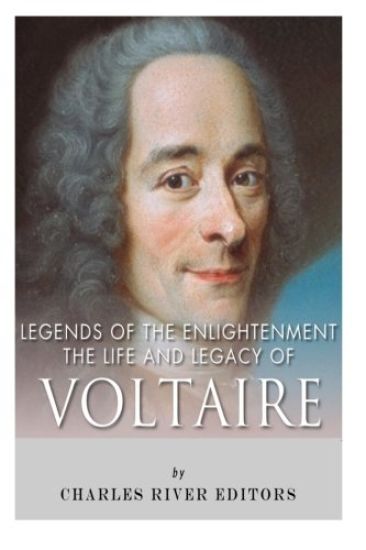
*Includes pictures. *Includes Voltaire's quotes. *Includes footnotes and a bibliography for further reading. "To hold a pen is to be at war." - Voltaire "All men are equal; it is not their birth, but virtue itself that makes the difference." - Voltaire The grand narrative of the Enlightenment, usually recounted and understood in terms of progress and modernity, generally appears as a simplified evolution from the trappings of superstition, feudalism, and everything "irrational" to a world more similar to today's world. Alongside the Renaissance, the Enlightenment is credited for the transition to an adherence to reason, secularism, and promotion of values such as individual and collective freedom and liberty. At the heart of the movement in France was Fran ois-Marie Arouet, better known by the pen name Voltaire, whose voluminous writings advocated for greater liberalism, including the freedom of religion and the separation of church and state. In addition to the classic Candide, Voltaire was a biting polemic whose satirical attacks on the Catholic Church were among the fiercest of his day. He also understood the risks he was taking with these writings, at one point explaining, "It is dangerous to be right in matters where established men are wrong." The Enlightenment is looked upon fondly, and it serves to reinforce the notion that the present is superior to the past, but things did not change as rapidly or as completely as many believe. In fact, some recent historians have challenged the belief that the Enlightenment was responsible for the French Revolution, which is a vital issue when it comes to Voltaire. After all, Voltaire, as his contemporaries and as most of his modern readers know him, is widely regarded as the pinnacle of Enlightenment thought, the symbol of the era of reason, and the harbinger of modern values. In that regard, his work is often considered to be the backbone of the French Revolution, which began about a decade after his death. Voltaire was unquestionably monumental, but he was also an exceptional product of his age, and his writings can introduce readers to the broader picture of the Enlightenment as a sum of contrasting and varied forces, tendencies and events. That Voltaire's own narrative should be read with caution and a critical eye is evident from the onset, as even salient facts in his biography bear the mark of self-fashioning and constantly draw the reader towards a tempting but simplified perspective of a progressive personal history. While it's important to assess his influence, it's also important to disentangle the actual man from his reputation, which was established in large part by his own writings. As one historian has aptly explained, "telling the story of the life of Voltaire is...as much about describing the self-conscious construction and mythologization of an intellectual identity as it is about enumerating the objective events that marked his career." Legends of The Enlightenment: The Life and Legacy of Voltaire examines the life and works of one of the most famous philosophers of the 18th century. Along with pictures of important people, places, and events, you will learn about Voltaire like never before, in no time at all.
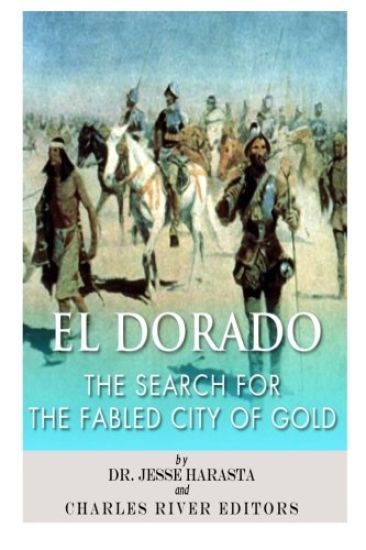
*Includes pictures.*Includes historic accounts about the myth of El Dorado.*Includes a bibliography and footnotes for further reading. Alongside the famous Lost City of Atlantis, perhaps no mythological city has captured the imaginations of people or been the source for exploration quite like El Dorado, the fabled city of gold that the Spanish believed was located somewhere in South America. The origins of the Spaniards' belief in the existence of the mythical city was based on their rumors surrounding the tribal chief of the Muisca in present-day Colombia; the Spanish heard that his initiation included covering himself with gold dust and diving into Lake Guatavita. Of course, if the chief could cover himself in gold, he must have access to a lot of it, and around this figure, the myth of El Dorado sprang up as the location of it. Naturally, the belief in the existence of El Dorado propelled it from being merely a city to an entire empire itself, and this spurred several journeys in the 16th century, including one by Francisco Pizarro's half-brother, Gonzalo, and another by Sir Walter Raleigh. Although none of these journeys actually discovered such a place, they resulted in plenty of lives lost and a lot of exploration of the heart of South America. Moreover, despite the fact none of the explorers actually found El Dorado, the rumors and journeys only cemented the belief that such a place existed, and El Dorado was actually located on maps made by several European nations for centuries. As folklorist Jim Griffith once put it, "El Dorado shifted geographical locations until finally it simply meant a source of untold riches somewhere in the Americas." In fact, it would not be until about the early 19th century that explorer Alexander von Humboldt disproved El Dorado's existence, at least in the spot it was assumed to be located for over 200 years. Although no El Dorado was ever found, the myth still fascinates people today, and it remains a pop culture fixture around the globe. El Dorado is also still used as a metaphor not only for places where people seek to get rich quick but even as a mentality and mindset, much like the notion of the American Dream. El Dorado: The Search for the Fabled City of Gold chronicles the origins behind the myth and the history of the actual journeys that sought to discover the city. Along with pictures of important people, places, and events, you will learn about El Dorado like never before, in no time at all.
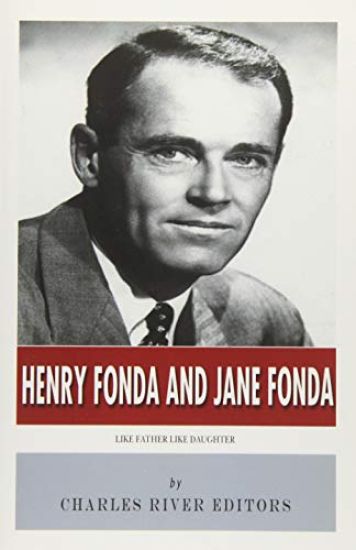
*Includes pictures. *Includes their own quotes about their lives and careers. *Includes a bibliography for further reading. Among all of Hollywood's iconic leading men, arguably none proved as versatile at acting as Henry Fonda, whose career spanned six decades and earned him Academy Awards for roles in various genres. After breaking into Hollywood in 1935, Fonda quickly rose the ranks, earning an Academy Award nomination in the classic Twelve Angry Men (1940), but Fonda had the kind of staying power that most actors could only dream of. In fact, Fonda had already received an honorary lifetime achievement award from the Academy (in 1980) before winning the Oscar for Best Actor for his role in On Golden Pond (1981), an award he earned when he was already well into his 70s and only about a year away from his death. Fonda would also earn Emmy nominations for his work on two different shows and even a Grammy for a spoken word album in 1977. And as if all that wasn't enough, he was also a critically acclaimed stage performer, winning a Tony for Mister Roberts in 1948. One of the remarkable aspects of Henry Fonda's career is that he was able to play vastly different roles despite not changing his style of acting. As Henry's distant personality would suggest, he hailed from an old-school breed of actors who didn't express emotions outwardly, and even as his progeny would become associated with Method Acting, Henry remained in the same mold as actors like Cary Grant and Jimmy Stewart. Of course, the seemingly effortless nature of Henry's acting only made him more endearing to contemporary audiences, even as his acting style would eventually go out of style. Growing up in the shadow of one of America's most famous actors would be intimidating for anyone, but few have emerged out of that shadow like Jane Fonda, the oldest daughter of screen legend Henry Fonda. In fact, when Jane co-starred with her father in the last film he made, On Golden Pond, he won the Academy Award for Best Actor for it. However, she has accomplished more than enough in her own career to make her father proud, winning 2 Academy Awards, an Emmy and 7 Golden Globe Awards herself. Jane burst onto the scene in the early 1960s, when she was still in her 20s, and when she performed in Sunday in New York, one critic labeled her "the loveliest and most gifted of all our new young actresses". She has been acting at least off and on from that point forward, earning critical acclaim both for her acting skills and for many of the movies she appeared in. However, today many people associate Jane Fonda with political causes, most notoriously her stance against the Vietnam War. Indeed, she might still be the face of the anti-Vietnam movement because of an episode that earned her the notorious nickname "Hanoi Jane". In addition to speaking out against the war, Fonda actually traveled to Hanoi in July 1972 and was photographed sitting in a North Vietnamese anti-aircraft battery, immediately earning widespread condemnation that sought to brand her as anti-American. Fonda has spent the rest of her life trying to explain her regret over it, telling Barbara Walters in a 1988 interview, "I would like to say something, not just to Vietnam veterans in New England, but to men who were in Vietnam, who I hurt, or whose pain I caused to deepen because of things that I said or did. I was trying to help end the killing and the war, but there were times when I was thoughtless and careless about it and I'm very sorry that I hurt them... I will go to my grave regretting the photograph of me in an anti-aircraft gun, which looks like I was trying to shoot at American planes." Nevertheless, it has not tempered her liberal political activism.