Kirjojen hintavertailu – 12 903 725 kirjaa ja 27 kauppaa

Kirjailija

Charles River

Kirjat ja teokset yhdessä paikassa: 4 673 kirjaa, julkaisuja vuosilta 2013–2022, suosituimpiin kuuluu William Powell and Myrna Loy: The Lives and Careers of One of Classical Hollywood's Most Iconic Duos. Vertaile teosten hintoja ja tarkista saatavuus suomalaisista kirjakaupoista.

4 673 kirjaa

Kirjojen julkaisuvuodet: 2013–2022.

History's Greatest Artists: The Life and Legacy of Vincent van Gogh

History's Greatest Artists: The Life and Legacy of Vincent van Gogh

Charles River

Createspace Independent Publishing Platform
2013
nidottu
*Includes pictures of 20 of van Gogh's most famous works, including an explanation of his techniques and influences. *Includes pictures of van Gogh and excerpts of his letters to brother Theo. *Explains the artistic influences and legacy of van Gogh's life and art. *Discusses the mysteries and controversies surrounding van Gogh's mental illnesses and death. *Includes a Bibliography for further reading. "A weaver who has to direct and to interweave a great many little threads has no time to philosophize about it, but rather he is so absorbed in his work that he doesn't think but acts, and he feels how things must go more than he can explain it." - Vincent van Gogh, 1883 Vincent van Gogh is undoubtedly one of the most famous artists of all time, and though the critical establishment may not consider him the greatest artist who ever lived, there may be no artist with whom the public has a greater familiarity. Unfortunately, a great deal of that familiarity comes from the circumstances leading up to his death, and the manner in which they have been linked to his painting career. Of all the things that occurred in van Gogh's tumultuous life and career, the best known thing about it might be that he cut off the lower left lobe of his ear, and much of the general public is familiar with his painting "Self Portrait with Bandaged Ear". In 1882, Vincent would hauntingly and somewhat prophetically write to his brother Theo, "What am I in the eyes of most people - a nonentity, an eccentric, or an unpleasant person - somebody who has no position in society and will never have; in short, the lowest of the low. All right, then - even if that were absolutely true, then I should one day like to show by my work what such an eccentric, such a nobody, has in his heart." Across much of the world, van Gogh's body of work is so commonplace that virtually everyone is familiar with at least some element of his life. Reproductions of his paintings populate offices, calendars, t-shirts, and the like, and his paintings continue to have the potential to affect people. On the surface, it might appear as though van Gogh is a very familiar figure, and yet people have spent nearly 125 years wondering just what compelled him to harm himself, just how tortured he was mentally, and what kind of effects it had on his art. In addition to dying a premature (and still controversial) death, van Gogh was 27 before beginning his 10-year painting career, meaning he painted for a comparably short period of his life. Nevertheless, he produced an extraordinary amount of art, and much of the myth of van Gogh surrounds the fact that he painted over 800 paintings (and many more drawings and watercolors) in such a short time. Understandably, the sheer volume of work meant that many had an unfinished, primal quality that seems to be commensurate with the type of person who would paint 800 paintings (in addition to numerous drawing and studies) over 10 years, building to a feverish crescendo at the end of his life. On top of that, van Gogh also managed to find time to write nearly 900 letters during that same period. Given the way his art and life blend together, it's no surprise that van Gogh and his work continue to deeply affect viewers to this day. While van Gogh's painting career is the period of greatest interest, it was in many ways a response to his upbringing and the events of his youth. History's Greatest Artists: The Life and Legacy of Vincent Van Gogh examines van Gogh's life before his career, a close analysis of his painting style and artistic themes, and his controversial death. Along with pictures of some of his most famous work, excerpts from his letters, a bibliography, and a Table of Contents, you will learn about one of history's greatest painters like you never have before, in no time at all.
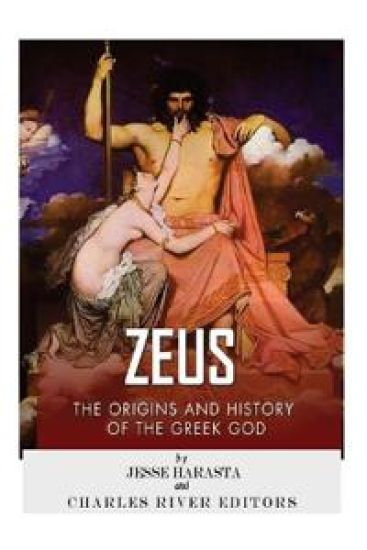
Zeus: The Origins and History of the Greek God

Zeus: The Origins and History of the Greek God

Charles River

Createspace Independent Publishing Platform
2013
nidottu
*Includes pictures of important places and historic art depicting Zeus and other Greek gods. *Explains the historical origins of the god and the mythological tales about him. *Includes a Bibliography for further reading. "I will sing of Zeus, chiefest among the gods and greatest, all-seeing, the lord of all, the fulfiller who whispers words of wisdom to Themis as she sits leaning towards him. Be gracious, all-seeing Son of Cronos, most excellent and great " - "The Hymn To Zeus", attributed to Homer Zeus is a god of apparent paradox: sublimely regal yet ridiculously fickle, a giver of laws but a slave to his own passions, a being of incredible power who is desperate to possess that which he cannot have. As the leader of the Greek pantheon on Mount Olympus, Zeus was the god of kingship (and the associated elements of law, oaths, the state and the protection of property) and the god of storms, controlling lightning, wind and thunder. In many ways, one of Ancient Greece's most complex gods is also the most understandable, since he seems so human, and because there is plenty of information about him that survived, including the original legends about his birth, his early deeds and his many relationships with other gods, lovers, and humans. Furthermore, scholars have been able to analyze the historical roots of "Zeus" as a concept, identifying what gods he is related to among other cultures, where the legends of Zeus originated, and what this information says about the Ancient Greeks. One of the reasons Zeus remains one of the most recognizable gods in history is because of the spread of his influence. Due to the conquests of Alexander the Great, Zeus was brought along with other elements of Hellenization to Egypt and the Near East, and a few centuries later, Rome all but adopted him as their own chief god, Jupiter. From there, he was exported around the Roman Empire and fused with numerous other local gods in the process. Ultimately, Zeus was a prominent god from the period of pre-recorded history until the Christianization of Greece, which was complete by the early 7th century A. D. It is difficult for modern observers to understand how a hot-headed, sex-obsessed god could command the love and admiration of so many Greeks, not to mention their cultural heirs throughout the Roman Empire. What did the worship of this god provide for his worshipers? How did belief in his existence fulfill their spiritual needs? How was he different from other members of his pantheon? This book explores the figure of Zeus, including his origins, the stories told about him, the way he was worshiped and how he is remembered today. Along with pictures and a bibliography, you will learn about the Greek god like you never have before, in no time at all.

The Civil War Presidents: The Lives and Legacies of Abraham Lincoln and Jefferson Davis
*Includes pictures of each general and important people, places, and events in their lives *Includes an introduction for each president *Includes a Table of Contents *Includes bibliographies for each president Despite the fact that the Civil War began over 150 years ago, it remains one of the most widely discussed topics in America today, with Americans arguing over its causes, reenacting its famous battles, and debating which general was better than others. Americans continue to be fascinated by the Civil War leaders who made the difference between victory and defeat. Abraham Lincoln (1809-1865) is one of the most famous Americans in history and one of the country's most revered presidents. Schoolchildren can recite the life story of Lincoln, the "Westerner" who educated himself and became a self made man, rising from lawyer to leader of the new Republican Party before becoming the 16th President of the United States. Lincoln successfully navigated the Union through the Civil War but didn't live to witness his crowning achievement, becoming the first president assassinated when he was shot at Ford's Theater by John Wilkes Booth on April 14, 1865. History has accorded Abraham Lincoln a spot in the pantheon of American politics for the manner in which he steered the Union to victory and into the Reconstruction period after the war. In turn, Jefferson Davis has been heavily criticized. Davis constantly clashed with Confederate generals like Joseph Johnston, the South's diplomacy failed to obtain foreign intervention, and he was unable to keep the Southern states together cohesively as the Confederate economy began to collapse. Whether the Civil War would have ended any differently with someone else in charge of the Confederacy will never be known, but Davis had a tumultuous presidency. Given the charged nature of the Civil War during the fighting and the years after it, the legacies of both men often obscure what they were like in life. The Civil War Presidents humanizes the two important leaders, chronicling their antebellum lives, their politics, their presidencies, and ultimately their legacies. Along with pictures of both presidents, an original introduction for both, and pictures of other important people, places and events in their lives, you will learn about the Civil War presidents like you never have before, in no time at all.

The World's Greatest Civilizations: The History and Culture of the Aztec

The World's Greatest Civilizations: The History and Culture of the Aztec

Charles River

Createspace Independent Publishing Platform
2013
nidottu
*Includes over 20 pictures of Aztec art, ruins, and more. *Describes daily life for the Aztecs, including their infamous human sacrifice rituals. From the moment Spanish conquistador Hernan Cortes first found and confronted them, the Aztecs have fascinated the world, and they continue to hold a unique place both culturally and in pop culture. Nearly 500 years after the Spanish conquered their mighty empire, the Aztecs are often remembered today for their major capital, Tenochtitlan, as well as being fierce conquerors of the Valley of Mexico who often engaged in human sacrifice rituals. Ironically, and unlike the Mayans, the Aztecs are not widely viewed or remembered with nuance, in part because their own leader burned extant Aztec writings and rewrote a mythologized history explaining his empire's dominance less than a century before the Spanish arrived. Naturally, Cortes and other Spaniards depicted the Aztecs as savages greatly in need of conversion to Catholicism. While the Mayans are remembered for their astronomy, numeral system, and calendar, the Aztecs have primarily been remembered in a far narrower way, despite continuing to be a source of pride to Mexicans through the centuries. As a result, even though the Aztecs continue to interest people across the world centuries after their demise, it has fallen on archaeologists and historians to try to determine the actual history, culture, and lives of the Aztecs from the beginning to the end, relying on excavations, primary accounts, and more. The World's Greatest Civilizations: The History and Culture of the Aztecs looks at this whole story, in an attempt to portray the Aztecs as they actually were. Along with pictures of Aztec art and ruins, this book describes the Aztecs' lives, religion, art, cities, and empire, in an attempt to better understand the once dominant
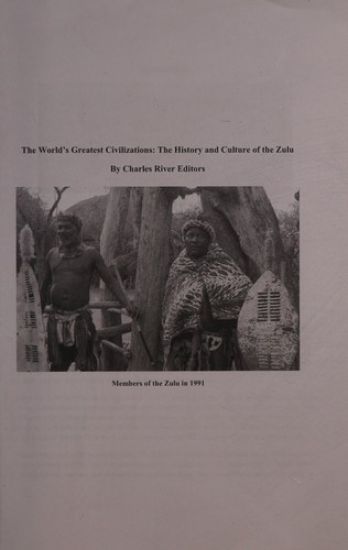
The World's Greatest Civilizations: The History and Culture of the Zulu

The World's Greatest Civilizations: The History and Culture of the Zulu

Charles River

Createspace Independent Publishing Platform
2013
nidottu
*Explains the origins, history, religion, and social structure of the Zulu *Includes European descriptions of the Zulu *Includes a Bibliography for further reading "He is Shaka the unshakeable, Thunderer-while-sitting, son of Menzi He is the bird that preys on other birds, The battle-axe that excels over other battle-axes in sharpness, He is the long-strided pursuer, son of Ndaba, Who pursued the sun and the moon. He is the great hubbub like the rocks of Nkandla Where elephants take shelter When the heavens frown..." - Traditional Zulu song The Zulu are one of the most famous ethnic groups in Africa, and possibly one of the most misunderstood. Of course, that was due almost entirely to the fact that European colonial powers encountered the powerful group in the 19th century and found that they were more than willing to resist and fight them. At the height of its power in the southern part of Africa, the Zulu could rely on an army of 40,000 warriors, presenting a formidable obstacle to the designs of the British, who eventually engaged in a full-scale conflict with the Zulu due to their own geopolitical concerns. When the fighting started at the beginning of 1879, British military leader Lord Chelmsford assured, "'If I am called upon to conduct operations against them, I shall strive to be in a position to show them how hopelessly inferior they are to us in fighting power, altho' numerically stronger." Less than 10 days later, Chelmsford had lost nearly 33% of his fighting force at the Battle of Isandlwana, but the British began to take the Zulu more seriously and subdued the Zulu nation in the span of 5 months. The military conflict helped immortalize the Zulu in the minds of Westerners, but their history was far from finished in 1879. The Zulu persevered, only to suffer under the depredations of South Africa's apartheid system, but they also outlasted that, and even today, they remain the largest ethnic group in South Africa. In the midst of the fighting and the apartheid system, the actual culture and history of the Zulu have often been overlooked, even as they remain one of the most famous groups in Africa's history. The World's Greatest Civilizations: The History and Culture of the Zulu comprehensively covers the history, culture, and legacy of the Zulu, from their origins to their influence. Along with pictures and a bibliography, you will learn about the Zulu like you never have before, in no time at all.
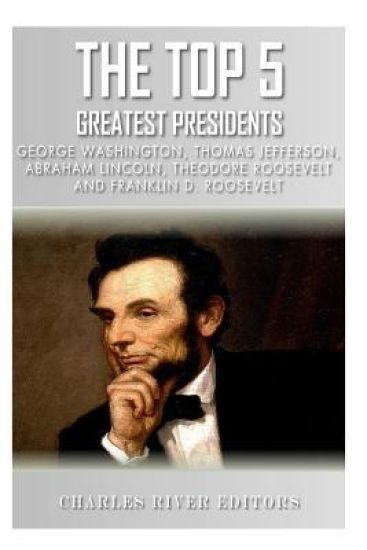
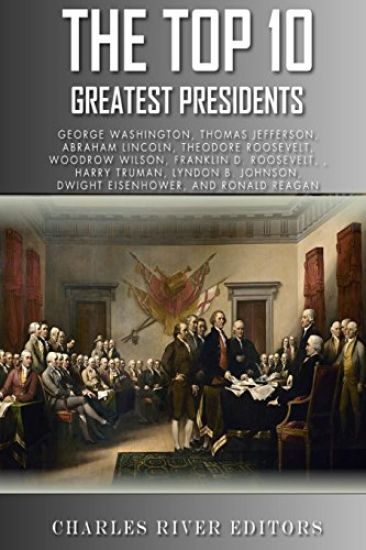
The Top 5 Greatest Presidents: George Washington, Thomas Jefferson, Abraham Lincoln, Theodore Roosevelt and Franklin D. Roosevelt
*Includes pictures. *Includes bibliographies. The Founding Fathers have held a special place in American society since the nation gained its freedom, and many of them had become national heroes even before then. Over 200 years later, Americans still look with reverence to these men, often debating with each other what the Founding Fathers would think about a certain issue, or how they would judge a certain law or legislation. In many respects, these men have become icons, whose words, thoughts and deeds are rarely questioned. Every American is taught a pristine narrative of the life and legacy of George Washington and can easily recite the highlights and myths of Washington's life. Washington's Secretary of State and the 3rd president, Thomas Jefferson was instrumental in authoring the Declaration of Independence, laying out the ideological groundwork of the notion of states' rights, leading one of the first political parties, and overseeing the expansion of the United States during his presidency. Abraham Lincoln (1809-1865) is one of the most famous Americans in history and one of the country's most revered presidents. Schoolchildren can recite the life story of Lincoln, the "Westerner" who educated himself and became a self made man, rising from lawyer to leader of the new Republican Party before becoming the 16th President of the United States. Lincoln successfully navigated the Union through the Civil War but didn't live to witness his crowning achievement, becoming the first president assassinated when he was shot at Ford's Theater by John Wilkes Booth on April 14, 1865. When McKinley was assassinated in 1901, young Teddy Roosevelt was thrust into the presidency. Roosevelt's "Square Deal" domestic policies favored average citizens while busting trusts and monopolies. Teddy also promoted conservation as an environmental stance, while his "speak softly and carry a big stick" foreign policy is still an oft used phrase today. Teddy even earned a Nobel Prize during his presidency. Teddy is on Mount Rushmore and might be America's greatest 20th century president, but if he's not it might be because of his own relative. Whether Franklin Delano Roosevelt was America's greatest 20th century president or not, there's no question that he was the most unique. A well-connected relative of Theodore Roosevelt, FDR was groomed for greatness until he was struck down by what was widely believed to be polio at the time. Nevertheless, he persevered, rising through New York politics to reach the White House just as the country faced its greatest challenge since the Civil War, beginning his presidency with one of the most iconic lines ever spoken during an inaugural address. For over a decade, President Roosevelt threw everything he had at the Great Depression, and then threw everything the country had at the Axis powers during World War II. Ultimately, he succumbed to illness in the middle of his fourth term, just before the Allies won the war.
The Seven Wonders of the Ancient World

The Seven Wonders of the Ancient World

Charles River

Createspace Independent Publishing Platform
2013
nidottu
*Includes historic artwork depicting each of the Seven Wonders and pictures of some of the ruins. *Discusses the history and mysteries surrounding each of the Seven Wonders. *Includes ancient accounts describing the Seven Wonders. *Includes a Bibliography for further reading about each of the Seven Wonders. "I have gazed on the walls of impregnable Babylon along which chariots may race, and on the Zeus by the banks of the Alpheus, I have seen the hanging gardens, and the Colossus of the Helios, the great man-made mountains of the lofty pyramids, and the gigantic tomb of Mausolus; but when I saw the sacred house of Artemis that towers to the clouds, the others were placed in the shade, for the sun himself has never looked upon its equal outside Olympus." - Antipater of Sidon Nearly 2,000 years ago, two ancient writers named Antipater of Sidon and Philo of Byzantium authored antiquity's most well known tour guides. After the two Greeks had traveled around the Mediterranean, they wrote of what they considered to be the classical world's greatest construction projects. While there is still some question as to who actually authored the text attributed to Philo and when it was authored, their lists ended up comprising the Seven Wonders of the Ancient World, igniting interest in the ones they chose and inspiring subsequent generations to identify their era's own Seven Wonders. Naturally, the Seven Wonders of the Ancient World may be considered something of a misnomer. Only one still stands (the' Great Pyramid at Giza in Egypt), all existed in the Hellenistic culture rather than all over the world, and relatively few people saw them or visited them. They were all architectural marvels of the late Classical period and all but two were created by the Greeks. All but one were in the Mediterranean area. Even so, they represented a widespread range of works and cultures and spread out across three different continents. The Seven Wonders of the Ancient World have continued to fascinate modern society, thanks in large measure to what was written about them and the fact that only one, the Great Pyramid at Giza, still survives. For that reason, speculation has revolved around the ones that didn't. Did the Colossus of Rhodes straddle the entire harbor or was it a statue on a pedestal at the mouth of the harbor, like an ancient Statue of Liberty? How did the Babylonians successfully plant and irrigate the Hanging Gardens? How tall was the Lighthouse of Alexandria? When did Phidias construct the Statue of Zeus at Olympia? The Seven Wonders of the Ancient World profiles each of the seven wonders named by Philon, discussing the history of each wonder, what was written about each wonder, what is known about each wonder, and the lingering mysteries surrounding what is not known about them. Along with historic depictions of the wonders, you will learn about the Seven Wonders of the Ancient World like you never have before, in no time at all.
American Legends: The Life of Robert F. Kennedy

American Legends: The Life of Robert F. Kennedy

Charles River

Createspace Independent Publishing Platform
2013
nidottu
*Includes pictures of Bobby and important people, places, and events in his life. A lot of ink has been spilled covering the lives of history's most influential figures, but how much of the forest is lost for the trees? In Charles River Editors' American Legends series, readers can get caught up to speed on the lives of America's most important men and women in the time it takes to finish a commute, while learning interesting facts long forgotten or never known. In some ways, Robert Francis Kennedy (1925-1968) is the forgotten Kennedy, eclipsed in life while working in his brother John's administration, eclipsed in death both by his older brother's assassination and his younger brother's long, influential career in the Senate as a liberal lion. And yet, the politics of the 1960s and the ultimate legacy of the Kennedys, including the "Kennedy Curse", would have been incomplete without Bobby's place in the narrative. As Bobby's private life and public life played out, the two came to mirror each other. Among the Kennedy clan, Bobby remained within the shadow of older brothers Joseph Jr. and John, both of whom their father thought were destined to become political scions. And ultimately, it was Ted who cast the longest political shadow, serving for decades in government. But Bobby may have been the most intellectual and ideological of them all. And it was Bobby who worked behind the scenes to help advance John's political career, including his political campaigns and as Attorney General in his administration. Eventually, with the deaths of his brothers, Bobby rose to become the leader of the Kennedy family, at the same time his political prominence rose. Today, unfortunately, Bobby is best remembered for his assassination, the way in which it helped perpetuate the "Kennedy Curse", and the fact that his political promise, including potentially becoming president in 1968, was never fulfilled. American Legends: The Life of Robert F. Kennedy looks at Bobby's place in the political and cultural narrative of the Kennedys and the 1960s, but it also humanizes the middle brother who labored tirelessly for the good of his family, the ideological advocate who took courageous stands, and the man who juggled the demands of being a Kennedy with his own political ambitions. Along with pictures of Bobby and other important people and events in his life, you will learn about RFK like you never have before, in no time at all.
America's War Heroes of World War II: Dwight Eisenhower, George Patton and Douglas MacArthur
*Weaves the lives and careers of the generals into one entertaining and educational narrative. *Includes some of the generals' most colorful and inspiring quotes, including Patton's Speech to the Third Army and MacArthur's Farewell Address to Congress. *Includes pictures of the generals and other important people, places, and events. *Discusses the relationships between the three generals. *Explains the generals' roles in the Atlantic and Pacific Theaters. *Includes a Bibliography for further reading. During the middle of the 20th century, the United States completed its transformation into one of the world's superpowers, and few were as instrumental in this development as Dwight D. Eisenhower (1890-1969), A career military man, Ike was too young to serve in combat during World War I, but he began a long and productive career collaborating with future military legends George Patton and Douglas MacArthur while serving some of the nation's other famous generals, including George Marshall and John J. Pershing. Amazingly, he had never served in anything but administrative positions before World War II. By 1942, Eisenhower was given the role of appointed Supreme Commander Allied (Expeditionary) Force in North Africa, and after his success there, Eisenhower oversaw the invasion of Sicily in 1943, which at the time had been the largest amphibious invasion in history. In both campaigns he had the fortune of commanding George Patton. With those successes, President Roosevelt picked Eisenhower to be the Supreme Allied Commander of the Allied Expeditionary Force, leaving him in charge of Operation Overlord and the defining moment of his military career, D-Day. By the time he died in 1969, President Nixon aptly described Eisenhower as "the world's most admired and respected man, truly the first citizen of the world." Rommel, Guderian, Liddell-Hart and JFC Fuller were all early exponents and practitioners of armored warfare, tactics that were to break the stalemate that had characterized World War I. Advocates of the tank and above all speed, it was their ideas which decimated Saddam Hussein's forces in the 1990 Gulf War. But among the proponents and practitioners of armored warfare, the brash, bold, arrogant and eccentric George S. Patton remains the world's greatest armored commander by the one yardstick that really counts: the battlefield. In 1944-45, Patton's Third Army raced across northern Europe, covering more ground and destroying more enemy resources than any other equivalent force in history. Patton is one of America's most celebrated generals and one of the most famous generals of the 20th century, but his story has its origins in the form of a shy, dyslexic boy who could cry uncontrollably and who viewed his own emotional intelligence as unmanly. Patton was a fascinating, complicated and controversial man whose life story ranges between genius, folly and tragedy, with absolute determination the one constant theme. Of all the military men America produced during the 19th and 20th centuries, it's hard to find one as important, successful and controversial as General Douglas MacArthur. The son of a Civil War veteran, MacArthur rose to become the most instrumental commander in the Pacific Theater during World War II. His legendary return to the Philippines in 1944 made good on one of the war's most famous vows, and it was MacArthur who fittingly who oversaw the occupation and reconstruction of Japan following the war. Given his long and celebrated career, MacArthur was the obvious choice to lead the newly created United Nations' troops during the Korean War, but his arguments over war strategy and policy eventually led to his controversial firing by President Harry Truman in 1951. After that, in his own words, he "faded away", living out his remaining days on the top floor of the Waldorf Hotel until his death in 1964.
American Outlaws: The Life and Legacy of John Dillinger

American Outlaws: The Life and Legacy of John Dillinger

Charles River

Createspace Independent Publishing Platform
2013
nidottu
*Comprehensively covers Dillinger's most notorious robberies and prison escapes. *Includes pictures of Dillinger and important people and places in his life. *Includes a Bibliography for further reading. "I will be the meanest bastard you ever saw when I get out of here." - John Dillinger America has always preferred heroes who weren't clean cut, an informal ode to the rugged individualism and pioneering spirit that defined the nation in previous centuries. The early 19th century saw the glorification of frontier folk heroes like Davy Crockett and Daniel Boone. After the Civil War, the outlaws of the West were more popular than the marshals, with Jesse James and Billy the Kid finding their way into dime novels. And at the height of the Great Depression in the 1930s, there were the "public enemies", common criminals and cold blooded murderers elevated to the level of folk heroes by a public frustrated with their own inability to make a living honestly. Two months after Franklin D. Roosevelt's inauguration in 1933, a petty thief who had spent almost a decade behind bars for attempted theft and aggravated assault was released from jail. By the end of the year, that man, John Dillinger, would be America's most famous outlaw: Public Enemy Number One. From the time of his first documented heist in early July 1933, until his dramatic death in late July of the following year, he would capture the nation's attention and imagination as had no other outlaw since Jesse James. His exploits were real, and in many cases impressive, but Dillinger's importance and legacy have always been partly symbolic. The country was in a panic over a supposed crime wave that some historians believe was more perception than reality, but a new breed of criminal targeting the nation's already vulnerable banks was a potent illustration and metaphor of the way society's institutions and morals seemed to be coming undone. And in the mind of the public, the outlaws of the 30s were very different from the gangsters of the 20s; they hailed from the farm country of America's nostalgic past, not the corrupt cities of its unsettled present and scarier future. Much was made of Dillinger's roots in the farming town of Mooresville, Indiana, even though he came of age in Indianapolis, and was very much a city boy at heart. Ultimately, the story of Dillinger and the era's other famous criminals--Bonnie and Clyde, Baby Face Nelson, Pretty Boy Floyd--would largely be seen as a story of America's fall from grace. Just before Dillinger was released from prison in 1933, a feature article ran entitled "The Farmer Turned Gangster." America saw in Dillinger what it wanted to see, and even in Dillinger's lifetime it was nearly impossible to separate myth from reality. Even still, Dillinger would never have become the mythical figure he became if J. Edgar Hoover and the FBI hadn't actively marketed him as "Public Enemy Number One," and if he hadn't died in a way that was almost scripted for Hollywood. Dillinger's figure looms so large in American history and popular culture that it's easy to forget that his starring role in the daily news lasted for less than a year. American Outlaws: The Life and Legacy of John Dillinger looks at the life and crime of the famous outlaw, but it also humanizes them and examines their relationship. Along with pictures of Dillinger and important people, places, and events in his life, you will learn about the infamous public enemy like you never have before, in no time at all.

American Legends: The Life of Joseph Smith

American Legends: The Life of Joseph Smith

Charles River

Createspace Independent Publishing Platform
2013
nidottu
*Explains Joseph Smith's life and the founding of the Mormon Church. *Includes pictures of Smith and important people, places, and events in his life. *Includes a Bibliography for further reading. "Our missionaries are going forth to different nations, and in Germany, Palestine, New Holland, the East Indies, and other places, the standard of truth has been erected: no unhallowed hand can stop the work from progressing, persecutions may rage, mobs may combine, armies may assemble, calumny may defame, but the truth of God will go forth boldly, nobly, and independent till it has penetrated every continent, visited every clime, swept every country, and sounded in every ear, till the purposes of God shall be accomplished and the great Jehovah shall say the work is done." - Joseph Smith A lot of ink has been spilled covering the lives of history's most influential figures, but how much of the forest is lost for the trees? In Charles River Editors' American Legends series, readers can get caught up to speed on the lives of America's most important men and women in the time it takes to finish a commute, while learning interesting facts long forgotten or never known. Among all the various figures in 19th century America who left controversial legacies, it is hard to find one as influential as Joseph Smith (1805-1844), the founder of the The Church of Jesus Christ of Latter Day Saints, Mormonism, and the Latter Day Saint movement. Revered as a prophet on the level of Moses by some, reviled as a perpetrator of large-scale fraud by others, what everyone can agree on is that Joseph Smith founded a religious movement that played a crucial role in the settlement of the West, especially in Utah. Locating Joseph Smith in history is to look for the "mess" of early America and find him standing in the middle, trying to make sense of the "native pandemonium" that gripped the nation in its formative years. All the things that Mormon recoil at, the mention of his treasure seeking days of youth, the use of the seer stones and looking into the hat to read "reformed Egyptian" help explain the youthful creativeness of a young United States trying to organize itself. There is a humor in his story, and especially those first years of creating the church that speak directly anyone who has felt the exhilaration of creativity. Inspired by the Second Great Awakening evidence of Native American cultures that surrounded him during his early years in western New York, Smith claimed that he had visions as a young adult that helped him produce the Book of Mormon, and he was able to create a society of like-minded followers who intended to strike west and found Zion. Smith's dream of Zion would lead the way for the trials and the tribulations of the Mormons for the rest of the 19th century, including countless conflicts with local authorities and the U. S. government. Smith himself would be a casualty of the clashing, murdered by a mob in 1844 after being imprisoned in Carthage, Illinois near the settlement of Nauvoo, which Smith had painstakingly tried to create as a commune for his people. American Legends: The Life of Joseph Smith profiles the life of Joseph Smith, the founding of his religion, and the aftermath of his death. Along with pictures of important people, places, and events, you will learn about Joseph Smith like you never have before, in no time at all.
Meeting at Waterloo: The Lives and Legacies of Napoleon Bonaparte and Arthur Wellesley, the Duke of Wellington
*Includes pictures of Napoleon, Wellington and important people, places and events in their lives. *Includes maps of famous battles, including Austerlitz and Waterloo. *Answers common myths about Napoleon, including whether he was short, whether his men shot off the Sphinx's nose, whether he played chess, and whether he was poisoned. *Includes a Bibliography for further reading. "Courage cannot be counterfeited. It is the one virtue that escapes hypocrisy." - Napoleon "Believe me, nothing except a battle lost can be half so melancholy as a battle won." - Duke of Wellington, at Waterloo Waterloo is the most famous battle in modern history if not all of history, and appropriately so. Gathering an army of 100,000 men, Napoleon marched into what is now Belgium, intent on driving his force between the advancing British army under the Duke of Wellington and the Prussian forces under Marshal Blucher. It was the kind of daring strategy that only Napoleon could pull off, as he had at places like Jena and Austerlitz. At Waterloo, however, it would end disastrously, as Napoleon's armies were unable to dislodge Wellington and unable to keep the Prussians from linking up with the British. The battle would end with the French suffering nearly 60% casualties, the end of Napoleon's reign, and the restructuring of the European map. Simply put, the next 200 years of European history can be traced back to the result of the battle that day in 1815. When historians are asked to list the most influential people of the last 200 years, a handful of names might vary, but there is no question that the list will include Napoleon Bonaparte (1769-1821), the most successful French leader since Charlemagne and widely acknowledged one of the greatest generals ever. Indeed, Napoleon was likely the most influential man of the 19th century, leaving an indelible mark on everything from the strategy and tactics of warfare to the Napoleonic Code that drafted laws across the continent. To defeat Napoleon, the Europeans had to form large coalitions multiple times, which helped bring about the entangling alliances that sparked World War I after Europe was rebuilt following Waterloo and the Congress of Vienna. By the time of his death, Wellington had been prime minister twice, a shrewd personal advisor to four British monarchs and one of the nation's most prominent politicians for three decades. But despite his nearly four decades of peacetime service in and out of politics, Wellington has remained one of the titans of the 19th century because of one June day in 1815. Then, as now, the Duke of Wellington is best remembered for defeating Napoleon in the most famous battle of modern history at Waterloo. Even then, the fact Wellington is remembered for Waterloo belies his extraordinary military career, which saw him come up through fighting in the Netherlands and India before opposing Napoleon's forces on the Iberian Peninsula for several years. By the time Wellington took command of allied forces during the Hundred Days Campaign and decisively finished the Napoleonic Era at Waterloo, he had participated in about 60 battles and was one of Britain's greatest war heroes. Meeting at Waterloo covers the lives and legacies of both leaders, including their fateful meeting in June 1815, but it also humanizes Napoleon and Wellington off the battlefield as well. Along with pictures of important people, places, and events, you will learn about Napoleon and Wellington like you never have before.
The World's Greatest Civilizations: The History and Culture of Ancient Sparta

The World's Greatest Civilizations: The History and Culture of Ancient Sparta

Charles River

Createspace Independent Publishing Platform
2013
nidottu
*Explains Sparta's military society and battle tactics. *Includes pictures of important people, places, and events in Spartan history and culture. *Includes a Bibliography for further reading. "The walls of Sparta were its young men, and its borders the points of their spears." - attributed to King Agesilaos There have been no shortage of great warrior societies in history, including the Romans, Mongols, Macedonians, and Vikings, the list goes on. Yet one humble city in particular, nestled in a valley near the Eurotas river in the Greek region of the Peloponnese and once ridiculed as little more than a cluster of villages inhabited by uncouth shepherds, produced the most famous warrior elite the world has ever known. The most unique city-state in Ancient Greece was Sparta, which continues to fascinate contemporaneous society. It is not entirely clear why Sparta placed such a great emphasis on having a militaristic society, but the result was that military fitness was a preoccupation from birth. If a Spartan baby did not appear physically fit at birth, it was left to die. Spartan children underwent military training around the age of 7 years old, and every male had to join the army around the age of 18. The Spartans, whose carefully constructed approach to warfare and - there is no other word for it - Spartan way of life, earned the grudging admiration of all of Greece and succeeded in establishing themselves in the years following the reforms of the semi-legendary ruler Lycurgus as the greatest military force in all of Hellas. Athens might have the mightiest fleet and the greatest cadre of philosophers and dramatists, Thessaly might have had the most vaunted cavalry, and the great city-states of Argos, Thebes and Corinth all had their own claims to fame, but on the battlefield the Spartan phalanx stood without peer. So feared were they in Greece that their very appearance on the battlefield could cause entire enemy armies to flee in terror, and in one of history's most famous battles, 300 hundred Spartan warriors headed a combined Greek force which held off the hundreds of thousands of Persian warriors of Xerxes's invading army for three days at Thermopylae, inflicting an estimated 20,000 casualties upon them before dying to the last man rather than retreating. Sparta will forever be known for its military prowess, but the Spartans had lives off the battlefield as well, and their way of life was also unique. For example, Spartan females were formally educated, which was a rarity among the city-states, and the Spartan way of life was entirely dependent on a class of indentured servants known as the helots. Yet the Laws of Lycurgus, which ordered all Spartans to disregard art (with the exception of song, which the Spartans prized, and some forms of music and poetry), to distrust philosophy, and to abhor excess in all things, were designed to create the perfect warrior society, and they did. As a result, the Spartans became notorious for "Laconic phrases" The World's Greatest Civilizations: The History and Culture of Ancient Sparta comprehensively covers the history and culture of the famous Greek city-state, looking at their religious, political, and military past, and examining all their accomplishments. Along with historic artwork depicting important people, places, and events, The History and Culture of Ancient Sparta will bring readers up to speed on Ancient Sparta today.
Legends of Music: The Life and Legacy of Tupac Shakur

Legends of Music: The Life and Legacy of Tupac Shakur

Charles River

Createspace Independent Publishing Platform
2013
nidottu
*Includes a Suggested Playlist of some of Pac's lesser known songs. *Discusses both the New York shooting and Las Vegas shooting in detail, explaining who was likely responsible for the shooting. *Discusses the beefs during Pac's life and the various conspiracy theories surrounding his death. At the renowned Coachella music festival in 2012, crowds looked on with awe and stunned silence as the world's most famous rapper took the stage to deliver a fiery performance of two of his well known hits alongside friend and former collaborator Snoop Dogg. The legendary Tupac Shakur had just overshadowed every other performer at the festival, despite the fact he'd been dead for over 15 years. The "2Pac Hologram" was only the latest buzzworthy headline that Tupac has generated long after he was infamously gunned down just off the strip in Las Vegas back in September 1996. Since his death, Shakur's estate has released far more music posthumously than Pac released in his all-too-brief career, amazing fans and music critics alike. In addition to the music that still keeps finding the light of day, the hologram performance was another fitting example that music fans continue to refuse to let him go, with some even going so far as to speculate that he faked his death. Why does Pac continue to hold such a high place in pop culture among anyone who grew up in the last 40 years? The answers can be found in his turbulent life, unsolved murder, and the fact that most of the topics of his music continue to be relevant today. Born to a single mother who later developed an addiction to crack, Pac's childhood was marred by constant moving, living in squalor, and eventually being homeless as a teenager in "The Jungle", Marin City. Always a fan of performing, Pac channeled his rage, energy, and charisma into a rap career, fueled by his inability to forget how he grew up and the social ills he witnessed. Rising from roadie for Digital Underground to his own spectacular single career, Pac rode his controversy and classic music to the national forefront, becoming front page news for both his arrests and hit records. Becoming the first man to have a #1 album while in jail, Pac was eventually bailed out by Suge Knight, CEO of Death Row Records, and from 1995-1996 became rap music's biggest name. He would release the first original double CD in rap history with All Eyez on Me in February 1996 and the classic Makaveli album, recorded and produced in just a week, in November 1996. Both went #1, but Pac wasn't around to see Makaveli's success, having been infamously gunned down after a Mike Tyson fight on September 7, 1996 in Las Vegas. His murder remains unsolved. Having become a rap icon cut down in the prime of his life and career, with the music to match the story of his life, Pac's name and legacy are sure to endure. Legends of Music: The Life and Legacy of Tupac Shakur details the life, career, and legacy of the world's most famous rapper, detailing how his upbringing shaped his philosophy and music, the theories surrounding his death, the conspiracy theories that he faked his death, and descriptions of Pac in the studio. Learn about Tupac Shakur like you never have before, in no time at all.
Meeting at Little Bighorn: The Lives and Legacies of George Custer, Sitting Bull and Crazy Horse
*Includes pictures of Custer, Sitting Bull, and important people, places, and events in their lives. *Explains the Lakota oral legends and the origins of the names Sitting Bull and Crazy Horse. *Analyzes the three men and their legacies. *Includes a Bibliography for further reading. The Battle of the Little Bighorn is one of the most famous battles in American history and to this day remains one of the U. S. Army's biggest debacles. It was also the most decisive victory a Native American tribe had against the U. S. as it steadily pushed westward and forced native tribes off their land. The battle forever linked Sitting Bull, Crazy Horse and George Custer, and it also made them American legends. Like Geronimo in the Southwest during the same era, Sitting Bull and Crazy Horse fought in several skirmishes against settlers and U. S. forces across the Plains during the 1860s on the way to becoming leaders of the Lakota. While it is still debated whether Sitting Bull was the "Supreme Chief of the whole Sioux Nation" by 1868, it's clear that he was one of the influential leaders of the Lakota. And when The Great Sioux War of 1876 began, Sitting Bull was recognized as the most important leader among all Native American tribes on the Plains, and the one to turn to for those who intended to keep fighting whites. At the Battle of the Little Bighorn, during which an estimated 2,000 Lakota and Cheyenne warriors inspired by one of Sitting Bull's visions routed and then annihilated the 7th U. S. Cavalry led by Custer, Crazy Horse was the one who executed the vision, leading his warriors against two of the 7th Cavalry columns, and oral legends claim he led the charge that started the rout of Custer's column. That disaster led the American government to double down on its efforts to "pacify" the Sioux, and by the end of the decade many of them had surrendered and been moved onto a reservation. Both Crazy Horse and Sitting Bull became celebrities of sorts after their eventual surrender, and both suffered controversial deaths on reservations that had their tribesmen claiming they were assassinated. Though he's now best remembered for "Custer's Last Stand", George Armstrong Custer began June 25, 1876 as one of America's better regarded cavalry officers, and a man whose ambitions might one day take him to higher office. In fact, decades before radio and television existed, Custer mastered the art of public relations, dressing impeccably and having newspaper correspondents accompany him on campaign, all in an effort to help cultivate and enhance his legacy. Custer's efforts worked, with one biographer noting that Americans during the 19th century viewed him as "a cavalier without fear and beyond reproach." Much like famous Confederate cavalry leader JEB Stuart, Custer added substance to the style. Despite being in his early 20s when the Civil War started, Custer rose through the ranks so quickly that he famously commanded a brigade of Michigan cavalrymen at Gettysburg, fighting the vaunted JEB Stuart and his horsemen to a standstill on the climactic 3rd day of that battle. Custer's success continued through until the end of the war, with his men playing an integral role during the Appomattox Campaign that forced the surrender of Robert E. Lee's Army of Northern Virginia. Had Custer's career ended there, he would have been both successful and largely forgotten. Meeting at Little Bighorn details the lives of the three men and their feateful meeting at Little Bighorn, but it also humanizes them and addresses the controversies surrounding their lives and their famous battle. Along with pictures of important people, places, and events in his life, you will learn about Custer, Sitting Bull and Crazy Horse like you never have before, in no time at all.
The Greatest Generals of the Civil War: The Lives and Legends of Robert E. Lee, Stonewall Jackson, Ulysses S. Grant, and William Tecumseh Sherman
*Includes pictures of each general and important people, places, and events in their lives. *Includes an introduction for each general. *Includes bibliographies for each general. Despite the fact that the Civil War began over 150 years ago, it remains one of the most widely discussed topics in America today, with Americans arguing over its causes, reenacting its famous battles, and debating which general was better than others. Americans continue to be fascinated by the Civil War icons who made the difference between victory and defeat in the war's great battles. Within the pantheon of Civil War greats are the Confederacy's Robert E. Lee and Stonewall Jackson, and the Union's Ulysses S. Grant and William Tecumseh Sherman. With the exception of George Washington, perhaps the most famous general in American history is Robert E. Lee (January 19, 1807 - October 12, 1870), despite the fact he led the Confederate Army of Northern Virginia against the Union in the Civil War. Lee is remembered today for constantly defeating the Union's Army of the Potomac in the Eastern theater from 1862-1865, considerably frustrating Lincoln and his generals. His leadership of his army led to him being deified after the war by some of his former subordinates, especially Virginians, and he came to personify the Lost Cause's ideal Southern soldier. His reputation was secured in the decades after the war as a general who brilliantly led his men to amazing victories against all odds. Thomas Jonathan Jackson is one of the most famous generals of the Civil War, but many of the people he continues to fascinate probably don't remember his whole name. That's because Jackson earned his famous "Stonewall" moniker at the First Battle of Manassas or Bull Run, when Brigadier-General Bee told his brigade to rally behind Jackson, whose men were standing like a stone wall. Ironically, it's still unclear whether that was a compliment for standing strong or an insult for not moving his brigade, but the nickname stuck for the brigade and the general itself. Many still wonder how the outcome of Gettysburg or the Civil War itself may have changed if Jackson had not been mortally wounded at Chancellorsville. While all eyes were fixed on the Eastern theater at places like Manassas, Richmond, the Shenandoah Valley and Antietam, Ulysses S. Grant went about a steady rise up the ranks through a series of successes in the West. His victory at Fort Donelson, in which his terms to the doomed Confederate garrison earned him the nickname "Unconditional Surrender" Grant, could be considered the first major Union victory of the war, and Grant's fame and rank only grew after that at battlefields like Shiloh and Vicksburg. William Tecumseh Sherman (February 8, 1820 - February 14, 1891) holds a unique position in American history. Synonymous with barbarity in the South, Sherman is lauded as a war hero in the North, and modern historians consider him the harbinger of total war. As a General in the Union Army during the American Civil War (1861-65), Sherman was recognized for his outstanding command of military strategy but criticized for the harshness of the "scorched earth" policies that he implemented in conducting total war against the Confederate States, especially in 1864 and 1865. Military historian B. H. Liddell Hart famously declared that Sherman was "the first modern general." Along with pictures of the generals and important people, places, and events in their lives, you will learn about the Civil War's greatest generals like you never have before, in no time at all.

American Legends: The Life of Stephen Douglas

American Legends: The Life of Stephen Douglas

Charles River

Createspace Independent Publishing Platform
2013
nidottu
*Explains the central issues of the 1850s, including the Missouri Compromise, the Kansas-Nebraska Act, popular sovereignty and the Dred Scott Decision. *Includes pictures of Douglas and other important people, places, and events in his life. *Includes a Bibliography for further reading. "Now, I hold that Illinois had a right to abolish and prohibit slavery as she did, and I hold that Kentucky has the same right to continue and protect slavery that Illinois had to abolish it. I hold that New York had as much right to abolish slavery as Virginia has to continue it, and that each and every State of this Union is a sovereign power, with the right to do as it pleases upon this question of slavery, and upon all its domestic institutions. ... And why can we not adhere to the great principle of self-government, upon which our institutions were originally based." - Stephen Douglas A lot of ink has been spilled covering the lives of history's most influential figures, but how much of the forest is lost for the trees? In Charles River Editors' American Legends series, readers can get caught up to speed on the lives of America's most important men and women in the time it takes to finish a commute, while learning interesting facts long forgotten or never known. The most famous debates in American history were held over 150 years ago, and today they are remembered and celebrated mostly because they included future President Abraham Lincoln, one of the nation's most revered men. But in the Fall of 1858, Lincoln was just a one-term Congressman who had to all but beg his U. S. Senate opponent to debate him. That's because his opponent, incumbent U. S. Senator Stephen Douglas, was one of the most famous national politicians of the era. Though Douglas is remembered today almost entirely for his association with Lincoln, in 1858 he was "The Little Giant" of American politics and a leader of the Democratic Party. In particular, it was Douglas who had championed the idea of "popular sovereignty", advocating that the settlers of federal territory should vote on whether their state would become a free state or a slave state. When Congress created the territories of Kansas and Nebraska in 1854, it followed this model, and Douglas believed it was a moderate position that would hold the Union together. But many in the North considered popular sovereignty a deliberate attempt to circumvent the Missouri Compromise, which was supposed to have banned slavery in any state above a certain parallel. As a result, the Lincoln-Douglas debates would be almost entirely about issues pertaining to slavery. Douglas would go on to win reelection in 1858, but Lincoln would win the war, literally and figuratively. In the presidential election of 1860, Lincoln would win the Republican nomination and the presidency in large part because Douglas had fractured the national Democratic Party with some of his stated policies during the 1858 debates. When the Democrats ran a Northern Democrat (Douglas) and a Southern Democrat (Breckenridge) in 1860, they split the vote and handed the election to Lincoln. American Legends: The Life of Stephen Douglas profiles the life and politics of the Little Giant, his seminal debates with Lincoln, and his lasting legacy. Along with pictures of important people, places, and events, you will learn about Stephen Douglas like you never have before, in no time at all.
Leading the Dillinger Gang: The Lives and Legacies of John Dillinger and Baby Face Nelson
*Comprehensively covers the two outlaws' most notorious shootouts and robberies, their relationship, and their deaths. *Includes pictures of Dillinger, Baby Face Nelson and important people and places in their lives. *Includes a Bibliography for further reading. "I will be the meanest bastard you ever saw when I get out of here." - John Dillinger "He had a baby face. He was good looking, hardly more than a boy, had dark hair and was wearing a gray topcoat and a brown felt hat, turned down brim." -The wife of Chicago Mayor Big Bill Thompson describing the man who attacked her and stole her jewelry in October 1930. America has always preferred heroes who weren't clean cut, an informal ode to the rugged individualism and pioneering spirit that defined the nation in previous centuries. The early 19th century saw the glorification of frontier folk heroes like Davy Crockett and Daniel Boone. After the Civil War, the outlaws of the West were more popular than the marshals, with Jesse James and Billy the Kid finding their way into dime novels. And at the height of the Great Depression in the 1930s, there were the "public enemies", common criminals and cold blooded murderers elevated to the level of folk heroes by a public frustrated with their own inability to make a living honestly. Two months after Franklin D. Roosevelt's inauguration in 1933, a petty thief who had spent almost a decade behind bars for attempted theft and aggravated assault was released from jail. By the end of the year, that man, John Dillinger, would be America's most famous outlaw: Public Enemy Number One. From the time of his first documented heist in early July 1933, until his dramatic death in late July of the following year, he would capture the nation's attention and imagination as had no other outlaw since Jesse James. America saw in Dillinger what it wanted to see, and even his death seemed scripted for Hollywood. The man who became Public Enemy Number One after the deaths of John Dillinger and Pretty Boy Floyd was Lester Joseph Gillis, whose alias "George Nelson" eventually gave way to the nickname "Baby Face Nelson". Despite the almost playfully innocent nickname, and the fact that he was not as notorious as two of his partners in crime, Dillinger and Floyd, Baby Face Nelson was the worst of them all. In an era where the outlaws were glorified as Robin Hood types, Baby Face was a merciless outlier who pulled triggers almost as fast as he lost his temper. By the time fate caught up with Baby Face Nelson in November 1934 at the "Battle of Barrington", a shootout that left his body riddled with nearly 20 bullet holes, he was believed to have been responsible for the deaths of more FBI agents than anybody else in American history. It was a distinction he would have appreciated; during one bank robbery, Baby Face Nelson gleefully screamed "I got one " after shooting police officer Hale Keith several times. Due to his association with Dillinger and his own crime spree, Baby Face Nelson became a fixture of pop culture and was the main character in a few Hollywood films two decades after his death. Though he is not remembered as colorfully as Dillinger or Bonnie and Clyde, he is often remembered paradoxically as being a devoted family man who even had his wife and children on the run with him. Leading the Dillinger Gang looks at the lives and crimes of the two outlaws, including their time together running the Dillinger gang, and it also analyzes their legacies. Along with pictures of the outlaws and important people, places, and events in their lives, you will learn about Dillinger and Baby Face like never before.