Kirjojen hintavertailu – 12 903 725 kirjaa ja 27 kauppaa

Kirjailija

Charles River

Kirjat ja teokset yhdessä paikassa: 4 673 kirjaa, julkaisuja vuosilta 2013–2022, suosituimpiin kuuluu William Powell and Myrna Loy: The Lives and Careers of One of Classical Hollywood's Most Iconic Duos. Vertaile teosten hintoja ja tarkista saatavuus suomalaisista kirjakaupoista.

4 673 kirjaa

Kirjojen julkaisuvuodet: 2013–2022.

Alexander Hamilton & Aaron Burr: The Men Behind America's Most Famous Duel

Alexander Hamilton & Aaron Burr: The Men Behind America's Most Famous Duel

Charles River

Createspace Independent Publishing Platform
2013
nidottu
*Includes pictures of Burr, Hamilton, and important people and places. *Explains the origins of their duel and includes the correspondence between them leading up to the duel. *Includes accounts of the duel and explains the mysteries and controversies still surrounding what happened. *Includes a Bibliography for further reading. "General Hamilton and Judge Kent have declared in substance that they looked upon Mr. Burr to be a dangerous man, and one who ought not be trusted with the reins of government." The Founding Fathers have been revered by Americans for over 200 years, celebrated for creating a new nation founded upon the loftiest ideals of democracy and meritocracy. But if the American Dream has come to represent the ability to climb the social ladder with skill and hard work, no Founding Father represented the new America more than Alexander Hamilton. Unfortunately, one of the best known aspects of Hamilton's (1755-1804) life is the manner in which he died, shot and killed in a famous duel with Aaron Burr in 1804. But Hamilton started as an orphaned child in the West Indies before becoming one of the most instrumental Founding Fathers of the United States in that time, not only in helping draft and gain support for the U. S. Constitution but in also leading the Federalist party and building the institutions of the young federal government as Washington's Secretary of Treasury. Hamilton is also well remembered for his authorship, along with John Jay and James Madison, of the Federalist Papers. The Federalist Papers sought to rally support for the Constitution's approval when those three anonymously wrote them, but they demonstrate how men of vastly different political ideologies came to accept the same Constitution. Conversely, it is hard if not impossible to find a figure with a more controversial legacy than Aaron Burr, one of the most reviled yet mysterious characters of the last 200 years. Today Burr is remembered almost solely for participating in the duel with Hamilton, but it is often forgotten that Burr killed Hamilton while he was Thomas Jefferson's sitting Vice President. As if that wasn't incredible enough, Burr's path to the Vice Presidency sparked a Constitutional crisis after the Election of 1800, and in addition to leading to the establishment of the 12th Amendment, it was Hamilton's support of his principal political foe Jefferson over Burr that helped ignite the arguments that culminated with their duel. Burr was charged with murder for participating in the controversial and illegal duel, bringing his political career to an end, but he saved his most controversial act for last. After leaving politics, Burr headed west, where he engaged in a mysterious and convoluted scheme that eventually led to charges of treason for conspiring to create a new Western empire. Like the murder charges, he was never convicted of treason for the controversial and confusing conspiracy, but Burr had burned nearly every bridge by then. Having incurred massive debt, Burr took to practicing law and staying out of the public eye for the rest of his life. Alexander Hamilton & Aaron Burr: The Men Behind America's Most Famous Duel chronicles the lives and legacies of both men and their notorious duel, but it also humanizes them and provides contemporary accounts that offer conflicting opinions of them. Along with pictures and a bibliography, you will learn about Hamilton, Burr and their duel like you never have before.
American Legends: The Life of Rita Hayworth

American Legends: The Life of Rita Hayworth

Charles River

Createspace Independent Publishing Platform
2013
nidottu
*Includes pictures of important people, places, and events. *Includes Hayworth's quotes about her own life and career. *Includes a bibliography for further reading. "I've had a lot of unhappiness in my life - and a lot of happiness. Who doesn't?" - Rita Hayworth A lot of ink has been spilled covering the lives of history's most influential figures, but how much of the forest is lost for the trees? In Charles River Editors' American Legends series, readers can get caught up to speed on the lives of America's most important men and women in the time it takes to finish a commute, while learning interesting facts long forgotten or never known. Rita Hayworth's life and career remain fascinating to both the general public and avid movie fans alike. Even people with just a casual interest in movies appreciate her performances in films such as Gilda (1946), The Lady from Shanghai (1947), and Salome (1953), and few actresses could rival Hayworth's popularity during the late 1940s and early 1950s. Indeed, many of her most famous films are still enjoyed by viewers from around the world even today, and with her acting career spanning nearly 50 years, few viewers are not familiar with at least some of Hayworth's films, particularly since she appeared in films of a wide variety of genres. In addition, Hayworth is also famously remembered for her status as one of the premier pin-up girls of World War II, with countless American soldiers who fought overseas carrying pin-up photos of Hayworth with them at all times. Even if she was never awarded an Academy Award, Hayworth remains extremely popular today, and it was no surprise that she was named one of the Top 100 actresses of the 20th century by the American Film Institute in 1999. While Hayworth is still famous today, she is arguably even more significant within the academic community, as the rise of Film Studies and the subsequent development of Cultural Studies as academic disciplines catapulted Hayworth from a popular actress to a figure worthy of close critical attention. Hayworth is now identified not only for the importance of her films but also as a figure who illuminates and exposes the treatment of race and sexuality during the period known as classical Hollywood cinema. As someone who was relegated to transforming her entire image, including her personal background and physical appearance, Hayworth represents both the height of Hollywood glamour as well as the lengths required of many actors and actresses in order to succeed in a particularly cut-throat environment. If Hollywood promoted the Horatio Alger myth of the rags-to-riches movie star, it is also important to acknowledge the extent to which it forced many stars to essentially erase their personal backgrounds in the interest of achieving this success. Even though it is true that Hayworth was the beneficiary of tremendous fortune throughout her life, her popularity within Cultural Studies curricula reflects the importance of not only her films but also her star image as well. Of course, Rita's personal background is nearly as notorious as her career, since her glamorous performances on the movie set are frequently juxtaposed with the adversity she faced behind the scenes. She was deeply unhappy for much of her life, due to a long string of failed marriages and a battle with alcoholism, and by examining the films in conjunction with her off-screen turmoil, people quickly get a sense of the almost schizophrenic character of Rita Hayworth. Only by looking at Hayworth's life in its different stages and placing emphasis on both her triumphs and hardships can people completely understand her life and career. American Legends: The Life of Rita Hayworth examines the life and career of one of Hollywood's most iconic women. Along with pictures of important people, places, and events, you will learn about Rita Hayworth like never before, in no time at all.
Ludwig van Beethoven: The Life and Music of the Great Composer

Ludwig van Beethoven: The Life and Music of the Great Composer

Charles River

Createspace Independent Publishing Platform
2013
nidottu
*Analyzes the themes and progression of Beethoven's most famous works, comparing and contrasting them to each other and other composers' great works. *Includes pictures of important people and places in Beethoven's life. *Includes a bibliography for further reading. *Includes a list of Beethoven's works. "Don't only practise your art, but force your way into its secrets; art deserves that, for it and knowledge can raise man to the Divine." - Beethoven Among all of history's greatest musicians, few have been as admired or influential as Ludwig van Beethoven, whose name remains synonymous with composing. Works like his Fifth and Ninth symphonies remain instantly recognizable over 200 years after they were composed, and their sweeping and grandiose nature are made all the more amazing by the fact that their author was gradually going deaf and couldn't hear music very well by the time he was composing them. Similarly, the "Moonlight Sonata" and "F r Elise" are renowned across the world and are some of the most famous piano pieces of all time. At the same time, Beethoven's work ushered in a new era in art, helping the transition from the Classical era to the Romantic era. In the 180 years since his death, Beethoven has been enshrined by modern society as one of the most esteemed classical composers in the history of civilization, but he had a profound and immediate influence on the German musical lineage that would pass through Robert Schumann, Richard Wagner, Gustav Mahler and Richard Strauss all the way to composers of the 20th and early 21st centuries. At a time when music was very much viewed as science, Beethoven was a giant in the field, and as such he was viewed as a genius. As Beethoven himself once put it, "Music is the one incorporeal entrance into the higher world of knowledge which comprehends mankind but which mankind cannot comprehend." In terms of assessing the essence of Beethoven's era, character or musical output, no unqualified categorization is possible, for he straddled a titanic shifting of social ideologies, performance and compositional practices, intra-continental upheavals and an emergence of the championed self in all forms of civic and artistic expressions. The ideals of the Enlightenment, an intellectual tide that swept throughout the late 18th century and opened the door to a new individualism, did not remain static through his lifetime; Beethoven was shaped by the internal and societal bent for revolutionary thought, and he was eager to play his part as a public figure in reflecting and furthering its development. Indeed, by the late Classical age, which largely deemed music a science, it came to be admitted in even academic circles that "music is the inarticulate outpouring of emotion." Such a changing state of music's relationship to society allowed what some have called Beethoven's Promethean personality to prosper in his creative work. Ludwig van Beethoven: The Life and Music of the Great Composer comprehensively analyzes the themes and revolutionary advancements of Beethoven's music, looking at his most famous works and comparing and contrasting them. Along with pictures of important people, places, and events, you will learn about Beethoven and his music like never before, in no time at all.
Establishing the Elizabethan Age: The Lives and Legacies of Henry VIII, Anne Boleyn and Elizabeth I
*Includes pictures of Henry, Anne, Elizabeth and important people, places, and events in their lives. *Analyzes their legacies and discusses popular legends about them. *Includes a Bibliography for further reading. Over 450 years after his reign, Henry VIII is still the most famous and recognizable King of England, but it's for all the wrong reasons. Though well regarded by contemporaries as a learned king and "one of the most charismatic rulers to sit on the English throne", he is best remembered today for his gluttony and multiple marriages, particularly the gruesome way in which he was widowed on more than one occasion. Naturally, that was the focus of the popular Showtime drama series centered around his life, The Tudors. Henry VIII will probably continue to be best known for beheading some of his wives, most notably Anne Boleyn, so it is somewhat fitting that his most decisive act came as a result of a marital mishap. Sharply at odds with the Catholic Church over his attempt to dissolve his marriage with Catherine of Aragon, Henry VIII ultimately broke with the Church and established the Church of England, which forever both the religious history of England and the social hierarchy of the nation and its empire. Of Henry's wives, none is more famous than his second, Anne Boleyn, who even today remains both famous and infamous for her personal and political life nearly 400 years after her death. Anne was a vixen and ultimately a victim, but she was also an astute politician, foolish lover and wise woman who could never decide whether to listen to her heart or her head. She was also both an adulteress and religious reformer, and these two qualities would come together to change the face of English Christianity forever. Anne came into the court with a better idea of what she was getting herself into than any other of Henry's queens, but even she could not see foresee how fickle fate would cost her both her love and her life. Like Catherine of Aragon before her, she would be unable to hold on to her wandering husband. However, she would, ironically, be the last of his queens that he'd ever cheat on. Early female mortality and his own failing health would keep him faithful to the women who would follow her as queen, in a way that the teachings of the Church and common decency never would. When Queen Elizabeth II came to the throne in 1652, many commentators heralded the beginning of her reign as the second Elizabethan age. The first one, of course, concerned the reign of Henry VIII's second surviving daughter and middle surviving child, Queen Elizabeth I, one of England's most famous and influential rulers. It was an age when the arts, commerce and trade flourished. It was the epoch of gallantry and great, enduring literature. It was also an age of wars and military conflicts in which men were the primary drivers and women often were pawns. Elizabeth was the last Tudor sovereign, the daughter of the cruel and magnificent King Henry VIII and a granddaughter of the Tudor House's founder, the shrewd Henry VII. Elizabeth, hailed as "Good Queen Bess," "Gloriana" and "The Virgin Queen" to this day in the public firmament, would improve upon Henry VIII's successes and mitigate his failures, and despite her own failings would turn out to "have the heart and stomach of a king, and a king of England too". Indeed, that was the phrase she would utter in describing herself while exhorting her troops to fight for England against the Spanish Armada. Establishing the Elizabethan Age chronicles the lives and legacies of Henry VIII, Anne Boleyn and Elizabeth I, but it also humanizes them and discusses common legends about them. Along with pictures of important people, places, and events in her life, you will learn about Henry, Anne and Elizabeth like you never have before.
American Legends: The Life of William Faulkner

American Legends: The Life of William Faulkner

Charles River

Createspace Independent Publishing Platform
2013
nidottu
*Includes pictures of important people and places. *Includes Faulkner's own quotes about his life and career, as well as his famous Nobel Prize acceptance speech. *Includes a Bibliography for further reading. A lot of ink has been spilled covering the lives of history's most influential figures, but how much of the forest is lost for the trees? In Charles River Editors' American Legends series, readers can get caught up to speed on the lives of America's most important men and women in the time it takes to finish a commute, while learning interesting facts long forgotten or never known. With the notable exception of Mark Twain, whose roots along the Mississippi River factored so thoroughly into his life story and his literature, America's greatest writers have rarely been categorized by or associated with a specific region of the country. And among America's greatest 20th century writers, many have been identified with a specific era, such as F. Scott Fitzgerald and the 1920's, or even as part of a community of expatriates, like Ernest Hemingway and Gertrude Stein. William Faulkner is an exception to that rule, and a prolific and influential one at that. The reclusive Southerner, who died about 40 miles away from his birthplace in New Albany, Mississippi, was associated with the South as a region and Southern literature in particular throughout his career, at least when he was associated with anything at all. Faulkner toiled in relative obscurity for much of his life, and it was only after he earned a Nobel Prize in 1949 that he truly entered the national radar. He later joked about his own neighbors, "Some folks wouldn't even speak when they passed me on the street...it wasn't until the Nobel Prize that they really thawed out." But by the time Faulkner died a little more than a decade later, he had earned multiple Pulitzer Prizes and was widely recognized as the leader of a Southern Renaissance and and one of the 20th century's greatest writers. Faulkner tapped into his heritage and culture to truly capture the Southern way of life both in the present and in past eras, including the antebellum South and the Civil War, bringing the South to life in novels like Absalom, Absalom and The Sound and the Fury. But paradoxically, Faulkner was romanticizing a past way of life by using one of the early 20th century's greatest literary innovations, the "stream of consciousness" writing popularized by the Irish literary icon James Joyce. While critics frequently took note of the stream of consciousness technique and contrasted it with Ernest Hemingway's "iceberg theory" of writing less and letting readers use their imaginations to fill in the blanks, Faulkner dismissed comparisons, saying, "Let the writer take up surgery or bricklaying if he is interested in technique. There is no mechanical way to get the writing done, no shortcut. The young writer would be a fool to follow a theory... The good artist believes that nobody is good enough to give him advice. He has supreme vanity. No matter how much he admires the old writer, he wants to beat him." American Legends: The Life of William Faulkner profiles the life and career of one of America's most influential novelists. Along with pictures of important people, places, and events, you will learn about Faulkner like you never have before, in no time at all.
Legends of Hollywood: The Life and Legacy of Marlene Dietrich

Legends of Hollywood: The Life and Legacy of Marlene Dietrich

Charles River

Createspace Independent Publishing Platform
2013
nidottu
*Includes pictures of Dietrich and important people, places, and scenes. *Includes Dietrich's own quotes about her life. *Includes a Bibliography for further reading. "Glamour is what I sell, it's my stock in trade." - Marlene Dietrich When Marlene Dietrich first became a household name in the United States, she introduced a new standard for female sexuality on screen. Her performance in The Blue Angel (1930) not only stands as one of the most glamorous roles ever played but also one of the frankest depictions of the femme fatale ever captured on screen. Moreover, the film essentially set the tone for the image that Marlene Dietrich would cultivate over her career: unabashedly sexual but wrapped in an air of mystery. Most stars are beautiful and talented in ways that make them noticeable, but it is generally counterbalanced by an approachability that renders them accessible to a diverse audience. Marlene Dietrich, on the other hand, did not follow this model; ever since The Blue Angel, her star persona has rested on a foundation of exoticism. Of course, the mythical qualities of Dietrich's image were no accident. Her most famous director, Josef von Sternberg, did his best to accentuate the foreign and exotic nature of his most famous actress, and in conjunction with that, the most famous images of Dietrich portray her glowing face juxtaposed against a shadowy silhouette, with the ornamental composition making it seem almost as though she were an artificial creation. Her life off-screen was no less exotic, as they were filled with an endless string of affairs that only enhanced the Marlene Dietrich myth. At the same time, however, there is a complexity to her performances that extends far beyond the artificiality of the costumes and the sensuality of her appearance. The significance of Dietrich's career lies in the way that she combined feminine sensuality with masculine independence; she may have introduced a more overt form of female sexuality to cinema, but her films also inaugurated a female independence that had yet to surface in Hollywood. Moreover, the narrative of her life reveals much about both German and Hollywood, as well as the cabaret culture of Berlin and the politics of Nazi Germany and America before and after World War II. Film stars become famous for their performances, but they are not separate from the cultures in which they operate. Legends of Hollywood: The Life and Legacy of Marlene Dietrich profiles the life and career of one of Hollywood's most iconic actresses. Along with pictures of important people, places, and events, you will learn about Marlene Dietrich like you never have before, in no time at all.
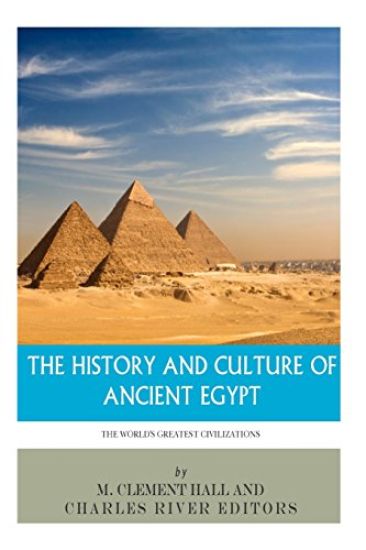
The World's Greatest Civilizations: The History and Culture of Ancient Egypt

The World's Greatest Civilizations: The History and Culture of Ancient Egypt

M. Clement Hall; Charles River

Createspace Independent Publishing Platform
2013
nidottu
*Includes maps and pictures of Ancient Egyptian art and architecture, including King Tut's death mask and the Great Pyramid at Giza. Africa may have given rise to the first human beings, and Egypt probably gave rise to the first great civilizations, which continue to fascinate modern societies across the globe nearly 5,000 years later. From the Library and Lighthouse of Alexandria to the Great Pyramid at Giza, the Ancient Egyptians produced several wonders of the world, revolutionized architecture and construction, created some of the world's first systems of mathematics and medicine, and established language and art that spread across the known world. With world-famous leaders like King Tut and Cleopatra, it's no wonder that today's world has so many Egyptologists. What makes the accomplishments of the Ancient Egyptians all the more remarkable is that Egypt was historically a place of great political turbulence. Its position made it both valuable and vulnerable to tribes across the Mediterranean and the Middle East, and Ancient Egypt had no shortage of its own internecine warfare. Its most famous conquerors would come from Europe, with Alexander the Great laying the groundwork for the Hellenic Ptolemy line and the Romans extinguishing that line after defeating Cleopatra and driving her to suicide. The World's Greatest Civilizations: The History and Culture of Ancient Egypt comprehensively covers the history and culture of Ancient Egypt, looking at its religious, political, foreign and military past, and examining all the architectural and artistic achievements from 3,000-30 B. C. Along with historic artwork depicting important people, places, and events, The History and Culture of Ancient Egypt will bring readers up to speed on Ancient Egypt today.
America's Greatest First Ladies: The Lives and Legacies of Abigail Adams, Dolley Madison, Mary Lincoln, Eleanor Roosevelt, Jackie Kennedy and Hillary
*Includes pictures of the First Ladies and important people, places, and events in their lives. *Includes Bibliographies for further reading. American presidents have shaped the course of global affairs for generations, but as the saying goes, behind every great man there's a great woman. While the First Ladies often remain overshadowed by their husbands, some have carved unique niches in their time and left their own lasting legacy. Abigail Adams served as a political advisor that earned her the moniker "Mrs. President", while Dolley Madison helped establish the role of the First Lady in the early 1800s, Eleanor Roosevelt gave voice to policy issues in a way that made her a forerunner of First Ladies like Hillary Clinton, and Jackie Kennedy created glamorous trends that made her more popular than her husband. Eleanor Roosevelt and Hillary Clinton may have been the most politically active First Ladies in American history, but Abigail Adams was the first to act as political advisor for her husband and the first to be dubbed "Mrs. President". Indeed, Abigail was politically inclined to degree highly unusual among women of the 18th and 19th century, and she had originally impressed her future husband John because she was so well versed in poetry, philosophy and politics. After the Constitution was ratified, George Washington went about setting all the precedents for the role of the presidency, establishing traditions like the Cabinet. But the role of being the First Lady of the United States was defined by the wife of the 4th president. James Madison may have been the Father of the Constitution, but his wife Dolley all but defined the responsibilities and customs of being the president's wife. It's possible that the world would have remembered Mary Todd Lincoln (1818-1882) if only because she was the wife of one of America's greatest presidents and present for his shocking assassination, but Mary was one of the most unique women to ever be First Lady, and she was in the White House during the country's most trying time. If Dolley Madison was instrumental in molding the role of First Lady in the 19th century, credit can be given to Eleanor Roosevelt for revolutionizing the political nature of the role in the 20th and 21st centuries and making it possible for presidents like Bill Clinton to enlist their wives to handle political duties. In 1961, President John F. Kennedy made it seem like anything was possible, and Americans were eager to believe him. The next three years would be fondly and famously labeled "Camelot," suggesting an almost mythical quality about the young President and his family. The famous label came from John's fashionable and beautiful wife, Jackie, whose elegance and grace made her the most popular woman in the world. Her popularity threatened to eclipse even her husband's, who famously quipped on one presidential trip to France that he was "the man who accompanied Jacqueline Kennedy to Paris." During the presidential campaign in 1992, Democratic challenger Bill Clinton announced that by voting for him, Americans would get two presidents "for the price of one." The reference to his wife Hillary signified that she would be no ordinary First Lady, and indeed she was employed frequently by her husband in the White House to try to push legislation through Congress. Of course, describing Hillary Clinton as just a First Lady belittles all of her accomplishments. Today she is the most powerful woman in the world and one of the most recognizable. America's Greatest First Ladies looks at the lives and legacies of all 6 of these influential and important First Ladies, while also examining the relationships each had with their husband. With pictures of important people, places, and events, you will learn about America's Greatest First Ladies like you never have before.
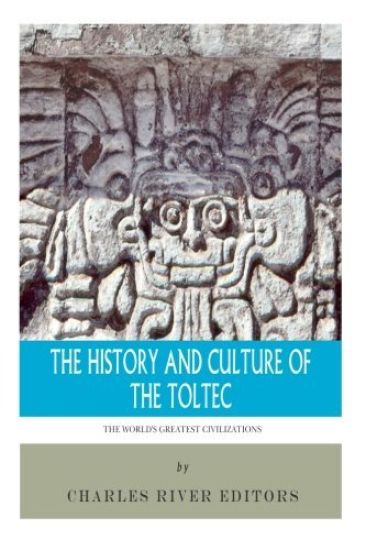
The World's Greatest Civilizations: The History and Culture of the Toltec

The World's Greatest Civilizations: The History and Culture of the Toltec

Charles River

Createspace Independent Publishing Platform
2013
nidottu
*Includes pictures depicting important people, places, and events. *Includes a bibliography for further reading. The Toltec are one of the most famous Mesoamerican groups in South America, but they are also the most controversial and mysterious. The Toltec have been identified as the group that established a strong state centered in Tula (in present-day Mexico), and the Aztec claimed the Toltec as their cultural predecessors, so much so that the word Toltec comes from the Aztec's word Toltecatl, translated as artisan. The Aztec also kept track of the Toltec's history, including keeping a list of important rulers and events, that suggest the peak of the Toltec occurred from about 900-1100 A. D. From the moment Spanish conquistador Hernan Cortes first found and confronted them, the Aztecs have fascinated the world, and they continue to hold a unique place both culturally and in pop culture. Nearly 500 years after the Spanish conquered their mighty empire, the Aztecs are often remembered today for their major capital, Tenochtitlan, as well as being fierce conquerors of the Valley of Mexico who often engaged in human sacrifice rituals. Ironically, and unlike the Mayans, the Aztecs are not widely viewed or remembered with nuance, in part because their own leader burned extant Aztec writings and rewrote a mythologized history explaining his empire's dominance less than a century before the Spanish arrived. Thus, even as historians have had to rely on Aztec accounts to trace the history and culture of the Toltec, they have had to deal with the fact that the evidence is fragmentary and incomplete. Given the fact that the Aztec leaders engaged in revisionist history, it becomes even more difficult to be sure that the Aztec accounts of the Toltec are accurate, with some scholars going so far as to call the Toltec culture nothing but myth. While scholars continue to debate whether the Toltec were an actual historical group, there is an added layer of mystery to the fact that the settlement at Tula has a lot in common with the famous Mayan settlement at Chich n Itz . The architecture and art at both sites are so similar that archaeologists and anthropologists have assumed they had the same cultural influences, even as historians struggle to determine the historical timelines, and thus whether Tula influenced Chich n Itz or vice versa. The World's Greatest Civilizations: The History and Culture of the Toltec comprehensively covers the history, culture, and controversy behind the Toltec, profiling their origins and their lasting legacy. Along with pictures depicting important people, places, and events, you will learn about the Toltec like you never have before, in no time at all.
Heroes of the Alamo: The Lives and Legacies of Davy Crockett and Jim Bowie

Heroes of the Alamo: The Lives and Legacies of Davy Crockett and Jim Bowie

Charles River

Createspace Independent Publishing Platform
2013
nidottu
*Discusses some of the legends and controversies surrounding Crockett and Bowie, including their deaths at the Alamo. *Includes passages from Crockett's autobiography about some of his frontier exploits and legendary adventures. *Includes the story about Crockett's famous Not Yours To Give speech, and the debate over whether he actually gave it. *Includes pictures of Crockett, Bowie and other important people and places in their lives. *Includes a Bibliography of each man for further reading. "I know not whether, in the eyes of the world, a brilliant death is not preferred to an obscure life of rectitude. Most men are remembered as they died, and not as they lived. We gaze with admiration upon the glories of the setting sun, yet scarcely bestow a passing glance upon its noonday splendor." - Davy Crockett "I'll wage they found no bullets in his back." - Jim Bowie's mother after hearing of his death at the Alamo The Wild West and the frontier have long held a special place in the narrative of American history, and of all the legends and folk heroes who lived in the 19th century, none became as famous as Davy Crockett, "The King of the Wild Frontier". Crockett had the distinction of being a living legend in his own life. Known as a hardscrabble frontiersman who could spin a good yarn but who also took a no-nonsense approach that brought him from the backwoods of Tennessee to the halls of Congress. Though he served during the presidency of another Westerner, Andrew Jackson, Crockett was very much his own man, and he was distrustful of other politicians, a sentiment that has only endured him further to subsequent generations of Americans. Like Crockett, Jim Bowie was famous in his lifetime, but it was his death in Texas that made him an American legend. Like Daniel Boone and Davy Crockett, Bowie has come to represent the pioneering spirit of the frontier, along with the masculinity, machismo and swagger that earned him a reputation for fighting. And like any good legend, he is perhaps best remembered for his death at the Alamo than for any aspect of his life. Much of Bowie's participation in the Alamo is still controversial, and fittingly he was known across America before that for another controversy. In what became known as the notorious Sandbar Fight of 1827, a duel between two men turned into a large fight that included Bowie, who was shot and stabbed during the melee but still managed to stab to death the sheriff of Rapides Parish in Louisiana with a large knife that has since become universally known as the Bowie knife. Between that fight and his death, Bowie became one of the Western frontier's most celebrated folk heroes. Heroes of the Alamo chronicles the lives, myths and legends of the Alamo's two most famous defenders, examining the known and unknown about their lives and deaths in an attempt to separate fact from fiction. Along with pictures of important people and places, you will learn about Davy Crockett and Jim Bowie like you never have before, in no time at all.
British Legends: The Life and Legacy of Sir Isaac Newton

British Legends: The Life and Legacy of Sir Isaac Newton

Charles River

Createspace Independent Publishing Platform
2013
nidottu
*Includes pictures of Newton and important people in his life. *Discusses Newton's discoveries and theories, including the legend about the falling apple inspiring his discovery of gravity. *Includes excerpts of Newton's most influential quotes and writings. "Here is buried Isaac Newton, Knight, who by a strength of mind almost divine, and mathematical principles peculiarly his own, explored the course and figures of the planets, the paths of comets, the tides of the sea, the dissimilarities in rays of light, and, what no other scholar has previously imagined, the properties of the colours thus produced. Diligent, sagacious and faithful, in his expositions of nature, antiquity and the holy Scriptures, he vindicated by his philosophy the majesty of God mighty and good, and expressed the simplicity of the Gospel in his manners. Mortals rejoice that there has existed such and so great an ornament of the human race He was born on 25 December 1642, and died on 20 March 1726/7." - Inscription on Sir Isaac Newton's tomb. A lot of ink has been spilled covering the lives of history's most influential figures, but how much of the forest is lost for the trees? In Charles River Editors' British Legends series, readers can get caught up to speed on the lives of Great Britain's most important men and women in the time it takes to finish a commute, while learning interesting facts long forgotten or never known. In 1676, Sir Isaac Newton famously wrote in a letter to philosopher Robert Hooke, "If I have seen further it is by standing on ye sholders of Giants." By the time he died, Newton had become science's greatest giant, and every scientist who has followed him has stood on his shoulders. Newton is widely considered the most influential scientist in history, best known for the discovery of gravity and the subsequent laws of motion that he theorized. Schoolchildren around the world are still taught the famous legend about an apple falling on Newton's head, but that colorful story and the preoccupation with Newton's work in physics tend to make people forget Newton's work in other fields. Using empirical studies, Newton developed theories about light prisms, how matter cools, and even tried studying and calculating the speed of sound. And those are just the sciences; Newton also helped develop several mathematical fields, including calculus. When looking at Newton's work, it's easy to forget that he was also a man with typical human emotions and convictions. Though religion and science are often seen as antagonistic counterparts, Newton was very religious, and he intently studied the Bible and even occultist practices and theories. Newton wrote at length on these topics, which fascinated him so much that he spent more time writing about them than he did science and mathematics. British Legends: The Life and Legacy of Sir Isaac Newton chronicles the amazing life and legacy of a man whose work helped propel the Scientific Revolution and modern physics, but it also humanizes him and looks at his non-scientific work as well. Along with pictures of important people, places, and events in his life, you will learn about Sir Isaac Newton like you never have before, in no time at all.
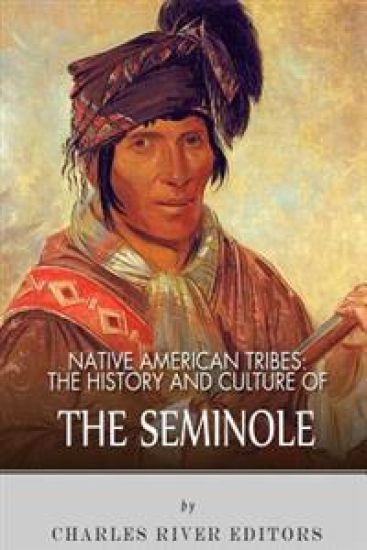
Native American Tribes: The History and Culture of the Seminole

Native American Tribes: The History and Culture of the Seminole

Charles River

Createspace Independent Publishing Platform
2013
nidottu
*Includes pictures of important people and places. *Includes a Bibliography for further reading. From the "Trail of Tears" to Wounded Knee and Little Bighorn, the narrative of American history is incomplete without the inclusion of the Native Americans that lived on the continent before European settlers arrived in the 16th and 17th centuries. Since the first contact between natives and settlers, tribes like the Sioux, Cherokee, and Navajo have both fascinated and perplexed outsiders with their history, language, and culture. In Charles River Editors' Native American Tribes series, readers can get caught up to speed on the history and culture of North America's most famous native tribes in the time it takes to finish a commute, while learning interesting facts long forgotten or never known. The Seminole tribe is one of the best known Native American tribes, and one of the most feared among 19th century Americans and Spaniards. In fact, the origin of the term Seminole comes from a Spanish description of them as "wild", which belies the fact that the Seminole had friendly relations with the British and Spanish during the colonial era. With the Spanish Empire foundering during the mid-19th century, the young United States sought to take possession of Florida. President Andrew Jackson's notorious policy of Indian Removal led to the Seminole Wars in the 1830s, and that was already after General Andrew Jackson had led American soldiers against the Seminole in the First Seminole War a generation earlier. The Seminole Wars ultimately pushed much of the tribe into Oklahoma, and the nature of some of the fighting remains one of the best known aspects of Seminole history among Americans. Native American Tribes: The History and Culture of the Seminole comprehensively covers the Native American tribe from its origins to today. Along with pictures and a bibliography, you will learn about the Seminole like you never have before, in no time at all.
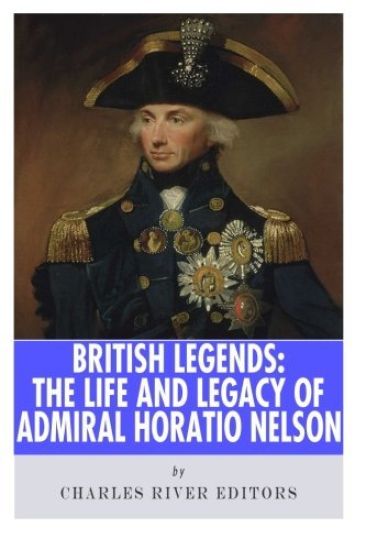
British Legends: The Life and Legacy of Admiral Horatio Nelson

British Legends: The Life and Legacy of Admiral Horatio Nelson

Charles River

Createspace Independent Publishing Platform
2013
nidottu
*Includes famous art depicting Nelson and important people, places, and events in his life. *Includes detailed descriptions of Nelson's greatest victories, including the Battle of Trafalgar. *Includes Nelson's most famous quotes. *Includes a bibliography for further reading. "England expects that every man will do his duty" - Nelson before the Battle of Trafalgar Over the course of its history, England has engaged in an uncountable number of battles, but none of her military heroes has had a greater military legacy than Admiral Lord Horatio Nelson, 1st Viscount Nelson, 1st Duke of Bront . Whether traveling to Trafalgar Square or one of the hundreds of pubs named after him, seemingly it becomes easy to believe that no Briton has cast as long a shadow. Nelson is well known across the world for his decisive victory at Trafalgar, made all the more legendary by the fact that he was mortally wounded at the height of his greatest feat. And it is understandable that any man who could thwart Napoleon's ambitions as well as Nelson did would earn a place in the history books. But Nelson embodied every virtue of his homeland; a dashing, courageous military officer who was impeccably cultured, and, of course, the best at what he did. Indeed, as the personification of the supremacy of the Royal Navy, the man and his life had a powerful resonance well before his death. When Nelson's body was immersed in rum during the homeward voyage from Trafalgar, it is said that the sailors would steal a drink, thereby imbibing the spirit of their hero. Rum is still called "Nelson's Blood" in Britain's Royal Navy, and consumers can buy a spiced version at the pub in Burnham Thorpe. Nelson's strategy and tactics are taught at naval colleges around the world, and the current U. K. government is, more than 200 years after his death, considering establishing a public holiday on the anniversary of Trafalgar. It is tempting simply to ascribe Nelson's place in history to his decisive naval victories; but he was far more complex than that. In fact, the man described by Professor Lambert as "Brittania's God of War" took a very modern approach to his own public image, which he carefully cultivated. The enduring Nelson cult was therefore as much his creation as anyone else's, but that's not to say he didn't earn it. Good fortune, hard work, bravery and supreme talent across a range of fields enabled Nelson to go down as history's greatest admiral. British Legends: The Life and Legacy of Admiral Horatio Nelson looks at the life, career, and legacy of Britain's foremost military hero, but it also humanizes the courageous and charismatic man who was as effective at leading and inspiring his men as he was at inspiring the British public. Along with pictures of important people, places, and events in his life, you will learn about Admiral Nelson like you never have before, in no time at all.
Native American Tribes: The History and Culture of the Nez Perce

Native American Tribes: The History and Culture of the Nez Perce

Charles River

Createspace Independent Publishing Platform
2013
nidottu
*Includes pictures of important people and places. *Explains the origins, history, religion, and social structure of the tribe. *Discusses the tribe's involvement in the Lewis & Clark expedition. *Includes a Bibliography for further reading. From the "Trail of Tears" to Wounded Knee and Little Bighorn, the narrative of American history is incomplete without the inclusion of the Native Americans that lived on the continent before European settlers arrived in the 16th and 17th centuries. Since the first contact between natives and settlers, tribes like the Sioux, Cherokee, and Navajo have both fascinated and perplexed outsiders with their history, language, and culture. In Charles River Editors' Native American Tribes series, readers can get caught up to speed on the history and culture of North America's most famous native tribes in the time it takes to finish a commute, while learning interesting facts long forgotten or never known. Many Native American tribes went out of their way to steer clear of white settlers during the 19th century, but the Nez Perc people might have remained confined to historical obscurity if not for their willingness to establish ties with European adventurers, explorers, clergy, and settlers. By doing so, most notably assisting the Lewis & Clark Expedition in 1805, the Nez Perc succeeded in not only bringing to light their ancient heritage but staking their claim to their place in modernity. From their role in helping Lewis and Clark blaze a trail to the Northwest Pacific coast in the early 19th century to their modern-day roles in the fields of academics, politics, the arts and sciences, the Nez Perc people stand among America's most influential. Nez Perc literally means "pierced nose" in French, but it is unclear whether the tribe ever used nose piercing as a form of ornament. Today, the tribe is best known for being led by Chief Joseph in the late 19th century. When he died in 1904, most Americans who knew his people's story considered Chief Joseph, whose Nez Perc name is Himahtooyahlatkekt ("Thunder Rolling Down from the Mountains"), a military genius and an "Indian Napoleon." This assessment of the Native American leader was based on a 1,500-mile odyssey during which he and his people left their reservation in the hopes of escaping to Canada, where the Nez Perc intended to join Sitting Bull and his Hunkpapa Sioux band. Perhaps it's not surprising that Chief Joseph (who was far more of a diplomat than military tactician) was misunderstood and misrepresented by Americans, because his people were misunderstood as well. By the middle of the 19th century, the Nez Perc was one of the strongest Native American groups in the Pacific Northwest, and they had maintained friendly relations with American settlers for several decades. Lewis and Clark had considered them so friendly and reliable that they left their horses with the Nez Perc as they loaded onto canoes and journeyed to the Pacific Coast. But the Nez Perc 's attitudes would soon change as the United States government began to coerce them to cede their traditional homeland to newly arriving white settlers, and the Nez Perc began suffering a fate very similar to that of other Native American tribes to the east. Like the Sioux, the Cherokee, the Seminole, and other tribes, the Nez Perc became notorious among contemporary Americans for resisting their displacement and fighting the U. S. Army in the 1870s. Native American Tribes: The History and Culture of the Nez Perc comprehensively covers the history, culture, and legacy of the Pacific Northwest's most famous tribe. Along with pictures and a bibliography, you will learn about the Nez Perc like you never have before, in no time at all.
American Legends: The Life of Bill Clinton

American Legends: The Life of Bill Clinton

Charles River

Createspace Independent Publishing Platform
2013
nidottu
*Includes pictures of Clinton and important people, places and events in his life. "Sometime in my sixteenth year, I decided I wanted to be in public life as an elected official. I loved music and thought I could be very good, but I knew I would never be John Coltrane or Stan Getz. I was interested in medicine and thought I could be a fine doctor, but I knew I would never be Michael DeBakey. But I knew I could be great in public service." - Bill Clinton A lot of ink has been spilled covering the lives of history's most influential figures, but how much of the forest is lost for the trees? In Charles River Editors' American Legends series, readers can get caught up to speed on the lives of America's most important men and women in the time it takes to finish a commute, while learning interesting facts long forgotten or never known. It would be impossible to sum up the life and legacy of Bill Clinton in one sentence or even one paragraph, as the former president represents many different things to many different people. Indeed, the yin and yang of Clinton's life and career are inescapable. Widely hailed as the greatest politician of his era, Clinton proved to be his own worst enemy, creating unnecessary scandals through his womanizing. Clinton was one of the first politicians to truly connect with young adults, yet in the process he provided ludicrous soundbytes like "I did not inhale." Long considered the Democratic Party's greatest spokesman and surrogate, Clinton's presidency was defined by centrist "triangulation". And though he is still publicly popular and considered a great president, Clinton became just the second president to be impeached in the House of Representatives. Regardless of what Americans think of him, one thing Clinton does represent is the American Dream. Born to a single mother in Hope, Arkansas, Clinton used his ambition, hard work and intelligence to become a Rhodes scholar. As a teenager, a meeting with President Kennedy helped drive him toward politics, which he pursued after getting his law degree at Yale, where he met future wife Hillary Rodham. Clinton ran for the U. S. House of Representatives in 1974 but was defeated, which spurred him into state politics in Arkansas, where he climbed the ladder from Attorney General to Governor at just 32 years old. He spent most of the 1980s as Arkansas' governor and a prominent voice in the more centrist wing of the Democratic Party, favoring welfare reform and smaller government. In 1992, Clinton truly became "The Comeback Kid", managing to win the Democratic primaries after losing the first two primaries, and going on to defeat incumbent President George H. W. Bush. After a failed healthcare reform initiative and huge Republican gains in the midterm elections of 1994, Clinton moved to the middle, governing as a centrist. And as the first president with a full term in the wake of the Soviet Union's dissolution, Clinton was widely responsible for charting a new foreign policy course for the U. S., which was now the world's sole superpower. His foreign interventions in places like Bosnia and Somalia greatly influenced future projections of American power and global events. Clinton left office with budget surpluses and a high approval rating, despite the never-ending controversies swirling around him, and he has since doubled as a political surrogage and global ambassador for his country. American Legends: The Life of Bill Clinton chronicles Clinton's life and career, including all of its famous highs and infamous lows, as well as the controversies and legacy he left in his wake. Along with pictures of important people, places, and events in his life, you will learn about The Comeback Kid like you never have before, in no time at all.
Religions of the World: The Religion of Ancient Mesopotamia

Religions of the World: The Religion of Ancient Mesopotamia

Charles River

Createspace Independent Publishing Platform
2013
nidottu
*Includes E. A. Wallis Budge's explanation of the Seven Tablets of Creation, the creation myth that bears striking similarities to the Book of Genesis. *Includes the Ancient Mesopotamian account of the Descent of the Goddess Ishtar into the Underworld. *Explains the role religion played at the national level, city level, and personal level in all aspects of life. *Includes pictures depicting gods and events in the religion. *Includes a Bibliography for further reading. A lot of ink has been spilled covering the lives of history's most influential figures, but how much of the forest is lost for the trees? Throughout time, people have been religious by nature, and billions today adhere to unique faiths across the world. In Charles River Editors' Religions of the World, readers can get caught up to speed on today's religions and yesterday's religions in the time it takes to finish a commute, while learning interesting facts long forgotten or never known. Throughout history, the world's most prominent religions have had intricacies that made them unique, yet many of them have also shared similar characteristics and stories. Nowhere is this clearer than in the religion practiced by people in Ancient Mesopotamia, which also happens to be the oldest documented religion in the world. Ancient Mesopotamian religion continues to captivate people for many of the same reasons today's best known religions and their histories fascinate people. The religion practiced by the Ancient Mesopotamians provides a certain mix between the mundane and the surreal, and at the same time aspects of it are both familiar and bizarre to people today. Some find themselves drawn to it based on its preeminent position in religious history as the oldest documented religion in the world. Others become fascinated with the close connections between some of the Mesopotamian religious texts, which include a flood story, a creation story and a story of the righteous sufferer, and their parallels in the Hebrew Bible. There are also many who learned about the mythological tales of the Greco-Roman world as children and revel in the mythological battles, love affairs and intrigue depicted in the Mesopotamian texts. Today the Ancient Mesopotamians and their religion are a source of curiosity, but thousands of years ago the religion was an integral part of their lives. From their birth to their death, deities surrounded them, and whether their social interactions were on the level of a smaller city or that of a larger nation-state, deities played key roles in the social fabric of their society. In fact, the people and religion were so intertwined that a study of Ancient Mesopotamian religion is a study of Ancient Mesopotamian culture. Religions of the World: The Religion of Ancient Mesopotamia examines the history and legacy of the religion practiced by the Ancient Mesopotamians, looking at the similarities it shares with other religions and the differences that make it unique. Along with pictures of important figures and places, you will learn about the religion of Ancient Mesopotamia like you never have before, in no time at all.
American Legends: The Life of Dred Scott and the Dred Scott Decision

American Legends: The Life of Dred Scott and the Dred Scott Decision

Charles River

Createspace Independent Publishing Platform
2013
nidottu
*Includes the full text of the Dred Scott decision and every opinion written by the Supreme Court justices. *Analyzes the Dred Scott decision and its impact on future civil rights cases. *Includes pictures of important people, places, and events. "The question is simply this: Can a negro, whose ancestors were imported into this country, and sold as slaves, become a member of the political community formed and brought into existence by the Constitution of the United States, and as such become entitled to all the rights, and privileges, and immunities, guarantied by that instrument to the citizen? " - Dred Scott v. Sanford Dred Scott was an unlikely candidate to become the impetus and rallying cry of a brand new political party in the mid-19th century. Born into slavery in Virginia as Sam Scott, the young slave took the name of his older brother Dred after Dred's death, and he moved throughout Southern slave states as property of the Blow family until he was sold to U. S. Army doctor John Emerson in St. Louis, Missouri. Emerson's commission in the Army eventually brought him to the Wisconsin Territory in 1836, which was north of the line established by the Missouri Compromise of 1820 and was thus free territory where slavery was illegal. Naturally, Emerson brought his slaves along with him, and Dred Scott thus lived for an extended period of time in free territory, his slave status being a violation of the Missouri Compromise, the Northwest Ordinance, and the Wisconsin Enabling Act. By 1840, Dred Scott had married another slave of Emerson's named Harriet, and the couple had a child. Desperate to shake off the yoke of slavery but unable to buy his family's freedom, Scott sued for his freedom in Missouri, arguing that once he had entered free territory he could no longer be a slave. Scott's case made its way through the court system, and when the Missouri Supreme Court struck down a lower court ruling in Scott's favor, Scott and his lawyers appealed to the United States Supreme Court. What followed was the 19th century's most important and far-reaching case. In Dred Scott v. Sandford (1857), the Supreme Court ruled 7-2 against Scott and Chief Justice Roger Taney wrote what is widely considered the most notorious opinion in American jurisprudence. The Court held that it lacked jurisdiction to hear the case because slaves and their descendants were not and could not be citizens of the United States because the Constitution never intended for them to be citizens. Thus, Scott had no standing to bring a case in court to begin with. Since every black person in the country had presumably come as a result of the slave trade or was the descendant of a slave, the Court essentially ruled that blacks could not be American citizens. Additionally, the Court opined that Congress could not prohibit slavery in federal territories, had no authority to prohibit slavery in federal territories. Taney hoped the case would help settle the growing political tension over the issue of slavery, but it had the opposite effect of becoming a springboard for Republicans and Abraham Lincoln. Though Scott and his family were set free just months after the case, he would die less than two years after being part of one of America's seminal cases. American Legends: The Life of Dred Scott and the Dred Scott Decision looks at the life of one of the most famous slaves in American history and the plaintiff in one of its most famous cases, but it also humanizes the man whose yearning for freedom shaped the destiny of a nation. Along with pictures of important people, places, and events, you will learn about Dred Scott and the Dred Scott Decision like you never have before.
Native American Tribes: The History and Culture of the Natchez

Native American Tribes: The History and Culture of the Natchez

Charles River

Createspace Independent Publishing Platform
2013
nidottu
*Includes pictures of important people and places. *Discusses the origins, history, religion, and social structure of the Natchez. *Explains the Natchez's association with the Ancient Moundbuilders. *Includes a Bibliography for further reading. From the Trail of Tears to Wounded Knee and Little Bighorn, the narrative of American history is incomplete without the inclusion of the Native Americans that lived on the continent before European settlers arrived in the 16th and 17th centuries. Since the first contact between natives and settlers, tribes like the Sioux, Cherokee, and Navajo have both fascinated and perplexed outsiders with their history, language, and culture. In Charles River Editors' Native American Tribes series, readers can get caught up to speed on the history and culture of North America's most famous native tribes in the time it takes to finish a commute, while learning interesting facts long forgotten or never known. Though they are not as well known as tribes like the Sioux or Cherokee, the Creek are one of the oldest and most important Native American tribes in North America. With roots that tie them to the Ancient Moundbuilders, the Natchez were one of the most established groups in the Southeastern United States, and came to be known as one of the Five Civilized Tribes. It's also believed that they were among the first natives encountered by Spanish explorer Hernando De Soto's historic expedition in the mid-16th century. Like various other indigenous groups, the Natchez quickly found themselves in conflict with European powers, most notably the French, who they engaged in a series of battles with during the early 18th century. The French decimated the tribe and led to the dispersal of their dwindling numbers, but the Natchez continue to occupy popular imaginations because of several unique features that make them stand out from other groups. Despite counting so many well-known tribes among their neighbors, the Natchez managed to maintain a distinctly different culture, most notably the fact that their language was so different that it is actually considered its own isolated language. Furthermore, they had a unique chieftain social structure, and for the past 80 years, scholars and archaeologists have been excavating a settlement known as the Grand Village of the Natchez that dates back about 1500 years. Native American Tribes: The History and Culture of the Natchez comprehensively covers the culture and history of the famous group, profiling their origins, their history, and the debates and mysteries surrounding their famous settlement. Along with pictures of important people, places, and events, you will learn about the Natchez like you never have before, in no time at all.