Kirjojen hintavertailu – 12 903 725 kirjaa ja 27 kauppaa

Kirjailija

Charles River

Kirjat ja teokset yhdessä paikassa: 4 673 kirjaa, julkaisuja vuosilta 2013–2022, suosituimpiin kuuluu William Powell and Myrna Loy: The Lives and Careers of One of Classical Hollywood's Most Iconic Duos. Vertaile teosten hintoja ja tarkista saatavuus suomalaisista kirjakaupoista.

4 673 kirjaa

Kirjojen julkaisuvuodet: 2013–2022.

Current Events: Israel and Her Enemies

Current Events: Israel and Her Enemies

Charles River

Createspace Independent Publishing Platform
2013
nidottu
"You don't want a messianic apocalyptic cult controlling atomic bombs." - Israeli Prime Minister Benjamin Netanyahu Welcome to the Middle East, where Israel and her neighbors have been engaged in diplomatic and military conflicts for nearly 64 years, with roots in the disputes dating back over 2,000 years of history. Founded in May 1948, Israel faced annihilation from the moment the state declared independence, finding itself invaded by Arab armies hoping to put an end to it before it had barely been born. Israel has since grown into the region's strongest military power, but it continues to face existential threats that leave its position perilous in ways more dangerous than any it has faced in over 40 years. In fact, the world has been on edge for months over the standoff between Israel and Iran. With Iran seemingly racing toward a nuclear bomb and showing no signs of relenting, all eyes are on the two sides' covert shadow war (including assassinations and cyber warfare), and ultimately whether Israel and/or the United States will use force to stop them. In Israel and Her Enemies, the authors of Decoding the Conflict between Israel and the Palestinians recount the history of all of the conflicts between Israel and her neighbors, while also getting readers up to speed on where things stand now between Israel and nations like Iran and Syria, as well as relations between Israel and substate groups like Hamas, the Palestinian Authority, and Hezbollah. Along with analysis, anecdotes, and dozens of maps and pictures of important events and people, Israel and Her Enemies is the perfect starting point for understanding how the Middle East conflicts have gotten to where they are at today, and what the future may hold.
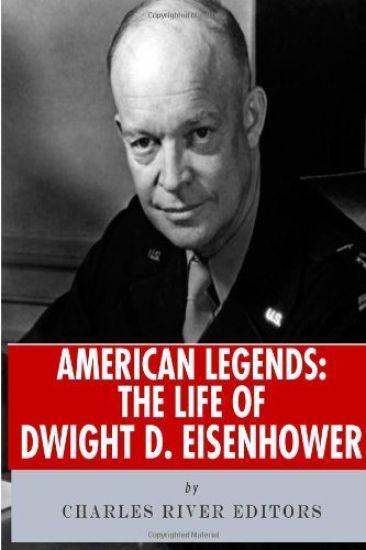
American Legends: The Life of Dwight D. Eisenhower

American Legends: The Life of Dwight D. Eisenhower

Charles River

Createspace Independent Publishing Platform
2013
nidottu
*Includes pictures of Eisenhower and important people, places, and events in his life. *Includes a detailed analysis of Eisenhower's military planning for D-Day and the invasion itself. A lot of ink has been spilled covering the lives of history's most influential figures, but how much of the forest is lost for the trees? In Charles River Editors' American Legends series, readers can get caught up to speed on the lives of America's most important men and women in the time it takes to finish a commute, while learning interesting facts long forgotten or never known. During the middle of the 20th century, the United States completed its transformation into one of the world's superpowers, and few were as instrumental in this development as Dwight D. Eisenhower (1890-1969), renowned for being the nation's principal commanding general during World War II and the president who served during the early, tumultuous Cold War years. A career military man, Ike was too young to serve in combat during World War I, but he began a long and productive career collaborating with future military legends George Patton and Douglas MacArthur while serving some of the nation's other famous generals, including George Marshall and John J. Pershing. Amazingly, he had never served in anything but administrative positions before World War II. Eisenhower remained mired in middle management positions until George Marshall, Chief of Staff of the Army, took notice of his skills and began promoting him. By 1942, Eisenhower was given the role of appointed Supreme Commander Allied (Expeditionary) Force in North Africa, and after his success there, Eisenhower oversaw the invasion of Sicily in 1943, which at the time had been the largest amphibious invasion in history. With those successes, President Roosevelt picked Eisenhower to be the Supreme Allied Commander of the Allied Expeditionary Force, leaving him in charge of Operation Overlord and the defining moment of his military career, D-Day. Like many before him, his successes in the war made him a natural candidate for President, and he was offered plum political spots by both parties before winning the presidency as a Republican in 1952. Despite being one of America's oldest presidents, Eisenhower redefined the public relations nature of the office, in addition to positioning America during the Cold War standoff with the Soviet Union. But Eisenhower's most lasting contribution as president was the construction of the interstate highway system, and it was in the final year of his presidency that his administration planned and implemented the Apollo space program that would land men on the Moon in 1969. By the time he died in 1969, President Nixon aptly described Eisenhower as "the world's most admired and respected man, truly the first citizen of the world." American Legends: The Life of Dwight Eisenhower details Ike's life and career in the military and politics, while also analyzing his lasting legacy. Along with pictures of important people, places, and events in his life, you will learn about Eisenhower like you never have before, in no time at all.
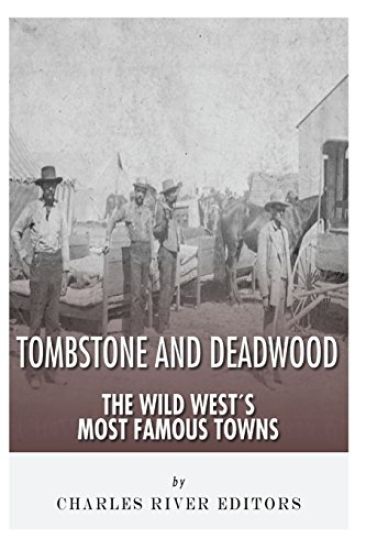
Tombstone and Deadwood: The Wild West's Most Famous Towns

Tombstone and Deadwood: The Wild West's Most Famous Towns

Charles River

Createspace Independent Publishing Platform
2013
nidottu
*Includes pictures of important people and places. *Profiles famous people and events like the Earps, Wild Bill Hickok, Calamity Jane and the Gunfight at the O. K. Corral. *Describes the sights, sounds, and history of both towns. *Includes bibliographies for each town. The Wild West has made legends out of many men, but it has forged a lasting legacy for Tombstone, Arizona and Deadwood, South Dakota, frontier boomtowns that have come to symbolize everything about the Old West. In many ways, these places fit all the stereotypes associated with that era in American history. Dusty places on the outskirts of civilization, Tombstone and Deadwood brought together miners, cowboys, lawmen, saloons, gambling, brothels, and everything in between, creating an environment that was always colorful and occasionally fatal. Those characteristics might not have distinguished Tombstone or Deadwood from other frontier outposts, but some of the most famous legends of the West called these towns home, most notably the Earp brothers and Doc Holliday in Tombstone and Wild Bill Hickok and Calamity Jane in Deadwood. Ultimately, the relationships and rivalries forged by the townspeople culminated in some of the West's most legendary events, including the murder of Hickok in 1876 and the Gunfight at the O. K. Corral on October 26, 1881. The West's most famous fight all but ensured that Tombstone would be the epicenter of Western lore, and as the city's population dwindled at the end of the 19th century, the allure of Tombstone as a tourist center took hold. Nearly half a million tourists flock to Tombstone each year, where they find a city that has cashed in on its legacy through careful preservation. Many of the historic buildings in Tombstone haven't changed much in the last 130 years, and visitors who come to the O. K. Corral or Boothill Cemetery can get an idea of what Tombstone was like in 1881. Similarly, Wild Bill's death helped ensure Deadwood would always be relevant, but in many ways the Deadwood craze was over almost before it began. During the 19th century, Deadwood's population reached its peak in the 1880s with a population of just less than 4,000, and fires, mining, and the closing of the frontier all made sure the population never grew. Today, barely 1,000 call Deadwood home, and it remains more an object of curiosity and tourism than anything else. Tombstone and Deadwood comprehensively covers the history of both towns, profiles the people who called them home, and highlights the places and events that made them famous. Along with pictures of important people, places, and events, you will learn about Tombstone and Deadwood like you never have before.
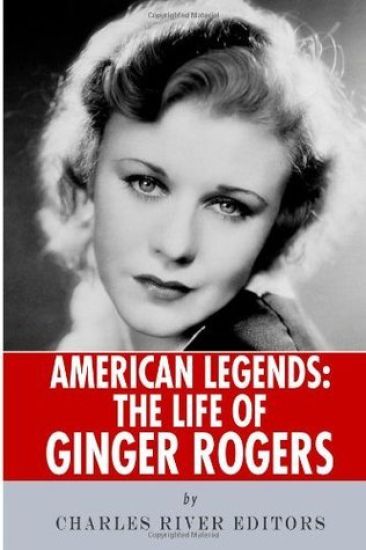
American Legends: The Life of Ginger Rogers

American Legends: The Life of Ginger Rogers

Charles River

Createspace Independent Publishing Platform
2013
nidottu
*Includes pictures of Ginger and important people, places, and scenes. *Comprehensively analyzes her relationship with Fred Astaire and their films together. *Includes a Bibliography for further reading. "I adored Fred. We were good friends. Our only problem is that we never aspired to be any kind of a team. We didn't want to be Abbott and Costello. We thought of ourselves as individuals. We didn't intend to be another Frick and Frack. But it happened anyway, didn't it? And I'll be forever grateful it did." - Ginger Rogers A lot of ink has been spilled covering the lives of history's most influential figures, but how much of the forest is lost for the trees? In Charles River Editors' American Legends series, readers can get caught up to speed on the lives of America's most important men and women in the time it takes to finish a commute, while learning interesting facts long forgotten or never known. There is no denying that the career of Ginger Rogers cannot be entirely divorced from that of Fred Astaire. The unlikely pairing - Rogers was a statuesque blonde while Astaire fell well short of the masculine ideal expected of male movie stars - only made their screen romance more dreamlike, even as the physical contrasts between them melted away during their protracted dance numbers. Not only were Astaire and Rogers the preeminent box office attraction of the time period, but they remain the most recognizable faces of the musical genre as a whole. It is telling that, as Edward Gallafent notes, the duo are identified simply as Fred and Ginger, with no need to even provide their last names. Moreover, not only are films such as Top Hat (1935) and Shall We Dance (1937) cornerstones of the musical, but one of the great achievements of the Fred and Ginger team is that they never fell out of public favor. Indeed, the completeness of the Fred and Ginger pairing was punctuated by the fact that there was no bitter breakup between them, making it so that audiences are left only with the seamless screen romances between them. Considering the immense success of their films together, it is entirely understandable that Astaire and Rogers are joined at the hip in the eyes of the public. However, an appreciation for the Fred and Ginger musicals is only enhanced by knowledge of the personal backgrounds of the two stars. After all, the fact remains that Astaire and Rogers came from vastly different cultural backgrounds, and at the time that they met, their careers had unfolded in dissimilar ways. Astaire was a national celebrity for his skills as a stage performer (mainly with his sister Adele), while Rogers was raised in a more archetypal Midwestern setting and her professional success was reached entirely through cinema. While Astaire made a name for himself through his dancing, Rogers was more recognized for her singing talents. Clearly, it is still possible to discern fundamental differences between their professional talents, contrasts that would become more distinguishable once they ceased making films together. American Legends: The Life of Ginger Rogers profiles the life and career of one of America's most famous entertainers. Along with pictures of important people, places, and events, you will learn about Ginger Rogers like you never have before, in no time at all.
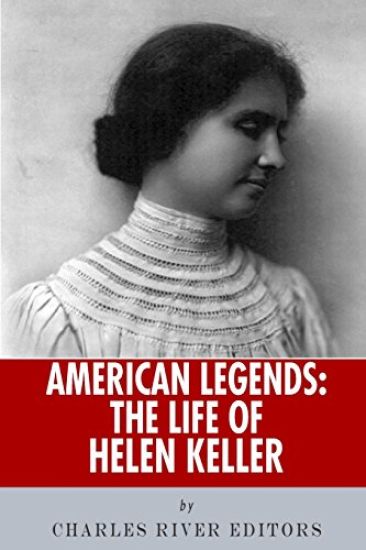
American Legends: The Life of Helen Keller

American Legends: The Life of Helen Keller

Charles River

Createspace Independent Publishing Platform
2013
nidottu
*Includes pictures of Helen Keller and important people in her life. *Includes Helen's quotes on politics, religion, inspiration, and more. *Includes a Bibliography for further reading. "Most people measure their happiness in terms of physical pleasure and material possession. Could they win some visible goal which they have set on the horizon, how happy they could be Lacking this gift or that circumstance, they would be miserable. If happiness is to be so measured, I who cannot hear or see have every reason to sit in a corner with folded hands and weep. If I am happy in spite of my deprivations, if my happiness is so deep that it is a faith, so thoughtful that it becomes a philosophy of life, - if, in short, I am an optimist, my testimony to the creed of optimism is worth hearing.." - Helen Keller A lot of ink has been spilled covering the lives of history's most influential figures, but how much of the forest is lost for the trees? In Charles River Editors' American Legends series, readers can get caught up to speed on the lives of America's most important men and women in the time it takes to finish a commute, while learning interesting facts long forgotten or never known. To say Helen Keller is one of the most unique figures in American history would be an understatement. As a young child, Helen lost both her vision and hearing, leaving her deafblind, an almost hopelessly debilitating condition that left her literally trapped, unable to communicate with anyone. As she would later write, "My life was without past or future; death, the pessimist would say, 'a consummation devoutly to be wished.'" Nobody would have blamed her for being hopelessly frustrated and imprisoned by her disabilities; in fact, that was to be expected. When her famous teacher, Anne Sullivan, brought Helen a doll and tried to teach her a few words by spelling them into her hand, the child became so frustrated that she broke the doll. As every American now knows, Helen eventually overcame the frustration and used unimaginable perseverance to overcome her disability. With Sullivan's help and the sense of touch, Helen eventually broke through and learned to communicate. Helen later recalled that after Sullivan put one of her hands in water and spelled water on the other hand, "I stood still, my whole attention fixed upon the motions of her fingers. Suddenly I felt a misty consciousness as of something forgotten - a thrill of returning thought; and somehow the mystery of language was revealed to me." Helen's story would have been remarkable enough if it had ended simply with her ability to communicate with the outside world, but "I had now the key to all language, and I was eager to learn to use it." With unbridled ambition, Helen became the first deafblind individual to earn a bachelor's degree from a college, published her own autobiography when she was just 22, and in the early 20th century became famous across the world as both an author and speaker. Naturally, Helen was a walking embodiment and advocate for people with disabilities, both the blind and deaf, but she was just as interested in other social and political causes, eventually becoming one of the most outspoken figures of her time. Those who were inspired by her story were surprised that she was willing to voice what they believed were radical beliefs on behalf of causes like women's suffrage, pacifism, and socialism. Helen also added actions to her words, founding both the Helen Keller International organization for research in vision, health and nutrition, and helping found the American Civil Liberties Union. American Legends: The Life of Helen Keller chronicles the amazing life and work of one of America's most famous women, explaining how she suffered and overcame her disabilities. Along with pictures of important people, places, and events in her life, you will learn about Helen Keller like you never have before, in no time at all.
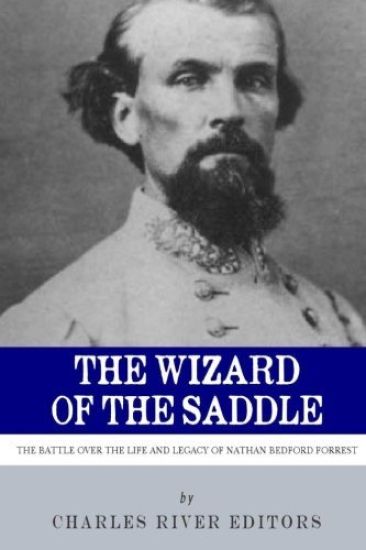
The Wizard of the Saddle: The Battle over the Life and Legacy of Nathan Bedford Forrest
*Includes pictures of Forrest and important people, places, and events. *Includes a lengthy bibliography for further reading. "I got there first with the most men." - Nathan Bedford Forrest Despite the fact that the Civil War was fought nearly 150 years ago, it remains a polarizing topic for the country to this day. And nowhere is this more evident than in the life and legacy of Confederate Lieutenant General Nathan Bedford Forrest, the war's most controversial soldier. When the war broke out, Forrest enlisted in the army and was instructed to raise a battalion of cavalry. A self-made man with no formal military training, Forrest spent the entire war fighting in the Western theater, becoming the only individual in the war to rise from the rank of Private to Lieutenant General. By the end of the war, Forrest was known throughout the South as the "Wizard of the Saddle," and anecdotes of his prowess in battle were legendary. In addition to being injured multiple times in battle, Forrest has been credited with having killed 30 Union soldiers in combat and having 29 horses shot out from under him. Northerners weren't the only ones who felt his wrath; Forrest famously feuded with several commanding officers and notoriously killed an artillery commander in his unit after a verbal confrontation spiraled out of control. History has properly accorded Forrest his place as one of the most courageous soldiers of the Civil War, and Forrest attained a number of command successes in the Western theater of the war. But Forrest was also at the head of Confederate troops accused of massacring a Union garrison comprised mostly of black soldiers at Fort Pillow, and he was also a prominent slave trader, an overt racist, and likely a leader of the Ku Klux Klan after the Civil War. When he died in 1877, in part due to various war wounds, he was the nation's most notorious unreconstructed rebel. Ashdown and Caudill, authors of The Myth of Nathan Bedford Forrest, write that the story of Forrest "embraces violence, race, realism, sectionalism, politics, reconciliation, and repentance." With these characteristics, it has proven almost impossible for any American to have a neutral view of Forrest, and it has been even harder to ignore him. Subsequently, Forrest's image has vacillated from celebrated to reviled, sometimes both at the same time, over the last 150 years, as the numerous and notable aspects of Forrest's life and legacy were considered by different people at different times. The Wizard of the Saddle: The Battle over the Life and Legacy of Nathan Bedford Forrest traces his life and Civil War record in the first part, detailing both his wild successes and his biggest controversies. The second part looks at how Forrest's legacy has been interpreted in the North and South since the end of the war, and how it fits within the context of Civil War memory and historiography as a whole, showing how Americans' opinions of Forrest have changed over time in conjunction with how the war and its aftermath were viewed. Along with pictures of Forrest and other important people, places and events in his life, you will learn about the Wizard of the Saddle like you never have before, in no time at all.
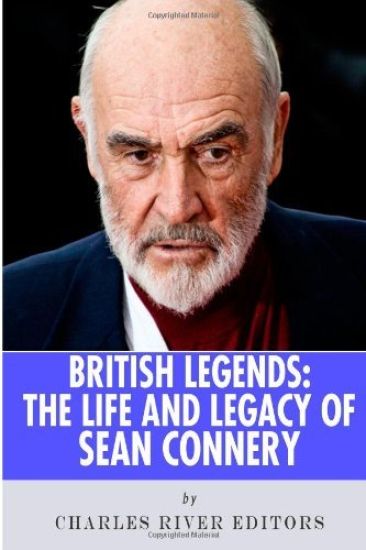
British Legends: The Life and Legacy of Sean Connery

British Legends: The Life and Legacy of Sean Connery

Charles River

Createspace Independent Publishing Platform
2013
nidottu
*Includes pictures. *Includes Connery's own quotes about his life and career. *Includes a Bibliography for further reading. A lot of ink has been spilled covering the lives of history's most influential figures, but how much of the forest is lost for the trees? In Charles River Editors' British Legends series, readers can get caught up to speed on the lives of Britain's most important men and women in the time it takes to finish a commute, while learning interesting facts long forgotten or never known. Perhaps no actor has been able to retain their popularity into old age as well as Sean Connery. Despite retiring in 2006, Connery remains a venerable figure who continued to receive accolades for his handsome virility and status within the Hollywood elite. After all, in 1989, just shy of his 60th birthday, Connery was feted by People magazine as the Sexiest Man Alive, and in the years that followed, Connery was awarded with even more lifetime achievement awards, including being named Sexiest Man of the Century by People magazine in 1999. As an actor, Connery won an Academy Award for his performance in The Untouchables (1989), and he has also been awarded Golden Globes and BAFTA awards as well. Based on these designations, one can reasonably place Connery among the ranks of the most acclaimed Hollywood actors of all time, a figure whose critical reputation only grew as he matured. Considering his personal acclaim as an actor, it is perhaps surprising that despite his status, most of the films in which Connery has appeared are not particularly acclaimed. Indeed, scanning his filmography, viewers finds very few films that have been showered with any significant awards, and even the role that brought Connery to fame, the James Bond franchise, initially received a largely lukewarm critical reception. On occasion, Connery has worked with directors of great critical standing, most notably Alfred Hitchcock in Marnie (1963), and yet even these films were not greeted with great praise. While Connery's skills as an actor remain unquestioned, his films themselves have not been canonized as outstanding, nor do they populate the curricula of film courses. Given the gulf between Connery's own reputation and those of his films, it is natural to conclude that Connery's fame has arisen despite appearing in films that were generally unworthy of his talents as an actor. One of the prevailing questions surrounding Connery, therefore, is how he was able to attain such fame and acclaim despite appearing in films that have continually been deemed less than outstanding. To answer that question, it is necessary to consider not only his film appearances but also the personal background that shaped his career decisions and contributed to the development of his star persona. In fact, the legend of Sean Connery is inseparable from his upbringing, as well as the precarious period of his young adulthood. Connery came from an impoverished background, and his willingness later in his career to accept roles that were seemingly beneath him can be attributed to a blue collar ethos that respects the value and importance of hard work. In light of his difficult upbringing, Connery's rise to stardom is an unlikely one, as Connery managed to progress from the poorest regions of Edinburgh, Scotland to the heights of Hollywood fame, becoming famous for his signature mix of suave, debonair comportment and virile masculinity. At the same time, Connery's eccentric behavior in later years, which might be criticized if other people acted that way, are often considered part of the unique Connery charm. British Legends: The Life and Legend of Sean Connery looks at the life of the iconic Bond actor on and off the silver screen. Along with pictures of important people, places, and events, you will learn about Sean Connery like you never have before, in no time at all.
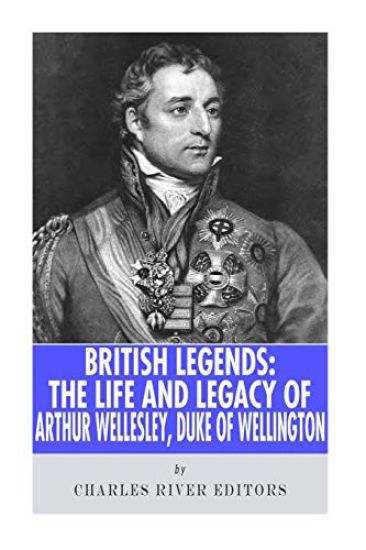
British Legends: The Life and Legacy of Arthur Wellesley, Duke of Wellington

British Legends: The Life and Legacy of Arthur Wellesley, Duke of Wellington

Charles River

Createspace Independent Publishing Platform
2013
nidottu
*Includes pictures of Wellington and important people, places, and events in his life. *Includes a Bibliography for further reading. "Believe me, nothing except a battle lost can be half so melancholy as a battle won." - Duke of Wellington, at Waterloo A lot of ink has been spilled covering the lives of history's most influential figures, but how much of the forest is lost for the trees? In Charles River Editors' British Legends series, readers can get caught up to speed on the lives of Great Britain's most important men and women in the time it takes to finish a commute, while learning interesting facts long forgotten or never known. In September 1852, a steam train carried the body of Arthur Wellesley, First Duke of Wellington, from Kent to London, where he was to be interred at St. Paul's Cathedral after a huge state funeral. A million would flock to pay their final respects, and young Queen Victoria wept openly, lamenting that "his loss will be quite irreparable". By the time of his death, Wellington had been prime minister twice, a shrewd personal advisor to four British monarchs and one of the nation's most prominent politicians for three decades. But despite his nearly four decades of peacetime service in and out of politics, Wellington has remained one of the titans of the 19th century because of one June day in 1815. Then, as now, the Duke of Wellington is best remembered for defeating Napoleon in the most famous battle of modern history at Waterloo. Even then, the fact Wellington is remembered for Waterloo belies his extraordinary military career, which saw him come up through fighting in the Netherlands and India before opposing Napoleon's forces on the Iberian Peninsula for several years. By the time Wellington took command of allied forces during the Hundred Days Campaign and decisively finished the Napoleonic Era at Waterloo, he had participated in about 60 battles and was one of Britain's greatest war heroes. Historical memory of Wellington often stops there, but he spent half his lifetime in politics after Waterloo, serving as a prime minister in the 1820s and an influential Tory in the House of Lords in the 1830s and 1840s, serving all the while as Commander-in-Chief of Britain's military. Though he had earned the nickname Iron Duke at the height of his political unpopularity, the originally derisive nickname came to represent his stern will and personality. British Legends: The Life and Legacy of Arthur Wellesley, Duke of Wellington covers the life of one of Britain's greatest warheros and one of its most erstwhile politicians. Along with pictures of important people, places, and events in his life, you will learn about the Duke of Wellington like you never have before, in no time at all.
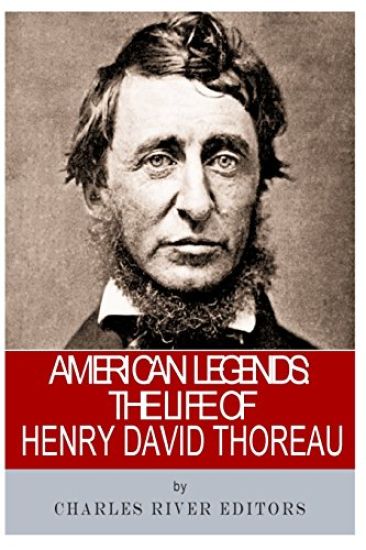
American Legends: The Life of Henry David Thoreau

American Legends: The Life of Henry David Thoreau

Charles River

Createspace Independent Publishing Platform
2013
nidottu
*Includes dozens of Thoreau's quotes. *Includes Emerson's article about Thoreau's life in the August 1862 edition of Atlantic Monthly. *Includes pictures of Thoreau and important people and places in his life. *Includes a Bibliography of Thoreau's works and works about him. "A living dog is better than a dead lion. Shall a man go and hang himself because he belongs to the race of pygmies, and not be the biggest pygmy that he can? Let every one mind his own business, and endeavor to be what he was made. Why should we be in such desperate haste to succeed and in such desperate enterprises? If a man does not keep pace with his companions, perhaps it is because he hears a different drummer. Let him step to the music which he hears, however measured or far away." - Henry David Thoreau A lot of ink has been spilled covering the lives of history's most influential figures, but how much of the forest is lost for the trees? In Charles River Editors' American Legends series, readers can get caught up to speed on the lives of America's most important men and women in the time it takes to finish a commute, while learning interesting facts long forgotten or never known. In the mid-19th century, Romantic literature was still in full bloom across the West, but some American authors began producing literature that, while still Romantic, was unique enough to be considered a different genre. This new genre, Transcendentalism, focused on the spirituality of the self and nature, not rejecting religion outright but concentrating on pragmatism and the importance of individuals as the spiritual center of the cosmos. In addition to drawing upon the Age of Enlightenment, Transcendentalist authors also utilized the philosophy of Plato, who taught that self-fulfillment through attaining knowledge should be an individual's ultimate goal. One of the most famous Transcendentalists, and possibly its most ardent practitioner, was Henry David Thoreau (1817-1862). As a prot g of Ralph Waldo Emerson, Thoreau took the values of the movement to heart and was particularly interested in the interconnection between man and nature, writing in Walden, "Most of the luxuries and many of the so-called comforts of life are not only not indispensable, but positive hindrances to the elevation of mankind." That famous work was Thoreau's account of his experience living for two years in a small cabin in a forest along the shore of Walden Pond in Concord, Massachusetts. In 1846, Thoreau was arrested for failing to pay taxes, which was based on his opposition to slavery and other ways the government spent taxpayers' money. After being freed, he gave a lecture about the roles of governments and individuals in society, which eventually became the famous essay "Civil Disobedience." In addition to rejecting any government "which is the slave's government also," Thoreau famously advocated "the majority of one", calling upon people to break unjust laws. As fate would have it, Thoreau's message of civil disobedience has resonated more than any of his other Transcendentalist values, and it had a profound influence on the philosophy and nonviolent protests of activists like Mahatma Gandhi and Martin Luther King, Jr. American Legends: The Life of Henry David Thoreau looks at the life and work of Thoreau, and it examines his ideology and the Transcendentalist movement. Along with pictures of important people and places, you will learn about Thoreau like you never have before, in no time at all.
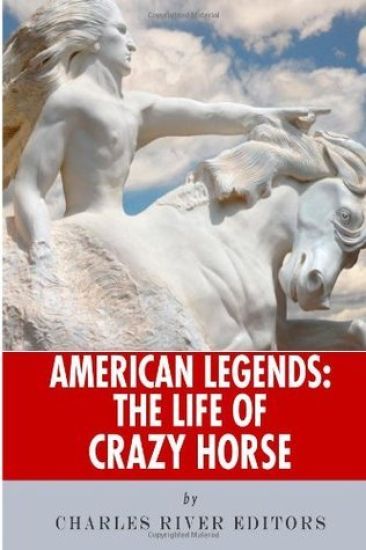
American Legends: The Life of Crazy Horse

American Legends: The Life of Crazy Horse

Charles River

Createspace Independent Publishing Platform
2013
nidottu
*Includes pictures of important people and places in Crazy Horse's life. *Explains the Battle of the Little Bighorn and several Lakota oral legends, including the origins of Crazy Horse's name. "Upon suffering beyond suffering: the Red Nation shall rise again and it shall be a blessing for a sick world. A world filled with broken promises, selfishness and separations. A world longing for light again. I see a time of Seven Generations when all the colors of mankind will gather under the Sacred Tree of Life and the whole Earth will become one circle again." - Crazy Horse A lot of ink has been spilled covering the lives of history's most influential figures, but how much of the forest is lost for the trees? In Charles River Editors' American Legends series, readers can get caught up to speed on the lives of America's most important men and women in the time it takes to finish a commute, while learning interesting facts long forgotten or never known. As he lay dying, Tashunke Witco, whose name is literally translated as "His Horse is Spirited" or "His Horse is Crazy," refused to be placed on an army cot, and he insisted upon being placed on the floor. He had spent his life avoiding white people whenever possible, and after he died, his cousin Touch the Clouds pointed to the blanket covering the dead Chief's body and said, "This is the lodge of Crazy Horse." Throughout his life, Tashunke Witco tried to live the life his people had enjoyed for centuries. He never signed a treaty with the U. S. government and was never photographed, largely because he wanted to avoid contact with the settlers encroaching further west upon Native American lands. By staying away from white settlements and military forts, he thus avoided the places where a photographer might be lurking. As the great Lakota leaders surrendered to the U. S. military or were killed, they became symbols of the qualities and character of their people. Red Cloud is often referred to as a symbol of Lakota concession. Sitting Bull is considered symbolic of Lakota spirituality. Crazy Horse, because he delayed surrender and never entered into treaty agreements with the U. S. military, became a symbol of Lakota resistance. Crazy Horse may have fervently wished to avoid white settlers, but he's a Native American icon today because of the inability to do so. Like Geronimo in the Southwest and Sitting Bull on the Plains, Crazy Horse was a chief who fought in several skirmishes against settlers and U. S. forces during the 1860s, and he became one of the most famous Native Americans in American history because of one fateful confrontation with whites: the legendary Battle of the Little Bighorn, during which an estimated 2,000 Lakota and Cheyenne warriors routed and then annihilated the 7th U. S. Cavalry led by George Custer. That disaster led the American government to double down on its efforts to "pacify" the Plains, and by the end of the decade many of them had surrendered and been moved onto a reservation. Like Sitting Bull, Crazy Horse tried to avoid surrendering for as long as he could, and both suffered a controversial death. American Legends: The Life of Crazy Horse chronicles the amazing life of the Lakota leader who defiantly fought to save his people's homeland, but it also humanizes the man who became one of the most famous Native Americans in American history. Along with pictures of important people, places, and events, you will learn about Crazy Horse like you never have before, in no time at all.
American Legends: The Life of James Dean

American Legends: The Life of James Dean

Charles River

Createspace Independent Publishing Platform
2013
nidottu
*Includes pictures of Dean and important people and places in his life. *Includes some of Dean's most famous quotes, and quotes about Dean made by friends and co-stars. *Includes a Bibliography for further reading. "Dream as if you'll live forever. Live as if you'll die today." - James Dean A lot of ink has been spilled covering the lives of history's most influential figures, but how much of the forest is lost for the trees? In Charles River Editors' American Legends series, readers can get caught up to speed on the lives of America's most important men and women in the time it takes to finish a commute, while learning interesting facts long forgotten or never known. It would be no exaggeration to say that James Dean has been more mythologized than any other actor in history, a development due more to his off-screen personality and conduct than the films he actually starred in. Much of Dean's appeal derives from his humble and ordinary origins, and audiences are drawn to the romance of the Indiana farm boy who catapulted to the top of the motion picture industry in a single year - the same year that would see him die. Of course, James Dean remains well-known for being anything but humble and ordinary. As famous as his films are, Dean's story is inextricably tied to his love for racing cars and his death in a high speed car crash. And though Dean was already wildly famous at the time of his death, there is no question that his death only enhanced his fame. One study found evidence of a "James Dean effect," which concluded that a star's popularity benefits if the star dies young instead of living longer and losing luster. By dying young, Dean actually ensured that his name would remain famous, and his appeal has transcended generations. For better or worse, the mythology surrounding him complicates any attempt to accurately depict his life, and it remains extraordinarily difficult to arrive at any cohesive understanding of many of the details of Dean's life. While Dean's fame will continue to live on, it is important to acknowledge that his star persona was formed in response to the era in which he came up. His film career illuminates 1950s Hollywood, a period that was rife with tension and change within the industry. Although Dean remains an American icon and culturally relevant, his popularity was also greatly tied to his own cultural epoch. At the same time, many cultural groups and fanzines have appropriated Dean as their own, making it that much harder to find the "true" details of Dean's life. American Legends: The Life of James Dean profiles the life and legacy of the famous actor and rebel without a cause. Along with pictures of important people, places, and events, you will learn about James Dean like you never have before, in no time at all.
American Legends: The Life of Marilyn Monroe

American Legends: The Life of Marilyn Monroe

Charles River

Createspace Independent Publishing Platform
2013
nidottu
*Includes pictures of Marilyn and important people and scenes. *Includes quotes about her life and career. *Includes a bibliography for further reading. "The truth is I've never fooled anyone. I've let people fool themselves. They didn't bother to find out who and what I was. Instead they would invent a character for me. I wouldn't argue with them. They were obviously loving somebody I wasn't. When they found this out, they would blame me for disillusioning them and fooling them." - Marilyn Monroe A lot of ink has been spilled covering the lives of history's most influential figures, but how much of the forest is lost for the trees? In Charles River Editors' American Legends series, readers can get caught up to speed on the lives of America's most important men and women in the time it takes to finish a commute, while learning interesting facts long forgotten or never known. Few actresses lived their lives in the public eye more than Marilyn Monroe, and yet her life remains shrouded in mystery to this day. While it is common knowledge that Marilyn's life is a rags-to-riches story, her life is bookended by hazy details surrounding her early life and even more mysterious death. Who was Norma Jean Baker? Who was Marilyn Monroe? The unknown has contributed to the mythology that has since become part of her legacy, and she nurtured it. Marilyn was adept at constructing a fanciful mystique about her early years, and it's become all but impossible to disentangle the truth from the narrative that Marilyn helped establish. Fittingly, even though Marilyn is instantly recognizable and still one of film's greatest icons, her films remain unfamiliar to the vast majority of the public. Most people have some preconception of Marilyn's film persona, seeing her as the "dumb blonde" without a brain who existed only in order to be gazed upon. However, one of the essential questions concerning Marilyn's life involves the accuracy of the "Marilyn stereotype"; is the "dumb blonde" identity an accurate descriptor of her film roles, and how does it compare to Marilyn's personality off of the movie set? Given how famous Marilyn Monroe was and continues to be, it's remarkable that so many people know so little about her life and career. What is known is that Marilyn Monroe was America's ultimate sex symbol in the 20th century, in part because she came of age in the wake of World War II and became famous during the conservative era of the 1950s. She appeared in just two films in the 1960s, prior to her premature death in August 1962, and there is a wide gulf between the brevity of her career and the impact that she made on American culture throughout the 1950s. Marilyn's death left everyone to speculate where her career would have gone in the 1960s, but it's probably safe to guess she wouldn't be the icon she remains today. American Legends: The Life of Marilyn Monroe comprehensively examines the starlet's life and films, exploring the controversies and the ways in which her life and works are mutually informative. Along with pictures of important people, places, and events, you will learn about Marilyn Monroe like you never have before, in no time at all.
American Legends: The Life of Tecumseh

American Legends: The Life of Tecumseh

Charles River

Createspace Independent Publishing Platform
2013
nidottu
*Explains the origins of Tecumseh's name. *Includes some of Tecumseh's quotes and his speeches to William Henry Harrison, the Choctaw and Chickasaw Nations, and the Osages. *Includes pictures of Tecumseh and important people in his life. "The Great Spirit made all things. He gave the white people a home beyond the great waters. He supplied these grounds with game, and gave them to his red children; and he gave them strength and courage to defend them." - Tecumseh A lot of ink has been spilled covering the lives of history's most influential figures, but how much of the forest is lost for the trees? In Charles River Editors' American Legends series, readers can get caught up to speed on the lives of America's most important men and women in the time it takes to finish a commute, while learning interesting facts long forgotten or never known. Throughout the 19th century, American settlers pushing across the Western frontier came into contact with diverse American tribes, producing a series of conflicts ranging from the Great Plains to the Southwest, from the Trail of Tears to the Pacific Northwest. Indian leaders like Geronimo became feared and dreaded men in America, and Sitting Bull's victory over George Custer's 7th Cavalry at Little Bighorn was one of the nation's most traumatic military endeavors. Given this history, Tecumseh's reputation among Americans has been both the most unique and anomalous. As the leader of the Shawnee, Tecumseh was the most famous Native American of the early 19th century, and he attempted to peacefully establish a Native American nation east of the Mississippi River in the wake of the American Revolution. While Native Americans, especially in the "old Northwest" (present-day land west of the Appalachian Mountains and east of the Mississippi River), understood and recognized their own, long established territories and those of other tribes, these boundaries and territories were ignored and unappreciated by the incoming settlers. Together with his brother Tenskwatawa, Tecumseh was in the process of forming a wide-ranging, Native American confederacy that they hoped would stem the westward flow of Anglo-American settlers and essentially establish a "nation" of Native Americans that would be recognized and accepted by the advancing European-American settlers. Throughout his life, Tecumseh had experienced the effects of encroachment by white settlers as his family and his people were forced from their ancestral homelands and wandered westward several times, finally settling in Missouri. As settlers continued to encroach further west, however, Tecumseh stood firm and ready to fight them. Before America fought Britain in the War of 1812, they were engaged in Tecumseh's War around the Great Lakes. The fighting made the Indian leader famous and made a military hero (and eventually a president) out of William Henry Harrison, whose victory at Tippecanoe is considered the end of that war. Undeterred, Tecumseh allied with the British during the War of 1812 against the Americans, and he continued to fight on until he was killed at the Battle of the Thames. Without their leader, Tecumseh's Confederacy began to rapidly disintegrate. Despite being one of their most tenacious opponents, Tecumseh almost immediately became a celebrated folk hero and respected leader in American history, all while continuing to be one of the most poignant symbols of resistance among Native Americans. The pan-Indian icon continues to be a household name across the United States today, nearly 200 years after his death. American Legends: The Life of Tecumseh chronicles the amazing life of the Native American leader, examines his leadership of the Shawnee Confederacy, and analyzes his enduring legacy. Along with pictures, you will learn about Tecumseh like you never have before, in no time at all.
American Legends: The Life of Ulysses S. Grant

American Legends: The Life of Ulysses S. Grant

Charles River

Createspace Independent Publishing Platform
2013
nidottu
*Includes 30 pictures of Grant and important people, places, and events in his life. *Includes anecdotes about Grant's life, such as how Hiram Ulysses Grant came to be known as Ulysses S. Grant. A lot of ink has been spilled covering the lives of history's most influential figures, but how much of the forest is lost for the trees? In Charles River Editors' American Legends series, readers can get caught up to speed on the lives of America's most important men and women in the time it takes to finish a commute, while learning interesting facts long forgotten or never known. In the 19th century, one of the surest ways to rise to prominence in American society was to be a war hero, like Andrew Jackson and William Henry Harrison. But few would have predicted such a destiny for Hiram Ulysses Grant, who had been a career soldier with little experience in combat and a failed businessman when the Civil War broke out in 1861. However, while all eyes were fixed on the Eastern theater at places like Manassas, Richmond, the Shenandoah Valley and Antietam, Grant went about a steady rise up the ranks through a series of successes in the West. His victory at Fort Donelson, in which his terms to the doomed Confederate garrison earned him the nickname "Unconditional Surrender" Grant, could be considered the first major Union victory of the war, and Grant's fame and rank only grew after that at battlefields like Shiloh and Vicksburg. Along the way, Grant nearly fell prey to military politics and the belief that he was at fault for the near defeat at Shiloh, but President Lincoln famously defended him, remarking, "I can't spare this man. He fights." Lincoln's steadfastness ensured that Grant's victories out West continued to pile up, and after Vicksburg and Chattanooga, Grant had effectively ensured Union control of the states of Kentucky and Tennessee, as well as the entire Mississippi River. At the beginning of 1864, Lincoln put him in charge of all federal armies, and he led the Army of the Potomac against Robert E. Lee in the Overland campaign, the siege of Petersburg, and famously, the surrender of the Army of Northern Virginia at Appomattox. Although Grant was instrumental in winning the war and eventually parlayed his fame into two terms in the White House, his legacy and accomplishments are still the subjects of heavy debate today. His presidency is remembered mostly due to rampant fraud within his Administration, although he was never personally accused of wrongdoing, and even his victories in the Civil War have been countered by charges that he was a butcher. Like the other American Legends, much of Grant's personal life has been eclipsed by the momentous battles and events in which he participated, from Fort Donelson to the White House. American Legends: The Life of Ulysses S. Grant covers the amazing accomplishments of Grant's life and career while putting a human touch on the Westerner who rose from virtually nothing to become the most influential general and author of the Civil War, and an important president. Along with pictures of Grant and other important people, places and events in his life, you will learn about Grant like you never have before, in no time at all.
American Legends: The Life of James Madison

American Legends: The Life of James Madison

Charles River

Createspace Independent Publishing Platform
2013
nidottu
A lot of ink has been spilled covering the lives of history's most influential figures, but how much of the forest is lost for the trees? In Charles River Editors' American Legends series, readers can get caught up to speed on the lives of America's most important men and women in the time it takes to finish a commute, while learning interesting facts long forgotten or never known. The Founding Fathers have become so revered by Americans in the last 200 years that the "Father of the Constitution" himself is often overlooked among the rest of the pantheon. Today James Madison's legacy mostly pales in comparison to the likes of George Washington, Ben Franklin and his closest colleague, Thomas Jefferson, but Madison's list of important accomplishments is monumental. A lifelong statesman, Madison was the youngest delegate at the Continental Congress from 1780-83, and at 36 he was one of the youngest men who headed to Philadelphia for the Constitutional Convention in 1787. Despite his age, he was the Convention's most influential thinker, and the man most responsible for the final draft of the U. S. Constitution. Along with Alexander Hamilton and John Jay, Madison was one of the most persuasive advocates for ratifying the Constitution, authoring some of the most famous Federalist Papers, and he drafted the Bill of Rights that was later added to the Constitution. But his work was far from done; along with Thomas Jefferson, Madison was one of the founders and ideological cornerstones of the Democratic-Republican Party that guided the young nation in the first 30 years of the 19th century. That included his own presidency, in which he oversaw the War of 1812. Like the other Founding Fathers, Madison is better known in word and deed than as an actual person. American Legends: The Life of James Madison covers Madison's incredible accomplishments, but it also humanizes the classic thinker who idolized Thomas Jefferson and had a loving relationship with wife Dolley, who helped mold the position of First Lady as debutante. Along with pictures of Madison and other important people and events in his life, you will learn about the Father of the Constitution like you never have before, in no time at all.
British Legends: The Life and Legacy of Charlie Chaplin

British Legends: The Life and Legacy of Charlie Chaplin

Charles River

Createspace Independent Publishing Platform
2013
nidottu
*Includes pictures of Chaplin and important people, places, and events in his life. *Includes Chaplin's own quotes about his work, politics, and more. *Includes a Bibliography for further reading. "I remain just one thing, and one thing only - and that is a clown. It places me on a far higher plane than any politician." - Charlie Chaplin Only a select few actors become international stars in their time, but none had as unique a career as Charlie Chaplin. Chaplin was the first true film star, and he managed to do so even when films were still silent. He has been honored with too many awards to count, and the fact that his name remains instantly recognizable nearly a century after his first film is a testament to his influence. Even today, Chaplin's films are arguably more recognizable than those of perhaps any other actor or director; everyone is familiar with the famous "Tramp" costume and persona, and even the casual film enthusiast has likely seen films such as City Lights (1931) and Modern Times (1936). Chaplin is known for the singular blend of pathos and humor evinced by his films, and it is not uncommon for audiences to laugh and cry at alternate points of a Chaplin film, a trait that continues to endear audiences even to this day. For this reason, in his review of Stephen Weissman's biography of Chaplin, Martin Sieff noted, "It is doubtful any individual has every given more entertainment, pleasure, and relief to so many human beings when they needed it most." As Sieff's comment suggests, Chaplin's career coincided with the two World Wars and the Great Depression, but while Chaplin the actor was popular, Chaplin the person became controversial in the final decades of his life. In fact, there is a wide discrepancy between the almost uniformly enthusiastic praise of Chaplin today and the subversive identity he cultivated toward the latter part of his career. Although accusations of being a communist sympathizer and Chaplin's confrontation with the House Committee on Un-American Activities have mostly become a footnote in the storied career of a man best remembered as an acting pioneer, it forced Chaplin to spend the last 15 years of his career working as an artist in exile, and the shifting viewpoints of Chaplin were instrumental in forcing people to evaluate the way in which they viewed celebrities, as well as what it means to be entertained. Indeed, it is impossible to substantiate the belief that Chaplin's later films are poorer in quality than his earlier ones, yet the public largely rejected his later directorial efforts. In the end, it must be acknowledged that, more than any other figure who had come before him, the public was aware of Chaplin's personal life in ways that were often upsetting and inconsistent with the persona effected through his films. Due to the way Chaplin was vilified, relatively little is known about the final chapter of Chaplin's life, and one of the prevailing tensions concerning Chaplin is the way in which he is incredibly famous on the one hand but also a particularly mysterious and even unknown figure on the other hand. After Chaplin's body was stolen from his grave, Kenneth Schuyler Lynn pointed out that "the image of his empty gravesite came to symbolize his historic elusiveness, as a person no less than as a performer." How is it that a director who is arguably more famous than any other also held such an "elusive" sensibility? British Legends: The Life and Legacy of Charlie Chaplin comprehensively examines Chaplin's life and films, exploring the controversies and the ways in which his life and works are mutually informative. Along with pictures of important people, places, and events, you will learn about Charlie Chaplin like you never have before, in no time at all.
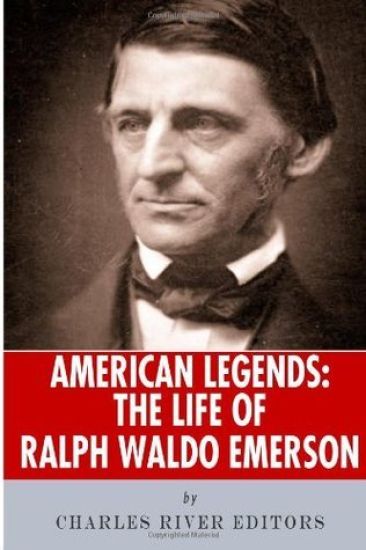
American Legends: The Life of Ralph Waldo Emerson

American Legends: The Life of Ralph Waldo Emerson

Charles River

Createspace Independent Publishing Platform
2013
nidottu
*Includes a list of dozens of Emerson's most inspirational quotes. *Includes pictures of Emerson and important people and places in his life. *Includes a Bibliography of Emerson's works and books about Emerson for further reading. "Standing on the bare ground, - my head bathed by the blithe air, and uplifted into infinite space, - all mean egotism vanishes. I become a transparent eye-ball; I am nothing; I see all; the currents of the Universal Being circulate through me; I am part or particle of God." - Ralph Waldo Emerson A lot of ink has been spilled covering the lives of history's most influential figures, but how much of the forest is lost for the trees? In Charles River Editors' American Legends series, readers can get caught up to speed on the lives of America's most important men and women in the time it takes to finish a commute, while learning interesting facts long forgotten or never known. In the mid-19th century, Romantic literature was still in full bloom across the West, but some American authors began producing literature that, while still Romantic, was unique enough to be considered a different genre. This new genre, Transcendentalism, focused on the spirituality of the self and nature, not rejecting religion outright but concentrating on pragmatism and the importance of individuals as the spiritual center of the cosmos. In addition to drawing upon the Age of Enlightenment, Transcendentalist authors also utilized the philosophy of Plato, who taught that self-fulfillment through attaining knowledge should be an individual's ultimate goal. The leader of Transcendentalism and the man who ushered the movement's practices and literature was Ralph Waldo Emerson (1802-1883), one of America's most famous writers and speakers. Whereas Romantic literature typically took the form of poetry, novels and short stories, much of Emerson's writings disregarded those traditional structures and were written as essays. Emerson initiated Transcendentalism with the publishing of his essay Nature in 1836, which espoused the virtues of nature and the interconnectedness of all life in nature. With his focus on the environment and natural history, Emerson became the first major American writer whose work was not influenced in any way by European literature. But Emerson didn't just write Transcendentalist literature; he practiced what he preached. Now at the forefront of a movement, Emerson established group meetings, gave a series of lectures, and helped produce a Transcendentalist publication in the 1840s, which included his famous essay Self-Reliance. As Emerson's movement and stature grew, he befriended other authors, including Nathaniel Hawthorne, Louisa May Alcott, and Henry David Thoreau, who became his greatest prot g . Thoreau in particular took a keen interest in the idea of getting in touch with nature, writing in Walden, "Most of the luxuries and many of the so-called comforts of life are not only not indispensable, but positive hindrances to the elevation of mankind." American Legends: The Life of Ralph Waldo Emerson looks at the life and work of Emerson and the movement he helped lead. Along with pictures, you will learn about Ralph Waldo Emerson like you never have before, in no time at all.
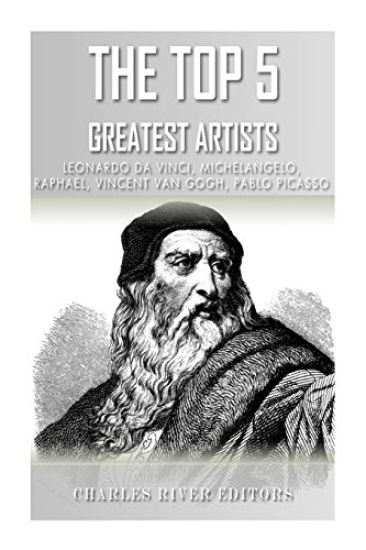
The Top 5 Greatest Artists: Leonardo, Michelangelo, Raphael, Vincent Van Gogh, and Pablo Picasso
*Includes pictures of important people and places, as well as the artists' most famous works. *Discusses the relationships between the artists. *Includes a Bibliography on each artist for further reading. It would be hard to determine which field Leonardo had the greatest influence in. His "Mona Lisa" and "The Last Supper" are among the most famous paintings of all time, standing up against even Michelangelo's work. But even if he was not the age's greatest artist, Leonardo may have conducted his most influential work was done in other fields. His emphasis on the importance of Nature would influence Enlightened philosophers centuries later, and he sketched speculative designs for gadgets like helicopters that would take another 4 centuries to create. It's possible that Michelangelo is the most famous artist in history, but it's also possible that he's an underrated artist. The vast influence of his career is reflected by the fact that he is not only known for his own art but has also come to embody an entire epoch of Western art. Along with Leonardo da Vinci, there are no other artists who so fully capture the spirit of scientific and artistic discovery that characterized art during the late 15th and early 16th centuries. Moreover, Michelangelo's career is distinguished from that of his peers through his seamless ability to work within different art forms, receiving acclaim regardless of the medium. After first rising to fame as a sculptor, he also painted and served as an architect, and since his death, Michelangelo has also become decorated for his prolific output as a poet. The diversity and high standard of his work, no matter the medium, make it difficult to even arrive at a most famous work. Raffaello Sanzio da Urbino, known across the world simply by the name Raphael, stands as one of the main pillars of the High Renaissance, an iconic example of the balance between spirituality and Humanistic inquiry that characterized the time period. Although he lived just 37 years, his career produced an amazingly rich output, and he completed more works than many artists do over careers spanning twice the length. At the same time, Raphael's art combined central tropes associated with the Renaissance while remaining remarkably original. Vincent van Gogh is undoubtedly one of the most famous artists of all time, and though the critical establishment may not consider him the greatest artist who ever lived, there may be no artist with whom the public has a greater familiarity. Unfortunately, a great deal of that familiarity comes from the circumstances leading up to his death, and the manner in which they have been linked to his painting career. In 1882, Vincent would hauntingly and somewhat prophetically write to his brother Theo, "What am I in the eyes of most people - a nonentity, an eccentric, or an unpleasant person - somebody who has no position in society and will never have; in short, the lowest of the low. All right, then - even if that were absolutely true, then I should one day like to show by my work what such an eccentric, such a nobody, has in his heart." In their biography of Pablo Picasso, Hans Ludwig and Chris Jaffe note that "for him, art was always adventure: 'To find is the thing.'" Indeed, there is perhaps no artist who produced more art than Picasso, whose enormous oeuvre (which spanned most of his 91-year life) contained a countless number of paintings and drawings. Picasso also worked in other mediums as well, notably sculpture and lithography, and his constant experimentation with form makes him a useful case study through which to chart the growth of Modernism as an artistic movement and many of the artistic trends that would dominate the 20th century.